News Posts matching #NVIDIA

Return to Keyword Browsing

NVIDIA and AMD Customize HBM4 Memory for Next-Generation AI Accelerators

NVIDIA's and AMD's next-generation accelerators will definitely utilize a next-generation HBM4 memory, too. However, interesting news, confirmed by SemiAnalysis, is that these accelerators will utilize a customized HBM memory for the first time. In an HBM stack, consisting of stacked DRAM dies up to a 12-high, connected with TSVs, there is the possibility of embedding an optional base die with customized logic/accelerator circuitry tailored to a specific need. It appears that NVIDIA and AMD are not only exploring this option to gain more performance, but are also actively working on an implementation with a custom base that will push these accelerators ahead of any third-party ASIC solution by a third. Since everyone is trying to grab a bit of market share in the AI ASIC world, NVIDIA and AMD have to innovate their designs to stay ahead constantly.

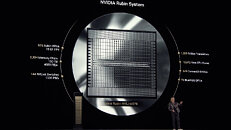
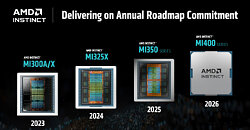
"We expect NVIDIA and AMD to come out with their custom HBM implementations with HBM4, with other accelerator designers likely to only have a custom base die implementation by HBM4E in the 2027 timeframe," notes the SemiAnalysis post. This means that while ASIC designers, such as Broadcom and MediaTek, will have a working solution in 2027 chips, NVIDIA and AMD will have a working custom HBM4 in 2026 products. For NVIDIA, this is the "Rubin" architecture, supposed to outperform the current "Blackwell" implementation by a wide margin. For AMD, this is the Instinct MI400 series of accelerators, which is coming for the first time in a rack-scale flavor.
NVIDIA Releases GeForce 580.97 WHQL Drivers

NVIDIA today released the latest version of its GeForce graphics drivers. Version 580.97 WHQL comes with optimization for "Senua Saga: Hellblade II Enhanced." The drivers also add DLSS 4 support for this game, as well as to "Grand Theft Auto V Enhanced." There are no game-specific bugs fixed, but a couple of general bugs are. These include a flicker or underflow effect noticed on Samsung 57-inch Odyssey G9 display when idling on the desktop; and another bug that causes some notebook displays to appear dim when an external HDR-capable monitor is connected, and the display mode is set to "NVIDIA GPU only." Grab the driver from the link below.

DOWNLOAD: NVIDIA GeForce 580.97 WHQL

Giga Computing Joins SIGGRAPH 2025 with NVIDIA-based Systems Scaling from Mini PCs to Workstations to Enterprise-grade Servers

Giga Computing, a subsidiary of GIGABYTE and an industry leader in generative AI servers and advanced cooling technologies, today announced its GIGABYTE booth at SIGGRAPH 2025 to showcase innovative products accelerated by NVIDIA Blackwell architecture that allows designers and researchers to manipulate or engage with digital content in real-time. At SIGGRAPH, Giga Computing is presenting a comprehensive range of AI computing solutions, beginning with a compact system, advancing to a high-performance workstation, and culminating in a powerful server. Each system is fully optimized and seamlessly integrated with the NVIDIA AI software stack to deliver exceptional performance across a broad spectrum of applications, including video processing, AI research, and more.

A GIGABYTE GPU Server to Maximize Design and Visualization
Then new GIGABYTE XL44-SX2 at SIGGRAPH shows off the best in enterprise computing by pairing a future-proof, modularized server design with the ultimate data center GPU for AI and visual computing—NVIDIA RTX PRO 6000 Blackwell Server Edition. This GPU accelerates demanding enterprise workloads, including AI, scientific computing, graphics, and video applications. Up to eight GPUs can be configured in the GIGABYTE server with an integrated NVIDIA MGX PCIe switch board with NVIDIA ConnectX-8 SuperNIC with 800G networking for each GPU to deliver high throughput and better scale-out capabilities.

Apple and NVIDIA Eye Intel's 14A Node for Trial Production

Intel's leadership has placed the fate of its 14A process on confirmed commitments, following CEO Lip-Bu Tan's statement that future spending will require confirmed external orders. Speaking on a recent earnings call, Tan signaled a departure from the previous build-first mindset and warned that Intel could pause or cancel 14A unless viable clients step forward. That message focused industry attention on reports that Apple and NVIDIA have been given access to 14A process design kits (PDKs) and are considering trial production. Apple may test the node for limited runs of M-series chips as part of a dual foundry strategy to reduce single supplier risk, while NVIDIA could explore the process for entry-level GPU lines. Such pilot runs would give Intel the customer validation it needs to justify further investment and would amount to a vote of confidence if they move beyond testing.

Technical promise alone will not secure success. Intel markets 14A as an evolution of its 18A foundation, incorporating second-generation RibbonFET transistor layouts and PowerDirect architecture. However, converting those designs into high-yield, cost-effective production is a steep climb. If Apple chooses to diversify away from a single supplier, that decision would reshape client dynamics and could pressure TSMC to adjust capacity or pricing priorities. If not, another failed ramp would make it harder for Intel to win priority from major customers and could complicate Apple's sourcing plans. Intel has a narrow window to turn interest into volume, and contract terms, performance, and timing will decide whether 14A becomes a credible alternative or an expensive, never-materialized project.

NVIDIA Intros RTX PRO 4000 SFF Edition and RTX PRO 2000 Blackwell GPUs

NVIDIA has rolled out two new professional graphics cards at SIGGRAPH 2025. These cards broaden its Blackwell architecture range, introducing the RTX PRO 4000 SFF Edition and RTX PRO 2000. These compact GPUs aim to speed up AI for professional tasks while staying energy-efficient. The graphics cards come with fourth-generation RT Cores and fifth-generation Tensor Cores. They pack major performance boosts into smaller sizes. The RTX PRO 4000 SFF Edition boasts 24 GB of ECC GDDR7 memory. It churns out 770 AI TOPS of throughput. This means it can handle AI tasks up to 2.5 times faster and ray tracing 1.7 times better than older models (i.e. RTX A4000). While bringing updated specs, NVIDIA managed to keep the same 70 W TGP as the card it replaces.

The RTX PRO 2000 comes with 16 GB of ECC GDDR7 memory and targets mainstream design and AI workflows with its 545 AI TOPS of power. Compared with the NVIDIA RTX A2000, it makes 3D modeling up to 1.6 times faster, improves CAD performance by 1.4 times, and speeds up rendering. Performance improvements can also be seen in AI with image generation being 1.4 times quicker and text generation 2.3 times faster. Both GPUs are particularly suited for compact workstations with limited space or tight power budgets. The RTX PRO 2000 will be available through PNY and TD SYNNEX, while both cards will be offered in complete systems from manufacturers including Dell, HP, and Lenovo. These graphics cards are expected to launch later this year, though specific pricing has not been disclosed.

NVIDIA RTX PRO Servers with Blackwell Coming to World's Most Popular Enterprise Systems

NVIDIA today announced that the NVIDIA RTX PRO 6000 Blackwell Server Edition GPU is coming to the world's most popular enterprise servers, speeding the shift from traditional CPU systems to accelerated computing platforms. With these new 2U mainstream servers, enterprises worldwide can harness the NVIDIA Blackwell architecture in the most widely adopted rack-mounted systems for breakthrough performance and efficiency in their data centers.

Global system partners including Cisco, Dell Technologies, HPE, Lenovo and Supermicro will offer the 2U NVIDIA RTX PRO Servers—available in multiple configurations—to bring universal acceleration for enterprise workloads spanning agentic AI, content creation, data analytics, graphics, scientific simulation, as well as industrial and physical AI.

Manli Launches GeForce RTX 50-series Black Stellar Line of Graphics Cards

Manli today launched its GeForce RTX 50-series Black Stellar line of premium custom-design graphics cards. The lineup consists of performance-segment GPUs, namely the GeForce RTX 5070, the RTX 5060 Ti 16 GB, the RTX 5060 Ti 8 GB, and the RTX 5060. All three cards come with a triple-slot cooling solution that uses three 90 mm fans, while the RTX 5070 Black Stellar comes with a slightly heavier heatsink than the other three cards. The cooler design consists of a matte black main shroud with a contrasting S-shaped acrylic accent, and an illuminated "Stellar" logo on top. The PCB is barely half the length of the card, which makes much of the airflow from the second fan, and all the airflow from the third one flow through the heatsink and out from the backplate. All three cards come with factory overclocked speeds that range from 30 MHz to 40 MHz over NVIDIA reference boost speeds.

ASUS Announces the NUC 15 Performance

ASUS today announced NUC 15 Performance, a cutting-edge barebone mini PC that features the latest Intel Core Ultra 9 / 7 processors (Series 2) and the latest NVIDIA GeForce RTX 5070 / 5060 Laptop GPUs. This compact powerhouse delivers exceptional performance in a sleek 3-liter design, and is ideal for high-vision computing in commercial and industrial applications.

Next-level performance
Powered by either an Intel Core Ultra 9 275HX or Ultra 7 255HX processor, NUC 15 Performance delivers exceptional AI performance and efficiency, offering up to an 18% performance boost over previous NUC models for smooth multitasking while running the most demanding apps. Designed for business and creative professionals, NUC 15 Performance ensures seamless, high-efficiency computing to enhance productivity.

NVIDIA GeForce NOW Gets Mafia: The Old Country, Titan Quest II, and More Games

This GFN Thursday brings an offer members can't refuse - 2K's highly anticipated Mafia: The Old Country is launching in the cloud today. The prequel to the award-winning action-adventure Mafia series leads five games joining the cloud this week, including the long-awaited launch of Stormgate 1.0 and early access for THQ Nordic's Titan Quest II. And don't miss out on the newest season of Marvel Rivals, available for members to stream without having to wait for downloads or patches.

The Don Says Play
Return to the heart of the Mafia saga and journey into the brutal underworld of 1900s Sicily with Mafia: The Old Country. Hustle and scheme through savage streets and sun-baked villages in a gripping, linear narrative. Experience a world where every choice cuts deep, every vendetta matters and loyalty is a dangerous game. Step into the scuffed shoes of Enzo Favara - a man with nothing to lose and even less to trust - and earn a seat at Don Torrisi's table. Whether it's settling vendettas with a stiletto blade or dueling with a lupara shotgun, every fight is life or death, and every bullet counts. Players can expect gritty stealth, messy brawls and nerve-wracking shootouts - fueled by loyalty, betrayal and the need to prove more value to the Torrisi family alive than dead.

NVIDIA DLSS 4 Comes to Death Relives and The First Descendant

More than 800 games and applications feature RTX technologies, and each week new games integrating NVIDIA DLSS, NVIDIA Reflex, and advanced ray-traced effects are released or announced, delivering the definitive PC experience for GeForce RTX players. Last week, Clair Obscur: Expedition 33, Dead Take, and Rune Factory: Guardians of Azuma were the latest games to add support for DLSS 4 with Multi Frame Generation, multiplying frame rates. This week, DLSS 4 with Multi Frame Generation comes to Death Relieves and The First Descendant. And GeForce heads to QuakeCon 2025 this weekend with DOOM: The Dark Ages custom PCs, RTX game demos, and cool prizes! Read on for all the details.

The First Descendant Season 3 Launches August 7th, Featuring DLSS 4 With Multi Frame Generation
The First Descendant is a free, third-person cooperative action-RPG shooter powered by Unreal Engine 5. Experience the fun of strategic boss fights through multiplayer co-op, using an extensive range of unique characters, with exciting gunplay, and looting. Battle through the engrossing story, and tackle World Missions against huge bosses in The First Descendant. Season 3, "Breakthrough", launches August 7th, adding a massive new open area to explore and fight in, a new 8-player Field Colossus Raid, a new hoverbike mount to make traversing large areas faster, and a crossover with the much-loved action RPG NieR:Automata.

Huawei Open-Sources AI Software Stack, Aiming to Rival CUDA

Huawei used its annual developer summit in Shenzhen this week to announce that it will release the Compute Architecture for Neural Networks (CANN) software stack, which powers its Ascend AI processors, as open source before the end of the year. Rotating chairman Eric Xu Zhijun said the goal is to make it easier for developers to get started and build a lively community around Huawei's chips. In the weeks leading up to the public launch, the company has collaborated with Tsinghua University, Peking University, AI startups such as StepFun and Infinigence, and the newly formed Model-Chips Ecosystem Innovation Alliance to agree on contribution rules and establish transparent governance. By putting CANN on public code repositories under a permissive licence, Huawei hopes to capture the same kind of grassroots enthusiasm that drove Linux and RISC-V adoption, only this time for hardware designed in China.

This announcement comes at a sensitive moment on both technical and political fronts. China's regulator has initiated a security review of NVIDIA's H20 GPUs, citing concerns about remote-management features that compromise data sovereignty. At the same time, US authorities have approved limited exports of the same chip. Unlike NVIDIA's CUDA framework, which now blocks third-party translation layers on non-NVIDIA GPUs, CANN will allow forks and cross-platform ports from day one. It will take years for CANN to match CUDA's two decades' worth of optimized libraries and tooling. If Huawei can keep contributors engaged, an open-source CANN may shift the company's role from chip maker to the neutral steward of a unified AI software ecosystem. The first public snapshot is scheduled for the fourth quarter, alongside the release of the Ascend 910C processors and a joint reference server design with Tencent Cloud.

NVIDIA Reassures Customers: No Backdoors, No Kill Switches, No Spyware in its GPUs

NVIDIA is shipping millions of GPUs across data center, consumer, and professional workloads that power every use case today. Since the infrastructure powering vital services, such as healthcare and finance, requires NVIDIA GPUs to run, some policymakers have demanded backdoors, kill switches, and spyware to prevent malicious actors from performing any harmful activity on an NVIDIA GPU. However, NVIDIA issued a blog post reaffirming that its GPUs don't contain any backdoors, kill switches, or spyware, and that such features will never be present on NVIDIA hardware.

The company argues that safety should stem from features such as diagnostics, performance monitoring, bug reporting, and timely firmware patching, rather than relying on a kill switch to power off a GPU. And all of that is happening with a user's consent and knowledge of what services run on their hardware. "Hardwiring a kill switch into a chip is something entirely different: a permanent flaw beyond user control, and an open invitation for disaster. It's like buying a car where the dealership keeps a remote control for the parking brake—just in case they decide you shouldn't be driving. That's not sound policy. It's an overreaction that would irreparably harm America's economic and national security interests," says NVIDIA blog. We hope that the company remains on this track, as promoting good values is essential for development in the hardware industry.

ASUS Unveils ProArt GeForce RTX 50-Series Graphics Cards with USB-C and Wood-Patterned Look

ASUS today announced the ProArt GeForce RTX 50 Series graphics cards, featuring a USB Type-C port for compatibility with monitors that use DisplayPort over USB-C, plus a wood-patterned laminate trim. The GeForce RTX 5080 GPU powers the next generation of ProArt cards. Featuring NVIDIA Blackwell architecture with DLSS 4 upscaling, the ProArt GeForce RTX 5080 series brings potent next-level performance to the table, for gaming and content creation alike. The suite of NVIDIA RTX 50 technologies includes Multi Frame Generation and enhanced Ray Reconstruction, Super Resolution and NVIDIA Reflex 2 with Frame Warp.

A key benefit of ProArt GeForce RTX 5080 cards are their sizable 16 GB pool of GDDR7, which provides sufficient capacity to play nearly any game at high resolutions with maxed-out graphics settings. And with the ability to deliver up to 1858 AI TOPS, each card can deliver next-level performance for AI-intensive tasks. The ProArt GeForce RTX 5080 graphics cards include a wood-patterned laminate trim on their rounded front edges, offering a complementary aesthetic for wood-themed builds. And indirect, minimal Aura Sync lighting customizable in Armoury Crate makes sure that this unique look isn't lost in shadow, once a PC is up and running.

MSI Launches NVIDIA GeForce RTX 5080 and RTX 5070 Ti EXPERT Graphics Cards

MSI proudly announces the launch of the new GeForce RTX 5080 16G EXPERT and RTX 5070 Ti 16G EXPERT graphics cards, marking a major expansion of the renowned EXPERT Series—engineered to empower creators, professionals, and advanced users alike. Designed to strike the ideal balance between cutting-edge performance, sophisticated aesthetics, and unwavering reliability, the EXPERT Series sets a new benchmark for high-end graphics solutions.

Powered by the latest NVIDIA Blackwell architecture, the GeForce RTX 5080 and 5070 Ti EXPERT graphics cards deliver exceptional acceleration for demanding creative, AI-driven, and technical workloads. With support for DLSS 4, advanced ray tracing, and AI-enhanced workflows, users can expect blazing-fast rendering, seamless multitasking, and rock-solid stability.

ADATA XPG Launches VALOR NANO Compact Cases with the All-New PYMCORE SFX PSU

XPG, Unlike the past when creators and gamers had to settle for bulky tower PCs dominating their desktops, NVIDIA SFF-Ready standard now offers a high-performance, compact solution that optimizes internal space and thermal efficiency. Responding to the growing demand for "no-compromise performance in a space-friendly design," XPG introduces the VALOR NANO series—featuring the new VALOR AIR NANO and VALOR MESH NANO cases, both NVIDIA SFF-Ready certified. To deliver extreme performance and enhance the gaming experience, XPG also unveils the compact yet powerful PYMCORE SFX PSU. This dream combo allows users to create a desktop setup that balances aesthetic minimalism with uncompromising hardware performance which redefining the tech lifestyle experience.

Say Goodbye to Crowded Desktops! XPG SFF-Ready Combo is the Ideal Solution for Creators and Gamers
According to the reports, the SFF motherboard market is expected to grow to USD 6.2 billion by 2032, with a CAGR of approximately 6.5% [1], showing consumers' increasing emphasis on personal space quality. GPU which often require significant space, have also driven the market toward high-performance yet minimalist PC platforms, thanks to NVIDIA's introduction of the SFF-Ready standard. This initiative has gradually shifted industry focus and further spurred the growth of the PC components market. XPG addresses this trend with the VALOR AIR/MESH NANO cases, engineered for optimal airflow and space efficiency along with the PYMCORE SFX PSU, which enhances powerful output, size efficiency, and stability. Together, they form a truly SFF-Ready solution. Whether you're a creator crafting a premium build in limited space, or a small-form-factor user seeking performance and aesthetics, XPG's precise space management offers a fresh approach to building your ideal rig.

MSI Exhibits DC-MHS and MGX Server Platforms at OCP APAC 2025

At OCP APAC 2025 (Booth S04), MSI, a global leader in high-performance server solutions, presents modular server platforms for modern data center needs. The lineup includes AMD DC-MHS servers for 21" ORv3 and 19" EIA racks, built for scalable and energy-efficient cloud infrastructure, and a NVIDIA MGX-based GPU server optimized for high-density AI workloads such as LLM training and inference. These platforms demonstrate how MSI is powering what's next in computing with open, modular, and workload-optimized infrastructure. "Open and modular infrastructure is shaping the future of compute. With OCP-aligned and MGX-based platforms, MSI helps customers reduce complexity, accelerate scale-out, and prepare for the demands of cloud-native and AI-driven environments." - Danny Hsu, General Manager of MSI's Enterprise Platform Solutions

AMD DC-MHS Platforms for Cloud Infrastructure
Powered by a single AMD EPYC 9005 processor and up to 12 DDR5 DIMM slots per node, MSI's DC-MHS open compute and core compute platforms deliver strong compute performance and high memory bandwidth to meet the demands of data-intensive and parallel workloads. Built on the modular OCP DC-MHS architecture and equipped with DC-SCM2 management modules, these systems offer cross-vendor interoperability, streamlined integration, and easier serviceability, ideal for modern, scalable infrastructure in hyperscale and cloud environments.

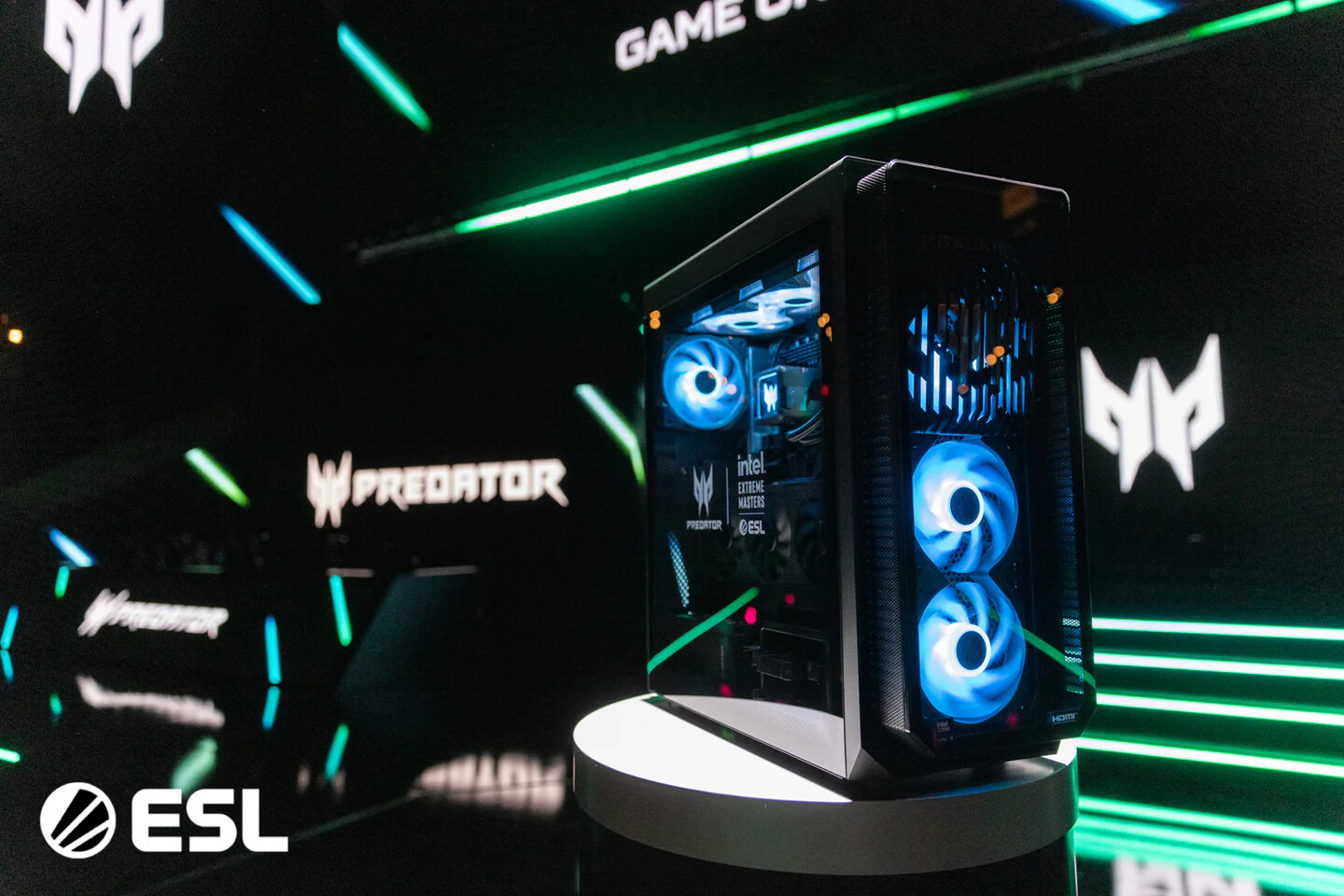
Acer's Predator Orion 7000 Named The Official 2025 Tournament PC of Intel Extreme Masters

ESL FACEIT Group (EFG), the leading esports and video game entertainment company, in partnership with Acer and Intel, is proud to announce that the Predator Orion 7000 has been named the Official 2025 Tournament PC of Intel Extreme Masters (IEM). Debuting at IEM Cologne 2025, this marks the first time in IEM history that fans can now play on and purchase the hardware used by the world's top Counter-Strike professionals.

The Predator Orion 7000 is built for elite gaming performance, powered by an Intel Core Ultra 9 285K processor, up to an NVIDIA GeForce RTX 5090 GPU, and support for up to 128 GB of DDR5 memory. Its advanced Predator CycloneX 360 cooling system ensures optimal thermal performance, while transparent tempered glass side panels showcase its cutting-edge internals. Designed for 4K gaming, streaming, and competitive play, the Predator Orion 7000 delivers the speed, thermal efficiency, and visual edge trusted by the best esports athletes.

NVIDIA DLSS 4 Comes To Clair Obscur: Expedition 33, Dead Take and Rune Factory: Guardians of Azuma

More than 800 games and applications feature RTX technologies, and each week new games integrating NVIDIA DLSS, NVIDIA Reflex, and advanced ray-traced effects are released or announced, delivering the definitive PC experience for GeForce RTX players. Last week, DLSS 4 with Multi Frame Generation was available at launch in Killing Floor 3 and WUCHANG: Fallen Feathers, and was added to The First Descendant Season 3 demo. This week, DLSS 4 with Multi Frame Generation comes to Clair Obscur: Expedition 33, Dead Take, and Rune Factory: Guardians of Azuma. And 7 Days to Die now features support for DLSS Super Resolution. Plus, you can check out our new EA SPORTS F1 25 video captured with immersive path-traced effects enabled and maxed out, and with performance accelerated by DLSS 4 with Multi Frame Generation. Read on for all the details.

Clair Obscur: Expedition 33 Adds DLSS 4 With Multi Frame Generation
Once a year, the Paintress wakes to paint a cursed number upon her monolith and everyone of that age instantly turns to smoke and fades away. Year by year, that number ticks down. Tomorrow, she'll wake and paint "33." Join Gustave, and his fellow Expeditioners as they embark on a desperate quest to break the Paintress' cycle of death once and for all in Sandfall Interactive and Kepler Interactive's Clair Obscur: Expedition 33. Retracing the steps of dozens of failed Expeditions before them, players will overcome powerful enemies and fight to save the future of their world. Set in a dreamlike world, the story unfolds as fantasy and art converge, backed by an enchanting soundtrack to create a breathtaking story unlike any other.

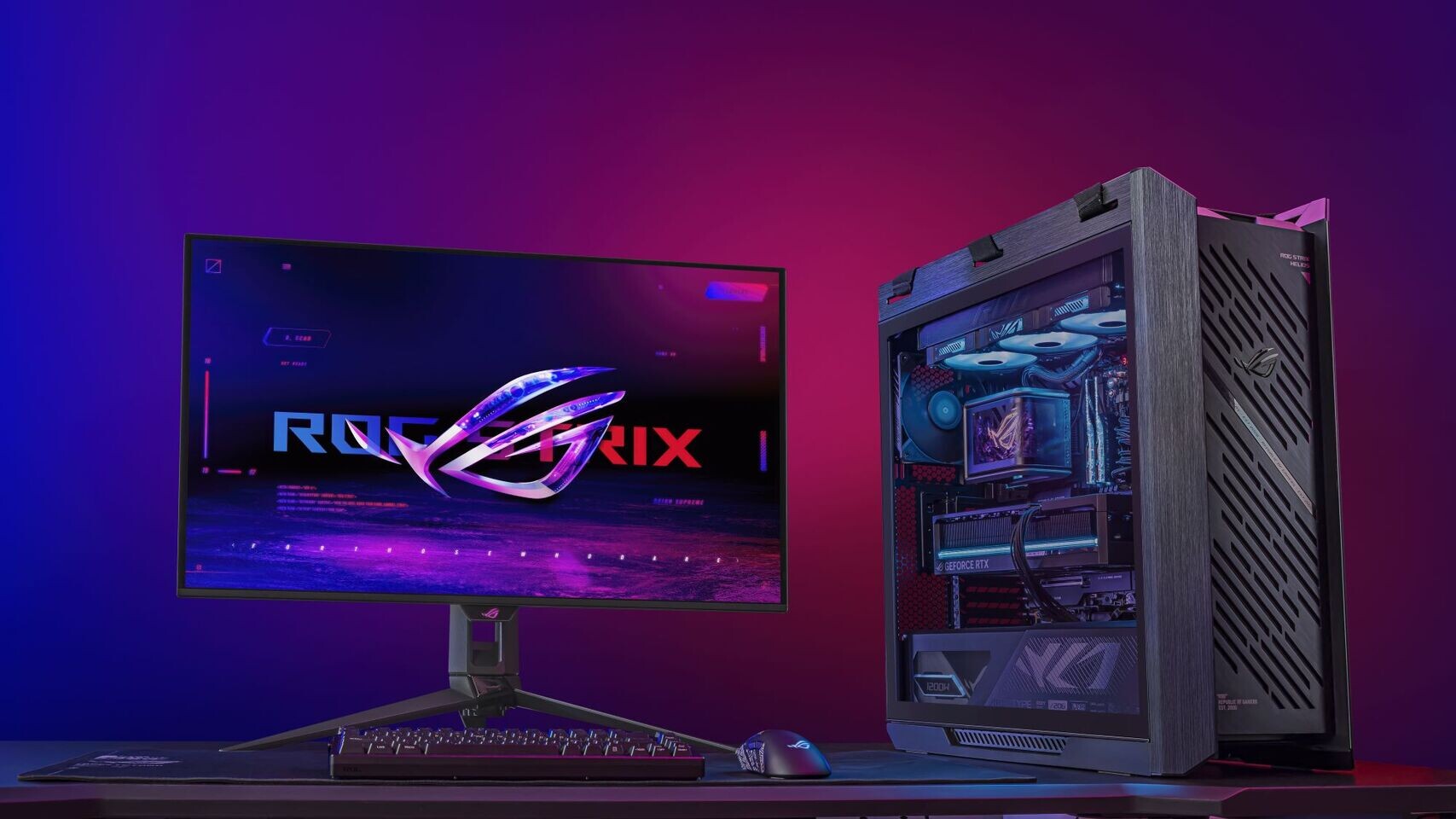
ASUS Republic of Gamers Announces ROG Strix Helios II Chassis

ASUS Republic of Gamers (ROG) today announced the ROG Strix Helios II, a mid-tower gaming PC case with premium luster and efficient cooling in a design that offers plenty of elbow room for the building process. The chassis features aluminium exterior elements, an optimized internal layout, and incredible thermal efficiency to ensure readiness for heavyweight gaming.

The Helios II is packed with connectivity and DIY-friendly features. Users get enough front ports to connect all their peripherals and can even top up their mobile devices with the front panel's 60-watt USB-C fast charging. Effortless assembly is enabled thanks to the Helios II's spacious design, wealth of tool-free installation features, and cable management optimizations. Combine these perks with this case's aesthetics and cooling capabilities, and users will find the ROG Strix Helios II is in a class all its own.

NVIDIA to End GeForce Regular Driver Support for Maxwell, Volta, and Pascal GPUs in Q4

NVIDIA is planning to retire regular driver updates for its older, pre-RTX GPU generations after October 2025, the company announced. These include the GeForce GTX 900 series based on the "Maxwell" graphics architecture, the sole gaming graphics card powered by "Volta," the GeForce TITAN V, and the GeForce GTX 10-series based on the "Pascal" graphics architecture. The company will continue regular Game Ready driver updates for GTX 16-series "Turing" besides all RTX 20-series, 30-series, 40-series, and 50-series GPUs.

With Microsoft stopping support for Windows 10, except for those on an extended support program, NVIDIA has decided to release drivers compatible with Windows 10 only till October 2026, following which the regular driver only cover Windows 11 and the future Windows 12 expected to release later this year. It is commendable that NVIDIA decided to support its pre-RTX architectures for this long, considering that the GTX 900-series debuted 11 years ago, the TITAN V 8 years ago, and the GTX 10-series 9 years ago.

Support Plan detailed in the 580.88 WHQL driver patch notes:
"After a final Game Ready Driver release in October 2025, GeForce GPUs based on Maxwell, Pascal, and Volta architectures will transition to receiving quarterly security updates for the next three years (through October 2028). Our support lifetime for these GPUs reaches up to 11 years, well beyond industry norms.
Also, we're extending Windows 10 Game Ready Driver support for all GeForce RTX GPUs to October 2026, a year beyond the operating system's end-of-life, to ensure users continue to receive the latest day-0 optimizations for new games and apps."

Mafia: The Old Country PC System Requirements and Features Detailed

2K Games and Hangar 13 have detailed the full PC features and graphics settings, as well as official system requirements for the upcoming Mafia: The Old Country game that will launch on August 8th. It is interesting to see that the game will support AMD's FSR 4, NVIDIA's DLSS 4, and Intel's XeSS 2 with Frame Generation FSR, DLSS, and XeSS on supported hardware, but there is no ray tracing. It will also support Unreal Temporal Super Resolution (TSR), have uncapped frame rate during gameplay, ultrawide monitor and HDR support.

The list includes minimum, recommended and epic preset requirements, and all are using Unreal TSR set to either Balanced or Quality mode. The minimum requirements target 1080p resolution with graphics settings set at Medium and Unreal TSR set at Balanced. You will need at least an AMD Ryzen 7 2700X or Intel Core i7-9700K CPU, 16 GB of RAM, and either an AMD Radeon RX 5700 XT or NVIDIA RTX 2070 graphics card. The recommended requirements target 1440p resolution with graphics quality preset set to High and Unreal TSR set to Quality. These settings require an AMD Ryzen 7 5800X or Intel Core i7-12700K CPU, 32 GB of RAM, and either an AMD Radeon RX 6950 XT or an NVIDIA RTX 3080 Ti graphics card.

NVIDIA Releases GeForce 580.88 WHQL Game Ready Drivers

NVIDIA has released the newest version of its GeForce graphics driver, the GeForce 580.88 WHQL, which comes with Game Ready optimizations for Mafia: The Old Country, which includes DLSS 4 with Multi Frame Generation, DLSS Frame Generation, DLSS Super Resolution, and NVIDIA Reflex support. The new driver also adds DLSS 4 with Multi Frame Generation support for Clair Obscur: Expedition 33 and Microsoft Flight Simulator 2024. NVIDIA also added support for 62 new G-SYNC Compatible gaming displays. The new driver also fixes some gaming and general bugs.

According to the release notes, the NVIDIA GeForce 580.88 WHQL driver fixes issues in Marvel's Spider-Man Remastered, World of Warcraft, Starcraft Remastered and several other games, including issues with Battlefield 2042, which experienced random squares and flickering artifacts and micro-stutter issues when VSYNC is enabled in Cyberpunk 2077. It also fixes issues in Blender and Cloudflare WARP, issues with GPU video memory after enabling NVIDIA Smooth Motion, and an issue where the GPU scaling option is missing from NVIDIA Control Panel/NVIDIA App when a DSC monitor is connected. The driver also fixes flickering issues during window resize with the Samsung 57-inch Odyssey Neo G9 and blank screen issues in DisplayPort 2.1 mode with HDR on the LGE 27GX790A-B. NVIDIA also announced it will continue supporting Maxwell, Pascal, and Volta GPUs with Game Ready drivers until October 2025, after which these will get quarterly security updates for the next three years. NVIDIA is also extending Windows 10 Game Ready Driver support for all GeForce RTX GPUs to October 2026

DOWNLOAD: NVIDIA GeForce 580.88 WHQL

Dozen New Games Coming to NVIDIA GeForce NOW in August

August brings new levels of gaming excitement on GeForce NOW, with 2,300 titles now available to stream in the cloud. Grab a controller and get ready for epic adventures - a dozen new games are coming to the cloud this month. Each week brings fresh titles for members to discover, stream and conquer. Get ready to shrink down for big fun - early access for Grounded 2, announced as a surprise in June at XBOX Games Showcase, will be available to stream on day one: tomorrow, Aug. 1. Plus, finish off July with the eight games available to stream this week, alongside the latest update for the acclaimed open-world action role-playing game Genshin Impact.

The Park Is Calling
Step into the wild, unpredictable world of Brookhollow Park - Grounded 2 is launching in early access in the cloud, and the backyard has never felt bigger or more alive. Shrink to the size of an ant, navigate towering blades of grass, uncover hidden secrets and face off against bugs that can be friend or foe. Craft weapons and armor from scavenged materials, build creative bases and raise Buggie companions to help explore and survive. Whether playing solo or with friends, every day brings new challenges and surprises. Grounded 2's quirky humor and inventive gameplay make every moment an adventure, from dodging predators to racing Buggies through underground tunnels.

Nscale, Aker and OpenAI to establish Stargate Norway: a 100,000 NVIDIA GPU AI Gigafactory

Nscale Global Holdings Ltd. ("Nscale"), Aker ASA ("Aker") and OpenAI today announced the launch of Stargate Norway: an advanced AI infrastructure project in Narvik, Northern Norway. Powered entirely by renewable energy, the facility will target to deliver 100,000 NVIDIA GPUs by the end of 2026, with ambitions to scale significantly in the years ahead. Stargate Norway will be designed to provide secure, scalable, and energy-efficient infrastructure for sovereign AI workloads across Europe, fully aligned with European regulatory frameworks. The initiative is led by global AI infrastructure provider Nscale, in partnership with Aker and OpenAI.

Stargate Norway is planned to deliver 230MW of capacity, with ambitions to expand by an additional 290MW - positioning it among the most significant AI infrastructure investments in Europe. The project marks OpenAI's first data centre initiative on the continent and the inaugural European site under its 'OpenAI for Countries' program.

Clair Obscur: Expedition 33 Patch 1.4.0 Brings Frame Generation and Low Latency Mode Support for DLSS and XeSS

Sandfall Interactive has released the newest Clair Obscur: Expedition 33 Patch 1.4.0, adding Frame Generation and Low Latency Mode support for both DLSS and XeSS, as well as bringing some requested quality-of-life (QoL) additions like the Battle Retry Prompt. While the support for DLSS Frame Generation was already available for Clair Obscur: Expedition 33 via a mod (behind Patreon), it is great that Sandfall Interactive has now added the official support. In addition, the new 1.4.0 update also fixes some general bugs, improves visuals, and brings some requested QoL updates.

According to the release notes, the biggest update is the Frame Generation and Low Latency Mode support for both DLSS and XeSS (on compatible GPUs), which promises smoother gameplay and lower input lag. In addition, Sandfall Interactive also added the Batter Retry Prompt, which is a new pop-up window that appears after defeat and gives you an option to quickly retry the battle. Apparently, this was one of the most requested additions. Other QoL improvements include Lumina cost display, autoplay dialogue, and separate volume sliders for different phases in the game.
Return to Keyword Browsing
Nov 27th, 2026 19:31 CST change timezone

New Forum Posts

Popular Reviews

TPU on YouTube

Controversial News Posts