
News Posts matching #NVIDIA

Return to Keyword Browsing

Intel Arc GPUs Remain in Development, NVIDIA RTX iGPUs Are Complementary

When the announcement of NVIDIA-Intel collaboration hit, it hinted at the future of NVIDIA RTX GPUs integrated inside Intel SoCs. That left us wondering if Intel's own Arc lineup of GPUs—already planned up to Xe4 "Druid"—will continue to be used, or if they will be completely scrapped in favor of the RTX GPUs. According to PC World, an Intel spokesperson confirmed, "We're not discussing specific roadmaps at this time, but the collaboration is complementary to Intel's roadmap and Intel will continue to have GPU product offerings." However, this is very vague and non-specific. If using NVIDIA RTX iGPU in Intel SoC, that will leave only discrete Intel Arc designs to be sold independently. Additionally, maintaining a GPU driver and general support stack is an extremely resource-demanding thing. Intel's active company restructuring could ultimately decide the fate of the Arc graphics division.

As a reminder, Intel currently ships Arc "Battlemage" GPU generation, with the higher-end Arc B770 reportedly planned for the holiday season. The company plans to use a part of its Xe3 "Celestial" for graphics rendering and Xe4 "Druid" for media and display duties in its upcoming "Nova Lake" SoCs scheduled for 2026. We are yet to see when, or if, the Xe3 "Celestial" will make it into the hands of consumers, in any form besides "Nova Lake." For discrete GPUs, maybe that can be the appearance of Arc "Celestial" dGPUs in 2026, but that is all a huge question mark.
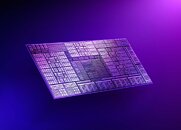

NVIDIA-Intel Collaboration Evaluates Intel 18A and 14A Nodes, Both Remain TSMC Customers

Yesterday, NVIDIA's $5 billion investment in Intel and joint partnership to develop customized x86 processors made waves, as the biggest semiconductor names are teaming up to create the ultimate high-performance products for every segment. However, we were left wondering how the manufacturing side of things will work out, especially since Intel operates its own fabs and manufactures a great chunk of its products in-house. Intel also uses TSMC for some of its production. On the other hand, NVIDIA uses TSMC exclusively for its contract manufacturing services. That will continue to be the case with the new NVIDIA-Intel venture. During the press conference, Jensen Huang stated, "NVIDIA and Intel are both successful customers of TSMC. They are a world-class foundry and support customers of diverse needs. You can't overstate the magic that is TSMC. But today, our partnership is 100% focused on the custom CPUs we are building for data centers that can connect to the NVIDIA AI ecosystem."

Intel's CEO Lip-Bu Tan also reiterated the message: "We both still have a lot of respect for TSMC, and we will continue to work with them." Additionally, the Intel CEO mentioned its own 18A and 14A nodes, stating, "We will still work on 14A and 18A and see if that can be used at some point in the future." Rumors from early August seem to be correct, as NVIDIA was indeed evaluating the 14A node for trial production. While trial production differs from high-volume production as a customer, the approach to Intel 14A involves collaboration with customers. Hence, NVIDIA is likely conducting early testing and providing feedback to Intel engineers, who can then enhance the node before volume production. This doesn't affect any NVIDIA product roadmap for datacenters, which are firmly committed to TSMC nodes for the next year or two. However, it might make an impact in the coming quarters on consumer products or components, such as networking ASICs.

Microsoft Unveils World's Biggest AI Datacenter, Housing Hundreds of Thousands of GPUs

Microsoft announced today that it will bring Fairwater, a purpose-built AI datacenter in Mount Pleasant, Wisconsin, online in early 2026. The new site is designed as the most powerful datacenter on the planet, serving as a hub for next-generation model training and inference. The campus covers 315 acres with roughly 1.2 million square feet across three buildings and will house hundreds of thousands of NVIDIA GB200 and GB300 GPUs linked by fiber, which can reportedly circle the globe 4.5 times. While we don't have information on the exact GPU count, Microsoft claims the installation will deliver about 10x the performance of today's fastest supercomputers for frontier AI workloads. With the fastest already deployed cluster being xAI's Colossus 1, this means that this system could have over half a million "Blackwell" and "Blackwell Ultra" GPUs.

Over 90% of compute capacity will use a closed-loop liquid cooling system that is filled during construction and continuously recirculated, backed by what the company describes as the planet's second-largest water-cooled chiller plant. Around 10% of servers will rely on outside air and switch to water cooling only on the hottest days. Storage and I/O are scaled for exabyte-class datasets, and the buildout involved 46.6 miles of deep foundation piles, 26.5 million pounds of structural steel, 120 miles of medium-voltage underground cable, 72.6 miles of mechanical piping, and an external cooling array that includes 172 20-foot fans.

NVIDIA's $5B Intel Investment Reveals x86-GPU NVLink Project

NVIDIA's surprise $5 billion investment in Intel today came with an unexpected revelation - the two companies have been quietly working together for almost a year on fusing x86 CPUs with RTX and data center GPUs through NVLink. The result? Actual system-on-chip designs that could finally break the PCIe bottleneck that's been holding back AI servers. NVIDIA will handle the heavy lifting on design and manufacturing of these hybrid chips, integrating NVIDIA's NVLink directly into Intel's x86 silicon. It's basically the same approach NVIDIA already uses with their Vera processors (Arm + Blackwell GPUs), except now they're doing it with Intel's x86 cores instead of custom Arm designs. Anyone who's worked with current GPU servers knows the pain points. PCIe connections between CPUs and GPUs create bandwidth choke points, add latency, and make memory management a nightmare for AI workloads. These new chips bypass all that with direct GPU-CPU communication and shared memory pools.

The target market isn't just data centers either. Intel mentioned both server and client applications, which suggests we might see this tech trickle down to gaming laptops and workstations eventually. For now though, the focus is clearly on machine learning clusters and HPC installations where PCIe bandwidth is already maxed out. AMD won't be thrilled about this development. They've been pushing their own CPU-GPU integration story, but this Intel-NVIDIA combo could leapfrog their efforts entirely. The manufacturing question remains murky though. When pressed about using Intel's fabs for production, Intel CEO Lip-Bu Tan gave a diplomatic non-answer about "perfecting the process" first. Reading between the lines, TSMC will probably keep making the actual chips for both companies, at least initially. Jensen said that basically for the start, NVIDIA will buy a CPU chip then sell a unified CPU plus GPU chiplet.

NVIDIA GeForce NOW Gets Dying Light: The Beast, Assassin's Creed Shadows Expansion, and 10 More Games

GeForce NOW is packing a monstrous punch this week. Dying Light: The Beast, the latest adrenaline-fueled chapter in Techland's parkour-meets-survival-horror saga, is clawing its way into the cloud - ready for members to stream instantly. That's just the start. Head back to class with SEGA's wacky management simulation games Two Point Campus and Two Point Museum, then slip into the shadows for the new "Claws of Awaji" expansion in Ubisoft's Assassin's Creed Shadows. It's all part of 11 new games joining the GeForce NOW library.

Also this week, Dying Light: The Beast joins the lineup of GeForce RTX 5080-ready titles, alongside Kingdom Come: Deliverance II and Monster Hunter Wilds, which are already available on the service. Look for the "GeForce RTX 5080 Ready" row in the app or check out the full list. Japan is the latest region to get GeForce RTX 5080-class power. Stay tuned to GFN Thursday for updates as more regions upgrade to Blackwell RTX. Those who want to follow along can track progress on the server rollout page for the latest. And don't miss out on getting Borderlands 4 for free with the purchase of a new 12-month Ultimate membership.

Dying Light: The Beast Launches Today With DLSS 4 Multi Frame Generation, Ray Tracing & NVIDIA Reflex

More than 800 games and applications feature RTX technologies, and each week new games integrating NVIDIA DLSS, NVIDIA Reflex, and advanced ray-traced effects are released or announced, delivering the definitive PC experience for GeForce RTX players. Last week, DLSS 4 with Multi Frame Generation multiplied frame rates in Borderlands 4.

Later today, Dying Light: The Beast becomes the latest much-anticipated title to launch with support for DLSS 4 with Multi Frame Generation, multiplying performance by up to 8X. DLSS 4 with Multi Frame Generation is also available in Farming Simulator 25, and the Mistfall Hunter Closed Beta. And, Jump Space launches this week with DLSS Super Resolution, while Gears of War: Reloaded is available now, also with DLSS Super Resolution support.

NVIDIA Buys $5B Worth of Intel, RTX iGPUs Coming to x86, Shares up 25%

NVIDIA and Intel today announced one of the largest industry collaborations in recent years, jointly developing multiple generations of consumer PC and data center products, utilizing the best design teams from both companies. According to the latest announcement, NVIDIA is investing $5 billion at $23.28 per share, making NVIDIA one of Intel's largest shareholders, with a 4.9% stake in the total company. The goal of this collaboration is split into two verticals. One—and perhaps the most interesting one—is the integration of NVIDIA RTX GPUs inside Intel x86 System-on-Chips (SoCs), which Intel's own Arc GPUs previously powered. Intel once even considered tapping AMD with its "Kaby Lake G" design, which never progressed beyond generation one. Now, NVIDIA's RTX GPUs will become the standard for integrated graphics, powering millions of laptops, handheld devices, and possibly even desktop processors.

The second pillar of this collaboration is the development of custom x86 CPUs for NVIDIA, which will be integrated into NVIDIA's AI infrastructure platforms. Spanning multiple verticals such as DGX workstations, HGX servers, and NVIDIA SuperPODs. NVIDIA currently uses a mix of its self-developed Arm-based Grace/Vera CPUs, as well as x86 CPUs in some HGX systems. For now, this has served NVIDIA well, and its data center roadmap indicates that NVIDIA will continue to ship these custom CPUs through its product family. However, with custom x86 CPUs fine-tuned for NVIDIA, Intel will gain significant share in the AI training and inference infrastructure, where NVIDIA previously completely bypassed both x86 vendors with custom Arm designs. For example, Intel's designs, such as Clearwater Forest Xeons, are coming soon with up to 288 "Darkmont" E-cores on a massive chiplet package using the 18A node. This should be a perfect companion for NVIDIA's accelerators, and we could even see some customized versions that offer lower core counts but higher frequencies, all within NVIDIA's SuperPODs with hundreds of GPUs.

ASUS Gaming Laptops from 2021-2024 Have Buggy BIOS Causing Stuttering: Report

According to the latest research published on GitHub by Zephkek, a cybersecurity enthusiast with experience in low-level programming, ASUS ROG gaming laptops have been riddled with buggy BIOS firmware, causing system hiccups. These hiccups occur in the form of stuttering when watching YouTube, pops on Discord calls, the mouse briefly freezing, and other annoying occurrences. According to this investigation, the issue is not any pre-installed "bloat," old drivers, or the operating system itself. The problem actually lies deeply embedded in ASUS BIOS design, where the system-level operations and component management occur.

To find out what happened, the researcher used the LatencyMon tool, which measures CPU interrupt latency. CPU interrupt latency is an important metric as it tells the CPU to stop its current program execution pipeline and move on to another, higher-priority task. On ASUS ROG laptops, like the Zephyrus M16, the first core in the CPU, which is first accessible by the application, is spending over 90 seconds processing interrupts. In that time that specific CPU core is blocked from doing any other work, which leads to stutter, when some time-sensitive workload is running on that core. Behind all of this is the ACPI.sys implementation of the Advanced Configuration and Power Interface (ACPI) standard, acting as the bridge between firmware and the OS to manage power functions (sleep, hibernate, battery, and thermal reporting) and to assist with Plug-and-Play device discovery and resource configuration. This ACPI.sys interprets ACPI Machine Language (AML), which is a code provided by every BIOS maker, including ASUS in this instance.

China Blocks Tech Firms from Buying NVIDIA AI Accelerators

China has reportedly banned its domestic technology firms from purchasing NVIDIA AI accelerators to promote the adoption of domestic AI accelerators. According to sources close to the Financial Times, the Cyberspace Administration of China (CAC) instructed several technology giants, including Alibaba, Baidu, and Tencent, to stop their independent evaluation and procurement of NVIDIA's export-modified AI accelerators. This includes chips like the RTX PRO 6000D, a variant of the RTX PRO 6000 designed for the Chinese market. There is no mention of the modified "Blackwell Ultra" single-die B30A accelerators, which were intended as a China-specific alternative to the GB300, offering half the compute power.

This directive from Beijing indicates that, despite Chinese tech giants' interest in NVIDIA-supplied AI accelerators due to their superior software and computing capabilities, regulators aim to promote domestic AI accelerators from companies like Huawei and Cambricon. These domestic chips are built on older technology nodes, primarily because of China's limited access to cutting-edge manufacturing and the absence of modern EUV tools for its domestic fabs. An insider told the Financial Times that "the top-level consensus now is there's going to be enough domestic supply to meet demand without having to buy NVIDIA chips." This suggests that the current ambitions of Chinese AI labs could be fully met with domestic chips. However, training and running frontier-level models on non-NVIDIA hardware remains a persistent challenge.

NVIDIA to Tap TSMC's A16 Node for "Feynman" GPUs

NVIDIA is preparing a significant change in its chip strategy for its next-generation GPU design, codenamed "Feynman", as the first customer of TSMC's A16 process. This choice breaks NVIDIA's long-running pattern of adopting slightly older nodes to extract greater efficiency and performance gains for its datacenter accelerators. NVIDIA's biggest AI dies are enormous, at 104 billion transistors currently per each "Blackwell Ultra" die and occupying areas that are breaking reticle limits. Such a scale typically favors one or two generations old nodes to protect yield and thermal characteristics. To keep up with the compute demand, NVIDIA appears to be adapting its architectures to A16 while keeping other families like "Rubin" on refined N3P variants and paired with CoWoS-L packaging.

The most appealing aspect of the A16 node will be its backside power delivery, which separates power and signal routing to reduce losses and simplify floor planning. Implementations range from buried power rails that still use a front-side lowest metal layer to power vias that reach the rear side. TSMC's Super Power Rail concept enables power to be delivered directly to the transistor's source and drain terminals, resulting in lower resistance. Those choices affect efficiency, layout, and thermal behavior. Power demands for high-end AI accelerators are rising fast. Current flagship solutions already draw about 1,400 W in Blackwell Ultra, and next-generation Rubin designs are expected to exceed 2,300 W. Hence, node selection will be critical for the next-generation Feynman design, given its multi-gigawatt power requirement. If A16 reaches volume production on schedule, first silicon could arrive in late 2027 or early 2028.

ASUS Announces New ProArt P16 Laptop With Lumina Pro OLED Touchscreen and NVIDIA GeForce RTX 5090 Laptop GPU

ASUS today announced a new configuration of ProArt P16, its flagship Copilot+ PC for creators. Now featuring the ASUS Lumina Pro OLED touchscreen display - the best display in an ASUS laptop to date - ProArt P16 offers stunning color accuracy, visual clarity, seamless motion, and eye care for exceptional visuals. Combined with this best-in-class visual experience is a significant performance boost provided by the NVIDIA GeForce RTX 5090 Laptop GPU for demanding creative tasks - most notably the acceleration of 10-bit 4:2:2 video workflows. Additionally, Copilot+ PC capabilities along with NVIDIA RTX AI acceleration, and exclusive ASUS AI tools like StoryCube and MuseTree empower creators to work smarter, faster, and more intuitively than ever.

Workstation-class Power
Driven by the latest AMD Ryzen AI 9 HX 370 processor, ProArt P16 makes light work of even the most demanding and resource-intensive professional tasks. Boasting up to 50 TOPS of NPU processing power, it accelerates AI-driven tasks, such as speech-to-text transcribing, auto sequence-framing, and scene-edit detection, so creators can focus on storytelling, not workflow. Meanwhile, 64 GB of lightning-fast LPDDR5X RAM and a 4 TB PCIe 4.0 upgradable SSD slash loading times, rapidly elevating projects to masterpieces, whenever and wherever.

NVIDIA Moves to SOCAMM2, Phases Out Initial SOCAMM Design

NVIDIA has reportedly discontinued its first-generation Small Outline Compression Attached Memory Modules, known as SOCAMM. According to ET News, NVIDIA is shifting focus to the second-generation SOCAMM2 standard, which is being revamped for higher memory speeds, resulting in significantly improved bandwidth and performance. The first-generation SOCAMM was developed independently by NVIDIA, outside of any official memory consortium like JEDEC. It featured a detachable module design, offering superior specifications compared to existing solutions, with 694 I/O ports (compared to LPCAMM's 644 and traditional DRAM's 260), direct LPDDR5X memory substrate integration, and a more compact form factor.

NVIDIA aims for SOCAMM2 to become a faster, more widely adopted standard, potentially with JEDEC's assistance to standardize the format. SOCAMM2 is expected to maintain the same 649 I/O ports exposed to the motherboard but will integrate faster LPDDR5X running at 9600 MT/s, compared to the first-generation SOCAMM's 8533 MT/s. The new SOCAMM2 might also use LPDDR6 and source it from multiple suppliers. NVIDIA currently ships SOCAMM in its "Blackwell Ultra" GB300 NVL72 system, providing 18 TB of LPDDR5X memory at 14.3 TB/s bandwidth. An upgrade to SOCAMM2 could increase that to 16 TB/s bandwidth as a simple drop-in replacement, stemming from 9600 MT/s LPDDR5X. Additionally, NVIDIA may be diversifying its supplier strategy. The first-gen SOCAMM was supplied by Micron, but now Samsung and SK Hynix might join, although no specific details or timeline are available.

NVIDIA Pulls GeForce RTX 5090 and RTX 5080 Founders Edition from Its Marketplace

NVIDIA has quietly removed its GeForce RTX 5090 and RTX 5080 Founders Edition graphics cards from its online marketplace. This removal seems to affect all international online stores, including those in the US, Germany, the UK, and France. In the US, NVIDIA now only offers the Founders Edition version of the GeForce RTX 5070, which includes a Borderlands 4 game as a bonus. The Founders Edition versions of the RTX 5090 and RTX 5080 are absent, with AIB-designed versions taking their place. The situation is similar in the UK, while stores in France and Germany only list the RTX 5070 and RTX 5080 Founders Editions, with no RTX 5090 Founders Edition available.

One possible reason for this could be that NVIDIA is preparing a mid-cycle refresh with the RTX 50 SUPER series and wants to avoid excess inventory of non-SUPER models. However, this would mainly affect the RTX 5070 and RTX 5080, which are rumored to receive the SUPER upgrade. There is no clear explanation for the absence of the RTX 5090 Founders Edition from all global stores, especially given the high demand and record-breaking gaming revenues. An End-of-Life (EOL) scenario seems unlikely. We can only speculate about NVIDIA's reasons for this removal, but it might be an inventory adjustment, as NVIDIA could have distributed too many of these models to other retailers, leaving none for its own store. We will continue to monitor the marketplace for updates in the coming days.

Update 15:47 UTC: An NVIDIA spokesperson for Wccftech confirmed that "GeForce RTX 50 series Founders Editions continue to be in production. They are limited edition products so, from time to time, go out of stock on our website and return when back in stock." So there are no long-term reasons for potential buyers to worry about.

MSI Preparing RTX 5090 Extreme OC GPU with Triple-Channel Voltage Control

According to the developer behind MSI Afterburner, Alexey Nicolaychuk, MSI is testing an overclocking upgrade arriving in a new beta and aimed at setting up the stage for a new MSI RTX 50-series Extreme OC SKU. Called triple-channel voltage control, the feature adds memory and auxiliary (MSVDD) voltage adjustments alongside core voltage tuning, and it exposes direct PWM access with an extended ±100 mV window on compatible designs. MSI is working on new GPU engineering samples that expose the MP2988 and MP29816A PWM controllers, providing VRM telemetry, allowing the utility to adjust voltages and monitor VRM temperature. However, these capabilities rely on board firmware and hardware choices. NVIDIA's Founders Edition designs lock I2C access on reference cards, so the functionality will initially be limited to upcoming custom MSI Extreme OC cards, which will allow controller access.

Memory voltage control is the most significant change, as many workloads are memory-bound and benefit as much from GDDR tuning as from higher GPU clocks. With access to the memory rail, MSI's boards could support higher memory clocks and improved stability under aggressive timings, boosting bandwidth-sensitive benchmarks and some games. Core voltage is more flexible via direct PWM, yet GPU boost logic, thermals and silicon variance will still cap practical gains for most users. These Extreme OC designs require more robust VRMs and cooling, as well as improved power delivery. Extreme overclockers using custom cooling will likely extract the biggest wins, while mainstream users should be cautious of warranty and stability tradeoffs when experimenting. The beta is expected before the cards reach retail, but it will give us an idea of what the GDDR7 memory and other "Blackwell" characteristics are capable of.

Schenker Unveils XMG APEX 16 MAX Gaming Notebook

The XMG APEX 16 MAX is a price-performance-focused 16-inch entry in the upper performance class of the XMG portfolio. The base configuration with GeForce RTX 5070 Ti is available for under €2,000. Positioned as the AMD-based counterpart to the equally affordable XMG PRO 16 Value Edition with Intel CPUs, the laptop is equipped with either a Ryzen 9 8940HX or 9955HX. Key features include 1600p displays with a 300 Hz refresh rate and full DCI-P3 color space coverage, available as either a 500-nit IPS panel or a 1,000-nit Mini LED option. In addition to the extensive connectivity options typical of XMG, the freely configurable laptop supports up to 96 GB of RAM and up to 16 TB of SSD storage.

With the NVIDIA GeForce RTX 5070 Ti with 12 GB of GDDR7 VRAM, the XMG APEX 16 MAX (M25) integrates the most attractive of the three most capable graphics chips in terms of price-performance ratio, delivering ample power for gaming with high frame rates on the laptop's 1600p display. The GPU operates continuously at NVIDIA's specified maximum graphics performance of 140 watts, including 25 watts of Dynamic Boost.

NVIDIA GeForce RTX 4090 Gets a 48 GB Mod and Step-by-Step Tutorial

A Russian technician and modder known as VIK-on has posted a hands-on video showing how Chinese workshops are converting GeForce RTX 4090 gaming cards into AI-focused accelerators by doubling their memory. Using an MSI RTX 4090 Suprim as a donor, VIK-on removed the AD102 GPU package and the card's 12 2 GB GDDR6X chips, then placed those parts onto a custom clamshell PCB that accepts memory on both sides. The builders pair the board with a blower-style cooler, designed for multi-GPU racks, and load modified firmware so that the system recognizes the larger capacity. The method mixes factory-level board work with careful firmware changes and advanced soldering. You can purchase a brand-new custom PCB that includes clamshell memory support and has most passive components pre-installed. You can see it in the third picture below, the upper PCB is the newly bought one, the bottom one is the original. However, the GPU and memory must be reflowed or hand-soldered, which requires expensive tools and expertise.

Firmware mods, some of which trace back to techniques used for salvaging cards with faulty memory channels, are adapted to enable the GPU to accept the new layout. Shops often harvest GDDR6X chips from defective cards or purchase modules at a low cost, which reduces expenses, but the conversion process is still not trivial. Published price notes indicate that the clamshell kit costs roughly $140 in China, and the total cost of the parts for a DIY upgrade is near $430 before shipping.
Converting large numbers of consumer cards for AI reduces the supply for gamers, and stripped or modified boards can resurface on the second-hand market, surprising buyers. Additionally, modified cards may not meet reliability standards or all warranty rules. They can even malfunction under sustained workloads. Therefore, it is better to skip going after a customized GPU to save yourself the hassle of compatibility issues; however, the point that it can be done remains.

NVIDIA GeForce NOW RTX 5080 SuperPOD Rollout Begins, Three More Games

GeForce NOW Blackwell RTX 5080-class SuperPODs are now rolling out, unlocking a new level of ultra high-performance, cinematic cloud gaming. GeForce NOW Ultimate members will see GeForce RTX 5080 performance arriving to a server near them, enabling even richer experiences in blockbuster titles like DUNE: Awakening, Borderlands 4, Hell Is Us, Dying Light: The Beast, Cronos: The New Dawn, Clair Obscur: Expedition 33 and more. They all come with breathtaking graphics and lowest-latency gameplay, thanks to NVIDIA DLSS 4 technology and next-generation AI features. Experience the new Cinematic-Quality Streaming mode for stunning color and fidelity across the latest devices.

The new Install-to-Play feature is expanding the cloud library to nearly 4,500 games for Ultimate and Performance members. This week kicks it off with three new games, including the launch of Borderlands 4. GeForce NOW is the ultimate way to play the Borderlands franchise's latest entry - free with the purchase of a new 12-month Ultimate membership bundle. Make sure to follow along on GFN Thursdays for server updates.

NVIDIA GeForce RTX 50-Series SUPER GPUs Could Arrive at CES 2026

Widespread speculation surrounding the possible launch of the NVIDIA GeForce RTX 50 SUPER series has shifted, with industry sources confirming that the official timeline for the enhanced GPU variants has been moved by a few months. According to Hongxing2020 hardware leaker, known for his ties with GPU AIBs, he claims that the RTX 50 SUPER series has been delayed. Recent online reports have claimed Christmas as the release date; however, these may not be accurate. NVIDIA remains committed to its current RTX 50 Blackwell series for the following months, which continues to operate at full production capacity with no discontinuation plans in sight.

According to VideoCardz, a possible mid-cycle "Blackwell" refresh in the form of SUPER GPUs could hit at CES 2026, when the announcement is expected. NVIDIA plans to increase the memory sizes of key performance-segment and high-end graphics card SKUs to boost their performance in higher resolutions, particularly with ray tracing and neural rendering enabled. Specifically, the company plans to leverage new 24 Gbit density GDDR7 memory chips, which allow it to create memory sizes such as 18 GB over a 192-bit wide memory bus or 24 GB across a 256-bit wide memory bus. Besides the added memory, NVIDIA is expected to increase shader counts and GPU clock speeds marginally.

NVIDIA Releases GeForce 581.29 WHQL Game Ready Drivers

NVIDIA has released the GeForce 581.29 WHQL Game Ready drivers adding optimizations for Borderlands 4 (that will launch this week on September 12) and Dying Light: The Beast. The update also includes Studio Driver support for Microsoft TRELLIS NIM. The drivers fix a critical Marvel Rivals performance issue that affected users on previous 581.xx versions. This should restore expected frame rates and gameplay.

However, some known issues persist. Counter-Strike 2 may display slightly distorted text when running below native resolution, Adobe Premiere Pro users could experience system freezes during hardware-accelerated exports on certain configurations, and Like a Dragon: Infinite Wealth players might notice light flickering on some systems.

DOWNLOAD: NVIDIA GeForce 581.29 WHQL

Borderlands 4 Launches September 12th with DLSS 4 Multi Frame Generation & NVIDIA Reflex

More than 800 games and applications feature RTX technologies, and each week new games integrating NVIDIA DLSS, NVIDIA Reflex, and advanced ray-traced effects are released or announced, delivering the definitive PC experience for GeForce RTX players. Last week, DLSS 4 with Multi Frame Generation multiplied frame rates in Cronos: The New Dawn, Hell is Us, Indiana Jones and the Great Circle: The Order of Giants, and Microsoft Flight Simulator 2024.

This week, the highly anticipated Borderlands 4 launches with DLSS 4 with Multi Frame Generation support, giving GeForce RTX gamers the definitive experience. And the free to play MOBA, Predecessor, has added support for DLSS 4 with Multi Frame Generation.

NVIDIA Blackwell Ultra Sets the Bar in New MLPerf Inference Benchmark

Inference performance is critical, as it directly influences the economics of an AI factory. The higher the throughput of AI factory infrastructure, the more tokens it can produce at a high speed - increasing revenue, driving down total cost of ownership (TCO) and enhancing the system's overall productivity. Less than half a year since its debut at NVIDIA GTC, the NVIDIA GB300 NVL72 rack-scale system - powered by the NVIDIA Blackwell Ultra architecture - set records on the new reasoning inference benchmark in MLPerf Inference v5.1, delivering up to 1.4x more DeepSeek-R1 inference throughput compared with NVIDIA Blackwell-based GB200 NVL72 systems.

Blackwell Ultra builds on the success of the Blackwell architecture, with the Blackwell Ultra architecture featuring 1.5x more NVFP4 AI compute and 2x more attention-layer acceleration than Blackwell, as well as up to 288 GB of HBM3e memory per GPU. The NVIDIA platform also set performance records on all new data center benchmarks added to the MLPerf Inference v5.1 suite - including DeepSeek-R1, Llama 3.1 405B Interactive, Llama 3.1 8B and Whisper - while continuing to hold per-GPU records on every MLPerf data center benchmark.

NVIDIA Unveils "Rubin CPX" GPU: Single-Die, 30 PetaFLOPS, and 128 GB of GDDR7 Memory

During the AI Infra Summit, NVIDIA announced the "Rubin CPX" GPU, a specialized accelerator derived from the upcoming "Rubin" family, specifically made for massive-context AI models. The chip delivers 30 PetaFLOPS of NVFP4 compute performance on a monolithic die, accompanied by 128 GB of GDDR7 memory. The monolithic die configuration represents a departure from the dual-GPU packages characteristic of NVIDIA's current Blackwell and Blackwell Ultra architectures, as well as the design path that the rest of the Rubin family will follow. The Rubin CPX addresses computational bottlenecks in extended-context scenarios where AI models process millions of tokens simultaneously. This capability proves critical for applications including comprehensive software codebase analysis and hour-long video content processing, which can require up to one million tokens.

The processor integrates four NVENC and four NVDEC video encoders directly on-chip, enabling streamlined multimedia workflows without external processing dependencies. Performance metrics suggest that the Rubin CPX is delivering three times the attention processing speed of NVIDIA's current best GB300 Blackwell Ultra accelerator systems. The architecture employs a cost-optimized single-die approach, rather than multi-chip modules, which potentially reduces manufacturing complexity while maintaining computational density. Memory bandwidth specifications remain undisclosed, though a 512-bit interface could yield approximately 1.8 TB/s throughput when using 30 Gbps GDDR7 memory chips. NVIDIA plans integration of Rubin CPX processors within the Vera Rubin NVL144 CPX platform, which combines traditional Rubin GPUs with the specialized CPX variants. This hybrid configuration targets 8 ExaFLOPS of aggregate compute performance, with 1.7 PB/s of memory bandwidth, across a complete rack deployment. The "Kyber" rack will include ConnectX-9 network adapters capable of 1600G networking, Spectrum6 doing 102.4T switching, as well as co-packaged optics. NVIDIA plans this to arrive in late 2026, after the regular Rubin GPU launch in early 2026.

NVIDIA RTX Remix Update Introduces Advanced Path-Traced Particle System

Many classic PC games remain beloved for their unforgettable stories, characters, and gameplay. But as technology advances, their visuals struggle to keep up, making it harder for the original gamers who played them, or new generations, to appreciate their magic. NVIDIA RTX Remix, a modding platform for RTX AI PCs, was built to change that. By reimagining the graphics of these timeless classics with cutting-edge path tracing, we're allowing longtime fans to relive their favorite adventures in stunning detail, while introducing a new wave of players to the games that defined an era.

Today, we've released a new RTX Remix update through NVIDIA app, adding an advanced particle system that enables modders to enhance traditional fire and smoke effects, as well as more fantastical effects, like those in Portal. Check out our official documentation to see the full release notes.

AMD Claims Arm ISA Doesn't Offer Efficiency Advantage Over x86

During the IFA 2025 in Berlin, AMD hosted a media discussion, where one of the topics was the ongoing x86 vs. Arm debate. AMD has argued that x86 processors, both their own and Intel's SKUs, can offer competitively long battery life in the notebook form factor while maintaining the decades-old x86 software ecosystem. In a now-deleted article from ComputerBase, AMD claimed that the value of the overall package drives power efficiency and battery life, not the instruction set behind the CPU cores. As seen with designs like Intel's "Lunar Lake" and AMD's "Strix Point," x86 designs can deliver significant performance in a power-efficient package, including the GPU and even memory. Below is AMD's quote for ComputerBase, machine translated to English.
AMDSpeaking of efficiency, the topic of Arm vs. x86 came up here, as it does every year. AMD, almost like Intel recently, declared that the myth that x86 can't be efficient was refuted last year. Both AMD Ryzen and Intel Core can offer extremely long runtimes in notebooks, while accessing the entire x86 ecosystem. Ultimately, the overall package doesn't offer an advantage for Arm.

NVIDIA GeForce RTX 5090 Gets 128 GB VRAM Capacity Mod

NVIDIA's GeForce RTX 5090 GPU comes with 32 GB of GDDR7 memory by default. However, Chinese modders have experimented with equipping large memory capacities before, especially with the last-generation RTX 4090, which comes in at 96 GB of GDDR6X. This time, the current-generation top-end "Blackwell" consumer GPU, the RTX 5090, gets not double, not triple, but quadruple the memory capacity in the latest mod. According to @I_Leak_VN, the GPU has an astonishing 128 GB of GDDR7 memory and is priced at $13,200. That is over six times the MSRP, for a four times memory increase.

The big-picture question is what is done to the GPU to support this much memory. Currently, no GDDR7 memory modules are surpassing 24 Gbit, or about 3 GB per module, with the smaller capacity ones coming at 16 Gbit, or 2 GB per module. The largest configuration that a dual-sided, sandwiched approach to the PCB modding could support is 96 GB. That is exactly how NVIDIA's ProViz RTX PRO 6000 Blackwell GPU gets its 96 GB GDDR7 capacity. However, given that there are no 4 GB GDDR7 modules, we can only assume that some serious PCB modification was made to accommodate all the modules. Most likely, a PCB riser, tucked away somewhere, or any other interesting solution could be at play. You can take a look at NVIDIA-SMI output, which clearly shows the 128 GB capacity below.
Return to Keyword Browsing
Nov 27th, 2026 19:39 CST change timezone

New Forum Posts

Popular Reviews

TPU on YouTube

Controversial News Posts



