News Posts matching #NVMe

Return to Keyword Browsing

AMD X570 Puts Out Up To Twelve SATA 6G Ports and Sixteen PCIe Gen 4 Lanes

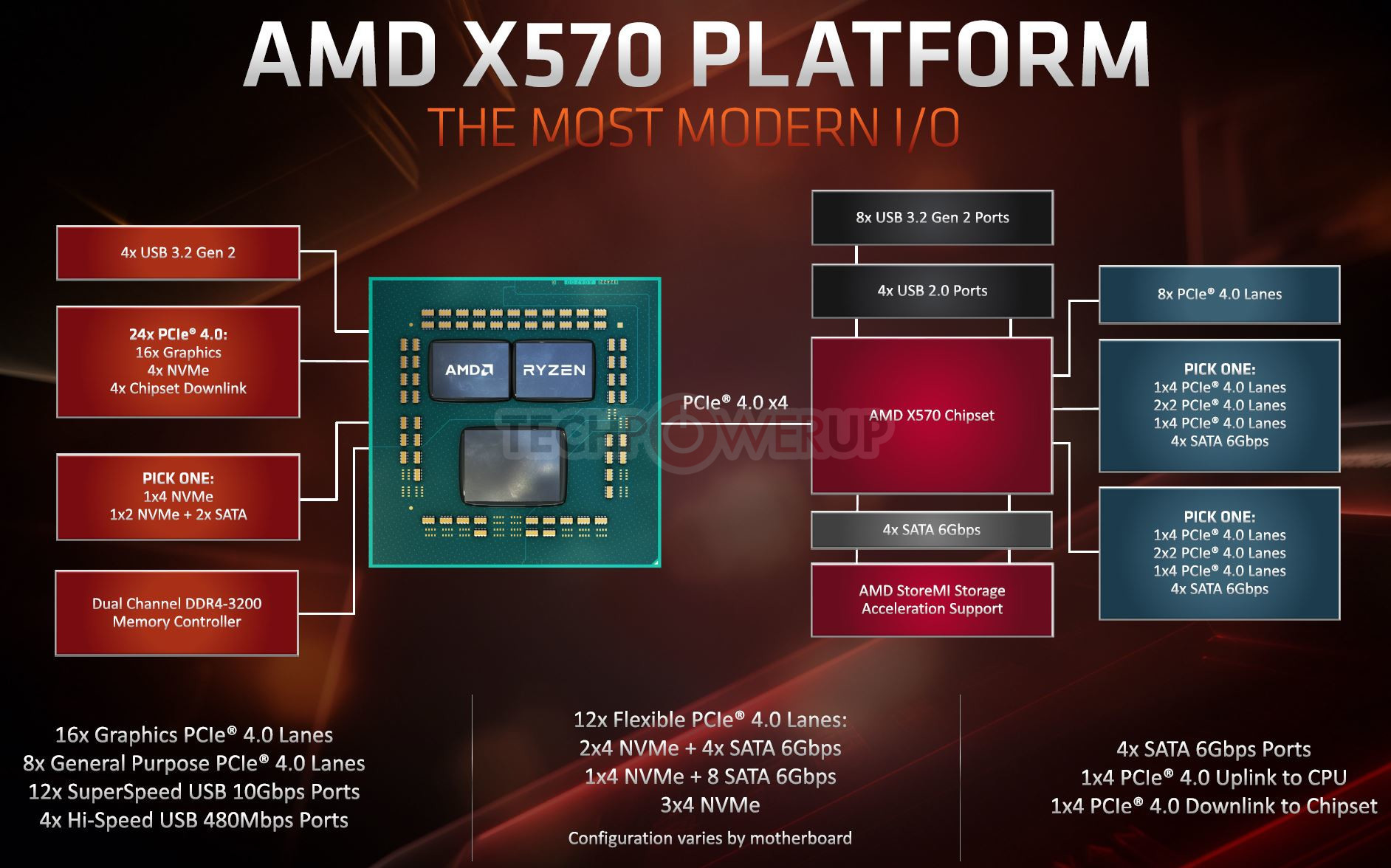
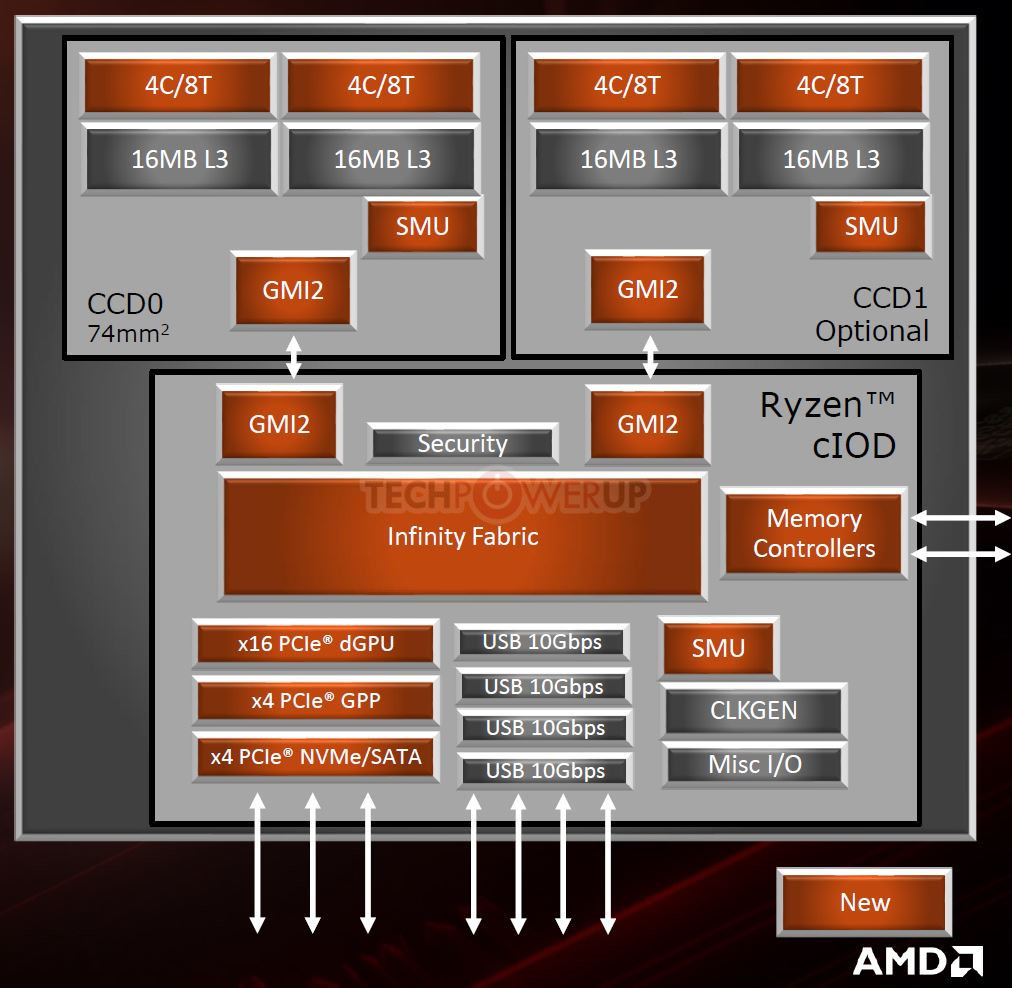
AMD X570 is the company's first in-house design desktop motherboard chipset for the AM4 platform. The company sourced earlier generations of chipset from ASMedia. A chipset in context of the AM4 platform only serves to expand I/O connectivity, since an AM4 processor is a full-fledged SoC, with an integrated southbridge that puts out SATA and USB ports directly from the CPU socket, in addition to LPCIO (ISA), HD audio bus, and SPI to interface with the firmware ROM chip. The X470 "Promontory Low Power" chipset runs really cool, with a maximum TDP of 5 Watts, and the ability to lower power to get its TDP down to 3W. The X570, on the other hand, has a TDP of "at least 15 Watts." A majority of the X570 motherboards we've seen at Computex 2019 had active fan-heatsinks over the chipset. We may now have a possible explanation for this - there are just too many things on the chipset.

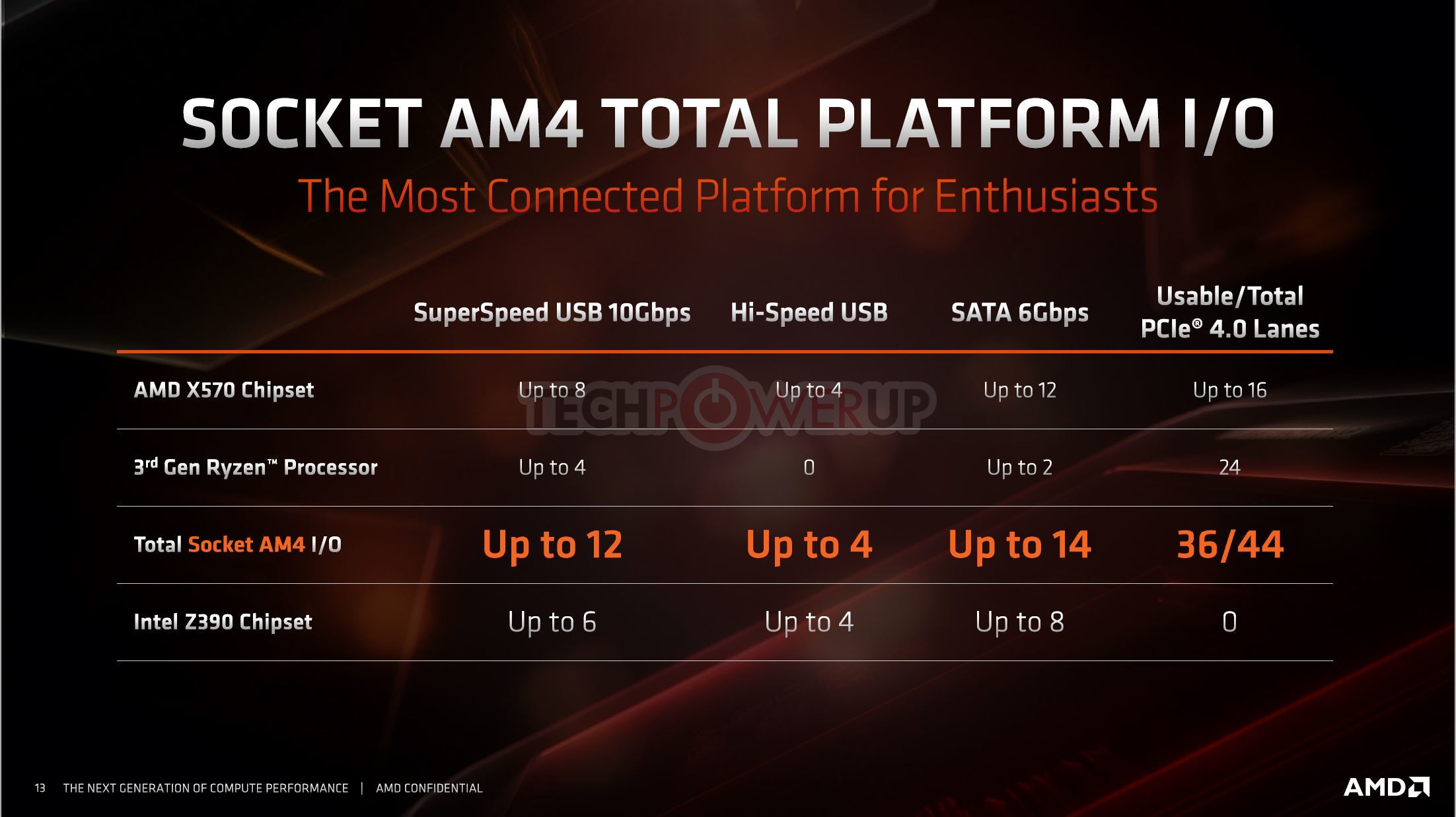
According to AMD, the X570 chipset by itself can be made to put out a staggering twelve SATA 6 Gbps ports (not counting the two ports put out by the AM4 SoC). A possible rationale behind this may have been to enable motherboard designers to equip every M.2 slot on the motherboard with SATA wiring in addition to PCIe, without needing switches that reroute SATA connection from one of the physical ports. It's also possible that AMD encouraged motherboard designers to not wire out SATA ports from the AM4 SoC as physical ports to save costs on switches, and dedicate one of them to the M.2 slot wired to the SoC. With the two SATA ports from the SoC out of the equation, and every other M.2 slot getting a direct SATA connection from the chipset, motherboard designers can wire out the remaining SATA ports as physical ports, without spending money on switches, or worrying about customer complaints on one of their drives not working due to automatic switching. This is an extreme solution to a rather simple problem.
Sony PlayStation 5 Promises 4K 120Hz Gaming

Sony has finalized the design and specification of its PlayStation 5 entertainment system. Unlike buzzwords Microsoft threw around like "8K capable" for its "Project Scarlett" console, Sony has a slightly different design goal: 4K UHD at 120 Hz, guaranteed. The most notable absentee at E3 2019, Sony is designing the PlayStation 5 to leverage the latest hardware to guarantee 120 frames per second on your 4K display. Much like "Project Scarlett," the SoC at the heart of the PlayStation 5 is a semi-custom chip co-designed by AMD and Sony.

This unnamed SoC reportedly features an 8-core/16-thread CPU based on AMD's latest "Zen 2" microarchitecture, which is a massive leap from the 8 low-power "Jaguar" cores pulling the PS4 Pro. The GPU will implement AMD's new RDNA architecture. The SoC will use GDDR6 memory, shared between the CPU and GPU. Much like "Project Scarlett," the PS5 will include an NVMe SSD as standard equipment, and the operating system will use a portion of it as virtual memory. There will also be dedicated hardware for 3D positional audio. Sony also confirmed full backwards compatibility with PS4 titles.

Xbox "Project Scarlett" to be 8K and Ray-tracing Ready, AMD-powered, Coming 2020

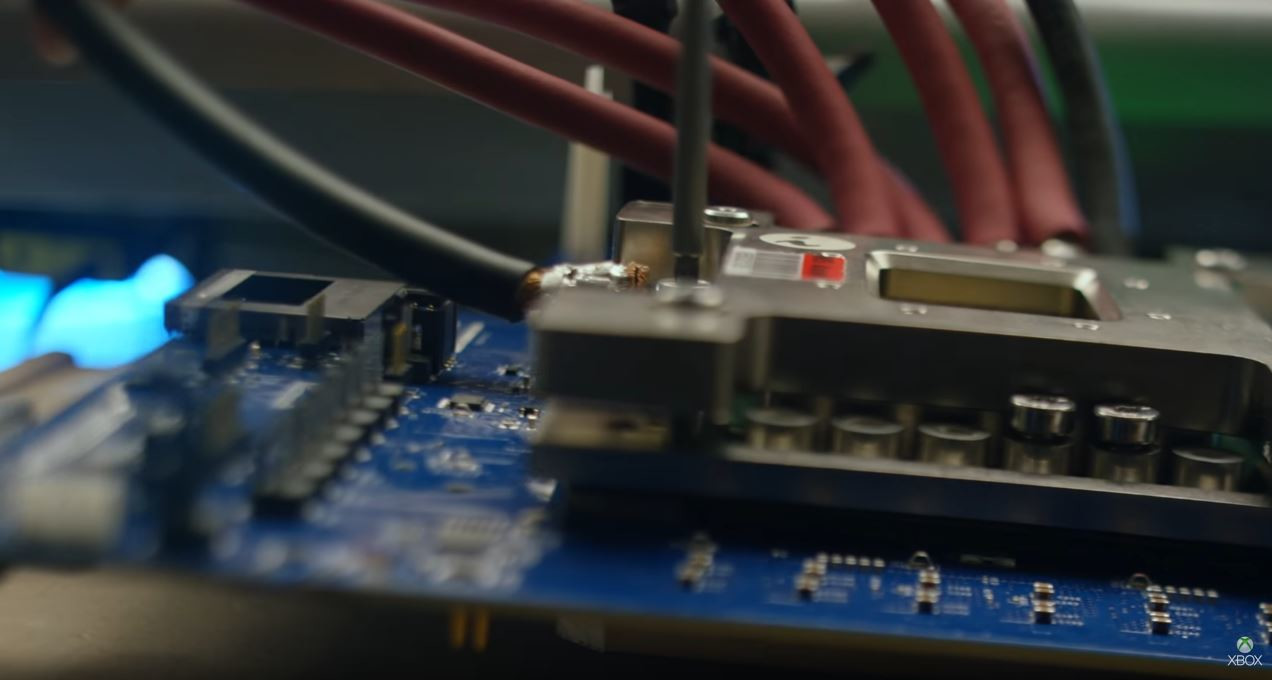
Microsoft at its E3 2019 keynote dropped a huge teaser of its next-generation gaming console development, codenamed "Project Scarlett." The console is expected to pack some serious hardware that powers gaming at 8K resolution (that's four times 4K, sixteen times Full HD). That's not all, it will also feature real-time ray-tracing. Microsoft's performance target for the console is to be 4 times higher than that of the Xbox One X. The company is also giving the console its first major storage sub-system performance update in years.

At its heart is a new 7 nm semi-custom SoC by AMD and a high degree of customization by Microsoft. This chip features CPU cores based on the "Zen 2" microarchitecture, which provide a massive leap in CPU performance over the current Scorpio Engine SoC that uses low-power "Jaguar Enhanced" cores. At the helm of graphics is a new iGPU based on the RDNA architecture that powers AMD's upcoming Radeon RX 5000 "Navi" graphics cards. It's interesting here to note that Microsoft talks about real-time ray-tracing while we're yet to see evidence of any specialized ray-tracing hardware on "Navi." In its teaser, however, Microsoft stressed on the ray-tracing feature being "hardware-accelerated."

ASUS Rolls Out the Hyper M.2 x16 V2 NVMe RAID Card

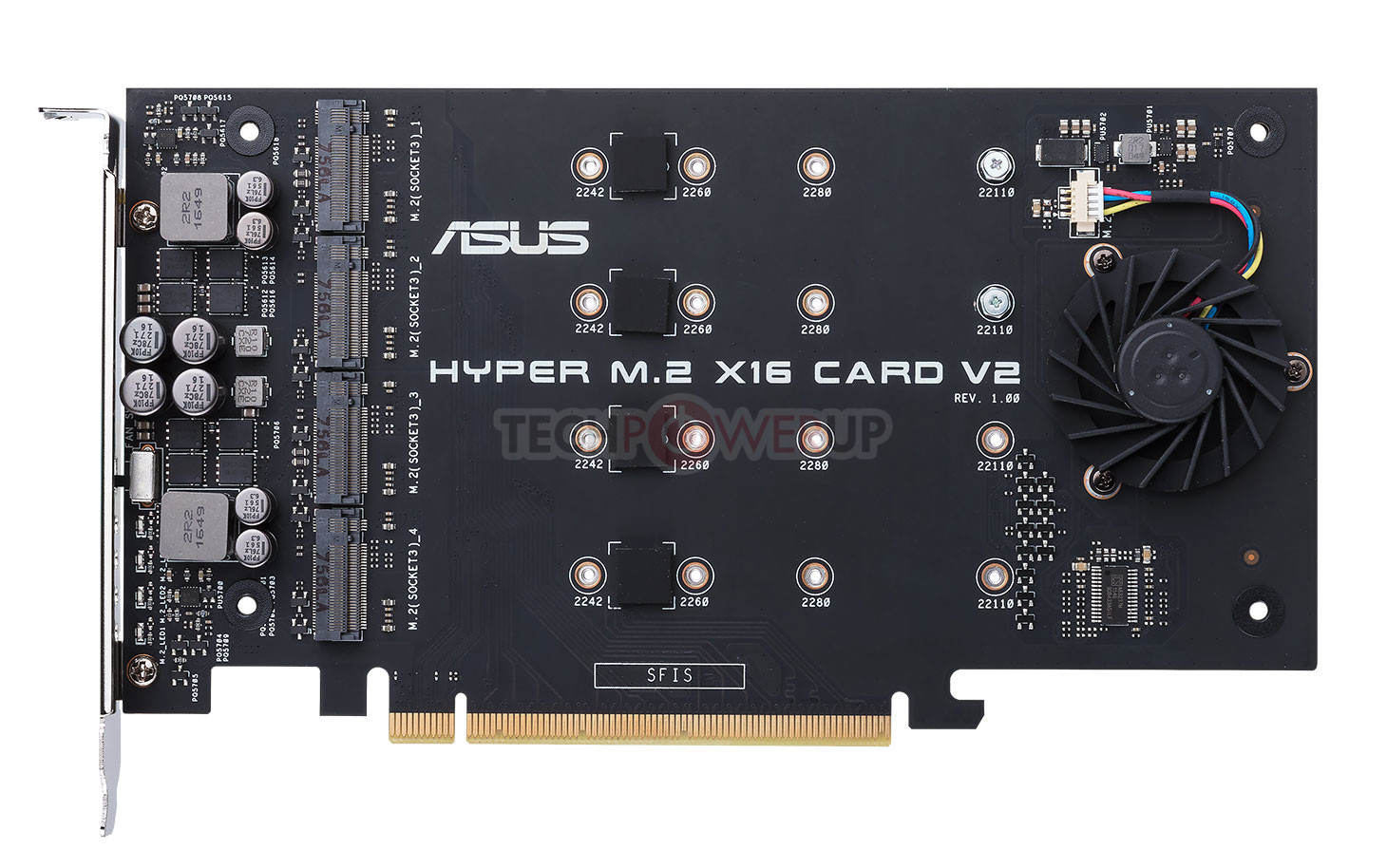
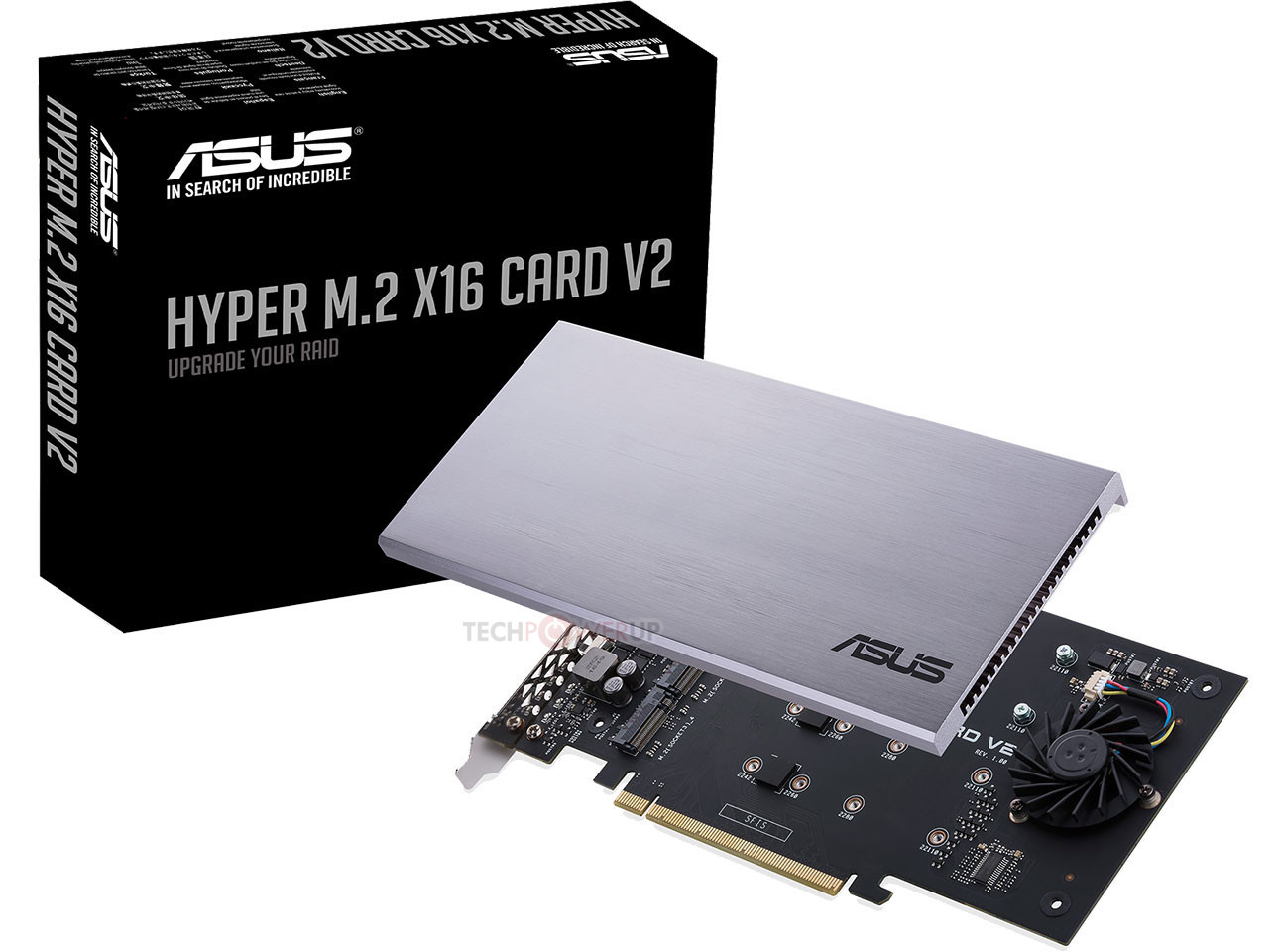
ASUS today rolled out the latest in its series of M.2 NVMe RAID add-on cards, the Hyper M.2 x16 Card V2. A successor to a similar card ASUS released back in 2017, this one comes with improved electrical components, so each of its four slots is guaranteed to put out 14 Watts of power. The card splits a PCI-Express 3.0 x16 link to four M.2-22110 slots, each with PCI-Express 3.0 x4 wiring. There's no PCIe switch logic involved, so your motherboard is required to support PCIe lane segmentation (most HEDT motherboards since 2016 do). The card supports Intel VROC (virtual RAID on CPU), and is tested to work on AMD Ryzen Threadripper processors. ASUS didn't change the thermal solution. You still get a chunky aluminium shroud covering the whole card, and lateral-flow fan pushing air across the drives, which can be turned off. The company didn't reveal pricing.

KLEVV Shows Off New Flash Drives, SSDs and Memory with Copious Amounts of RGB

KLEVV at its Computex 2019 booth unveiled a new line of high-performance USB flash drives. It also brought along its latest variants of CRAS series M.2 NVMe SSDs and DDR4 memory, which come with a dazzling/blinding (take your pick) amount of RGB LED embellishment. We begin with the Portable Ghost, branded as a "portable SSD" and not a flash-drive. This is because the USB 3.1 gen 2 type-C connection pulls a PCIe/NVMe internal SSD. When plugged into a PC or a USB charger, the drive can also work as a wireless drive to your other devices over Bluetooth 4.2. The drive comes in two variants based on capacity, which significantly differ in hardware. The 240 GB variant is pulled by a JMicron JM5583 controller, while the 480 GB variant has a Silicon Motion SM2263EN. Both models use 72-layer 3D TLC NAND flash, and have the same on-paper performance figures, with up to 1,250 MB/s reads/writes. The drive isn't without two RGB LED diffusers.

The Blu RC30 is another fascinating, albeit slower drive, that's properly marketed as a flash drive. Built in the conventional 2-piece capped form-factor, the drive features a USB 3.1 gen 1 (5 Gbps) type-A connection. An internal battery which soaks up power when plugged in, lets the drive function wireless over Bluetooth 4.2, and also be used as a wireless presentation tool (a clicker), with capacitive touch surface and a couple of buttons, which imitate a mouse. Built in capacities of 32 GB, 64 GB, and 128 GB, the Blu RC30 offers sequential transfer-rates of up to 250 MB/s reads on all three models, and write-speeds rated at 40 MB/s for the 32 GB model, 50 MB/s for 64 GB, and 90 MB/s for the 128 GB model. Transfer rates are severely throttled in wireless mode. We then moved on to its SSD and memory products.

Toshiba Launches XG6-P NVMe SSD Series

Toshiba today announced the XG6-P solid state drive (SSD) series, a derivative of its NVMe M.2-based XG6 Series featuring class-leading write performance. Offering up to 2,048 gigabytes (GB) of capacity, XG6-P SSDs are ideal for high-end workstation PCs and gaming systems, as well as cost-optimized data center and composable infrastructures. With over 30 percent higher sequential and random write speeds and over 15 percent higher random read speeds than its predecessor, the XG6-P Series enables enhanced application performance and data access.

8Pack Launches the New Supernova XL ft Intel's Ultra-exclusive i9-9990XE

Ian "8Pack" Parry is proud to announce his latest extreme machine, the Supernova XL. Built inside the CaseLabs STH10, the Supernova XL not only draws its inspiration from the very first 8Pack machine, but also gives one final moment in the sun to add to the already accomplished CaseLabs legacy. Standing at just under a metre the Supernova XL is a colossal machine, consisting of five custom acrylic pass through plates complete with mirrored internals. It's a showpiece to behold. The interior is also fitted with a light box, bathing the water-cooled components in a customisable light display.

Powering the Supernova XL you'll find one Intel's most exclusive processors, the i9-9990XE. Available in extremely limited quantities, through closed auction, this elusive processor is so exclusive it isn't even listed on the official Intel Ark database. The i9-9990XE is a 14 core processor, with a 4.0 GHz base clock pulling 255W TDP, it's capable of hitting a 5.0 GHz boost clock across all cores - straight out of the box. Cooled by a custom water-loop, with two dedicated radiators, the i9-9990XE is overclocked by 8Pack himself for a system that gives only world-class leading performance.

EVGA SR-3 DARK Will Challenge the ROG Dominus for W-3175X Supremacy

EVGA at its Computex 2019 booth showcased its flagship HEDT motherboard, the SR-3 DARK. This socket LGA3647 motherboard based on Intel C621 chipset, is purpose-built for squeezing the most out of the Xeon W-3175X 28-core HEDT processor Intel rolled out last year to challenge the Threadripper WX. The SR-3 DARK competes with only two other motherboards of its kind, the ASUS ROG Dominus Extreme, and GIGABYTE C621 Aorus Xtreme. EVGA deployed many of the innovations it introduced with the Z390 DARK that make it arguably the best LGA1151 motherboard for record-seeking overclocking.

For starters, the CPU socket is oriented sideways, just like the Z390 DARK, to position the DDR4 memory slots north and south of the socket. There's only one slot per memory channel, so you don't have to worry about multi-slot topology hindering your memory OC in any way. The CPU VRM is located east of the socket, directly next to the board's angled power inputs that include one 24-pin ATX and four 8-pin EPS inputs! There are additional inputs such as two SATA power, and one 6-pin PCIe, to stabilize the other power domains. The VRM area, along with the C621 PCH, are liquid cooled by a monoblock embedded into an aluminium heatsink. This block has a clear-acrylic top, and its coolant channel runs over the CPU VRM first, before guiding the coolant through a fin-lattice over the PCH, and then onto the outlet.

ADATA Unveils its M.2 PCIe Gen4 SSD: Ready for AMD X570

It looks like SSDs will beat graphics cards to utilizing (and benefiting) from the bandwidth of PCI-Express gen 4.0 bus. AMD X570 platform motherboards offer 2-3 M.2 slots with PCIe gen 4.0 x4 wiring (64 Gbps). Corsair formally launched the MP600, and now ADATA joins the party with its unnamed drive. Based on the Silicon Motion SM2267 controller, the drive comes in an unbelievable capacity of up to 8 TB, probably using 96-layer QLC NAND flash.

The controller features DRAM cache, and dynamic SLC caching (all of the NAND flash is treated as SLC until storage demands force portions of them to be treated as MLC, TLC, and eventually QLC). It takes advantage of NVMe 1.3 protocol. As for performance, ADATA claims sequential speeds of up to 4000 MB/s reads. Such speeds were impossible of PCIe gen 3.0 x4 due to various overheads. Sequential writes are still up to 3000 MB/s. 4K random read/write access is rated at 400k IOPS. The company didn't reveal availability details.

Patriot Viper VPR100 and VPN100 SSDs Pictured

Patriot showed off many new M.2 NVMe SSDs at its Computex 2019 booth, led by two Viper series models that caught our eyes, the VPR100 and VPN100. While technically an M.2-2280 drive, the Viper VPR100 features a chunky heatsink that makes the drive wider than 22 mm. This could be a problem if you're trying to install it in an M.2 slot positioned between two PCIe slots. The heatsink is studded with RGB LEDs. The drive is based on the Phison E12 controller and offers sequential transfer rates of up to 3450 MB/s reads, and up to 3000 MB/s writes. The Viper VPN100 is practically the same drive, but with a heatsink that sticks to the 22 mm width limit. You can run both drives without their heatsinks.

BIOSTAR Racing X570GT8 Pictured

We got a closer look at the Racing X570GT8 from BIOSTAR. This board was already leaked to the web earlier this month. Right off the bat we see an understated design with a predictable layout. The board draws power from a combination of 24-pin ATX, 8-pin EPS, and 4-pin ATX power connectors, and uses a 12-phase VRM design. Expansion slots include two PCI-Express 4.0 x16, a third gen 4.0 x16 (electrical gen 4.0 x4), and three other gen 4.0 x1 slots. Storage connectivity includes three M.2 NVMe 64 Gbps slots. Overclocker-friendly features include POST code readout, onboard buttons, and USB BIOS Flashback. The board's sole 1 GbE interface is driven by an Intel i211-AT controller. The onboard audio solution is powered by an ALC1220 CODEC. Expect this board to be priced around $170.

Gigabyte Teases World's First PCIe 4.0 M.2 SSD With Speeds up to 5000 MB/s, Other Computex Announcements

Who would have thought that Gigabyte - who don't manufacture controllers, nor memory - would be the first company to tease a PCIe 4.0-based M.2 SSD. In a blog post on its website that serves as a warm-up for the upcoming Computex, the company says that they'll be announcing the world's first PCIe 4.0 M.2 SSD - with speeds up to 5000 MB/s at "low temperatures" - I guess that means that thermal throttling will become much more common with these new SSDs.

Any other details are currently unknown; however (and we're just speculating here), we know that Phison was preparing a PCIe 4.0 NVMe controller in the form of the E16. At the time (back in January of 2019), Phison paired their E16 controller with Micron's 96-layer TLC flash, but improvements in controller development as well as changes in the flash memory used could have brought up their - then - performance figures of expected 4.8/4.4 GB/s of read/write throughput on Toshiba's BiCS 4 flash. We'll just have to wait for Computex and see, but oh my - new PCIe 4.0 SSDs, new up-to 16-core CPUs on the 7 nm process, new 7 nm GPUs... Isn't this a great time to be a PC enthusiast? Read after the break for the rest of Gigabyte's Computex tease.

ADATA Launches XPG SPECTRIX S40G RGB Gaming SSD

ADATA Technology, a leading manufacturer of high-performance DRAM modules, NAND Flash products, and mobile accessories today announces that launch of the XPG SPECTRIX S40G RGB gaming SSD. With sustained read/write speeds of up to 3500/3000MB per second, customizable RGB lighting, and a slew of performance enhancing features, the XPG SPECTRIX S40G is a no brainer for those seeking amazing performance and exceptional reliability.

The S40G supports the NVMe standard and utilizes the high-speed PCIe Gen3 x4 interface to let users enjoy sustained read/write speeds of up to 3500/3000 MB per second. What's more, sporting next-generation 3D Flash memory it offers a leap forward in capacity, efficiency, and durability. Also with the M.2 2280 specification, it supports the latest Intel and AMD platforms. These capabilities make the S40G ideally suited for gamers, PC enthusiasts, overclockers, and graphics professionals. User can customize the SSD's look with programmable RGB lighting effects. They can set up patterns, pulse speed, lighting intensity, and more. Control is a snap with XPG's RGB control software.

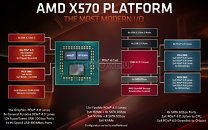
AMD X570 Unofficial Platform Diagram Revealed, Chipset Puts out PCIe Gen 4

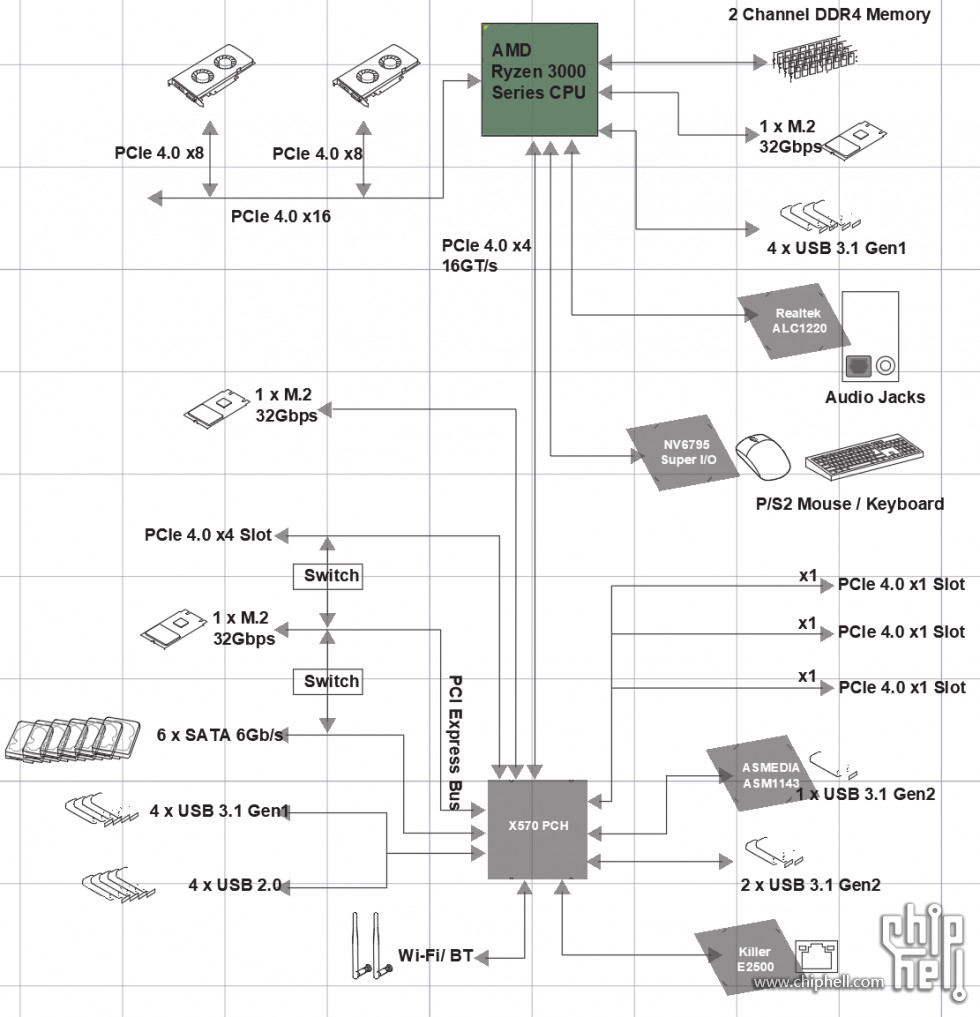
AMD X570 is the company's first in-house design socket AM4 motherboard chipset, with the X370 and X470 chipsets being originally designed by ASMedia. With the X570, AMD hopes to leverage new PCI-Express gen 4.0 connectivity of its Ryzen 3000 Zen2 "Matisse" processors. The desktop platform that combines a Ryzen 3000 series processor with X570 chipset is codenamed "Valhalla." A rough platform diagram like what you'd find in motherboard manuals surfaced on ChipHell, confirming several features. To maintain pin-compatibility with older generations of Ryzen processors, Ryzen 3000 has the same exact connectivity from the SoC except two key differences.

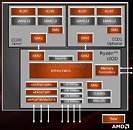
On the AM4 "Valhalla" platform, the SoC puts out a total of 28 PCI-Express gen 4.0 lanes. 16 of these are allocated to PEG (PCI-Express graphics), configurable through external switches and redrivers either as single x16, or two x8 slots. Besides 16 PEG lanes, 4 lanes are allocated to one M.2 NVMe slot. The remaining 4 lanes serve as the chipset bus. With X570 being rumored to support gen 4.0 at least upstream, the chipset bus bandwidth is expected to double to 64 Gbps. Since it's an SoC, the socket is also wired to LPCIO (SuperIO controller). The processor's integrated southbridge puts out two SATA 6 Gbps ports, one of which is switchable to the first M.2 slot; and four 5 Gbps USB 3.x ports. It also has an "Azalia" HD audio bus, so the motherboard's audio solution is directly wired to the SoC. Things get very interesting with the connectivity put out by the X570 chipset.
Update May 21st: There is also information on the X570 chipset's TDP.
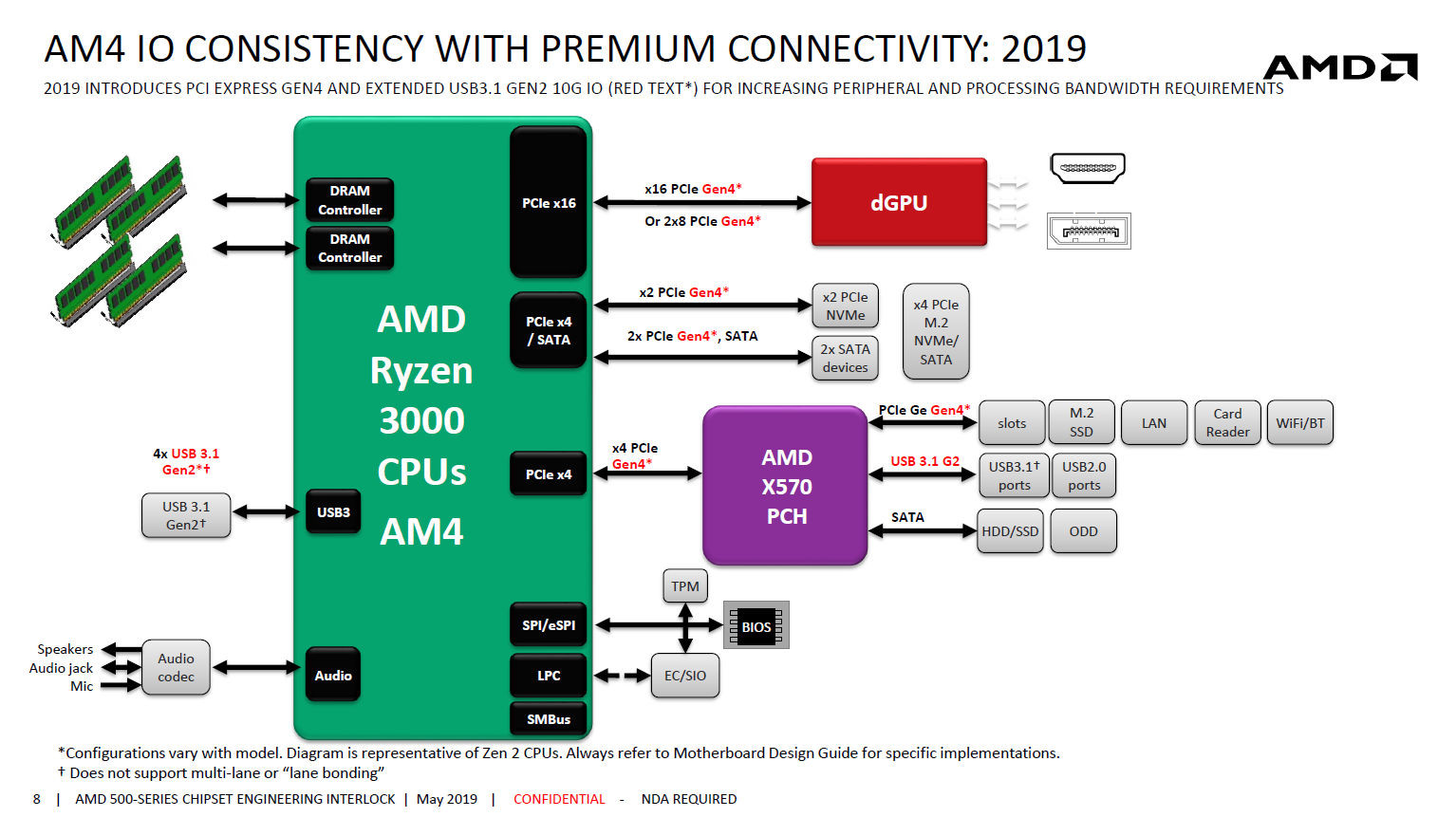
Update May 23rd: HKEPC posted what looks like an official AMD slide with a nicer-looking platform map. It confirms that AMD is going full-tilt with PCIe gen 4, both as chipset bus, and as downstream PCIe connectivity.

Mushkin Announces Availability of Helix-L NVMe SSD

Mushkin Enhanced MFG - An industry-leading designer and manufacturer of high-performance and high-reliability computer products, is excited to announce global availability of its much-anticipated Helix-L PCIe m.2 SSD (Solid State Drive) originally announced at CES 2019 and has available capacities of 250 GB, 500 GB, and 1 TB.

Built using the latest Silicon Motion SM2263XT PCIe Gen 3 x 4 NVMe controller to generate super-fast sequential Read and Write speeds. The Helix-L offers extreme storage performance and capacities in a M.2 2280 form factor, fitting directly into a motherboard or notebook. Employing the ultra-high-speed PCIe Gen3 x4 M.2 interface for maximum bandwidth, the Helix-L leaves traditional SATA III and even previous generation M.2 SSDs in the rearview. Loading everything from large video and image files to games, applications or the operating system faster than ever before.

Kingston Introduces Next-Gen KC2000 NVMe PCIe SSD

Kingston Digital, Inc., the Flash memory affiliate of Kingston Technology Company, Inc., a world leader in memory products and technology solutions, today announced KC2000, its next generation M.2 NVMe PCIe SSD for enterprise and power users. Kingston's KC2000 NVMe PCIe SSD delivers powerful performance using the latest Gen 3.0 x 4 controller and 96-layer 3D TLC NAND. Offering superior read and write speeds up to 3,200 and 2,200MB/s, respectively, KC2000 delivers outstanding performance and endurance, and improves workflow in desktop, workstations and high-performance computing (HPC) systems.

KC2000 is a self-encrypting drive that supports end-to-end data protection using 256-bit AES Hardware-based encryption and allows the usage of independent software vendors with TCG Opal 2.0 security management solutions such as Symantec , McAfee , WinMagic and others. KC2000 also has built-in Microsoft eDrive support, a security storage specification for use with BitLocker.

ZOTAC Announces the ZBOX QX Series Mini PC Powered by Xeon and Quadro

ZOTAC Technology, a global manufacturer of innovation, today introduced the more capable ZBOX Q Series Mini Creator PC featuring the advanced NVIDIA Quadro GPU and powerful workstation focused Intel Xeon processor. The new addition to the ZBOX Q Series leverages the ZBOX Mini PC's sleek and minimal design without compromising the powerful hardware components inside. From stunning industrial design and advanced special effects, to complex scientific visualization and sophisticated data modeling, to creating and editing images and videos, the ZBOX Q Series enables limitless creations.

The new ZBOX Q Series features the industry certified NVIDIA Quadro with up to 16GB GDDR5 memory. It's a tested and certified fully compatible hardware on many major professional design applications. The new Q Series models come equipped with an Intel Xeon processor to deliver fast and responsive performance.

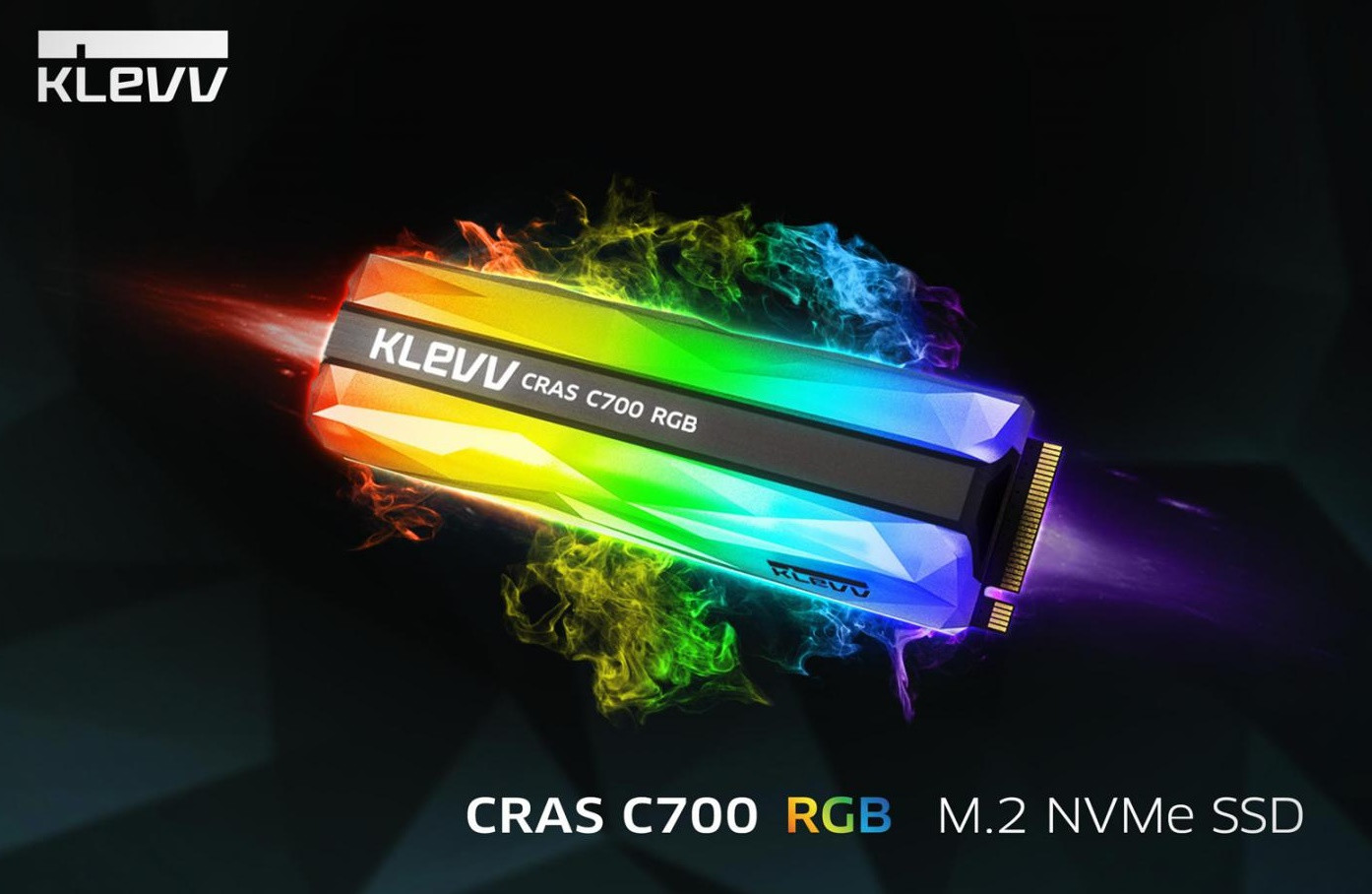
KLEVV Announces RGB-king CRAS C700 RGB NVMe M.2 SSD

Klevv today announced the launch of the CRAS C700 RGB NVMe M.2 SSD, which dials RGB goodness up to at least 12. The new SSD makes use of the PCIe 3.0 4x interface through the NVMe 1.3 protocol, enabling up to read 1500MB/s read and 1300MB/s write speeds. Klevv have made this SSD available in 120 GB, 240 GB and 480 GB capacities. There's SLC caching on-board, which means performance will certainly be slower in more data-heavy operations, in the event that the SLC cache overflows. The RGB goodness is distributed through 8 individually-addressable LEDs behind a gem-like diffuser, which provides an even glow that's programmable through most motherboard RGB control software.

Klevv also announced that the CRAS C700 RGB NVMe M.2 SSD makes use of 10-layer PCB for "better data integrity", as well as a 27% reduction in operating temperatures for the SD due to KLEVV's heatsink design. An unannounced feature for the RGB power in these SSDs is the ability to illuminate even Game of Thrones' Season 8, Episode 3 from inside your PC case.

Trendforce: SSD Price-per-GB Could Drop as Low as $0.1 by Year's End

A report from technology market analyst Trendforce places SSD's pricing in sharp decline, with price per GB being projected to hit as low as $0.1 by year's end. Citing oversupply in the NADN flash market and an impending price war to allow manufacturers to sell out accumulating inventory, this is one of those clear cases of a win for consumers - which, after the shenanigans in the DRAM market, is about time. Trendforce further states that the price reductions should render 128 GB SSDs obsolete, as they mostly are by now, with 512 GB capacities becoming the mainstream choice for system integrators and DIY.

Pricing evolution in the market also places premium NVMe solutions at an only 6% premium over SATA offerings, showcasing the increased cost savings that manufacturers have achieved with the reduction in price for NVMe controllers, and the lower amount of physical materials needed to put an NVMe SSD together compared to a SATA-based alternative. Furthermore, Trendforce says that value PCIe-based solutions have a 0% price difference compared to SATA-based ones, so the option for the older form factor should only fall upon how many NVMe/PCIe sockets users' motherboards have available to populate.

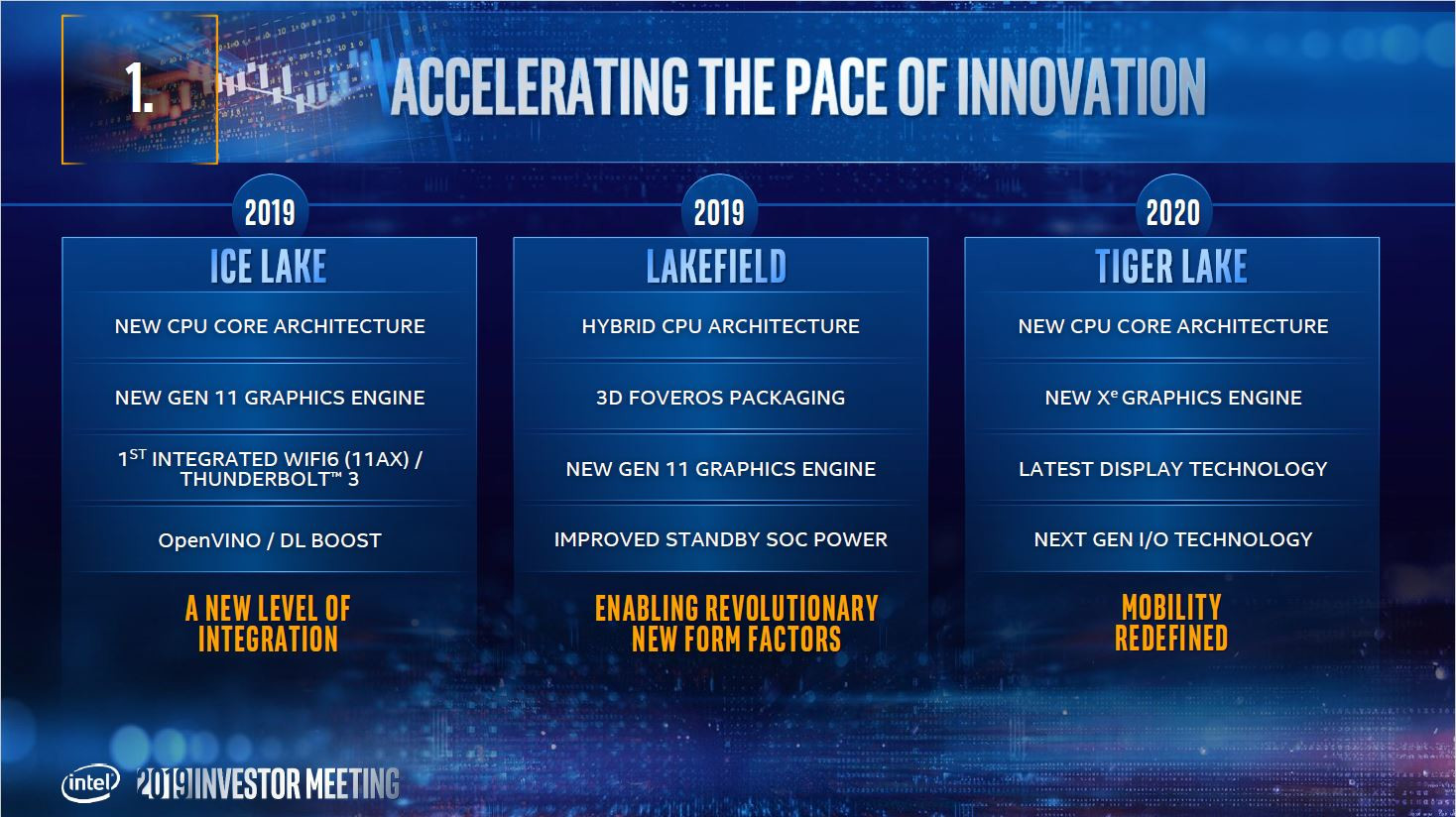
Intel "Tiger Lake" Architecture Combines Willow Cove CPU Cores and Xe iGPU

Even as Intel banks on 10 nm "Ice Lake" to pull it out of the 14 nm dark ages, the company is designing a fascinating new monolithic processor SoC die that succeeds it. Codenamed "Tiger Lake," and slated to debut in 2020, this die packs "Willow Cove" CPU cores and an iGPU based on Intel's Xe architecture, not Gen11. "Willow Cove" CPU cores are more advanced than the "Sunny Cove" cores "Ice Lake" packs, featuring a redesigned on-die cache, additional security features, and transistor optimization yielded from the newer 10 nm+ silicon fabrication process.

Intel is already boasting of 1 TFLOP/s compute power of the Gen11 iGPU on "Ice Lake," so it's logical to predict that the Xe based iGPU will be significantly faster. It will also support the latest display standards. The "next-gen I/O" referenced by Intel could be faster NVMe, Thunderbolt, and USB standards that leverage the bandwidth doubling brought about by PCI-Express gen 4.0. Here's the catch: much like "Ice Lake," the new "Tiger Lake" chip will get a mobile debut as Tiger Lake-Y or Tiger Lake-U, and desktop processors could follow later, possibly even 2021, depending on how much pressure it faces from AMD.

PNY Rolls Out XLR8 CS3030 Series M.2 NVMe SSDs

PNY today rolled out the XLR8 CS3030 line of high-end SSDs in the M.2-2280 form-factor. Featuring M.2 PCI-Express 3.0 x4 interface, the drives take advantage of the NVMe 1.3 protocol. The company didn't mention which controller it is using, but that it's mated to 3D TLC NAND flash. Available in capacities of 250 GB, 500 GB, and 1 TB, the XLR8 CS3030 has among the highest on-paper maximum sequential-read numbers, at up to 3,500 MB/s. The 250 GB variant writes at up to 1,050 MB/s, the 500 GB variant at up to 2,000 MB/s, and the 1 TB variant up to 3,000 MB/s. Endurance of the three variants is rated at 380 TBW, 800 TBW, and 1,650 TBW, respectively. The company did not put out random-access numbers. Available now, the XLR8 CS3030 series SSDs are backed by a 5-year warranty.

Samsung Not Working on 970 Pro NVMe SSD in 2 TB Capacities In Contrast to Retailer Leaks

Update: April 29, 2019: A representative on behalf of Samsung contacted us to let us know that the company has not released a 2 TB version of the 970 Pro, and has no current plans to do so either. It appears that the retail leaks were not accurate after all. The original story is below for records.

A year after it has introduced the first versions of its 970 Pro NVMe SSD, Samsung is finally updating its lineup with a 2 TB SKU. Previous generation models always saw a 2 TB solution being made available, so the absence of such a model in the 970 Pro series was a bit amiss.

Two webshops (one German, one Chinese) have already listed the part with its own SKU number, so it really is incoming to the worldwide market. If you're looking for a solid storage option that replaces a hard-drive in terms of storage density, this could be the one for you. A price around the €940 mark is likely to be close to the actual number.

Micron Introduces 9300 Series NVMe Enterprise SSDs

Micron Technology, Inc., today unveiled its new series of flagship solid-state drives (SSDs) featuring the NVM Express (NVMe) protocol, bringing industry-leading storage performance at higher capacities to cloud and enterprise computing markets. The Micron 9300 series of NVMe SSDs enables companies with data-intensive applications to access and process data faster, helping reduce response time.

"The introduction of our third generation of NVMe SSDs endorses our tradition of continued innovation for cloud and enterprise markets," said Derek Dicker, corporate vice president and general manager for Micron's Storage Business Unit. "The Micron 9300 is our flagship series of NVMe SSDs, which feature industry-leading sequential write performance and latency, increased capacities, and delivery of a 28% reduction in power over the previous generation."

Apacer Debuts the AS2280P4 M.2 NVMe SSD

If you aim for the top, don't skimp on your SSD drives! Check out Apacer's brand-new AS2880P4 M.2 PCIe Gen3 x4 SSD, which boasts stronger-than-ever performance at reasonable price. This SSD now brings reading/writing speeds of 3,200/2,000MB/sec and 360,000 operations per second (IOPS) within easy reach of eSports players! NVMe1.3-compliant, the AS2880P4 uses the latest 3D NAND TLC technology to make it an ultra-compact, high-capacity that frees up space for you to further modify and expand your gaming devices. Its max capacity of 480GB makes it perfect for hardcore eSports players, post-production CAD 3D modeling designers, and users demanding high speed and high capacity.

The M.2 PCIe Gen3 x4 is definitely the top choice for high performance demands in ultra-thin notebooks, high-power computers, e-sports consoles, mini-PCs, and embedded devices. As a trend-defining SSD brand, Apacer has led the global market with its groundbreaking PCIe Gen3 x4 NVMe 1.3 SSD and is now writing history again with its successor, the brand-new AS2280P4.

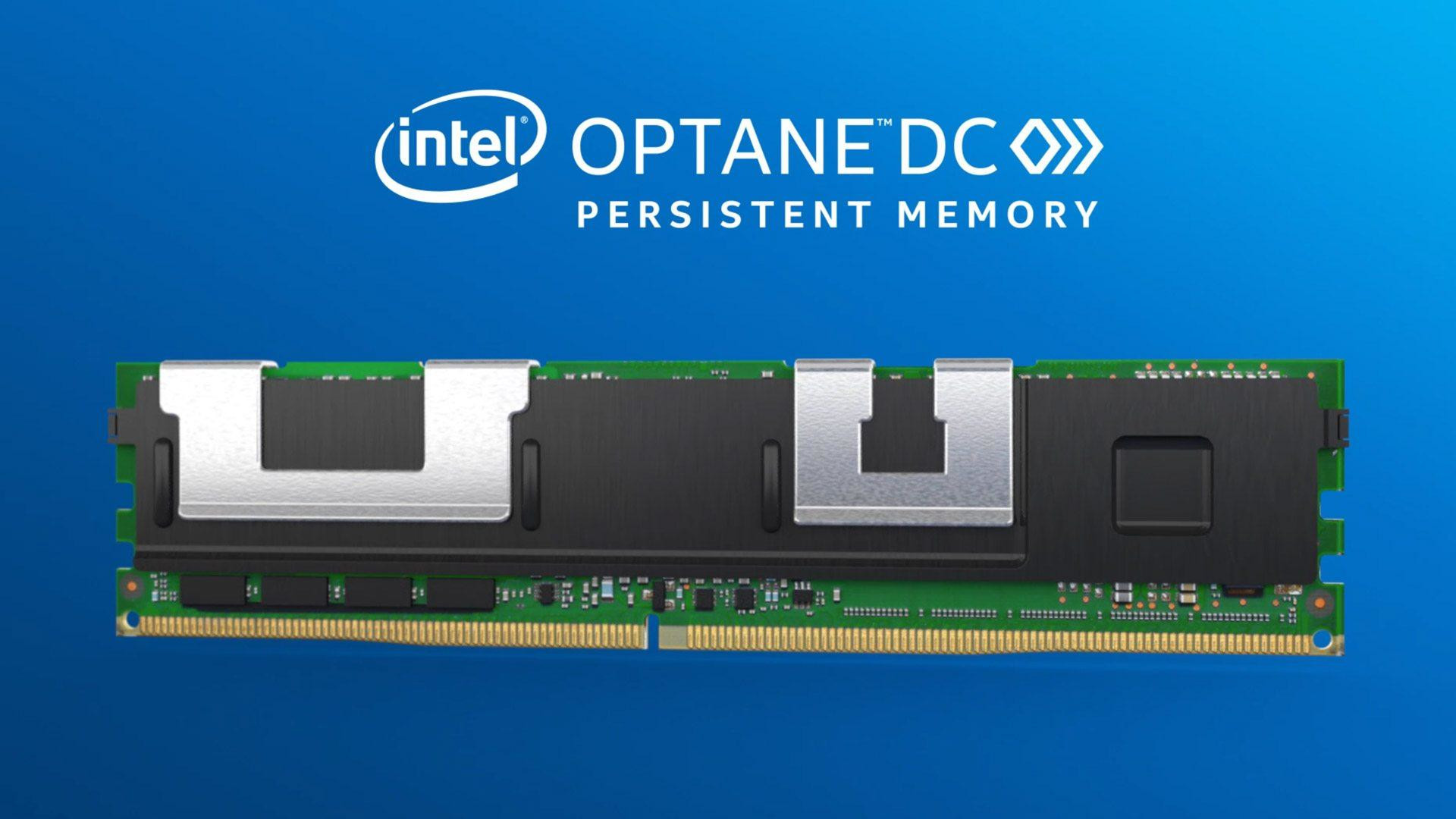
Intel Optane Persistent Memory 512GB Module Can be Yours for $7816

Optane Persistent Memory is being touted by Intel as the "hottest" storage medium between DRAM and NVMe SSDs in the short-term, and a successor to DRAM-based memory in the long-term, aided by its ability to hold data even in the absence of power. The company's latest Xeon Scalable "Cascade Lake" processors support Optane Persistent Memory, allowing data-centers to cram larger amounts of data accessible at DRAM-like speeds, even if at much higher latencies. It remains significantly faster than NVMe SSDs. Component retails began listing 512 GB modules of the Optane Persistent Memory, and its prices are nothing like your 512 GB NVMe SSD. CompSource lists the 512 GB module (model: NMA1XXD512GPSU4) for a whopping USD $7,816, although the product is out of stock.
Return to Keyword Browsing
Nov 22nd, 2026 18:53 CST change timezone

New Forum Posts

Popular Reviews

TPU on YouTube

Controversial News Posts