News Posts matching #NVMe

Return to Keyword Browsing

GIGABYTE Rolls Out AORUS RGB AIC NVMe SSD

GIGABYTE today rolled out the Aorus RGB AIC NVMe SSD series. Built in the full-height single-slot AIC form-factor with PCI-Express 3.0 x4 host interface, the card combines a Phison PS5012-E12 NVMe 1.3 controller with Toshiba BiCS3 TLC NAND flash, and comes in capacities of 512 GB and 1 TB, which are equipped with 512 MB and 1 GB of DRAM cache, respectively. The 1 TB variant offers sequential transfer speeds of up to 3,480 MB/s reads, with up to 3,080 MB/s writes; up to 610,000 IOPS 4K random reads, and up to 530,000 IOPS 4K random writes. The 512 GB variant, on the other hand, gives you up to 3,480 MB/s sequential reads, up to 2,100 MB/s sequential writes; up to 360,000 IOPS 4K random reads, and up to 510,000 IOPS random writes.

GIGABYTE deployed a passive cooling system, consisting of a thermal pad that makes contact with the controller, NAND flash chips, and DRAM chips on one side, and on the other side the card's top aluminium shroud that doubles up as a heatspreader. There's an equally thick aluminium back-plate which holds the card's acrylic RGB LED diffuser that runs along the top edge. You use GIGABYTE RGB Fusion software to control the lighting on this card. Both cards are backed by 5-year warranties, provided the card stays below their rated endurance of 800 TBW for the 512 GB model, and 1600 TBW for the 1 TB model. The company didn't reveal pricing.

Team Group Releases Three New Flash Products

Targeting to expand the capacity of our consumers' storage devices, Team Group today releases three new FLASH products. They are the MP34 M.2 solid state drive with PCIe Gen 3.0 x4 high speed interface and the latest NVMe 1.3 protocol, the ELITE A1 high-speed memory card which is specially made for ANDROID devices and 4K video recording, the C188 high-speed flash drive with elegant design and up to 130 MB/s of read/write speed. These products allow consumers to upgrade their PC or mobile devices at ease.

Today, Team Group releases the M.2 solid state drive MP34 that uses PCIe Gen 3.0 x4 high-speed interface and the latest NVMe 1.3 protocol. Connecting to the built-in controller of the chipset and processor through PCI-e bus provides transfer signal without any lag. The transfer performance is remarkable. The transfer speed of MP34 is up to 3000 MB/s, which is 5 times* higher than the SATA III interface. It supports S.M.A.R.T and has built-in smart algorithm, Wear-Leveling technology and Error Correction Code. In addition to bring the SSD to its maximum performance and prolong the service life, it also supports both Intel and AMD platforms. Whether it is installed on a desktop or a laptop, it will offer consumer the finest and smoothest gaming experience.

Galaxy Unveils HOF M.2 PCIe SSD with Heat-pipe Based Heatsink

High-end M.2 NVMe SSDs are beginning to come with integrated heatsinks as overheating controllers impact sustained performance. The latest such drive is a new edition of the Hall of Fame (HOF) M.2 PCIe series from Galaxy, which come with a chunky aluminium heatsink, only this one isn't just another hunk of metal. This heatsink uses a flattened copper heat pipe to pull heat from the drive's hot components and spread it evenly along both sides of the aluminium block. The heat pipe makes direct contact with the drive's Phison PS5012-E12 8-channel controller and Toshiba-made 64-layer 3D TLC NAND flash chips.

The heatsink wraps around sideways of the drive and so it may not be a perfect fit for NVMe RAID cards with multiple M.2 slots side-by-side, although for most applications, such as the M.2 slot on the motherboard, the design could click. The drive comes in capacities of 512 GB, 1 TB, and 2 TB. All three models offer sequential read speeds of up to 3400 MB/s. The 1 TB and 2 TB models write at up to 2800 MB/s, while the 512 GB writes at up to 2000 MB/s. 4K random access performance of the 2 TB and 1 TB models are rated at up to 400,000 IOPS reads with up to 600,000 IOPS writes; and up to 400,000 IOPS reads with up to 540,000 IOPS writes for the 512 GB model. The drive is initially being launched in China, and could make its way to western markets under the Galax and KFA2 brands later this year.

Patriot Viper Gaming launches Viper VPN100 PCIe M.2 SSD

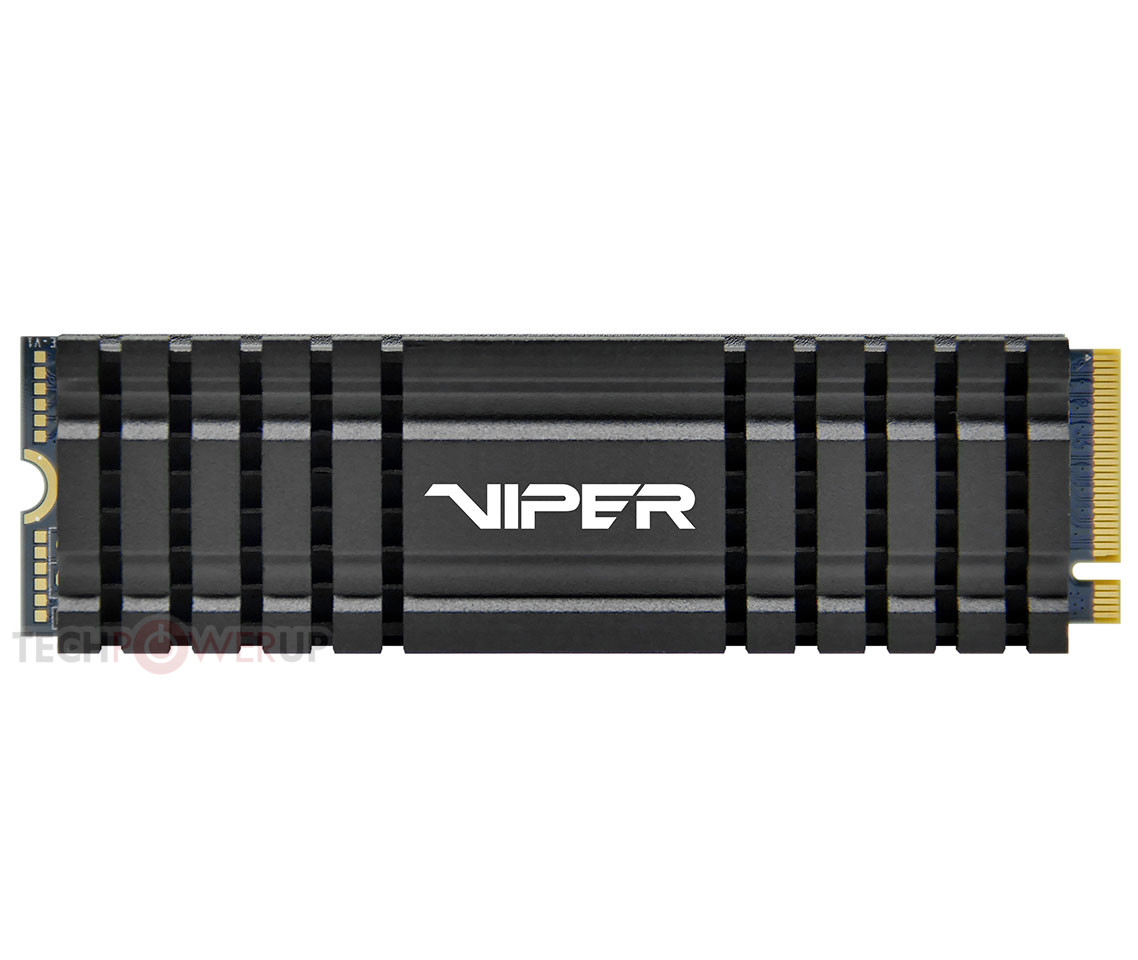
VIPER GAMING, a trademarked brand of PATRIOT and a global leader in performance memory, solid state drives and flash storage solutions, today announced the release of its ultra-performance Viper VPN100 PCIe m.2 SSD (Solid State Drive) and has available capacities up to 2TB . The VPN100 is built using the latest Phison E12 PCIe Gen 3 x 4 NVMe controller to generate super-fast sequential Read and Write speeds. The VPN100 has been developed with a built-in aluminum heatshield with 6 single thermal fins to provide splendid heat dissipation under fierce PC workload.

The quality build GPU and CPU are needed to get the most from a modern gaming PC. While the latest games are putting a significant demand on storage, a faster SSD indeed ensures smooth gameplay and faster data transfer. Read and Write speeds are critical metrics for computer performances, especially when directly booting up to a 4k video editing workload. The VPN100 delivers the perfect combination across ultimate performances, ultra-fast speeds, and enhanced multi-tasking capabilities. Blasting transfer speeds allow gamers to access their games and get back into the game much faster while accelerating the overall responsiveness of your system. 5 times faster than traditional SATA SSDs speeds, the VPN100 is a top-of-the-line reliability SSD for hardcore gamers, PC enthusiasts, content creators, and video rendering professionals who are looking into blazingly fast startup times and instantaneous access for better productivity.

Micron Unveils 2200 Client-segment SSD, Ditches SMI for In-house Controller

Micron has curiously been releasing client-segment SSDs these recent weeks. The company's main brand was focused on enterprise products, while subsidiary brands Crucial and Ballistix catered to the client-segment. Following up on its late-February launch of the 1300-series client-segment SSDs, Micron unveiled the even faster 2200-series. These drives ditch Silicon Motion-sourced controllers in favor of a new controller Micron designed in-house. Built in the M.2-2280 form-factor with PCI-Express 3.0 x4 interface, taking advantage of the NVMe protocol. This in-house controller is mated with Micron's 64-layer 3D TLC NAND flash, cushioned by its own LPDDR4 DRAM cache.

Available in capacities of 256 GB, 512 GB, and 1 TB, the Micron 2200 is rated to offer sequential transfer rates of up to 3000 MB/s reads, with up to 1600 MB/s writes, up to 240,000 IOPS 4K random reads, and up to 210,000 IOPS 4K random writes, with an endurance rating of 75 TB, 150 TB, and 300 TB, for the 256 GB, 512 GB, and 1 TB variants, respectively. Micron-exclusive features also make their way, such as native power-loss data-protection, and TCG Opal SED. The company hasn't revealed pricing or availability for these drives.

Western Digital's Award-Winning WD Blue SSD Goes NVMe

Western Digital Corp., a global data infrastructure leader, is accelerating the NVMe transition of value-PC storage by adding an NVMe model to its award-winning WD Blue solid state drive (SSD) portfolio, the WD Blue SN500 NVMe SSD. The new SSD delivers three times the performance of its SATA counterpart while maintaining the reliability the WD Blue product line is known for. For content creators and PC enthusiasts, the WD Blue SN500 NVMe SSD is optimized for multitasking and resource-heavy applications, providing near-instant access to files and programs.

Leveraging the scalable in-house SSD architecture of the highly acclaimed WD Black SN750 NVMe SSD, the new WD Blue SN500 NVMe SSD is also built on Western Digital's own 3D NAND technology, firmware and controller, and delivers sequential read and write speeds up to 1,700 MB/s and 1,450 MB/s respectively (for 500 GB model) with efficient power consumption as low as 2.7W. Demands on storage are continuing to grow and client workloads are evolving, the WD Blue SN500 NVMe SSD features high sustained write performance over SATA as well as other emerging technologies on the market today to give that performance edge.

Toshiba Memory Expands NVMe SSD Portfolio Targeting Cloud Data Centers

Toshiba Memory America, Inc. the U.S.-based subsidiary of Toshiba Memory Corporation, announced availability of its XD5 Series NVMe SSD platform in a 2.5-inch, 7 mm low-profile form factor that is optimized for low-latency and performance consistency in read-intensive workloads. Developed for both data center and cloud environments, the new 2.5-inch form factor XD5 Series is ideal for NoSQL databases, large-scale-out data mining and analysis, and streaming applications. The XD5 Series is also well-suited for Open Compute Project (OCP) applications and systems.

Built on 64-layer BiCS FLASH TLC (3-bit-per-cell) 3D flash memory, and featuring a PCIe Gen 3 x4 interface, the new XD5 SSD 2.5-inch option delivers sequential read performance up to 2,700 megabytes per second (MB/s) and sequential write performance up to 895 MB/s with low active power consumption of 7 watts. At one drive write per day (DWPD), the XD5 Series can write nearly 4 terabytes (TB) of random data daily for five years at a consistent performance rate. Random read/write performance is specified at 250,000/21,000 Input/Output Operations per Second (IOPS) respectively, making the XD5 Series a predictable and reliable solution for read-intensive or heavy transactional workloads.

QNAP Officially Launches the TS-2888X AI-Ready NAS for Machine Learning

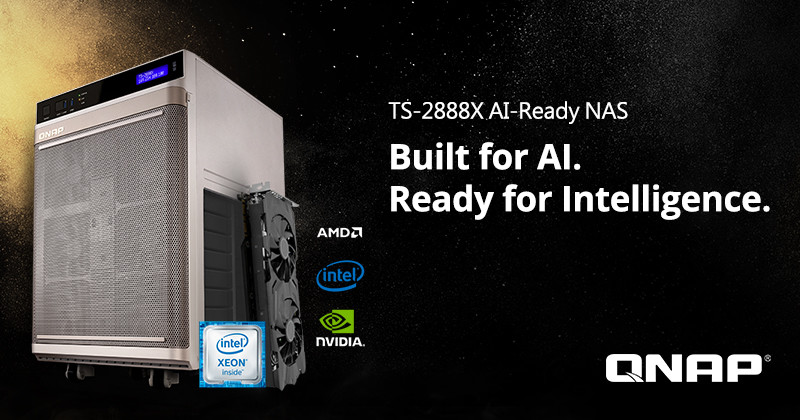
QNAP Systems, Inc. today officially launched the TS-2888X, an AI-Ready NAS specifically optimized for AI model training. Built using powerful Intel Xeon W processors with up to 18 cores and employing a flash-optimized hybrid storage architecture for IOPS-intensive workloads, the TS-2888X also supports installing up to 4 high-end graphics cards and runs QNAP's AI developer package " QuAI". The TS-2888X packs everything required for machine learning AI, greatly reducing latency, accelerating data transfer, and eliminating performance bottlenecks caused by network connectivity to expedite AI implementation.

WD Announces CL SN720 and DC SN630 NVMe SSDs for Data Centers

Western Digital Corp. today announced two new additions to its broad portfolio of NVMe-based systems, platforms, SSDs, and memory drives for data center and cloud customers. With a full portfolio covering applications from edge-to-core, these additions are the Western Digital Ultrastar DC SN630 NVMe SSD and the Western Digital CL SN720 NVMe SSD. Each leverages the power of Western Digital's vertical integration capabilities, including internally developed controller and firmware architectures, and 64-layer 3D NAND technology. As a replacement for lower-performing SATA SSDs, these new NVMe drives meet the insatiable need for performance, scalability, endurance and low total cost of ownership (TCO) for public and private cloud deployments, hyperscale cloud environments, and next-generation workloads at the edge.

IT managers face challenges such as managing multiple workload types, scaling at optimal TCO, and controlling server sprawl. Due to its inherent scalability and performance benefits, NVMe is quickly becoming the de facto standard for everything from traditional scale-up database applications to emerging edge computing architectures.

microSD Express Implements NVMe to Become the Fastest Mobile Removable Media

The SD Association announced today microSD Express, offering the popular PCI Express and NVMe interfaces alongside the legacy microSD interface for backwards compatibility. Like SD Express, microSD Express uses the PCIe interface delivering a 985 megabytes per second (MB/s) maximum data transfer rate and the NVMe upper layer protocol enables advanced memory access mechanism, enabling a new world of opportunities for mobile devices.

microSD Express cards defined in the SD 7.1 specification will be offered in a variety of capacities such as microSDHC Express, microSDXC Express and microSDUC Express. "microSD Express gives the mobile industry a compelling new choice to equip mobile devices with removable SSDs," said Hiroyuki Sakamoto, SDA president. "SD 7.1 prepares consumers and mobile device manufacturers to meet ever increasing storage demands for years to come."

EK co-develops a heatsink for the Intel Optane 905P M.2 SSD

EK Water Blocks, the premium computer cooling gear manufacturer, is releasing a passive heatsink for the M.2 version of the Intel Optane 905P NVMe SSD. The passive heatsink ensures lower operating temperatures which expands the lifespan and improves the sustained performance of the drive. It ensures that the Intel Optane 905P NVMe SSD operates at its maximum possible performance by preventing thermal throttling during heavy workload cycles.

The 905P Intel Optane Drive uses around 9.35 W of power under load, which is challenging to dissipate without a dedicated cooling solution like the EK-M.2 Intel Optane Heatsink. The cooling performance of this solution by EK is achieved via thermal pads that transfer heat to the aluminum heatsink that is finned for a larger dissipation area. The design of the heatsink ensures that it is easy to install, it is low profile, easily reusable and aesthetically not intrusive.

ASRock DeskMini 310 supports Intel 9th Gen Processors

The world leading motherboard and mini PC manufacturer - ASRock, announces DeskMini 310 supports Intel the latest 9th Generation Core series 65-watt LGA1151 processors. ASRock DeskMini 310 adopts with Intel H310 chipset, supports up to 32GB DDR4-2666MHz memory, dual 2.5-inch hard drive and one M.2 (2280) PCIe Gen3 x4 NVMe SSD. ASRock provides various optional accessories of DeskMini 310, includes USB 2.0 cable, VESA mount kit, and Wi-Fi ac kit. With comprehensive accessories, DeskMini 310 can satisfy diverse demands from all users.

Samsung Launches Industry's First 1TB Embedded Universal Flash Storage

Samsung Electronics, the world leader in advanced memory technology, today announced that it has begun mass producing the industry's first one-terabyte (TB) embedded Universal Flash Storage (eUFS) 2.1, for use in next-generation mobile applications. Just four years after introducing the first UFS solution, the 128-gigabyte (GB) eUFS, Samsung has passed the much-anticipated terabyte threshold in smartphone storage. Smartphone enthusiasts will soon be able to enjoy storage capacity comparable to a premium notebook PC, without having to pair their phones with additional memory cards.

"The 1 TB eUFS is expected to play a critical role in bringing a more notebook-like user experience to the next generation of mobile devices," said Cheol Choi, executive vice president of Memory Sales & Marketing at Samsung Electronics. "What's more, Samsung is committed to assuring the most reliable supply chain and adequate production quantities to support the timely launches of upcoming flagship smartphones in accelerating growth of the global mobile market."

Transcend Launches MTE220S M.2 NVMe SSD Series

Transcend Information Inc., a leading manufacturer of storage and multimedia products, is proud to announce the MTE220S PCIe M.2 Solid-State Drive. This SSD utilizes PCI Express Gen3 x4 interface and is compatible with NVM Express (NVMe) specifications. Utilizing this interface means never-before-seen transfer speeds of 3,500 MB/s read and 2,800 MB/s write are now a reality. Using 3D chips and packing into a M.2 2280 form factor, the MTE220S SSD is the must-have for gaming enthusiasts and high-end applications.

Transcend's MTE220S SSD comes equipped with DDR3 DRAM cache memory. This means that commonly used programs load much faster, and boot time is greatly reduced. Utilizing SLC caching, the MTE220S SSD can reach astonishing read/write speeds of 3,500 MB/s and 2,800 MB/s, respectively, and 4K Random performance is also significantly improved. In addition to speeds, reliability is also enhanced with the Low Density Parity Check code in place.

Samsung Launches the 970 EVO Plus NVMe SSD Family

Samsung today introduced the Samsung 970 EVO Plus, the newest enhancement in its Non-Volatile Memory Express (NVMe) SSD portfolio. With industry-leading performance and up to two terabytes in capacity, Samsung's 970 EVO Plus sets a new bar for high-performance storage, enabling IT professionals, tech enthusiasts and gamers to handle intensive workloads on PCs and workstations with more ease.

"Since introducing the first NVMe SSDs to the consumer market in 2015, Samsung has continued to challenge technical barriers in SSD design and performance," said Dr. Mike Mang, vice president of Brand Product Marketing, Memory Business at Samsung Electronics. "The new 970 EVO Plus powered by Samsung's latest fifth-generation V-NAND technology will now offer unrivaled performance in its class when taking on demanding tasks like 4K content editing, 3D modeling and simulation as well as heavy gaming."

Starblaze Announces High-Performance STAR1000P SSD Controller

Today Starblaze announced the availability of the STAR1000P NVMe solid state drive (SSD) controller for high-end client and entry-level enterprise applications. Performance optimizations enable the new controller to achieve sequential reads at 3.6GB/second and sequential writes at 3.2GB/second, up to 50% higher than Starblaze's previous generation controller, STAR1000. The STAR1000P achieves random reads at 750K input/output operations per second (IOPS) and random writes at 600K IOPS, up to 120% higher than Starblaze's STAR1000. The STAR1000P features PCIe Gen3x4, NVMe 1.3 and eight flash channels to support up to 32 terabytes (TB) of storage. The STAR1000P also incorporates a multicore implementation of Synopsys' DesignWare ARC HS38 processor, taking advantage of ARC's extensible architecture with custom instructions that improve scheduling efficiency.

"Enterprise SSD applications need increasing processor performance to support much higher throughput with reduced latency," said John Koeter, vice president of marketing for IP at Synopsys. "Synopsys' ARC HS processors deliver the scalability that Starblaze needs to extend the performance of their STAR1000P platform for the rapidly evolving SSD controller market."

Kingston Also Showcases KC2000 Series NVMe SSDs

Kingston at CES 2019 also showcased their high-tier KC2000 series SSD. These differ from the likely market-warping A2000 series SSDs in terms of pure performance, for those that only care for that metric. While the A2000 series has the potential to bring SATA SSDs completely out of the equation (if promises of lower pricing paired with three to four times higher performance come true), the KC2000 will be gunning for the upper tiers of the market in terms of performance.

The KC2000 PCIe 3.0 x4 NVMe SSDs will be available in capacities ranging from 256 GB to 2TB, boasting performance of 3 GB/s read and 2 GB/s write. Unlike their lower-tier counterparts, which make use of a variety of lower-tier controllers and Toshiba's 3D TLC NAND, these will contain the SMI SM2262en controller paired Intel 3D TLC NAND flash memory. These SSDs should be released sometime in Q2 2019 and will have a security software suite included.

Intel Readies Crimson Canyon NUC with 10nm Core i3 and AMD Radeon

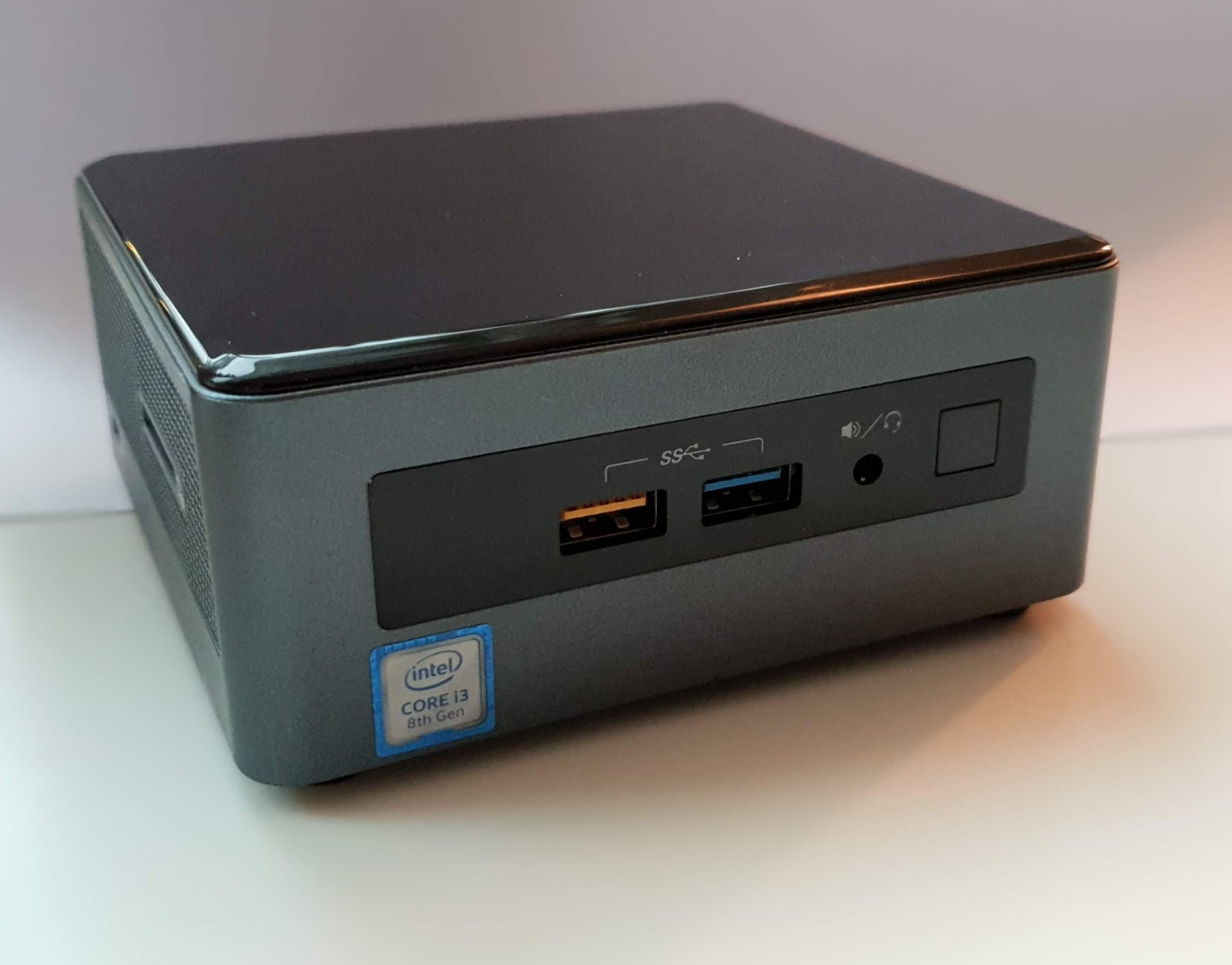
Intel is giving final touches to a "Crimson Canyon" fully-assembled NUC desktop model which combines the company's first 10 nm Core processor, and AMD Radeon discrete graphics. The NUC8i3CYSM desktop from Intel packs a Core i3-8121U "Cannon Lake" SoC, 8 GB of dual-channel LPDDR4 memory, and discrete AMD Radeon RX 540 mobile GPU with 2 GB of dedicated GDDR5 memory. A 1 TB 2.5-inch hard drive comes included, although you also get an M.2-2280 slot with both PCIe 3.0 x4 (NVMe) and SATA 6 Gbps wiring. The i3-8121U packs a 2-core/4-thread CPU clocked up to 3.20 GHz and 4 MB of L3 cache; while the RX 540 packs 512 stream processors based on the "Polaris" architecture.

The NUC8i3CYSM offers plenty of modern connectivity, including 802.11ac + Bluetooth 5.0 powered by an Intel Wireless-AC 9560 WLAN card, wired 1 GbE from an Intel i219-V controller, consumer IR receiver, an included beam-forming microphone, an SDXC card reader, and stereo HD audio. USB connectivity includes four USB 3.1 type-A ports including a high-current port. Display outputs are care of two HDMI 2.0b, each with 7.1-channel digital audio passthrough. The company didn't reveal pricing, although you can already read a performance review of this NUC from the source link below.

Western Digital WD Black SN750 is a High-end NVMe SSD with a Chunky Heatsink

Western Digital over the weekend refreshed its high-end client-segment SSD lineup with the WD Black SN750. Built in the M.2-2280 form-factor with PCI-Express 3.0 x4 interface and support for the NVMe 1.3 protocol, the drive combines a refreshed in-house developed controller with SanDisk-made 64-layer 3D TLC NAND flash memory, cushioned by up to 2 GB of DRAM cache. The biggest change this drive offers over last Summer's WD Black 3D series, however, is the optional aluminium heatsink originally made by EK Waterblocks, which improves the drive's thermals and possibly sustained performance. You can opt to buy the drive without this heatsink.

Available in capacities of 250 GB for $80, 500 GB for $130, 1 TB for $250, and 2 TB for $500, the WD Black SN750 offers sequential transfer rates of up to 3470 MB/s reads on the 500 GB and 1 TB models. The 250 GB model reads at up to 3100 MB/s, and the 2 TB model up to 3400 MB/s. Sequential write speeds, too, are improved across the board, with up to 3000 MB/s for the 1 TB model, up to 2900 MB/s for the 2 TB model, up to 2600 MB/s for the 500 GB model, and up to 1600 MB/s for the 250 GB model. 4K random-access numbers can be as high as 515,000 IOPS reads. All models are backed by 5-year product warranties.

ASRock Announces its Intel B365 Motherboard Series

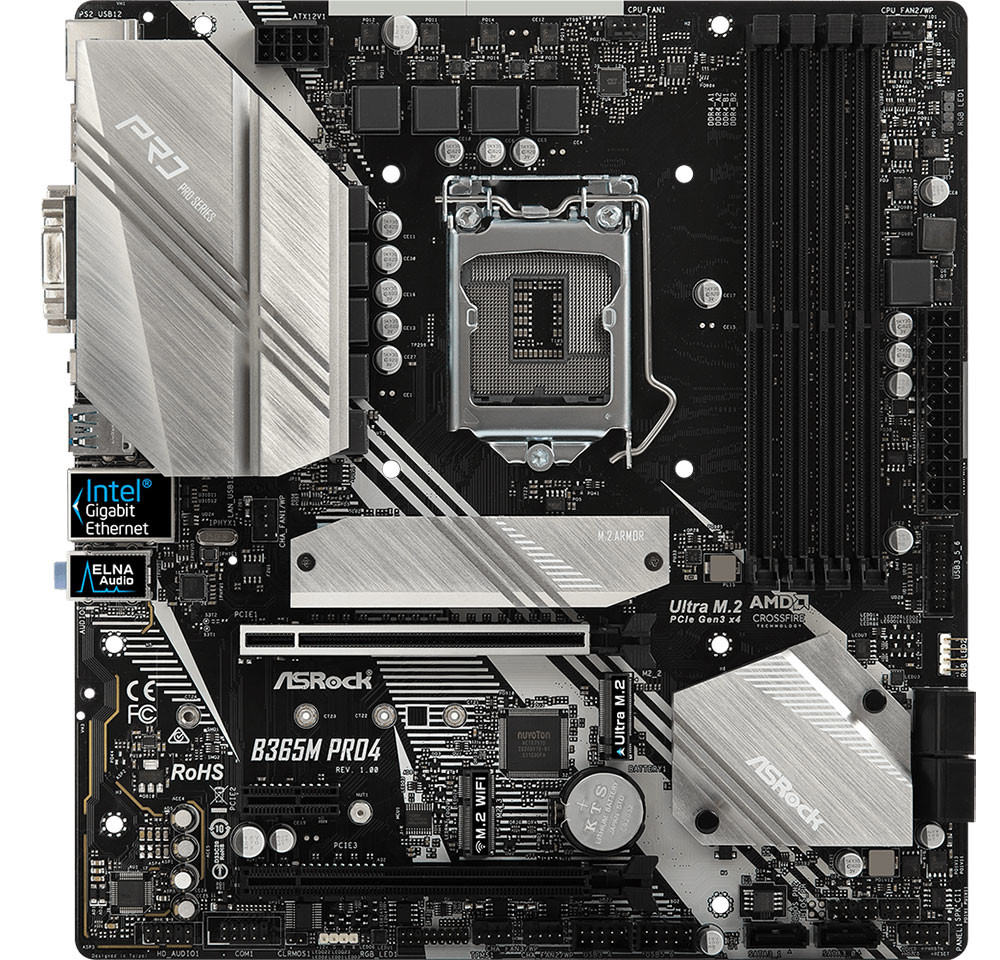
There's no better way to kick off 2019 with the launch of new products, the motherboards featuring Intel B365 chipset launched during CES 2019 aims mostly at mainstream market but with huge improvement on not only functionality but also aesthetics, the product line are formed by total of 5 motherboards including Mini-ITX, the ever popular PRO series and the latest Phantom Gaming motherboards, giving a wide range of selection for everyone.

As M.2 NVMe SSDs get ever more attractive through affordability, capacity and performance, it is certain that these lightning fast storage devices will soon be a must have solution for gaming or even everyday use. ASRock has seen this trend and went all out to be the first to include the M.2 heatsink as standard equipment for the mainstream motherboard, the B365 Phantom Gaming 4 even has two separate M.2 heatsink for secondary high speed M.2 SSDs.

Mushkin Showcases Multiple Storage Solutions at CES 2019

Mushkin has been focusing most of its product offerings on the storage area, with multiple product tiers in the SSD space. At CEs 2019, the company put together a booth where it showcased some of its more recent advancements in this product category.

The Pilot-E is an internal NVMe SSD available in 250 GB to 2 TB capacities, with an astonishing up to 3.4 GB/s read and 2.5 GB/s write speeds, powered by an SMI SM226EN controller and 3D TLC NAND. Another lower-tier interpretation of the Pilot-E is the Pilot, which ranges from 120 GB - 2 TB, but uses a slower Silicon Motion SM2262 controller which brings the performance numbers down to 3.2 GB/s and 1.9 GB/s in sequential read and write, respectively.

Toshiba Shows Off 96-Layer BiCS FLASH Alongside Plethora of Enterprise SSDs at CES 2019

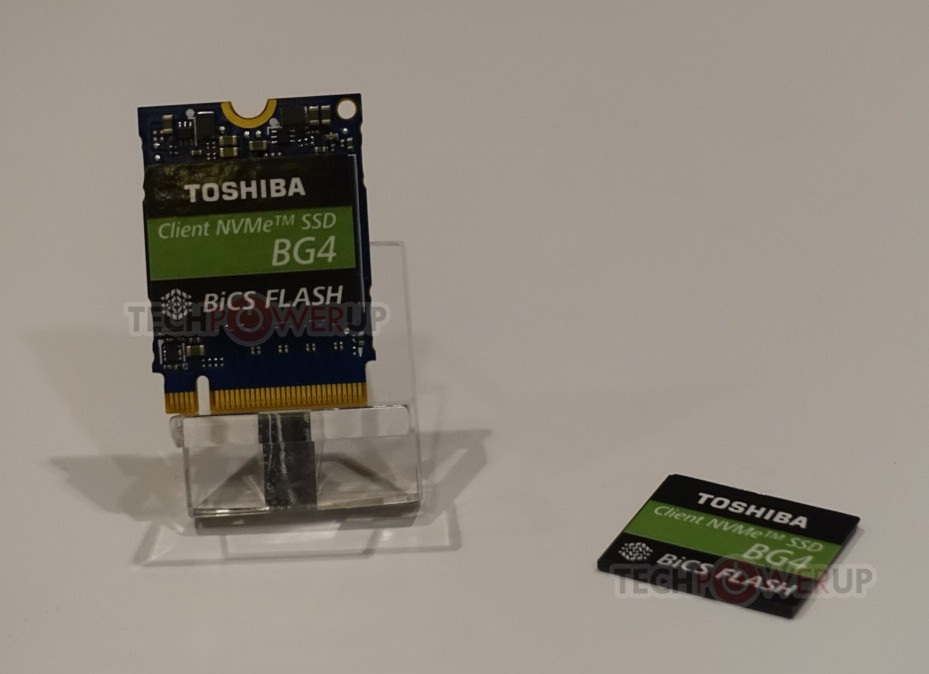
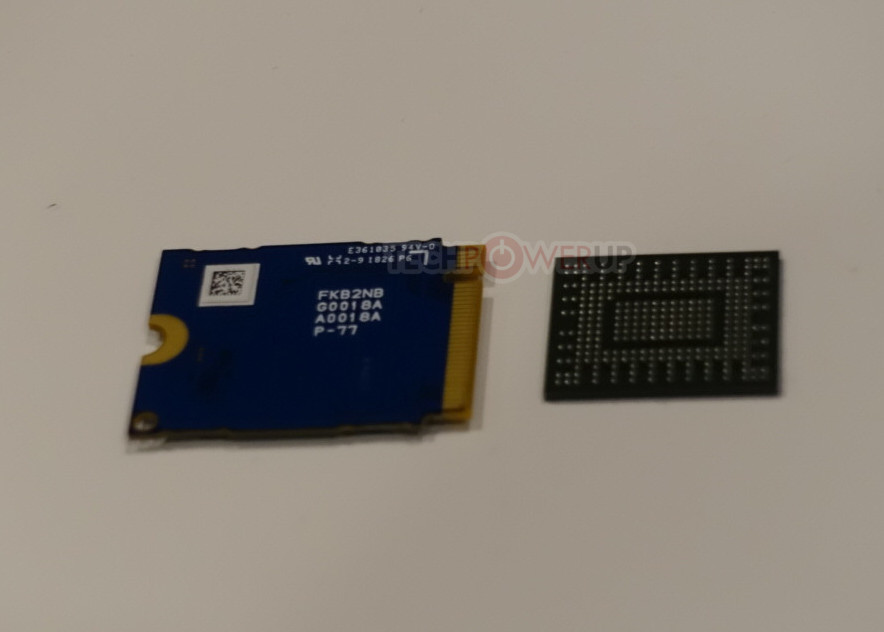
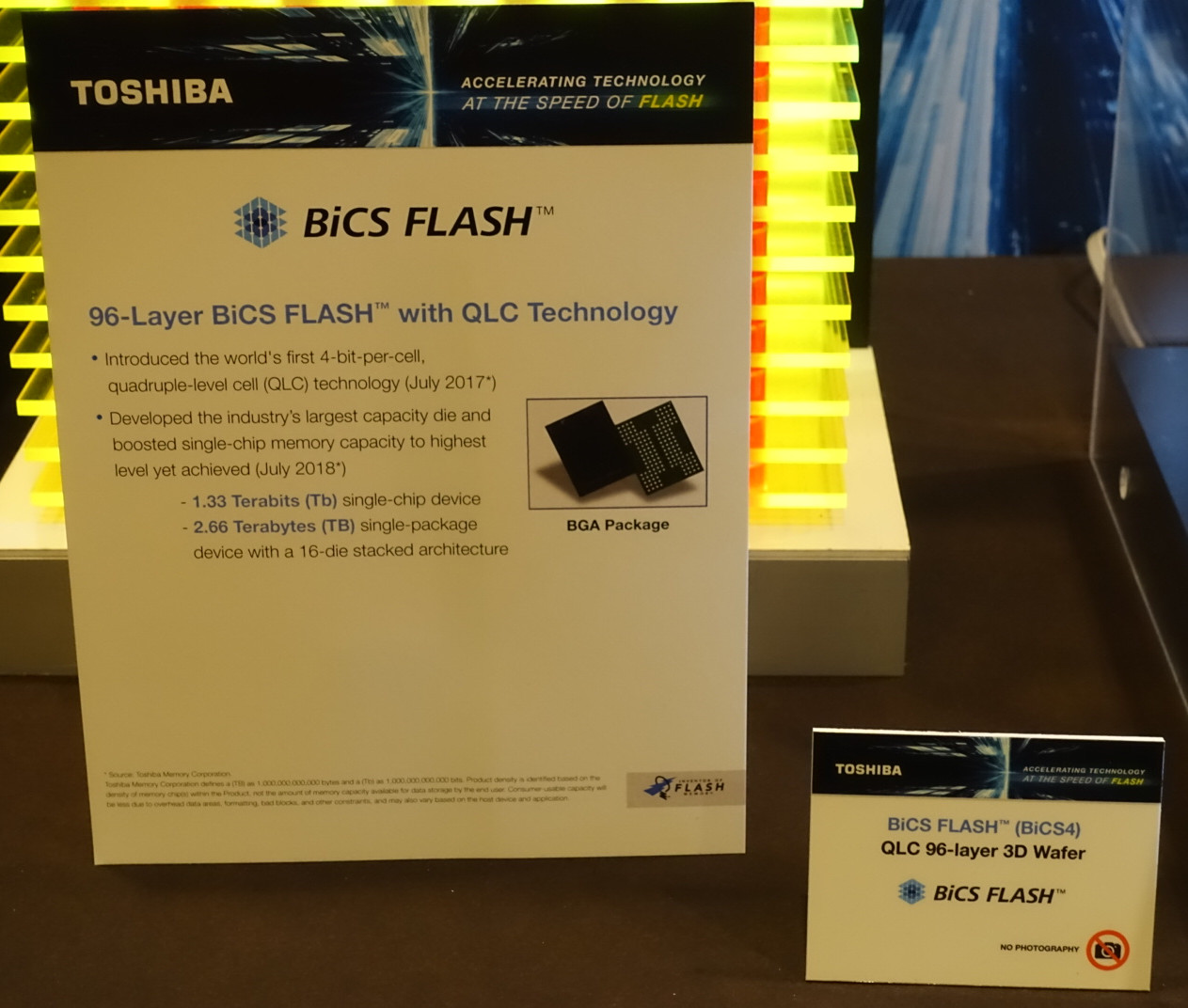
During our visit with Toshiba at CES 2019, we were shown not only new technologies that they will be rapidly deploying but a large number of SSDs for various market segments. The biggest draw was their 96-layer BiCS Flash with 4-bit-per-cell quadruple-level cell (QLC) technology. Toshiba is now pushing the boundary for capacity as a single chip device can reach 1.33 Tb (Terabits) while a single package device with 16-dies stacked architecture can reach 2.66 TB. That said, they are already sampling their 1 TB NVMe single package BG4 series SSDs to PC OEM customers in limited quantities.

These latest drives with their new BiCS FLASH technology incorporate everything into a tiny SSD that offers class-leading storage with sequential read performance reaching up to 2250 MB/s. Random read performance can also hit exceptional levels reaching up to 380,000 IOPS. For now, these BG4 based drives are targeted at ultra-thin PC notebooks, IoT embedded systems and will be made available in four capacities including; 128 GB, 256 GB, 512 GB and finally 1 TB. To meet expected demand, Toshiba will also be opening a facility in Japan dedicated to this latest technology in order to bring even higher capacities per NAND module.

Toshiba Memory Unveils 1TB Single Package PCIe Gen3 x4 SSD with 96-Layer 3D Flash

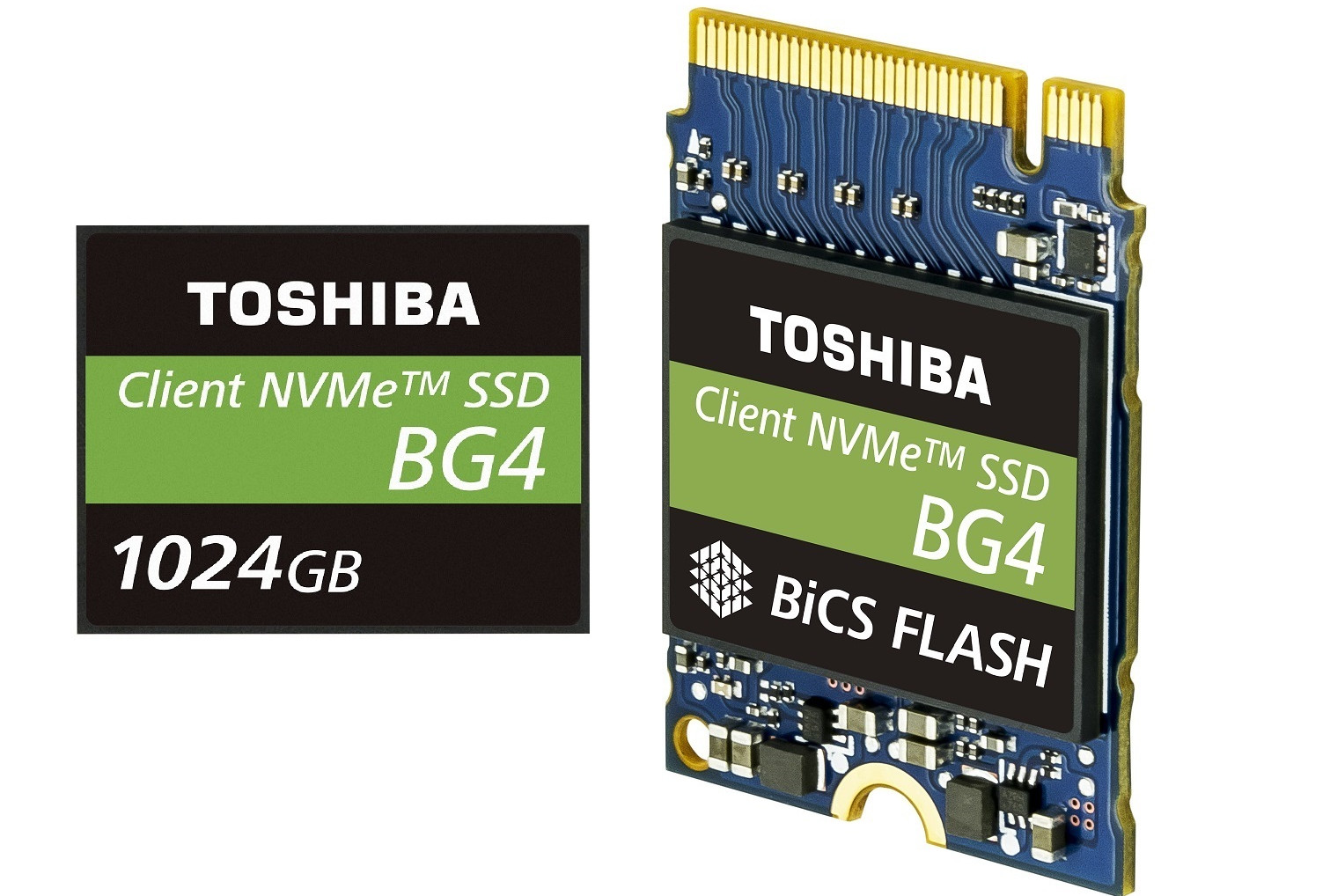
Toshiba Memory Corporation, the world leader in memory solutions, today announced the BG4 series, a new line-up of single package NVMe SSDs with capacities up to 1,024 GB, which places both innovative 96-layer 3D flash memory and an all-new controller into one package to deliver best-in-class read performance. The BG4 series is currently sampling to PC OEM customers in limited quantities, with general sample availability expected later in the second calendar quarter of 2019.

This new series of single package SSDs, featuring PCIe Gen 3.0 x4 lanes, offers sequential read performance up to 2,250 MB/s, and with improved flash management delivers industry-leading random read performance up to 380,000 IOPS. The BG4 single package SSDs are suitable for compact and performance-oriented systems, such as ultra-thin PC notebooks, IoT embedded systems and server boot in data centers.

Seagate FireCuda 510 and BarraCuda 510 M.2 NVMe SSDs Hands-on

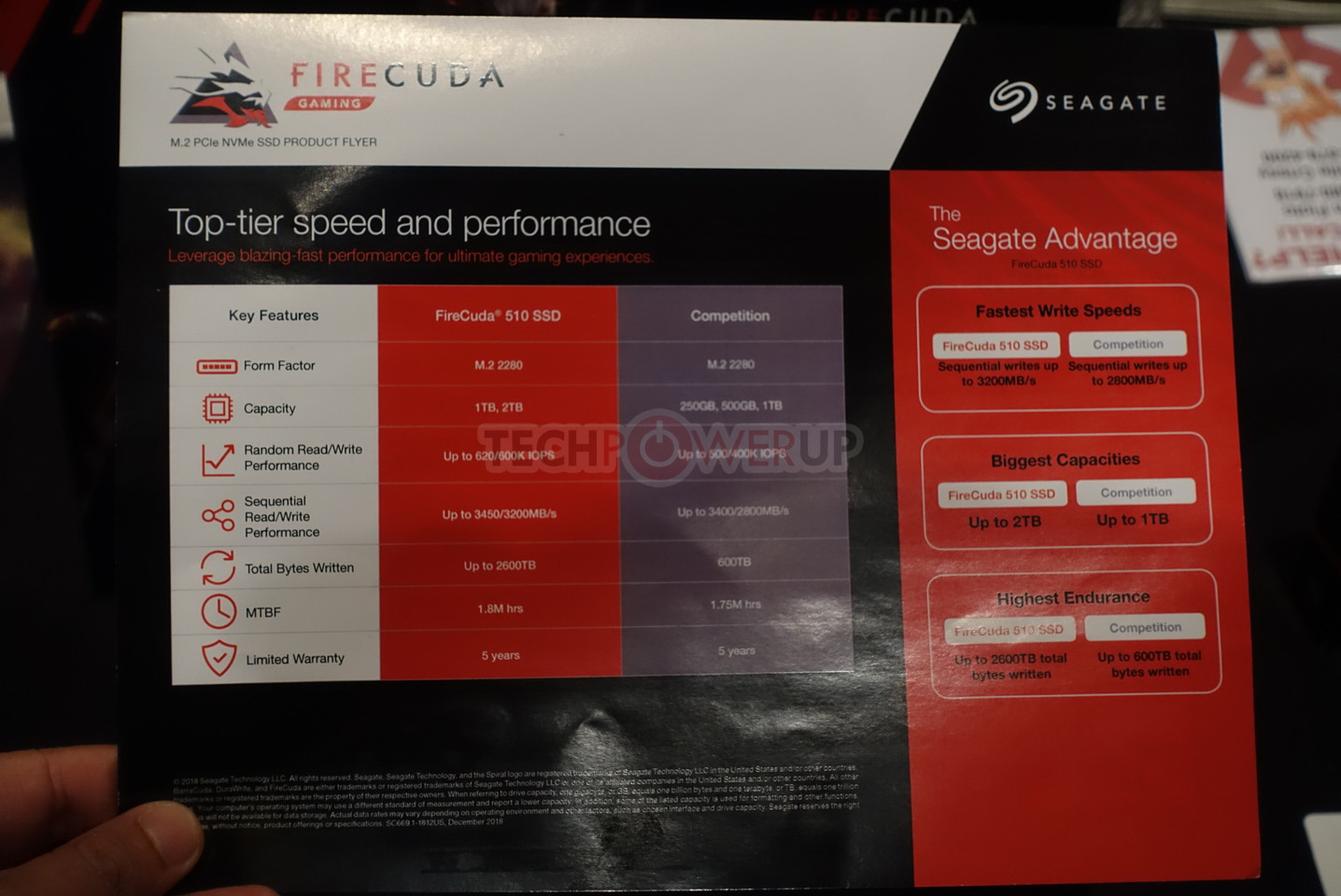
Seagate eyes itself a slice of the M.2 NVMe SSD market targeting DIY gaming PC builders in 2019. It's come up with slightly more imaginative branding than arch-rival WD, with the FireCuda 510 and BarraCuda 510. The FireCuda 510 is the company's flagship drive, built in the M.2-2280 form-factor, and featuring a PCI-Express 3.0 x4 interface. This drive offers stellar sequential transfer speeds of up to 3450 MB/s reads, with up to 3200 MB/s writes, and random-access numbers of up to 620,000 IOPS reads, with up to 600,000 IOPS writes; which upstages even existing segment leaders such as Samsung 970 PRO and WD Black 3D, at least on paper. It comes in capacities up to 2 TB, and is backed by 5-year warranties.

The BarraCuda 510 isn't far behind its sibling, and despite its deceptive "green" branding, isn't a drab M.2-SATA drive. It's out to compete with the likes of the Samsung 970 EVO. With speeds of up to 3400 MB/s sequential reads, up to 3100 MB/s sequential writes, and a 5-year warranty, this drive debuts in just two models initially - 256 GB and 512 GB, with more models in the pipeline. Retail availability is expected to be in March, 2019 and pricing is not yet confirmed.

Acer Unveils the Predator Triton 900 Convertible with RTX 2080 Graphics

Acer today unveiled two new Windows 10 gaming notebooks, the Predator Triton 900, a 17-inch performance notebook featuring a slim design and convertible 4K display - and the Predator Triton 500 - a 15-inch all-metal gaming powerhouse measuring just 17.9 mm (0.70 inches) thin. Both gaming notebooks combine new, functional designs with powerful internals that rival gaming desktops.

"We are pushing the envelope on what a gaming notebook can be with designs that offer more uses while still packing in the computing power," said Jerry Hou, General Manager, Consumer Notebooks, IT Products Business at Acer. "The Predator Triton 900's one-of-a-kind flipping screen allows for multiple gaming scenarios and better ergonomics, while the Triton 500 offers superb gaming performance in a slimmer, all-metal body for gamers on the go."
Return to Keyword Browsing
Nov 22nd, 2026 18:53 CST change timezone

New Forum Posts

Popular Reviews

TPU on YouTube

Controversial News Posts