News Posts matching #RX 9000

Return to Keyword Browsing

Leaks Predict $5000 RTX 5090 GPUs in 2026 Thanks to AI Industry Demand

It's no secret that gaming is suffering under something of an affordability crisis, with increased demand for AI-capable GPUs and DDR5 memory resulting in rising prices for gamers and other far-reaching side effects on the gaming hardware market. Now, though, fresh leaks suggest that things are only going to get worse in 2026. According to Korean publication, Newsis, both AMD and NVIDIA are planning to gradually and permanently increase GPU prices "over the next several months." This is expected to start as early as January 2026, when AMD is expected to increase prices. NVIDIA will allegedly follow suit in February.

If the publication's insider sources are correct, the NVIDIA RTX 5090, which launched at $1,999, will reach as high as $5,000 before the end of the year. No prediction has been made for AMD's RX 9000 series, but memory has already been said to take up as much as 80% of the average GPU BOM cost, and memory prices are expected to increase by as much as 40% by Q2 2026. We've already reported on the fact that instability and price increases in the DRAM market will likely affect launch windows for upcoming hardware, potentially reaching as far as next-gen console launches, and ASUS recently announced that it would be increasing hardware prices starting in early January 2026, despite also increasing DDR4 motherboard production in response to the changing market.

GIGABYTE Removes Controversial Leaking Thermal Gel from Newer GPUs

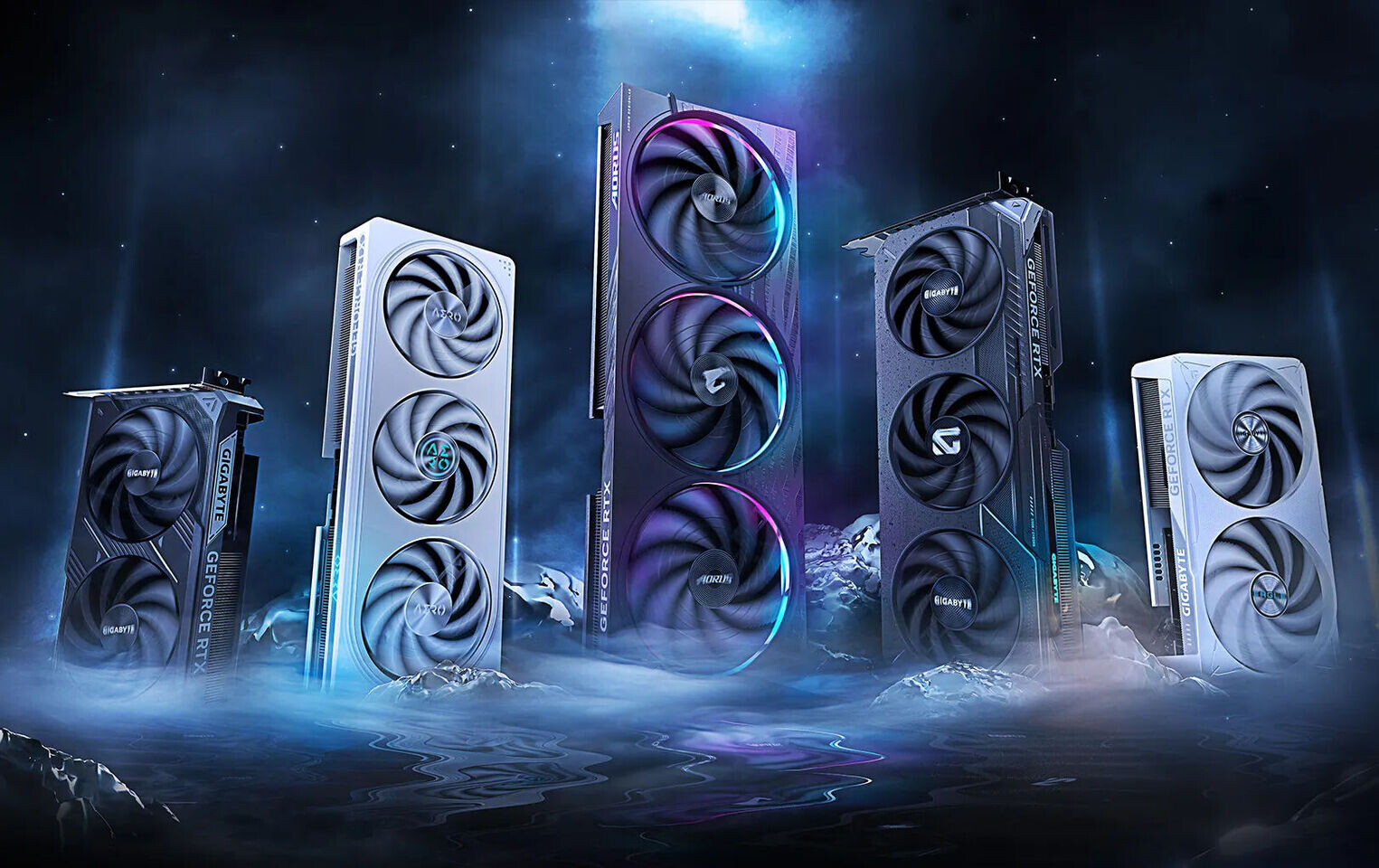
GIGABYTE has updated its website for the GeForce RTX 5070 Ti WINDFORCE OC V2 graphics card to reflect a change in the usage of its controversial leaking thermal gel. The older website, courtesy of UNIKO's Hardware, had information about "server-grade" thermal conductive gel, which was slowly leaking from multiple GPUs including GeForce RTX 50 series and Radeon RX 9000 series that used the leaking gel. In the more recent past, we haven't seen reports about more leaking thermal gel from the community, indicating that GIGABYTE has either fixed the issue or used a completely new thermal solution.

When the issue arose a few months ago, GIGABYTE explained that the problem was due to an excessive application of gel in early production batches. They assured that the material could withstand temperatures up to 150°C without melting. While they acknowledged the cosmetic issue of the gel appearing to drip or separate, GIGABYTE maintained that this did not impact the performance, reliability, or lifespan of the cards. They stated that later production runs had been adjusted to apply the correct amount of gel, but no recall was issued for the affected units.

Call of Duty: Black Ops 7 Season 01 Enhanced with AMD FSR Redstone Features

Call of Duty: Black Ops 7 Season 01 kicks off with a bang: remastered classics like Nuketown 2025 and Standoff, new maps like Fate, Utopia, and Odysseus, and a wild holiday variant, Sleighjacked. Multiplayer fans get a buffet of modes—Prop Hunt, Sticks and Stones, One in the Chamber, Sharpshooter, and Gun Game—each tuned for maximum chaos and competition. Endgame received colossal new World Events. And for Zombies fans? The new Astra Malorum Map and Survival Map: Exit 115 are waiting, with new enemies (hello, O.S.C.A.R.), The Mule Kick Perk-a-Cola, and a new Wonder Weapon to discover.

AMD FSR: Ready to Run
Season 01 is the first to launch with AMD's FSR Redstone features. What does that mean for players? In short: smoother performance, sharper visuals, and a more immersive experience—no matter how intense the firefight gets. FSR is built on machine learning, delivering next-gen upscaling, frame generation, and ray regeneration. Whether you're pushing for 240 Hz on a Radeon RX 9000 series card or just want your game to look and feel incredible at any frame rate, Redstone has you covered

AMD Releases Adrenalin Edition 25.12.1 WHQL Drivers

AMD has released its latest AMD Software Adrenalin Edition 25.12.1 WHQL drivers, headlined by support for AMD FSR 4 "Redstone", the company's next-gen FidelityFX Super Resolution technology. The driver also adds product support for the Radeon AI PRO R9600D and Radeon AI PRO R9700S, alongside several fixes. These include Radeon Anti-Lag 2 not available in Counter-Strike 2 (DX11), crashes with some HDMI 2.1 displays during standby, intermittent Radeon Overlay freezes, and a crash in ARC Raiders on the Blue Gate map on RX 9000 series GPUs.

Known issues remain, including Cyberpunk 2077 path-tracing crashes, instability in Battlefield 6 on Ryzen AI 9 HX 370, Roblox Player crashes when task-switching on RX 7000 GPUs, Battlefield 6 texture flicker when using Record & Stream, and incorrect shadows in Call of Duty: Black Ops 7. AMD says fixes are in progress.

DOWNLOAD: AMD Software Adrenalin 25.12.1 WHQL
[Editor's note: Our in-depth review of the AMD FSR 4 Redstone is now live]

AMD Radeon Price Hike Confirmed at $10 per 8GB of VRAM, More Increases Expected in 2026

AMD's rumored price hike at the end of 2025 is becoming a reality, as confirmed by anonymous GPU distributors to Tom's Hardware. The increase is a more modest $10 per 8 GB of VRAM. This means a $10 increase for 8 GB models like the Radeon RX 9060 XT 8 GB, and a $20 increase for 16 GB models like the Radeon RX 9060 XT 16 GB and RX 9070 / 9070 XT. This adjustment is just half of what was anticipated based on an earlier report from Chinese Board Channels, which suggested AMD was considering a $20 increase for 8 GB models and a $40 increase for 16 GB models.

However, this is not the end of price hikes. AMD is expected to implement another increase in January 2026, though the specifics are currently unknown. Earlier information from Board Channels suggested that gamers might see a price increase of 300 RMB ($42) for 8 GB models and 600 RMB ($85) for 16 GB SKUs. As we approach the final weeks of 2025, these details remain unconfirmed. AMD's AIB partners will pass these increases to customer, who will absorb any additional cost of manufacturing.

AMD Radeon RX 9000 Series Still Absent from Steam Hardware Survey

As we enter December, Valve has completed processing data and officially released the November Steam Hardware and Software Survey, highlighting trends in the gaming industry. Interestingly, AMD's latest RDNA 4 designs from the Radeon RX 9000 series have yet to make a significant impact on the market, indicating that many Steam survey participants are not using AMD Radeon RX 9000 series GPUs. The top spot in the GPU usage list is held by NVIDIA's GeForce RTX 4060 (notebook), with the first AMD product appearing nine spots later. Valve lists this first AMD Radeon GPU as an unnamed entry, likely representing integrated GPUs or other systems-on-chip products with unconventional configurations compared to standard discrete GPUs.

The first AMD discrete GPU on the list is the older RDNA 2-based Radeon RX 6600, followed by the RDNA 3-based RX 7800 XT. However, nine months after the RDNA 4 series began selling, there are no RDNA 4 GPUs present in the general survey. This could suggest that Steam gamers prefer other options or that the RDNA 4 series isn't selling well. While we don't have a definitive conclusion, the data points to a concerning trend.

VKD3D-Proton Adds FSR 4, Even for Older Radeon GPUs

While AMD's shiny new FSR 4 is ostensibly exclusive to Radeon RX 9000 series, there have been a number of successful attempts to get it running on older AMD Radeon GPUs after a rather sizeable mistake on AMD's part led to the FSR 4 libraries leaking online. Now, however, a Linux developer working for Valve has implemented a fix to get FSR 4 running on older GPUs right into the Proton translation layer responsible for running Direct3D 12 via the Vulkan API on Linux. Support for FSR 4 is only one of a bunch of updates to D3VK-Proton shipping in the latest 3.0 update.

As of version 3.0 of VKD3D-Proton, the translation layer responsible FSR 4 is present for RX 9000 series Radeon GPUs using the official method, but the Valve developer behind the project, Hans-Kristian Arntzen, has also implemented a "hacky emulation path" that allows FSR 4 to work on older Radeon GPUs. The developer notes that this implementation uses int8 and float16 cooperative matrix support, and that it may come at "significant performance cost." It is, as such, not officially supported by the default build of VKD3D-Proton, and the current official implementation is also mostly a first step in the process of getting FSR 4 implemented "in a more proper way" into Valve's Proton itself. Support for FSR 4 may not be relevant to devices like the Steam Deck, due to the increased performance hit, but it may become more important around the release of the Steam Machine, which still relies on RDNA 3 GPU cores but is expected to provide around the same performance as an AMD Radeon RX 7600M.

AMD FSR "Redstone" Arrives December 10, Exclusive to Radeon RX 9000 Series

AMD's General Manager and Senior Vice President, Jack Huynh, released a video on X hinting at the upcoming launch of the company's newest advanced graphics technology, named "Redstone." The latest teaser suggests that more details will be revealed on December 10. AMD's latest FSR "Redstone" platform builds on the AI and machine learning super resolution introduced with FSR 4 and introduces three key innovations: neural radiance caching, AI and ML-based Ray Regeneration, and AI and ML-based Frame Generation. Neural Radiance Caching utilizes a machine learning model that continuously learns how light interacts within a scene to predict and store indirect lighting, reducing the performance cost of ray tracing.

Additionally, AMD FSR "Redstone" Ray Regeneration works similarly to NVIDIA DLSS 3.5 Ray Reconstruction by using a neural network to regenerate pixels that couldn't be accurately path-traced, particularly improving reflection quality when super resolution is applied. The new AI and machine learning-based Frame Generation model marks a significant evolution from the interpolation technology AMD introduced with FSR 3. This approach uses machine learning with integrated temporal and spatial awareness to generate interleaving frames with greater accuracy and enhanced image quality. While this method doesn't achieve the 2x frame-rate doubling of NVIDIA's RTX 40-series "Ada" architecture, it intentionally prioritizes superior visual fidelity.

AMD Releases New Software Adrenalin Edition 25.11.1 WHQL Drivers

AMD has released its latest AMD Software Adrenalin 25.11.1 WHQL drivers, adding support for the new AMD Ryzen 5 7500X3D CPU, as well as game support for Call of Duty: Black Ops 7, Anno 117: Pax Romana, and ARC Raiders games. The latest driver also fixes application crash that happened when Easy Anti-Cheat was enabled with Radeon Overlay in certain games, and an issue where CPU metrics/tuning did not appear after updating the graphics driver via AMD Software Install Manager.

While it was not mentioned in the drivers release notes, you might need this latest release to use the first feature of AMD FSR Redstone, Ray Regeneration, which is now available in Call of Duty: Black Ops 7 for AMD Radeon RX 9000 series GPUs. While there was no official announcement, other than one from AMD's own Jack Huynh over at Twitter, the Ray Regeneration is meant to "restore full-quality ray-traced detail from sparse samples", and promises to reduce noise.

DOWNLOAD: AMD Software Adrenalin 25.11.1 WHQL

MSI Pushes Afterburner 4.6.6 Stable Update After Years of Beta

MSI has quietly pushed a long-awaited stable update for its Afterburner utility, turning years of beta evolution into an official v4.6.6 stable release that many in the PC community have been waiting for. The new build bundles a refreshed RivaTuner Statistics Server and folds a large number of previously experimental features into the supported release, bringing broader GPU compatibility, more flexible fan and power controls, and several important security fixes. Users will notice official handling for the newest GeForce RTX 50 series desktop cards, support for more complex multi-fan layouts, and added hooks for advanced voltage management on boards that expose those rails. Because some of the deeper hardware controls depend on how a card's firmware and driver behave, a subset of functionality will be most useful on partner designs engineered for overclocking. Additionally, unofficial RDNA 4 support is added, and since MSI doesn't offer RDNA 4 cards, it will remain unofficial.

Beyond device compatibility, the update modernizes the toolchain and usability, as the app now targets the current Visual C++ runtime, and older systems, such as Windows XP, are no longer supported. The installer approach minimizes bloat by fetching required runtime components when needed. The release also introduces UI polish, featuring new skins, localization improvements, and a simplified method for hiding integrated GPUs from the interface, along with an expanded voltage and frequency editor and increased on-screen telemetry capacity. The bundled statistics server gains many behind-the-scenes enhancements and security patches that improve stability and reduce risk.

AMD Enables PyTorch on Radeon RX 7000/9000 GPUs with Windows and Linux Preview

AMD has rolled out a public preview of ROCm 6.4.4 that finally lets PyTorch run natively on Windows and Linux for a broad swath of its consumer silicon. The update brings official framework support to Radeon RX 9000 (RDNA 4) and RX 7000 (RDNA 3) GPUs, as well as to select Ryzen AI 300 "Strix" and Ryzen AI MAX "Strix Halo" APUs, fulfilling a promise AMD made at Computex 2025 to make ROCm more cross-platform and developer-friendly. "At Computex this year, I shared our commitment to making ROCm a true cross-platform, developer-first stack. I said we'd bring ROCm to Radeon on Windows and Linux in the second half of 2025. I'm proud to say that today, we're delivering on that promise," says Andrej Zdravkovic, Senior Vice President and Chief Software Officer.

For Windows users, this is a genuine quality-of-life change: no more dual-booting, convoluted workarounds, or constant reliance on cloud instances to test and run AI models locally. AMD describes the release as a foundation rather than a finished product. The preview provides native PyTorch wheels, allowing developers to prototype, benchmark, and provide feedback while AMD iterates on performance and feature coverage. The company positions this step as part of a broader effort to extend ROCm beyond the data center and into the everyday machines of creators and developers. At the same time, enterprise customers continue to get higher-scale optimizations through the ROCm 7.0 family for Instinct and EPYC platforms. If community testing is successful, users can expect more frequent updates and enhanced Windows support in the next release cycle.

ASUS Expands Its Radeon RX 9000 Series Lineup With Prime RX 9070 XT WHITE

ASUS is expanding its Radeon RX 9000 Series graphics card lineup with yet another model that will be a part of its Prime series, the ASUS Prime RX 9070 XT WHITE. The new version is the white color variant of the previously available Prime RX 9070 XT version. Surprisingly, ASUS still have no ROG Strix or ROG Matrix versions for the Radeon RX 9000 series.

As it was the case with the original ASUS Prime RX 9070 XT, the new WHITE version features the Navi 48 GPU with 4,096 Stream Processors and 16 GB of GDDR6 memory on a 256-bit memory interface. The GPU works at 2,460 MHz game clock and boost up to 3,010 MHz in default mode and 2,480 MHz game clock and 3,030 MHz boost clock in OC mode with GPU Tweak III. The ASUS Prime RX 9070 XT WHITE also uses the same 2.5-slot cooler with three Axial-tech fans, dual-ball bearings, and 0dB tech, and is NVIDIA SFF-Ready, which means it should fit in smaller cases.

New AMD Radeon GPU Tool Allows Users to Force-Enable FSR 4 in More Games

AMD Radeon GPU owners can now attempt to enable FSR 4 in more games, thanks to a new "AMD GPU Profile Manager" community tool that overrides the driver whitelist. Published on GitHub by developer Mikhail and demonstrated by content creators including Ancient Gameplays, the utility exposes AMD Adrenalin profile databases. It allows users to add or modify entries that typically require official driver support. The manager targets Radeon RX 9000 series cards and works by allowing titles that already support FSR 3.1 to try FSR 4. Users can enable FSR 3 first, either in the game or before launch, and then watch Adrenalin for signs that FSR 4 injection is active. The tool also offers quick add buttons for recent test builds and a one-click option to import profiles from AMD tech preview drivers, which is particularly handy for those who have reverted to older drivers and lost newly added entries. It aims to restore functionality and give power users a way to experiment while AMD completes its official whitelisting process.

There are important cautions alongside the convenience. The utility does not guarantee success in every title, and forcing FSR 4 into games with anti-cheat protections or online multiplayer can cause crashes, false positives, or account penalties. Community-maintained lists, demonstrations, and project notes highlight which games are confirmed to work and which are incompatible. Users are advised to back up driver profiles before making changes and to avoid applying forced profiles in competitive environments until developers add official support. The developer says more profile editing features are planned, and the project could grow into a general profile manager similar to well-known tools in other GPU ecosystems.

AMD FSR 4 Now Available in Any DX11/12 Title via OptiScaler

AMD's AI-driven FSR 4 upscaler has been limited to the relatively small number of titles released alongside the RX 9000 series until now. A weekend patch to the open-source utility OptiScaler changes this by adding full redirection support for FSR 4 in version 2025.7.19. Any DirectX 11 or DirectX 12 game that originally shipped with FSR 2, DLSS 2, or Intel XeSS can now utilize AMD's latest libraries instead. Early adopters can take advantage of FSR 4 enhancements, provided they have an RDNA 4 GPU and are willing to follow a few manual steps. You simply drop OptiScaler's FSR 4 proxy DLL into the game's installation folder, open OptiScaler's interface or its configuration tool to select "fsr4" as the backend, and turn off any built-in anti-lag or frame-generation module to prevent timing conflicts between two low-latency systems.

Once these steps are complete and you are running on DirectX 11 or 12 without an incompatible anti-cheat or a Vulkan render path, you can launch the game, and OptiScaler will seamlessly drive FSR 4 in place of the original upscaler. There are still some caveats. OptiScaler does not yet support Vulkan render paths, and online titles protected by Easy Anti-Cheat or BattlEye will refuse to launch when they detect the proxy DLL. Additionally, there is no universal installer, so each game directory must be modified individually. Even so, for single-player or LAN-only releases, this tool immediately extends FSR 4's reach from the current 65 native titles to potentially hundreds of legacy games.

NVIDIA GeForce RTX 50-series GPUs Make a Dent in Latest Steam Hardware Survey

NVIDIA's freshly completed GeForce RTX 50 family, powered by the new Blackwell architecture, has begun to register meaningful numbers in Steam's June 2025 Hardware Survey. Since first appearing in May, cards from this lineup, except for the as-yet-unavailable RTX 5050, now account for 3.69% of surveyed systems. Leading the pack among the newcomers, the RTX 5070 grabs nearly 1% of overall share, up substantially from its debut, while the RTX 5080 and RTX 5070 Ti follow closely behind. The more budget-oriented RTX 5060 Ti and RTX 5060 have also made their mark, and even the top-end RTX 5090 has registered on enough machines to appear in the survey.

These figures show a swift uptake by desktop gamers eager for improved performance and AI-driven features, even as the tried-and-true RTX 4060 Laptop GPU holds onto its position as the most prevalent NVIDIA part, with just under 5% of the installed base. Meanwhile, AMD's latest Radeon RX 9000 series and Intel's Arc B-series remain absent from the survey results, suggesting that shipment volumes for those cards have not yet reached the critical mass needed to register with Valve's monthly sampling of millions of Steam users. This demonstrates NVIDIA's continued dominance in add-in board sales, where it has consistently captured over 90% of the market.

AMD Radeon RX 9070 Non-XT Dips Below MSRP for the First Time

AMD Radeon RX 9070 graphics card has dipped below its MSRP for the first time since launch, according to a price tracker by ComputerBase. One of Germany's largest online retailers, Alternate, is offering the XFX Radeon RX 9070 Quicksilver OC for €613, undercutting AMD's MSRP target of €629. This marks the first time since launch that consumers can purchase the card at a sub-MSRP rate. When the Radeon RX 9070 and its faster sibling, the RX 9070 XT, debuted in early March, both models briefly sold at their intended MSRPs of €629 and €689, respectively. Soon after, retail prices surged, and the cheapest listings for non-XT SKU remained around €649, €20 above MSRP, for weeks.

The card features a factory OC, boosting the base clock by 8% to 1,440 MHz, the game clock by 7% to 2,210 MHz, and the boost clock by 7% to 2,700 MHz, while the memory clock runs at an effective 20.1 Gbps. A ComputerBase pricing bot dedicated to tracking Radeon RX 9000 series fluctuations finally displayed the offer after an earlier error had prevented listing. Meanwhile, the RX 9070 XT remains priced above €700, with no comparable sub-MSRP listings. Enthusiasts hoping for a similar price drop on the XT variant will need to wait and monitor whether other retailers follow Alternate's example or if further price adjustments occur in the coming weeks. If you see a good deal, it may not be there for long, so act swiftly!

ASRock Reveals AMD Radeon RX 9060 XT Series Graphics Cards

ASRock, the leading global motherboard, graphics card and mini PC manufacturer, today launched the new Steel Legend and Challenger series graphics cards based on the latest AMD Radeon RX 9060 XT GPU. As the latest member of the AMD Radeon RX 9000 series GPUs, AMD Radeon RX 9060 XT also uses the AMD RDNA 4 architecture, which is equipped with the 3rd Gen ray tracing and 2nd Gen AI accelerators, provides up to 32 AMD RDNA 4 compute units, and supports AMD HYPR-RX, AMD FidelityFX Super Resolution (FSR) 4 and advanced Frame Generation..., and other AMD's latest exclusive technologies, plus the latest specifications such as DisplayPort 2.1a, PCI Express 5.0, and also a large-capacity up to 16 GB GDDR6 memory. These rich features and specifications provide end users with an excellent AAA gaming experience.

Otherwise, ASRock AMD Radeon RX 9060 XT Series graphics cards also support various ASRock exclusive features, including the Striped Ring/Axial Fan, Air Deflecting Fin, Ultra-fit Heatpipe, Metal Backplate, and Polychrome SYNC technology to provide great cooling efficiency, solid construction and fancy ARGB lighting effects. With these exclusive features, ASRock AMD Radeon RX 9060 XT Series graphics cards are premium choices for gamers and system integrators.

AMD Teases "Not Available For Purchase" Radeon RX 9060 XT Reference Card Design

In an almost uncanny case of recent history repeating itself, AMD has kicked off another RDNA 4 new product teaser campaign. Today's reminder—regarding Jack Huynh's upcoming Computex presentation—included a promotional render of a stubbier dual-fan Radeon RX 9000 Series card design. Casting our memories back to late January (2025), Team Red rolled out an ill-timed advertisement—not long after the official delay of Radeon RX 9070 XT and non-XT cards. Despite denying the existence of "Made-By-AMD" (MBA) reference designs, AMD staffers were likely enraged by Chinese black market channel offerings of alleged "real deal examples." Days after first wave RDNA 4's March 6 global launch, a triple-fan specimen was outed.

Throughout early Q2, insiders and members of the Chiphell forum have played around with Radeon RX 9070 XT and RX 9070 MBA cards. The latter unit (see photo below) seems to utilize a dual-fan configuration in a fairly long enclosure format. Team Red's latest promo post likely points to a forthcoming unveiling of Radeon RX 9060 XT partner models, but curious industry observers will be wondering whether the shorter reference design actually exists in real life. As per usual, a tiny disclaimer claims otherwise: "Artistic Render. Not Available For Purchase." So far, leaks have suggested the presence of Acer, ASUS, GIGABYTE, and XFX custom options during introductory proceedings. Today's refresher outlined upcoming new product categories and partner contributions: "join AMD on May 21 as we reveal what's next in gaming, AI PCs, and more. (Our) SVP and GM of Computing and Graphics Group, along with industry leaders and partners showcase what is built to power the next level."

GIGABYTE Acknowledges Issues With Thermal Conductive Gel on GeForce RTX 50 and Radeon RX 9000 Series

GIGABYTE acknowledges customer feedback regarding thermal conductive gel application on our GeForce RTX 50 Series and Radeon RX 9000 Series graphics cards. This gel is engineered to ensure optimal contact across uneven component surfaces, and is applied via a fully automated process to minimize human variance compared with traditional thermal pads. We take your concerns seriously and want to provide clear information. Regarding the topic, we wish to clarify the following points:

Comprehensive Testing & Validation
The thermal conductivity gel solution on the GIGABYTE graphics cards has undergone rigorous testing to verify the performance and stability, including but not limited to:
  • Multi-axis drops and vibration testing (Covering four corners and six sides)
  • Long-duration heavy-load operational simulations, meanwhile, the exposure to extreme ambient temperatures
  • Verification in both vertical and horizontal installation orientations

AMD's Radeon RX 9070 XT Shatters Sales Records, Outperforming Previous Generations by 10X

In a recent interview with ASUS China Manager Tony Yu on Bilibili, AMD CEO Dr. Lisa Su revealed that the company's latest RDNA 4-based Radeon RX 9070 XT GPU has achieved remarkable success, with first-week sales surpassing previous generations by tenfold. "I'm very proud of the team on RDNA 4," said Dr. Su, adding, "When we design a new architecture, we plan its core features years in advance. For RDNA 4, our goal was to deliver top-tier gaming performance at an accessible price, allowing more gamers to experience this technology. The 9070 XT has been a fantastic success—it's the No. 1 selling AMD Radeon GPU in its first week, with sales 10 times higher than past generations."

While rumors suggested AMD sold 200,000 Radeon RX 9000 GPUs at launch, the company clarified that this figure was never shared, basically dismantling the rumor. When (and if) we get the official concrete sales numbers, it will show just how much of a significant milestone has been achieved by Team Red. Notably, in some specific markets like Japan, AMD has captured nearly 50% of the market share with the RX 9070 series—a first for the company. Dr. Su confirmed that AMD is ramping up production to meet surging demand. "We are very excited and increasing manufacturing to ensure more gamers can access our GPUs," she said. This move is expected to stabilize supply and pricing. Additionally, AMD hinted at more RDNA 4 releases, likely including the Radeon RX 9060 series, which will come in 16 GB and 8 GB variants later this year. With competitive pricing and strong performance, AMD's latest GPUs are well-received by the gaming community despite no high-end competition for NVIDIA's top SKUs.

Acer Refreshes Predator BiFrost and Acer Nitro Graphics Cards with New AMD Radeon RX 9000 Series GPUs

Acer today unveiled its latest Predator BiFrost and Acer Nitro graphics cards, powered by the next-generation AMD Radeon RX 9000 Series GPUs. This cutting-edge line-up includes six models designed to elevate gaming and creative experiences with next-level performance and visual fidelity. The models include the Predator BiFrost Radeon RX 9070 XT OC 16GB, Predator BiFrost Radeon RX 9070 OC 16GB, and four Nitro graphics cards: Acer Nitro Radeon RX 9070 XT OC 16GB, Acer Nitro Radeon RX 9070 OC 16GB, and standard versions of the Acer Nitro Radeon RX 9070 XT 16GB and Acer Nitro Radeon RX 9070 16GB.

The new GPUs are engineered for ultra-fast gaming and demanding tasks, leveraging AMD RDNA 4 compute units and up to 16 GB of memory to deliver immersive 8K visuals. The advanced cooling technology, featuring three FrostBlade 4.0 fans, and reinforced designs ensures systems can be pushed to their limits while maintaining peak performance. DIY gamers will appreciate new software features such as Acer Intelligence Space, which offers intuitive AI system detection, and Acer Game Assistance's adaptive aim system to give players a competitive edge.

MSI Doesn't Plan Radeon RX 9000 Series GPUs, Skips AMD RDNA 4 Generation Entirely

MSI has officially confirmed that it will not manufacture graphics cards based on AMD's latest RDNA 4 architecture, effectively bypassing the entire Radeon RX 9000 series lineup. In a statement to Tom's Hardware, an MSI representative briefly noted the company "is not manufacturing AMD GPUs this generation," pausing its AMD partnership while leaving the door open for future collaborations. Data compiled by Tom's Hardware shows MSI produced 45 distinct models during the RDNA 2 generation (RX 6000-series), but dramatically scaled back to just four custom designs for RDNA 3 (RX 7000-series)—representing a 91% reduction in AMD SKU diversity. Those limited RDNA 3 offerings, including the flagship RX 7900 XTX, notably reused cooling solutions from previous-generation AMD cards, indicating reduced R&D allocation compared to the company's NVIDIA lineup.

MSI's withdrawal from offering AMD-based solutions is due to several factors. NVIDIA's dominance in market share (83%, according to Steam hardware surveys) provides partners with stronger return-on-investment potential, while EVGA's 2022 exit from the GPU market created an opportunity for MSI to strengthen its position as a premier NVIDIA partner. There were reportedly delays in finalizing the MSRP for the RX 9000 series, which complicated manufacturers' calculations, production planning, and shipments. The vacuum left by MSI creates potential opportunities for other emerging players like Acer, which has been slowly expanding its AMD graphics card presence. However, MSI's decision—likely finalized during earlier strategic planning cycles—could potentially push away AMD enthusiasts despite strong projected demand for the Radeon RX 9070 series. Whether this represents a permanent strategic realignment or a temporary market response, we are yet to find out. AMD plans to return to the high-end GPU segment with its UDNA generation, so we have to wait and see if MSI makes a comeback here. For AIBs, partnerships with GPU makers are essential to get R&D resources behind a new product. Once partnerships pause, it is hard to get that wheel going again.

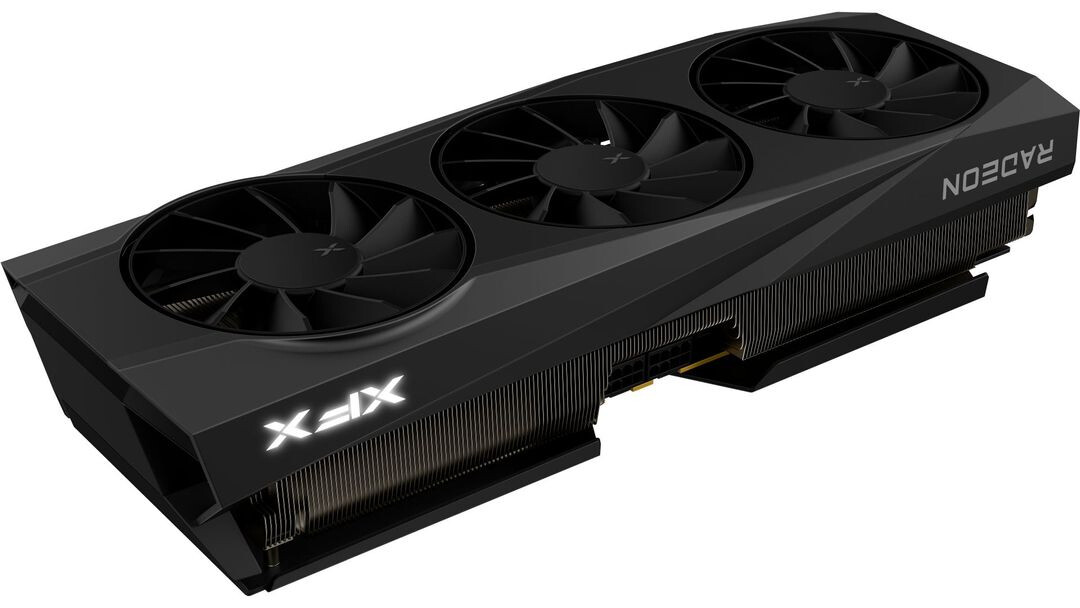
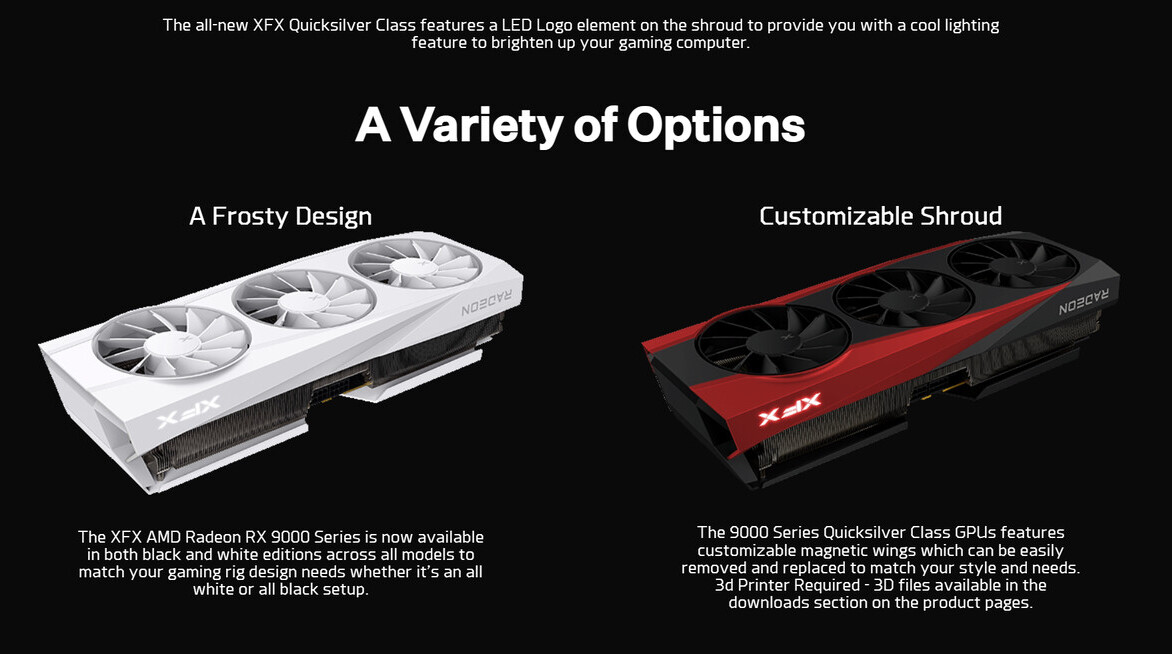
XFX Releases "Magnetic Wing" 3D Print Models for New QUICKSILVER Radeon RX 9070 Series

Shortly after participating in AMD's special RDNA 4 launch event, XFX presented its custom Radeon RX 9070 Series graphics card models to Chinese media outlets. The board partner's "QUICKSILVER class" customizable shroud design was highlighted by global PC hardware news sites—a demonstration unit was showcased with attached "racing car red and white" sections. At the time, XFX's web presences teased this intriguing modular system: "the RX 9000 Series QUICKSILVER Class GPUs features customizable magnetic wings which can be easily removed and replaced to match your style and needs." Select models also sport the manufacturer's impressive "Magnetic Air" triple-fan system—as explored in W1zzard's review of a related (higher-end) MERCURY model; worth a read!

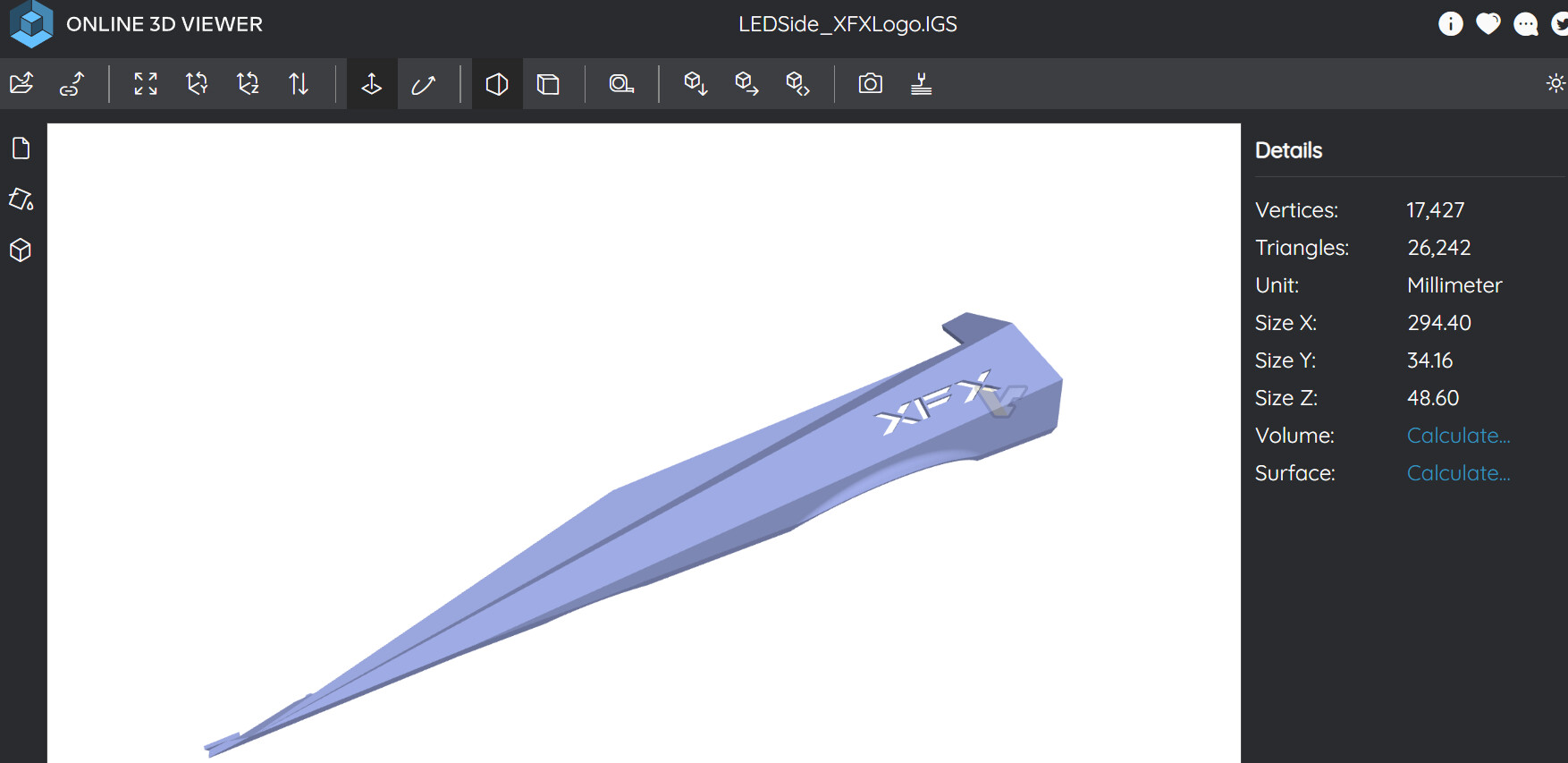
Very recently, XFX's RDNA 4 QUICKSILVER splash page was updated with additional information: "3D Printer Required—3D files available in the downloads section on the product pages." A fresh VideoCardz report covered the availability of 3D print files for compatible card models, via official download pages. Owners can print out their own interpretations, but "magnets are required for assembly." XFX has not yet indicated whether it will sell aftermarket magnetic wing parts. The company's general mentioning of "RX 9000 Series" could imply that forthcoming QUICKSILVER models—e.g. Radeon RX 9060 XT—will be similarly provisioned with modular shroud designs.

AMD Radeon RX 9050 GPU Class Leaked by Mexican Webstore

AMD has officially stated that its portfolio of RDNA 4 generation graphics cards consists of Radeon RX 9070 XT, RX 9070, and RX 9060 XT models. Last December, a longer list of GPUs appeared online—this pre-Christmas 2024 leak revealed Radeon RX 9060, RX 9050 and RX 9040 identifiers. Team Red seems to be working on populating the lower end of its Radeon RX 9000 family—similarly, Team Green is reportedly expanding its "Blackwell" GPU generation into the "entry-mainstream" segment with their RTX 5050 card design.

Late last week, a Mexican PC hardware retailer inadvertently added Radeon RX 9060 and 9050 categories (not product listings) to its webstore. Noted graphics card watchdogs picked up on the shop's accidental adding of search filters; prompting the swift removal of NDA-busting material (by the time of writing). Resultant VideoCardz news coverage has spread the word of possible forthcoming launches of much cheaper RDNA 4 GPU models. AMD and involved board partners are likely aiming to get lower-mid-range Radeon RX 9060 XT cards out of the door by the second quarter of 2025. Recent leaks indicate Radeon RX 9060 (non-XT) and RX 9050-class products potentially arriving at retail closer to summertime, with speculated "Navi 44" GPUs onboard.

AIB Leak "Reconfirms" Radeon RX 9060 XT 16 GB & 8GB Memory Configs

Last week, Acer registered a glut of new graphics card SKUs—an extensive EEC filing revealed several unannounced Nitro and Predator BiFrost Radeon RX 9060 XT models. The AMD board partner seems to be preparing two memory configurations for its lower-end RDNA 4 custom cards: 16 GB and 8 GB (GDDR6). VideoCardz reached out to AIB industry moles, in order to establish whether the aforementioned specification points were concrete. A past weekend report "reconfirms" incoming 16 GB and 8 GB variants. Going back to RDNA 3, Team Red released its Radeon RX 7600 XT GPU in 16 GB form, while the cheaper Radeon RX 7600 made do with a VRAM pool of 8 GB. An unnamed board partner's list of launch day offerings reportedly contains basic technical specs (see screenshot below).

Leaked Radeon RX 9060 XT details show 16 GB GDDR6 and 8 GB GDDR6 variants, with 128-bit memory interfaces. VideoCardz believes that 20 Gbps memory chips will be utilized, as featured on recently launched Radeon RX 9070 series cards. The leaked product list indicates that required juice will be delivered through a lone 8-pin power connector; a minimum PSU requirement suggestion is 500 W, although this could jump up to 550 W for factory overlocked SKUs. A speculative "Navi 48 LE" GPU variant is present within TechPowerUp's GPU database entry for the Radeon RX 9060 XT. VideoCardz reckons that a "Navi 44" GPU would be more appropriate for this class; perhaps derived from a mobile part. The leak suggests the presence of a single HDMI 2.1 port, as well as two DP 2.1 ports—a smaller GPU would have trouble driving more than that. During an official RDNA 4 launch event—held in Beijing, late last month—a Team Red representative announced a loose Q2 2025 launch window for Radeon RX 9060 XT graphics cards.
Return to Keyword Browsing
Nov 19th, 2026 17:22 CST change timezone

New Forum Posts

Popular Reviews

TPU on YouTube

Controversial News Posts