News Posts matching #USB

Return to Keyword Browsing

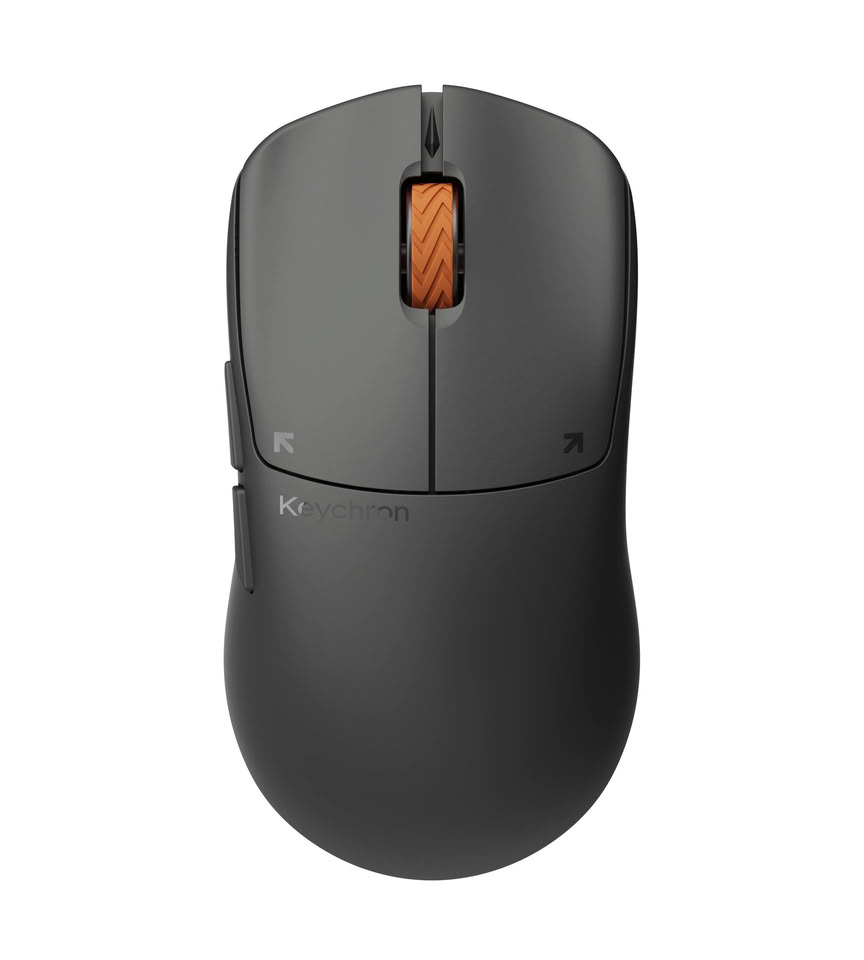
Keychron Launches G25 HE 46 g Gaming Mouse with Razer Viper Mini Shape and Analog Switches

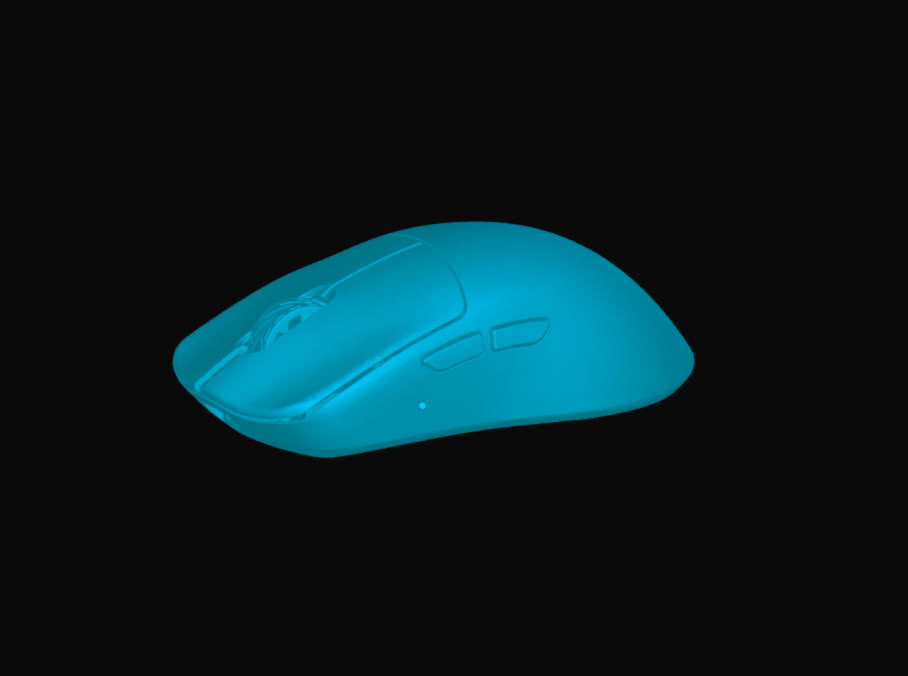
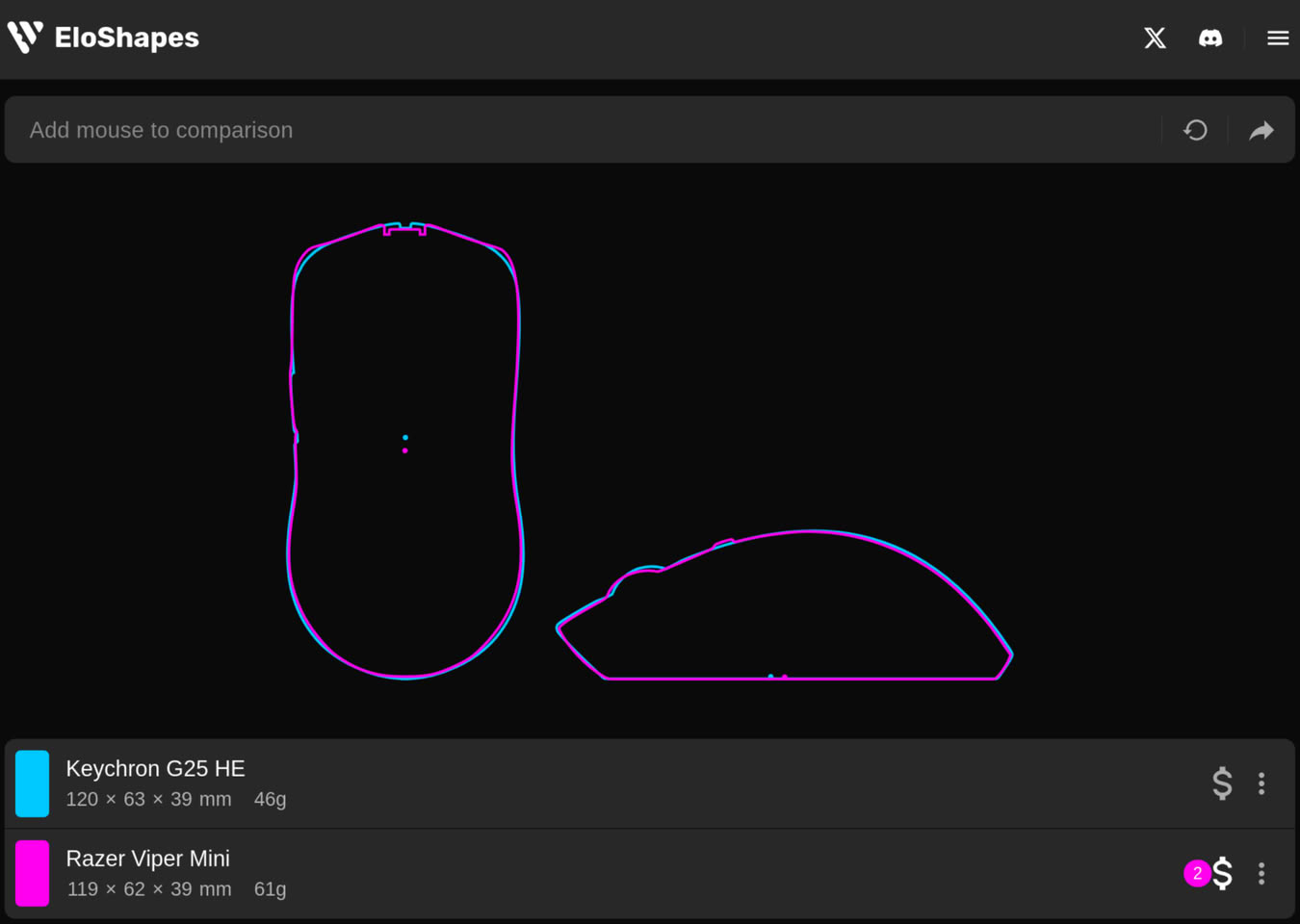
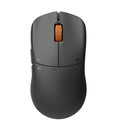
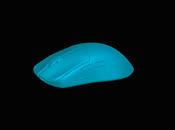
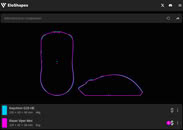
Following the release of the Keychron G6 HE, the brand has been steadily expanding its portfolio of models with Hall effect switches for adjustable actuation and rapid trigger support. The G25 HE is Keychron's latest HE mouse model, recently announced in an X post, and it takes the Hall effect switch tech and the flagship internals of the G6 HE and puts it all into a smaller shape that bears an uncanny resemblance to the Razer Viper Mini and Cobra shapes. Keychron has yet to provide a full spec sheet or product page for the G25 HE, but the mouse has been scanned and submitted to EloShapes for comparisons, where its specs and features are also available.

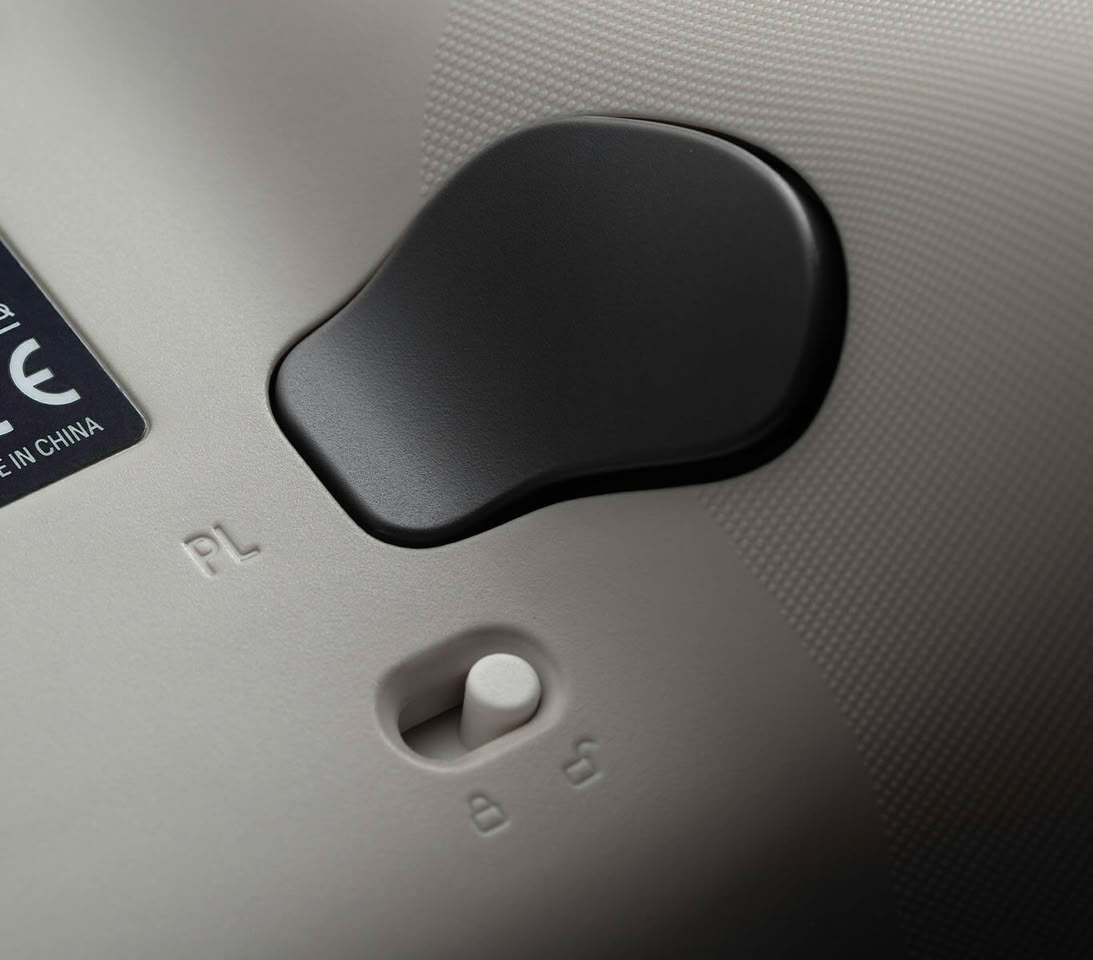
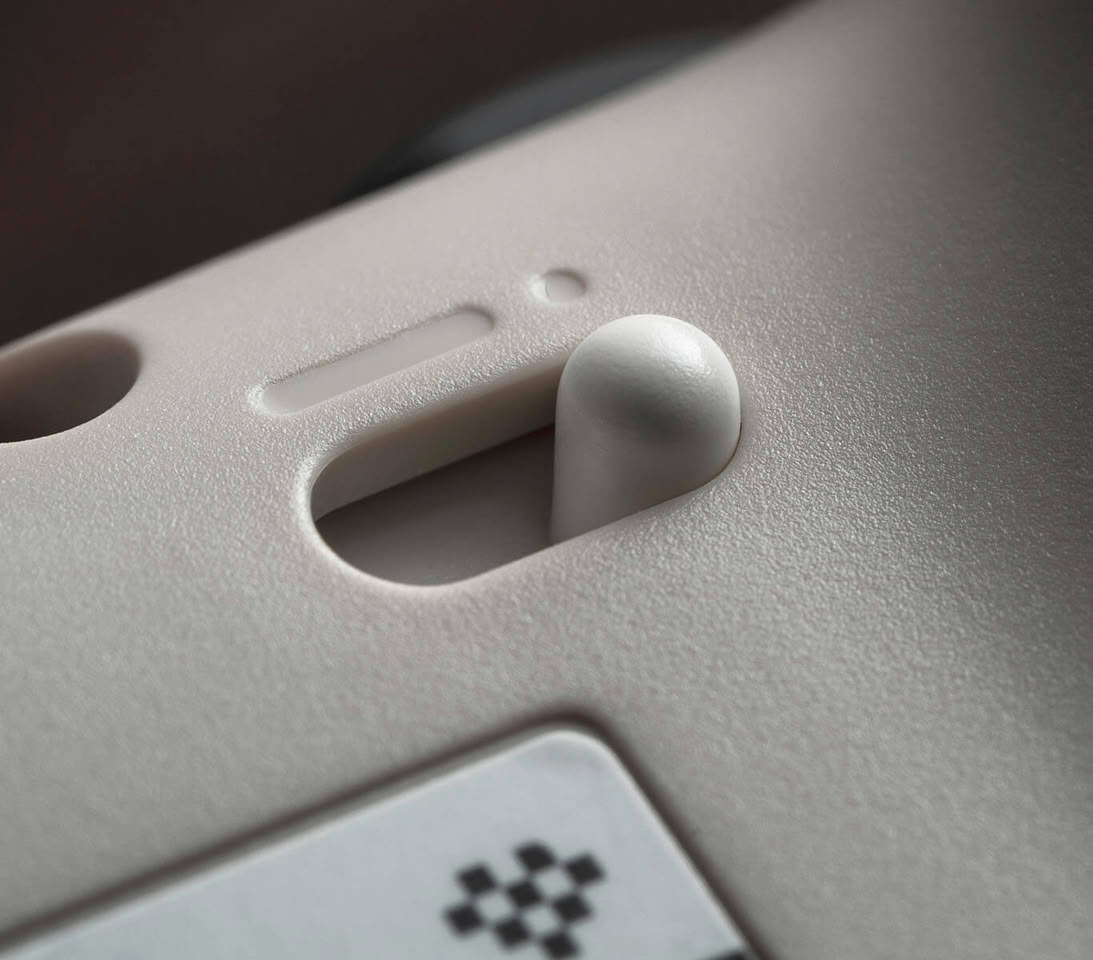
The Keychron G25 HE measures in at 120 × 63 × 39 mm and weighs 46 g, which is on the lighter side for a wireless mouse, but not the lightest by any means. It is also a symmetrical shape with right-side programmable thumb buttons and a partially open bottom plate. The G25 HE is powered by a PixArt PAW 3955 optical sensor and a Nordic 54LM20A MCU, which means it has a peak DPI of 40,000, up to 8 kHz polling rate, and can track at up to 750 IPS and 60 G of acceleration. The star of the show, and the mouse's namesake, are the MagOpt switches which feature both optical and Hall effect magnetic sensing, although the switches still have a click leaf and a distinct tactile bump, which has been largely considered to have a negative impact on the mouse's adjustable actuation trickery.
8BitDo Launches Ultimate 3C+ Wired Controller for XBOX and PC

8BitDo has officially announced the Ultimate 3C+ Wired controller for Xbox as a $39.99 Xbox controller that incorporates many of the same features as the Ultimate 3C+ Wireless launched in October, but at a much lower price. The 3C+ Wired controller has a traditional Xbox layout on both the face buttons and the offset analog sticks, but it features additional customization options that set it apart from a regular Xbox controller.

The headline features of the Ultimate 3C+ Wired controller include TMR joysticks with adjustable tension, which are supposed to resist joystick drift; remappable fast-trigger L4 and R4 buttons for additional inputs and faster trigger response times; Hall effect triggers with switchable dual-mode functionality; and a 3.5 mm audio jack at the bottom of the controller for more immersive sound. It also has two additional back paddles with an integrated paddle lock to prevent accidental activations.

Steam Frame Gets Mainline Linux Support, Signalling SteamOS Alternatives for VR Gaming

The Valve Steam Frame has been supported in downstream SteamOS kernel builds since its launch in September, but a new set of patches submitted for inclusion in the mainline Linux kernel 7.4 will officially add support for the new VR headset in the mainline Linux kernel. The patches were submitted by Neil Armstrong on behalf of Valve Software and provide initial support for the Steam Frame.

The patch notes specifically mention support for system reserved memory, regulators, GPIO keys PMIC functions, PMIC ADC channels, USB gadget, Wi-Fi 7 and Bluetooth, I2C and basic peripherals, and the built-in SD card slot. While support isn't yet feature-complete, it lays the groundwork for further kernel support down the line and should make it significantly easier for other distributions to support the Steam Frame without implementing a bunch of custom code and tools. This is also just one of many Linux 7.4 patches that will improve hardware support in the upcoming Linux kernel version.

Targus Introduces DOCK402 USB-C Alt. Mode Mobile Dock with Built-In 140 W Charger

Targus, a global leader in laptop cases and mobile computing accessories and the number one third-party docking station brand in the U.S., today launched the USB-C Alt. Mode Single Video 8K Mobile Dock with Built-In GaN Charger (DOCK402TT). Designed for portable power and connectivity, the new dock combines laptop power, display output, peripheral connections, and wired networking in one travel-ready, sustainable design.
David Dorantes, Director of Product Marketing, Targus"Mobile professionals shouldn't have to carry a separate dock and charger to stay productive when they are away from their usual workspace. DOCK402TT combines both in one travel-ready device, delivering the power and connectivity they need with less gear to pack, carry, and manage."

PS5 Linux Project Gets Support for PS5 Pro and Up To Firmware Version 13.60

Following the launch of the PS5 Linux project and the lead developer's subsequent exit from the PlayStation modding scene, it appears as though the project has continued to receive contributions. Recent updates to the PS5-linux-loader project add support for running Linux on PlayStation 5 and PlayStation 5 Pro models on firmware versions 5.00-13.60.

Since the former lead developer, Andy Nguyen, left the project, it has been taken over by seven developers who seem to be leaning on AI for development efforts, with Claude being listed as one of the contributors. Currently, the project includes: support for all USB ports, HDMI support at up to 4K 60 Hz, internal Bluetooth support, a custom GbE driver for Ethernet support, VAAPI hardware video decoding, encoding, and transcoding. Given the speed at which expanded firmware support has been added, it only seems like a matter of time before firmware version 14.10 gets support as well, since a Hypervisor exploit has already surfaced for that firmware version. This would theoretically make it possible to run GTA VI and boot Linux on the same PS5 Pro when the game eventually launches.

Keychron Launches J3 SE QMK Wireless Mechanical Keyboard With Soft Pastel Color Palette

Deviating from its usual line-up of understated, almost professional keyboard designs that mostly feature matte black and white designs with small splashes of color, Keychron has just released the J3 SE wireless mechanical keyboard in more playful "Pink" and "Pink Blue" colorways. The J3 SE features an easy-to-use 96% layout that makes few compromises to cut down on desk space—even including a full-size zero key in the num pad. Keychron sells the J3 SE on its site for $129.99.

The Keychron J3 SE has an ABS case, in either pastel pink or blue, while the Blue Pink colorway has a mix of white, pink, and blue keycaps, and the Pink colorway features keycaps in white, light pink, and a deeper salmon pink color. Both the Pink and Blue Pink variants of the J3 SE have double-shot PBT keycaps in the MDA profile, and there is a sizeable knob in the top right corner of the keyboard, above the num pad. Another notable feature is the inclusion of north-facing RGB backlighting, which should make it significantly easier to find shine-through keycaps that work properly with the keyboard.

Modder Builds "Slurptop" Cyberdeck with Full Height Keyboard, Swappable Tool Batteries, and Trackball

The concept of a cyberdeck is to customize hardware to better suit your specific needs and use cases, and a modder who goes by "Slurp Burgers" online has taken the concept to something of an extreme, with their take on a laptop, the Slurptop. Unlike many DIY cyberdeck builds, which are based on Raspberry Pi computers, the Slurptop uses a full-fat AMD Ryzen 7 7730U in the motherboard from a GMKtec M5 Ultra mini PC. As a result, it has somewhat better I/O than a traditional laptop, although the mini PC's three front USB Type-C ports were all used to connect the display and peripherals internally.

The modder took the GMKtec innards and built a custom 3D printed shell around them, replete with a columnar-stagger ergonomic keyboard using MX-style switches and SA profile keycaps, a central num pad, and a trackball mounted at the bottom of the cyberdeck. Perhaps more interesting, the modder designed custom circuitry to be able to run the device off a 24 V Kobalt power tool battery, which is swappable in the event that you need an emergency charge. The modder says that, with light productivity use, like word processing, the battery lasts around five hours, but that could be increased with a bigger 8 Ah battery.
OWC Announces General Availability of Dock Ejector 2.1

Other World Computing (OWC), a trusted leader in high-performance storage, memory, connectivity, software, and accessories that empower creative and business professionals to maximize performance, enhance reliability, and streamline workflows, today announced the general availability (GA) launch of OWC Dock Ejector 2.1 software that adds one-click safe ejection for connected data volumes, for Mac and PC. In addition, on Mac, OWC Dock Ejector 2.1 now provides seamless high-power USB port enablement.

TOPC Launches $6,399 AMD Ryzen AI Max+ Pro 495 Mini PC Workstation

The ever-growing list of mini PCs powered by AMD's Gorgon Halo APUs has just received its latest addition in the TOPC TXA2, a new workstation built around AMD's Ryzen AI Max+ Pro 495 APU and its powerful Radeon 8065S iGPU. The TOPC TXA2 is available in two configurations, with either 2 TB of storage for $6,399 or 4 TB of storage for $6,699 on TOPC's online store—even though the price is high, it's still a solid $900 cheaper than AMD's in-house Ryzen AI Halo Developer platform.

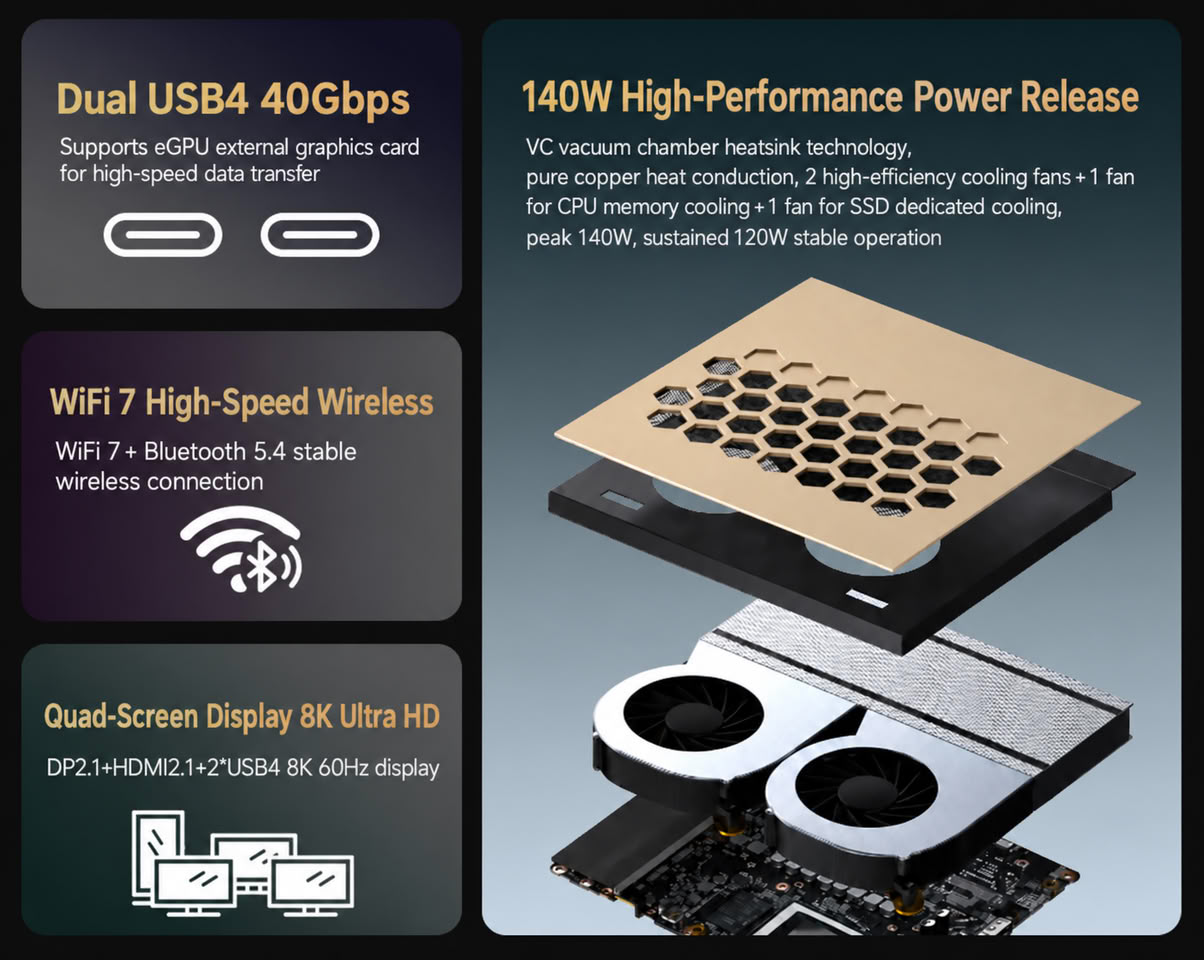
The TXA2 also packs 192 GB of LPDDR5X-8533 unified memory, with up to 160 GB shared with the iGPU for workstation use. Despite the 180 ×180 × 78 mm, or ~2.5 L chassis, TOPC claims that the TXA2 is capable of a 120 W TDP. It's also no slouch in the I/O department, with Wi-Fi 7 and Bluetooth 5.4 for wireless networking and connectivity, and it has a healthy port selection, to boot.

ATK Launches Bright Yellow Pokémon F1 V3 Ultimate+ Gaming Mouse and RS7 Air HE Keyboard

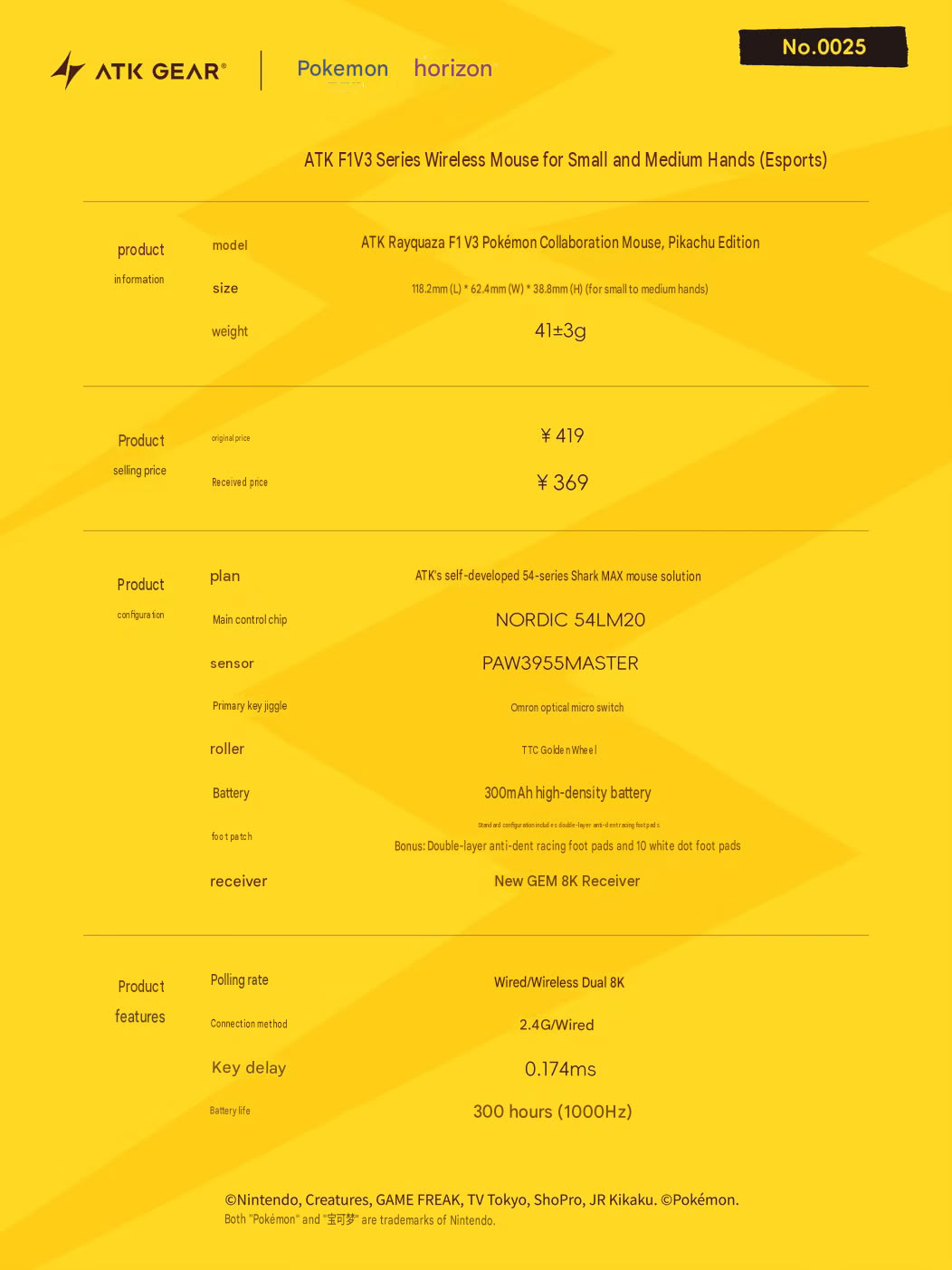
ATK has officially announced its latest collaboration: Pikachu-flavored versions of its Blazing Sky F1 V3 lightweight wireless gaming mouse and its RS7 Air Hall effect gaming keyboard. Both products have already been announced in China, but the official launch date is October 20, and an international launch appears to be a way out. The collaboration is an official deal with Game Freak and Nintendo, and the F1 V3 Pikachu Edition is listed as having a launch price of CNY 369 ($55 converted), with a regular MSRP of CNY 419 ($63 converted). The RS7 Air Pikachu edition will launch at CNY 399 ($60 converted), with an official MSRP of CNY 449 ($67 converted).

The ATK F1 V3 uses the same small-medium claw and palm grip-optimized shape as the F1 V3 Ultimate+, meaning it measures in at 118.2 × 62.4 × 38.8 mm, but it weighs in at 41 g ±3 g, which is 10% heavier than the Ultimate+, and it has the same PixArt PAW 3955 Master sensor and Nordic 54LM20 MCU as the original mouse. ATK claims that those internals afford the mouse a click latency of just 0.174 ms, and ATK claims a wireless battery life of 300 hours at 1 kHz polling, despite the relatively small 300 mAh battery. The F1 V3 can connect to the PC via both USB Type-C and via 2.4 GHz with up to 8 kHz polling over both connections. The clicks use ATK's custom optical switches, while the scroll wheel uses a TTC Gold encoder.
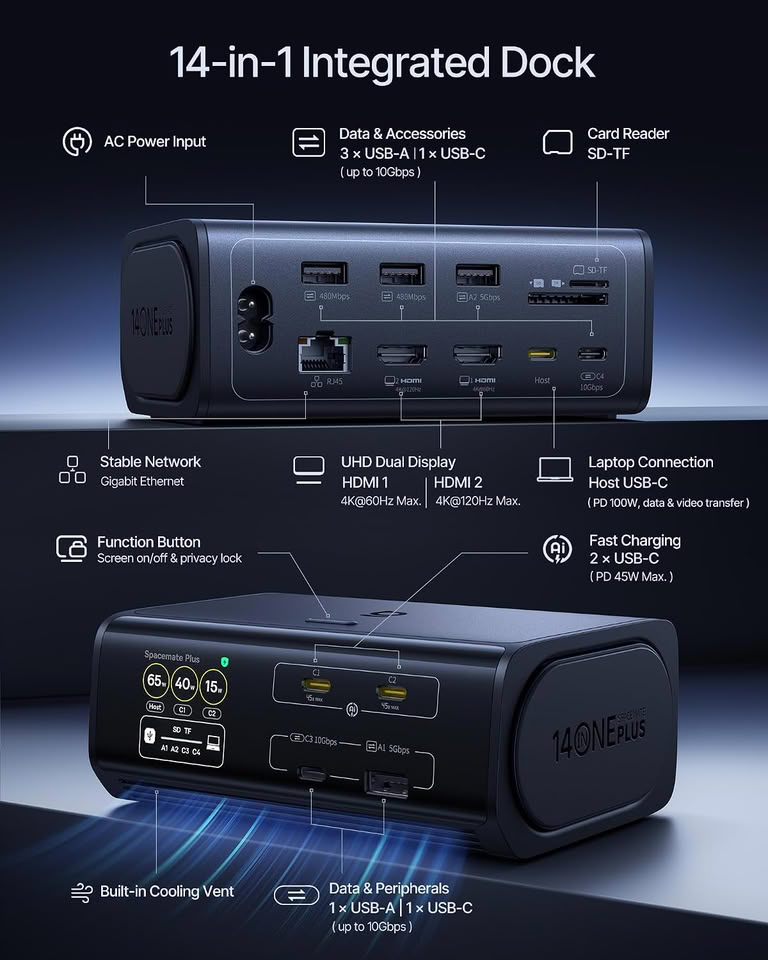
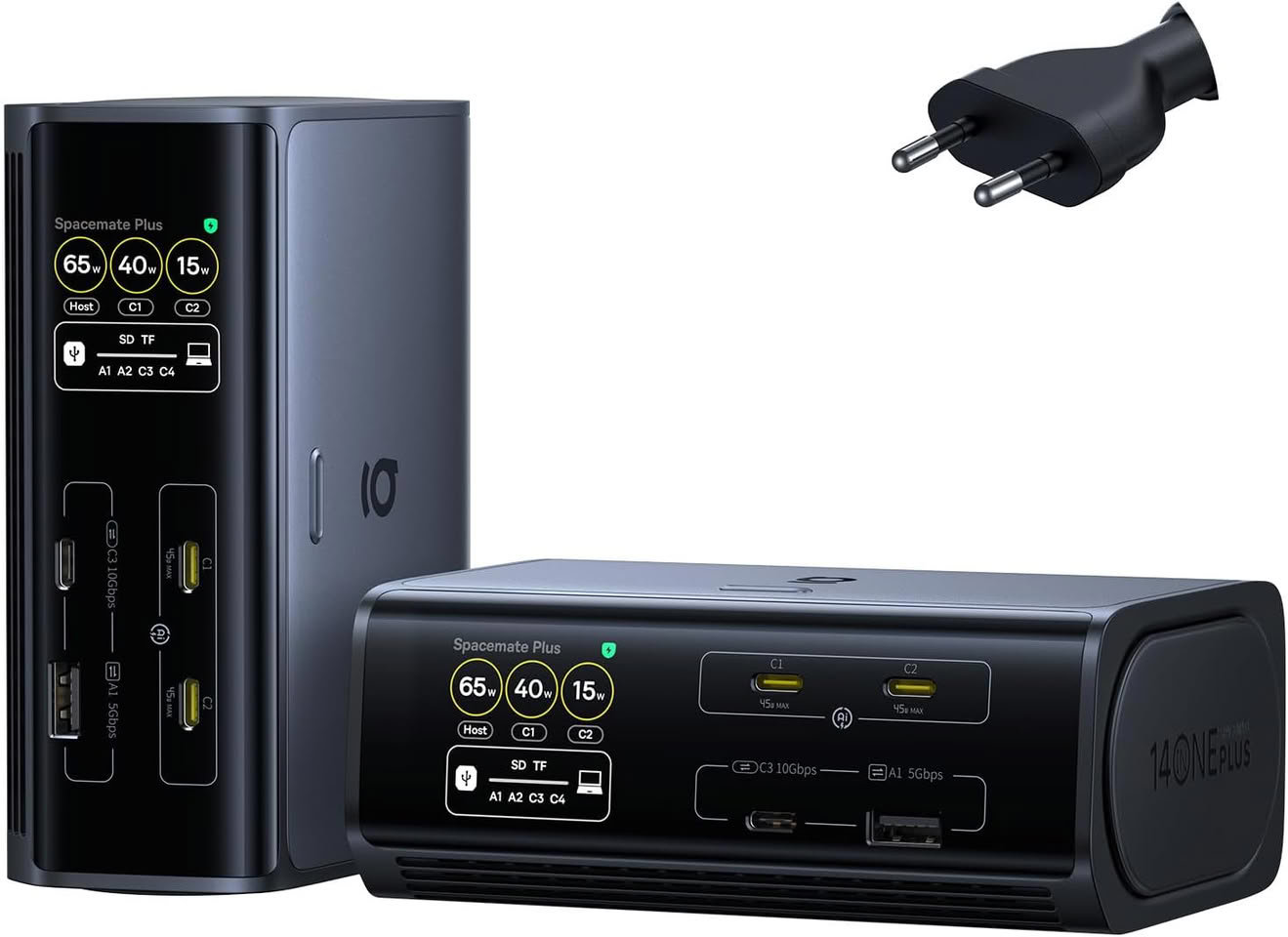
Baseus Launches the Spacemate RD1 Plus: The Definitive 14-in-1 Desk Tower with 4K @ 120 Hz

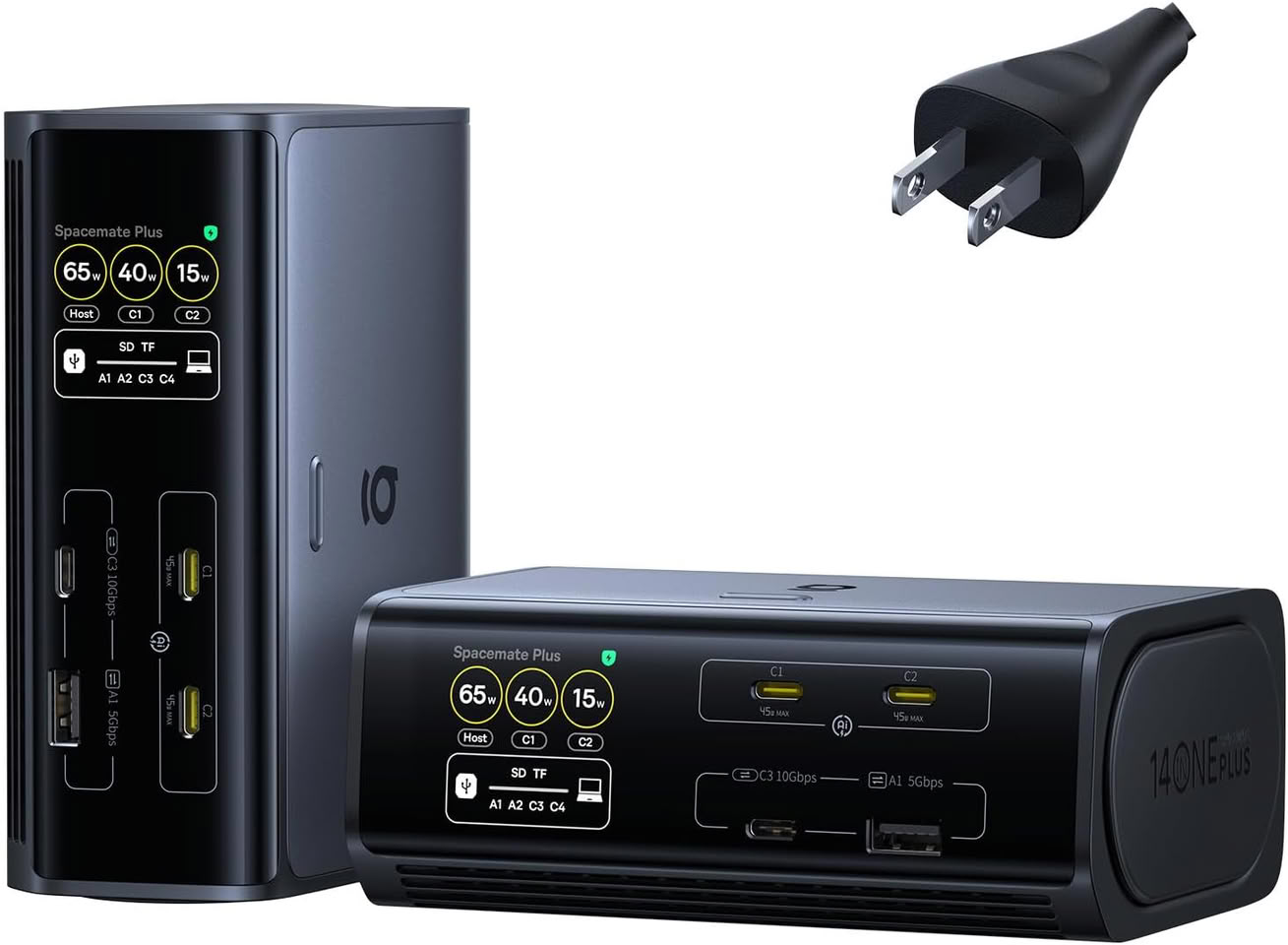
Baseus today announced the launch of the Baseus Spacemate RD1 Plus 14-in-1 (WIN) Station, a next-generation docking station that combines integrated GaN power, high-refresh display output, and intelligent workspace organization in one compact device. Built around the principle of total desktop authority, the dock integrates ultra-smooth high-refresh capabilities, an intelligent GaN-powered charging system, and an orientation-sensing display to bring effortless order and speed to modern desktop workflows.

Engineered primarily for the needs of today's desk-based professionals, the Spacemate RD1 Plus sets a new benchmark for daily office comfort and workstation performance with 14-in-1 function. Backing its 4K @ 120 Hz output, the dock supports horizontal and vertical setups with the auto-rotating smart display. It grants an effortless, real-time command over your workspace. A closer look at the Spacemate RD1 Plus reveals thoughtful advancements designed to redefine the daily desktop experience.

Epomaker Reveals Galaxy75 Wireless Mechanical Keyboard with Aluminium Case and VIA Support

Epomaker has officially confirmed that it is planning to launch a 75% version of its popular Galaxy series mechanical keyboards, building on the Galaxy100, Galaxy100 Lite, Galaxy80, Galaxy70, and Galaxy68. Although pricing is yet to be confirmed, the keyboard was shown off in a recent Epomaker livestream, and there is already a product page for it on the Epomaker online store, denoting key specs and features. Speculation would put the Galaxy75 somewhere around the $80-100 price point, since the Galaxy68 and Galaxy70 are priced at $99.99 on Epomaker's website and Amazon. According to the site, the Galaxy75 will be available only with Epomaker's Creamy Jade linear switches.

Unlike the Galaxy70 and Galaxy68, the Galaxy75 follows a more traditional, no-frills 75% layout, replete with a key in the F13 position and a full four-key navigation column on the right edge of the keyboard. The construction is also fairly standard, with an aluminium chassis, polycarbonate switch plate, and five layers of sound-damping foam, all of which Epomaker says delivers a "dense thock" sound signature. The case is also gasket mounted, and the keyboard has two aesthetic touches in the sparkle in what appears to be an electrophoretic coating and in the keycap sets. The Galaxy75 will launch in three colors, each of which has a matching Cherry profile keycap set: the black keyboard comes with black and orange dye-sublimated keycaps with cityscape printing, and the lavender and pink versions come with a mix of dye-sublimated solid PBT keycaps with accent keycaps featuring opaque ABS under a clear PC layer with UV-printed legends.

HP EliteBoard G2a Keyboard Computer Launches with Eyewatering Price and AMD Ryzen AI 400 APUs

HP revealed the EliteBoard G2a keyboard PC at CES 2026, promising "next-generation local AI power in a keyboard-sized form factor." Now, 10 months later, HP has released the updated EliteBoard G2a, revealing pricing and some of the keyboard and underlying PC specs, in the process. The G2a features either the updated AMD Ryzen AI 7 Pro 450 APU or its smaller Ryzen AI 5 Pro 435 counterpart. The cheapest version of the HP EliteBoard G2a, which packs a Ryzen AI 5 Pro, 16 GB of DDR5-5600 memory, and 512 GB of PCIe Gen 5 SSD storage, comes in at $3,028, while the SKU with the Ryzen AI 7 Pro 450 APU paired with 32 GB of memory and a 512 GB SSD, comes in at $4,167.

The small form factor PC is capable of drawing 65 W over USB Power Delivery, and the only I/O it features is a single USB4 port and a single USB Type-C 10 Gbps port. The EliteBoard G2a also features built-in dual speakers and comes bundled with an HP 675M wireless mouse. The keyboard component of the mini PC is a membrane keyboard, not mechanical, and it follows what appears to be an 1800 layout, and it has white backlighting. Fortunately, the EliteBoard G2a uses SODIMM RAM, so it's upgradeable in the event that you want 32 GB of RAM but don't want to pay HP's upgrade cost.

8BitDo Launches Ultimate 3C+ Wireless Controller with Thumb Stick Tension Adjustment and Extra Buttons

8BitDo has officially launched the latest version of its Ultimate Wireless controller, the Ultimate 3C+, which is, for an intents and purposes, a more affordable version of the recently revealed special edition Ultimate 3 Wireless controllers. The Ultimate 3C comes in at a pre-order price of $39.99 on Amazon, and it will officially be launched for regular purchase on October 30. The controller itself is based on the same Xbox design as most of 8BitDo's Ultimate controllers—meaning it features the ABXY face buttons and offset thumb sticks—and it is compatible with both Android and Windows via 2.4 GHz, USB-C wired, and Bluetooth 5.4 LE connections, with the 2.4 GHz connection offering 1 kHz polling for reduced input latency.

The 8BitDo Ultimate 3C+ has a number of flagship-tier features, like TMR joysticks with adjustable tension, separate trigger vibration motors that sync with the controller rumble, lockable back paddles, additional L/R4 shoulder buttons, Hall effect triggers with both linear and non-linear control modes, and magnetic storage on the controller for the 2.4 GHz receiver. 8BitDo says that the 500 mAh battery in the Ultimate 3C controller is able to power the controller for up to 20 hours when using the 2.4 GHz connection, while Bluetooth stretches that to 32 hours.

Valve Publishes Steam Frame CAD Files for DIY Accessories and Tweaks

Valve has finally released the CAD files for its Steam Frame VR headset and VR controllers, officially allowing modders and creators to create and publish their own Steam Frame accessories—as long as they're published under the correct Creative Commons Attribution Non-Commercial Share Alike 4.0 International license. The CAD files are published on GitLab, and they include both 3D models and technical drawings and documentation for reference when designing accessories.

The CAD files also include documentation on the electronics of the Steam Frame, including an example project documenting a USB 3.0 expansion port that could be adapted for other electronics projects. While Valve hasn't granted a sweeping explicit license to create commercial projects for the Steam Frame, it notes on the Frame's GitLab repo that "if you wish to pursue a commercial license please reach out to us at steamframecompatible at valvesoftware com," ostensibly opening the door for licensing partnerships.

Epomaker Launches HE60: Affordable Wireless Magnetic Gaming Keyboard With 8 kHz Polling

Following the recent launch of the Epomaker HE65 V2, the brand has officially released its latest HE60 V2, which is a new 60% wireless gaming keyboard that targets the affordable gaming keyboard market. The HE60 uses the same 60% layout as the now-famous Wooting 60HE, and it borrows some of the Wooting's design language, to boot. The HE60 also uses a tray-mount ABS case, like the Wooting, and it even has the same carry strap on the left edge of the keyboard case. To mitigate any potential reverberation or unpleasantness from the tray-mount case, Epomaker has filled the case with five layers of sound damping materials—PCB foam, a switch pad, a "sound-enhancing pad," a latex case foam around the switch sockets, and a silicone bottom pad. The HE60 uses an aluminium plate and plat-mounted stabilizers.

The Epomaker HE60 features both Bluetooth and 2.4 GHz wireless connectivity, and it has an 8,000 mAh battery, which should last a good long while, although Epomaker makes no claims about battery life. 8 kHz polling is achievable via 2.4 GHz and the USB Type-C wired connections, and there is a mode switch under the Caps Lock key to switch modes. Being a Hall effect keyboard, the Epomaker HE60 features the typical adjustable actuation, with a range of 0.1-3.3 mm of travel, and features like SOCD and DKS, all of which are customizable in the browser-based Epomaker Hub driver. In its stock form, the HE60 ships with Epomaker Creamy Jade Magnetic linear switches, which are closed-bottom switches that feature 30-55 gf actuation force, a POM stem, PC upper case, and PA66 bottom with a 20 mm spring.

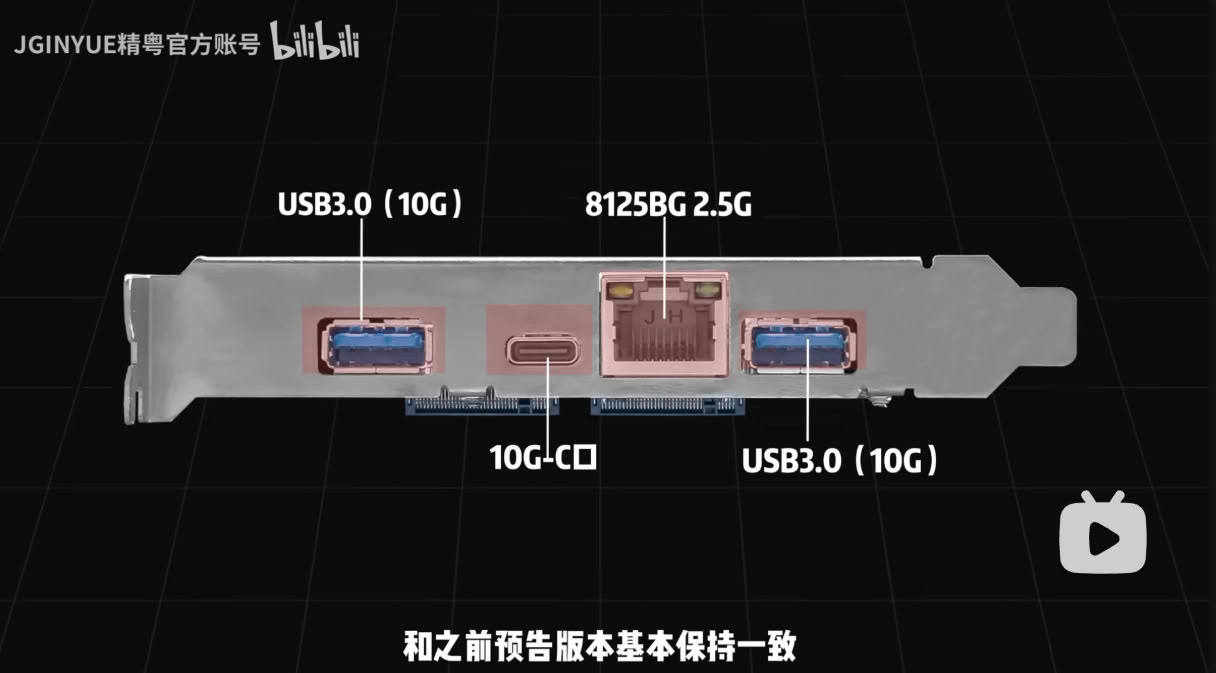
AMD B650 Chipset Arrives on a $58 PCIe Expansion Card From JGINYUE

JGINYUE has put AMD's B650 chipset on a PCIe add-in card called the Xscale.io, and it costs just 388 yuan in China, VideoCardz reports. That works out to roughly $58, although some conversions put it closer to $54. The card uses the "Promontory 21" chip to add four M.2 slots, a 2.5 GbE port, two 10 Gbps USB Type-A ports, and one 10 Gbps USB Type-C port to any system with a spare PCIe slot. There are also two internal USB 2.0 headers. The four M.2 slots are not equal, however. The two on the front are PCIe 4.0 x4, while the two on the back are limited to PCIe 3.0 x2 and PCIe 3.0 x1, so the rear slots are probably best left for slower bulk storage.

The card takes a 6-pin PCIe power connector, and it has a 4-pin fan header for an optional 40 mm fan. Apparently, that header runs at a fixed speed, and the fan is not included. This isn't the first card of its kind, since Lekuo launched a B650 add-in card in August with four M.2 slots and four SATA ports, and WisdPi sells a $199 option with OCuLink. JGINYUE's version undercuts both by a wide margin. The company reportedly plans variants with 20 Gbps USB Type-C, 10 GbE, and a half-height design, though there's no word on availability outside China.

Windows 11 is Phasing Out Classic Printer Drivers, Could Break Older Workflows

If you have any old printers in your office, updating Windows and the driver stack might become problematic in the future. Microsoft is slowly moving Windows 11 away from the traditional model of installing printer manufacturers' drivers, instead providing a unified base layer within the operating system itself for host-based compatibility. This change targets legacy v3 and v4 printer drivers and aims to make Windows printing more standardized, secure, and easier to maintain. The future vision is for plug-and-play functionality in the operating system, where every certified printer is compatible without the need for traditional driver installation. Existing drivers can still receive updates on a case-by-case basis. Since July 1, Windows has also changed its driver ranking so that compatible devices prefer Microsoft's built-in Internet Printing Protocol (IPP) Class Driver.

A final stage is scheduled for July 1, 2027, when third-party driver updates will be limited to security fixes. Existing drivers can still be installed manually using packages supplied by manufacturers, provided the manufacturers decide to continue supporting the older driver model. The foundation is Windows Ready Print, which uses standards including IPP and is designed around Mopria-certified devices. Instead of requiring a separate driver for every printer, Windows can handle compatible hardware through its own printing stack.

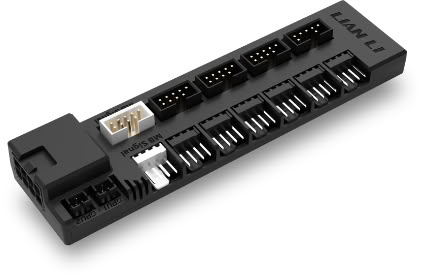
Lian Li Debuts Edge Hub Adv With Automatic Shutdown for 12V-2x6 Cable Thermal Events

There is no shortage of horror stories about misbehaving 12V-2x6 power connectors, whether they be on AMD Radeon or on NVIDIA GPUs. The ongoing drama with the GPU connector has prompted manufacturers of other PC gaming hardware to come up with solutions, like ASUS's ROG Equalizer, Cooler Master's GPU Shield technology, or ASRock's protected, right-angled 12V-2x6 cable. The latest to join the GPU power race with active protection is Lian Li, except it does things a little differently.

The Lian Li Edge Hub Adv is the latest iteration of the brand's USB-controlled fan hub, and the new model includes two sensor ports for temperature sensing using NTC (negative temperature coefficient) sensors built into an included 650 mm 12V-2x6 GPU power cable. The power cable connects the GPU to the PSU, and the NTC cable plugs directly into the Lian Li Edge Hub Adv, which connects to Lian Li's L-Connect 3 monitoring software on Windows. By default, L-Connect is set up to monitor the temperature of the NTC sensor and start an emergency shut-down once the connector temperature reaches a certain threshold. In addition to an on-screen pop-up alerting the user to an imminent shutdown and giving them the chance to trigger the shutdown manually instead, Lian Li will also send the user an email when a shutdown is triggered by a misbehaving GPU power connector.

Infinix Launches GT NX Series Peripherals: Redefine Mobile Gaming Boundaries to Deliver Native Console-Grade Experience for Gamers

Infinix, a leading global technology brand, today officially unveiled its flagship gaming peripheral of the year—the GT NX Series Peripherals. While the mobile gaming market continues to expand, players are increasingly seeking a more professional and immersive experience. High-frame-rate, high-fidelity mobile games impose stringent demands on smartphones in terms of thermal management, network stability, and display output. To fully unlock this potential, the GT NX Series introduces dedicated physical controls and industry-leading haptic feedback, providing gamers with tactile precision, ergonomic comfort, and a true console-grade feel right in the palm of their hands.

Most mobile gaming peripherals available today are fragmented and single-purpose: docking stations only handle video mirroring, cooling fans merely address overheating, and game controllers often come with high latency. Gamers have to purchase multiple separate accessories and spend time on complicated setup. To tackle these industry pain points, Infinix officially unveiled the GT NX Controller and GT NX Station multi-functional esports docking station. This integrated hardware connects control, cooling, display output and port expansion in one complete workflow, transforming a smartphone into a portable gaming console for versatile scenarios.

StarTech.com Launches Quad Monitor Thunderbolt 5 Dock for Multi-Display Workstations

StarTech.com has launched a new Universal Thunderbolt 5 Docking Station (206N-TB5USB4DOCK) built for power users who need more display space, more charging power, and fewer compromises at the desk. The dock supports up to four 4K 60 Hz monitors on Windows, giving IT teams a driverless way to equip demanding workstations for engineering, finance, development, content creation, and other multi-display workflows.

The dock delivers up to 140 W Power Delivery to the host laptop, supporting high-performance systems through the same connection used for displays, networking, storage, and peripherals. Its downstream Thunderbolt 5 port also provides up to 45 W of charging for compatible devices, adding another source of power for connected hardware.

Sonnet Launches Thunderbolt 5 eGPU Box with 850 W PSU and Triple-Slot GPU Support

Sonnet, the US-based accessory maker who previously launched the Echo 20 and 21 Thunderbolt 5 docking stations with 10 GbE, has officially released the Breakaway Box 850 T5, a Thunderbolt 5-based eGPU box with an industrial aesthetic and a built-in 850 W PSU. The Breakaway Box 850 T5 is available from Sonnet for $599.99.

The Breakaway Box 850 T5 is designed to accept triple-slot GPUs with dimensions up to 345 × 155 × 70 mm, and the included PSU features three 8-pin connectors that can be adapted to a 12v-2×6 connector in the case of the latest NVIDIA and certain AMD Radeon GPUs. The enclosure itself weighs 6.4 kg and measures 210 × 400 × 250 mm, and it is backwards-compatible with Thunderbolt 4 and USB4 in addition to Thunderbolt 5.

Microsoft Rolls Out Emergency Windows 11 Patch, But AMD GPU Driver and File Explorer Crashes Remain

Microsoft today rolled out an out-of-band emergency Windows 11 patch with KB5129195, which is being distributed to everyone. This emergency update is automatically downloading across every PC, as it fixes crucial issues and patches privilege elevation vulnerabilities. The list of fixes in this update includes a patch for CVE-2026-62721, issues with remote desktop connection, and importantly, a partial fix for faulty USB audio. If readers recall, Microsoft's previous September update disrupted USB audio output on many PCs, affecting USB Audio Class 1.0 devices, where systems that used to work produced no sound. In the latest patch rolling out today, Microsoft noted that 8-channel and 3D audio modes are being fixed, but several other issues remain. For example, the lack of volume controls and the complete lack of audio output are still present for some USB audio devices, so this release doesn't completely fix the problem.

Next, there are a few unconfirmed issues in the previous KB5124008 September update that sites such as Windows Latest are tracking. Today's out-of-band KB5129195 doesn't fix them. These include issues with AMD Radeon GPU users, who are reportedly experiencing system freezing, crashing, driver timeouts, black screens, missing display output, and even immediate errors after reinstalling the driver stack. Separately, Windows Latest also spotted users complaining about File Explorer failing to start or crashing immediately, as well as not being able to access file history. This issue is present in some enterprise environments such as Citrix UPM, FSLogix, Horizon, or ProfileUnity ProfileDisks on both Windows 11 24H2 and 25H2.

Windows 11 September Update Kills Audio Output on Some PCs

Windows 11 continues its streak of breaking things, as Microsoft has confirmed that there is an issue with the latest September security update. According to the updated support document, Microsoft confirmed that the KB5124008 Windows security update can break audio output on some PCs. Specifically, this security update introduces issues with USB audio devices, where users of these audio output devices can't get any output from them. Messages include "This device cannot start (Code 10)" in the device manager, which fails to recognize some devices, while other symptoms can include unresponsive volume controls, no volume at all, no audio output, unresponsive sound settings, or the complete lack of detection in the device manager.

Microsoft confirmed that this only affects USB Audio Class 1.0 devices, but the current workaround is quite strange. Some USB audio devices can continue to function in standard stereo configuration. However, when switching to multichannel audio features such as 8-channel or 3D audio mode, the device can fail. The company is stating that the mileage will vary depending on the device type and use case, as some users were able to restore audio functions by switching to 2-channel audio mode in cases like these. However, do note that it doesn't mean that the problem is solved, but that only a few devices can find a workaround until a temporary fix is in place. Microsoft is reportedly working on a resolution.

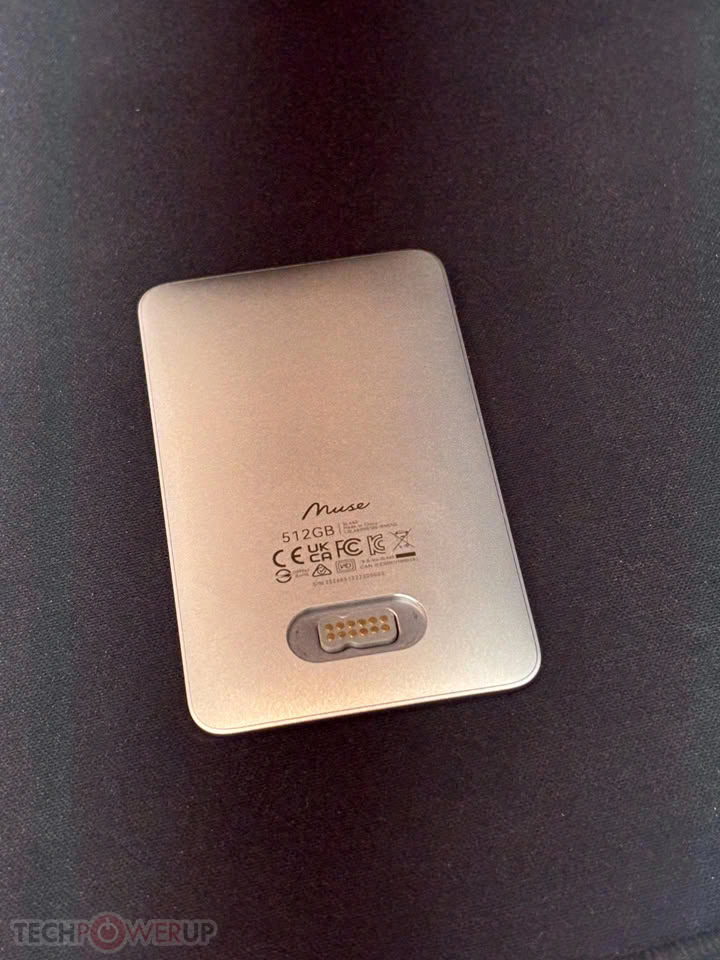
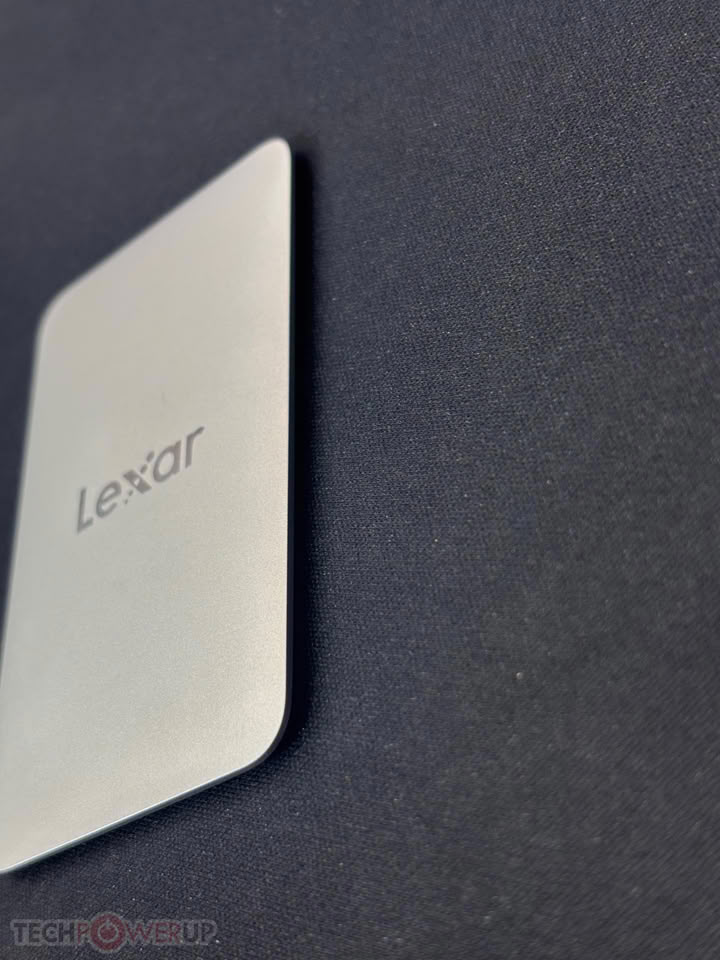
Lexar Shows Off Muse Portable SSD, Claims World's Thinnest at IFA 2026

We are on the ground at IFA 2026 in Berlin, and Lexar used the floor to show off the Muse, a portable SSD the company is calling the world's thinnest. It measures just 3.8mm at its thickest point, tapering to about 1mm at the edges. That's closer to a credit card than the SSD bricks most people are used to carrying. However, getting there meant losing the USB-C port entirely. The Muse instead uses SnapLink, a proprietary pogo-pin connector held in place by N52-grade neodymium magnets, paired with a separate magnetic cable that terminates in USB-C. That also means that if you lose the SnapLink cable, the Muse is pretty much dead weight, since there's no standard port to fall back on.

The speeds are unremarkable for this class of drive, with up to 1,050 MB/s reads and 1,000 MB/s writes, and support for 4K ProRes recording at up to 120 FPS on compatible iPhones. Lexar also throws in a magnetic sleeve so the drive can sit on the back of a MagSafe-compatible iPhone. It launches in 512GB and 1TB capacities in Q4 2026, but there's no word on pricing yet. Lexar also hasn't shared sustained write or thermal numbers, so it's not clear yet how that thin aluminium shell handles heat during a long video dump. Lexar showed the Muse alongside its AI Storage Core lineup at the show, marking the company's 30th year in the memory business.
Return to Keyword Browsing
Nov 11th, 2026 07:07 CST change timezone

New Forum Posts

Popular Reviews

TPU on YouTube

Controversial News Posts