News Posts matching #USB

Return to Keyword Browsing

Lexar Shows New AI Storage Core Technologies and Storage for Specialized Application Environments at IFA 2026

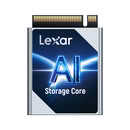
Beyond portable storage, Lexar is also showcasing the continued evolution of its AI Storage Core at IFA 2026. Combining advanced packaging, chip hardware, Lexar Luma Bridge technologies, and system-level optimization, the showcase includes next-generation AI-grade Gen 5 SSD and AI-grade Gen 5 Storage Stick. With bandwidth of up to 11 GB/s, these concepts support compact AI devices requiring larger local model storage, faster model switching, lower-latency data access, and sustained performance within constrained power and thermal environments.

Underpinning these concepts is an integrated hardware-software architecture built around Longsys' self-developed Gen 5 controller SPU, or Storage Processing Unit, and Lexar Luma Bridge technologies. Manufactured on an advanced 5 nm process with a DRAM-less architecture, the SPU is engineered to improve supply stability while maintaining high-performance AI storage capabilities. Lexar Luma Bridge uses intelligent workload scheduling, predictive prefetch, and optimized cache management to address large Mixture-of-Experts models, expanding KV Cache, and I/O latency—improving local AI performance while reducing DRAM capacity requirements by approximately 40%.

Club3D Unveils New 40 Gbps USB4 NVMe Enclosure and Dual Port Wall Charger

Club 3D, a Dutch technology innovator specializing in advanced computer connectivity solutions since 1997, released their products for August. Introducing the CAC-2510, an ultra-fast 40 Gbps USB4 NVMe enclosure engineered to deliver maximum data transfer speeds and high-performance external storage. We also introduced the CAC-1935, a compact fast charger designed to fit effortlessly into tight spaces while delivering reliable, high-speed power delivery.

Meet our 40 Gbps USB4 NVMe enclosure
High-performance external storage shouldn't force you to settle for thermal throttling or data transfer bottlenecks. The Club 3D CAC-2510 M.2 SSD Enclosure bridges the gap between pocket-sized mobility and blazing-fast desktop performance over a single, high-speed connection.

Windows 11 Deletes ASUS GPU Drivers After Extended Eco Mode Usage

As was recently discovered by an ASUS ROG Zephyrus G14 owner on Reddit, there is apparently a conflict between Windows 11's built-in driver management tools and ASUS's proprietary power profiles. After leaving their Zephyrus G14 laptop, with an NVIDIA GeForce RTX 5070 Ti dGPU, in Eco Mode for a number of weeks, Reddit user u/OK-Horse-3169 switched their laptop back into performance mode in order to play some games, only to discover that Windows had deleted the GPU driver. According to ASUS's support documentation, this is expected behavior.

As it turns out, on basically any laptop with a MUX switch that disables the dGPU entirely, Windows 11 will automatically remove the drivers, because the driver is no longer necessary for a device that's no longer connected—it treats it much like it would a removable USB drive or peripheral. The source of the problem, as discovered by the redditor, is called pnpclean.dll, a maintenance task that deletes the aforementioned drivers if a device hasn't been connected for 15-30 days. After the driver was deleted, Windows recognized the user's RTX 5070 Ti as a generic display adaptor until the driver was reinstalled.

Keychron Launches Two New Alice Keyboards with Scissor Switches

Keychron is known for its line-up of wireless mechanical keyboards, but it also has more basic scissor switch designs for office and productivity use. With the launch of the Keychron B40 and B39, the brand has brought some of its mechanical layouts into the scissor switch realm with two Alice layout keyboards. The Keychron B40 is a 75% Alice layout keyboard, while the B39 features an 1800 Alice layout, which just means it packs a num pad to the right of the navigation cluster and alpha block. The B40 is available for $49.99, while the B39 launched for $54.99 on the Keychron online store.

Keychron's B40 and B39 both feature scissor switches, which Keychron claims are more silent than mechanical switches, but the switch mechanisms are still pre-lubed from the factory, and the switches still have 3.5 mm of total travel distance—a claimed 59% taller than traditional scissor switches. The B40 and B39 both run ZMK firmware, which is designed for wireless efficiency, and Keychron claims that this allows the keyboards to reach up to 520 hours on a single charge in 2.4 GHz mode, despite the relatively small 800 mAh batteries.

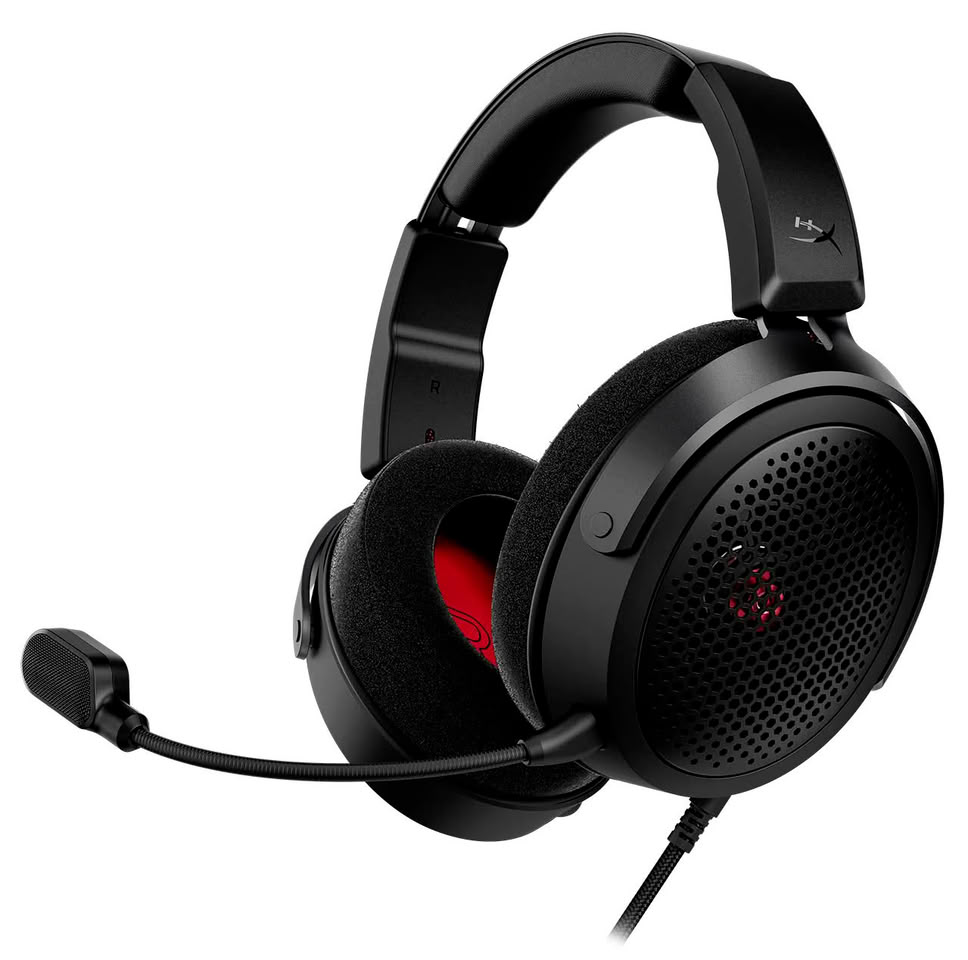
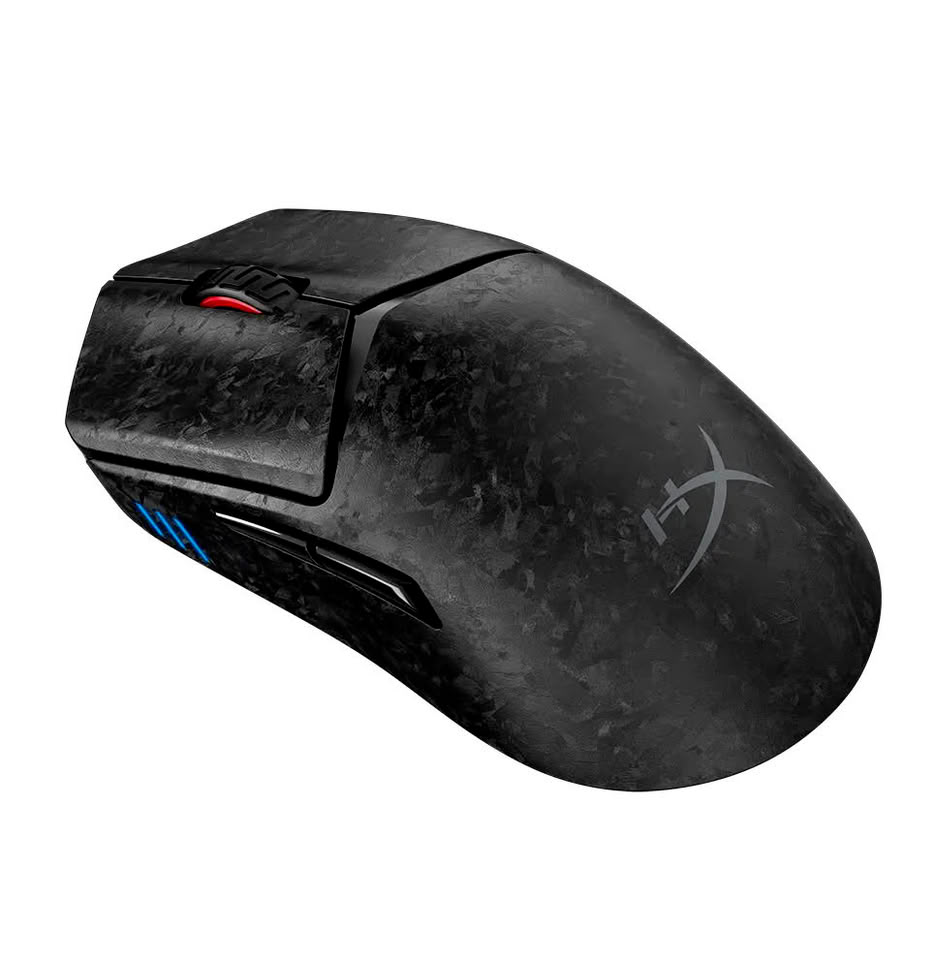
HyperX Launches New Gaming Headphones, Mouse, and Microphone Series

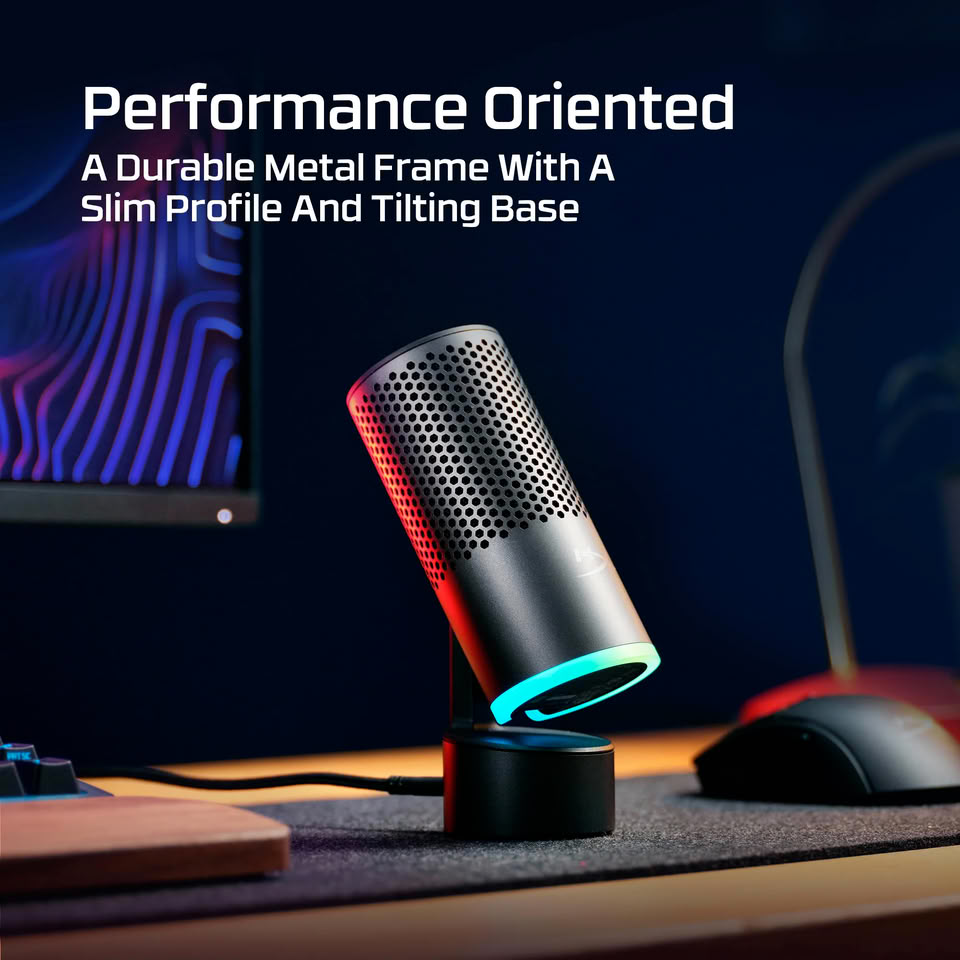
This weekend, HyperX announced several new products during its Level Awakening online event: the Cloud Alpha Air open-back headset, the Pulsefire Haste 3 Pro wireless mouse, and SoloCast 2 Pro USB microphone. HyperX Cloud Alpha Air is an open-back over-ear gaming headset with a metal-reinforced headband and sliders. It features 40 mm dynamic drivers with neodymium magnets, a unidirectional electret condenser microphone and a USB connection with 16-bit and 24-bit audio.

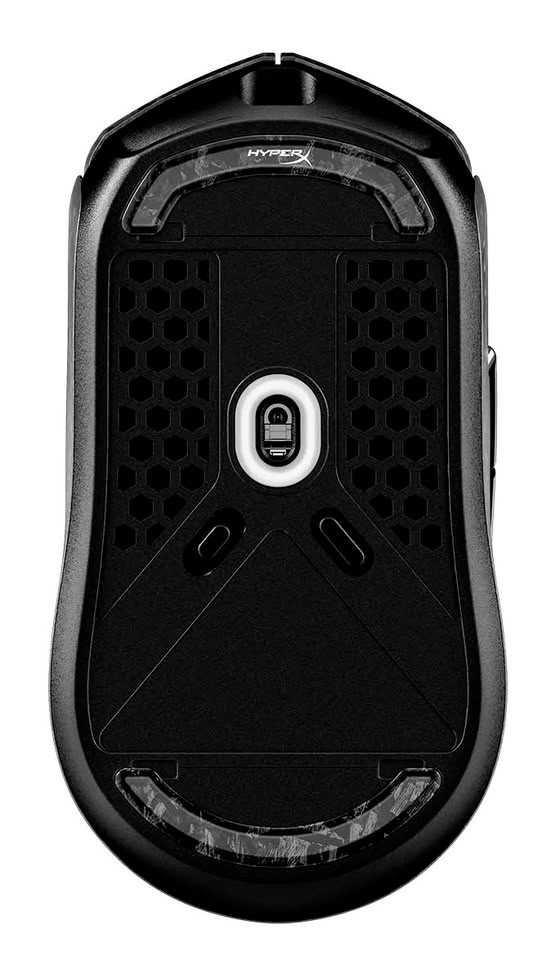
The Pulsefire Haste 3 Pro is a symmetrical wireless gaming mouse with a carbon-fiber shell and a weight of just 47 g. It supports up to 42,000 DPI, five DPI presets (400, 800, 1600, 3200, 6400), 800 IPS, 70G acceleration, up to 8,000 Hz polling and uses optical switches. For connectivity, it offers USB, Bluetooth, and 2.4 GHz wireless. The battery can last up to 35 hours at 8 kHz polling. The HyperX SoloCast 2 Pro is a USB condenser microphone with two 14 mm condenser capsules, a built-in pop filter, RGB lighting and a tap-to-mute sensor. It was also upgraded with a 3.5 mm audio output. All three products are currently listed as coming soon on HyperX's website. The Cloud Alpha Air headset is priced at $149.99 MSRP, the Pulsefire Haste 3 Pro gaming mouse at $129.99, and the SoloCast 2 Pro microphone at $89.99.

Minisforum Launches $1,800 M2 Pro Mini PC With Intel Arc B390 iGPU and 32 GB RAM

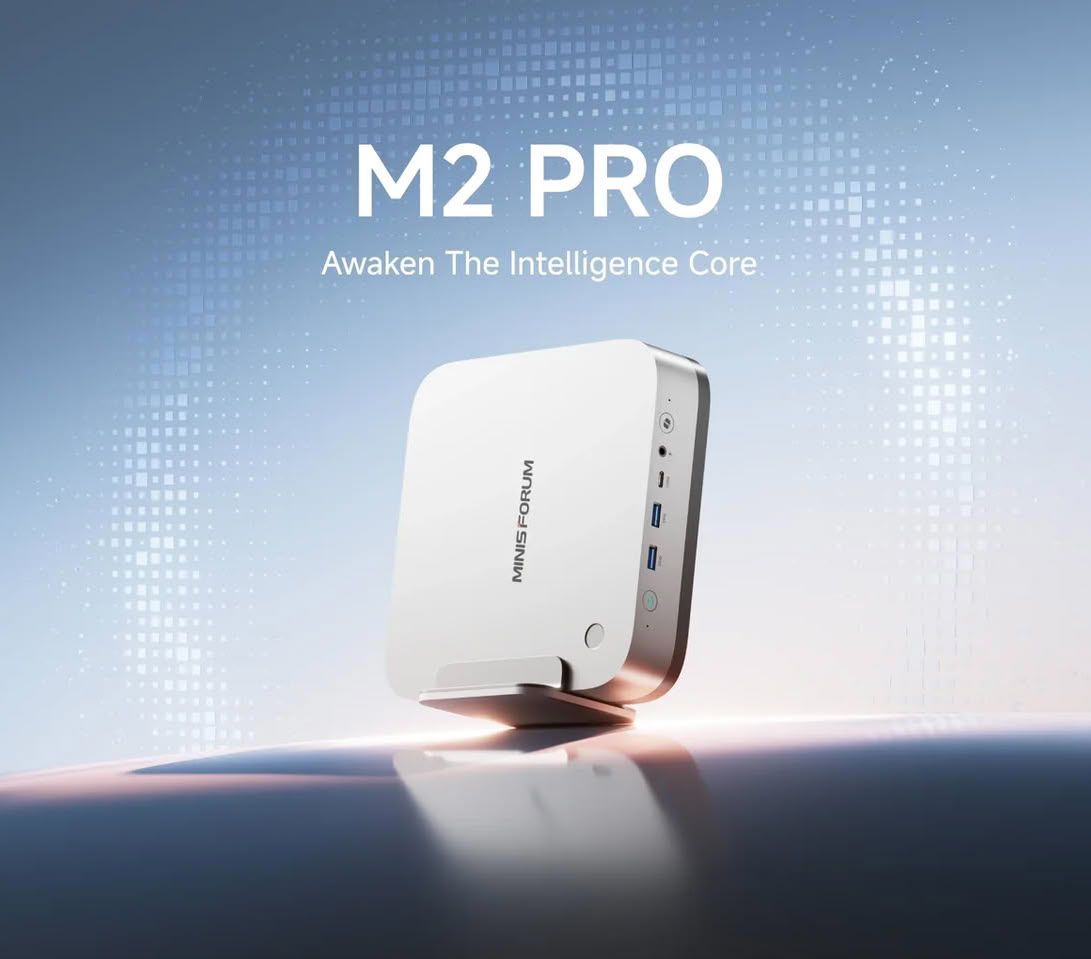
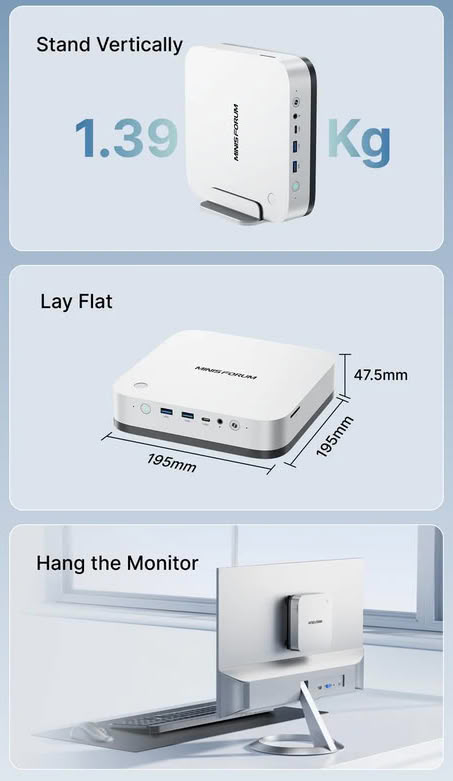
Minisforum is apparently continuing its ongoing attempt to flood the mini PC market with as many models as possible, with the M2 Pro being the latest entry into its Intel Panther Lake-powered mini PC line-up. The Minisforum M2 Pro packs Intel's latest Core Ultra X7 358H, with its powerful Arc B390 iGPU in tow, into an aluminium chassis measuring just 195 × 195 × 47.5 mm, or 1.8 L. Minisforum claims that the Intel Core X7 Ultra CPU inside the M2 Pro can sustain TDP of up to 65 W thanks to a dual heat pipe cooling solution and a flow-through cooling design.

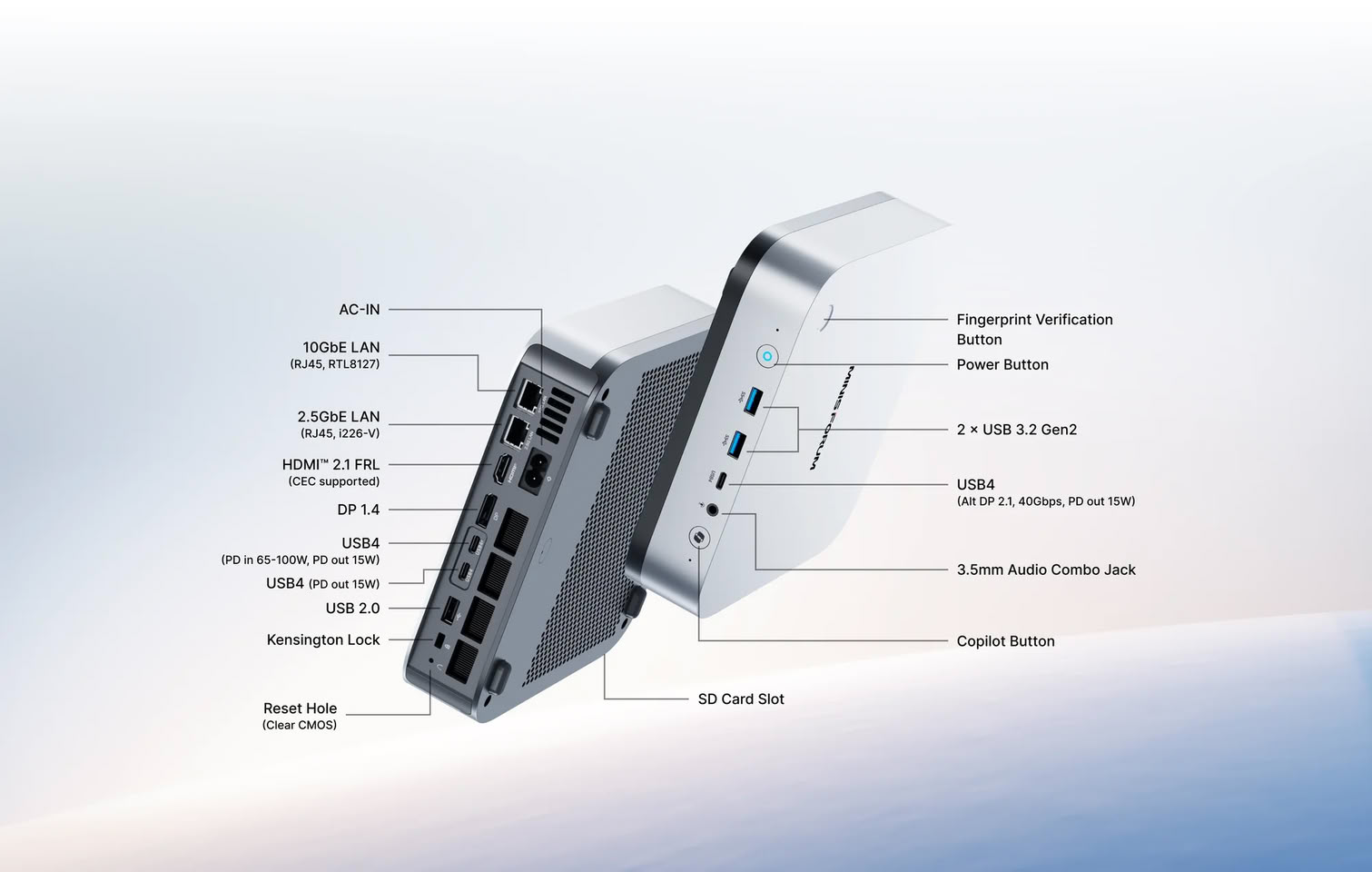
Minisforum seems to also be positioning the M2 Pro as something of a do-it-all machine, since it features built-in HDMI CEC, making it a solid, if somewhat expensive HTPC and living room console. The Minisforum M2 Pro also packs a 134.9 W PSU into the tiny chassis, meaning there is no need to hide a power brick behind a TV console or on a desk. The M2 Pro only comes in one variant, with the Intel Core Ultra X7 358H, 32 GB of LPDDR5X-7467 memory, and a 1 TB NVMe SSD, all for an MSRP of $1,799, with a launch discount bringing that down to $1,439. At that price, it's certainly not cheap, but it also has an impressive specs and features list to back up that price, including upgradeable and expandable storage and triple USB4 ports.

beyerdynamic Expands Gaming-focused Range with MMX 100 and MMX 130

German audio specialist beyerdynamic is expanding its MMX gaming range with two new wireless headsets: the closed-back MMX 100 wireless and the open-back MMX 130 wireless are both based on the same beyerdynamic audio DNA, representing two different gaming experiences. Choosing between closed-back and open-back is not a question of quality, but of personal listening preference. The closed-back MMX 100 wireless is designed for gamers who want to minimize distracting ambient noise and focus entirely on the game.

In contrast, the open-back MMX 130 wireless is ideal for those who prefer a more open and spacious sound, allowing them to experience the atmosphere, soundtracks and ambient sounds in greater detail. With these two models, beyerdynamic is making its audio expertise accessible to an even wider gaming audience. Rather than offering a plethora of unnecessary features and gimmicks, both headsets focus on the essentials: precise sound, high levels of comfort, flexible connectivity, and long-lasting quality.

SteelSeries Wireless Keyboard Battery Becomes Spicy Pillow After Being Plugged in 24/7

Battery health is something many users consider when using and charging devices like laptops and smartphones, but it's just as important to consider when talking about wireless peripherals, as one Reddit user who goes by u/Molti_gfx recently discovered. The user posted to r/spicypillows about their SteelSeries wireless mechanical keyboard that developed a case of battery bloat from being plugged in permanently. They noticed a "weird bump" in the keyboard's plate, caused by the battery swelling, and was forced to remove the battery from the keyboard for safety reasons.

All Li-ion batteries will eventually degrade as their users burn through charge cycles—especially above 85% and below 15%—and, although many brands put protections in place in their battery management systems (BMS), there will almost always be some percentage of cells that bloat as they degrade. It's unclear how long the SteelSeries keyboard was left plugged in, but, as the user explains, they left it connected to their gaming PC in order to benefit from reduced latency.

Keychron Launches Comically Large C100 8K 100-Key Mechanical Macro Pad

Shortly after announcing a handful of new gaming mice—the G6 HE and an updated version of the M4—Keychron has officially launched the C100 8K, a new macro pad with 100 programmable keys and per-key RGB backlighting. The C100 8K Giant Custom Macro Pad is available from Keychron directly for $64.99 with Keychron Apex Red Switches.

The C100 8K, as the full name suggests, is a macro pad with 10 rows and 10 columns, totaling 100 keys. It features an 8 kHz polling rate, as do most of Keychron's new keyboards. By default, it ships with transparent ASA profile keycaps, made from a blend of PBT and PC plastic, and a set of Keychron's Apex Red linear switches, but it also uses standard hot-swap sockets if for those who want different switches. The C100 8K is otherwise fairly barebones, using a plastic case and a wired USB Type-C connection, with no wireless option for a cleaner desk setup.

Epomaker Launches $65 TH65 Wireless Mechanical Keyboard

Epomaker is known for its affordable mechanical keyboards, and it has just announced the latest wireless mechanical keyboard in its lineup. The Epomaker TH65 is a 65% wireless mechanical keyboard that falls squarely in the budget category, with a starting price of just $64.99. It is available on Epomaker's website in Black with translucent PC keycaps, Retro white with opaque PBT keycaps, and Pink with ABS and PC keycaps.

Despite the low price, the TH65 has some of the hallmarks of a premium mechanical keyboard, including double-shot PBT keycaps, a gasket mount, and a programmable knob. The keyboard's case itself is made of ABS plastic, which inevitably lowers cost, but it also allows for features like two-stage flip-out feet for typing angles of 6, 8, or 10.5°. The TH65 is also available with three different switches: linear Epomaker Creamy Jades, Epomaker Crystal Silent Tactile switches, or Epomaker Clear linear switches. The TH65 features a PC plate and five layers of sound damping materials.

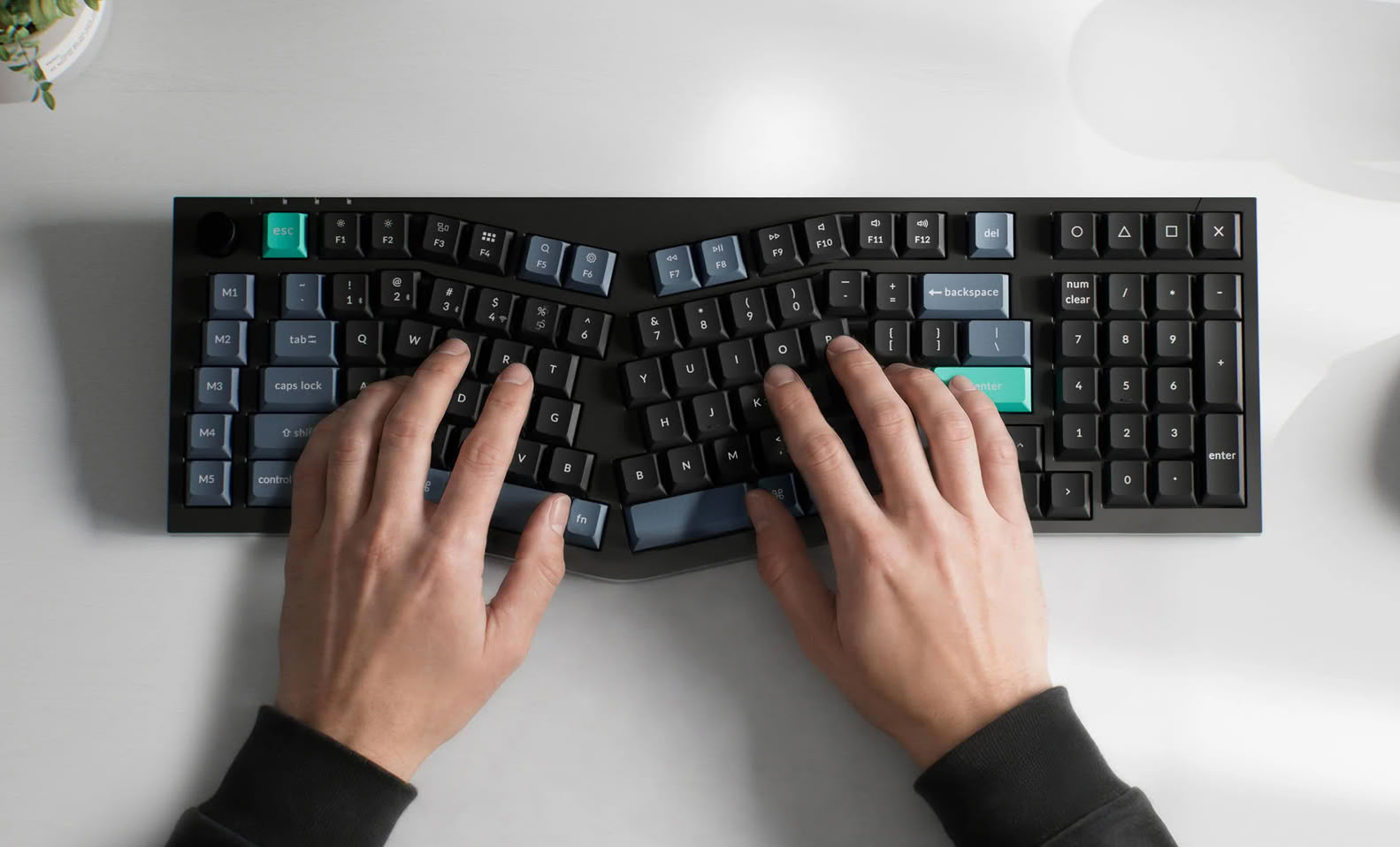
Dygma Launches Travel-Friendly Sonsei Monobody Ergonomic Mechanical Keyboard

Dygma Lab, the company known for split ergonomic keyboards like the Dygma Defy and Raise, has launched its latest keyboard, the Dygma Sonsei, as a travel-friendly take on the ergonomic keyboard. Instead of the typical split ergo design, the Sonsei's aluminium unibody design takes inspiration from Alice keyboards, sacrificing some of the flexibility, and arguably some of the ergonomic benefits, of a split keyboard, in exchange for a more travel-friendly design that doesn't require the cable-heavy setup of something like the ZSA Voyager or the hassle of managing a fully split keyboard, like the MoErgo Go60.

The Sonsei still uses a columnar stagger layout, like the Defy, which offsets keys vertically instead of horizontally and is said to position the fingers more naturally when in resting position, and it has a 56-key compact layout, reducing hand movement and stretching while typing and making it more travel-friendly. Instead of the typical MX-style 3- and 5-pin switches, the Sonsei uses Gateron KS-33 2.0 Low-Profile switches to offer both a travel-friendly slim design and a variety of aftermarket switch options.

Philips Introduces the 24B2D5300 Standalone Dual-sided Monitor

he Philips dual-sided business monitor 24B2D5300 has just been announced and it is the first standalone monitor to incorporate a unique "dual screen" design. With a screen on each side of the device, the monitor opens up new opportunities for business workflows, customer-facing applications, and collaborative use.

This monitor is equipped with two 23.8" IPS technology panels, Full HD resolution on both screens, 120 Hz refresh rates, and USB-C connectivity for seamless connection into existing modern hardware. While the monitor offers a strong feature set, its true differentiation lies in a unique dual-sided design and bespoke build to ensure users get the most out of the dual screens.

Keychron Launches BM27 Affordable Silent Wireless Ergonomic Mouse

Keychron's latest mouse deviates from the brand's recent focus on gaming peripherals and throws a bone to office workers with a penchant for comfort. The BM27 is a wireless ergonomic mouse with a 55° angled grip and silent micro switches on all buttons. The BM27 has six programmable buttons including the left, right, and middle click buttons. In other words, there are three additional programmable buttons that can be customized in Keychron Launcher: one behind the scroll wheel and two thumb keys on the side.

The BM27 is built around the PixArt PAW 3212 sensor, which delivers up to 2400 DPI resolution and tracking at speeds up to 30 IPS, and the polling maxes out at 1 kHz. While this performance is ample for the intended productivity use cases, it's likely insufficient for gaming. It has both Bluetooth and 2.4 GHz wireless connectivity, as well as wired USB Type-C connectivity, and the 500 mAh battery promises up to 100 hours of usage over Bluetooth. The BM27 is relatively affordable, at $34.99 on Keychron's online store. It is only available in Space Gray at the time of writing, and it has a soft-touch UV finish on for additional comfort.

TobenOne Intros UDS060 Docking Station With Programmable Shortcut Keys and Volume Knob

TobenONE, a professional docking station brand specializing in office connectivity solutions, has launched the UDS060, an innovative docking station featuring fully programmable shortcut keys and a customizable volume knob. Designed to give users greater control over their workflows, the UDS060 combines high-performance connectivity with personalized hardware controls, enabling frequently used commands to be executed with a single touch.

Unlike conventional docking stations that focus solely on expanding connectivity, the UDS060 introduces a new approach to productivity by allowing users to assign virtually any function to physical controls. Everyday actions such as locking the screen, taking screenshots, muting audio, launching applications, or triggering custom keyboard shortcuts can all be mapped to dedicated buttons, helping content creators, remote workers, and office professionals streamline repetitive tasks and maintain focus throughout the workday.

Endorfy Release New Solum 2 Series USB Microphones

The Solum 2 series opens a new chapter in the history of ENDORFY microphones. Designed from the ground up in cooperation with a German design studio, it includes four USB models: Solum 2 Core, Solum 2, Solum 2 Pro, and Solum 2 Boom Arm. It is a new generation of microphones created for everyday recording, streaming, voice communication, and remote work.

All models are equipped with a high-quality condenser capsule, a proprietary next-generation shock mount, and a detachable metal pop filter. The individual designs differ in equipment, operation, and recording capabilities, allowing them to meet the needs of different user groups, from people making online calls to streamers and content creators. What connects them is the brand's shared design approach: to create a microphone based on proprietary solutions and prove that functionality, simplicity, build quality, and modern sound can go hand in hand in both basic and the most demanding voice-work scenarios.

[Editor's note: Our in-depth review of the Endorfy Solum 2 Series is live]

Apricorn Introduces Massive 4 TB Aegis Secure Key 3

Apricorn, the leading global provider of quantum-resistant hardware-encrypted external storage solutions, today announced the availability of the 4TB Aegis Secure Key 3 (ASK3), the highest-capacity hardware-encrypted USB drive of its kind. Built on a mini solid-state drive architecture housed in a USB flash drive form factor, the new ASK3 delivers eight times the storage capacity of comparable hardware-encrypted USB flash drives, giving organizations an unprecedented combination of portability, speed and security.

The new 4 TB model incorporates the same hardware enhancements introduced in the latest generation of the ASK3, including a new bridge controller chip for faster performance, improved data transfer speeds and an environmental protection design that helps safeguard both the device and the data it contains in demanding operating conditions.

GameSir Launches T7 Pro W Retro Green Wired Controller for Xbox and PC

GameSir, a global gaming peripherals brand renowned for combining high-performance engineering with distinctive design, today announces the launch of the GameSir T7 Pro W Retro Green Wired Controller. Combining dependable wired performance with a nostalgic translucent aesthetic, the T7 Pro W Retro Green delivers modern gaming technology in a design inspired by the iconic transparent hardware of the late 1990s and early 2000s. The GameSir T7 Pro Retro Green is available now, priced at £55.99 / $49.99 / €59.99 on the GameSir website, with Amazon availability expected at a later date.

Featuring a striking translucent green shell, the T7 Pro W Retro Green pays tribute to one of gaming's most recognizable design eras while introducing subtle RGB lighting that adds a contemporary touch. The result is a controller that blends retro character with modern style, making it equally at home on a desktop setup or alongside an Xbox console.

Keychron Launches K5 Ultra 8K Low Profile Mechanical Keyboard with Wood Accents

Following the recent launch of the Keychron K4 Ultra and K10 Ultra, the accessory maker has officially launched the new K5 Ultra 8K, a low-profile wireless mechanical keyboard with a full 100% layout and sleek cherry wood accents. The K5 Ultra is the latest version of the low-profile K Ultra-series, which means it uses the same ZMK firmware and has the same 2.4 GHz and Bluetooth 5.2 wireless connectivity as the previously announced K3 Ultra had. The K5 Ultra has launched with an MSRP of $114.99, and is available in black on the Keychron online store or on Amazon. The K5 Ultra is also capable of refresh rates of up to 8 kHz over both the wired USB Type-C connection and the 2.4 GHz connection. Wireless connectivity is powered by a 2,400 mAh battery, and Keychron cites 370 hours of use from a single charge with the backlighting disabled and the keyboard running at an 8 kHz polling rate.

The Keychron K5 Ultra uses a proper full-size layout and includes both a programmable knob above the backspace key and a macro row above the num pad. The K5 Ultra is available with Keychron's relatively new Milk POM low-profile switches—which follow the Gateron Low-Profile 2.0 pin layout—in three switch flavors. Milk POM Reds are linear with a 45 gf actuation force, while the Milk POM Browns are tactile with a 50 gf actuation force, and the Milk POM Banana switches are a strong tactile switch with 57 gf actuation force. All three switches have 3.1 mm of total travel, but the Reds have 1.3 mm of pre-travel, while the two tactile varieties have 1.7 mm pre-travel. The K5 Ultra measures in at 436.6 x 128.29 mm and has a 15.55 mm front height. It also features two-stage flip-out feet for different typing angles.

Jsaux Previews 3 Steam Machine Display Faceplates

Jsaux, the maker of a smorgasbord of functional and decorative Steam Deck accessories, has just provided an update on its previously announced Steam Machine faceplate project, which it has revealed to potentially be coming in three separate iterations. On the brand's Discord, it recently held a poll asking for community feedback on three separate versions of the faceplates: one with a large monochrome e-ink display akin to Valve's initial prototype, another with a smaller color e-ink display with a knob and additional buttons on the front, and another with a large color dot matrix display.

It's unclear whether Jsaux will release all three versions of the display, but judging by the response on Discord, both versions of the e-ink faceplate were popular, although the full-size monochrome e-ink display ended up winning the popular vote with 49% of the votes preferring that version. It's worth noting that Jsaux's Discord poll simply asked which version of the display faceplate the accessory maker should launch first, and not which version it should launch at all, suggesting there is at least some intention to launch all three versions.

Keychron Debuts K4 Ultra and K10 Ultra Wireless Mechanical Keyboards

Keychron has just expanded its line-up of K Ultra wireless mechanical keyboards with the K4 Ultra and K10 Ultra, both of which feature num pads and identical internals with slight layout tweaks to cater to different use cases. The K10 Ultra is a full-size wireless mechanical keyboard, replete with a four-key macro row above the num pad, while the K4 Ultra forgoes the navigation cluster above the arrow keys in favor of a more compact 96% layout. Both the K4 Ultra and K10 Ultra are available on Keychron's online store and its Amazon storefront for $114.99, with the K4 Ultra's more compact layout slimming down the overall footprint by just over 55 mm.

Internally, both the K4 and K10 Ultra are based on ZMK firmware, which optimizes for wireless battery life, with Keychron claiming up to 600 hours of battery life from the 4,000 mAh battery in both keyboards with the backlighting disabled. For wireless connectivity, the K4 Ultra and K10 Ultra feature 2.4 GHz and Bluetooth 5.2 connections, with a USB Type-C port for charging or wired connectivity, and both keyboards are capable of 8 kHz polling over 2.4 GHz and wired connections.

Minisforum Debuts NAB9S Mini PC with DDR4 and 24-Core Intel i9 CPU

Minisforum has officially released the NAB9S mini PC, which has gone on sale for $399 for a barebones model and $759 for a pre-built version with 32 GB of DDR4-3200 RAM and a 1 TB SSD. Aside from opting for the older DDR4 standard instead of DDR5, Minisforum has also included a full 2.5-inch SATA bay for additional SSD or HDD storage, making it more viable for cost-sensitive buyers who need a compact workstation. The NAB9S features an aluminium chassis with toolless access for easy installation of additional memory or storage. As for CPU horsepower, the NAB9S is powered by the Intel Core i9-13900HK, which is a laptop CPU with 24 cores (eight P-Cores and 16 E-Cores) and 32 threads and up to 5.4 GHz boost frequency. Unfortunately, this limits the mini PC's applications as an SFF gaming or content creation machine.

The NAB9S also offers a surprisingly decent selection of ports, including dual USB 3.2 Type-A ports, a USB 3.2 Gen 1 Type-C, and a 3.5 mm audio combo jack on the front. The rear I/O consists of dual 2.5 G LAN ports, dual HDMI ports, two USB 3.2 Type-C ports (only one with DisplayPort Alt mode) and dual USB 3.2 Gen 2 Type-A ports. The mini PC ships with an internal SATA cable to adapt the M.2 SATA port to a traditional 2.5-inch SATA port, and it also includes a VESA mount and requisite hardware for mounting the mini PC to the back of a monitor or a similar situation. Minisforum has also beefed up the cooling on the NAB9S, with active SSD cooling and flow-through cooling for to keep the i9 CPU in check.

Pre-Orders for $4000 AMD Ryzen AI Halo Mini PC Dev Kits Go Live

AMD announced in May 2026 that the Ryzen AI Halo Developer Platform mini PC would arrive in June, and launch day has apparently arrived, with the Strix Halo-powered mini PC now available for pre-order via Micro Center in the US. The Ryzen AI Halo developer kit is mostly aimed at AI developers, and although there are two SKUs, both have identical hardware, featuring the AMD Ryzen AI Max+ 395 CPU, with its Radeon 8060S iGPU, and 128 GB of LPDDR5x-8000 memory shared across both the CPU and GPU cores. The mini PC is launching with 2 TB of SSD storage, and it includes a 120 W PSU.

Pricing is set at $3,999, and the only difference between the two available SKUs is that one ships with Linux, while the other ships with Windows 11 Pro. No shipment date has yet been confirmed. Physical I/O is limited to USB Type-C, with three unspecified USB Type-C ports, likely USB 3.2 Gen 2×2 or USB4, one of which has DisplayPort Alt Mode support, an HDMI 2.1 port, a 10 Gbps Ethernet port, and a USB Type-C port for power input. It will also ship with both Bluetooth 5.4 and Wi-Fi 7. The mini PC itself measures just 149 × 149 × 43.18 mm, and the chassis appears to be mostly aluminium.

Epomaker Teases HE65 V2 TMR Gaming Keyboard in 2 Translucent Colorways

Following up the recent updated HE75 V2 keyboard, Epomaker has officially unveiled the HE65 V2 TMR gaming keyboard in a recent livestream on YouTube. The HE65 V2 TMR, as the name suggests, updates the Hall effect gaming keyboard to TMR (tunnel magnetoresistance) tech, which has the benefit of having improved efficiency over Hall effect, while still delivering the low latency, adjustable actuation distance, and analogue features that HE keyboards deliver. The HE65 V2 is a 65% keyboard, which sacrifices the function row, navigation cluster, and num pad in favor of a smaller footprint, however, the HE65 V2 still has a dedicated arrow cluster, a three-key navigation column, and a programmable knob on the right side of the alphanumeric keys.

There is no official product page or pricing for the Epomaker HE65 V2, but Epomaker's livestream shows off some of the design and features of the upcoming budget TMR keyboard. For starters, the HE65 V2 TMR will be available in both black—or dark smoky gray—and white—or clear, more accurately. Both versions of the keyboard will feature similar Cherry profile keycaps, although the white version's keycaps are completely clear, with UV printed lettering, while the black keyboard's keycaps are significantly more opaque while still letting light through from the south-facing per-key RGB backlighting. The HE65 V2 TMR will have a plastic top and bottom case, which allows Epomaker to include two-stage flip-out feet and integrated dongle storage for the 2.4 GHz dongle right next to the keyboard's power switch. It will also have both Bluetooth and USB-C wired connectivity, in addition to the aforementioned 2.4 GHz connection, and that wireless connectivity will be supported by a built-in 4,000 mAh battery.
The livestream video follows.

Kingston Technology Highlights Design-In Memory, Industrial SSD, and Embedded Solutions for Next-Gen Applications

Kingston Technology Company, Inc., a world leader in memory and storage solutions, continues to advance its "Built on Commitment" philosophy as industrial PCs, edge systems, and embedded platforms take center stage in powering next-generation automation, intelligent services, and mission-critical applications. As advanced manufacturing, smart logistics, and global digital infrastructure rapidly expand, customers are seeking more than technology. They expect unwavering reliability, extended product lifecycles, and a trusted global supply they can depend on everywhere they operate.

To meet these evolving demands, Kingston continues to strengthen its portfolio of design-in memory and industrial storage solutions with controlled BOM, lifecycle management, and a commitment to long-term reliability. This approach enables integrators and OEMs to build stable systems that thrive in even the most demanding environments.

Lexar's "AI Storage Stick" Concept Calls for Treating M.2 NVMe SSDs Like Memory-expansion Cartridges

If you think about it, an M.2 NVMe SSD isn't conceptually different from an NES cartridge, so you shouldn't need a USB/Thunderbolt enclosure to treat your M.2 SSD like a portable storage device, or so argues Lexar. The company innovated a concept for Mini-PCs and desktops that calls for a robust M.2 slot that can take many insertions, and for an M.2 SSD to be encased in a metal jacket (not an enclosure, just a jacket). The SSD is then inserted into a 25 mm-wide slot on the front-panel of a mini PC, directly into the M.2 slot that's wired to the processor or chipset, thereby eliminating all other overheads.

The Mini-PC you see is a prototype by ASUS. There is of course the problem that neither PCIe isn't practically a hot-pluggable standard, which is why Thunderbolt and USB 3 came to existence in the first place as hot-pluggable link layers on top of a serial physical layer. The company also showcased the AI-Grade Gen 5 x4 NVMe SSD. This M.2 NVMe drive that's probably based on a DRAMless controller. Driving Lexar's effort is the ability to treat the SSD like memory, so the LLM can load larger models, using a 3-tiered memory hierarchy. The GPU's video memory is at L1 due to its highest bandwidth and least latency to the GPU. Then comes the system memory, larger but relatively slower; and finally, NVMe SSDs. Lexar claims that this approach has found to relieve memory footprint by at least 40%.
Return to Keyword Browsing
Nov 11th, 2026 04:07 CST change timezone

New Forum Posts

Popular Reviews

TPU on YouTube

Controversial News Posts