
News Posts matching #Windows 11

Return to Keyword Browsing

Windows 11 Has a Buggy, Duplicating Task Manager That Hogs Resources

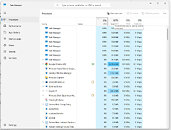
Microsoft has done it again! The latest bug now hides in the least possible place—the one and only Task Manager. According to multiple user reports, the Windows 11 update KB5067036 is causing the Task Manager to remain open even after being closed, creating a new instance each time a user opens and closes it. Each instance uses around 20-95 MB of RAM, so if you open and close it 100 times, you could end up with 2 GB of RAM tied up by these persistent Task Manager instances. Additionally, these background instances can consume CPU resources. Despite being a minimally invasive application, each tskmgr.exe instance uses about 0.9% of CPU resources, so 10 instances could reduce your CPU's capacity by almost 10% without you even noticing.

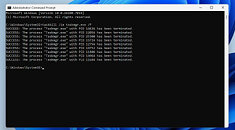
We managed to replicate the bug, and found multiple instances running in the background, without any way to normally close it. A simple fix for this issue is clicking the "End Task" button instead of the classical "X" to exit application. However, if you opened multiple instances to play with how many times the process can be repeated, you will have a hard and boring time solving it manually. Instead, use the "taskkill /im taskmgr.exe /f" command in the command line as administrator to remove all existing Task Manager processes. As always, be cautious when running any command in the CMD as an administrator—but trust us on this one.
Samsung Internet Browser Comes to Windows Desktop PCs

After more than a decade of focusing exclusively on mobile platforms, Samsung is finally bringing its Samsung Internet browser to Windows-based PCs. The company announced today that a beta version of the Chromium-based browser will be available for Windows 11 and Windows 10 systems running version 1809 or newer, starting October 30, 2025, in the United States and Korea. It is a significant decision for Samsung, which has maintained a mobile-first approach since the browser's inception, essentially leaving desktop users out in the cold while millions enjoyed the experience on their Galaxy devices. Additionally, it shows that Samsung may venture into more applications as the local AI integration takes off.

The desktop version is designed to create a unified browsing ecosystem across Samsung's product lineup, letting users carry their digital experience seamlessly between phones and computers. Users who log in with their Samsung Account will have their bookmarks, browsing history, and saved passwords synchronized through Samsung Pass, which should make authentication and form filling straightforward across devices. The browser also brings intelligent features powered by Galaxy AI, including Browsing Assist, which can summarize web pages and translate content on the fly. For those switching between their Galaxy phone and PC, the browser will prompt them to pick up where they left off, eliminating the hassle of hunting down tabs across different devices.

AAEON Releases UP Xtreme ARL Edge

AAEON's UP brand, predominately known for its industrial-grade developer board series, today announced the release of the UP Xtreme ARL Edge, its first Mini PC to feature the new Intel Core Ultra 200H Series platform (formerly Arrow Lake). Primarily designed to bring AI functionality to applications such as industrial robots and AMRs, the UP Xtreme ARL Edge boasts a ruggedized enclosure with fanless operation, capable of operating in temperatures as wide as -20°C to 60°C. Moreover, the Mini PC is equipped with a 9 V to 36 V DC power input range, while also boasting impressive resistance to shock and vibration.

Despite its fanless operation, the UP Xtreme ARL Edge offers a choice of Intel Core Ultra (Series 2) processors, with default models offering the Intel Core Ultra 5 processor 225H, Intel Core Ultra 7 processor 255H, or the Intel Core Ultra 7 processor 265H, with the latter capable of utilizing the platform's enhanced integrated CPU, GPU, and NPU to provide up to 97 TOPS of AI performance.

Durabook Introduces Next-Generation R10 Copilot+ PC Rugged Tablet

Durabook, the global rugged mobile solutions brand owned by Twinhead International Corporation, today announced the launch of its next-generation AI-powered fully rugged R10 tablet. Equipped with high-performance Intel Core Ultra 200V series processors, the 10" device is one of the first Copilot+ PC rugged tablets on the market. Redefining versatility in the tablet world, the R10 can be paired with a detachable backlit keyboard, seamlessly transforming it into a 2-in-1 rugged laptop PC. This adaptable design delivers the ideal balance of performance, reliability, and mobility, empowering users with a powerful and intelligent rugged device that fuses cutting-edge AI capabilities with Durabook's hallmark durability and field-proven design.

Twinhead's CEO, Fred Kao, said: "Durabook devices are built to meet the needs of professionals who depend on powerful, reliable technology to stay productive in any environment. The compact and versatile R10 redefines the 10-inch rugged tablet category by providing AI-enhanced productivity supported by smart engineering for optimal usability. The R10's adaptive design and customisation capability make it the perfect partner for field service operatives working across a wide range of sectors, including industrial manufacturing, warehouse management, automotive diagnostics, public safety, utilities, transport and logistics."

Windows 11 Will Start Memory Scans After BSOD to Prevent Future Issues

The land of Windows 11 is finally getting a feature most users will appreciate, with the introduction of the new memory scanning for issues after a blue screen of death (BSOD) happens. "We're introducing a new feature that helps improve system reliability. If your PC experiences a bug check (unexpected restart), you may see a notification when signing in suggesting a quick memory scan," noted Windows Insider Program lead Amanda Langowski. Additionally, the "If you choose to run it, the system will schedule a Windows Memory Diagnostic scan to run during your next reboot (taking 5 minutes or less on average) and then continue to Windows. If a memory issue is found and mitigated, you will see a notification post-reboot."

Microsoft notes that this first wave flags every bug check so they can watch how memory glitches turn into blue screens, and they will refine targeting of these issues in the later updates. At the moment the preview will not run on Arm64 PCs, machines that have Administrator Protection turned on, or any BitLocker setup that boots without Secure Boot enabled. Users that are part of the Windows Insiders Dev and Beta channels will be able to access this feature. Windows 11 Insider Preview Build 26220.6982 (KB5067109) and Windows 11 Insider Preview Build 26120.6982 (KB5067109) are the first in the rollout, so they can beta test the feature before it hits the main stable Windows 11 branch.

AAEON Releases BOXER-6649-RAP Brings Multiple PoE LAN to its Rugged Box PC Series

Leading provider of industrial PC solutions AAEON (Stock Code: 6579), has introduced the BOXER-6649-RAP, the company's first fanless embedded computer equipped with four independent full-speed PoE LAN ports. Available with a choice of 28 W 13th Generation Intel Core processors (formerly Raptor Lake), the BOXER-6649-RAP notably offers a 50% increase in DDR5 memory capacity over previous generations alongside a robust mechanical design for industrial deployment. AAEON has highlighted that the BOXER-6649-RAP is primarily targeted for use in the smart security, safety, and surveillance sectors, which is reflected in the system's I/O specifications. The BOXER-6649-RAP's four PoE LAN ports each offer 2.5GbE speed, and are joined by a fifth RJ-45 port, also offering 2.5GbE LAN. The system comes with two USB 3.2 Gen 2 (10 Gbps) ports, four USB 2.0, and both DB-9 and DB-15 ports for RS-232/422/485 and an 8-bit digital I/O, respectively.

For memory, the BOXER-6649-RAP can support up to 96 GB of DDR5 via two SODIMM slots, a substantial increase from the 64 GB provided by previous products from its Rugged Box PC series. AAEON has specified that the purpose of this is to help customers locally store large data models and run real-time AI inference without frame drops, particularly suitable for the product's target applications.

Windows 11 25H2 October Update Bug Renders Recovery Environment Unusable

It seems like Microsoft has encountered a significant issue with the latest Windows 11 25H2 October update, KB5066835. The company confirmed that this update disrupts mouse and keyboard functionality within the Windows Recovery Environment (WinRE), making them unresponsive and unusable. As a result, the WinRE feature is completely inoperative. WinRE is a built-in troubleshooting toolkit included with Windows. It's intended to assist users when their computer encounters startup problems or system issues. WinRE activates automatically when Windows crashes or fails to boot properly, but users can also access it manually to utilize various repair tools.

However, with the current problem affecting keyboard and mouse input, WinRE is essentially ineffective. Microsoft stated that "the USB keyboard and mouse continue to work normally within the Windows operating system," and assured users that they are "working to release a solution to resolve this issue in the coming days. More information will be provided when it is available." This is yet another incident related to the recent Windows 11 updates, which have previously caused localhost issues. The list of Windows 11 problems continues to grow as the latest updates are released. Microsoft maintains a Windows 11 version 25H2 known issues and notifications website that provides status updates on the latest problems, including this one.

Update October 21 16:05 UTC: Microsoft has issued a hot fix. The company claims that "this out-of-band (OOB) update includes quality improvements. This update is cumulative and includes security fixes and improvements from the October 14, 2025, security update (KB5066835)..." which you can check out here.

Microsoft Readies Windows-on-Arm for Gaming With AVX/AVX2 Support

With the release of the October 2025 cumulative update (KB5066835) for Windows 11 versions 24H2 and 25H2, Microsoft has expanded Prism emulation for Arm64 devices. This update enables Windows to emulate x86 vector instructions such as AVX and AVX2 on Arm PCs. As a result, many apps and games that previously couldn't run on Arm hardware can now at least launch. Intel's AVX is a set of SIMD instructions commonly used by media tools, game engines, and creative applications to speed up tasks like video encoding, physics, and effects. Arm-based chips like Snapdragon do not natively support Intel's proprietary AVX instructions, which often led to failures or poor performance in these programs. Prism's emulation translates AVX instructions, allowing these programs to run on Arm devices. However, because it is emulation, there is additional CPU overhead, and performance will vary significantly depending on the application.

Arm, on the other hand, offers the Scalable Vector Extension (SVE), which enhances vector processing capabilities in the Armv8-A architecture, with SVE2 being its successor in Armv9-A. Unlike traditional SIMD designs with fixed-size vectors, SVE supports flexible vector lengths from 128 to 2048 bits in 128-bit increments. This flexibility allows chip manufacturers to select the vector size that best suits their processors. The main advantage is that programs written for SVE can run on any SVE-compatible processor without recompilation, regardless of the processor's vector size.

Microsoft Breaks Localhost with Windows 11 October Update, Users Forced to Revert

Just two days after Windows 10 reached its end of life, issues with Microsoft's latest Windows 11 October update have begun to surface. Users on Microsoft Support Forums, Stack Overflow, and Server Fault have reported that the localhost functionality in Windows 11 is now broken. This problem is affecting millions of web developers who are unable to run their applications on their own PCs. The update, KB5066835, focuses on security and enhances the September-issued KB5065789 package with additional quality improvements. However, it disrupts the localhost function, a virtual hostname that allows a PC to serve as its own server. This feature is commonly used by local developers to test websites or fully developed web apps. The disruption has significantly impacted developers, including those using Windows 11 on their local servers or workstations for production purposes.

The community has managed to solve the issue by simply deleting the October KB5066835 package, alongside its September KB5065789 sibling, if the first package uninstall doesn't work. Software engineers have reported connection failures and HTTP/2 protocol issues impacting various development tools, including ASP.NET compilation processes and Visual Studio debugging functionality. Investigation has revealed that the problem originated in build version 26100.6899, with the root cause identified in HTTP.sys—a kernel-level Windows component responsible for managing HTTP traffic on local systems.

Update October 17, 15:30 UTC: Microsoft confirmed the issue and stated: "We are working on releasing a resolution for this issue in a future Windows update. We will provide an update when more information is available."

Microsoft PowerToys Adds Automatic Light/Dark Mode Switching Based on Time of Day

It has been over six years since we last covered an update for Microsoft PowerToys. PowerToys date all the way back to the Windows 95 era, offering a set of utilities for power users to enhance and streamline their Windows experience for greater productivity. Modern PowerToys, initially released in 2019, are a collection of tools and apps that allow users to customize the user interface and user experience. The latest PowerToys update, version 0.95.0, introduces features like automatic switching between light and dark modes in the Windows 11 UI, depending on the time of day. Users can schedule light mode to be active during the day and have the tool automatically switch to dark mode when the sun sets.

Another notable improvement is the speed enhancement of the Command Palette, reducing latency by hundreds of milliseconds in real-world scenarios. Additionally, the Peek function, which allows users to preview files without opening apps, is now accessible by simply pressing the space key on your keyboard. For those eager to apply these changes, the Find My Mouse highlight can be made fully transparent and adjusted using a built-in slider. Other features, such as ignoring shortcut conflicts and unassigning shortcuts, are also available.

MAINGEAR Unleashes Hell with Ultra-Premium Limited Edition DOOM EDITION Desktop Gaming PC Drop

MAINGEAR, the leader in premium-quality, high-performance, custom gaming PCs, is dropping its all-new DOOM EDITION desktops, forged in collaboration with HAVN, using their HS 420 DOOM: The Dark Ages Limited Edition chassis. Combining the artistry of HAVN's award-winning design with MAINGEAR's industry-leading engineering, these limited-edition systems are bespoke-crafted battle stations worthy of the Slayer himself. Face the nightmare, watch the drop come alive in this short video.

MAINGEAR's DOOM EDITION PCs are built using no ordinary PC case. Crafted with precision-cut steel, tempered glass, and premium-grade finishes, the chassis is built to resemble a relic of war, brutal, imposing, and instantly recognizable as DOOM. Designed for maximum airflow, cable management, and support for the highest-end GPUs and cooling systems, it's a masterpiece of form and function. MAINGEAR takes this foundation and infuses it with top-of-the-line components and expert craftsmanship, ensuring that every DOOM EDITION desktop doesn't just look the part, but dominates the battlefield of modern gaming.

End of an Era: Windows 10 Officially Reaches End of Life

Today is the day that marks the end of Windows 10. On October 14, 2025, Microsoft drew a line under an operating system that has powered millions of desktops since 2015. Beginning now, Windows 10 will no longer receive feature updates, routine quality-of-life improvements, or general technical support from the company. Devices running the system will continue to boot and run existing software, but the steady flow of system-level hardening and new capabilities that users came to expect will stop. For many households, schools, and small businesses, the change will be largely invisible at first, but the risk picture shifts as time passes.

Extended Security Updates (ESU) are meant to soften that landing, not to act as a permanent lifeline. Through Microsoft's ESU program, eligible machines can still receive critical and important security patches for a limited window after support ends. Enrollment rules, pricing, and eligibility differ by region and by whether a user is a consumer or an organization, and the program excludes new features and non-security fixes. For European Economic Area, ESUs packages are free for a year before Microsoft pulls the plug, but users must sign in with Microsoft Account. ESU can buy time for complex migrations, but it is explicitly a temporary measure. Relying on ESU's long-term leave systems exposed to unsupported components and growing incompatibilities with newer software.

Microsoft Breaks Windows Media Creation Tool Ahead of Windows 10 EOL

Microsoft has accidentally broken the Windows Media Creation Tool (MCT) just a day ahead of Windows 10 end-of-life. The company confirmed this case on its official documentation for Windows 10 22H2, which is perhaps the last update for that document page that we will see. "The Windows 11 media creation tool version 26100.6584, released September 29, 2025, might not work as expected when used on Windows 10 devices. The media creation tool might close unexpectedly, displaying no error message," says Microsoft page, adding the clarification about MCT "The media creation tool is used to create a bootable USB or DVD which can be utilized to perform a reinstall or clean install of Windows 11 on a new or used PC. Note that the Windows 11 media creation tool is not currently supported on Windows 10 devices that use Arm64 processors."

Of course, Microsoft offers a workaround. You can download bootable Windows 11 installation media directly from Microsoft's official download page here and select "Download Windows 11 Disk Image (ISO) for x64 devices" to get the ISO or follow the link for Arm64 build. Microsoft is preparing a fix that will be included in an upcoming update to the Windows 11 Media Creation Tool, and this document will be updated to reflect the resolution once that update is released. As a reminder, the Windows 10 reaches end-of-life tomorrow, October 14, when all security updates will stop and users would need to purchase separate extended security updates as a package, or switch to Windows 11.

Microsoft Extends Dark Mode to File Explorer, Revamps Start Menu in Windows 11 Preview

Microsoft is rolling out a noticeable update to Dark Mode in Windows 11 with the latest Insider Preview pushed to the Dev Channel. Build 26220.6772 applies dark theming to a range of File Explorer interactions that have long stuck out as bright exceptions: dialogs that appear when copying, moving, and deleting files now match the system theme, context menus honor dark mode, progress bars and file-selection windows adopt the darker palette, and replacement or confirmation prompts are no longer glaringly light. Microsoft also made some subtle layout and behavior adjustments to menus, so the experience reads as a unified whole rather than a patchwork of old and new interfaces.

Taken together, these changes address a persistent complaint that has followed Windows for nearly a decade: the operating system's dark theme has repeatedly been undercut by legacy UI elements that did not receive the same styling attention. Windows still contains legacy components. For example, certain Properties windows, the Run dialog, and parts of Control Panel may remain in light mode until Microsoft either modernizes or replaces their underlying code. By releasing the change to Dev Channel insiders first, Microsoft is inviting power users and testers to exercise everyday workflows and report edge cases, so the company can refine behaviors before considering Beta and Stable rollouts. That said, this does not complete the work. Achieving true visual cohesion will require continued attention to legacy paths and a steady stream of smaller updates.

Microsoft Blocks Online Account Bypass on Windows 11

Microsoft has released its latest Windows 11 Insider Preview Build 26220.6772 (KB5065797) in the Dev Channel. While it introduces some new Copilot-powered features and updates to Windows Hello, it also rings a death sentence to bypassing Microsoft Online Account, which is now mandatory for everyone. Microsoft has doubled-down on making users sign in with their Microsoft Online Account, and local-only installations are no longer possible at the time of writing. Although new workarounds will likely emerge over time, Microsoft has successfully closed off the most accessible and widely known methods for avoiding Microsoft account creation in recent Windows 11 preview releases. Since these changes currently exist only in preview versions, several weeks will probably pass before they reach the stable, public releases of Windows 11. The latest Windows Blog confirms:
MicrosoftWe are removing known mechanisms for creating a local account in the Windows Setup experience (OOBE). While these mechanisms were often used to bypass Microsoft account setup, they also inadvertently skip critical setup screens, potentially causing users to exit OOBE with a device that is not fully configured for use. Users will need to complete OOBE with internet and a Microsoft account, to ensure device is setup correctly.

ASUS Announces ExpertCenter PN54-S1 Mini PC

ASUS today announced ExpertCenter PN54-S1, a mini PC powered by the latest AMD Ryzen 200 Series processors. This mini PC handles everyday workloads easily, with robust performance and enterprise-grade security making it a reliable solution for businesses. With its 0.6-liter premium aluminium chassis, ExpertCenter PN54-S1 Mini PC offers exceptional capabilities in a small footprint, delivering a perfect combination of efficiency, flexibility, and 24/7 dependability.

Optimized for productivity and multitasking
The Ryzen 200 Series processor that powers ExpertCenter PN54-S1 Mini PC is built on the AMD Zen 4 architecture with up to eight high-performance CPU cores and support for up to 64 GB of memory, ensuring low-latency multitasking for daily workloads. ExpertCenter PN54-S1 Mini PC provides up to 16 AI TOPS for responsive processing of AI tasks to support local AI operations such as voice recognition, image enhancement, and real-time translation.

Microsoft Releases Windows 11 25H2... With Zero New Features?

Microsoft has officially released Windows 11 version 25H2 after months of testing and previews. Delivered as a lightweight enablement package (eKB), 25H2 update is not a complete OS replacement but a light switch that turns on feature code already present on machines running 24H2. Microsoft stages new features inside regular cumulative updates in a disabled state. When the eKB is installed, it flips those flags, and a single restart activates the features, upgrading the device to 25H2 with minimal downtime. Because 24H2 and 25H2 share a servicing branch, they utilize the same codebase and servicing pipeline, which provides annual feature updates with the same efficiency and reliability as monthly updates. That helps reduce package size and installation time, making the transition from 24H2 to 25H2 about as easy as rebooting. The only difference between 25H2 and 24H2 is the support duration. For example, 25H2 Enterprise and Education Windows 11 versions move to a 36-month cycle, while Pro editions follow a 24-month cycle, typical for all Windows 11 24H2 builds.

With the 25H2 update, Microsoft is not focusing on significant under-the-hood changes or a visual overhaul, which were common in previous updates. Instead, the emphasis is primarily on security improvements. For instance, Microsoft is removing features like PowerShell 2.0 and Windows Management Instrumentation command-line (WMIC) during installation. These features were previously deprecated due to vulnerabilities to security exploits. Additionally, IT administrators now have the ability to remove pre-installed Microsoft default apps using Group Policy/MDM CSP on Enterprise and EDU devices.

European Economic Area Windows 10 Users Receive One Year of Free Security Updates

Microsoft is offering free Extended Security Updates (ESUs) to all Windows 10 users in the European Economic Area (EEA). As support for Windows 10 ends on October 14 this year, security vulnerabilities will become a concern for those still using the older operating system. While users with specific needs for Windows 10 can purchase ESUs, European customers will receive them at no cost due to strict EU regulations. To access these free ESUs, users must have an active Microsoft account. This is a significant benefit, as users outside the EEA must either pay for ESUs or upgrade to Windows 11 to continue receiving security updates and support. For Windows Central, Microsoft has confirmed that "In the European Economic Area, we're making updates to the enrollment process to ensure it meets local expectations and delivers a secure, streamlined experience. Our goal is to support customers and provide them with options as they transition to Windows 11, with uninterrupted access to critical security updates."

Additionally, Microsoft has clarified for Bleeping Computer that free ESUs will mandate sign-in with Microsoft account. The company claims that users need to "Sign in to your PC with a Microsoft account (MSA) and stay signed in to receive ESU updates at no additional cost. If your MSA is not used to sign in for a period of up to 60 days, ESU updates will be discontinued, and you'll need to re-enroll by signing in using the same MSA." For Windows 10 OS users in Europe, signing in with a Microsoft account seems like a no-brainer considering that the year of free updates can delay the need to transfer sensitive workloads to Windows 11.

Microsoft Claims 90% of Windows-on-Arm Usage Happens on Native Apps

Microsoft has published an interesting data point about the usage model of its Windows-on-Arm (WoA) devices. The company's corporate vice president Mike Adams claims that "The Arm app ecosystem continues to expand, with native Arm versions available for apps representing 90% of total user minutes, thus providing efficient, high-performance experiences across the scenarios that matter most to our customers." The Arm-based software ecosystem has matured to the point where the user experience is primarily occurring on native app builds, rather than relying on an x86-to-Arm translation layer. Microsoft is confident enough in this ecosystem's compatibility that it recommends users with older PCs running Windows 10—which will reach its end-of-life on October 14, 2025—consider transitioning to Arm-based Copilot+ AI PCs.

The company showcased various app use cases, all operating on their native build for Windows 11 on Arm. These include endpoint protection applications, VPN and Zero Trust Network Access (ZTNA) apps, endpoint management tools, productivity and creative apps, as well as social, web, and entertainment applications. Microsoft even made a list of compatible applications, which you can check out here. For consumers, the choice of WoA laptops is limited, but we can expect more announcements from Qualcomm and NVIDIA to kickstart more design wins and shipments of Arm-based processors to the general Windows PC users.

Windows 11 Revives DreamScene With Live Video Wallpapers Returning

Windows OS is bringing back live wallpapers, reminiscent of the Windows Vista era. Originally known as DreamScene, this feature enabled video files, such as MP4 or MKV, to be used as live wallpapers on Windows desktop PCs. Microsoft is currently testing this feature again, as noted by @phantomofearth on X. In the latest Windows 11 Dev/Beta build 26x20.6690, there is a hidden option that lets you use video files as live wallpapers. Microsoft is also testing support for external files, which means we might see the company include a selection of customized live wallpapers in the next Windows 11 update.

To enable this feature, you need to be a part of the Windows Insider program. Once you become a part of this feature-preview program, you need to enable feature ID 57645315 and restart your explorer.exe, so Windows can apply it. However, the timeline for this feature is uncertain, and it might be part of next year's major updates. As of now, no significant features have been added this year. Microsoft isn't aiming for more under-the-hood changes for the 25H2 update, nor a visual makeover that prior updates were usually known for. Instead, the updates are primarily focused on security and are delivered as an enablement package. For changes like this, we assume Microsoft needs more bug testing before rolling out the feature to stable channels.

Windows 11 24H2 September Patch Breaks HDCP/DRM Video Playback

Microsoft recently rolled out its September 2025 Patch update with a KB5065426 code for Windows 11 24H2. However, the patch reportedly produces a very specific bug that prevents some Digital TV and BluRay/DVD applications from playing video. As these applications utilize Enhanced Video Renderer (EVR) with HDCP enforcement or Digital Rights Management (DRM) for digital audio, they may experience various errors, including copyright protection issues, frequent playback interruptions, freezing or black screens, or no video playback at all. Microsoft confirmed the issue on September 19 and is actively working on the fix, which it will roll out in future Windows updates. Microsoft claims that this issue doesn't impact streaming services.

The Enhanced Video Renderer, although still used by some players, has largely been superseded by newer renderers, such as the Simple Video Renderer. Its job in protected playback is to work with Media Foundation and older DirectShow components so decoded frames remain within a trusted rendering path. EVR ensures video is composited only onto Direct3D surfaces that the system treats as secure, preventing decrypted frames from being written to ordinary memory or captured by other software. That coordinated handoff between the media framework, drivers, and the GPU is what lets Windows meet the licensing and output restrictions required for BluRay, broadcast TV, and other DRM-protected formats.

Google Launches Windows Desktop App for Local Files and Web Searches

Google has developed and released an application for Windows PCs. While it might seem unusual for Google to release a Windows app that isn't Chrome, this new app serves an intriguing purpose. Simply called the Google App, it enables users to search across various vectors on their Windows-based PCs, including local files, Google Drive files, installed applications, and the web. Emerging from Google's Search Labs, it is currently available only in supported countries for users to try out. After downloading it through a dedicated installer and following a straightforward installation process, the app can be activated using the Alt + Space keyboard shortcut. This interrupts any ongoing activity and runs as a layer above the current app, even if it's a game. Users can later change this shortcut in the settings.

The app includes Google's Lens, allowing users to search based on the current screen image or even tackle math homework. There are also options to disable Google's AI mode, which is now standard in many search queries. Initially, the app will be available only in the US, with expansion to other Google Labs-supported countries planned for the future. It is available exclusively in English and requires Windows 10 or higher. Interestingly, this app is similar to Apple's Spotlight, which is a built-in macOS search tool that scans your apps, files, emails, contacts, calendar events, system settings, and even the web. It seems that the days of separately searching through your files are over, as a single search engine can power the entire experience, from file management to web search, and even help you locate important information inside documents.

Acer Launches TravelMate X14 AI Business Laptop and New Projectors

Acer today announced a suite of commercial products at IFA 2025, designed to empower the modern workforce. The lineup includes the Acer TravelMate X14 AI Copilot+ PC and three new additions to the eco-friendly Vero projector series: the Acer Vero XL2320p, Vero XL2521, and Vero SL2520n.

"As AI is becoming increasingly important in modern business workflows, small and medium businesses need devices that integrate intelligent tools, robust security, and mobility," said James Lin, General Manager, Notebooks, Acer Inc. "The TravelMate X 14 AI was designed to deliver just that, powered by the latest Intel Core Ultra processors and Copilot+ PC experiences, offering professionals a lightweight yet durable solution crafted to accelerate productivity and collaboration from anywhere."

Windows 11 25H2 Preview Arrives as Lightweight Enablement Package

Microsoft has released the latest Windows 11 version 25H2 (Build 26200.5074) in the Release Preview Channel for customers who want to preview what the new OS will offer before the general, widespread release cycle later this year. Microsoft isn't aiming for more under-the-hood changes for the 25H2 update, nor a visual makeover that prior updates were usually known for. Instead, the updates are mostly focused on security. For example, Microsoft removes some of its features with the installation, like PowerShell 2.0 and Windows Management Instrumentation command-line (WMIC). Both of these were previously deprecated, as they were vulnerable to various security exploits. Additionally, IT administrators can remove pre-installed Microsoft default apps via Group Policy/MDM CSP on Enterprise/EDU devices.

Interestingly, the 25H2 update is delivered as an enablement package, or eKB, so it's not a complete OS replacement but a light switch that turns on feature code already present on machines running 24H2. Microsoft stages new features inside regular cumulative updates in a disabled state. When the eKB is installed, it flips those flags, and a single restart activates the features, upgrading the device to 25H2 with minimal downtime. Because 24H2 and 25H2 share a servicing branch, they utilize the same codebase and servicing pipeline, which provides annual feature updates with the same efficiency and reliability as monthly updates. That helps reduce package size and installation time, making the transition from 24H2 to 25H2 about as easy as rebooting. The process also resets support timelines for affected editions, for example, Enterprise and Education move to a 36-month cycle, while Pro editions follow a 24-month cycle. This keeps feature rollouts controlled and reversible until the eKB enables them.

Windows 11 Gets Support for Super Wideband Stereo Bluetooth LE Audio

In a blog post, Microsoft has announced that Windows 11 is getting support for super wideband stereo Bluetooth LE Audio. That might sound like mumbo-jumbo, but so far, Windows has had some issues when it comes to using Bluetooth headset and audio. The standard Bluetooth SBC audio codec suffers from an issue where the speakers in a headset switches to mono audio if the microphone is being used. This is something Bluetooth LE Audio addressed by allowing for stereo audio while the microphone is in use, in combination with the new LC3 audio codec. However, Microsoft had as yet to implement it in Windows 11, which is the main part of the announcement in the blog post.

The super wideband stereo part on the other hand is largely marketing for 32 kHz audio being recorded from the microphone, versus a mere 8 kHz for the old SBC codec. This apparently allows for spatial audio in Teams calls, assuming you have the correct hardware, but it also improves game audio when playing with a Bluetooth headset and using the built-in microphone for in game chats. From an OS standpoint, the new features are already available, but according to Microsoft, driver updates might be needed for current hardware, if the hardware vendors support Bluetooth LE Audio to start with. Microsoft also points out that it expects most new Windows 11 PCs and laptops coming out later this year, will feature support out of the box. Note that a compatible headset is also required and many headsets out there lack support for the LC3 audio codec. Microsoft is hoping to bring CD-quality audio to Bluetooth LE devices in the future.
Return to Keyword Browsing
Nov 11th, 2026 18:17 CST change timezone

New Forum Posts

Popular Reviews

TPU on YouTube

Controversial News Posts