News Posts matching #Xeon 6

Return to Keyword Browsing

MSI Unveils AI Servers Powered by NVIDIA MGX at OCP 2024

MSI, a leading global provider of high-performance server solutions, proudly announced it is showcasing new AI servers powered by the NVIDIA MGX platform—designed to address the increasing demand for scalable, energy-efficient AI workloads in modern data centers—at the OCP Global Summit 2024, booth A6. This collaboration highlights MSI's continued commitment to advancing server solutions, focusing on cutting-edge AI acceleration and high-performance computing (HPC).

The NVIDIA MGX platform offers a flexible architecture that enables MSI to deliver purpose-built solutions optimized for AI, HPC, and LLMs. By leveraging this platform, MSI's AI server solutions provide exceptional scalability, efficiency, and enhanced GPU density—key factors in meeting the growing computational demands of AI workloads. Tapping into MSI's engineering expertise and NVIDIA's advanced AI technologies, these AI servers based on the MGX architecture deliver unparalleled compute power, positioning data centers to maximize performance and power efficiency while paving the way for the future of AI-driven infrastructure.

Lenovo Announces New Liquid Cooled Servers for Intel Xeon and NVIDIA Blackwell Platforms

At Lenovo Tech World 2024, we announced new Supercomputing servers for HPC and AI workloads. These new water-cooled servers use the latest processor and accelerator technology from Intel and NVIDIA.

ThinkSystem SC750 V4
Engineered for large-scale cloud infrastructures and High Performance Computing (HPC), the Lenovo ThinkSystem SC750 V4 Neptune excels in intensive simulations and complex modeling. It's designed to handle technical computing, grid deployments, and analytics workloads in various fields such as research, life sciences, energy, engineering, and financial simulation.

MSI Showcases Innovation at 2024 OCP Global Summit, Highlighting DC-MHS, CXL Memory Expansion, and MGX-enabled AI Servers

MSI, a leading global provider of high-performance server solutions, is excited to showcase its comprehensive lineup of motherboards and servers based on the OCP Modular Hardware System (DC-MHS) architecture at the OCP Global Summit from October 15-17 at booth A6. These cutting-edge solutions represent a breakthrough in server designs, enabling flexible deployments for cloud and high-density data centers. Featured innovations include CXL memory expansion servers and AI-optimized servers, demonstrating MSI's leadership in pushing the boundaries of AI performance and computing power.

DC-MHS Series Motherboards and Servers: Enabling Flexible Deployment in Data Centers
"The rapidly evolving IT landscape requires cloud service providers, large-scale data center operators, and enterprises to handle expanding workloads and future growth with more flexible and powerful infrastructure. MSI's new rage of DC-MHS-based solutions provides the needed flexibility and efficiency for modern data center environments," said Danny Hsu, General Manager of Enterprise Platform Solutions.

Flex Announces Liquid-Cooled Rack and Power Solutions for AI Data Centers at 2024 OCP Global Summit

Flex today announced new reference platforms for liquid-cooled servers, rack, and power products that will enable customers to sustainably accelerate data center growth. These innovations build on Flex's ability to address technical challenges associated with power, heat generation, and scale to support artificial intelligence (AI) and high-performance computing (HPC) workloads.

"Flex delivers integrated data center IT and power infrastructure solutions that address the growing power and compute demands in the AI era," said Michael Hartung, president and chief commercial officer, Flex. "We are expanding our unique portfolio of advanced manufacturing capabilities, innovative products, and lifecycle services, enabling customers to deploy IT and power infrastructure at scale and drive AI data center expansion."

Jabil Intros New Servers Powered by AMD 5th Gen EPYC and Intel Xeon 6 Processors

Jabil Inc. announced today that it is expanding its server portfolio with the J421E-S and J422-S servers, powered by AMD 5th Generation EPYC and Intel Xeon 6 processors. These servers are purpose-built for scalability in a variety of cloud data center applications, including AI, high-performance computing (HPC), fintech, networking, storage, databases, and security — representing the latest generation of server innovation from Jabil.

Built with customization and innovation in mind, the design-ready J422-S and J421E-S servers will allow engineering teams to meet customers' specific requirements. By fine-tuning Jabil's custom BIOS and BMC firmware, Jabil can create a competitive advantage for customers by developing the server configuration needed for higher performance, data management, and security. The server platforms are now available for sampling and will be in production by the first half of 2025.

AMD EPYC "Turin" with 192 Cores and 384 Threads Delivers Almost 40% Higher Performance Than Intel Xeon 6

AMD has unveiled its latest EPYC processors, codenamed "Turin," featuring Zen 5 and Zen 5C dense cores. Phoronix's thorough testing reveals remarkable advancements in performance, efficiency, and value. The new lineup includes the EPYC 9575F (64-core), EPYC 9755 (128-core), and EPYC 9965 (192-core) models, all showing impressive capabilities across various server and HPC workloads. In benchmarks, a dual-socket configuration of the 128-core EPYC 9755 Turin outperformed Intel's dual Xeon "Granite Rapids" 6980P setup with MRDIMM-8800 by 40% in the geometric mean of all tests. Surprisingly, even a single EPYC 9755 or EPYC 9965 matched the dual Xeon 6980P in expanded tests with regular DDR5-6400. Within AMD's lineup, the EPYC 9755 showed a 1.55x performance increase over its predecessor, the 96-core EPYC 9654 "Genoa". The EPYC 9965 surpassed the dual EPYC 9754 "Bergamo" by 45%.

These gains come with improved efficiency. While power consumption increased moderately, performance improvements resulted in better overall efficiency. For example, the EPYC 9965 used 32% more power than the EPYC 9654 but delivered 1.55x the performance. Power consumption remains competitive: the EPYC 9965 averaged 275 Watts (peak 461 Watts), the EPYC 9755 averaged 324 Watts (peak 500 Watts), while Intel's Xeon 6980P averaged 322 Watts (peak 547 Watts). AMD's pricing strategy adds to the appeal. The 192-core model is priced at $14,813, compared to Intel's 128-core CPU at $17,800. This competitive pricing, combined with superior performance per dollar and watt, has resonated with hyperscalers. Estimates suggest 50-60% of hyperscale deployments now use AMD processors.

Intel's Flagship 128-Core Xeon 6980P Processor Sets Record $17,800 Flagship Price

The title has no typo, and what you are reading is correct. Intel's flagship 128-core 256-threaded CPU Xeon 6980P compute monster processor carries a substantial $17,800 price point. Intel's Xeon 6 "Granite Rapids" family of processors appears to be its most expensive yet, with the flagship SKU now carrying more than a 50% price increase compared to the previous "Emerald Rapids" generation. However, the economics of computing are more nuanced than simple comparisons. While the last generation Emerald Rapids Xeon 8592+ (64 cores, 128 threads) cost about $181 per core, the new Granite Rapids Xeon 6980P comes in at approximately $139 per core, offering faster cores at a lower per-core cost.

The economics of data centers aren't always tied to the cost of a single product. When building total cost of ownership models, factors such as power consumption, compute density, and performance impact the final assessment. Even with the higher price of this flagship Granite Rapids Xeon processor, the economics of data center deployment may work in its favor. Customers get more cores in a single package, increasing density and driving down cost-per-core per system. This also improves operational efficiency, which is crucial considering that operating expenses account for about 10% of data center costs.

Intel Clearwater Forest Pictured, First 18A Node High Volume Product

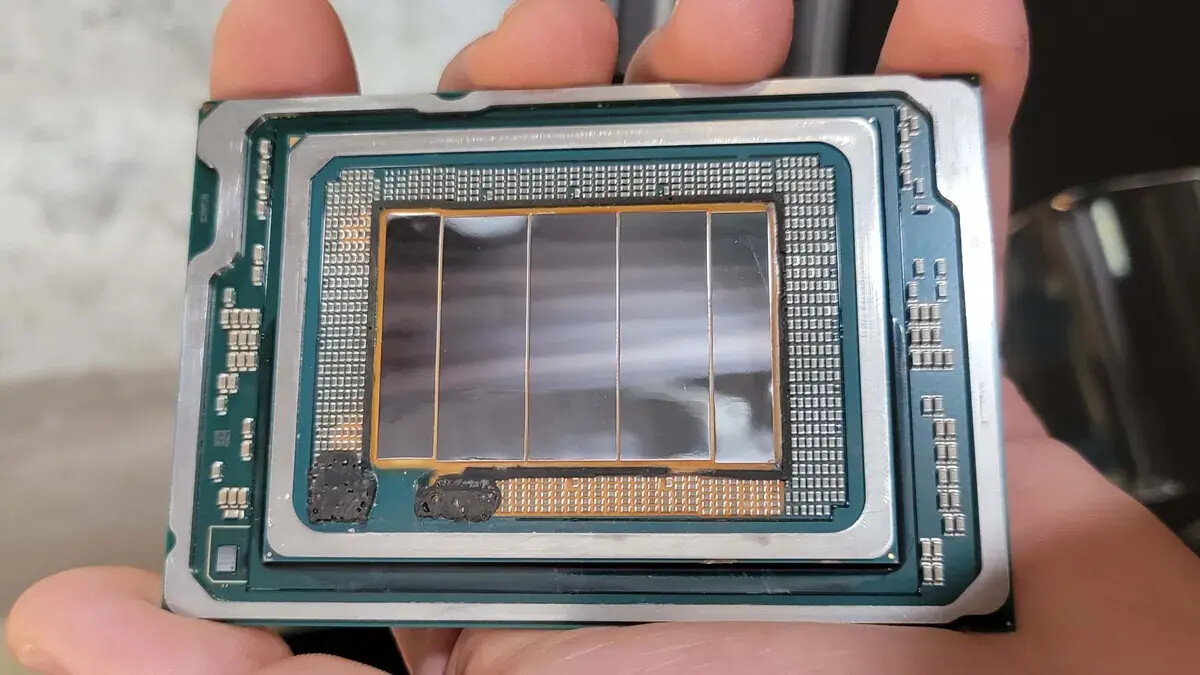
Yesterday, Intel launched its Xeon 6 family of server processors based on P-cores manufactured on Intel 3 node. While the early reviews seem promising, Intel is preparing a more advanced generation of processors that will make or break its product and foundry leadership. Codenamed "Clearwater Forest," these CPUs are expected to be the first high-volume production chips based on the Intel 18A node. We have pictures of the five-tile Clearwater Forest processor thanks to Tom's Hardware. During the Enterprise Tech Tour event in Portland, Oregon, Tom's Hardware managed to take a picture of the complex Clearwater Forest design. With compute logic built on 18A, this CPU uses Intel's 3-T process technology, which serves as the foundation for the base die, marking its debut in this role. Compute dies are stacked on this base die, making the CPU building more complex but more flexible.

The Foveros Direct 3D and EMIB technologies enable large-scale integration on a package, achieving capabilities that previous monolithic single-chip designs could not deliver. Other technologies like RibbonFET and PowerVia will also be present for Clearwater Forest. If everything continues to advance according to plan, we expect to see this next-generation CPU sometime next year. However, it is crucial to note that if this CPU shows that the high-volume production of Intel 18A is viable, many Intel Foundry customers would be reassured that Intel can compete with TSMC and Samsung in producing high-performance silicon on advanced nodes at scale.

ASRock Rack Expands Server Portfolio Powered by Intel Xeon 6900 Series Processors

ASRock Rack Inc., a leading innovative server company, today announced the launch of its new server platforms, powered by Intel Xeon 6900 series processors with Performance-Cores (P-Cores). These advanced platforms are designed to deliver exceptional performance across a wide range of demanding workloads, including High-Performance Computing (HPC), Artificial Intelligence (AI), storage, and networking.

The Intel Xeon 6900 Series Processors are optimized for high performance per core and are delivered in a new class of Intel server platform design. They offer up to 12 memory channels, providing greater memory bandwidth to support demanding environments such as cloud, AI, and HPC. Leveraging these processors, ASRock Rack's newly released platforms—the 1U all-flash storage server 1U8E1S-GNRAPDNO and the GNRAPD12DNO server motherboard—fully maximize throughput with unprecedented compute capability.

ASUS Introduces All-New Intel Xeon 6 Processor Servers

ASUS today announced its all-new line-up of Intel Xeon 6 processor-powered servers, ready to satisfy the escalating demand for high-performance computing (HPC) solutions. The new servers include the multi-node ASUS RS920Q-E12, which supports Intel Xeon 6900 series processors for HPC applications; and the ASUS RS720Q-E12, RS720-E12 and RS700-E12 server models, embedded with Intel Xeon 6700 series with E-cores, will also support Intel Xeon 6700/6500 series with P-cores in Q1, 2025, to provide seamless integration and optimization for modern data centers and diverse IT environments.

These powerful new servers, built on the solid foundation of trusted and resilient ASUS server design, offer improved scalability, enabling clients to build customized data centers and scale up their infrastructure to achieve their highest computing potential - ready to deliver HPC success across diverse industries and use cases.

GIGABYTE Intros Performance Optimized Servers Using Intel Xeon 6900-series with P-core

Giga Computing, a subsidiary of GIGABYTE and an industry leader in generative AI servers and advanced cooling technologies, today announced its first wave of GIGABYTE servers for Intel Xeon 6 Processors with P-cores. This new Intel Xeon platform is engineered to optimize per-core-performance for compute-intensive and AI intensive workloads, as well as general purpose applications. GIGABYTE servers for these workloads are built to achieve the best possible performance by fine tuning the server design to the chip design and to specific workloads.

All new GIGABYTE servers support Intel Xeon 6900-series processors with P-cores that have up to 128 cores and up to 96 PCIe Gen 5 lanes. Additionally, for greater performance in memory intensive workloads, the 6900-series expands to 12 channel memory, and makes available up to 64 lanes CXL 2.0. Overall, this modular SOC architecture has great potential with the ability to leverage a shared platform for running both performance and efficiency optimized architecture.

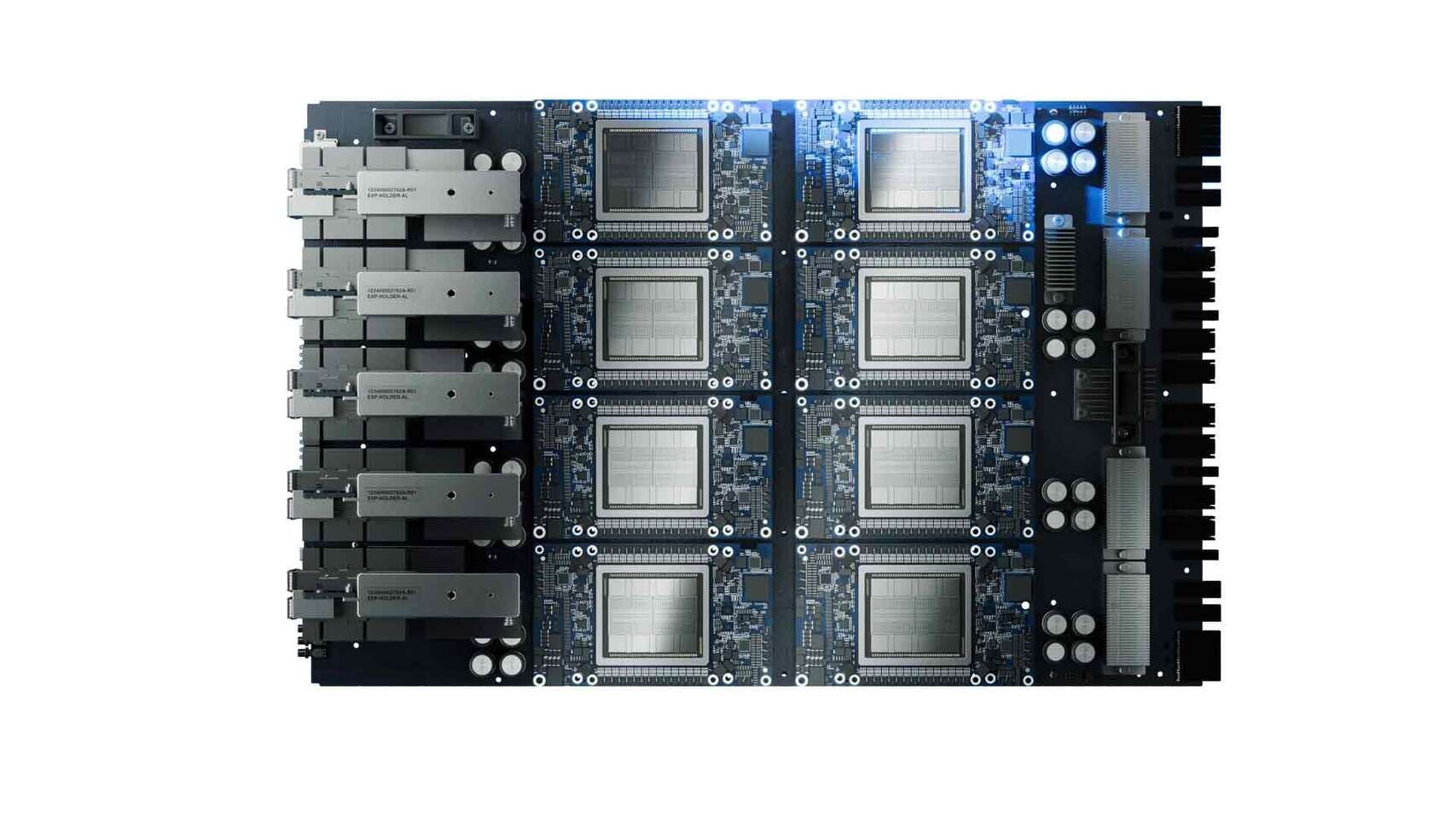
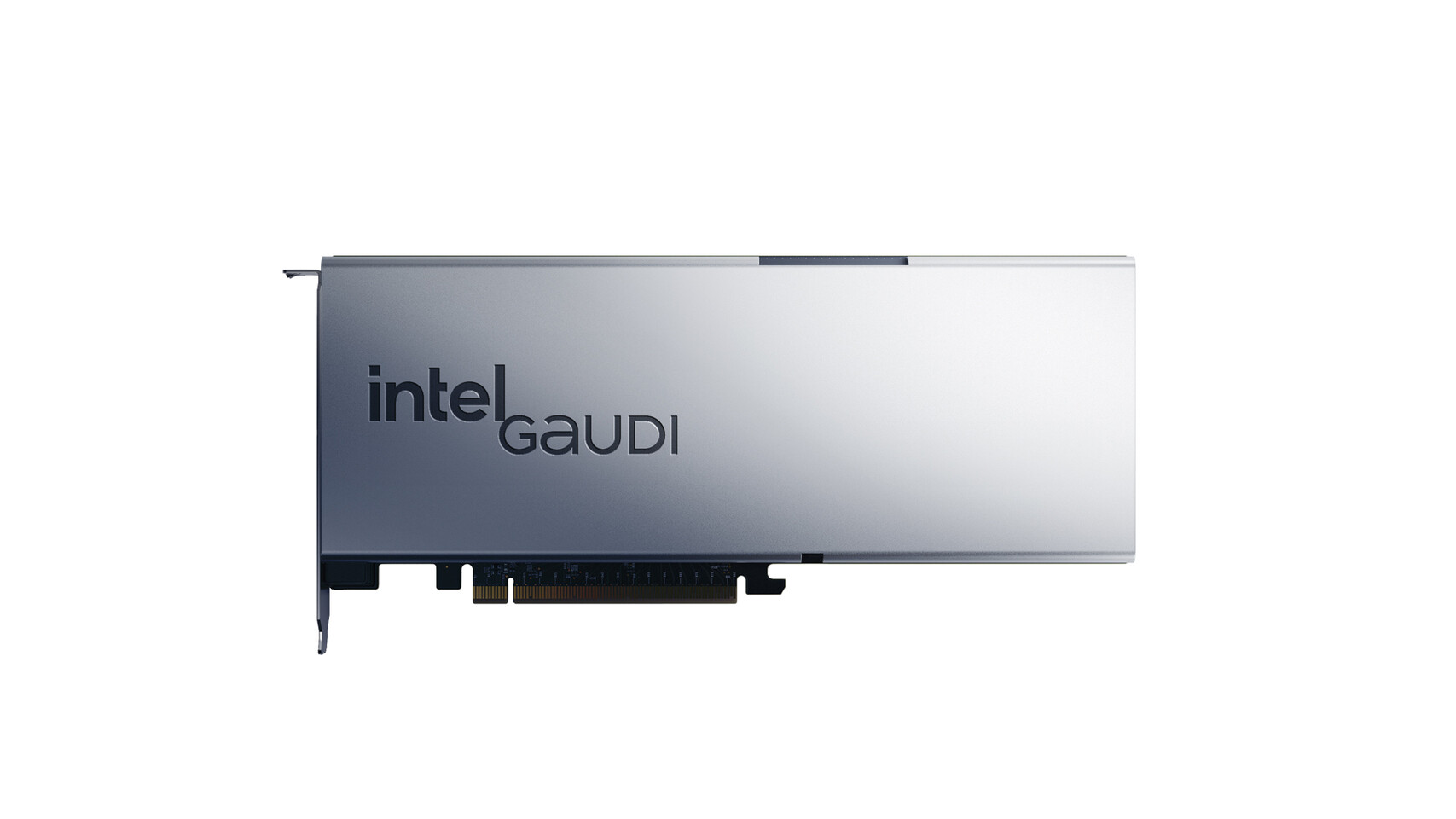
Intel Launches Gaudi 3 AI Accelerator and P-Core Xeon 6 CPU

As AI continues to revolutionize industries, enterprises are increasingly in need of infrastructure that is both cost-effective and available for rapid development and deployment. To meet this demand head-on, Intel today launched Xeon 6 with Performance-cores (P-cores) and Gaudi 3 AI accelerators, bolstering the company's commitment to deliver powerful AI systems with optimal performance per watt and lower total cost of ownership (TCO).

"Demand for AI is leading to a massive transformation in the data center, and the industry is asking for choice in hardware, software and developer tools," said Justin Hotard, Intel executive vice president and general manager of the Data Center and Artificial Intelligence Group. "With our launch of Xeon 6 with P-cores and Gaudi 3 AI accelerators, Intel is enabling an open ecosystem that allows our customers to implement all of their workloads with greater performance, efficiency and security."

MSI's Introduces New Server Platforms with Intel Xeon 6 Processor Featuring P-Cores

MSI, a leading global server provider, today introduced its latest server platforms, powered by Intel Xeon 6 processor with Performance Cores (P-cores). These new products deliver unprecedented performance for compute-intensive tasks, tailored to meet the diverse demands of data center workloads.

"The demand for data center performance has never been greater, driven by compute-intensive AI, HPC applications, and mission-critical database and analytics workloads," said Danny Hsu, General Manager of Enterprise Platform Solutions. "To meet these demands, IT teams need reliable performance across an increasingly diverse array of workloads." MSI's new server platforms, powered by Intel Xeon 6 processors, deliver high performance across a broad range of tasks, meeting diverse requirements for both performance and efficiency.

Pat Gelsinger Writes to Employees on Foundry Momentum, Progress on Plan

All eyes have been on Intel since we announced Q2 earnings. There has been no shortage of rumors and speculation about the company, including last week's Board of Directors meeting, so I'm writing today to provide some updates and outline what comes next. Let me start by saying we had a highly productive and supportive Board meeting. We have a strong Board comprised of independent directors whose job it is to challenge and push us to perform at our best. And we had deep discussions about our strategy, our portfolio and the immediate progress we are making against the plan we announced on August 1.

The Board and I agreed that we have a lot of work ahead to drive greater efficiency, improve our profitability and enhance our market competitiveness—and there are three key takeaways from last week's meeting that I want to focus on:
  • We must build on our momentum in Foundry as we near the launch of Intel 18A and drive greater capital efficiency across this part of our business.
  • We must continue acting with urgency to create a more competitive cost structure and deliver the $10B in savings target we announced last month.
  • We must refocus on our strong x86 franchise as we drive our AI strategy while streamlining our product portfolio in service to Intel customers and partners.
We have several pieces of news to share that support these priorities.

Intel to Produce Custom AI Chips and Xeon 6 Processors for AWS

Intel Corp. and Amazon Web Services. Inc., an Amazon.com company, today announced a co-investment in custom chip designs under a multi-year, multi-billion-dollar framework covering product and wafers from Intel. This is a significant expansion of the two companies' longstanding strategic collaboration to help customers power virtually any workload and accelerate the performance of artificial intelligence (AI) applications.

As part of the expanded collaboration, Intel will produce an AI fabric chip for AWS on Intel 18A, the company's most advanced process node. Intel will also produce a custom Xeon 6 chip on Intel 3, building on the existing partnership under which Intel produces Xeon Scalable processors for AWS.

Intel Xeon 6 Delivers up to 17x AI Performance Gains over 4 Years of MLPerf Results

Today, MLCommons published results of its industry-standard AI performance benchmark suite, MLPerf Inference v4.1. Intel submitted results across six MLPerf benchmarks for 5th Gen Intel Xeon Scalable processors and, for the first time, Intel Xeon 6 processors with Performance-cores (P-cores). Intel Xeon 6 processors with P-cores achieved about 1.9x geomean performance improvement in AI performance compared with 5th Gen Xeon processors.

"The newest MLPerf results show how continued investment and resourcing is critical for improving AI performance. Over the past four years, we have raised the bar for AI performance on Intel Xeon processors by up to 17x based on MLPerf. As we near general availability later this year, we look forward to ramping Xeon 6 with our customers and partners," said Pallavi Mahajan, Intel corporate vice president and general manager of Data Center and AI Software.

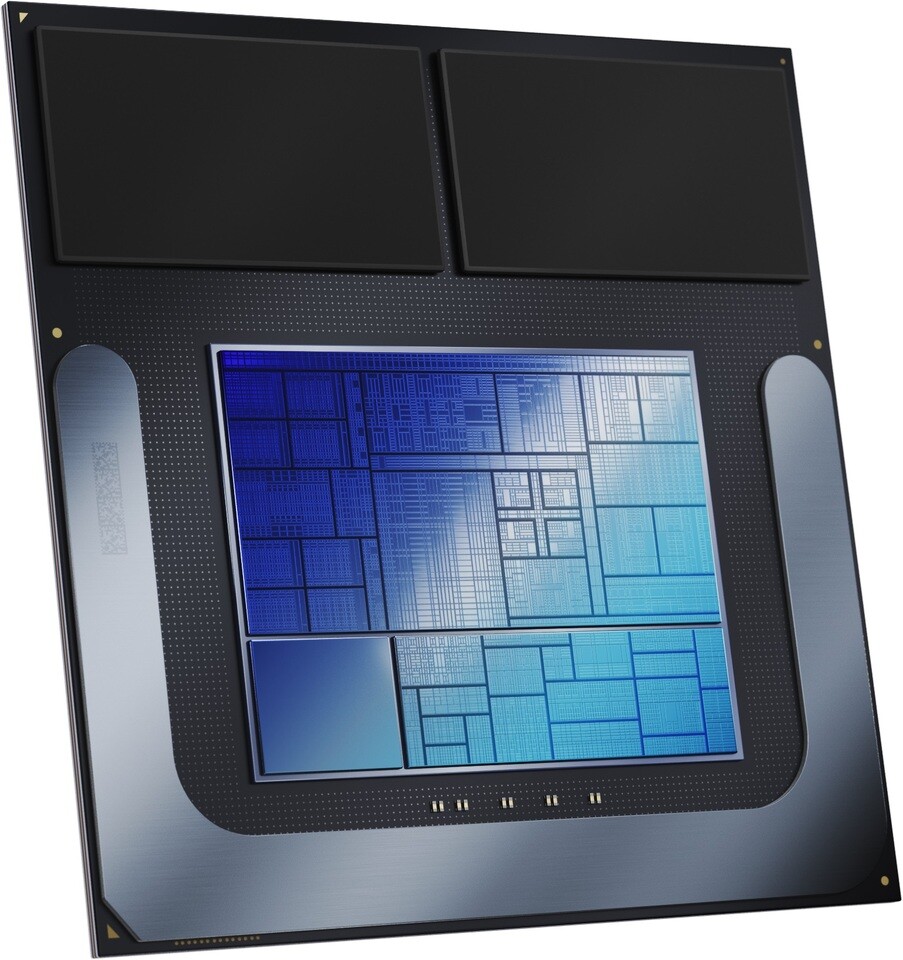
Intel Dives Deep into Lunar Lake, Xeon 6, and Gaudi 3 at Hot Chips 2024

Demonstrating the depth and breadth of its technologies at Hot Chips 2024, Intel showcased advancements across AI use cases - from the data center, cloud and network to the edge and PC - while covering the industry's most advanced and first-ever fully integrated optical compute interconnect (OCI) chiplet for high-speed AI data processing. The company also unveiled new details about the Intel Xeon 6 SoC (code-named Granite Rapids-D), scheduled to launch during the first half of 2025.

"Across consumer and enterprise AI usages, Intel continuously delivers the platforms, systems and technologies necessary to redefine what's possible. As AI workloads intensify, Intel's broad industry experience enables us to understand what our customers need to drive innovation, creativity and ideal business outcomes. While more performant silicon and increased platform bandwidth are essential, Intel also knows that every workload has unique challenges: A system designed for the data center can no longer simply be repurposed for the edge. With proven expertise in systems architecture across the compute continuum, Intel is well-positioned to power the next generation of AI innovation." -Pere Monclus, chief technology officer, Network and Edge Group at Intel.

Intel Postpones Innovation 2024 Event to 2025, No Word on Arrow Lake Launch

Intel announced that it has postponed the 2024 edition of its Innovation event to 2025. Among other things, the first-party event showcases innovations from the company's various business units made in the preceding year, includes a few key product launches, and teasers for what's next. The Innovation 2024 was poised to be particularly important for the company, as it was expected to launch its next generation Core Ultra "Arrow Lake" processors not just for mobiles, but even the desktop platform. Other key product showcase items include Xeon 6 server processors, and Gaudi 3 AI accelerator, besides updates from the company's foundry business, particularly the Intel 20A and Intel 18A nodes.

Intel's postponement of Innovation 2024 can be seen as a move to demonstrate sincerity that the company working to meet its goal of cutting cost of revenue by $10 billion through FY 2024, something that will bear results by mid-2025. It would have probably felt inappropriate for the company to host a lavish product showcase event in light of this. That said, there's no word on how this affects launch of products such as Core Ultra "Arrow Lake," it's possible that the company may launch them in a low-key dedicated media presentation.

Intel Granite Rapids SKUs Detailed With Up To 128 Cores and 500 W TDP

The newest leak from X (formerly Twitter) has detailed five Intel Granite Rapids SKUs, including the 6980P, 6979P, 6972P, 6952P, and the 6960P. Featuring up to 128 CPU cores and up to 504 MB of cache, these show that Intel Granite Rapids will double the amount of cores compared to the Emerald Rapids SKUs.

The newest leak coming from Jaykihn over at X, following the previous leak that detailed the most powerful SKU. The 6980P will pack 128 cores, pack 504 MB of cache, have a 2.0 GHz base frequency and a massive 500 W TDP rating. The rest of the SKUs have lower core count, ending with the 6960P, which comes with 72 cores, 432 MB of cache, but also a higher 2.7 GHz base frequency.

Intel "Meteor Lake" CPUs Face Yield Issues, Company Running "Hot Lots" to Satisfy Demand

In a conversation with Intel's CEO Pat Gelsinger, industry analyst Patrick Moorhead revealed that Intel's Meteor Lake CPU platform suffers from some production issues. More specifically, Intel has been facing some yield and/or back-end production issues with its Meteor Lake platform, resulting in a negative impact on Intel's margins when producing the chip. The market is showing great demand for these chips, and Intel has been forced to run productions of "hot lots"-- batch production of silicon with the highest priority that gets moved to the front of the production line so they can get packaged as fast as possible. While this is a good sign that the demand is there, running hot lots increases production costs overall as some other wafers have to go back so Meteor Lake can pass.

The yield issues associated with Meteor Lake could be stemming from the only tile made by Intel in the MTL package: the compute tile made on the Intel 4 process. Intel 4 process is specific to Meteor Lake. No other Intel product uses it, not even the Xeon 6, which uses Intel 3, or any of the upcoming CPUs like Arrow Lake, which uses the Intel 20A node. So, Intel is doing multiple nodes for multiple generations of processors, further driving up costs as typical high-volume production with a single node for multiple processors yields lower costs. Additionally, the company is left with lots of "wafers to burn" with Intel 4 node, so even with Meteor Lake having yield issues, the production is ultimately fine, while the operating costs and margins take a hit.

Intel Reports Q2-2024 Financial Results; Announces $10 Billion Cost Reduction Plan, Shares Fall 20%+

Intel Corporation today reported second-quarter 2024 financial results. "Our Q2 financial performance was disappointing, even as we hit key product and process technology milestones. Second-half trends are more challenging than we previously expected, and we are leveraging our new operating model to take decisive actions that will improve operating and capital efficiencies while accelerating our IDM 2.0 transformation," said Pat Gelsinger, Intel CEO. "These actions, combined with the launch of Intel 18A next year to regain process technology leadership, will strengthen our position in the market, improve our profitability and create shareholder value."

"Second-quarter results were impacted by gross margin headwinds from the accelerated ramp of our AI PC product, higher than typical charges related to non-core businesses and the impact from unused capacity," said David Zinsner, Intel CFO. "By implementing our spending reductions, we are taking proactive steps to improve our profits and strengthen our balance sheet. We expect these actions to meaningfully improve liquidity and reduce our debt balance while enabling us to make the right investments to drive long-term value for shareholders."

Micron Technology Unveils MRDIMMs to Scale Up Memory Densities on Servers

Micron Technology, Inc., today announced it is now sampling its multiplexed rank dual inline memory module (MRDIMMs). The MRDIMMs will enable Micron customers to run increasingly demanding workloads and obtain maximum value out of their compute infrastructure. For applications requiring more than 128 GB of memory per DIMM slot, Micron MRDIMMs outperform current TSV RDIMMs by enabling the highest bandwidth, largest capacity with the lowest latency and improved performance per watt to accelerate memory-intensive virtualized multi-tenant, HPC and AI data center workloads.1 The new memory offering is the first generation in the Micron MRDIMM family and will be compatible with Intel Xeon 6 processors.

"Micron's latest innovative main memory solution, MRDIMM, delivers the much-needed bandwidth and capacity at lower latency to scale AI inference and HPC applications on next-generation server platforms," said Praveen Vaidyanathan, vice president and general manager of Micron's Compute Products Group. "MRDIMMs significantly lower the amount of energy used per task while offering the same reliability, availability and serviceability capabilities and interface as RDIMMs, thus providing customers a flexible solution that scales performance. Micron's close industry collaborations ensure seamless integration into existing server infrastructures and smooth transitions to future compute platforms."

ASRock Rack Unveils GPU Servers, Offers AI GPU Choices from All Three Brands

ASRock Rack sells the entire stack of servers a data-center could possibly want, and at Computex 2024, the company showed us their servers meant for AI GPUs. The 6U8M-GENOA2, as its name suggests, is a 6U server based on 2P AMD EPYC 9004 series "Genoa" processors in the SP5 package. You can configure it with even the variants of "Genoa" that come with 3D V-cache, for superior compute performance from the large cache. Each of the two SP5 sockets is wired to 12 DDR5 RDIMM slots, for a total of 24 memory channels. The server supports eight AMD Instinct MI300X or MI325X AI GPUs, which it wires out using Infinity Fabric links and PCIe Gen 5 x16 individually. A 3 kW 80 Plus Titanium PSU keeps the server fed. There are vacant Gen 5 x16 slots left even after connecting the GPUs, so you could give it a DPU-based 40 GbE NIC.

The 6U8X-EGS2 B100 is a 6U AI GPU server modeled along the 6U8M-GENOA2, with a couple of big changes. To begin with, the EPYC "Genoa" chips make way for a 2P Intel Xeon Socket E (LGA4677) CPU setup, for 2P Xeon 5 "Emerald Rapids" processors. Each socket is wired to 16 DDR5 DIMM slots (the processor itself has 8-channel DDR5, but this is a 2 DIMM-per-channel setup). The server integrates an NVIDIA NVSwitch that wires out NVLinks to eight NVIDIA B100 "Blackwell" AI GPUs. The server features eight HHHL PCIe Gen 5 x16, and five FHHL PCIe Gen 5 x16 connectors. There are vacant x16 slots for your DPU/NIC, you can even use an AIC NVIDIA BlueField card. The same 3 kW PSU as the "Genoa" system is also featured here.

Next-Gen Computing: MiTAC and TYAN Launch Intel Xeon 6 Processor-Based Servers for AI, HPC, Cloud, and Enterprise Workloads at COMPUTEX 2024

The subsidiary of MiTAC Holdings Corp, MiTAC Computing Technology and its server brand TYAN, the leading manufacturer in server platform design worldwide, unveil their new server systems and motherboards optimized for today's AI, HPC, cloud, and enterprise workloads at COMPUTEX 2024, Booth # M1120 in Taipei, Taiwan from June 4 to June 7. Harnessing the power of the latest Intel Xeon 6 processor and 4th and 5th Gen Intel Xeon Scalable processors, these solutions deliver cutting-edge performance.

"For over a decade, MiTAC has worked with Intel at the forefront of server technology innovation, consistently delivering cutting-edge solutions tailored for AI and high-performance computing (HPC). The integration of Intel's latest Xeon 6 processors into our MiTAC and TYAN server platforms transforms computational capabilities, significantly enhancing AI performance, boosting efficiency, and scaling cloud operations. These advancements empower our customers with a competitive edge through superior performance and optimized total cost of ownership," said Rick Hwang, President of MiTAC Computing Technology Corporation.

ASUS Unveils Cutting-Edge Servers and Data Storage for HPC and AI at Computex 2024

ASUS, a leading data center solutions provider, today proudly unveils its expertise in delivering comprehensive solutions for high-performance computing (HPC), AI, and diverse enterprise needs in its Data Center Solutions VIP Showcase at Computex 2024. At the event, ASUS demonstrates its expertise in servers, storage and data center architecture with support for Intel, AMD and NVIDIA technologies, as well as its liquid/air-cooling solutions and proprietary, high-quality software platforms. Equipped to meet the demanding requirements of today's data-intensive workloads, ASUS offers tailored solutions that are meticulously designed to elevate performance, reliability and scalability. From research institutions, financial firms, to manufacturing facilities, ASUS stands ready to empower organizations with cutting-edge HPC capabilities.

Unveiling enhanced flexibility with Intel Xeon 6 processors
To build a top-notch ecosystem, strong integration and partnerships are crucial for excellence. ASUS proudly introduces its latest servers, RS700-E12 and RS720-E12 series, powered by Intel Xeon 6 processors. Through fine tuning in hardware design, we've adeptly addressed the challenges of higher performance as well as increased power consumption, while also embracing modular design for more efficient motherboard layout and serviceability. Empowered by ASPEED AST2600 and PFR AST1060, these advancements have been seamlessly integrated into the all-new ASMB12-iKVM on the Intel Xeon 6 processor platform, resulting in remarkable CPU performance and fortified out-of-band management and security. This new architecture enriches all workloads, leveraging Intel 7 process paired with multiple compute cores etched on Intel 3 process, to deliver unparalleled efficiency and reliability.
Return to Keyword Browsing
Nov 11th, 2026 23:37 CST change timezone

New Forum Posts

Popular Reviews

TPU on YouTube

Controversial News Posts