News Posts matching #computer

Return to Keyword Browsing

GEEKOM Returns to CES 2026 with Premium Laptops and Next-Generation Mini PCs

GEEKOM will make its fourth consecutive appearance at CES 2026, taking place from January 6 to 9 at Booth 35025 in LVCC South Hall 2. As a leader in the Mini PC industry, GEEKOM is presenting its most focused product launch to date, marking a major expansion into premium laptops while continuing to advance its compact computing lineup.

The centerpiece of GEEKOM's CES 2026 showcase is the GeekBook X14 Pro, a laptop that sets a new benchmark for lightweight design. Weighing just 2.2 pounds and measuring only 0.23 inches at its thinnest point, the GeekBook X14 Pro is positioned as the world's lightest all-metal laptop. It features a 2.8K OLED display with a 120 Hz refresh rate, delivering sharp visuals, vivid colors, and smooth performance.

Tiiny AI Reveals AI Pocket Lab Mini PC Powered by 12-core Arm CPU

Tiiny AI Inc. (www.tiiny.ai), a US deep-tech AI startup, today unveiled the world's smallest personal AI supercomputer, the Tiiny AI Pocket Lab, officially verified by Guinness World Records under the category "The Smallest MiniPC (100B LLM Locally)." The event marked the first global public unveiling of the Tiiny AI Pocket Lab. For the first time in AI supercomputing, a pocket-sized device is capable of running up-to a full 120-billion-parameter large language model (LLM) entirely on-device—without cloud connectivity, servers, or high-end GPUs.

Designed for energy-efficient personal intelligence, Tiiny AI Pocket Lab runs within a 65 W power envelope. It can enable large-model performance at a fraction of the energy and carbon footprint of traditional GPU-based systems.

MSI IPC Unveils Powerful New Edge AI System MS-C910E

MSI IPC announces the launch of its latest edge AI system, the MS-C910E, a high-performance industrial computer engineered for robust AI inference, demanding I/O tasks, and real-world industrial deployments. The MS C910E is built on the LGA 1700 Intel R680E platform and supports up to Intel Core Processors (Series 2) for strong and scalable performance. It offers 2 DDR5 SO- DIMM slots for up to 96 GB memory with ECC for reliable data handling. The system supports 4 independent displays through 2 HDMI and 2 DP outputs and delivers fast networking with four 2.5 GbE LAN ports for demanding AI and industrial tasks.

The MS C910E is built for reliability with strong resistance to vibration and shock and supports wide range DC input from 12 to 48 volt. It operates in environments from -10 °C to 40 °C, making it ready for harsh industrial conditions.

IBM and Cisco Announce Plans to Build a Network of Large-Scale, Fault-Tolerant Quantum Computers

Today, IBM and Cisco announced an intention to collaborate on the groundwork for networked distributed quantum computing, to be realized as soon as the early 2030s. By combining IBM's leadership in building useful quantum computers with Cisco's quantum networking innovations, the companies plan to explore how to scale large-scale, fault-tolerant quantum computers beyond IBM's ambitious roadmap. Additionally, they will work to solve fundamental challenges towards a quantum computing internet.

Within five years, IBM and Cisco will aim to demonstrate the first proof-of-concept for a network that combines individual, large-scale, fault-tolerant quantum computers, enabling them to work together to run computations over tens to hundreds of thousands of qubits. This network would allow problems to be run with potentially trillions of quantum gates, the fundamental entangling operations required for transformative quantum applications such as massive optimization problems, or the design of complex materials and medicines.

AMD and Eviden to Power Europe's New Exascale Supercomputer

AMD (NASDAQ: AMD) and Eviden, the Atos Group product brand leading in advanced computing, announced their selection to build Alice Recoque, a next-generation supercomputer to support the need for high performance computing (HPC) and AI, serving as an AI Factory. Alice Recoque will be France's first and Europe's second Exascale supercomputer, led by Grand équipement national de calcul intensif (GENCI), operated by Commissariat à l'énergie atomique et aux énergies alternatives (CEA), and powered by next-generation AMD AI and HPC compute technologies.

This project, representing an overall cost of 544 million euros, is funded by EuroHPC JU, with budget stemming from the Digital Europe Programme (DEP), and the Jules Verne Consortium, led by France through GENCI and CEA with the participation of Netherlands IT cooperation SURF and Greece with GRNET.

Retro Games and Plaion Replai Announce The Spectrum Collector's Edition

Plaion Replai, in partnership with Retro Games Limited, have revealed The Spectrum Collector's Edition, a stunning all-white homage to one of the most important milestones in British technological history - the one-millionth ZX Spectrum. Available exclusively for pre-order from today at www.plaionreplai.com, this strictly limited, premium Collector's Edition is priced at £199.99 and will not be sold anywhere else. Once the allocation is gone, it's gone forever.

Launching 26th June 2026, this Collector's Edition marks Retro Games Limited's most ambitious celebration of Spectrum heritage to date. The one-millionth ZX Spectrum, produced in 1983, represents far more than a numerical achievement. It symbolized the moment the UK firmly established itself as a global center of creativity, coding, and digital innovation. As the first British home computer to surpass one million sales, the Spectrum ignited the nation's 'bedroom coder' movement, nurturing future industry pioneers and giving millions of young people their first taste of programming, digital art, and game creation.

Eviden Unveils its BullSequana XH3500, a Converged Supercomputing Platform for the AI-HPC Era

Eviden, the Atos Group product brand leading in advanced computing, today announces the launch of BullSequana XH3500, its latest supercomputer built to support convergence of High-Performance Computing (HPC) and Artificial Intelligence (AI) workloads. Designed to scale beyond exascale performance, the BullSequana XH3500 combines cutting-edge hardware with a comprehensive software and application ecosystem, helping organizations accelerate scientific discovery, industrial innovation, and AI-driven breakthroughs.

Building on over two decades of HPC leadership, Eviden introduces the BullSequana XH3500 as a natural progression from the BullSequana XH3000, refining its hybrid computing strategy and harnessing the technological foundations laid by its predecessor.

Quantinuum Announces Commercial Launch of New Helios Quantum Computer

Quantinuum, the world leader in quantum computing, today announced the launch of Helios, the world's most accurate general-purpose commercial quantum computer, designed to accelerate quantum computing adoption by enterprises. With the highest fidelity of any commercial system and a first-of-its-kind real-time control engine, Helios enables developers to program a quantum computer in much the same way they program heterogeneous classical computers. A new, modern Python-based programming language called Guppy allows developers to seamlessly combine hybrid compute capabilities—quantum and classical—in a single program. Helios is now available to customers through Quantinuum's cloud service and on-premise offering.

"The next computing inflection point starts today," said Dr. Rajeeb Hazra, President & CEO of Quantinuum. "For the first time enterprises can access a highly accurate general purpose quantum computer to drive real world impact, transforming how industries innovate - from drug discovery to finance to advanced materials."

Huawei Launches Homegrown PCs With Custom Processors and Linux-Based OS

Huawei is advancing its strategy for technology independence by introducing two new desktop computer models built entirely with Chinese components. The Qingyun line—featuring the W515y and W585y models—represents the company's latest effort to provide computing solutions free from foreign hardware. These systems integrate Huawei's Kirin 9000X chip with locally developed Linux software, instead of Microsoft Windows. Users can choose between UOS V20 from Tongxin or Galaxy Kylin V10. While details about the hardware are still emerging, the Kirin 9000X is an eight-core Arm-based chip with 16 threads, operating at 2.5 GHz. It could be a big.LITTLE deisgn, or a big-core only SoC. The desktops feature quad-channel LPDDR5x memory and support both flash storage and conventional hard drives.

The port selection is vast, offering a Type-C USB connector and three standard USB 3.2 ports on the front, with four additional USB connections, wired network capability, a legacy serial interface, and dual video options via VGA and HDMI on the back panel. Weighing approximately 3.6 kg and measuring just under 300 mm in width, the systems are compact. Huawei includes its own keyboard and mouse with each unit, though pricing and release dates have not been disclosed. Notably, Huawei has chosen to equip these computers with established Linux variants instead of its HarmonyOS.

Nintendo's Creature Capture Mechanic Patent Denied

Seemingly as part of its ongoing lawsuit against Palworld's developer, Pocketpair, Nintendo applied for several patents to protect what it saw as intellectual property being ripped from Pokémon games. One of those early patent filings at the Japanese Patent Office (JPO) described effectively the creature capture mechanics you see in most Pokémon and similar games these days. The patent describes the game mechanic as throwing an object at a character, after which the computer determines whether the character in question is successfully captured. It also mentions throwing an object at a character in a game in order to limit the character's movement in the field. According to Games Fray, this patent application has now been denied, meaning Nintendo may have to find another linchpin in its ongoing lawsuit against Palworld's developer.

The denial of the patent comes after the patent office examined prior art that was submitted by an unnamed third party. As Games Fray goes on to explain, however, the decision to deny Nintendo's patent doesn't necessarily spell victory for Palworld and Pocketpair. Firstly, the patent denial is "non-final," which means Nintendo can contest the ruling and defend its position. Secondly, and this appears to be more important, while Japanese judges regularly do consult with the JPO and respect the decision of the Patent Office, the patent is non-binding, meaning the final decision is still up to the judge's discretion. For Nintendo's part, the patent in question forms a core part of a family of patents, so if it is eventually "finally" denied, Nintendo may lose additional resources to fight against its perceived threats, since that patent would weaken its claim to other patents in the patent family.

IBM Runs Quantum Computing Algorithm on AMD FPGA Chips

IBM says it has successfully executed one of its key quantum computing algorithms in real time on AMD field-programmable gate arrays (FPGAs), marking a step toward cheaper and more practical hybrid quantum systems. The algorithm, designed to dynamically detect and correct quantum errors, was first announced in June and is now running on widely available AMD reconfigurable hardware rather than costly, custom-built control units. Jay Gambetta, IBM's VP of Quantum, told Reuters that the FPGA-based implementation performs 10× faster than required for live error correction, calling it "a big deal" for real-world quantum computing. The demonstration suggests IBM's development timeline is a full year ahead of schedule for its 2029 Starling quantum system roadmap. Quantum computers use qubits that can show both 0 and 1 at the same time but often face problems from outside factors that lead to errors in calculations. IBM's new method tackles this issue by keeping an eye on and fixing these errors as they happen, which keeps the system steady during quantum tasks. By running this quantum computing algorithm on regular AMD chips, we see how classical and quantum systems are coming together more and more opening doors to mixed setups where normal hardware handles fixing errors and running things in real time.

IBM's approach might help close the gap between the early quantum machines we have now and future ones that don't make mistakes. By showing that off-the-shelf chips you'd find in data centers can do this job well, IBM cuts down on costs and makes things simpler while also making it easier to improve performance as systems get bigger. These are big steps in moving quantum computing out of labs and into the business world. The partnership between IBM and AMD appears to be bearing fruit. Back in August, the two companies announced a close collaboration to develop next-generation computing architectures that combine quantum computing and high-performance computing, a concept known as quantum-centric supercomputing. More recently, in early October, IBM and AMD also revealed a joint effort to deliver advanced AI infrastructure to Zyphra, an open-source AI research and product company based in San Francisco. Under a multi-year agreement, IBM will provide Zyphra with a large cluster of AMD Instinct MI300X GPUs hosted on IBM Cloud, enabling the training of next-generation multimodal foundation models.

Google's Willow Quantum Processor Achieves 13,000× Speed Advantage Over Classical Supercomputers

Google has announced a major breakthrough in quantum computing with its new Willow processor claiming a 13,000× performance advantage over the world's fastest supercomputers. The 105-qubit chip successfully executed a physics simulation using a new algorithm called Quantum Echoes completing in seconds what classical systems would take days to compute. The experiment simulated out-of-time-order correlators (OTOCs), a benchmark for complex quantum interference, marking what Google calls the first verifiable demonstration of quantum advantage with real-world applications. The Quantum Echoes algorithm was built to leverage quantum parallelism showing both high speed and accuracy.

Google says the achievement, announced on October 22 demonstrates practical potential for quantum workloads in molecular modeling, materials science, and NMR spectroscopy. While widespread applications remain several years out, the company notes that the result validates its long-term roadmap pairing hardware like Willow with custom algorithms to achieve scalable, fault-tolerant quantum computation. Meanwhile, IBM 1,121-qubit Condor processor announced in December 2023 has yet to demonstrate comparable real-world performance. However, the scope of IBM's Condor quantum processor was to pave the way for its smaller 156-qubit Heron processor integrated into IBM's Quantum System Two. Despite Willow's smaller qubit count Google's results highlight the importance of algorithmic efficiency and error correction, suggesting that raw qubit numbers alone are no longer the key determinant of quantum computing progress.

The Basque Government and IBM Inaugurate Europe's First IBM Quantum System Two

The Basque Government and IBM (NYSE: IBM) today unveiled the first IBM Quantum System Two in Europe at the IBM-Euskadi Quantum Computational Center in San Sebastián. The installation of this system marks a milestone in the partnership between the two parties, which began in 2023 within the framework of the BasQ - Basque Quantum initiative, promoted by the Basque Government to help make Euskadi an international hub for quantum technologies.

The system installed on the Ikerbasque Foundation's main campus, at the IBM-Euskadi Quantum Computational Center, was inaugurated at a ceremony featuring remarks from the President of the Basque Country Government, Mr. Imanol Pradales; Jay Gambetta, Director of IBM Research; Juan Ignacio Pérez Iglesias, Minister of Science, Universities, and Innovation of the Basque Government; Eider Mendoza, Deputy General of Gipuzkoa; Eneko Goia, the Mayor of San Sebastián; and Horacio Morell, General Manager of IBM Spain, Portugal, Greece and Israel. The opening ceremony was also attended by, among others, the First and Second Vice-Lehendakari, Ibone Bengoetxea and Mikel Torres; and the Deputies General of Álava and Bizkaia, Ramiro González and Elixabete Etxanobe; in addition to representation from academia, government, and industry.

NVIDIA Spectrum-X Ethernet Switches Speed Up Networks for Meta and Oracle

NVIDIA today announced that Meta and Oracle will boost their AI data center networks with NVIDIA Spectrum-X Ethernet networking switches. Meta and Oracle are standardizing on Spectrum-X Ethernet switches as an open, accelerated networking architecture that speeds deployment at scale, unlocks exponential gains in AI training efficiency and shortens time to insights.

"Trillion-parameter models are transforming data centers into giga-scale AI factories, and industry leaders like Meta and Oracle are standardizing on Spectrum-X Ethernet to drive this industrial revolution," said Jensen Huang, founder and CEO of NVIDIA. "Spectrum-X is not just faster Ethernet—it's the nervous system of the AI factory, enabling hyperscalers to connect millions of GPUs into a single giant computer to train the largest models ever built."

Microsoft Unveils World's Biggest AI Datacenter, Housing Hundreds of Thousands of GPUs

Microsoft announced today that it will bring Fairwater, a purpose-built AI datacenter in Mount Pleasant, Wisconsin, online in early 2026. The new site is designed as the most powerful datacenter on the planet, serving as a hub for next-generation model training and inference. The campus covers 315 acres with roughly 1.2 million square feet across three buildings and will house hundreds of thousands of NVIDIA GB200 and GB300 GPUs linked by fiber, which can reportedly circle the globe 4.5 times. While we don't have information on the exact GPU count, Microsoft claims the installation will deliver about 10x the performance of today's fastest supercomputers for frontier AI workloads. With the fastest already deployed cluster being xAI's Colossus 1, this means that this system could have over half a million "Blackwell" and "Blackwell Ultra" GPUs.

Over 90% of compute capacity will use a closed-loop liquid cooling system that is filled during construction and continuously recirculated, backed by what the company describes as the planet's second-largest water-cooled chiller plant. Around 10% of servers will rely on outside air and switch to water cooling only on the hottest days. Storage and I/O are scaled for exabyte-class datasets, and the buildout involved 46.6 miles of deep foundation piles, 26.5 million pounds of structural steel, 120 miles of medium-voltage underground cable, 72.6 miles of mechanical piping, and an external cooling array that includes 172 20-foot fans.

Quantum Motion Delivers the Industry's First Full-Stack Silicon CMOS Quantum Computer

Quantum Motion has delivered the industry's first full-stack quantum computer to be built using a standard silicon CMOS chip fabrication process - the same transistor technology used in conventional computers. Deployed at the UK National Quantum Computing Centre (NQCC), this is the first full-stack quantum computer to use mass manufacturable 300 mm silicon CMOS wafer technology and the first silicon spin-qubit computer installed under the NQCC's Quantum Computing Testbed Programme.

The system integrates the company's Quantum Processing Unit (QPU) with a user interface and control stack compatible with industry standard software frameworks, such as Qiskit and Cirq, making it a full-stack solution. The system has a data-centre-friendly footprint of just three 19" server racks, housing the dilution refrigerator and integrated control electronics. Auxiliary equipment is designed to sit separately, enabling it to fit in standard data-centre environments and supporting upgrades to much larger QPUs without any change to the system footprint.

NEC Provides Computing Power for OCTOPUS Supercomputer at Osaka University

The University of Osaka D3 Center will begin trial operations of the "Osaka University Compute and sTOrage Platform Urging open Science" (OCTOPUS), a computational and data platform promoting open science built by NEC Corporation (NEC; TSE: 6701), starting this September, with full-scale operations commencing in December.

OCTOPUS is a supercomputer with a theoretical computational performance of 2.293 petaflops, centered around 140 computing nodes of the "NEC LX201Ein-1". Compared to the previous system, it not only offers approximately 1.5 times the performance, but also incorporates a provenance management function, which automatically records and manages processes such as data generation, jointly developed by both parties. This contributes to promoting open science, where research data is shared across society as a whole.

PsiQuantum Raises $1 Billion to Build Million-Qubit Scale, Fault-Tolerant Quantum Computers

PsiQuantum today announced it has raised $1 billion in funding for its Series E round to build the world's first commercially useful, fault-tolerant quantum computers. This funding will equip the company to break ground on utility-scale quantum computing sites in Brisbane and Chicago, deploy large-scale prototype systems to validate systems architecture and integration, and further advance the performance of its quantum photonic chips and fault-tolerant architecture.

Led by funds and accounts managed by affiliates of BlackRock, along with Temasek and Baillie Gifford, this fundraising values the company at $7 billion and brings in new investors, including entities administered by Macquarie Capital, Ribbit Capital, NVentures (NVIDIA's venture capital arm), Adage Capital Management, Qatar Investment Authority (QIA), Type One Ventures, Counterpoint Global (Morgan Stanley), 1789 Capital, and S Ventures (SentinelOne). The round also included participation from existing investors including Blackbird, Third Point Ventures, and T. Rowe Price Associates, Inc.

Steam Frame Could Be Valve's Next-Generation Gaming Console

Valve's introduction of the Steam Deck has been a massive success in the handheld gaming market. However, we have long anticipated the return of the legendary Steam Machine, which has its road paved by the ecosystem support around the Steam Deck. According to United States Patent and Trademark Office submission, Valve has patented "Steam Frame" trademark that is reportedly "intended to cover the categories of computer hardware; computer networking hardware; computer peripherals; computer hardware and computer software for the reproduction, processing, and streaming of audio, video, data, text, and multimedia content." Additionally, another trademark filing also claims that Steam Frame "is intended to cover the categories of computer game consoles for recreational game playing; video game consoles; video game accessories, namely, controllers for video games."

All the evidence points to the Steam Frame being a standalone console designed to fulfill Valve's mission and execute the vision left behind by the Steam Machine. That means the Steam Frame will arrive as a standalone console unit, paired with a controller, and boot straight into SteamOS, with all optimizations configured just like the current Steam Deck. It would be interesting to see what hardware powers the Steam Frame, given that portability is not a priority and that more adequate cooling would be available for a standalone console. Valve could target higher frame rates on much higher resolutions. For now, all we can do is speculate about the future, so we need to see some more concrete information about the project soon.

IBM and AMD Join Forces to Build the Future of Computing

Today, IBM and AMD announced plans to develop next-generation computing architectures based on the combination of quantum computers and high-performance computing, known as quantum-centric supercomputing. AMD and IBM are collaborating to develop scalable, open-source platforms that could redefine the future of computing, leveraging IBM's leadership in developing the world's most performant quantum computers and software, and AMD's leadership in high-performance computing and AI accelerators.

Quantum computing is a completely different way to represent and process information. While classical computers use bits that can only be either a zero or one, quantum computers' qubits represent information according to the quantum mechanical laws of nature. These properties enable a much richer computational space to explore solutions to complex problems beyond the reach of classical computing alone, including in fields such as drug discovery, materials discovery, optimization, and logistics.

GMKtec Launches NucBox M3 Ultra Mini PC with Intel Core i7-12700H

GMKtec has released the NucBox M3 Ultra a compact desktop computer built around Intel's 12th Gen Core i7-12700H, a 14-cores, 20-threads processor with turbo speeds up to 4.7 GHz. The system targets users who need desktop performance in a portable form factor. Graphics handling comes from integrated Intel Iris Xe graphics running at up to 1.4 GHz. The system supports up to 64 GB of dual-channel DDR4-3200 memory. In terms of connectivity it includes Wi-Fi 6 with 1200 Mbps speeds and 2.5 Gigabit Ethernet. The NucBox M3 Ultra comes with three display outputs, it has HDMI, DisplayPort, and USB-C ports and all these connections can handle 4K resolution at the same time.

The case is made of metal that's been CNC-machined and has a sandblasted finish. For cooling GMKtec NucBox M3 Ultra Mini PC uses a dual copper system with twin air intakes for improved airflow and heat dissipation. Its compact size (114 mm × 106 mm × 42.5 mm) makes it suitable for spaces where traditional desktop towers won't fit.

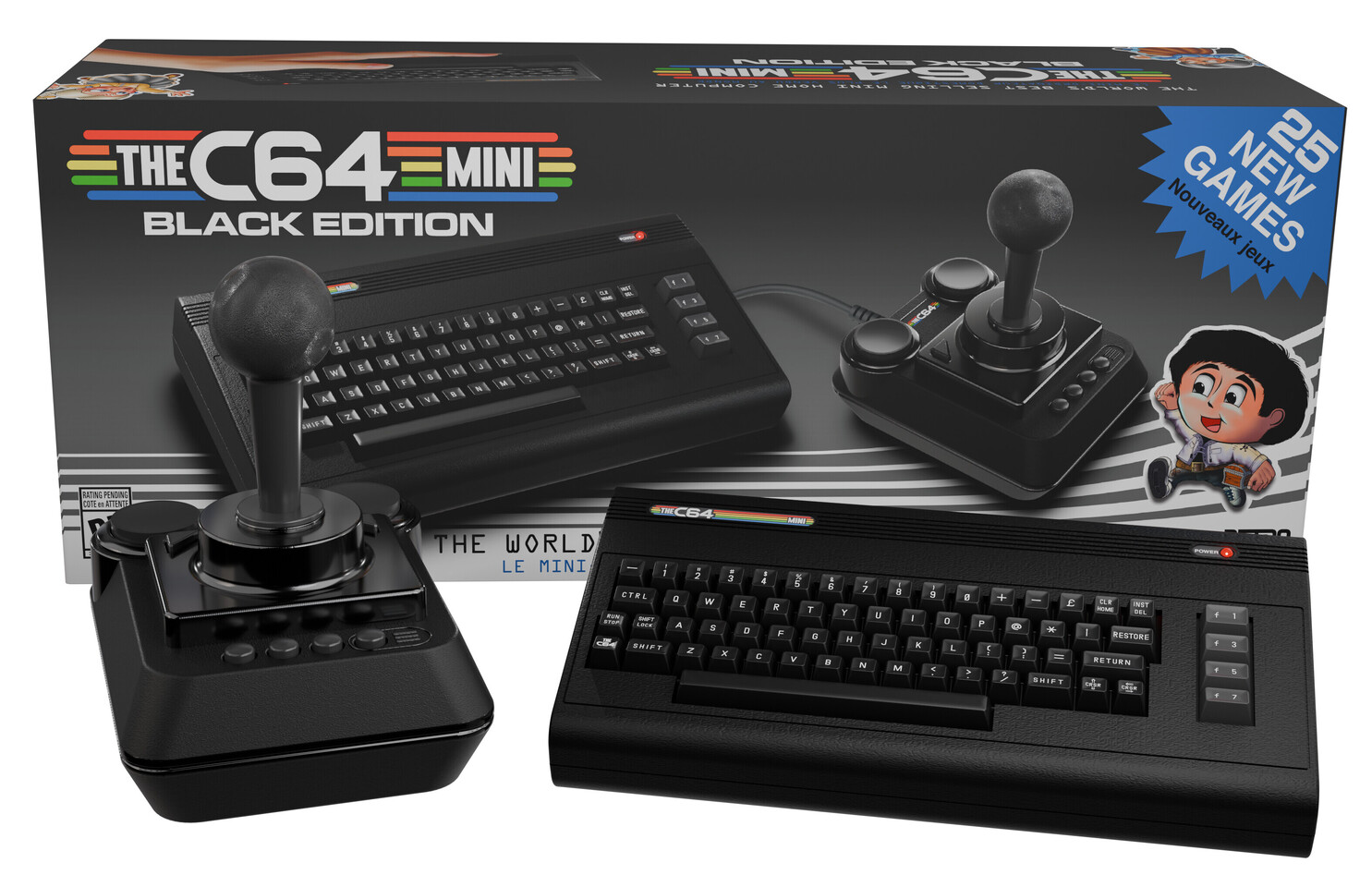
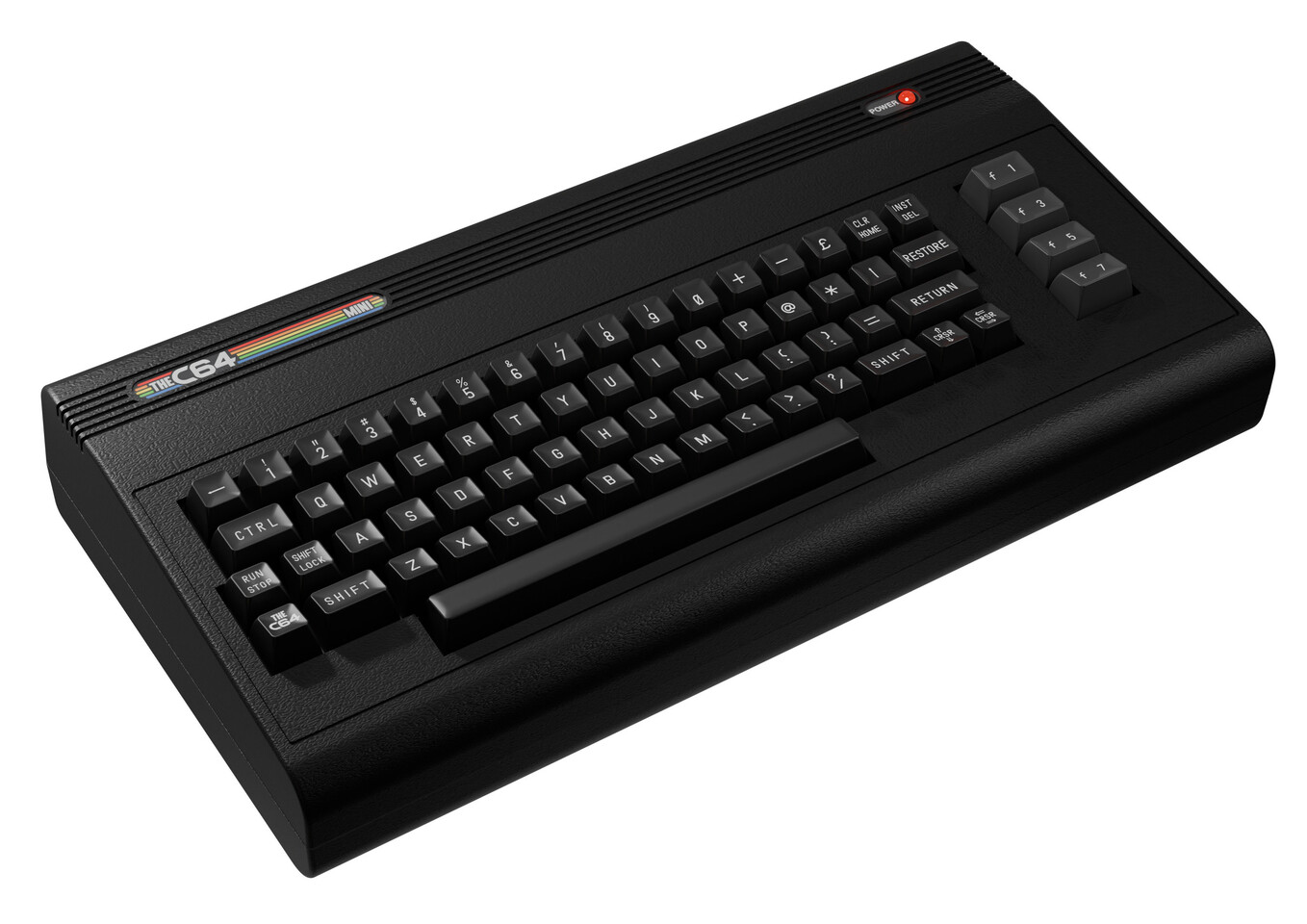
Retro Games Limited and Plaion Replai Announce 'TheC64 Mini - Black Edition'

PLAION REPLAI, a leading global publisher and developer of retro video game software and hardware, and Retro Games Ltd. (RGL), creators of the acclaimed THEC64 range, are proud to announce THEC64 mini - Black Edition, launching globally on 24th October 2025. This stunning new Black Edition of the best-selling THEC64 Mini has been beautifully reimagined in a bold matte-and-gloss black finish, making it a striking, collectible redesign of the beloved 8-bit machine. Along with the sleek aesthetic, THEC64 mini - Black Edition arrives with 25 hand-picked pre-installed Neo-Classic retro games, all among the highest rated C64 titles and many of which have been enhanced for this release and are otherwise commercially unavailable.

THEC64 mini - Black Edition is a modern reimagining of the Commodore 64, one of the most iconic home computers of all time. With more than 17 million units sold globally, the original C64 shaped generations of coders, gamers, musicians, and digital artists.

NVIDIA NVL72 GB200 Systems Accelerate the Journey to Useful Quantum Computing

The integration of quantum processors into tomorrow's supercomputers promises to dramatically expand the problems that can be addressed with compute—revolutionizing industries including drug and materials development.

In addition to being part of the vision for tomorrow's hybrid quantum-classical supercomputers, accelerated computing is dramatically advancing the work quantum researchers and developers are already doing to achieve that vision. And in today's development of tomorrow's quantum technology, NVIDIA GB200 NVL72 systems and their fifth-generation multinode NVIDIA NVLink interconnect capabilities have emerged as the leading architecture.

Europe Builds AI Infrastructure With NVIDIA to Fuel Region's Next Industrial Transformation

NVIDIA today announced it is working with European nations, and technology and industry leaders, to build NVIDIA Blackwell AI infrastructure that will strengthen digital sovereignty, support economic growth and position the continent as a leader in the AI industrial revolution. France, Italy, Spain and the U.K. are among the nations building domestic AI infrastructure with an ecosystem of technology and cloud providers, including Domyn, Mistral AI, Nebius and Nscale, and telecommunications providers, including Orange, Swisscom, Telefónica and Telenor.

These deployments will deliver more than 3,000 exaflops of NVIDIA Blackwell compute resources for sovereign AI, enabling European enterprises, startups and public sector organizations to securely develop, train and deploy agentic and physical AI applications. NVIDIA is establishing and expanding AI technology centers in Germany, Sweden, Italy, Spain, the U.K. and Finland. These centers build on NVIDIA's history of collaborating with academic institutions and industry through the NVIDIA AI Technology Center program and NVIDIA Deep Learning Institute to develop the AI workforce and scientific discovery throughout the regions.

ASUS Announces Key Milestone with Nebius and Showcases NVIDIA GB300 NVL72 System at GTC Paris 2025

ASUS today joined GTC Paris at VivaTech 2025 as a Gold Sponsor, highlighting its latest portfolio of AI infrastructure solutions and reinforcing its commitment to advancing the AI Factory vision with a full range of NVIDIA Blackwell Ultra solutions, delivering breakthrough performance from large-scale datacenter to personal desktop.

ASUS is also excited to announce a transformative partnership milestone in its partnership with Nebius. Together, the two companies are enabling a new era of AI innovation built on NVIDIA's advanced platforms. Building on the success of the NVIDIA GB200 NVL72 platform deployment, ASUS and Nebius are now moving forward with strategic collaborations featuring the next-generation NVIDIA GB300 NVL72 platform. This ongoing initiative underscores ASUS's role as a key enabler in AI infrastructure, committed to delivering scalable, high-performance solutions that help enterprises accelerate AI adoption and innovation.
Return to Keyword Browsing
Nov 11th, 2026 07:07 CST change timezone

New Forum Posts

Popular Reviews

TPU on YouTube

Controversial News Posts