Tuesday, November 4th 2025

Huawei Launches Homegrown PCs With Custom Processors and Linux-Based OS

Huawei is advancing its strategy for technology independence by introducing two new desktop computer models built entirely with Chinese components. The Qingyun line—featuring the W515y and W585y models—represents the company's latest effort to provide computing solutions free from foreign hardware. These systems integrate Huawei's Kirin 9000X chip with locally developed Linux software, instead of Microsoft Windows. Users can choose between UOS V20 from Tongxin or Galaxy Kylin V10. While details about the hardware are still emerging, the Kirin 9000X is an eight-core Arm-based chip with 16 threads, operating at 2.5 GHz. It could be a big.LITTLE deisgn, or a big-core only SoC. The desktops feature quad-channel LPDDR5x memory and support both flash storage and conventional hard drives.

The port selection is vast, offering a Type-C USB connector and three standard USB 3.2 ports on the front, with four additional USB connections, wired network capability, a legacy serial interface, and dual video options via VGA and HDMI on the back panel. Weighing approximately 3.6 kg and measuring just under 300 mm in width, the systems are compact. Huawei includes its own keyboard and mouse with each unit, though pricing and release dates have not been disclosed. Notably, Huawei has chosen to equip these computers with established Linux variants instead of its HarmonyOS.
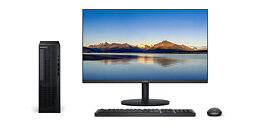
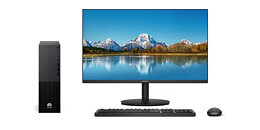
For reference, HarmonyOS is a complete redesign free from Linux and other foreign technologies, and it already powers Huawei phones and some laptops, but there are no plans to extend it to desktop PCs yet. This decision suggests that Huawei acknowledges the need for different solutions for various customer segments, with only some mission-critical applications benefiting from a fully custom OS. Established Linux platforms offer proven stability and extensive software support, which are often essential for specialized workflows. If Huawei wants to win more customers, a well-supported platform is a smart choice to gain market share.
Source: Tom's Hardware
Add your own comment

21 Comments on Huawei Launches Homegrown PCs With Custom Processors and Linux-Based OS

#1
LastDudeALive
An interesting hodgepodge of components and capabilities. It really shows how sanctions have hurt China's ability to stay up-to-date and competitive. Repurposed mobile chips, serial interface, VGA video, and Linux instead of their own OS.
Posted on Reply
#2
shuffy_losys
And amusing not too long away is the report of the iPhone laptop. I mean the budget MacBook Air.
Posted on Reply
#3
bonehead123
Will these be banned from being sold in most western countries, like other Huawei stuff ?

ie... made of chinese parts, by the chinese, for the chinese :D
Posted on Reply
#4
_roman_
Hopefully we see motherboards in the west also. I prefer a motherboard only without a screen and without a power supply unit.
Posted on Reply
#5
cfenton
Is HarmonyOS actually a distinct OS now? When it launched it was just a custom version of Android that Huawei swore was a totally original product.
Posted on Reply
#6
Battler624
LastDudeALiveAn interesting hodgepodge of components and capabilities. It really shows how sanctions have hurt China's ability to stay up-to-date and competitive. Repurposed mobile chips, serial interface, VGA video, and Linux instead of their own OS.
whats the issue with linux?
Posted on Reply
#7
LastDudeALive
Battler624whats the issue with linux?
No issue, it just shows that China doesn't have a reliable alternative homegrown OS yet.
Posted on Reply
#8
Imouto
LastDudeALiveAn interesting hodgepodge of components and capabilities. It really shows how sanctions have hurt China's ability to stay up-to-date and competitive. Repurposed mobile chips, serial interface, VGA video, and Linux instead of their own OS.
It hurt awhile but China is far past it. If anything, it's shown that US tech can only compete when its government threatens, bans and puts barriers on their competitors and customers.
Posted on Reply
#9
lexluthermiester
bonehead123Will these be banned from being sold in most western countries, like other Huawei stuff ?

ie... made of chinese parts, by the chinese, for the chinese :D
Better question: Do we care?
Posted on Reply
#10
Onasi
LastDudeALiveNo issue, it just shows that China doesn't have a reliable alternative homegrown OS yet.
There is almost no reason to go for fully custom homegrown when you can customize Linux to do whatever is necessary. I highly doubt it’s the matter of inability - there is simply nothing to gain from it. Pretty much everything that’s not running Windows is a Unix derivative these days.
Posted on Reply
#11
shuffy_losys
OnasiThere is almost no reason to go for fully custom homegrown when you can customize Linux to do whatever is necessary. I highly doubt it’s the matter of inability - there is simply nothing to gain from it. Pretty much everything that’s not running Windows is a Unix derivative these days.
Not that I think the country in question cares, but a lot of companies don't like using Linux for bespoke OSes. They tend to fork off of FreeBSD instead. Why? This thing called GPL.

I recall during a OSS usage brief at my short stint in a very large hardware company said that anything GPL licensed should be used as a last resort.
Posted on Reply
#12
Onasi
shuffy_losysNot that I think the country in question cares, but a lot of companies don't like using Linux for bespoke OSes. They tend to fork off of FreeBSD instead. Why? This thing called GPL.

I recall during a OSS usage brief at my short stint in a very large hardware company said that anything GPL licensed should be used as a last resort.
I know, that’s why I specifically noted Unix derivatives. Which is what both Linux and FreeBSD are. It’s a matter of licensing, yeah. Even in the console world, both Nintendo and Sony use what are effectively heavily modified FreeBSD systems for their software.
Posted on Reply
#13
Geofrancis
These don't have to be fast, they aren't gaming computers, They will most lightly be used in high security locations like government offices where they can't risk Intel or AMD CPUs.
Posted on Reply
#14
tpa-pr
I'd be really interested to see what this Linux distro they're using it. Is it an off-the-shelf distro they've customized or something they built themselves?
Posted on Reply
#15
_roman_
The real work is the package manager and how the software repository is. Linux Lint, Ubuntu fail a lot on those. Especially single package install and uninstall only feature. if someone respects the file hiearchy standard and all software and config files put automatically not attended in the right place. If software does not need attendance, baby mode to watch over every yes or no box, while installation.

Some people like having to sit at the computer for hours and wait every few minutes for the next choice box to answer while the installation is halted. For trivial things like installation folder which is covered by the file hiearchy standard or for the feature instllation choices. Waiting for reboots to install the next software is something many enjoy and never criticise.

Having multiple installers and uninstallers running at the same time is a real bonus. Configure software while installing is also a bonus.
Posted on Reply
#17
tpa-pr
lexluthermiesterHow's that?
I think roman might be referring to the 'dpkg configure' steps of installations? Where the apt package manager drops you into another config pane for the package its installing mid-way though a transaction, like this screenshot:

Other package managers either sort the configuration for you or inform you afterwards of steps you might need to undertake (like pacman in Arch).
Posted on Reply
#18
_roman_
lexluthermiesterHow's that?
Last time i used it the package manager allowed only a single instance. And only one operation at a time. That is very time consuming. The repository is very junky and quite often points to non existing downloads. Especially for linux mint cinnamon. Luckily the MSI CR700 Notebook died and I do not have to bother anymore with linux mint. I think that device died 2 years ago.

One of my motivation to keep windows 11 pro on my refurbished ryzen 4650u notebook is how awful those binary distros are. Maybe I find some motivation to look into Fedora / Mint in the new year again. I used baobab a few hours ago. My gentoo uses for over 1200 packages only 7.7Gib without /boot. / wihtout /boot and without /home

Grub is bloatware and there is no technical reason to use grub in 2025 with any uefi capeable motherboard. uefi can directly boot, e.g asus prime x670-p or msi x670E gaming plus wifi.
Posted on Reply
#19
lexluthermiester
_roman_Last time i used it the package manager allowed only a single instance. And only one operation at a time.
Ok.
_roman_That is very time consuming.
That doesn't count as a failure. Slower sure. Taking thing in a proper order is how mistake are NOT made. It might take longer but it is better in the long run.
_roman_The repository is very junky and quite often points to non existing downloads.
I have never seen this. Of course, I use mint, which is based on Debian/Ubuntu, but they make their own package DB stores, so what Debian and Ubuntu do is not always the case with Mint. Still, I service Ubuntu regularly and have not witnessed what you have described.
_roman_One of my motivation to keep windows 11 pro on my refurbished ryzen 4650u notebook is how awful those binary distros are.
That logic is a bit wonky. Not all Linux distro are created equal and many of them are an absolute delight to work with.

While I find Huawei's effort dubious at best, they at least have a wealth of great Linux offering to choose from.
tpa-prI think roman might be referring to the 'dpkg configure' steps of installations? Where the apt package manager drops you into another config pane for the package its installing mid-way though a transaction, like this screenshot:

Other package managers either sort the configuration for you or inform you afterwards of steps you might need to undertake (like pacman in Arch).
I've never seen this either. What version is that?
Posted on Reply
#20
tpa-pr
lexluthermiesterI've never seen this either. What version is that?
It's been around for quite a few years as far as I'm aware (I remember dealing with it as far back as the late 2000s), in both Debian and Ubuntu. But not all packages trigger it presumably because not all packages need additional configuration.

You can manually invoke it with "dpkg-reconfigure $PackageName" after a package is installed but you'll only get a TUI if a package actually requires configuration.
Posted on Reply
#21
lexluthermiester
tpa-prIt's been around for quite a few years as far as I'm aware (I remember dealing with it as far back as the late 2000s), in both Debian and Ubuntu. But not all packages trigger it presumably because not all packages need additional configuration.

You can manually invoke it with "dpkg-reconfigure $PackageName" after a package is installed but you'll only get a TUI if a package actually requires configuration.
I'll take your word for it.
Posted on Reply
Add your own comment
Nov 21st, 2026 13:10 PST change timezone

New Forum Posts

Popular Reviews

TPU on YouTube

Controversial News Posts