Wednesday, August 13th 2025

Intel to Deliver More APO Game Optimizations Next Quarter

Intel announced today that it will accelerate the CPU fine-tuning for games with its Application Optimization (APO) by introducing a new set of improvements scheduled for release next quarter. An engineer on the team confirmed the company is still committed to the project, saying "Intel is vested in keeping and growing APO capabilities through future programs." The update aims to expand game and application support, refine runtime scheduling, and improve consistency in performance across systems. APO does more behind the scenes than thread assignment. It continuously monitors application behavior and dynamically steers resources, from deciding which performance cores run which threads to adjusting an application's internal threading, all aimed at improving responsiveness and frame rates for supported titles. Several core mechanisms are proprietary and will remain internal as Intel scales APO and folds it into future programs.

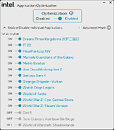
Intel plans to deliver the update through regular channels and to evolve the optional Application Optimizer interface that reveals which titles are tuned and allows users to opt out on a per-application basis. The interface is available through the Microsoft Store and not from Intel's download center. Users can disable APO globally or selectively disable specific games if the results are not as expected. The current APO stack targets modern Intel Core desktop and mobile processors with six or more performance cores. It requires BIOS enablement of Intel Dynamic Tuning Technology, a recent BIOS revision, and Windows 11. Advanced Mode unlocks wider compatibility for other 12th-generation and newer processors when Intel DTT version 11405 or later is present. Intel cautioned that real-world responsiveness may vary based on system configuration and graphics hardware. The company said ecosystem partners and select testers will receive early builds as the team focuses on stability, wider title coverage, improved telemetry, and clearer user controls. However, no exact release date was provided beyond the next quarter, which is expected to arrive soon.
Sources: via Uniko's Hardware, r/Intel
Add your own comment

36 Comments on Intel to Deliver More APO Game Optimizations Next Quarter

#1
Mysteoa
They let go some of their Linux maintainers for various Intel stuff, but this is left?
Posted on Reply
#2
overclockedamd
So, no plans to move away from the crappy P / E / LP-E core mashup any time soon, I see. A design that only ever existed so Intel could match AMD’s core count on paper and in marketing slides.

Poor Intel… how far you’ve fallen. And now the rumor mill is already hyping NEXT GEN! 52 CORES! Yeah, sure — 16P, 32E, 4LP.

32 E-cores on a desktop CPU. Why? (Besides marketing and benchmark padding, of course.)

Edit: I can already picture the PR releases — “THE ULTIMATE CPU” — plastered with Cinebench and Blender charts nobody outside of reviewers cares about.
Posted on Reply
#3
tfp
"An engineer on the team confirmed the company is still committed to the project, saying "Intel is vested in keeping and growing APO capabilities through future programs."

Shouldn't this be "The engineer on the team..."
overclockedamdSo, no plans to move away from the crappy P / E / LP-E core mashup any time soon, I see. A design that only ever existed so Intel could match AMD’s core count on paper and in marketing slides.

Poor Intel… how far you’ve fallen. And now the rumor mill is already hyping NEXT GEN! 52 CORES! Yeah, sure — 16P, 32E, 4LP.

32 E-cores on a desktop CPU. Why? (Besides marketing and benchmark padding, of course.)

Edit: I can already picture the PR releases — “THE ULTIMATE CPU” — plastered with Cinebench and Blender charts nobody outside of reviewers cares about.
Because it's super easy to release a new CPU with a new design and architecture. They should be pumping out new designs like monthly.
Posted on Reply
#4
L'Eliminateur
overclockedamdSo, no plans to move away from the crappy P / E / LP-E core mashup any time soon, I see. A design that only ever existed so Intel could match AMD’s core count on paper and in marketing slides.

Poor Intel… how far you’ve fallen. And now the rumor mill is already hyping NEXT GEN! 52 CORES! Yeah, sure — 16P, 32E, 4LP.

32 E-cores on a desktop CPU. Why? (Besides marketing and benchmark padding, of course.)

Edit: I can already picture the PR releases — “THE ULTIMATE CPU” — plastered with Cinebench and Blender charts nobody outside of reviewers cares about.
An intel software to "fix" a problem that intel brought into themselves due to piss-poor roadmap years ago with the e-core nonsense that's only barely useful on laptops (i have no doubts that intel added e-core trash to desktops to force/strongarm developers into coding for it, because if they left it at laptops only no one would give a toss), Intel never realised that core mix worked on ARM because they've been doing it since day one practically, because android is linux and on apple because they control the entire end-to-end, it was never going to work on windows x86.

when they moved to e-core they cemented their blacklist for me, and all my customers, i'm never going to buy a mixed cpu as i'm not going to pay for useless silicon i will have to bios-disable on day 0. On desktop it's performance fat cores or nothing
Posted on Reply
#5
chodaboy19
Didn't the volume sales happen mostly on 12th and 13th gen? Intel should prioritize cpus people actually bought.
Posted on Reply
#6
JustBenching
overclockedamdSo, no plans to move away from the crappy P / E / LP-E core mashup any time soon, I see. A design that only ever existed so Intel could match AMD’s core count on paper and in marketing slides.

Poor Intel… how far you’ve fallen. And now the rumor mill is already hyping NEXT GEN! 52 CORES! Yeah, sure — 16P, 32E, 4LP.

32 E-cores on a desktop CPU. Why? (Besides marketing and benchmark padding, of course.)

Edit: I can already picture the PR releases — “THE ULTIMATE CPU” — plastered with Cinebench and Blender charts nobody outside of reviewers cares about.
Ecores are...well cores. Normal cores. Asking why we need 32 of them in a desktop CPU is like asking why do we need 32 cores. Well, not all of us do I guess, that's why youll have options with lower core counts to satisfy your needs. Besides the fact that intel is involved, why are you actually complaining?

Cinebench and blender charts are an amazing indication of how a CPU will perform when multitasking, which is something I and many people I assume do a lot. Again, if you don't care about it, there will be an i5 and an i3 version for you with less cores and for a lot cheaper. Enjoy your very cheap multicore CPU - unless youd rather stick to 6c chips for 300$ for another decade
Posted on Reply
#7
Darmok N Jalad
My biggest problem with P+E is how it can be mismanaged by the OS. Windows still screws it up on my Adler Lake laptop, and we’re talking about Excel. 2E+8E does not feel any faster than the old 4C/8T laptop it replaced. It often feels worse and less responsive. I guess they are doing better core counts than that now, but it was certainly not a step up, IMO.
Posted on Reply
#8
phints
The fact this crap is even needed yet 9800X3D still smokes them is hilarious. If Trump is right about one thing Intel needs leadership.
Posted on Reply
#9
JustBenching
phintsThe fact this crap is even needed yet 9800X3D still smokes them is hilarious. If Trump is right about one thing Intel needs leadership.
Yeah we all know the 9800x 3d is really on par with Intels high core count cpus and amd high core count chips don't need any software to run properly and not mess up their ccd allocations..
Posted on Reply
#10
wEeViLz
overclockedamdSo, no plans to move away from the crappy P / E / LP-E core mashup any time soon, I see. A design that only ever existed so Intel could match AMD’s core count on paper and in marketing slides.

Poor Intel… how far you’ve fallen. And now the rumor mill is already hyping NEXT GEN! 52 CORES! Yeah, sure — 16P, 32E, 4LP.

32 E-cores on a desktop CPU. Why? (Besides marketing and benchmark padding, of course.)

Edit: I can already picture the PR releases — “THE ULTIMATE CPU” — plastered with Cinebench and Blender charts nobody outside of reviewers cares about.
Please show me on this doll where Intel hurt you..
Posted on Reply
#11
usiname
Darmok N JaladMy biggest problem with P+E is how it can be mismanaged by the OS. Windows still screws it up on my Adler Lake laptop, and we’re talking about Excel. 2E+8E does not feel any faster than the old 4C/8T laptop it replaced. It often feels worse and less responsive. I guess they are doing better core counts than that now, but it was certainly not a step up, IMO.
Same, when my company "upgraded" my working laptop from i7 10510u (4/8) or something like this to I7 1260U (2/4p + 8e) it was significant downgrade in terms of responsiveness and overall performance. Yes 1260U will smoke out 10510u on cinebench, but in reality it was far worse
Posted on Reply
#12
tfp
When my company moved me from a 11xxx laptop CPU with 8 cores to a Utra7 165H it was a big upgrade. Maybe they shouldn't be buying you low end crap to start with. At the same time if you just do email and word maybe it doesn't really matter.
Posted on Reply
#13
Evrsr
overclockedamdSo, no plans to move away from the crappy P / E / LP-E core mashup any time soon, I see. A design that only ever existed so Intel could match AMD’s core count on paper and in marketing slides.

Poor Intel… how far you’ve fallen. And now the rumor mill is already hyping NEXT GEN! 52 CORES! Yeah, sure — 16P, 32E, 4LP.

32 E-cores on a desktop CPU. Why? (Besides marketing and benchmark padding, of course.)

Edit: I can already picture the PR releases — “THE ULTIMATE CPU” — plastered with Cinebench and Blender charts nobody outside of reviewers cares about.
I haven't looked at the new E-cores but on Alder Lake they were about 30% more area and 25% more power efficient for the same performance. That is why.

Intel cannot scale P-cores as is, as they are very area bloated compared to AMD or other high end designs. Eventually, as is rumored, they may stop being a necessity.

People complaining about E-cores and games is more related to the system architecture than the cores themselves. Latency is more of an issue than the capabilities and depend on how they are placed on chip and what hoops they have to jump to get to L3 cache.

TPU benchmarked Raptor Lake with E-cores on or off:

www.techpowerup.com/review/rtx-4090-53-games-core-i9-13900k-e-cores-enabled-vs-disabled/2.html

The conclusion is the chips are 1% faster and the games that are slower are very old titles that are poorly threaded and may be running so fast to the point it does not matter (so TDT schedules some work to e-cores).
Posted on Reply
#14
Hecate91
These Ecores aren't as fast or useful as full performance cores, or Intel wouldn't still need an app to allocate software to P cores. E cores have a use with low power mobile chips, but on desktop I want full power high performance cores, Intel adding 32 e-cores shows they don't know what else to do other than more cores marketing as many things have been probably been cancelled or delayed. It's interesting how the tables have turned with people defending this marketing tactic with CB scores, I like doing real things with my PC, but you do you.
And yes the 9800X3D does smoke higher core count CPU's, 2x CCD CPU's are another issue, which Microsoft held back on fixing for years until Zen 5 so of course it isn't perfect with AMD CPU's either.
Posted on Reply
#15
JustBenching
EvrsrThe conclusion is the chips are 1% faster and the games that are slower are very old titles that are poorly threaded and may be running so fast to the point it does not matter (so TDT schedules some work to e-cores).
I have similar conclusions based on 12900 / 13900/ 14900k tested. Besides the weird game here and there that just doesn't like ecores (the only one that comes to my mind is that warhammer online game) everything else runs considerably better with ecores on - especially when it comes to lows. Like cod goes from 120 to 190 1% lows by enabling ecores. Turning them off is absolutely nuts - even for games - let alone for anything else.
Hecate91These Ecores aren't as fast or useful as full performance cores, or Intel wouldn't still need an app to allocate software to P cores.
Well you are wrong, that's not what APO does actually. APO micromanages every process of the game sending it to the correct core is all it does. It's game specific optimization, it doesnt just allocate games to the Pcores. It's been actually tested, APO is faster than turning off ecores exactly because APO makes use of the ecores in games. Ecores are in fact so fast in games that even without APO CPUs with ecores (even 3 year old ones like the 13900k) beat the 9950x in gaming. Crazy, right?
Posted on Reply
#16
kondamin
Golden cove, Zen 5 core's and apple's performance core's are so bloated most software can't fully use them.

it would be really nice if microsoft optimised windows to a point that it shut down everything it didn't absolutely need instead of spamming every random core with some BS task making my system waste power while i'm reading TPU or watching some youtube.
Posted on Reply
#17
Darmok N Jalad
tfpWhen my company moved me from a 11xxx laptop CPU with 8 cores to a Utra7 165H it was a big upgrade. Maybe they shouldn't be buying you low end crap to start with. At the same time if you just do email and word maybe it doesn't really matter.
That’s the thing, my work laptop is an i7-1265U, essentially the same tier as your ultra 7 (though likely with less thermal headroom). The difference is that in the time between Adler Lake and Meteor Lake is that Intel is no longer trying to sell a 2P+8E as a top tier (7 series) product. The fact that Intel was ever able to market and price a 2P core product as an i7 in this decade just shows how bad their situation was, and how highly they played up their core counts. In real use, the performance is terrible, even doing basic office work. My functional boot time is atrocious. It’s a solid 5 minutes before the system is decently responsive and not throttled.
Posted on Reply
#18
tfp
yeah i7-1265U is no i7, it's maybe an i3. That U stands for under perform.
Posted on Reply
#19
kondamin
Darmok N JaladIt’s a solid 5 minutes before the system is decently responsive and not throttled.
Do you need everything that's starting up?
Posted on Reply
#20
Battler624
Hecate91These Ecores aren't as fast or useful as full performance cores, or Intel wouldn't still need an app to allocate software to P cores. E cores have a use with low power mobile chips, but on desktop I want full power high performance cores, Intel adding 32 e-cores shows they don't know what else to do other than more cores marketing as many things have been probably been cancelled or delayed. It's interesting how the tables have turned with people defending this marketing tactic with CB scores, I like doing real things with my PC, but you do you.
And yes the 9800X3D does smoke higher core count CPU's, 2x CCD CPU's are another issue, which Microsoft held back on fixing for years until Zen 5 so of course it isn't perfect with AMD CPU's either.
They still dont need APO for this at all. as TPU tested. Its so far only for games that have bad scheduling.
Posted on Reply
#21
Darmok N Jalad
kondaminDo you need everything that's starting up?
It’s a work laptop, so I can’t change boot configurations. What’s funny is my M1 Mac mini can cold boot and open all my previous open sessions in maybe a minute. That includes some rather powerful image editors, on top of browser tabs, email, messages, and activity monitor. While the mini is a desktop, the entire machine only pulls 25w max from the wall.
Posted on Reply
#22
overclockedamd
wEeViLzPlease show me on this doll where Intel hurt you..
Intel? Where do I start. They’ve spent decades overcharging for half-baked tech, padding benchmarks, and hyping features nobody actually uses. Remember the Pentium FDIV bug? The endless anti-AMD deals that got them fined billions worldwide? Meltdown, Spectre, Foreshadow — hardware-level disasters patched with real-world slowdowns. Their ‘revolutionary’ P/E-core mashups are mostly marketing fluff, Optane was a dud, and 10nm delays handed AMD the performance crown while Intel was busy spinning PR. Basically, they’re pros at overhyping and underdelivering, and it’s been happening for decades.

I think this makes my point more clear.

Posted on Reply
#23
Lew Zealand
tfpyeah i7-1265U is no i7, it's maybe an i3. That U stands for under perform.
Oof, I thought I got the last dual core i7 made in the 2c4t Core i7-7567U in a 2017 NUC7i7. I guess Intel calls the 1260U and 1265U "10-core" processors though only 2 are performance cores.
Posted on Reply
#24
Cheeseball
Not a Potato
Darmok N JaladThat’s the thing, my work laptop is an i7-1265U, essentially the same tier as your ultra 7 (though likely with less thermal headroom). The difference is that in the time between Adler Lake and Meteor Lake is that Intel is no longer trying to sell a 2P+8E as a top tier (7 series) product. The fact that Intel was ever able to market and price a 2P core product as an i7 in this decade just shows how bad their situation was, and how highly they played up their core counts. In real use, the performance is terrible, even doing basic office work. My functional boot time is atrocious. It’s a solid 5 minutes before the system is decently responsive and not throttled.
That means your laptop is PL1 limited, which makes sense because i7-1265U has a base power of 15W (PL1) and only 55 seconds (I need verification of this) of 55W (PL2). So any multi-tasking tasks that you do will feel slow most of the time.

The two P-core and the eight E-cores would be fighting for that 15W and get relieved when they boost to 55W sometimes. Blame the OEM of whoever makes that work laptop you're on for a shitty out-of-box configuration.
Posted on Reply
#25
Darmok N Jalad
CheeseballThat means your laptop is PL1 limited, which makes sense because i7-1265U has a base power of 15W (PL1) and only 55 seconds (I need verification of this) of 55W (PL2). So any multi-tasking tasks that you do will feel slow most of the time.

The two P-core and the eight E-cores would be fighting for that 15W and get relieved when they boost to 55W sometimes. Blame the OEM of whoever makes that work laptop you're on for a shitty out-of-box configuration.
Oh, I don’t doubt that it’s thermally constrained. The damn thing is always hot to the touch. Doesn’t Intel allow OEMs to TDP-up or did they go back on that? At any rate, it’s still a poor experience where there are times the E cores are unused in a multithreaded task, which is more to the point of my OP. It’s not very consistent and not always an advantage.
Posted on Reply
Add your own comment
Nov 14th, 2026 19:27 CST change timezone

New Forum Posts

Popular Reviews

TPU on YouTube

Controversial News Posts