Thursday, August 14th 2025

FSP Intros Cannon Pro 2500W ATX 3.1 PSU
FSP, the channel brand of major power supply OEM Fortron, introduced its flagship PSU targeting enthusiast-segment desktops and workstations, the Cannon Pro 2500 W. This beastly PSU was shown off at the 2025 Computex this May, and is making its way to retail later this month. The PSU comes with full modular cabling, and is 20 cm in length. It meets ATX 3.1 and PCIe 5.1 CEM specifications. Its distribution table says that the PSU features a single 208 A +12 V rail, and uses DC to DC switching for 25 A +3.3 V and +5 V rails.
The Cannon Pro 2500 W offers 80 Plus Platinum switching efficiency when used with 230 V AC input. Among the protection features offered are over/under voltage, overcurrent, overload, overheat, short-circuit, surge and inrush, and no-load operation protection. Connectors include one 24-pin ATX, three 4+4 pin EPS, four 12V-2x6 each capable of 600 W, eleven 6+2 pin PCIe power, ten SATA power, and six Molex. The PSU is cooled by a 135 mm fluid dynamic bearing fan. The company hasn't confirmed pricing, but says that the PSU is backed by a 3-year warranty.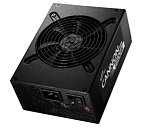
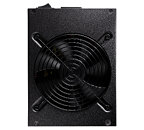
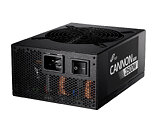
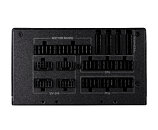
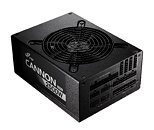
The Cannon Pro 2500 W offers 80 Plus Platinum switching efficiency when used with 230 V AC input. Among the protection features offered are over/under voltage, overcurrent, overload, overheat, short-circuit, surge and inrush, and no-load operation protection. Connectors include one 24-pin ATX, three 4+4 pin EPS, four 12V-2x6 each capable of 600 W, eleven 6+2 pin PCIe power, ten SATA power, and six Molex. The PSU is cooled by a 135 mm fluid dynamic bearing fan. The company hasn't confirmed pricing, but says that the PSU is backed by a 3-year warranty.


36 Comments on FSP Intros Cannon Pro 2500W ATX 3.1 PSU
Along with at one time more than few PSUs using their Epsilon platform failing to meet ATX specification by 12V ripple exceeding maximum allowed.
(basically ~500W PSUs overspecced as 600W and 700W models)
So considering that long history would still rate them as OK manufacturer.Warm engine always starts easily.
It's that frozen cold engine which needs lots of power to crank up.
So high temperature is meaningless for car starter cables, or they're undersized anyway.
And to actually cover fault situations rail can be considered to be same as single wire.
Now take a guess how low resistance must to allow that 208A at 12V...
That's ~0.058 ohms.
And then actual current limit of protection is even higher.
Meaning short circuit in device in the end of cable would have to be awfully good to always trigger protection. (connectors add resistance to path)
And already less than one tenth of that current exceeds maximum safe current for commonly used 18AWG wire.
Hence temperature of that wire would be skyrocketing fast long before any protection could notice overcurrent.
So it's 100% valid to consider these insanely high power single rail PSUs as risky for fault situations.
1) FSP makes a lot of PSU for themselves and other brands (BQ, Antec, Sparkle, OCZ, etc.,) at various price points so I'm sure they have used CapXon in the past (as have many others) they have also used Japanese companies like japan chemi-con as in this review from 2012. I can list a whole series of reviews showing they use other caps besides CapXon.
www.techpowerup.com/review/fsp-aurum-92-650w/4.html
2) CapXon makes caps at various price points including getting outsourced work from Japanese manufactures that then put them into the field as their own. I'm not saying go out and get a PSU with CapXon caps but that the field is different now than it was 10 years ago and that was different than it was 20 years ago although a lot of the fears of non-Japanese labeled caps still carry on.
I'm already for a few years using the MSI MPG A850GF without any hick-ups and I'm pretty sure other brands had their up and downs also with different editions/models of their PSU's.
But like mentioned here a couple of times, a flagship PSU of a well known brand with a very limited warranty time does (without running into speculations) raise questions at least.
Not necesarilly a 'red flag' but at least somthing to keep in mind when considering buying a PSU in this 'niche' powerhouse catagory.
Any ATX PSU over 1150-1200W (DC-output), belongs on 220-250VAC 50/60hz. -Really, 1KW (DC-output) is the limit for a constant load, on a 15A 100*-125VAC 50*/60hz branch
(12A AC-side derating @ ~75+ efficiency).
*Japan things...
High temps on wiring increase resistance.And 1 foot of 18AWG is going to give you a resistance of 0.006385 ohms. 3 foot would be .019. So what's the problem?It's always dangerous when someone thinks they know what they're taking about. You're not pushing all that amperage over a single 18AWG wire, and the internal rail isnt 18AWG. If what you claim is true, these would light on fire within minutes of being turned on, as would any similarly sized PSU. Since that doesnt happen, I'm going to venture on a limb and say you are incorrect.