Thursday, August 21st 2025

AMD FSR Leak Accidentally Tips Potential Support for Older GPUs
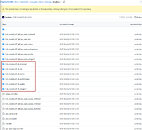
AMD recently released its FidelityFX Super Resolution SDK 2.0 to accompany the shift to the machine learning-based FSR 4, but in a bizarre twist, the company also seemingly accidentally open-sourced the libraries to FSR 4 via its AMD GPUOpen project, giving tech-savvy browsers a sneak peek at the inner workings of FSR 4. The files have since been removed from AMD's GPUOpen library, but quick fingers managed to snag screenshots of the file directory, which reveals enough. One of the biggest takeaways was the inclusion of 8-bit integer (INT8) libraries, which use less resources but are also less precise than those used in RDNA 4, indicate that there is or may have been some intention to release FSR 4 for AMD's RX 7000 GPUs. FSR 4 was initially announced to be exclusive to AMD's Radeon RX 9000 series GPUs, but that may not be the case for long.
There have previously been hints that AMD FSR 4 could be coming to older RDNA hardware, and there have even been mod projects that have successfully forced it to work on older hardware, but this is a substantial official signal that AMD may be working on porting it to older hardware. There is also speculation that the INT8 libraries may be destined for the PlayStation 5 Pro, but the file type seems to indicate otherwise—PS5 uses .PSSL, while these shaders were packaged as .HLSL, suggesting they were for PC use.
Sources:
@uzzi38 on X, VideoCardz
There have previously been hints that AMD FSR 4 could be coming to older RDNA hardware, and there have even been mod projects that have successfully forced it to work on older hardware, but this is a substantial official signal that AMD may be working on porting it to older hardware. There is also speculation that the INT8 libraries may be destined for the PlayStation 5 Pro, but the file type seems to indicate otherwise—PS5 uses .PSSL, while these shaders were packaged as .HLSL, suggesting they were for PC use.


28 Comments on AMD FSR Leak Accidentally Tips Potential Support for Older GPUs
1. GCN 5.1. Vega 7nm. It includes Vega20 only. iGPU Renoir and Cezanne are GCN5.0 like Raven Ridge and Picasso.
2. RDNA2+
1. If they made FSR 4 available on their older GPU's they look like good guys and garner goodwill from, well everyone. RDNA 3 owners are more likely to consider RDNA 5 or 6 because of it. RDNA 4 owners wont care because enough time has passed from it's launch not to feel buyers remorse.
2. But when it's locked to RDNA 4 it will continue to be a selling point in favor of it.
I would argue that RDNA 3 owners have very little reason to upgrade to RDNA 4 regardless if FSR 4 was exclusive or not.
It's the nature of things. The performance gap between two successive generations is not big enough to justify upgrading these days. Except maybe at the very top of the performance chart for those who just want the fastest.
And there are plenty of reasons to buy AMD GPU vs Nvidia. Non-burning power connectors, better linux drivers, better control panel, faster boot and cheaper prices. DLSS has been vastly better than FSR these fast few years. Only now has the gap narrowed to so little it takes pixel peeping to notice the difference and AMD is not sitting idle with FSR development either. The gap may very well vanish at the end of this year.
During the time DLSS enjoyed a much bigger advantage people bought AMD regardless. And those were not the best AMD cards. RDNA 4 is much better and has been received very well. If FSR 4 stays exclusive to it it wont negatively affect RDNA 4 sales vs Nvidia.
www.techpowerup.com/gpu-specs/docs/amd-rdna-whitepaper.pdf
RDNA2 actually improved the performance for INT4 and INT8 quite a lot, whereas RDNA3 added BF16 support, RDNA4 added FP8 and BF8 support and expanded the INT4 support.
It can load int8 value from memory to register (and vv) as int32 or int16 (to low or high half).
GCN5.1 and RDNA2 has int8 dot product.
It wouldn't bother me half as much if these didn't tend to be the lowest common denominator where all game developers stop, because at the end of the day they need to sell copies to everyone regardless of what they're running, and are thus bound by these long-overcome limitations. And we still get to hear complaints that games aren't properly optimized, devs are programmers, not magicians.
Radeon 9060 is (default/boost) 97/171 TOPS INT8.
PS5 Pro has the same INT8 throughput as the 9070 XT!
DLSS/XeSS use INT8. It seems like with Blackwell, DLSS started supporting FP8. XeSS also supports FP8. FSR2/3 doesn't look to support FP/INT8, but rather uses FP16. (Might be why quality is meh, to keep it performant, and supports basically all GPUs). FSR4 supports FP8 with some work on INT8. So really, FSR4 could technically run on anything that supports INT8 IF they supported INT8. I imagine the PSSR will likely be the INT8 implementation of FSR4.
Heck, RDNA2 even supports INT8.
This would be why RDNA 3.5 doesn't support FSR4. No native FP8 path.
Wonder why AMD hasn't ported to INT8 when XeSS and DLSS use it. Is FP8 a better path forward than using INT8, so wanted to slingshot themselves forward rather than play catchup? Then backport to INT8?
So, seems like FSR is going with a walled garden now, even though Intel and Nvidia can both run FP8. FSR3 is the fallback. :P
Okay that's an old joke, but you could probably make enough money to buy a McDonald's meal with how often this crops up. Or someone whining about a company being greedy for dropping support for their 10 year old hardware.
Im not saying all games are not optimized. Far from it, but it is a valid criticism when non-programmers are able to quickly find massive performance gains in those unoptimized games.
The one on top of my head was Doom 3's Ultra texture quality, which was basically just High texture quality that wasn't compressed. So basically you were just filling your VRAM for no benefit.Depending on the mod, you kind of have to be. Or at least know enough about how computer programs work to be able to do such.The problem though is what's "optimized"? From what I've seen the term is more of a subjective one said by non-programmers to complain that some software isn't running performant enough on their setup.
If one Youtuber can do it in under a week than a team of developers can defenetly do it in months leading up to the launch.
I actually quite like the approach some games have taken by locking the highest settings behind a flag, commandline argument or just a big Experimental! sign.
Those that really want can still easily enable it, but most people dont have to touch those settings.If it's a really deep dive mod like SKSE64 for Skyrim, then yea. If it's just AI enchanted textures or .ini tweaks then no.There's certainly some of that, but if a person has a 5090 and 9800X3D and they cant get a stable 60fps with a smooth frametime graph, then it's justified to call that game unoptimized. Not just by that user, but by others as well. Unless it's some super-duper path traced next Crysis or something that looks stunning.
Problem with most of the games people deem unoptimized is that they're not even anything special in terms of visuals.