Friday, August 22nd 2025

Intel Won't Abandon Glass Substrates, will License Tech to Externals
According to a report by South Korean outlet ETNews, cited by TrendForce, Intel has begun licensing its semiconductor glass substrate technology to external companies, marking a notable change in its business approach. As we reported this July, Intel had already signaled a retreat from producing glass substrates in-house, preferring instead to source finished solutions from specialized vendors. Intel is now reportedly in discussions with glass substrate makers, materials suppliers, and equipment providers about granting usage rights under defined terms in exchange for royalties. Rather than abandoning glass substrates, Intel appears to be repositioning itself as a technology licensor, allowing others to handle manufacturing while it benefits from its patent portfolio. This strategy, according to industry insiders, could accelerate wider market adoption by helping newcomers advance more quickly. Intel's shift is also seen as a response to ongoing issues in its manufacturing operations. By issuing licenses, the company can monetize its innovations while large-scale production is not expected until after 2030.
The glass substrate market is gaining momentum, with Absolics (an SKC subsidiary) already starting prototype production at its Georgia plant, which has an annual capacity of 12,000 square meters. Absolics plans to complete mass production setup by the end of 2025 and becoming the first to commercialize the technology. Meanwhile Samsung is preparing to adopt glass substrate interposers for advanced chips by 2028 and has established a pilot line at its Sejong facility. Major players such as Samsung Electronics, AMD, Broadcom, and Amazon are looking to adopt this technology, so Intel's decision may reshape the competitive landscape while creating new opportunities for collaboration.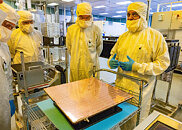
Sources:
TrendForce, ET News
The glass substrate market is gaining momentum, with Absolics (an SKC subsidiary) already starting prototype production at its Georgia plant, which has an annual capacity of 12,000 square meters. Absolics plans to complete mass production setup by the end of 2025 and becoming the first to commercialize the technology. Meanwhile Samsung is preparing to adopt glass substrate interposers for advanced chips by 2028 and has established a pilot line at its Sejong facility. Major players such as Samsung Electronics, AMD, Broadcom, and Amazon are looking to adopt this technology, so Intel's decision may reshape the competitive landscape while creating new opportunities for collaboration.

4 Comments on Intel Won't Abandon Glass Substrates, will License Tech to Externals
Finally Intel is making some smart move!