Tuesday, September 9th 2025

Apple Reveals the iPhone Air
Apple today debuted the all-new iPhone Air, the thinnest iPhone ever made, with pro performance. iPhone Air features a breakthrough titanium design that is elegant and light yet strong, with an innovative internal architecture that enables the latest iPhone experiences. The back of iPhone Air is now protected with Ceramic Shield, and the front cover uses Ceramic Shield 2, delivering 3x better scratch resistance, making iPhone Air more durable than any previous iPhone. iPhone Air also features a stunning 6.5-inch Super Retina XDR display with ProMotion up to 120 Hz. With the most Apple-designed chips in an iPhone—the powerhouse A19 Pro, N1, and C1X—iPhone Air is the most power-efficient iPhone ever made. Paired with the redesigned internal architecture and software optimizations, iPhone Air has fantastic all-day battery life. A powerful 48MP Fusion Main camera enables the equivalent of four lenses with incredible image quality, and the innovative 18MP Center Stage front camera takes selfies to the next level.
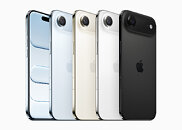
iPhone Air will be available in four gorgeous finishes: space black, cloud white, light gold, and sky blue. Pre-orders begin Friday, September 12, with availability beginning Friday, September 19.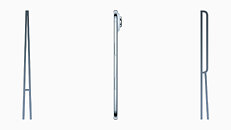
 "The all-new iPhone Air is so powerful, yet impossibly thin and light, that you really have to hold it to believe it's real. This huge leap in design and engineering is only made possible through Apple innovation, especially Apple silicon," said John Ternus, Apple's senior vice president of Hardware Engineering. "iPhone Air is a brand-new member of the iPhone family that delivers advanced features our users will love, like pro performance, a versatile 48MP Fusion camera system, our innovative Center Stage front camera, and great all-day battery life—all in a breakthrough design that feels like you're holding the future."
A Breakthrough Design
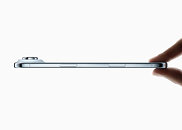
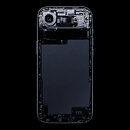
Featuring a breakthrough design with pro performance, iPhone Air is the thinnest iPhone ever made at 5.6 mm, and it is incredibly light, with a large, stunning display. The grade 5 titanium frame is strong, with an elegant high-gloss mirror finish, and a new plateau on the back that is precision-milled on both sides to house the cameras, speaker, and Apple silicon. This maximizes space for the battery to deliver remarkable all-day battery life. The thin design also features the Action button, so users can easily access a variety of functions with just a press, and Camera Control, to quickly launch the camera or enable visual intelligence.
The stunning 6.5-inch Super Retina XDR display features ProMotion, with an adaptive refresh rate of up to 120 Hz for smooth scrolling and stunning graphics. The Always-On display shows important information at a glance, and when not in use, it efficiently adjusts down to 1 Hz. iPhone Air is easy to use outside with 3000 nits peak outdoor brightness—the highest ever on iPhone—and 2x better outdoor contrast.
iPhone Air also introduces the Ceramic Shield 2 front cover, which is tougher than any smartphone glass or glass-ceramic with a new Apple-designed coating, providing 3x better scratch resistance and improved anti-reflection to reduce glare. For the very first time, Ceramic Shield now protects the back of iPhone, including the plateau, delivering 4x better resistance to cracks than the back glass on previous models. And with the strong titanium frame, iPhone Air exceeds Apple's stringent bend strength requirements. This design makes iPhone Air more durable than any previous iPhone.
Powerful Camera Systems
iPhone Air introduces an all-new Center Stage front camera that advances the photo and video experience. The Center Stage front camera features the first square front camera sensor on iPhone, offering a wide field of view and capturing photos up to 18MP. Users no longer have to rotate their iPhone to take a landscape selfie—they can take photos and videos in portrait or landscape while holding their iPhone vertically. For group shots, Center Stage for photos uses AI to automatically expand the field of view and can rotate from portrait to landscape to include everyone in the frame. The Center Stage front camera enables ultra-stabilized video in 4K HDR, and users can record on the front and rear cameras simultaneously with Dual Capture—perfect for documenting themselves and the world around them. During calls over FaceTime or third-party apps, Center Stage for video calls keeps users stable and positioned in frame.
A versatile new 48MP Fusion camera system gives users the equivalent of four lenses in their pocket. The custom main lens enables the popular 28 mm and 35 mm focal lengths, so users have more options to frame their shot, and the large 2.0µm quad-pixel sensor with sensor-shift OlS excels in low light. Users can also get closer to their subject with the optical-quality 2x Telephoto, which features an updated Photonic Engine that captures more lifelike details and color.
A new image pipeline built for iPhone Air enables next-generation portraits with Focus Control at the same level as multicamera systems, automatically capturing depth information so users can turn photos into portraits later in the Photos app. iPhone Air also supports the latest generation of Photographic Styles, including a new Bright style that brightens skin tones and applies a pop of vibrance across the image.
iPhone Air captures stunning video, with the ability to record in 4K 60 FPS Dolby Vision, and supports Action mode. Video is captured with Spatial Audio for immersive listening; Audio Mix lets users adjust sound after capture to boost voices and reduce ambient noise; and wind noise reduction minimizes unwanted noise.
Powered by Apple Silicon
The design of iPhone Air is only possible with Apple silicon. The high-performance A19 Pro, N1, and C1X chips make it the most power-efficient iPhone ever made.
The powerhouse A19 Pro features a new 6-core CPU that improves performance and efficiency for the tasks users do every day, delivering the fastest CPU in any smartphone. The 5-core GPU has an upgraded architecture, delivering next-level mobile gaming, including AAA titles. Neural Accelerators are built into each GPU core, bringing up to 3x the peak GPU compute over the previous generation, excellent for powering generative AI models running on device.
iPhone Air features N1, a new Apple-designed wireless networking chip that enables Wi-Fi 7, Bluetooth 6, and Thread. In addition to powering the latest generation of wireless technologies, N1 improves the overall performance and reliability of features like Personal Hotspot and AirDrop. iPhone Air also features C1X, a new cellular modem designed by Apple. C1X is up to 2x faster than C1, and for the same cellular technologies, it is even faster than the modem in iPhone 16 Pro, while using 30 percent less energy overall. This makes C1X the most power-efficient modem in an iPhone.
Remarkable All-Day Battery Life
Featuring advanced Apple silicon, an internal architecture that maximizes space for the battery, and software optimizations, iPhone Air delivers fantastic all-day battery life. The new Adaptive Power Mode in iOS 26 also gets to know a user's typical battery consumption and anticipates when they might run low, intelligently conserving power to help get them through the day.
eSIM: A Flexible, Convenient, and Secure Connection
iPhone Air features an eSIM-only design that saves space internally, helping enable the unbelievably light and thin form factor. eSIM offers greater flexibility, better security, and seamless connectivity compared to traditional physical SIM cards. An industry standard, eSIM is supported by over 500 carriers worldwide, including AT&T, T-Mobile, Verizon, and more. eSIM also makes staying connected while traveling even more convenient, allowing continued connectivity through affordable international roaming plans from users' home carriers or local prepaid options available with more than 200 carriers. For better security, eSIM cannot be physically removed if an iPhone is lost or stolen, and managing travel eSIMs is even easier with a new streamlined setup in iOS 26.
Featuring iOS 26 with New Apple Intelligence Capabilities
iOS 26 elevates the iPhone experience with a beautiful new design, powerful Apple Intelligence capabilities, and meaningful improvements to the apps users rely on every day. The new design with Liquid Glass makes apps and system experiences more expressive and delightful, bringing greater focus to content while keeping iOS instantly familiar. Apple Intelligence now translates text and audio on the go with Live Translation, helping users communicate across languages in Messages, FaceTime, and Phone. Updates to visual intelligence allow users to capture a screenshot and easily search or take action on anything they are viewing on their iPhone screen. The on-device foundation model at the core of Apple Intelligence is available to all developers, with apps already offering new intelligent, privacy-protected experiences that can even be used when offline. New screening tools for calls and messages help eliminate distractions so users can focus on the conversations that matter most. iOS 26 also introduces new features in CarPlay, Apple Music, Maps, and Wallet, as well as Apple Games, a brand-new app that gives players a single destination for all their games.
Beautiful New Accessories
Apple is introducing a new ecosystem of accessories to complement the breakthrough design of iPhone Air:
Apple 2030 is the company's ambitious plan to be carbon neutral across its entire footprint by the end of this decade by reducing product emissions from their three biggest sources: materials, electricity, and transportation. iPhone Air is made with 35 percent recycled content, including 80 percent recycled titanium, the highest ever for an iPhone, and 100 percent recycled cobalt in the battery. A new titanium USB-C port is 3D-printed to be thinner and stronger, fitting into the slim design while using 33 percent less material than a conventional forging process. iPhone Air is manufactured with 45 percent renewable electricity, like wind and solar, across the supply chain. It is designed to be durable, repairable, and offer industry-leading software support, while meeting Apple's high standards for energy efficiency and safe chemistry. The paper packaging is 100 percent fiber-based and can be easily recycled.
Pricing and Availability
Source:
Apple
iPhone Air will be available in four gorgeous finishes: space black, cloud white, light gold, and sky blue. Pre-orders begin Friday, September 12, with availability beginning Friday, September 19.


A Breakthrough Design
Featuring a breakthrough design with pro performance, iPhone Air is the thinnest iPhone ever made at 5.6 mm, and it is incredibly light, with a large, stunning display. The grade 5 titanium frame is strong, with an elegant high-gloss mirror finish, and a new plateau on the back that is precision-milled on both sides to house the cameras, speaker, and Apple silicon. This maximizes space for the battery to deliver remarkable all-day battery life. The thin design also features the Action button, so users can easily access a variety of functions with just a press, and Camera Control, to quickly launch the camera or enable visual intelligence.
The stunning 6.5-inch Super Retina XDR display features ProMotion, with an adaptive refresh rate of up to 120 Hz for smooth scrolling and stunning graphics. The Always-On display shows important information at a glance, and when not in use, it efficiently adjusts down to 1 Hz. iPhone Air is easy to use outside with 3000 nits peak outdoor brightness—the highest ever on iPhone—and 2x better outdoor contrast.
iPhone Air also introduces the Ceramic Shield 2 front cover, which is tougher than any smartphone glass or glass-ceramic with a new Apple-designed coating, providing 3x better scratch resistance and improved anti-reflection to reduce glare. For the very first time, Ceramic Shield now protects the back of iPhone, including the plateau, delivering 4x better resistance to cracks than the back glass on previous models. And with the strong titanium frame, iPhone Air exceeds Apple's stringent bend strength requirements. This design makes iPhone Air more durable than any previous iPhone.
Powerful Camera Systems
iPhone Air introduces an all-new Center Stage front camera that advances the photo and video experience. The Center Stage front camera features the first square front camera sensor on iPhone, offering a wide field of view and capturing photos up to 18MP. Users no longer have to rotate their iPhone to take a landscape selfie—they can take photos and videos in portrait or landscape while holding their iPhone vertically. For group shots, Center Stage for photos uses AI to automatically expand the field of view and can rotate from portrait to landscape to include everyone in the frame. The Center Stage front camera enables ultra-stabilized video in 4K HDR, and users can record on the front and rear cameras simultaneously with Dual Capture—perfect for documenting themselves and the world around them. During calls over FaceTime or third-party apps, Center Stage for video calls keeps users stable and positioned in frame.
A versatile new 48MP Fusion camera system gives users the equivalent of four lenses in their pocket. The custom main lens enables the popular 28 mm and 35 mm focal lengths, so users have more options to frame their shot, and the large 2.0µm quad-pixel sensor with sensor-shift OlS excels in low light. Users can also get closer to their subject with the optical-quality 2x Telephoto, which features an updated Photonic Engine that captures more lifelike details and color.
A new image pipeline built for iPhone Air enables next-generation portraits with Focus Control at the same level as multicamera systems, automatically capturing depth information so users can turn photos into portraits later in the Photos app. iPhone Air also supports the latest generation of Photographic Styles, including a new Bright style that brightens skin tones and applies a pop of vibrance across the image.
iPhone Air captures stunning video, with the ability to record in 4K 60 FPS Dolby Vision, and supports Action mode. Video is captured with Spatial Audio for immersive listening; Audio Mix lets users adjust sound after capture to boost voices and reduce ambient noise; and wind noise reduction minimizes unwanted noise.
Powered by Apple Silicon
The design of iPhone Air is only possible with Apple silicon. The high-performance A19 Pro, N1, and C1X chips make it the most power-efficient iPhone ever made.
The powerhouse A19 Pro features a new 6-core CPU that improves performance and efficiency for the tasks users do every day, delivering the fastest CPU in any smartphone. The 5-core GPU has an upgraded architecture, delivering next-level mobile gaming, including AAA titles. Neural Accelerators are built into each GPU core, bringing up to 3x the peak GPU compute over the previous generation, excellent for powering generative AI models running on device.
iPhone Air features N1, a new Apple-designed wireless networking chip that enables Wi-Fi 7, Bluetooth 6, and Thread. In addition to powering the latest generation of wireless technologies, N1 improves the overall performance and reliability of features like Personal Hotspot and AirDrop. iPhone Air also features C1X, a new cellular modem designed by Apple. C1X is up to 2x faster than C1, and for the same cellular technologies, it is even faster than the modem in iPhone 16 Pro, while using 30 percent less energy overall. This makes C1X the most power-efficient modem in an iPhone.
Remarkable All-Day Battery Life
Featuring advanced Apple silicon, an internal architecture that maximizes space for the battery, and software optimizations, iPhone Air delivers fantastic all-day battery life. The new Adaptive Power Mode in iOS 26 also gets to know a user's typical battery consumption and anticipates when they might run low, intelligently conserving power to help get them through the day.
eSIM: A Flexible, Convenient, and Secure Connection
iPhone Air features an eSIM-only design that saves space internally, helping enable the unbelievably light and thin form factor. eSIM offers greater flexibility, better security, and seamless connectivity compared to traditional physical SIM cards. An industry standard, eSIM is supported by over 500 carriers worldwide, including AT&T, T-Mobile, Verizon, and more. eSIM also makes staying connected while traveling even more convenient, allowing continued connectivity through affordable international roaming plans from users' home carriers or local prepaid options available with more than 200 carriers. For better security, eSIM cannot be physically removed if an iPhone is lost or stolen, and managing travel eSIMs is even easier with a new streamlined setup in iOS 26.
Featuring iOS 26 with New Apple Intelligence Capabilities
iOS 26 elevates the iPhone experience with a beautiful new design, powerful Apple Intelligence capabilities, and meaningful improvements to the apps users rely on every day. The new design with Liquid Glass makes apps and system experiences more expressive and delightful, bringing greater focus to content while keeping iOS instantly familiar. Apple Intelligence now translates text and audio on the go with Live Translation, helping users communicate across languages in Messages, FaceTime, and Phone. Updates to visual intelligence allow users to capture a screenshot and easily search or take action on anything they are viewing on their iPhone screen. The on-device foundation model at the core of Apple Intelligence is available to all developers, with apps already offering new intelligent, privacy-protected experiences that can even be used when offline. New screening tools for calls and messages help eliminate distractions so users can focus on the conversations that matter most. iOS 26 also introduces new features in CarPlay, Apple Music, Maps, and Wallet, as well as Apple Games, a brand-new app that gives players a single destination for all their games.
Beautiful New Accessories
Apple is introducing a new ecosystem of accessories to complement the breakthrough design of iPhone Air:
- The iPhone Air Case with MagSafe—available in frost and shadow—has an ultra-thin translucent design with a lightly frosted interior, a high-gloss outer surface, and a reinforced polycarbonate frame to protect iPhone Air from scratches and drops.
- The slim and lightweight iPhone Air Bumper—available in four matching colors—perfectly frames iPhone Air with a reinforced polycarbonate design for added edge protection.
- Crafted from 100 percent recycled yarns, the Crossbody Strap drapes comfortably, with embedded flexible magnets and stainless steel sliding mechanisms to easily adjust the length and keep both straps securely aligned. The Crossbody Strap will be available in 10 colors: black, light gray, blue, light blue, purple, sienna, green, neon yellow, tan, and orange.
- The iPhone Air MagSafe Battery has a thin and light design that seamlessly attaches to the back of the device. The MagSafe Battery quickly charges iPhone Air when the battery is low, and maximizes battery life when connected throughout the day, delivering up to 40 hours of video playback when used together.
Apple 2030 is the company's ambitious plan to be carbon neutral across its entire footprint by the end of this decade by reducing product emissions from their three biggest sources: materials, electricity, and transportation. iPhone Air is made with 35 percent recycled content, including 80 percent recycled titanium, the highest ever for an iPhone, and 100 percent recycled cobalt in the battery. A new titanium USB-C port is 3D-printed to be thinner and stronger, fitting into the slim design while using 33 percent less material than a conventional forging process. iPhone Air is manufactured with 45 percent renewable electricity, like wind and solar, across the supply chain. It is designed to be durable, repairable, and offer industry-leading software support, while meeting Apple's high standards for energy efficiency and safe chemistry. The paper packaging is 100 percent fiber-based and can be easily recycled.
Pricing and Availability
- iPhone Air will be available in space black, cloud white, light gold, and sky blue, starting with 256 GB storage, as well as 512 GB and 1 TB options. iPhone Air starts at $999 (U.S.) or $41.62 (U.S.) per month.
- Apple offers great ways to save and upgrade to the latest iPhone models. With Apple Trade In, customers can get $200 to $700 (U.S.) in credits when they trade in iPhone 13 or newer. Apple also partners with select carriers to offer incredible deals, and customers can get up to $1,100 (U.S.) in credits when they trade in iPhone 13 or newer—in any condition—to put toward iPhone 17 Pro. Customers can take advantage of carrier deals by visiting the Apple Store online or an Apple Store location. For carrier deal eligibility requirements and more details, see apple.com/shop/buy-iphone/carrier-offers. To see what their device is worth and for trade-in terms and conditions, customers can visit apple.com/shop/trade-in.
- Customers in more than 63 countries and regions, including Australia, Canada, China, Colombia, France, Germany, India, Japan, Malaysia, Mexico, Singapore, South Korea, Thailand, Türkiye, the UAE, the UK, the U.S., and Vietnam, will be able to pre-order iPhone Air beginning at 5 a.m. PDT this Friday, September 12, with availability beginning Friday, September 19. iPhone Air will be available in 22 other countries and regions beginning Friday, September 26.
44 Comments on Apple Reveals the iPhone Air
They're trying at least... They're not really pushing Ai either.
Most phones are too thin and slippery without a case and I'd prefer the back to be flush so the bump doesn't catch on things.
The only phones a case is a PITA with are the large phones but those are just unwieldy in general.
The design is really nice, looks great, happy to see that they did indeed add better anti-reflective coatings because my current iphone 13 pro is like a mirror outside it's really obsolete in that aspect.
I'll see the iphone 17 pro and air and decide in due time.They said it's very durable, only independent tests and time will confirm it :)
Yes, there is probably a segment of the market that is willing to tolerate the camera "plateau" in exchange for a phone chassis (the part you hold) that is quite thin. Note that the iPhone Air isn't that much thinner than the later generation iPod touches (which were 6.1mm thick). So Apple already has some idea of marketing products like this.
As for the bump, the video announcement and accompanying slide explained it. The plateau/"bump" provides enough space for the camera modules and some other components, including the Apple Silicon SoC. These bumps are a design compromise but Joe Consumer prioritizes cameras, battery life, and display. Apple could have used less performant and smaller camera modules for both the back and front. In fact, they probably tested out a wide variety of camera modules in various sizes in their prototypes and decided that the pronounced plateau would be more acceptable to Joe Consumer than a camera system that looked like it got pulled out of the iPhone XS (2018).
The iPhone Air has less runtime than other iPhones but there are a lot of people who don't exhaust their batteries regularly. I only charge my iPhone 16 every 2-3 days (and to 80%). The only time I really push the battery to its runtime limit is when I'm travelling abroad but then I charge overnight to 100%.
During the video presentation Apple was clever enough to touch on an accessory battery pack for the iPhone Air to cover some contingencies. And in some countries like Japan, you can just rent out power banks at the convenience store (7-Eleven, Lawson, FamilyMart, etc.).
Apple does not conduct user surveys or market studies but they have their finger on the pulse of Joe Consumer. My guess is the iPhone Air will sell better than the discontinued iPhone Plus model that it replaces. However after the wow factor is gone, we'll see if it has any sticking power.
For sure consumers in different markets and demographics have different preferences in terms of size, features, colorways, etc. For example we know that girls and young women in their twenties will be using their phones differently than middle-aged men.
We already know that many people online seem to have zero awareness that their usage case isn't the only valid one. We've seen that already come up here in this thread unsurprisingly (like the tired comment about putting a case on the phone).
I see few reasons you would need a phone lighter and lower profile than what we have currently. Unless you plan to wear your phone like a pocket watch or a pendant I don't see the use case this targets.
Smartphones are the primary drivers of practically all consumer electronics innovation here in 2025. Not everything is part of the phone hardware, there are a lot of software-driven features that people take for granted as well. Things like computational photography, computational audio, biometric identification, NFC contactless payment systems, improvements in wireless communications, battery technology, materials technology have all be primarily driven by smartphones.
It's hard for many personal computer enthusiasts to admit that PCs really haven't been the drivers of consumer technology innovation for over a decade now.
And concerning the camera modules there are some other factors to consider. Apple is a business and thus cost considerations; if they are able to use the same camera module part in multiple models there are some savings to be realized.
Today it's more about putting together good combinations of hardware and writing the software that exploits the features to their best advantage. Power management has come miles in the past ten years, way more than the actual battery chemistry improvements.
No one -- not even Apple (or Samsung) -- can please everyone all the time. That's why various companies market different combinations of products to cover a fairly wide spectrum of the general public. No one is pointing a gun at anyone's head saying "you must like this or else."
Put a case on the phone?!? Yeah, we know. Some people do it, some people don't. Been going on for nearly twenty years. And no one is forcing you to choose one way or the other. Whining about it every time Company _____ announces a new phone is old news.
Don't like the new iPhone Air? That's fine but just understand that there will be a large number of people who will buy it and enjoy owning it.
And as an American adult with a retirement account it's in my best interest to hope that Apple makes a lot of money selling these even if I have no plans to buy one myself.
But I don't own most things that are on the market, including the latest Lamborghini. But I'm not going to go to some supercar fan forum and start bitching and moaning about the price or how impractical it is as a two-seater. It's really only tech dorkwads who do this. If I go to a cooking Q&A forum, no one complains that they don't need the meat grinder attachment for their Kitchen-Aid stand mixer because they don't make sausages. But here in tech discussions, we see this sort of blathering ALL THE TIME.
:) :p :D
Presumably some Apple engineer watched a video on a prototype iPhone Air though. And most likely most of Apple's senior management team too. I wouldn't be surprised if there were a hundred prototypes being used inside the confines of Campus One spaceship in the months preceding today's announcement.
That said it's probably not that much different than watching a video on my geriatric iPod touch 6th generation (6.1mm thin), my current iPhone 16, and my backup iPhone XS.
For me, cases are more about grip, functionality (e.g. stand, card holder), and a bit of drop protection. Phones with smooth glass backs have a tendency to be quite slippery.
If I put a naked phone in my shirt pocket, there's a good chance of it slipping out if I lean over. If there's even the thinnest skin-type case, there's just enough grip to prevent this from happening. As you mentioned, the phone is eventually going to scratch (although much less in recent years).
Even just grabbing the device there's more of a chance that it might slip out of my clumsy hands if I'm not paying attention. I keep a couple of old phones for home use only; I still keep cases on these for improved grip (they're already scratched, don't care about that).
Manufacturers have been taking away useful features more than adding anything particularly useful. Less battery capacity for the sake of making the phone thinner is weird, perhaps nice for those who don't use cases. Though it must be nice for them to replace a phone every year from scratches and drops. A phone without a case and screen protector will still get scratched over time, and I really dislike how glass backed phones are too slippery.
For sure there have been improvements in power management which have increased battery longevity. There are also significant improvements in materials technology and durability, often overlooked. Same with water resistance. Ten years ago IP (Ingress Protection) codes weren't as commonly discussed.
There are a lot of software innovations (I didn't say that all of these consumer technology innovations were hardware) are significant as well.
For sure the PC world is fairly stagnant.
And there's no doubt that all of the consumer facing AI features are being driven by smartphones. Look at ChatGPT. iPhone and Android apps first, followed by macOS. And fiiiiiinally Windows. Same with their competitors: Claude, Perplexity, Mistral Le Chat, Meta AI, Copilot, Grok, these all lead the way on smartphone platforms first.
Hell, if you read the threads here, wifi still sucks on a lot of PCs, audio still sucks on a lot of PCs, some don't even have Bluetooth.
Look at all of the fitness/health tracking features. Even if the phone itself doesn't have heartrate sensors, it's the device that smartwatches, fitness trackers, etc. will sync with first: not tablets and certainly not PCs. PCs with gyroscopes, accelerometers, compasses, GPS, barometers, NFC contactless payments, satellite communications? Oddball models maybe but not your standard PC.
And then look at performance-per-watt. My iPhone/iPad crushes everything PC by that metric. Sure, PCs have some top-level performance but on a performance-per-watt measurement, they still suck with x64 falling behind Apple Silicon in this metric.
Even the HiDPI ("Retina Display" for Apple products) showed up on smartphones first, to improve text legibility for logographic character systems (e.g., Chinese, Japanese, Korean, etc.). It took years to migrate to notebook and desktop PCs; some operating systems and applications still don't get this right to this day.
When Steve Jobs introduced the iPhone in 2007, he referred to it as "the computer for the rest of us." He was 100% spot on.