Thursday, September 25th 2025

Intel to Hike 13th Generation "Raptor Lake" CPU Pricing by 10%
Intel plans to raise prices on some 13th Generation "Raptor Lake" desktop processors by around 10%, according to DigiTimes. In the fourth quarter, Intel will reportedly adjust contracts to account for the increase. Standard RPL-S SKUs that have traded near $150 to $160 could move to about $170 to $180, driven by tight inventories and rising upstream costs for Intel to maintain older and multiple product portfolios. OEMs claim that constrained inventory ahead of major shopping events leaves them unable to stock competitive holiday deals, forcing hard choices between protecting margins and offering discounts. Even if Intel does not formally announce a hike, limited RPL-S availability combined with surging memory costs is squeezing PC makers. Some top brands report component shortages and reluctance to place long-term orders amid volatile pricing.
Older Raptor Lake parts are benefiting from buyers seeking value, while the latest Core Ultra processors have not created strong consumer demand for AI-enabled PCs. The Core Ultra 200S series has shown slowed market adoption due to its worse initial performance compared to Raptor Lake and Raptor Lake Refresh. Some vendors favor cost-effective prior-generation chips to hit aggressive price points, keeping Raptor Lake supply tight despite the parts aging in calendar years. The role of third-party foundries, which continue to support older process nodes, has also extended the lifespan of previous-generation CPUs, altering historical upgrade cycles. Reportedly, some Raptor Lake SKUs cost over $200 less than the latest SKUs, excluding the cost of a new motherboard and the transition from DDR4 to DDR5 memory. With the end of Windows 10 support and the upcoming holiday season, it will be interesting to see how PC makers respond with pricing.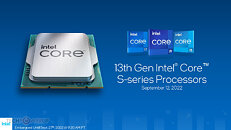
Sources:
DigiTimes, via Tom's Hardware
Older Raptor Lake parts are benefiting from buyers seeking value, while the latest Core Ultra processors have not created strong consumer demand for AI-enabled PCs. The Core Ultra 200S series has shown slowed market adoption due to its worse initial performance compared to Raptor Lake and Raptor Lake Refresh. Some vendors favor cost-effective prior-generation chips to hit aggressive price points, keeping Raptor Lake supply tight despite the parts aging in calendar years. The role of third-party foundries, which continue to support older process nodes, has also extended the lifespan of previous-generation CPUs, altering historical upgrade cycles. Reportedly, some Raptor Lake SKUs cost over $200 less than the latest SKUs, excluding the cost of a new motherboard and the transition from DDR4 to DDR5 memory. With the end of Windows 10 support and the upcoming holiday season, it will be interesting to see how PC makers respond with pricing.

21 Comments on Intel to Hike 13th Generation "Raptor Lake" CPU Pricing by 10%
Honestly you'd think intel would drop prices on core ultras but I guess thats completely out of the question. I dunno, this just seems.. backwards for intel.
A 14700K has been in the 275-299 range up until recently, was 250 at MC, which was easily the best all around desktop CPU for the money IMO. They've already gone up about 10%.
The fact that a 3 year old CPU (13900K) is near the top of these charts is a testament to how bad this entire last generation of CPUs were, from both AMD and Intel.
I picked the 9700X review as baseline here, because it is the same price as a 14700K.
The 9800x3d was a disappointment in windows gaming, but in linux the 9800x3d was pretty good, as linux make smroe use of AVX 256. And if you run emulators for newer consoles, those use AVX 512 and zen 5 tore zen 4 apart there. And still the 9800x3d is much easier to thermally manage then raptor lake.
They cant afford to keep doing this. Their margins are in tatters.There's that too. I couldnt trust any raptor lake silicon, and I know I'm not the only one.
So this means they have enough demand for Intel 7 parts (Raptor Lake) that they are struggling to keep up.
Putting a price hike on 13th gen is just odd, if only their C-suite and the CEO would take pay cuts, not gonna happen of course though.I wouldn't trust any 13th or 14th gen CPU either, no matter what claims Intel makes or what anecdotal "my cpu is just fine" defense people have.
Plenty of cases of users with the latest firmware seeing their 14900K and 13900K CPUs degrade anyway.
Either way, trust is gone. I for one would certainly not spend $400-$500 on a CPU that can start failing at any time, especially once it is out of warranty. And even if it did not, a potentially degraded CPU would be a prime suspect in every crash from then on - and I don't know about you, but I like my peace of mind, thank you.
The oxidation issue is a separate problem and only affects 13th Gen processors manufactured in late 2022, that is, the earliest samples manufactured. The amount of chips affected by that problem is relatively low. It does not affect later make 13th Gen chips manufactured 2023 and later, nor does it affect any 14th Gen-branded processor at all. An Intel representative has confirmed that as of early 2024, there were no processors affected left in the supply chain. To address both of these problems, Intel has extended the warranty on all affected processors from 3 to 5 years.
intel/comments/1ehv0v8/extended_warranty_update_on_13th14th_stability
Neither the via oxidation nor the vmin shift issues affect the Alder Lake-based 13th/14th Gen models (revisions "C0" and "H0") - this is an issue exclusive to the "B0" silicon and will most likely be found in the earlier 13900K, 13700K and 13600K models. No KS should be affected, 13th or 14th.
As I said, plenty of cases of people with updated BIOS seeing their 14900K going bad regardless. And against facts...
I personally don't trust any of the Raptor Lake cpu's, a warranty doesn't buy any peace of mind when I can easily just not buy one.
An extended warranty sounds nice, but a CPU should be one of the most reliable parts in a system, a CPU that isn't affected by contaminated defective silicon would otherwise last well past the warranty.