Monday, September 29th 2025

Intel "Granite Rapids-WS" Appears with 86 Cores and 172 Threads Built for HEDT
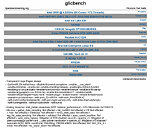
According to listing on OpenBenchmark.org, spotted by @momomo_us on X, appears to show a "Granite Rapids-WS" engineering sample running with 86 cores and 172 threads. The entry lists peak core speeds near 4.8 GHz, which likely reflects a turboboost on a few cores rather than a sustained all-core clock. Several important fields are empty in the submission, including power figures and other platform metrics, so the entry should be viewed as an early leak rather than a finished specification. The Granite Rapids-WS is a design built from Intel's XCC server compute dies, featuring two compute tiles that deliver 86 cores and two I/O tiles that handle connectivity, including PCIe and memory controllers. To go beyond 86, Intel would probably need to move to the larger UCC die and a bigger package.
Memory support for a workstation SKU remains unclear, although the server XCC family supports DDR5-6400 and can achieve higher effective speeds with MR-DIMMs. For a workstation, Intel is likely to choose an eight-channel memory configuration to balance capacity and board complexity. Thermal envelope and base clock frequencies are not reported, leaving questions about cooling and real-world expectations unanswered. If the entry is accurate, a Granite Rapids-WS part built from a server die could give Intel a quicker path to higher core counts for workstations. Intel has recently promoted Arrow Lake as a workstation option, while professional users have been left with a choice of an older workstation platform or AMD Threadripper, as Intel has recently scaled back its involvement in HEDT. For professionals and OEMs, the decisive factors will be validated core counts, power efficiency, memory and I/O capabilities, and how well software scales on the new hardware.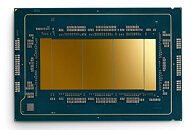
Source:
@momomo_us
Memory support for a workstation SKU remains unclear, although the server XCC family supports DDR5-6400 and can achieve higher effective speeds with MR-DIMMs. For a workstation, Intel is likely to choose an eight-channel memory configuration to balance capacity and board complexity. Thermal envelope and base clock frequencies are not reported, leaving questions about cooling and real-world expectations unanswered. If the entry is accurate, a Granite Rapids-WS part built from a server die could give Intel a quicker path to higher core counts for workstations. Intel has recently promoted Arrow Lake as a workstation option, while professional users have been left with a choice of an older workstation platform or AMD Threadripper, as Intel has recently scaled back its involvement in HEDT. For professionals and OEMs, the decisive factors will be validated core counts, power efficiency, memory and I/O capabilities, and how well software scales on the new hardware.


3 Comments on Intel "Granite Rapids-WS" Appears with 86 Cores and 172 Threads Built for HEDT
AMD is more clever in that regard; just make chiplets of each 8/16 cores and fuse the working ones on a die with a I/O.
The defective or lower binned chiplets can be resold as Ryzen (lower end) series.