Tuesday, October 21st 2025

Windows 11 25H2 October Update Bug Renders Recovery Environment Unusable
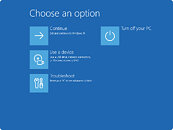
It seems like Microsoft has encountered a significant issue with the latest Windows 11 25H2 October update, KB5066835. The company confirmed that this update disrupts mouse and keyboard functionality within the Windows Recovery Environment (WinRE), making them unresponsive and unusable. As a result, the WinRE feature is completely inoperative. WinRE is a built-in troubleshooting toolkit included with Windows. It's intended to assist users when their computer encounters startup problems or system issues. WinRE activates automatically when Windows crashes or fails to boot properly, but users can also access it manually to utilize various repair tools.
However, with the current problem affecting keyboard and mouse input, WinRE is essentially ineffective. Microsoft stated that "the USB keyboard and mouse continue to work normally within the Windows operating system," and assured users that they are "working to release a solution to resolve this issue in the coming days. More information will be provided when it is available." This is yet another incident related to the recent Windows 11 updates, which have previously caused localhost issues. The list of Windows 11 problems continues to grow as the latest updates are released. Microsoft maintains a Windows 11 version 25H2 known issues and notifications website that provides status updates on the latest problems, including this one.
Update October 21 16:05 UTC: Microsoft has issued a hot fix. The company claims that "this out-of-band (OOB) update includes quality improvements. This update is cumulative and includes security fixes and improvements from the October 14, 2025, security update (KB5066835)..." which you can check out here.
 Early last week, Microsoft accidentally broke the Windows Media Creation Tool (MCT) just a day ahead of Windows 10's end-of-life. Additionally, the company began requiring Online Accounts for Windows 11 installations, making them increasingly difficult to bypass. Every previously reported issue has been addressed or resolved, except for the broken localhost functionality and now this WinRE problem. Without keyboard and mouse input, users are unable to initiate any recovery processes to resolve OS issues. Until Microsoft releases a patch, we must wait and hope that the OS remains stable without needing any intervention.
Sources:
Microsoft, via Windows Latest
However, with the current problem affecting keyboard and mouse input, WinRE is essentially ineffective. Microsoft stated that "the USB keyboard and mouse continue to work normally within the Windows operating system," and assured users that they are "working to release a solution to resolve this issue in the coming days. More information will be provided when it is available." This is yet another incident related to the recent Windows 11 updates, which have previously caused localhost issues. The list of Windows 11 problems continues to grow as the latest updates are released. Microsoft maintains a Windows 11 version 25H2 known issues and notifications website that provides status updates on the latest problems, including this one.
Update October 21 16:05 UTC: Microsoft has issued a hot fix. The company claims that "this out-of-band (OOB) update includes quality improvements. This update is cumulative and includes security fixes and improvements from the October 14, 2025, security update (KB5066835)..." which you can check out here.


170 Comments on Windows 11 25H2 October Update Bug Renders Recovery Environment Unusable
Win 7 design was literally Vista with a few minor changes. Saying that Vista's design was somehow much more appealing than Win 7 makes no sense.
If you do a blind test then most people would have a hard time distinguishing between the two when it comes to looks.
8 was an abortion for keyboard and mouse users. 8.1 attempted to fix it, but the damage was done. It did bring in some useful under the hood changes, but no one cared at that point.
Edit... As someone who quite frequently has to go into the recovering enviorement (Thanks MS for that btw, fix your software) this is rather concerning. It also raises questions on how/who screwed it up. If it comes back with some crap like, "oh AI wrote it and we didnt bother to check it" I'ma lose it. Maybe, just maybe, Microsoft a huge and wealthy company can use actual people instead of AI for thier OS. Litterally something that is supposed to work, and stably. Oh well, Windows 11 has had quite an entertainment value though.
For Windows reference milestones, Windows 7 RTM was July 2009. Windows 8 RTM was August 2012.
We have beaten this horse into a bloody pulp multiple times before.
No one at Microsoft cares about Windows. They haven't for 10+ years. The people who cared about Windows started leaving Microsoft 10-15 years ago. Microsoft's decline in consumer technology relevance was obvious once Gates stepped away as CEO. Fumbling their dominant presence in the mobile world was just the first of many disasters.
Today's monthly Patch Tuesday snafus are just kiddie play compared to the major strategic errors they have committed.
AI will fix our code guys, trust.
There is no Windows QA department. All of the competent Windows programmers and engineers left ten years ago. Windows users are now doing QA for free.
Microsoft basically knows 99.8% of Windows installations cannot switch to Linux for a multitude of reasons so you will eat Redmond dogchow regardless whether or not you are going to vomit it up several times a year.
For something different: Sometimes I fantasize about where we'd be if OS/2 had truly beaten windows. IBM may be pricey but I have a feeling they'd support their desktop OS better. Heck they supported OS/2 with patches all the way into the mid 2000s
The only way you are confusing Vista and 7's UI is if you are blind. 7 significantly toned down many UI elements, like the multicolor context bar at the top of windows, the start menu, transparency through menu buttons, ece. Both the file explorer and control panel in Vista look closer to XP then 7, the entire control panel got rearranged for 7 with different icons and locations. On yeah, and 7 completely deleted the widgets.Easily fixed by Start8 or the free Classic Shell. The under the hood improvements were easily worths pending 30 seconds installing Classic Shell.I'm gonna disagree with this assessment. Microsoft has bent over backwards to modernize Windows and keep it secure, while introducing new features, while also maintaining backwards compatibility with a nearly 30 year old API.
If they didnt care, they would do what Apple did, and would have gone through with the Metro/UWP transition back in 2012 and told windows users to suck it up and deal with it. It would be FAR easier to start over with 10, or 11, and break all backwards compatibility then to do what they are doing now.
All their issues have been from legacy systems. Breaking USB printer support, or the restore window, ece. These are systems that are opaque, likely undocumented, yet integrated in some horrid Mechanicus style design that you cant change without breaking everything.
Microsoft has deliberately chosen to prioritize legacy systems support over reliability. I understand the Apple comparison since I have owned both system platforms concurrently at home for close to 25 years. And there's even a device that runs desktop Linux gathering dust somewhere in my closet.
Apple has gone through two major system architecture transitions on Mac (PowerPC > Intel > Apple Silicon) as well as deprecating a bunch of technologies (32-bit binaries, OpenGL) and even the compatibility utilities (Rosetta, Rosetta 2) in their pursuit to put forth contemporary hardware and software. It is very difficult to play old Mac games on 2025 Mac hardware whereas it's still plausible to do so on Windows boxes. I still use Quicken 2017 on my Windows boxes. I'm glad I kept it up because Intuit dumbed down Mint.com and eventually lobotomized it to give us feeble Credit Karma.
It helped Apple that their thriving smartphone platform is on Arm. While I occasionally grumble about Apple's propensity to leave behind legacy technologies, I generally agree with their approach well, in part because there's another platform that I can count on for better legacy support: Windows.
Microsoft had at least three chances to create new platforms while leaving legacy support in the rear view mirror: Windows Mobile, Xbox and Surface. Well, we know what happened with Windows Mobile. As for Surface and Windows on Arm, they lack commitment in forging that road without legacy support. And my guess is Xbox is on the highway to hell. Perhaps Xbox executives are waiting for the day when most games will be played in the cloud and whatever operating system is behind the game won't matter to Joe Gamer.
In the long run the topic of desktop operating systems will likely become a less frequent topic as more tasks migrate to mobile devices and cloud services. I've looked at my own usage over decades. There are simply whole categories of things I used to do on computers that I basically only do on mobile now.
Social media in 2005: log into computer, fire up web browser, copy photo from digicam to computer, fumble with separate image editor, finally upload image. Social media in 2025: touch app on smartphone, take picture, post. We saw this transition: early Instagram had no PC interface, not even a web interface (which came later). Even before Facebook's 2012 acquisition of Instagram, the Instagram guys knew that smartphone was the future.
We're seeing this with many of the consumer facing A.I. tools. ChatGPT came to smartphones first (iPhone before Android) with Macs and finally Windows PCs trailing.
We have covered this before: ten years ago the smartphone dethroned the personal computer as the primary driver of all consumer technology innovation. While very powerful, the personal computer isn't where innovation is happening.
I do almost all of my online banking with smartphone apps. When the markets are open, I probably open my brokerage's smartphone or tablet app multiple times a day. I log into the brokerage website on my computer web browser like twice a month now. And now that I can sell specific lots of stocks on my phone's app, there's one less reason to fire up the desktop trading app.
Even checking the status of a Trusted Traveler program application was easier to do on their smartphone app versus logging into the CBP website on my computer's browser.
Shopping, travel booking, etc. more and more is happening on my phone, stuff I used to do on my computer. Hell, the last concert I went to a week ago I couldn't even print out my ticket. I had to use my smartphone app to gain admission.
Apple's Visual Intelligence AI feature? Available on iPhone with last year's iOS 18. Mac? Still not available even on macOS 26 Sequoia (this year's desktop OS).
Desktop systems are clearly headed into a niche existence. I've been a longtime user of standalone Microsoft Office on Windows systems (the non cloud/365 version) but at some point someone is going to offer a cloud solution that has robust conditional formatting features and then I will likely be done with standalone office productivity. I don't even use Word anymore, between my phone's note app and Apple's word processor, that's enough, I only care about Excel's conditional formatting.
All that said, Microsoft's commitment to legacy systems support doesn't excuse them from basic Windows QA procedures and proper release engineering fundamentals.
In this regard Microsoft doesn't give a sh!t and probably never will again. Defend Microsoft all you want but there is no one left there who says "Let's try to suck less next month."
It just needs to reach beta version. The more people donate to the project, the quicker we'll get a useable OS.
For gaming, too much fiddling, too many issues, especially with online games with anti-cheat systems as well as just the fact that you'll be missing out on graphic card features. AMD Adrenalin control panel just doesn't exist in Linux which means I have no access to frame limiter, AFMF, Radeon Chill, no ability to force MLAA or Anti-aliasing. Given these are huge benefits of Radeon cards, not having them at all is a huge issue for me. So, yeah I'll have to keep torturing myself with Windows because of this. But I love Ubuntu/Fedora on all other devices.
Just go linux and don't look back, no need.
Linux is not perect by any means, but it is still bullshit free, it is free and open source, then if you need to run a win app there is proton for games and wine and if that isn't enough ther is github.com/winapps-org/winapps for most everithing else.
What you can't run you don't need, I guarantee.
Honestly with linux nowadays it feels fresh and passionate like those days toying with ZX Spectrum, C64, Amiga or the early PCs
The differences are mostly so small that it's a game of "find 10 differences"
I used both for years so i know very well that i didn't really lose anything by moving to 7. The Context Bar being more uniformly colored looks nicer in 7 than the greenish one on Vista. Start Menu is pretty much 1:1 with some minor changes. Transparency was not scaled back in any noticeable way. Explorer and Control Panel looks very similar and many of the icons are exactly the same. Yes 7 got rid of the widgets officially so on desktop this was the most noticeable change.
You're reaching trying to somehow prove that 7 was somehow much different in looks compared to Vista. It wasn't.
For all intents and purposes it could have been Vista SP3.Nothing fixed Win 8 and the numbers showed that. People stayed at Win 7 and then moved to Win 10.
I get that you liked Win 8, but you're in the vast minority there.
I hated XP. I liked Vista and 7. I hated 8 and begrudgingly used 10 and so far i've liked 11 better than 10. At least when it comes to UI.
I use my system mostly for software development as a hobby/learning experience, which is why I chose NVidia GPU. AMD didn't have a decent set of software development tools, and up until a year or so ago, AI software pretty much did not work. So for me, AMD is not even a consideration.
I've been running Linux since early 90's and NVidia drivers since 2015, ATI/AMD before that. I fairly regularly had problems with NVidia driver updates or kernel updates that required building new drivers that would fail to compile, It was also common that my multi-monitor setup would break.
That hasn't been the case in the last year. If I update my system, the new NVidia driver gets installed with everything else and it just works. So NViidia support seems to be improving.
I also have Windows 11, but I pretty much use that infrequently for photo editing, video editing and some video games. Photo and video editing software on Linux is lacking, and I don't care that much about video games, except when I need a break.
One of the ways they managed to improve was a massive feature cull.
7 introduced the horrid large icons by default, taskbar pinning, both gross features, hidden quick launch by default, no longer remembered window positions across reboots.
However it did introduce snap which is very nice, and recovered some of the lost GDI performance by reintroducing some of the 2D acceleration that Vista removed.
I think many say Vista is the pinnacle is because it introduced many of the modern stuff that has aged well, Vista's problem was it was far too early in terms of the hardware not being able to run it well, and some features needing polish such as superfetch of which had a horrible initial implementation.
Vista's brand was shot, so SP4 was launched as Windows 7.