Thursday, October 30th 2025

Western Digital Investigates Older SMR Hard Drive Failures Tied to Design Flaws
Western Digital has confirmed it is investigating potential problems with some of its older SMR-based hard drives, following reports from multiple data recovery firms about unusually high failure rates. The affected models include 2 TB, 3 TB, 4 TB, and 6 TB WD Blue and Red drives (model numbers WD*0EZAZ, WD*0EDAZ, and WD*0EFAX) released around 2020, products that previously landed the company in a class-action lawsuit over undisclosed use of SMR (Shingled Magnetic Recording) technology. Tom's Hardware reports that Western Digital said in a statement to Heise Online that it takes the findings seriously and that its engineering teams have launched an internal review.
According to 030 Datenrettung Berlin GmbH, which first published the failure analysis, the issue could have its origins in design-level limitations of SMR technology in lower-capacity consumer drives. SMR increases areal density by overlapping data tracks allowing up to 25% more capacity per platter. However, rewriting data can require adjacent tracks to be rewritten as well, introducing latency and potential instability. These shortcomings have long made SMR unsuitable for certain workloads such as RAID or ZFS arrays. Western Digital's earlier decision not to disclose SMR use in these drives led to a $2.7 million lawsuit settlement in 2021. Now, data recovery labs warn that the same models could suffer physical damage and data loss over time. Users with WD Blue or Red drives in the 2-6 TB range from 2020 onward are advised to check their hardware, as early failure symptoms may include unusual clicking or grinding noises from the platters.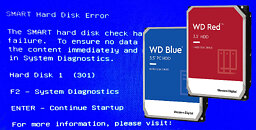
Sources:
Tom's Hardware, heise
According to 030 Datenrettung Berlin GmbH, which first published the failure analysis, the issue could have its origins in design-level limitations of SMR technology in lower-capacity consumer drives. SMR increases areal density by overlapping data tracks allowing up to 25% more capacity per platter. However, rewriting data can require adjacent tracks to be rewritten as well, introducing latency and potential instability. These shortcomings have long made SMR unsuitable for certain workloads such as RAID or ZFS arrays. Western Digital's earlier decision not to disclose SMR use in these drives led to a $2.7 million lawsuit settlement in 2021. Now, data recovery labs warn that the same models could suffer physical damage and data loss over time. Users with WD Blue or Red drives in the 2-6 TB range from 2020 onward are advised to check their hardware, as early failure symptoms may include unusual clicking or grinding noises from the platters.

16 Comments on Western Digital Investigates Older SMR Hard Drive Failures Tied to Design Flaws
Abd yep. Thoughtso. As soon as I saw these drives I knew immediately. I havent seen many of these lately but for a while I was seeing a lot.
Drive issues for drives made in 2020 is not something I want to read or hear.
Also what WD did with Red line is unforgivable.
These should be special category drives, not something pushed on customers buying pre-builds etc.
Also shingling adds another level of complexity making recovery even more difficult than how it already is...
Also using them as a buying guide doesn't work cuz the drives they use are older and only available used.
HGST NAS then HGST => WD Ultrastar Helium server drives have been trusty cool runners.
We always waited for the price drops, too costly at release.
Even 2nd user from Ebay have proven to be solid purchases, but thats tainted with a bit of luck.
WD red is SMR.
WD red plus/pro is CMR.
What is funny when I got my first WD red plus drives, the standard WD red were the same price, kind of like how QLC is often same cost as TLC.