Monday, November 3rd 2025

Kingston FURY Renegade G5 Now Available in 8 TB

Kingston FURY, the high-performance division of Kingston Digital, Inc., the flash memory affiliate of Kingston Technology Company, Inc., a world leader in memory products and technology solutions announces it has rounded out the recently named PCWorld "Editor's Choice" Kingston FURY Renegade G5 line with an 8192 GB full capacity option for high-power uses from video editing, 3D rendering, to gaming and more.

Optimized for those who need a system that can keep up with their workflow or gaming needs, Kingston FURY Renegade G5 PCIe 5.0 NVMe M.2 2280 SSD utilizes the latest PCIe Gen 5 x4 controller and 3D TLC NAND to reach speeds up to 14,800/14,000 MB/s read/write and over 2M IOPS to provide extreme performance and endurance, and now with over 8 TB to store more of your favorite games and media without losing system responsiveness.
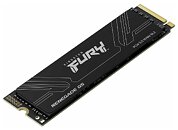
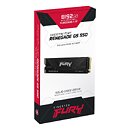
"Whether for work or play, users need more power and space," said Keith Schimmenti, SSD business manager, Kingston. "We're happy this 8 TB addition to Kingston FURY Renegade G5 SSD can provide high-power users and hardware enthusiasts both."
Kingston FURY Renegade G5 is available in full capacities from 1024 GB to 8192 GB and is backed by a limited five-year warranty, free technical support, and legendary Kingston reliability.
Source: Kingston
Add your own comment

30 Comments on Kingston FURY Renegade G5 Now Available in 8 TB

#1
WonkoTheSaneUK
Over 1000 currency units in the UK?
We have a saying for that - "NO!"
Posted on Reply
#2
MiSteR
Over 1800 currency unit in Bulgaria. We also have saying for that - "HELL NO!!!"
Posted on Reply
#3
Noci
Here in the Netherlands not 1k, but still pricy..... :twitch:

Posted on Reply
#4
bonehead123
WonkoTheSaneUKOver 1000 currency units in the UK?
We have a saying for that - "NO!"
MiSteROver 1800 currency unit in Bulgaria. We also have saying for that - "HELL NO!!!"
NociHere in the Netherlands not 1k, but still pricy..... :twitch:
Well, as the saying goes: "If ya wanna play (big), ya gotsta pay (big)", hahahaha :D

But I agree that very few people, outside of pro's/semi pro's, are gonna pay those prices, but then again, that seems to be their target market, at least for now anyways.........

And my saying for this is: Not NO, not Hell NO, but f*ck NO....... or "only in your wildest friggin dreams"
Posted on Reply
#5
RejZoR
While I have Kingston Fury RAM in my system, I don't think I'd ever consider Kingston SSD for my system. And while we're at that, Seagate taught me to stick with Samsung or Crucial. So, there's that...
Posted on Reply
#6
TumbleGeorge
MiSteROver 1800 currency unit in Bulgaria. We also have saying for that - "HELL NO!!!"
MSRP price per unit...when order 1000 units and before Vat and border taxes? You must suppose what will be retail price.
Edit: I see retail price 1862 leva. This is surprisingly low for new flagship model.
Maybe 16TB models is so close that companies rushing to realize their smaller models before it's market presence.
Posted on Reply
#7
TheLostSwede
News Editor
RejZoRWhile I have Kingston Fury RAM in my system, I don't think I'd ever consider Kingston SSD for my system. And while we're at that, Seagate taught me to stick with Samsung or Crucial. So, there's that...
They do the same Phison or Silicon Motion based drives as everyone else. I have a KC3000, been a solid drive.
Crucial isn't that different these days, as they've moved to use the same controllers. Samsung is one of the few makers left that make their own controllers these days.
Posted on Reply
#8
remixedcat
TheLostSwedeThey do the same Phison or Silicon Motion based drives as everyone else. I have a KC3000, been a solid drive.
Pius kingston did the firmware fix for the E18 issue as well...Crucial also uses Phison mostly too
Posted on Reply
#9
TheLostSwede
News Editor
remixedcatPlus kingston did the firmware fix for the E18 issue as well...Crucial also uses Phison mostly too
Yeah, updated my post to say that.
Posted on Reply
#10
Hakker
It's PCIe5 Everything with that labeled on it is over the top expensive and giving absolutely nothing back in return. Sure you can say it does 14GB/s but nothing and I really mean nothing at home needs it. Beyond that higher idle power consumption, much higher power consumption when in use and beyond premium price.
Posted on Reply
#11
TheLostSwede
News Editor
HakkerIt's PCIe5 Everything with that labeled on it is over the top expensive and giving absolutely nothing back in return. Sure you can say it does 14GB/s but nothing and I really mean nothing at home needs it. Beyond that higher idle power consumption, much higher power consumption when in use and beyond premium price.
So don't buy one? Problem solved.
Posted on Reply
#12
remixedcat
HakkerIt's PCIe5 Everything with that labeled on it is over the top expensive and giving absolutely nothing back in return. Sure you can say it does 14GB/s but nothing and I really mean nothing at home needs it. Beyond that higher idle power consumption, much higher power consumption when in use and beyond premium price.
for any media production you need as fast speeds as possible!
Posted on Reply
#13
TheinsanegamerN
It's always good to see more 8TB TLC competition, but agree the price is silly. The SN850x is $640 on amazon. That is the benchmark.
Posted on Reply
#14
jesdals
Ill gues that the 4x price hike for SSD and Memory finally gives us larger drives.... :confused:
Posted on Reply
#15
Wirko
Kingston has a little bit of everything for everyone, apparently from very different product teams:

NV3 2TB, with "2000G" in model number
NV3 2230 2TB, with "2T0" in model number
KC3000 2048GB, with "2048G" in model number
Fury Renegade 2TB, with "2000G" in model number
Fury Renegade G5 2048GB, with "2T0" in model number

Sometimes you get a baker's dozen, sometimes you don't. :confused:
Posted on Reply
#16
RejZoR
TheLostSwedeThey do the same Phison or Silicon Motion based drives as everyone else. I have a KC3000, been a solid drive.
Crucial isn't that different these days, as they've moved to use the same controllers. Samsung is one of the few makers left that make their own controllers these days.
Crucial makes own NAND and they also have own custom firmware. Their drives have outstanding record. A lot of other "3rd party" brands, not so much. They are notorious for bait and switching NAND quality without adding any name changing information and that has been a stinker reason for a long time. Kingston included. That being said, I have Kingston Fury RAM in my system currently, because they can't screw around like that because of QVL lists and I specifically bought one that was on it. Oh and my mousepad is from HyperX which is still their brand iirc. So it's not me hating on them, but I am being realistic on certain product segments they offer that are less desirable than from other brands. Oh and their USB drives have always been underwhelming and always significantly slower than Sandisk for example.

What annoys me more is that old brands like WD and Seagate aren't much better. You'd expect better from such old established brands, but I was straight up disappointed by Seagate. Drive is technically fine, but their support is crap, firmware updating process from finding to applying it is horrendous, their webpage sucks, their software feels ancient and outdated. I did not expect such subpar experience from a decades old brand like Seagate.
Posted on Reply
#17
remixedcat
RejZoRCrucial makes own NAND and they also have own custom firmware. Their drives have outstanding record. A lot of other "3rd party" brands, not so much. They are notorious for bait and switching NAND quality without adding any name changing information and that has been a stinker reason for a long time. Kingston included. That being said, I have Kingston Fury RAM in my system currently, because they can't screw around like that because of QVL lists and I specifically bought one that was on it. Oh and my mousepad is from HyperX which is still their brand iirc. So it's not me hating on them, but I am being realistic on certain product segments they offer that are less desirable than from other brands. Oh and their USB drives have always been underwhelming and always significantly slower than Sandisk for example.

What annoys me more is that old brands like WD and Seagate aren't much better. You'd expect better from such old established brands, but I was straight up disappointed by Seagate. Drive is technically fine, but their support is crap, firmware updating process from finding to applying it is horrendous, their webpage sucks, their software feels ancient and outdated. I did not expect such subpar experience from a decades old brand like Seagate.
TBH seagates fw updating isn't too bad for me.. I'm used to far more complex processes including setting up and configuration of tftp servers and stuff and sshing into whatever and at least in Linux i didn't have to use seachest.. the gui worked fine on my fc530r
Posted on Reply
#18
Wirko
RejZoRcertain product segments they offer that are less desirable than from other brands
That's the key. Avoid the NV3.
Posted on Reply
#19
remixedcat
WirkoThat's the key. Avoid the NV3.
And the nv3 i think had like 10 variants of NAND/controllers too

ohwait it's the nv2 that does and it's more than 10 :O
Posted on Reply
#20
TheLostSwede
News Editor
RejZoRCrucial makes own NAND and they also have own custom firmware. Their drives have outstanding record. A lot of other "3rd party" brands, not so much. They are notorious for bait and switching NAND quality without adding any name changing information and that has been a stinker reason for a long time. Kingston included. That being said, I have Kingston Fury RAM in my system currently, because they can't screw around like that because of QVL lists and I specifically bought one that was on it. Oh and my mousepad is from HyperX which is still their brand iirc. So it's not me hating on them, but I am being realistic on certain product segments they offer that are less desirable than from other brands. Oh and their USB drives have always been underwhelming and always significantly slower than Sandisk for example.

What annoys me more is that old brands like WD and Seagate aren't much better. You'd expect better from such old established brands, but I was straight up disappointed by Seagate. Drive is technically fine, but their support is crap, firmware updating process from finding to applying it is horrendous, their webpage sucks, their software feels ancient and outdated. I did not expect such subpar experience from a decades old brand like Seagate.
Not quite, Micron makes the NAND for Crucial, but ok, it's within the same corporate group.
A lot of other companies also use Micron NAND with the same Silicon Motion or Phison controllers as Crucial, so how a Crucial drive would be better in any way from a component standpoint, I don't understand.

I believe you'll find that all SSD manufacturers now mention that their products aren't static. What you forget here is that a lot of the smaller SSD brands often don't have a choice, as they buy their chips on the spot market, since companies like Micron, Samsung, Kioxia etc. won't work directly with them. Their choice is to either not sell a product or to swap to something else. Could they be more transparent about this? Yes, very much so, but to say they make bad products, it's simply untrue.

For the millionth time, QVL's are BS, it's just the board makers testing whatever RAM they have in house, they never, ever go out and buy RAM to test, they just use whatever they're being sent in for testing. When will people understand this? Yes, it can be a guide to what to buy, but it doesn't mean jack or shit at the end of the day, as a lot of other RAM will work just as well.

Well, WD/Sandisk makes their own NAND (in fabs co-owned with Kioxia) and some of their own controllers as well. Seagate on the other hand, seems to work under the same limitations as everyone else that doesn't make their own components. Did you care when these two companies swapped out components on the PCB that sits on their hard drives?
Bad support is a different matter, but since you seem to have limited experience when it comes to SSD brands (I've owned Crucial, Kingston, WD, Plextor, Corsair, Soldigm, Patriot, Intel and others), I can tell you that the firmware update app is a Phison thing that most companies simply skin slightly and yes, it's kind of janky when you compare with say Soldigm (that no longer makes consumer products). But please do remember that Samsung has had its fair share of issues over the years as well and they don't seem to have always responded to those in a timely or professional manner. Edit: I forgot that my old Thinkpad X250 had one one of those terrible Samsung SATA drives that slowed down to a crawl when filled over a certain percentage, it was possibly the worst SSD I've ever owned and there was never a fix for that problem.

And no, you're not being realistic, you've just decided that everyone else, except two brands that you like, are crap. That's admittedly your prerogative, but it doesn't mean that you're correct.
Posted on Reply
#21
remixedcat
TheLostSwedeNot quite, Micron makes the NAND for Crucial, but ok, it's within the same corporate group.
A lot of other companies also use Micron NAND with the same Silicon Motion or Phison controllers as Crucial, so how Crucial drive would be better in any way from a component standpoint, I don't understand.

I believe you'll find that all SSD manufacturers now mention that their products aren't static. What you forget here is that a lot of the smaller SSD brands often don't have a choice, as they buy their chips on the spot market, since companies like Micron, Samsung, Kioxia etc. won't work directly with them. Their choice is to either not sell a product or to swap to something else. Could they be more transparent about this? Yes, very much so, but to say they make bad products, it's simply untrue.

For the millionth time, QVL's are BS, it's just the board makers testing whatever RAM they have in house, they never, ever go out and buy RAM to test, they just use whatever they're being sent in for testing. When will people understand this? Yes, it can be a guide to what to buy, but it doesn't mean jack or shit at the end of the day, as a lot of other RAM will work just as well.

Well, WD/Sandisk makes their own NAND and some of their own controllers as well. Seagate on the other hand, seems to work under the same limitations as everyone else that doesn't make their own components. Did you care when these two companies swapped out components on the PCB that sits on their hard drives?
Bad support is a different matter, but since you seem to have limited experience when it comes to SSD brands (I've owned Crucial, Kingston, WD, Plextor, Corsair, Soldigm, Patriot, Intel and others), I can tell you that the firmware update app is a Phison thing that most companies simply skin slightly and yes, it's kind of janky when you compare with say Soldigm (that no longer makes consumer products). But please do remember that Samsung has had its fair share of issues over the years as well and they don't seem to have always responded to those in a timely or professional manner.

And no, you're not being realistic, you've just decided that everyone else, except two brands that you like, are crap. That's admittedly your prerogative, but it doesn't mean that you're correct.
Very well said.

Also if anything the 2 brands that have full gui and firmware updates thru it on Linux are Seagate and Crucial/Micron and that's it. At least both of those have Linux versions and solidigm has a cli for Linux.

Kingston, however is open to doing a Linux tool as well and their rep was nice about it and said I wasn't the only one...
Posted on Reply
#22
RejZoR
TheLostSwedeNot quite, Micron makes the NAND for Crucial, but ok, it's within the same corporate group.
A lot of other companies also use Micron NAND with the same Silicon Motion or Phison controllers as Crucial, so how a Crucial drive would be better in any way from a component standpoint, I don't understand.

I believe you'll find that all SSD manufacturers now mention that their products aren't static. What you forget here is that a lot of the smaller SSD brands often don't have a choice, as they buy their chips on the spot market, since companies like Micron, Samsung, Kioxia etc. won't work directly with them. Their choice is to either not sell a product or to swap to something else. Could they be more transparent about this? Yes, very much so, but to say they make bad products, it's simply untrue.

For the millionth time, QVL's are BS, it's just the board makers testing whatever RAM they have in house, they never, ever go out and buy RAM to test, they just use whatever they're being sent in for testing. When will people understand this? Yes, it can be a guide to what to buy, but it doesn't mean jack or shit at the end of the day, as a lot of other RAM will work just as well.

Well, WD/Sandisk makes their own NAND (in fabs co-owned with Kioxia) and some of their own controllers as well. Seagate on the other hand, seems to work under the same limitations as everyone else that doesn't make their own components. Did you care when these two companies swapped out components on the PCB that sits on their hard drives?
Bad support is a different matter, but since you seem to have limited experience when it comes to SSD brands (I've owned Crucial, Kingston, WD, Plextor, Corsair, Soldigm, Patriot, Intel and others), I can tell you that the firmware update app is a Phison thing that most companies simply skin slightly and yes, it's kind of janky when you compare with say Soldigm (that no longer makes consumer products). But please do remember that Samsung has had its fair share of issues over the years as well and they don't seem to have always responded to those in a timely or professional manner. Edit: I forgot that my old Thinkpad X250 had one one of those terrible Samsung SATA drives that slowed down to a crawl when filled over a certain percentage, it was possibly the worst SSD I've ever owned and there was never a fix for that problem.

And no, you're not being realistic, you've just decided that everyone else, except two brands that you like, are crap. That's admittedly your prerogative, but it doesn't mean that you're correct.
QVL is not bullshit. I've seen so many RAM sticks that were within specs and they should work, but couldn't ever get them to work at rated clocks and timings. It's impossible for motherboard makers to test ALL of them, but if you want reliability, you go with one that was tested.
Posted on Reply
#23
remixedcat
RejZoRQVL is not bullshit. I've seen so many RAM sticks that were within specs and they should work, but couldn't ever get them to work at rated clocks and timings. It's impossible for motherboard makers to test ALL of them, but if you want reliability, you go with one that was tested.
Not always feasable specially now that decently priced ram is slim pickings... I am having that now with this new build I'm doing. so people are resorting to cheapo sticks or stuff that isn't in the QVL. Not all of that is bad either. Just because something isn't in the QVL doesn't mean it's crap and you should avoid.
Posted on Reply
#24
TheLostSwede
News Editor
RejZoRQVL is not bullshit. I've seen so many RAM sticks that were within specs and they should work, but couldn't ever get them to work at rated clocks and timings. It's impossible for motherboard makers to test ALL of them, but if you want reliability, you go with one that was tested.
Ok, so why do my friends that work at both motherboard manufacturers and memory manufacturers tell me that it's not something worth putting too much trust in then?
After 15+ years in Taiwan and 25+ years in the tech industry, with over a decade of that as a tech writer/journalist, do you really think I haven't asked about things like this?

Yes, I agree that there were issues with AMD's first generation of Ryzen and the 300-series chipset and AMD seems to have issues early on with memory compatibility, but I've bought RAM that was on the QVL that had the exact same issue you're describing, so how did the QVL help?

I've had 100% reliability for over two years now with my non QVL RAM, so yes, the QVL is utterly pointless as anything but a rough guide.
Posted on Reply
#25
Wirko
TheLostSwedeNot quite, Micron makes the NAND for Crucial, but ok, it's within the same corporate group.
A lot of other companies also use Micron NAND with the same Silicon Motion or Phison controllers as Crucial, so how a Crucial drive would be better in any way from a component standpoint, I don't understand.

I believe you'll find that all SSD manufacturers now mention that their products aren't static. What you forget here is that a lot of the smaller SSD brands often don't have a choice, as they buy their chips on the spot market, since companies like Micron, Samsung, Kioxia etc. won't work directly with them. Their choice is to either not sell a product or to swap to something else. Could they be more transparent about this? Yes, very much so, but to say they make bad products, it's simply untrue.

For the millionth time, QVL's are BS, it's just the board makers testing whatever RAM they have in house, they never, ever go out and buy RAM to test, they just use whatever they're being sent in for testing. When will people understand this? Yes, it can be a guide to what to buy, but it doesn't mean jack or shit at the end of the day, as a lot of other RAM will work just as well.

Well, WD/Sandisk makes their own NAND (in fabs co-owned with Kioxia) and some of their own controllers as well. Seagate on the other hand, seems to work under the same limitations as everyone else that doesn't make their own components. Did you care when these two companies swapped out components on the PCB that sits on their hard drives?
Bad support is a different matter, but since you seem to have limited experience when it comes to SSD brands (I've owned Crucial, Kingston, WD, Plextor, Corsair, Soldigm, Patriot, Intel and others), I can tell you that the firmware update app is a Phison thing that most companies simply skin slightly and yes, it's kind of janky when you compare with say Soldigm (that no longer makes consumer products). But please do remember that Samsung has had its fair share of issues over the years as well and they don't seem to have always responded to those in a timely or professional manner. Edit: I forgot that my old Thinkpad X250 had one one of those terrible Samsung SATA drives that slowed down to a crawl when filled over a certain percentage, it was possibly the worst SSD I've ever owned and there was never a fix for that problem.

And no, you're not being realistic, you've just decided that everyone else, except two brands that you like, are crap. That's admittedly your prerogative, but it doesn't mean that you're correct.
I have checked the product pages of the top Gen 4 and Gen 5 SSDs from Crucial and Kingston. The Crucials have unspecified NAND type and an unspecified controller. Datasheets in pdf exist, they do list TLC, but I couldn't find them without googling. Meanwhile, the Kingstons have TLC NAND and the model of the controller(!) in the specs, and I appreciate that.
Posted on Reply
Add your own comment
Nov 22nd, 2026 11:53 CST change timezone

New Forum Posts

Popular Reviews

TPU on YouTube

Controversial News Posts