Wednesday, November 5th 2025

Liquid Cooling for NVIDIA GB300 "Blackwell Ultra" NVL72 Costs Nearly $50,000
NVIDIA's "Blackwell Ultra" server racks are undoubtedly powerful, but they demand significant system cooling. NVIDIA promotes the GB300 NVL72 as the top configuration: these liquid-cooled racks, built with Grace Blackwell Ultra Superchips, achieve exascale-class dense FP4 performance and offer substantial improvements in throughput-per-megawatt compared to previous HGX platforms. However, this extreme performance mandates massive cooling systems, which can cost around $50,000. According to a valuation model from investment bank Morgan Stanley, NVIDIA is spending nearly $50,000 on cooling for the 72-GPU configuration within its Oberon rack. With each chip rated at 1,400 W TDP, traditional air-based cooling solutions are not feasible.
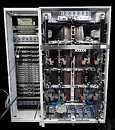
Considering that there are 72 GPUs rated up to 1,400 W, that is over 100 kW from GPUs alone. Add 32 "Grace" CPUs that are powering the system, and you have more than a 100 kW of heat at the peak load. Morgan Stanley models the rack as containing 18 compute trays (each consuming roughly 6.6 kW but needing cooling for about 6.2 kW) alongside nine switch trays. The firm values the cooling components for a single compute tray at about $2,260, which multiplies to roughly $40,680 across the rack. Switch-tray cooling adds about $1,020 per tray, or $9,180 total. High-performance cold plates are singled out as the most expensive parts in the BOM, with per-unit prices in the low hundreds.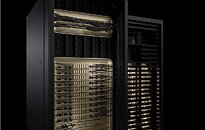
 Interestingly, the report also projects that the upcoming "Vera Rubin" NVL144 configuration will require even more thermal hardware as GPUs and interconnects increase power draw. Morgan Stanley estimates that cooling costs could rise by approximately 17% to about $55,710. This reflects a well-known pattern: as compute density and TDP increase, so do the expenses and engineering complexity of maintaining systems within thermal limits. With switches consuming more electricity, the cooling costs for this advanced system are expected to climb, adding to the challenge of managing heat dissipation in increasingly powerful AI infrastructure.
Sources:
Jukan on X, via Tom's Hardware
Considering that there are 72 GPUs rated up to 1,400 W, that is over 100 kW from GPUs alone. Add 32 "Grace" CPUs that are powering the system, and you have more than a 100 kW of heat at the peak load. Morgan Stanley models the rack as containing 18 compute trays (each consuming roughly 6.6 kW but needing cooling for about 6.2 kW) alongside nine switch trays. The firm values the cooling components for a single compute tray at about $2,260, which multiplies to roughly $40,680 across the rack. Switch-tray cooling adds about $1,020 per tray, or $9,180 total. High-performance cold plates are singled out as the most expensive parts in the BOM, with per-unit prices in the low hundreds.


20 Comments on Liquid Cooling for NVIDIA GB300 "Blackwell Ultra" NVL72 Costs Nearly $50,000
50k does not seem too terrible, all things consodered.
Remember, this 50k cooling system is covering 72 massively expensive GPUs, along with the rest of the server.
I would be very surprised if this 50k was more than 1% of the total cost for a fully kitted rack.
For larger data centers, it makes much more sense to have a centralized cooling system.
They are a bit more expensive, though...
Case in point, this 4MW CDU skid I put together for a customer.
Each of their data centers will need a minimum of 10 units, with each CDU costing at least 800k€.
And keep in mind, this does not include any of the equipment that actually cools the medium 😅
When I tell/show her some watercooling solutions cost up to $ 50,000 and that what I spend on my PC is peanuts compared to that, she probably will mellow her opinion :roll:.
Of course I won't bother her with the facts & figures and obvious reality that my rig is not even a pocket calculator compared to that monsterous GB300 NVL72 :shadedshu::laugh:.
Might be worth a try, but if she doesn't fall for the decoy I might get :nutkick::kookoo::laugh:.
But seriously, over 100kW of heat, I hope that they give the heatreturn some good thoughts by not wasting much as I love Mother Earth and all this id adding to our abuse of her.
(by the way, I've no intention to turn this into a political/environmental discussion. There are other forums for that, thank you)
At least with the system I am working on, our target return temperature is 35°C.
It would be hot enough for in-floor heating, but not much else 🫤
Before you can use the heat energy somewhere else, it needs to pass through a minimum of two heat exchangers, each of which require a few °C of thermal spread to extract the energy.
Add to this the losses over your supply lines, and it ends up being too cold to heat much of anything.
If you really wanted, you could use it to pre-heat a district heating system 🤔
You would probably be better off trying to harvest the waste heat from the heat pumps, but this would also be challenging.
At the very least, though, the waste heat from the thermal power plant supplying the data center should be being used for district heating, so it is not a complete loss!
Then you have to ask how you would prevent such controls from being abused.How are you going to move that heat? Shared heating systems were tried at the turn of the 20th century, and were abandoned largely because they proved to be very inefficient. Even if you insulate the pipes, the sheer losses from taking that heat and heating water, then bleeding that heat off in a home would make it unusable.
Hot air would be even worse. Once buildings get large enough you have to go with water heating.
www.barrons.com/livecoverage/nvidia-earnings-stock-price-jensen-huang/card/nvidia-s-multi-million-dollar-ai-servers-are-getting-more-expensive-fQAv8OTMJhJU0Ql8VzWZ
I can agree that relatively low water temperature in some rack cooling systems could at least require a different approach.
Not in the suburban or rural parts of the country, like where these data centers are being built. The systems in use are also more traditional sources: heating hot water with things like trash incineration and waste heat from industry. Datacenter heat is still experimental, and suffers from the issue that the coolant in said system isnt allowed to get hot enough to carry significant heat long distance. The newest deployments are playing around with 70C coolant, but watercooling typically tries to stay in the 30-40C range.
That means you'll need to collect that heat and concentrate it, which is going to be difficult and impose significant efficiency loss.
The issue is really transporting that heat from suburban/rural places efficiently, just the infrastructure necessary for it makes it not worth it, might as well install a vapor turbine to generate some electricity directly, but again the cost of it all will hardly break even.