Monday, January 12th 2026
Many Game Devs Reject AI in Gaming
It appears as though the divide between game developers jumping head-first into generative AI and those who oppose it is growing yet again. While brands like EA, Ubisoft, and Xbox are leaning further into the tech, several smaller and indie studios have recently gone on the record to state their displeasure with generative AI and its use in games. In a recent turn Larian Studios, of Baldur's Gate fame, has announced that it will no longer be relying on generative AI for concept art or in-game assets for its upcoming Divinity game. The studio's CEO, however, clarified in a Reddit AMA that he still sees some potential use for AI in optimizing workflows and trying to "improve the speed with which we can try things out."
The development team that worked on Bandai Namco's Code Vein 2 also confirmed in an interview with PCGamesN that there would be no generative AI in Code Vein 2, citing cohesiveness as part of the justification for avoiding the tech. The game's producer, Keita Iizuka, also commented that the team is "creating a very original world" and because they "value art style" and the aesthetic of the game. This extends to publishers, too. In a recent interview with Kotaku, Tim Bender, CEO of Hooded Horse, the publisher behind games like Manor Lords and Endless Legend 2, has officially banned AI from the company as a policy. The CEO said "It is now written into our contracts if we're publishing the game, 'no f**king AI assets.'" Bender also touched on using generative AI in early development or to generate placeholder art, expressing concern that developers could easily fall into the same trap as Sandbox Interactive did with Clair Obscur: Expedition 33, which ultimately resulted in the game being stripped of its Indie Game Awards Game of the Year award.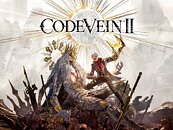
Sources:
Kotaku, PCGamesN, FRVR
The development team that worked on Bandai Namco's Code Vein 2 also confirmed in an interview with PCGamesN that there would be no generative AI in Code Vein 2, citing cohesiveness as part of the justification for avoiding the tech. The game's producer, Keita Iizuka, also commented that the team is "creating a very original world" and because they "value art style" and the aesthetic of the game. This extends to publishers, too. In a recent interview with Kotaku, Tim Bender, CEO of Hooded Horse, the publisher behind games like Manor Lords and Endless Legend 2, has officially banned AI from the company as a policy. The CEO said "It is now written into our contracts if we're publishing the game, 'no f**king AI assets.'" Bender also touched on using generative AI in early development or to generate placeholder art, expressing concern that developers could easily fall into the same trap as Sandbox Interactive did with Clair Obscur: Expedition 33, which ultimately resulted in the game being stripped of its Indie Game Awards Game of the Year award.

55 Comments on Many Game Devs Reject AI in Gaming
Half AV programs now have "AI" branding on their tools, although literally nothing changed compared to previous version.
We used decade and half ago software to gather soil data from multiple sensors and create maps in order to prepare plan for soil treatments... Now it is called AI, with multiple "startups" trying to gather money based on their "brand new" AI solution 😂😂😂
Also there is a podcast with Sam Altman when he says that he was happy the market was now more "sane" because some time before they had a meeting with companies and the next day the stock of those companies rose, just by having had a meeting with OpenAI.
Again, I'd appreciate if someone can provide the link for the podcast.Found it: