Tuesday, January 13th 2026

NVIDIA Reportedly Informed AIBs About GeForce RTX 50-series SUPER GPU Delay
The non-appearance of GeForce RTX 50-series "Blackwell" SUPER graphics cards at CES 2026 came as a major shock for portions of the PC hardware community. Normally, NVIDIA sticks to a fairly regular release cadence—barring a few hiccups here and there—with the launches of new gaming products and mid-gen refreshes. Unfortunately, current market conditions have affected a wide swath of manufacturers—prompting price hikes, supply chain adjustments, launch postponements, and rethinks of next-gen technology strategies. As laid out in TechPowerUp's recent top five "biggest no-shows of CES 2026," Team Green's much-anticipated current-gen GeForce product refresh gets top billing.
Last Thursday (January 8), members of the Board Channel community engaged in speculative talk of NVIDIA's alleged indefinite delay of GeForce RTX 50-series SUPER GPUs. One participant outlined three main reasons behind this disappointing postponement, reportedly extracted from a brief issued to board partners. According to this leak, the first factor is production capacity being adjusted to favor compute GPU lines—current demand, especially overseas, needs to be satisfied. Most importantly, greater profit margins are being pursued in the extremely lucrative AI server segment. The second bullet point focuses on a long-term forecast for escalating memory-related product costs—a serious problem for modern graphics cards that utilize fancy GDDR7 VRAM modules.
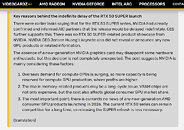
This year's overall GeForce "SUPER" upgrade was expected to arrive with denser memory modules onboard; reportedly 3 GB capacity per unit. According to the leaked set of sentences, Team Green is holding off from rolling out a mid-cycle "Blackwell" refresh due to (anticipation of) AMD not prepping any next-gen consumer GPUs within 2026. The current GeForce RTX 50-series is expected to remain competitive for a good while, especially given that the Red Team has not produced anything more potent than the RDNA 4 generation's Radeon RX 9070 XT 16 GB model. Had the rumored 2026 SUPER range emerged in the first quarter, industry soothsayers proposed updated GeForce RTX 5080 and RTX 5070 Ti models sporting 24 GB of VRAM. A new GeForce RTX 5070 variant was said to make do with a pool of 18 GB GDDR7 video memory. NVIDIA leadership could release "Blackwell" SUPER cards further down the line, but recent whispers of truly next-gen GeForce RTX designs—based on "Rubin" architecture—has drawn some community interest away from less exciting refreshed products.
Sources:
Board Channels CN, Gazlog, VideoCardz (translated screenshot, sourced from Board Channels), Notebookcheck, Wccftech
Last Thursday (January 8), members of the Board Channel community engaged in speculative talk of NVIDIA's alleged indefinite delay of GeForce RTX 50-series SUPER GPUs. One participant outlined three main reasons behind this disappointing postponement, reportedly extracted from a brief issued to board partners. According to this leak, the first factor is production capacity being adjusted to favor compute GPU lines—current demand, especially overseas, needs to be satisfied. Most importantly, greater profit margins are being pursued in the extremely lucrative AI server segment. The second bullet point focuses on a long-term forecast for escalating memory-related product costs—a serious problem for modern graphics cards that utilize fancy GDDR7 VRAM modules.


15 Comments on NVIDIA Reportedly Informed AIBs About GeForce RTX 50-series SUPER GPU Delay
In other news, SSD pricing and RAM pricing is getting even worse. 15% in a day, 80% more by the end of the quarter. Mechanical drives seem to be off the hook for the moment but I can imagine even those will be impacted before too long...
You always lose in the world of tech social media :) Unless you're AMD, of course, then it's all butterflies and unicorns. At worst, reasons.
We've already seen signs of that with the 5090 creeping up to $5000 in the news. Lower-tier GPUs with less VRAM aren't going to double as fast, but if nothing else changes they are all going to get extremely expensive again, like the ETH mining and COVID-19 days.
so all the companies that are buying things now, aren't even using them, they are just stockpiling everything, instead of buying things as they need them
and the reason they can't use them now is because there are only so many factories that work with all the electrical items that are needed to make the data centers hook into the grid, and those are backed up with orders for 12-16 months, not to mention all the other power requirements that are needed