Monday, February 9th 2026

Intel Kills Pay-to-Use "Software Defined Silicon" Initiative
Intel has quietly deprecated its Software Defined Silicon initiative (SDSi), known as "Intel On Demand," according to a report from Phoronix. The company has archived the official GitHub repository for SDSi for Xeon, an effort intended to enable optional features on Intel's server processors that could be unlocked for an extra fee. Intel had hoped enterprises would pay to enable these features, but the initiative never gained mass traction and was only sporadically maintained. Because hyperscalers operate at massive scale, paying an additional fee to enable a feature on silicon they had already purchased made little sense, contributing to Intel's decision to abandon the project. Subscription services are similar in concept, but they generally apply to software on a monthly basis rather than one-time hardware activations.
Originally, Intel planned to make Quick Assist, Dynamic Load Balancer, and Data Streaming Accelerator available as On Demand features, alongside Software Guard Extensions and the In-Memory Analytics Accelerator. These were described on the Intel On Demand website as a "one-time activation of select CPU accelerators and security features." The Intel On Demand site has since been reworked to remove most information, leaving only a few documents and paragraphs. Thankfully, the idea of putting hardware features behind a paywall has not gained traction for now, leaving the paywall model to traditional software. At one point enthusiasts wondered whether Intel On Demand would trickle down to consumer CPUs, but with the project apparently dead, that possibility seems unlikely in the near term. Intel Upgrade Service existed in a similar format back in early 2010s, but was also short-lived.
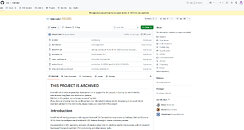
Source:
Phoronix
Originally, Intel planned to make Quick Assist, Dynamic Load Balancer, and Data Streaming Accelerator available as On Demand features, alongside Software Guard Extensions and the In-Memory Analytics Accelerator. These were described on the Intel On Demand website as a "one-time activation of select CPU accelerators and security features." The Intel On Demand site has since been reworked to remove most information, leaving only a few documents and paragraphs. Thankfully, the idea of putting hardware features behind a paywall has not gained traction for now, leaving the paywall model to traditional software. At one point enthusiasts wondered whether Intel On Demand would trickle down to consumer CPUs, but with the project apparently dead, that possibility seems unlikely in the near term. Intel Upgrade Service existed in a similar format back in early 2010s, but was also short-lived.


14 Comments on Intel Kills Pay-to-Use "Software Defined Silicon" Initiative
Intel Upgrade Service
2) I didn't know about that since I was just playing CS 1.6 at that time lol.
Thanks for the info, including it in the article!
@AleksandarK Perhaps you could try and get a clarification from Intel PR? Are the features that were previously lock now openly available, or are they simply shutting it all down, including all access to the stated features on the affected hardware?
It would have also been great to include a link/reference of what SDSi/Intel On Demand was, straight from the horse's mouth (Intel). In the current article, you link to a 2022 article, that links to a 2021 article, where "Phoronix spotted a Linux patch on GitHub? I know the feature happened, but in none of there referenced pieces, does TPU actually reference Intel or their documentation. Doesn't that seem important?
Intel Kills Killswitch
Because that is what that is. A killswitch that's turned on by default requiring
ransompayment to be lifted.