Thursday, February 19th 2026

NVIDIA GeForce RTX 5090 Melts 12V-2×6 Connector Despite -100 W Power Limit
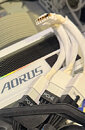
The melting and burning 12V-2×6 connectors on high-end NVIDIA—and some AMD—GPUs is well documented at this point, and although there is mounting evidence to support the fact that the new connector standard itself is partially to blame, there is still the idea that high power draw is to blame for these meltdowns. This is not necessarily the case, according to one user of the Mobile01 forum. According to the forum post about the incident, the top row of pins in a Gigabyte Aorus Master Ice RTX 5090's GPU power connector has melted down, despite the user having implemented a steep undervolt and power limit.
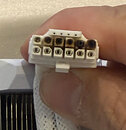
When installed, the user had limited GPU power to 500 W and dropped the voltage limit down to 0.9 v—that's a reduction of 100 W and 0.205 v compared to stock settings. It's worth noting that the GPU in question was connected to the PSU using a 16-pin adaptor, and the connector melted at the GPU side, not the PSU side, and the first indication of the meltdown was frequent crashing during gaming sessions. Both connector ends at the GPU side seem to be affected, but it's entirely possible that the GPU would have suffered even more damage had the power limit been higher. Currently, independent research seems to indicate that the 12V-2×6 cable itself seems to suffer from an unstable or inadequate connection, which increases the current and temperature across individual pins. Unofficial adaptors also seem to exaggerate these contact issues.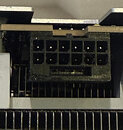
Source:
Mobile01 forum
When installed, the user had limited GPU power to 500 W and dropped the voltage limit down to 0.9 v—that's a reduction of 100 W and 0.205 v compared to stock settings. It's worth noting that the GPU in question was connected to the PSU using a 16-pin adaptor, and the connector melted at the GPU side, not the PSU side, and the first indication of the meltdown was frequent crashing during gaming sessions. Both connector ends at the GPU side seem to be affected, but it's entirely possible that the GPU would have suffered even more damage had the power limit been higher. Currently, independent research seems to indicate that the 12V-2×6 cable itself seems to suffer from an unstable or inadequate connection, which increases the current and temperature across individual pins. Unofficial adaptors also seem to exaggerate these contact issues.


133 Comments on NVIDIA GeForce RTX 5090 Melts 12V-2×6 Connector Despite -100 W Power Limit
That is why this standard is bad.
That is why some adapters from the secondary market have cooling, because there is an understanding of the problem.
That is why, when it has been turned on 30 times, it is recommended to replace it with a new one, because the surface gets scratched and starts to generate more heat.
Basics of engineering.
And the "just plug it in all the way" excuses don't apply anymore either, since Dell has added their own retention mechanism to the connector.
videocardz.com/newz/dell-pc-teardown-shows-mechanically-locked-12v-2x6-gpu-power-connector
The only things missing from this locked connector are cooling and a temperature sensor, but in the end, they just want to eliminate "some user errors" rather than extend the life of the card too much.
Then use 8 AWG
Basics of engineering in any field - predict, prevent, overengineer for safety. None of those are fulfilled in this case, therefore, 12HPWR is simply JUNK.
And about the temperature, a GPU is a difference starting point compared to a battery. A GPU already is ~50-60°C (or more) to begin with. That heat spreads through the copper layers to the connector.
But yes using 2 cables instead of 12 WILL fix the power inbalance problem in the cables.
Using the seasonic psu cable so I guess it’s fine 🤔
PCB mount:
XT30 - 15A - 180W @ 12V
XT60 - 30A - 360W @ 12V
XT90 - 40A - 480W @ 12V
Connecting six 12V wires to a single XT60 pin will be challenging cost wise. You'd probably need to solder them together to a single 10 awg wire, then that 10 awg wire to the XT60. You can't expect people to have a PSU with the new connector. That connector didn't exist when they bought their previous GPU.
Another option is using the existing 8-pin ESP connector, the one the CPU uses. I'm not sure what the actual rating for these are, but 300W shouldn't be an issue. There's varients with thicker pins that can handle it. It will be confusing for non tech savvy people when they can't put their 8-pin PCIe connector into the GPU's 8-pin ESP. People will try using PCIe to ESP adapters which may fail. There's the unbalanced load problem without individual wire current balancing.
Maybe Nvidia shouldn't design a +300W GPU with no room for wire connectors.
Back in the day, overclocking was the thing.
These days, it is proper underclocking so you can protect your expensive hardware and keep it running for longer.
So now I need two 360 AIO to cool high end CPU and GPU.
Connector issue is conseuqence, but it still couls have been prevented if someone was not cheaping out...
Back in the day, OC Celeron 300 to 450 MHz was huge :) Difference in performance was also day and night... Best of all, you needed just carefully to chose mobo and buy a bit better cooler. These days, it is much more expensive game :)