Tuesday, March 3rd 2026

Seagate Delivers Next-Generation Mozaic 4+ Hard Drives with 44 TB Capacity
As technology innovation accelerates both data creation and value, the need for scalable, efficient, high-performance storage solutions has never been greater. Today, Seagate Technology announced its next-generation Mozaic 4+ platform, the industry's only heat-assisted magnetic recording (HAMR)-based storage platform deployed at-scale, is now qualified and in production with two leading hyperscale cloud providers. Supporting capacities up to 44 TB, these qualifications reflect production-scale deployments in hyperscale environments.
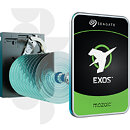
With additional customer qualifications under way, Seagate is delivering on its roadmap to scale from today's 4+TB per-disk toward a future 10 TB per-disk - enabling hard drive capacities of up to 100 TB. The platform incorporates a next-generation suspension architecture and an enhanced system-on-a-chip that enables precise recording at higher densities while maintaining enterprise-class reliability. Each platform generation allows continued gains in capacity without requiring disruptive architectural shifts.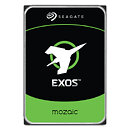
 "Data has become one of the most valuable assets for enterprises, fueling business insights, enhancing productivity, and enabling competitive advantage. As the foundation of modern data center infrastructure, data storage solutions are essential to manage ever-increasing data volumes and maximize returns on investments in today's AI driven-world," said Dave Mosley, Seagate's chair and chief executive officer. "Seagate's HAMR-based Mozaic products deliver the scale, performance, and efficiency customers need to unlock the full potential of their data."
With a majority of the world's largest cloud storage providers already qualified on Seagate's Mozaic platform, this milestone underscores the platform's critical role in data center infrastructure.
Production-Scale HAMR with Vertically Integrated Photonics
Seagate's custom-designed and manufactured laser technology reflects years of investment in nanophotonic engineering of critical components used in HAMR recording. This vertically integrated, in-house innovation strengthens both design and control over yield, reliability and supply chain resilience, all of which are essential as unprecedented growth in data pushes storage demand beyond historical levels. Vertical integration also shortens qualification timelines and supports predictable manufacturing economics.
How Mozaic 4+ Addresses Data Center Infrastructure Challenges
Artificial intelligence depends on the ability to retain and access massive volumes of training data, historical archives and AI-generated content - including increasingly large video and other multimodal outputs. Hyperscalers rely on mass-capacity hard drives to economically store, manage and reactivate the exponentially growing data pools that enable trustworthy AI workloads.
The incremental increases in per-disk capacity delivered by Mozaic 4+ enable high-capacity, cost-efficient storage that scales without increasing infrastructure footprint or energy consumption - strengthening the economic foundation of AI at scale. The platform advances capacity per-rack and per-watt, improving data center efficiency, lowering total cost of ownership and enabling organizations to preserve and reactivate data over time, sustainably.
1 In a one-exabyte deployment, Mozaic improves infrastructure efficiency by approximately 47 percent compared to standard 30 TB deployments, reducing required data center footprint by about 100 square feet and lowering annual energy consumption by roughly 0.8 million kilowatt-hours. At AI scale, these efficiencies compound into meaningful economic advantage.
"As AI models have evolved and GenAI-powered applications have expanded their capabilities and reach, it's become abundantly clear that the need for massive amounts of data—both real and synthetically generated—are essential to keep AI advancements moving ahead," said Bob O'Donnell, President of TECHnalysis Research. "Whether for large-scale model training or sophisticated fine-tuning, companies who build and use these AI models have found that high-capacity hard drive innovations like HAMR have become critical to quality and speed of their outputs."
Availability
Seagate's Mozaic 4+ hard drives supporting capacities up to 44 TB are now shipping in volume to two leading hyperscale cloud providers. Broader availability is planned as production continues to scale.
Source:
Seagate
With additional customer qualifications under way, Seagate is delivering on its roadmap to scale from today's 4+TB per-disk toward a future 10 TB per-disk - enabling hard drive capacities of up to 100 TB. The platform incorporates a next-generation suspension architecture and an enhanced system-on-a-chip that enables precise recording at higher densities while maintaining enterprise-class reliability. Each platform generation allows continued gains in capacity without requiring disruptive architectural shifts.


With a majority of the world's largest cloud storage providers already qualified on Seagate's Mozaic platform, this milestone underscores the platform's critical role in data center infrastructure.
Production-Scale HAMR with Vertically Integrated Photonics
Seagate's custom-designed and manufactured laser technology reflects years of investment in nanophotonic engineering of critical components used in HAMR recording. This vertically integrated, in-house innovation strengthens both design and control over yield, reliability and supply chain resilience, all of which are essential as unprecedented growth in data pushes storage demand beyond historical levels. Vertical integration also shortens qualification timelines and supports predictable manufacturing economics.
How Mozaic 4+ Addresses Data Center Infrastructure Challenges
Artificial intelligence depends on the ability to retain and access massive volumes of training data, historical archives and AI-generated content - including increasingly large video and other multimodal outputs. Hyperscalers rely on mass-capacity hard drives to economically store, manage and reactivate the exponentially growing data pools that enable trustworthy AI workloads.
The incremental increases in per-disk capacity delivered by Mozaic 4+ enable high-capacity, cost-efficient storage that scales without increasing infrastructure footprint or energy consumption - strengthening the economic foundation of AI at scale. The platform advances capacity per-rack and per-watt, improving data center efficiency, lowering total cost of ownership and enabling organizations to preserve and reactivate data over time, sustainably.
1 In a one-exabyte deployment, Mozaic improves infrastructure efficiency by approximately 47 percent compared to standard 30 TB deployments, reducing required data center footprint by about 100 square feet and lowering annual energy consumption by roughly 0.8 million kilowatt-hours. At AI scale, these efficiencies compound into meaningful economic advantage.
"As AI models have evolved and GenAI-powered applications have expanded their capabilities and reach, it's become abundantly clear that the need for massive amounts of data—both real and synthetically generated—are essential to keep AI advancements moving ahead," said Bob O'Donnell, President of TECHnalysis Research. "Whether for large-scale model training or sophisticated fine-tuning, companies who build and use these AI models have found that high-capacity hard drive innovations like HAMR have become critical to quality and speed of their outputs."
Availability
Seagate's Mozaic 4+ hard drives supporting capacities up to 44 TB are now shipping in volume to two leading hyperscale cloud providers. Broader availability is planned as production continues to scale.
18 Comments on Seagate Delivers Next-Generation Mozaic 4+ Hard Drives with 44 TB Capacity
$1000+?
Unlikely in the current climate I know, especially with WD saying they've already sold the entire year's drive production.
"Moore's Law is dead … It's completely over, and so the idea that a chip is going to go down in cost over time, unfortunately, is a story of the past."
Even the drives that are now old tech and are not cutting edge highest capacity are going up in price. Even staying at the same price - with new larger drives costing much more just because of larger capacity would be bad news, but we’re seeing price increases all across the product stacks, and everything is pointing that this is just the beginning, not some short jump.
The situation is so bad the tech outlets are mostly just ignoring the reality, because actually reporting the news isn’t something they do any more, it’s mostly just regurgitating press releases and playing PR for companies…
No-one wants to do an update of this old graph from 2023...
Admittedly prices stated here were rare discounts, but where are we now, even with the discounts? About $90 oer TB in SSD, and $25 in HDD? That's... Progress, I guess? :eek:
Now we got 44TB and they still can't be filled any faster.
And then there's WD:
blog.westerndigital.com/performance-optimized-hdd-4x-throughput-hbdt-dual-pivot/
Very large RAID arrays. Backblaze for example stores 60 drives in a single 4U pod. With 12 drives for parity, you can still easily hit multiple GB/s on that. Scale that to an entire rack, and several racks. Business won't be transfering at the peak speed of a single drive.
If you want speed at home, get a NAS. Even with an 8bay, depending on how you set up your RAID you can easily max out a 10Gb network. Cheap 16-bay NAS off ebay, it's easy peasy to.
But yeah I want one of these
And oh yeah these are CMR most likely so that's great!!!
Some enterprise drives even spun at 15.000K RPM but the advances compared to a normal 7200 RPM drive is very slim.
The problem is that in recent years a lot of the capacity increase was from more platters, and not much more density.
But now maybe there's WD's upcoming simultaneous I/O from multiple heads.The first 12TB drives came in 2017, so that's 9 years ago.
The largest drives in 2011 were 4TB.
geizhals.de/toshiba-n300-high-reliability-12tb-hdwg21cuzsva-a1989840.html
Let's do the Time Warp again!
Everything being in the cloud and offered as a service.
WD disks are using SMR so they are slow to write but otherwise are OK. I recall some NAS users grip about slow writes that affected the performance badly.