Tuesday, April 14th 2026

Microsoft Surface Laptops Get $200-300 Price Hike Due To RAMpocalypse
We've already seen large swathes of the PC hardware market get drastically affected by the ongoing DRAM and general hardware crisis, from Valve's upcoming Steam Machine to pre-built desktop PCs. Now, it seems as though it's Microsoft's turn with its Surface device line-up, which has seen a price increase of anywhere between $200 and $500, depending on the exact model. The price increases mean that the 13-inch Surface Pro with the Qualcomm Snapdragon X SoC, 16 GB of RAM, and 512 GB of storage increases by $300 to $1,499; while the 12-inch Surface Pro with the Snapdragon X, 16 GB RAM, and 256 GB of storage increases from $799 to $1,049; the 13-inch Surface Laptop with the Snapdragon X Plus, 16 GB RAM, and a 256 GB SSD increases from $899 to $1,199; the 13.8-inch Surface Laptop with the same SoC and RAM but 512 GB of storage increases from $1,199 to $1,499; and the Surface Laptop 15-inch with the Snapdragon X Elite SoC, 16 GB of RAM, and 256 GB of SSD storage sees a price hike from $1,499 to $1,599.
Microsoft confirmed in a statement to Windows Central that the price increases were a direct result of the current hardware constraints, with a Microsoft representative stating "Due to recent increases in memory and component costs, Surface is updating pricing on Microsoft.com for its current-generation hardware portfolio. We remain committed to delivering value to customers and partners while upholding our standards for quality and innovation." This news comes just after we reported that DDR4 spot prices have seen a marginal decrease. Microsoft's Surface line-up has never been the best value when it comes to Windows laptops, and they'll likely be an even tougher sell after the price hikes, especially with Apple's recent introduction of the hyper-popular $600 MacBook Neo and with the somewhat limited app and feature support that comes with Qualcomm's Snapdragon SoCs and Windows on Arm.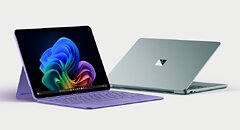
Sources:
Windows Central, Microsoft Store
Microsoft confirmed in a statement to Windows Central that the price increases were a direct result of the current hardware constraints, with a Microsoft representative stating "Due to recent increases in memory and component costs, Surface is updating pricing on Microsoft.com for its current-generation hardware portfolio. We remain committed to delivering value to customers and partners while upholding our standards for quality and innovation." This news comes just after we reported that DDR4 spot prices have seen a marginal decrease. Microsoft's Surface line-up has never been the best value when it comes to Windows laptops, and they'll likely be an even tougher sell after the price hikes, especially with Apple's recent introduction of the hyper-popular $600 MacBook Neo and with the somewhat limited app and feature support that comes with Qualcomm's Snapdragon SoCs and Windows on Arm.

13 Comments on Microsoft Surface Laptops Get $200-300 Price Hike Due To RAMpocalypse
2x apple devices will give you more screens, more keyboards, etc than "13-inch Surface Pro with the Qualcomm Snapdragon X SoC, 16 GB of RAM, and 512 GB of storage increases by $300 to $1,499"
microsoft your price hike strategy does not make sense when compared to the apple hardware. both devices use arm based chips
So, I tend not to believe that any of them are selling at a loss. Especially since the contract prices for memory in their current computers are probably the subject of a deal from years ago and rampocalipse has no bearing whatsoever.
We're bombarded by the news that AI bubble is starting to deflate, easing the pressure on PC parts which are supposedly already coming down in price, and at the same time we're getting news about huge price increases.
Make up your mind. Are we still doing the personal computer thing, or it's not needed any more, after all artificial inteligence will do everything?
Its just a matter of time and as always, patience gets rewarded. Just sit still, the big bois have the impression we're getting shaved, let them shave, at some point we'll just stand up from that chair without paying and say kthxbai.
Of course we will keep doing the personal computer thing. Nobody wants corporate constantly nagging them for money. And given the general quality reduction coming from across the Atlantic lately, I think everyone non-US will want to escape the Microsoft cluster ASAP. Matter of fact, its already happening, because its now FINALLY identified as a critical security risk. Everything mission critical is rapidly getting some EU-based backup or primary cloud. We went from 'we can't do that' to 'We'll make it happen' in the last 4 months.
www.atlanticcouncil.org/in-depth-research-reports/report/digital-sovereignty-europes-declaration-of-independence/#:~:text=Indeed,%20the%20EU%27s%20International%20Digital%20Strategy%20emphasizes,can%20hardly%20be%20accomplished%20without%20cooperative%20partners.
And its not just the tech side of things, its a fundamental divide in principles as well. The Digital Services Act is the massive elephant in the room here, and its clear that its doing what it needs to do: almost every Big Tech club from the US is under review as a platform breaching the DSA, and for all the right reasons, too.
Its all related - even to AI, as the way you use and regulate AI is fundamental to all of this as well - including the existence of a bubble. Regulation will vastly decrease the space AI can cover, and at the same time, make it useful. Its the same trust issue that regulation should have solved for crypto; and if we don't solve it for AI, we won't trust it and it will die. After all, nobody wants to be lied to.
Some GPUs are coming down, but that's just because margins are collapsing for retailers. The production costs haven't budged.
Stocks can be used as a model to see actual deflation. That very last dip last month may as well have contributed to slightly lower prices, even for a while. But I would not believe any clickbait on any of this.
I'm sure we'll see value and investment into AI-related companies adjusting, if not stabilizing. The conventional machine learning models clearly have specific limits and flaws that cant be solved within our pace of improving microchips. So when the percieved value and investment of these models in general are set by consumers or some other significant group, everything else follows.