Friday, July 17th 2026

Intel to Launch 28-Core "Nova Lake-S" Before 52-Core Version

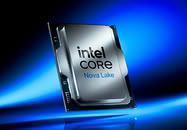
Intel is gradually laying the groundwork for the launch of its Core Ultra 400 "Nova Lake-S" desktop processors with a basic branding overhaul. However, the company is reportedly preparing different launch dates for various SKUs, according to VideoCardz. We know that Intel has SKUs arriving with either one or two compute dies, featuring up to 8 "Coyote Cove" P-Cores and 16 "Arctic Wolf" E-Cores, along with 4 LPE-Cores that are part of the I/O die. Depending on the SKU, Intel can pack a single compute die for up to 28 cores total or two compute dies for a 52-core CPU SKU. It seems that the single compute die version will arrive first, with the dual compute die variants following. The 28-core "Nova Lake-S" DS version, a new SKU segment, is expected to launch in Q1 of 2027. For the regular overclocking-focused "K" SKUs, Intel reportedly plans an early Q2 launch between March and April.

What is particularly interesting to enthusiasts is when the 52-core compute powerhouse will launch. With its dual compute dies, Intel's most powerful desktop CPU is set to arrive between late May and September 2027, bringing this model to consumers. As for a possible reason why Intel is choosing such a schedule, we might assume that the recent change in plans to bring back most of the compute tile production on the 18A node is the reason. As Intel ramps up 18A high-volume manufacturing for its internal needs, the company likely needs more time to stockpile fully-fledged compute dies for the flagship 52-core SKUs. Since they require double the compute tiles compared to the 28-core designs, the production capacity may need to catch up first.
Here is the roadmap plan, according to VideoCardz:
  • NVL-S 28C DS: Q1 2027, late January to March 2027
  • NVL-S 28C K: Q2 2027, March to April 2027
  • NVL-S 16C and 8C: Q2 2027, late March to May 2027
  • NVL-S 52C DS: Late May to September 2027
Source: VideoCardz
Add your own comment

41 Comments on Intel to Launch 28-Core "Nova Lake-S" Before 52-Core Version

#1
azrael
Are there actually any firm specs out yet or is it all still rumor-based?
Posted on Reply
#2
rattlehead99
Makes perfect sense, 52 cores is an insane amount of cores and is not for the regular person.
azraelAre there actually any firm specs out yet or is it all still rumor-based?
Considering that for the past few years there have been very reliable rumor sources, I take them as a 50/50 nowadays, as a likely possibility, since their success rate is way above 50/50, but they can always change their mind before release.
Posted on Reply
#3
dj-electric
This gradual platform release makes all the financial sense in the world on Intel's side.
Posted on Reply
#4
Lycanwolfen
I'm waiting and saving for the 52 core monster. I current have a 14900kF for my gaming box. Core i9 9900KF for my work box at home, Core i7 3700KF for my downtown office PC, and a core i5 running my file server.

Everything is basicly a hand me down. My i7 3770k used to be my gaming box so was the i9 9900KF. I basicly upgrade my gaming box to a top of the line system every 5 years or so then that system is changed out to work at home box then that one to office pc box.
Posted on Reply
#5
XeonsNOpterons
LycanwolfenI'm waiting and saving for the 52 core monster. I current have a 14900kF for my gaming box. Core i9 9900KF for my work box at home, Core i7 3700KF for my downtown office PC, and a core i5 running my file server.

Everything is basicly a hand me down. My i7 3770k used to be my gaming box so was the i9 9900KF. I basicly upgrade my gaming box to a top of the line system every 5 years or so then that system is changed out to work at home box then that one to office pc box.
Yeah, I have a feeling you will not be disappointed with the 52-core part! Only thing is, expect $1000+ price point for it. There is a tiny chance Intel maintains their ~$650 mainstream flagship price, but considering they are more than doubling core count, improving IPC, likely clock speed bumps, and tons of L3 cache... I think they will be charging more than normal. I am willing to bet AMD's 24-core flagship can barely edge out the 28-core mid tier chip in compute/productivity.

What I am interested to see is how the cache layout is for these Coyote Cove coves. I know Lion Cove went with 3MB/core of L2, so I expect at least that, but apparently they are unifiying the L2 cache between P-core pairs. So it would be 6MB for two cores.
Posted on Reply
#7
ir_cow
thevoiceofreasonI mean... it's just a rebranded Xeon?
Hopefully. I want Xeon back on consumer sockets. I miss the X79 days.
Posted on Reply
#8
Athena
XeonsNOpteronsYeah, I have a feeling you will not be disappointed with the 52-core part! Only thing is, expect $1000+ price point for it. There is a tiny chance Intel maintains their ~$650 mainstream flagship price, but considering they are more than doubling core count, improving IPC, likely clock speed bumps, and tons of L3 cache... I think they will be charging more than normal. I am willing to bet AMD's 24-core flagship can barely edge out the 28-core mid tier chip in compute/productivity.

What I am interested to see is how the cache layout is for these Coyote Cove coves. I know Lion Cove went with 3MB/core of L2, so I expect at least that, but apparently they are unifiying the L2 cache between P-core pairs. So it would be 6MB for two cores.
I dunno, for consumer parts, I really don't see a need for 52 cores, it's diminishing returns

most all games today barely take advantage of all cores, so most of the cores in that 52 core CPU won't even be touched
Posted on Reply
#9
kondamin
That would be a mistake if memory prices aren't back to normal by the time of the launch of nova lake.
They need that monster to compete with zen6 and the majority of people is only going to get the best performing thing if they are in the market that is basically all premium
Posted on Reply
#10
XeonsNOpterons
AthenaI dunno, for consumer parts, I really don't see a need for 52 cores, it's diminishing returns

most all games today barely take advantage of all cores, so most of the cores in that 52 core CPU won't even be touched
I was not talking about games, I meant for people who do not simply just game.
Posted on Reply
#11
qcmadness
XeonsNOpteronsI was not talking about games, I meant for people who do not simply just game.
Doubling the number of cores do not give you double performance, especially with Windows.
Posted on Reply
#12
melkor_unlimited
LycanwolfenI'm waiting and saving for the 52 core monster. I current have a 14900kF for my gaming box. Core i9 9900KF for my work box at home, Core i7 3700KF for my downtown office PC, and a core i5 running my file server.

Everything is basicly a hand me down. My i7 3770k used to be my gaming box so was the i9 9900KF. I basicly upgrade my gaming box to a top of the line system every 5 years or so then that system is changed out to work at home box then that one to office pc box.
If the first use of the new rig will be (mainly) gaming ... then 52 core monster is not the way you should go.
XeonsNOpteronsYeah, I have a feeling you will not be disappointed with the 52-core part! Only thing is, expect $1000+ price point for it. There is a tiny chance Intel maintains their ~$650 mainstream flagship price, but considering they are more than doubling core count, improving IPC, likely clock speed bumps, and tons of L3 cache... I think they will be charging more than normal. I am willing to bet AMD's 24-core flagship can barely edge out the 28-core mid tier chip in compute/productivity.
Reality check (of very probable) future
- $1000+ for 52 cores
- clock speed higher than Series 300 (Arrow Lake) but (probably) lower than 28 core model will provide
- doubling core count sounds good. But ... do you have a job for all of those cores? In gaming?
- tons of L3 cache sounds very good. But ... it is divided into 2 tiles.

The 52 core monster is not 52 core CPU like old 48 cores Xeon.
Its Chimera made of
- 4 LPE cores in System tile (without direct access to that Big L3)
- 8P + 16E cores + 144 MB L3 on Computing tile 0
- 8P + 16E cores + 144 MB L3 on Computing tile 1
And that means Latency issues when scheduler decides to put thread to core(s) on other tile.
Very high score in Cinebench.
Not so good in gaming and other use cases where Latency is undesirable.
XeonsNOpteronsWhat I am interested to see is how the cache layout is for these Coyote Cove coves. I know Lion Cove went with 3MB/core of L2, so I expect at least that, but apparently they are unifiying the L2 cache between P-core pairs. So it would be 6MB for two cores.
Comparing (6P+12E) vs (8P+16E) it looks like L3 is sliced down in 36MB chunks (2P + 4E).
2x 12MB slices per 2P cores cluster, 1x 12MB slice per 4E cores cluster.
Rumours on internet say it is 4MB shared L2 for 2P cores.
Posted on Reply
#13
Geddagod
XeonsNOpteronsI am willing to bet AMD's 24-core flagship can barely edge out the 28-core mid tier chip in compute/productivity.
I wouldn't be so confident abt that. AMD gets the benefit of SMT, which is still not coming back with NVL, if rumors are accurate. And 4 of NVL's cores are LP E-cores on the SOC tile without any L3.
melkor_unlimitedAnd that means Latency issues when scheduler decides to put thread to core(s) on other tile.
AMD does the same thing, only Intel's current gen Xeons have a "logically monolithic" L3 and even with Xeons, Intel is rumored to be switching to what AMD is doing.
melkor_unlimitedVery high score in Cinebench.
Not so good in gaming and other use cases where Latency is undesirable.
Might actually end up beneficial for gaming, because if all the cores really were on one tile with one, huge interconnected L3, the latency of such a cache is almost certainly going to be terrible. We see a very similar thing with the mesh fabric latency of large core count ARM chips, and ofc Intel server chips.
Posted on Reply
#14
Wirko
qcmadnessDoubling the number of cores do not give you double performance, especially with Windows.
And especially not with two channels of DDR5-8000.
Posted on Reply
#15
Broken Processor
And the first thing "gaming enthusiast's" will do is disable all the cores apart from the P cores because some YouTube idiots guide they bought told them to.

Sarcasm aside these chips will be great for home servers or any other CPU intensive workload provided Intel gives the instructions to be able to I guess we will have to wait and see but for 99% of users utterly overkill but regardless I'll not be buying one anyway.
Posted on Reply
#16
matar
Another 285k 8p 16E and lol 4 turtle cores
bring back SMT at least.
Posted on Reply
#17
RogueSix
Broken ProcessorAnd the first thing "gaming enthusiast's" will do is disable all the cores apart from the P cores because some YouTube idiots guide they bought told them to.
Yes. But the real™ gaming enthusiasts will wait for the bLLC variants anyway.

Regular Nova Lake (sans the "X3D" cache) will be rather pointless for gaming and expensive af since you are likely going to need super-fast RAM to get the most out of the CPU.

The bLLC variants are the real deal and hopefully they will be just as (nearly) RAM-agnostic as AMD's X3D CPUs so people can (re-)use their DDR5-6000 kits without any major performance hit thanks to the dominance of the cache.
Posted on Reply
#18
Makaveli
XeonsNOpteronsYeah, I have a feeling you will not be disappointed with the 52-core part! Only thing is, expect $1000+ price point for it. There is a tiny chance Intel maintains their ~$650 mainstream flagship price, but considering they are more than doubling core count, improving IPC, likely clock speed bumps, and tons of L3 cache... I think they will be charging more than normal. I am willing to bet AMD's 24-core flagship can barely edge out the 28-core mid tier chip in compute/productivity.

What I am interested to see is how the cache layout is for these Coyote Cove coves. I know Lion Cove went with 3MB/core of L2, so I expect at least that, but apparently they are unifiying the L2 cache between P-core pairs. So it would be 6MB for two cores.
I think it will cost more than $1000+ easily with that core count.

This part is like a Low end TR competitor for intel without the official title so Prosumers and workstation users will benefit more from it.
Posted on Reply
#19
XeonsNOpterons
GeddagodI wouldn't be so confident abt that. AMD gets the benefit of SMT, which is still not coming back with NVL, if rumors are accurate. And 4 of NVL's cores are LP E-cores on the SOC tile without any L3.
Eh, thread for thread, Arrow Lake already beats Zen 5 for productivity. Also the E-cores are the ones which are meant to have a higher IPC gain than the P-cores this time around. We shall see though, but apart from potentially eeking out a win in gaming, this does not look to be close especially with the 52-core.
melkor_unlimitedReality check (of very probable) future
- $1000+ for 52 cores
- clock speed higher than Series 300 (Arrow Lake) but (probably) lower than 28 core model will provide
- doubling core count sounds good. But ... do you have a job for all of those cores? In gaming?
- tons of L3 cache sounds very good. But ... it is divided into 2 tiles.
I never said that the 52-core processor will be the best in gaming. Just productivity. I think it will still be very good in gaming, but not the best.
melkor_unlimitedThe 52 core monster is not 52 core CPU like old 48 cores Xeon.
Not sure what 48-core Xeon you refer to. The only one I know of in the workstation space is the Xeon 678X, and that is not old. Only in architecture it is "old" since it is Redwood Cove, but it has pretty much the same IPC as Zen 5 (which is hilarious considering Golden Cove was started in 2019 and Redwood Cove is effectively a refresh).
Posted on Reply
#20
Geddagod
XeonsNOpteronsEh, thread for thread, Arrow Lake already beats Zen 5 for productivity.
Well luckily the 24 core zen6 part will have almost double the threads of the 28 core NVL part.
XeonsNOpteronsWe shall see though, but apart from potentially eeking out a win in gaming, this does not look to be close especially with the 52-core.
I don't expect Zen6 (X3D) to just eek out a win in gaming, but I agree that it's very unlikely the 24c Zen 6 part will be close to the 52 core part in multi threaded workloads
XeonsNOpteronsOnly in architecture it is "old" since it is Redwood Cove, but it has pretty much the same IPC as Zen 5
AMD is a gen ahead in IPC vs RWC. LNC has around the same IPC as Zen 5, not RWC. Unfortunately, GNR does not use LNC, despite it launching at the same time as LNC products like ARL/LNL.
Broken Processorbecause some YouTube idiots guide they bought told them to.
Put some respect on framechaser's name /s
Posted on Reply
#21
melkor_unlimited
GeddagodMight actually end up beneficial for gaming, because if all the cores really were on one tile with one, huge interconnected L3, the latency of such a cache is almost certainly going to be terrible. We see a very similar thing with the mesh fabric latency of large core count ARM chips, and ofc Intel server chips.
All the cores are on the same tile
NVL 6P+12E
NVL 8P+16E
+ all lower tier NVL
Zen 3/4/5 8
Zen 6 12
Zen 7 16

That 52 cores monstrosity does not have cores on the same tile (8P+16E)-(8P+16E)-(4LPE) and the big L3 is divided to two pieces too.
Posted on Reply
#22
phanbuey
melkor_unlimitedAll the cores are on the same tile
NVL 6P+12E
NVL 8P+16E
+ all lower tier NVL
Zen 3/4/5 8
Zen 6 12
Zen 7 16

That 52 cores monstrosity does not have cores on the same tile (8P+16E)-(8P+16E)-(4LPE) and the big L3 is divided to two pieces too.
I wonder if they nailed the interconnect or if it's going to have the same latency penalty as zen.
Posted on Reply
#23
Sol_Badguy
matarAnother 285k 8p 16E and lol 4 turtle cores
bring back SMT at least.
A rough (but likely realistically close) approximation of the NL 8P+16E+4LPE+bLLC vs 270K/285K would be 9800X3D vs 7700X (that sort of % gain):
tpucdn.com/review/amd-ryzen-7-9800x3d/images/relative-performance-cpu.png
tpucdn.com/review/amd-ryzen-7-9800x3d/images/relative-performance-games-1280-720.png
However the boost behavior shows that 9800X3D isn't a good match for the 7700X:
tpucdn.com/review/amd-ryzen-7-7700x/images/boost-clock-analysis.png
tpucdn.com/review/amd-ryzen-7-9800x3d/images/boost-clock-analysis.png
Instead the 9850X3D is the winning ticket (starting (1t) frequency is a bit higher for the 9850X3D but 16t avg is almost identical between the two):
tpucdn.com/review/amd-ryzen-7-9850x3d/images/boost-clock-analysis.png
Marginal boost over 9800X3D:
tpucdn.com/review/amd-ryzen-7-9850x3d/images/relative-performance-cpu.png
tpucdn.com/review/amd-ryzen-7-9850x3d/images/relative-performance-games-1280-720.png
So a preliminary estimation would be 11-12% more app perf and up to 24-25% more gaming perf.
A big unknown here is the frequency of the NL SKU. Significantly higher frequency will mean larger numbers than those above, maybe for apps more than for games but nevertheless more optimistic.
Posted on Reply
#24
XeonsNOpterons
GeddagodAMD is a gen ahead in IPC vs RWC. LNC has around the same IPC as Zen 5, not RWC. Unfortunately, GNR does not use LNC, despite it launching at the same time as LNC products like ARL/LNL.
Nah, my testing puts it literally on par with Zen 5 (and in more modern Cinebenchs, actually ahead of Zen 5). Lion Cove however is consistently 10-12% ahead of Zen 5. This is just some data from HWBot of Zen 5 Threadripper vs GNR-WS for some reference in Cinebench 2024. The right column is IPC.
Posted on Reply
#25
melkor_unlimited
XeonsNOpteronsNah, my testing puts it literally on par with Zen 5 (and in more modern Cinebenchs, actually ahead of Zen 5). Lion Cove however is consistently 10-12% ahead of Zen 5. This is just some data from HWBot of Zen 5 Threadripper vs GNR-WS for some reference in Cinebench 2024. The right column is IPC.
Your results are showing that cores in threadripper do not get too much power. At higher counts they are starving.
Posted on Reply
Add your own comment
Nov 12th, 2026 07:33 PST change timezone

New Forum Posts

Popular Reviews

TPU on YouTube

Controversial News Posts