Tuesday, July 21st 2026

NVIDIA Shows DLSS 5 Progress and Technical Details at SIGGRAPH 2026

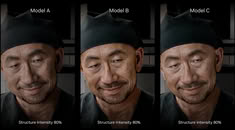
NVIDIA has once again showcased its DLSS 5 neural rendering at the SIGGRAPH 2026 event, currently taking place in Los Angeles. Despite the initial negative reaction from gamers, NVIDIA is continuing to develop the technology, offering improvements and a new demonstration of how DLSS 5 is intended to function. One of the most interesting aspects is that game developers can choose from three DLSS 5 models, each providing a different level of structural intensity, global illumination, texture detail, and more. These models, labeled Model A, Model B, and Model C, can be tailored to specific scenes or character needs, allowing developers to mix and match according to their requirements. Each model carries a different parameter count, meaning that some are more compute and memory-intensive than others. However, they generally fit and run fine on a single GPU without any problems.

Another noteworthy feature is the preservation of artistic intent, which was heavily criticized in the original DLSS 5 demo. Each individual object, scene, and game setting can be customized according to the developer's vision. This is one of the challenges NVIDIA faced with DLSS 5, as maintaining visual identity, object semantics, and character poses, along with output lighting semantics, motion, and art direction, is crucial. Within these strict parameters, DLSS 5 applies material photorealism to enhance visual appeal. Below you can even see the customization of the applied model, where there are adjustable parameters that can be done per scene and per character.

The second challenge that the company faced is temporal streaming. Traditional generative AI video generators process in chunks, reasoning across a frame and generating a batch of frames at once. However, real-time rendering requires immediate generation, frame by frame. Since DLSS 5 uses motion vectors from the game engine, it can generate additional textures instantly, without delay. This results in no shimmer or image corruption, as DLSS 5 know exactly where to attach itself and perform its texture generation instantly.

The final challenge for DLSS 5 is speed. To render a 4K frame with 8.3 million pixels at over 60 FPS, NVIDIA achieves this in less than 16 ms, with most of the processing time consumed by the game engine rather than the DLSS 5 model. The model is so efficient that users will not notice any delay during gameplay, and it operates on a single GPU. While NVIDIA highlights VRAM efficiency, it remains unclear whether 4K gaming will be limited to high VRAM GPUs or something else. As the launch is expected this fall, the company will provide general system requirements and further details, but the improvements compared to the original demo seem promising for now.

Source: NVIDIA at SIGGRAPH 2026
Add your own comment

153 Comments on NVIDIA Shows DLSS 5 Progress and Technical Details at SIGGRAPH 2026

#26
dyonoctis
RejZoRSorry, but this is the same shit that you can achieve with ReShade. On any graphic card. For free. Performance and obtaining it wise. Open both images in different tabs and alternate between them. It's just a not very impressive filter. The "original" DLSS5 was impressive on just how much crap they can smear on top of actual graphics using Ai models. This showcase, they are just showing some hardware accelerated ReShade filters and it's really not impressive at all. But hey, it'll be an option I guess.

Also no one is asking for multiframe generation because input latency is absolute garbage, even on NVIDIA. What I would ask for are further improvements to the AFMF. That shit is awesome. Zero perceivable input latency, 2x perceived framerate. If they can figure out how to better exclude crosshairs and HUD from it and it would be even more amazing.
If ReShade could handle subsurface scattering, global illumination, etc..., the VFX industry would have taken an interest in the tech long before games did. DLSS 5 is inferring what the image would look like if it were rendered with a better path-traced engine. So it needs to have an understanding of how lights and materials behave. You can't just add SSS on the skin without following what the physics rules say about how lights interact with skin.

It's like saying that in Blender, Eevee + ReShade can replace Cycle. More things are going on with DLSS 5 than better contrast and sharpness
Posted on Reply
#27
tsurugi
RejZoRSorry, but this is the same shit that you can achieve with ReShade. On any graphic card. For free. Performance and obtaining it wise. Open both images in different tabs and alternate between them. It's just a not very impressive filter. The "original" DLSS5 was impressive on just how much crap they can smear on top of actual graphics using Ai models. This showcase, they are just showing some hardware accelerated ReShade filters and it's really not impressive at all. But hey, it'll be an option I guess.

Also no one is asking for multiframe generation because input latency is absolute garbage, even on NVIDIA. What I would ask for are further improvements to the AFMF. That shit is awesome. Zero perceivable input latency, 2x perceived framerate. If they can figure out how to better exclude crosshairs and HUD from it and it would be even more amazing.


Can ReShade edit images like this
AFMF is based on frame interpolation rather than AI frame generation, so the quality of the interpolated frames is poor.
Posted on Reply
#28
JustBenching
sbaccMake game use bad AA and TAA so you can advertise DLSS

Make game use bad lighting and reflection so you can advertise RTX

Make game use bad material rendering, making everything plastic-ish so you can advertise DLSS5

What is the next step ? Probably make game logic/physic/NPC AI worse so you can advertise a proprietary magic band aid to the rescue.

Edit : in 10 years the "Nvidia OFF" version of game will look and play so bad, old game will have to be delisted and potentially "remaster" to keep the illusion...oh wait they're already doing it !
More anti nvidia well thought out arguments. Nvidia can't make anyone do anything. Most aaa games are console first. Consoles don't have dlss or RTX. Nvidia has nothing to do it. If anything consoles have amd hardware, if someone pushes ugly looking games it would have to be amd.
Posted on Reply
#29
wolf
Better Than Native
DLSS5 is improving at quite the rate! looking forward to playing around with it myself when the time comes.

And just leaving it off if I don't like it. remember, That's always an option ;)
Posted on Reply
#30
Hecate91
JustBenchingNvidia has nothing to do it.
Sure, Nvidia has nothing to do with AAA games on PC being terribly optimized UE5 garbage and pushing users to turn on upscaling and frame gen. Very well thought out argument to shield the green brand.
RecusWatch AMD fanboys attack this but suddenly it's must have feature when AMD has alternative. (FSR x8 frame generation)
The certain thing is the Nvidia fanboys will always attack when AMD delivers an alternative, such as complaining AMD didn't have upscaling then still finding a reason when they do, and recently with FSR 8X mode.
Posted on Reply
#31
jesdals
I will make up my mind about when it come to real use
Posted on Reply
#32
wolf
Better Than Native
Hecate91The certain thing is the Nvidia fanboys
Why are you in every Nvidia news thread if you hate them so much?


Control what you can control, you won't change the minds of people you perceive to be Nvidia fanboys acting like this, quite the opposite even.
Posted on Reply
#33
Denver
RecusWatch AMD fanboys attack this but suddenly it's must have feature when AMD has alternative. (FSR x8 frame generation)
What does this pointless flaming add to the thread?

I’ve always called Frame gen “trash” no matter what brand the trash bag is, it’s still trash.

A real breakthrough isn’t integrating image diffusion into upscaling, a breakthrough is having hardware that doesn’t need upscaling to deliver 4K, 60–120 fps.

A real breakthrough would be games that don’t use TAA, so the baseline would actually be native. But nah, now that we have a crutch, let’s stop investing in proprietary engines and simply use UE5 underutilizing the hardware. The experience of beta testers who buy the product doesn't matter.
Posted on Reply
#34
Doctor Who
RecusWatch AMD fanboys attack this but suddenly it's must have feature when AMD has alternative. (FSR x8 frame generation)
Nvidia is the dominant GPU player with the most market share; they are responsible for shifting the industry into this DLSS trash. So what would you have AMD do? Sit around and do nothing lol; they have no choice but to respond, similar to how AMD is the dominant CPU player and Intel is crawling from behind, copying AMD at every chance they get.
Posted on Reply
#35
Trunks0
tsurugi


Can ReShade edit images like this
It could get so close, that unless you knew what you where looking for... you could be excused for not knowing better. The major differences here in your captures could be emulated with a reshade that tweaked the colour, sharpness, added a bloom like effect to simulate the other lighting and contrast differences. A clever reshade could even use screen space RTGI to get very close to the same lighting detail. Or a game could just do this itself and not need this at all... which is what they should do.

It's actually kinda crazy what you can do with reshade.
tsurugiAFMF is based on frame interpolation rather than AI frame generation, so the quality of the interpolated frames is poor.
"Frame interpolation" just means that the frame inserted between frames are based on frames before and after. "Frame Generation" is mostly just newer techniques/methods that make better interpolated frames. And that said... AFMF does use Frame Generation techniques, it just not as good as game side DLSS, FSR or XeSS Frame-Gen. Which makes sense, as when its game-side it can feed the methods allot better data and produce nicer looking interpolated frames so it can look smoother with less artifacting.
Posted on Reply
#36
Doctor Who
wolfDLSS5 is improving at quite the rate! looking forward to playing around with it myself when the time comes.

And just leaving it off if I don't like it. remember, That's always an option ;)
The point isn’t to leave it off or on. It’s bad tech overall, being shoved down everyone's throats, making game development lazy and not fixing the core issues. It will become over-reliant on AI, and developers will skip traditional, baseline game optimizations. Not to mention the hardware requirements for this thing will leave older and moderate game setups behind.

This simply enables bad optimization normalization.
Publishers now routinely ship games expecting upscaling and frame generation to save their poor performance. Devs don’t optimize the base engine code anymore.
They depend on DLSS, FSR, or XeSS to save their hides.
Posted on Reply
#37
Frizz
AFMF, DLSS, MFG, AMWF, WMAF is a 7 dollar feature available on Steam for everyone 😆 : www.corsair.com/us/en/explorer/gamer/gaming-pcs/lossless-scaling-everything-you-need-to-know/?srsltid=AfmBOopKgFpMd5R0RewBlc0SIvEk_Cb8qb1aHrapBZztSRMNoDe7LSvo

I don't think DLSS/MFG tech is trash, it gives life to old/slower hardware like laptops, consoles, and handhelds. It even allows non flagship cards to reach flagship frames. The latency is subjective its not noticeable in my experience but have not had the displeasure of playing any titles below 60fps this generation yet. Also even E-Sports titles can be run by smoothly by APUs nowadays without the 'magic'.

Honestly the less people are blindly following the internet's negative opinions the more will realize they don't need to upgrade thanks to these new techniques. It could've been worse, NVIDIA and AMD focus on Raster just to be able to run Unreal Engine 5 games at 50-60fps then all the previous generation hardware is stuck at 20-30fps .. actually that's happening now 😆

Posted on Reply
#38
wolf
Better Than Native
Doctor WhoIt’s bad tech overall, being shoved down everyone's throats
Is it? What game forces you to use DLSS or frame gen?

Bad optimisation isn't a new phenomenon either, nor is midrange or older hardware getting left behind, in fact that used to happen way faster and FPS overall was generally lower.

Game devs work with what they have, in fact one could argue games look better today than they would have if excellent upscaling options didn't exist.
Posted on Reply
#39
Onasi
Doctor WhoNvidia is the dominant GPU player with the most market share; they are responsible for shifting the industry into this DLSS trash.
Are we just conveniently memory-holing the fact that console games started abusing checkerboard rendering as a way to improve performance long before DLSS came around? Or that DLSS in its first incarnation was utter trash and has been clowned on with very limited adoption from the industry?

Honestly, I feel like I am taking crazy pills sometimes.
Posted on Reply
#40
Frizz
OnasiAre we just conveniently memory-holing the fact that console games started abusing checkerboard rendering as a way to improve performance long before DLSS came around? Or that DLSS in its first incarnation was utter trash and has been clowned on with very limited adoption from the industry?

Honestly, I feel like I am taking crazy pills sometimes.
Ah yes PS3 was low res period, PS4+5 was upscale galore, whenever I saw game demos at conventions marketing 4K beautiful graphics on a 10,000 dollar TV I'd just scratch my head at the quality 😆
Posted on Reply
#41
JustBenching
Hecate91Sure, Nvidia has nothing to do with AAA games on PC
Exactly. Games are developed for consoles first. If anyone is sabotaging them its' the company that makes the console hardware (who also pushes x8 hallucination frames while their hardware is 2020 level of performance)
wolfBad optimisation isn't a new phenomenon either
You don't remember the days when your high end GPU was doing 4k60 without the need for crutches? Yeah, me neither. Cause it never happened. Day 1 I unpacked my 1080ti to finally enjoy watchdogs 2 in all it's glory. It managed around 15 fps at 4k ultra, even less than 15 with everything actually maxed out. RDR2 and it's glorious 16-20 fps (I actually managed to finish this game at this framerate, lol). That was all pre DLSS, then evil nvidia came up with DLSS and developers started slacking off I guess :D
Posted on Reply
#42
ZoneDymo
wolfWhy are you in every Nvidia news thread if you hate them so much?

Control what you can control, you won't change the minds of people you perceive to be Nvidia fanboys acting like this, quite the opposite even.
that implies that they cant change the minds though.
Posted on Reply
#43
kane nas
RecusWatch AMD fanboys attack this but suddenly it's must have feature when AMD has alternative. (FSR x8 frame generation)
The fact that you care more about what AMD users will say than about how much a graphics card capable of running DLSS 5 will cost is truly beyond me.
Posted on Reply
#44
tsurugi
Trunks0It could get so close, that unless you knew what you where looking for... you could be excused for not knowing better. The major differences here in your captures could be emulated with a reshade that tweaked the colour, sharpness, added a bloom like effect to simulate the other lighting and contrast differences. A clever reshade could even use screen space RTGI to get very close to the same lighting detail. Or a game could just do this itself and not need this at all... which is what they should do.

It's actually kinda crazy what you can do with reshade.


Um, you should know that what Reshade can do is very limited, as it is completely post-processing, with effects far inferior to DLSS5. Reshade RTGI is improving the effects of old games, with not much it can do, let alone surpassing modern games. When old games were created, relevant technologies were not popular, which is why there was room for improvement, whereas now RT has become the graphics standard for DX12, making these restricted Reshade RTGI completely unnecessary.

DLSS5 its at post-processing, but does the work of the rendering pipeline, and traditionally achieving the effects of DLSS5 could not be processed in real-time at all, as AI deeply processes the lighting, material rendering, textures, and subsurface reflections, which is different from simple Reshade effects.
JustBenchingYou don't remember the days when your high end GPU was doing 4k60 without the need for crutches? Yeah, me neither. Cause it never happened. Day 1 I unpacked my 1080ti to finally enjoy watchdogs 2 in all it's glory. It managed around 15 fps at 4k ultra, even less than 15 with everything actually maxed out. RDR2 and it's glorious 16-20 fps (I actually managed to finish this game at this framerate, lol). That was all pre DLSS, then evil nvidia came up with DLSS and developers started slacking off I guess :D
With TAA, 1440p only offers 480p clarity, until DLSS appeared, allowing 1440p to reach 4k clarity, and the latest DLSS model can achieve near 4k using just 1080p. Then with the launch of MFG, the display refresh rate rather than the graphics card became the limit. FG added 5ms of latency, although the latency was completely offset by DLSS and Reflex and is far better than the latency provided by consoles, NVIDIA is just too evil.
Posted on Reply
#45
Unregistered
It does not look good, remind me of GenAI pictures/videos.
#46
Onasi
tsurugiWith TAA, 1440p only offers 480p clarity, until DLSS appeared, allowing 1440p to reach 4k clarity, and the latest DLSS model can achieve near 4k using just 1080p.
TAA is just a blanket term. It’s not inherently shit, it depends on implementation. DLSS AA component IS TAA in a strict sense (it’s anti-aliasing and is temporal). So is idTech’s TSAA. The problem with AA in modern games is that developers are incompetent, not that there are some arbitrary “clarity metrics” certain methods are capable (or not) of meeting.
tsurugiThen with the launch of MFG, the display refresh rate rather than the graphics card became the limit.
MFG is fine for padding out the refresh on 240Hz+ screens after achieving a respectable base framerate. That’s what it’s for. The GPU is still the limiter for said base performance level.
Posted on Reply
#47
Chomiq
SnoutBaronAt 21:40-22:00 of the presentation, which I'm sure you've watched before giving an opinion, they give an example of using DLSS 5 to fake 'realistic' subsurface scattering in a raytraced scene, which they claim is more performant than actually applying subsurface scene-wide. Now as you say, it's a small difference...but game graphics today...is made up of years of small graphical improvements compounded together.
I did not need to watch it because I saw it in the screenshots from the presentation.
Posted on Reply
#48
SnoutBaron
ChomiqI did not need to watch it because I saw it in the screenshots from the presentation.
Many such cases.
Posted on Reply
#49
Chomiq
SnoutBaronMany such cases.
I mean, you can literally see the effect with the character's skin in ON/OFF comparison, why would I bother myself with a 50 minute keynote at a conference dedicated to 3D artists?
Posted on Reply
#50
SnoutBaron
ChomiqI mean, you can literally see the effect with the character's skin in ON/OFF comparison, why would I bother myself with a 50 minute keynote at a conference dedicated to 3D artists?
Probably to understand more about the thing you're moaning about, perhaps. Also the DLSS 5 section is only around 25'ish minutes long.
Posted on Reply
Add your own comment
Nov 19th, 2026 12:22 CST change timezone

New Forum Posts

Popular Reviews

TPU on YouTube

Controversial News Posts