Tuesday, July 21st 2026

NVIDIA Shows DLSS 5 Progress and Technical Details at SIGGRAPH 2026
NVIDIA has once again showcased its DLSS 5 neural rendering at the SIGGRAPH 2026 event, currently taking place in Los Angeles. Despite the initial negative reaction from gamers, NVIDIA is continuing to develop the technology, offering improvements and a new demonstration of how DLSS 5 is intended to function. One of the most interesting aspects is that game developers can choose from three DLSS 5 models, each providing a different level of structural intensity, global illumination, texture detail, and more. These models, labeled Model A, Model B, and Model C, can be tailored to specific scenes or character needs, allowing developers to mix and match according to their requirements. Each model carries a different parameter count, meaning that some are more compute and memory-intensive than others. However, they generally fit and run fine on a single GPU without any problems.
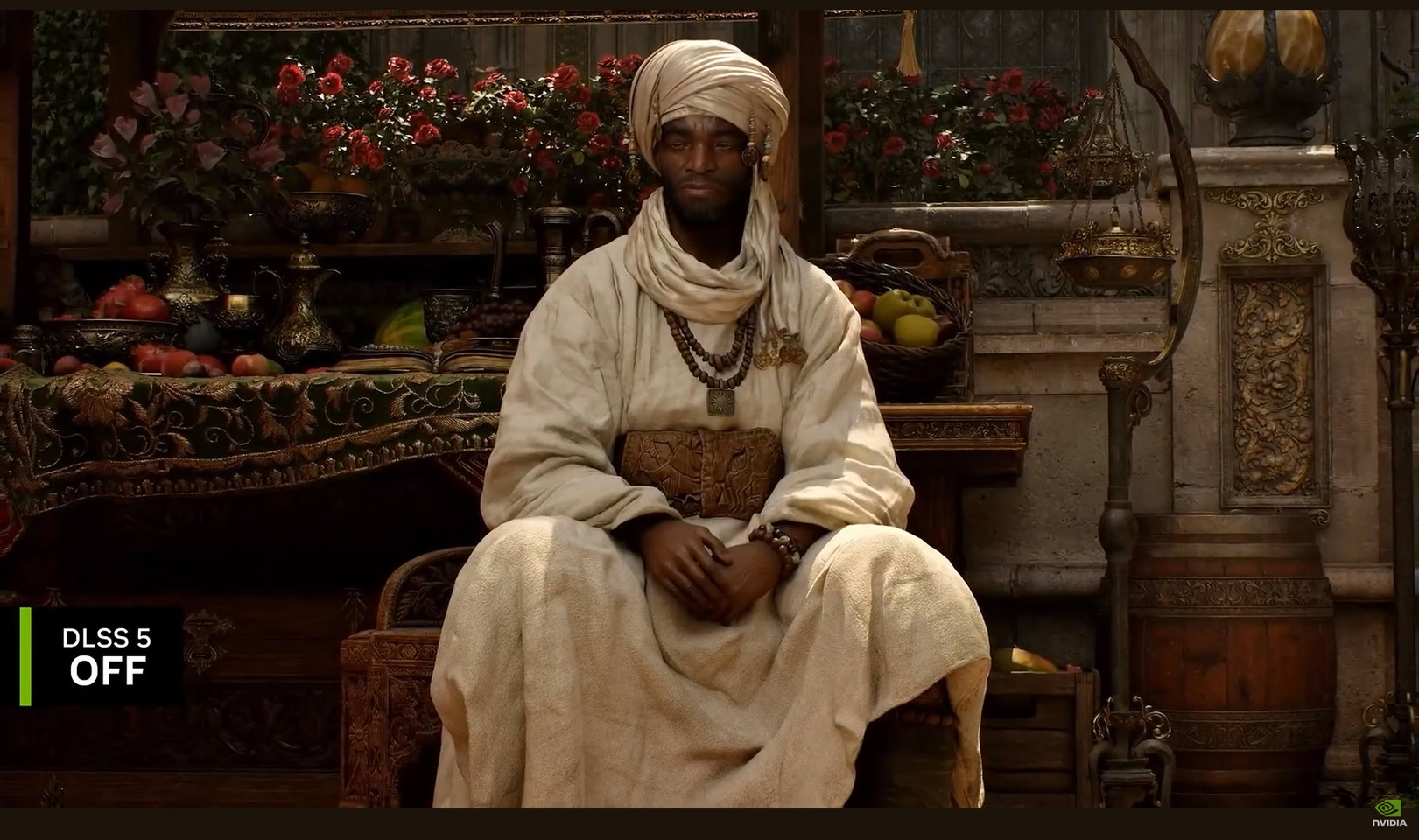
Another noteworthy feature is the preservation of artistic intent, which was heavily criticized in the original DLSS 5 demo. Each individual object, scene, and game setting can be customized according to the developer's vision. This is one of the challenges NVIDIA faced with DLSS 5, as maintaining visual identity, object semantics, and character poses, along with output lighting semantics, motion, and art direction, is crucial. Within these strict parameters, DLSS 5 applies material photorealism to enhance visual appeal. Below you can even see the customization of the applied model, where there are adjustable parameters that can be done per scene and per character.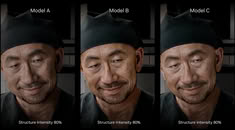





 The second challenge that the company faced is temporal streaming. Traditional generative AI video generators process in chunks, reasoning across a frame and generating a batch of frames at once. However, real-time rendering requires immediate generation, frame by frame. Since DLSS 5 uses motion vectors from the game engine, it can generate additional textures instantly, without delay. This results in no shimmer or image corruption, as DLSS 5 know exactly where to attach itself and perform its texture generation instantly.



 The final challenge for DLSS 5 is speed. To render a 4K frame with 8.3 million pixels at over 60 FPS, NVIDIA achieves this in less than 16 ms, with most of the processing time consumed by the game engine rather than the DLSS 5 model. The model is so efficient that users will not notice any delay during gameplay, and it operates on a single GPU. While NVIDIA highlights VRAM efficiency, it remains unclear whether 4K gaming will be limited to high VRAM GPUs or something else. As the launch is expected this fall, the company will provide general system requirements and further details, but the improvements compared to the original demo seem promising for now.
Source:
NVIDIA at SIGGRAPH 2026
Another noteworthy feature is the preservation of artistic intent, which was heavily criticized in the original DLSS 5 demo. Each individual object, scene, and game setting can be customized according to the developer's vision. This is one of the challenges NVIDIA faced with DLSS 5, as maintaining visual identity, object semantics, and character poses, along with output lighting semantics, motion, and art direction, is crucial. Within these strict parameters, DLSS 5 applies material photorealism to enhance visual appeal. Below you can even see the customization of the applied model, where there are adjustable parameters that can be done per scene and per character.








153 Comments on NVIDIA Shows DLSS 5 Progress and Technical Details at SIGGRAPH 2026
If I was walking down the street and saw that thing on the left I would be convinced we have been visited by aliens. It's not a human. I assume most of it is caused by the lack of reflections on the skin but still, there is no way that was the artistic intent. In gaming artists are always hamstrung by the technology they have at hand. There is no way an artist trying to make a realistic game would end up with that model on your screenshot unless the necessary hardware to do something better does not exist. Which is what DLSS 5 is attempting to fix.
Artistic intent is a wild goose chase that people bring up but there is no way someone actually believes that bs. As much as I love old games, this was NOT the artistic intent, it was the artist working within the limitations at hand
Do you think the artist wanted to make a 120x80 resolution game with sprites? No he didn't. That's why now they moved to this.
Would be heavier than DLSS upscaling and frame generation, but not to the same degree as those actual brute-force generative AIs like Stable Diffusion. But this is still just a software marketing gimmick.
If a game comes with DLSS pre-installed and it was the developer's intent for his artistic vision, then that is a huge problem. That tells me that the game developer is lazy and relying on DLSS to clean up its mess.That was the developer's intent. It's a video game, not live television. The DLSS, so-called enhancement, looks fake, the right is not how she's supposed to look. How about upscaling the picture without ruining it by altering characters appearances this drastically?
To add, more more added realism makes in-game characters feel less human. Umm no thanks.
Furthermore, it makes four fifths of feck all sense to implement FSR4 that only RDNA 4 and 3 can use, catering for such a slim portion of the market.Cool, don't play them, disable it, who cares. The point is, if DLSS 5 is going to be in a game, it will be executed to the artists intent.Disable it or don't use it then, and leave the enhancement on the table. Your point of view on what gets ruined or enhanced is relevant to you and you only.Looks better to me, yes please.
This is a rather interesting exchange, I'm wondering what will be brought up next that's yet another different point.
We get it, you don't like it.
What we 'perceive' as better, isn't necessarily developer's intent. Our 'preference' will always lean to some common denominator and the end result is that AI will make all images and faces look the same. You can already see that going on with AI generated images. Its all a polished, full make up perfectly lighted glossy look, an 'instagram filter' if you will. Eyes stand out a bit more, cheeks are blossoming a bit, etc. Basically, everything is trying to look like Elsa from Frozen.
So please no. We'll get fed up with these filters before you know it; I'm already comfortably in that space. I can see whether it had an AI pass from miles away. It all looks the same.
Its the same reason almost every cartoon has manga-waifu-like facial features these days. 'Preference'... or basically just data mining and tossing the best parts into the formula to re-use ad infinitum. Mate... I don't know about you but to me that's not artistic intent at all, its just sheep behaviour that comes down to simple, braindead commerce.Isn't DLSS5 in the very same way also a 'tool with a finite set of capabilities that guides the artist's output' in the very same way a brush, hardware or a software application is?
The tool does not define the intent - the tool influences the intent. The question is, will we get bored of the tool when we notice the patterns.
For some reason, that does not happen with, let's say, actual painting techniques. Its a good thought exercise to consider why. Perhaps its because we don't outsource part of the 'intent' to an algorithm. Perhaps its because the human input matters every step of the way. Deep down, we know this is true. The question is how long it'll take each person to figure it out, the illusion can last quite long, and as such, the illusionary tech represents a (potential) market.FYI pixel art games are indeed an intentional move these days, and they're not considered lesser in terms of art or style, quite the contrary even.
An interesting observation I think because it highlights what I'm trying to say above. We need content that's unique, and not fed through an algorithmic filter, or we'll get bored.
I get it, I've seen hundreds of generative AI images that are the same ultra smooth skin perfect lighting perfect face structure stuff that ends up looking so incredibly fake and AI slop-ish, and I am 1000% not into that either. What DLSS 5 looks like now, is not that, not to me.
So please, yes for what they're showing now. They get it. I'm not ashamed to want enhanced subsurface scattering, ambient occlusion, lighting and detail.
We have simply been trained to think the 3D rendition is somehow better because thats how things progressed in graphics; but realistically, in most games you just dont need it at all.
Similar things apply to perceived 'realism'. Photorealism in graphics is something we chase, but those are hardly artistically interesting to look at; all very similar really. Is that artistic intent, or just technological progress? The two are NOT aligned, at all.Lets see how this works out in the hands of the same talented and capable developers that are now busy working with UE5. I cant wait! They did so well using the first 4 versions of it, after all!
Now when it comes to realism in graphics, it entirely depends on the game you are trying to make. Like an RDR2 type of game needs photorealistic graphics (or a driving / flying simulator for example). When a game is trying to be realistic, it needs realistic graphics. So the fact that we NEED photorealistic graphics doesn't mean every game will be photorealistic, it means games that need it will have it. The perfect example for me would be the original Metro 2033 or FEAR 1. They are held back by their graphics nowadays and they would be a much much much better experience if they had the metro exodus graphics for example.
Most games that left a stigma in the gaming history were trying to achieve photorealism btw, and now that we are "almost" there it's not good anymore? :p
It isn't the popular narrative, but I've enjoyed multiple UE5 experiences too, as well as games leveraging the previous versions of course.
While the tools may have made it easy to create badly optimised (and looking to some degree) experiences, I don't blame the tools, I blame the devs. Like any tools, DLSS5 can be used badly, or excellently.
Time will tell.
If we still got those kinds of gains in a 6 year span the visual differences would be more pronounced lol it would be like a 3090 not being able to even running a 2026 game and whatever we have now being 100x faster.
It's the hardware that is what's lagging and why they keep coming up with these BS techniques to make games look better that don't hold up in motion, increase latency, add artifacts, and generally don't make gaming better than it was a decade ago before we had all this BS.
Almost inevitable they needed to explore alternate/additional ways to improve their products, who sees the additional ways themselves as improvements will of course vary. Given the drastic slowing of the hardware getting faster 'generally', I'd rather something is being done (that doesn't need to be used).
They are just providing a tool for sure but a tool that is being used by developers in the worst way possible. DLSS5 will be no different just another crutch that makes gaming worse overall.
AI as a whole has made gaming worse in general... More expensive (hardware), less soul, less optimized, lazier, and jobs are being cut left and right as a result.
The one thing I will say is I'm glad this is all going down when my interest in PC hardware is at a all time low, at the same time I ain't holding my breath for when AI actually makes gaming better for the consumer.
I'd love for massive leaps in raw power to continue, it just doesn't seem to be the reality right now.
We're kinda just getting what we're given, and the other players are playing catch up both in performance and those features, I'd love to see more innovation outside Nvidia too.
I'm partly thankful at least something is new and fun and advancing, becuase it'd be a lot more boring imo if all we had was the meager gen on gen gains and nothing new and shiny (and don't forget optional) too.
As for less soul, mate aint that the way the world is going and yeah it's depressing. More and more soulless products like cars for example, as well as a lot of AAA games not even accounting for these features.
What we've seen post Pascal is a redirection and redefining of what constitutes progress in graphics. Progression has moved from hardware to software, price has increased, and the overall quality of games (notably AAA) has taken a nosedive. The only thing that has 'leaped' is the quantity of content. Its not unsurprising so many game studios are seeing layoffs and budget cuts - gaming had grown way too big for itself, inspired by a few years of Covid lockdowns.
The market has been pulled from one extreme into the other, where we are now in a decisively 'dark' part of the curve... it'll curve back up though, I have no worries whatsoever.