Monday, August 3rd 2026

AMD "Zen 6" to Improve 1% Lows and In-Game Stuttering

AMD's latest "Zen 6" microarchitecture was unveiled at the Advancing AI event in a server format. However, we still anticipate a consumer version in the coming months, which might surprise gamers. According to 1usmus, the creator of the HYDRA OC tool, who shared insights with VideoCardz, AMD's "Zen 6" CPUs will focus on improving 1% lows in games through several software methods, besides hardware advancements. The first is Collaborative Processors Performance Control (CPPC). CPPC Performance Priority allows the operating system and firmware to manage the performance of each individual CPU core. This means the OS can direct maximum power and frequency to specific cores based on workload demands. For instance, if a game utilizes only about 8 cores, those cores will receive maximum power and frequency to enhance frame rates to their highest potential.

CPPC includes Performance Priority and HighestFreq settings, which manage task priority and allocate the highest performance, respectively. Additionally, when the CPU reaches its maximum temperature or power limit, the FloorPerf feature ensures that only the most critical tasks run at maximum frequency, while other cores are throttled to reduce power or temperature. This dynamic scheduling is expected to enhance various gaming aspects, particularly when addressing 1% lows in gaming tasks. Other features include per-core EPP boost, allowing specific CPU cores to boost to their maximum state without pushing the entire CPU to its limit. The CPU also offers improved frequency tuning with more dynamic scaling, focusing on maintaining stable clock speeds to deliver maximum performance when needed and ensuring a smooth gaming experience.
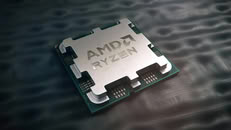
Additional software improvements include bandwidth controls. For example, with Zen 6, AMD has introduced PQOS Global Bandwidth Enforcers, which limit the memory bandwidth available to background tasks. This ensures that the majority of memory bandwidth is dedicated to main tasks, preventing background applications from affecting main application performance. When numerous background tasks are present, the CPU will limit their resource consumption. All of this combined will fix any game stuttering that may happen, as the 1% lows will be boosted by this dynamic workload optimization and prioritization of important tasks.
Source: via VideoCardz
Add your own comment

73 Comments on AMD "Zen 6" to Improve 1% Lows and In-Game Stuttering

#1
Frizz
This is what I like to hear, we may actually see benefits of having a high end CPU for high res triple A gaming.
Posted on Reply
#2
OMDLocomotion
I might have a reason to upgrade my cpu, I'm flabberghasterised
Posted on Reply
#3
Kwadratowicz
Trrrryt
It's okay that there is some progress, but as always it will just make some of the developers even more lazy.
Posted on Reply
#4
shuffy_losys
AleksandarKAMD's "Zen 6" CPUs will focus on improving 1% lows in games through several software methods, besides hardware advancements.
This makes me wonder what these software methods are. Because if they're limited to Zen 6, then I wouldn't really call those software methods.
Posted on Reply
#5
Frick
Fishfaced Nincompoop
FrizzThis is what I like to hear, we may actually see benefits of having a high end CPU for high res triple A gaming.
Why though? You're far more GPU bound.
Posted on Reply
#6
soder
Collaborative Processors Performance Control (CCPC)

Its CPPC, not CCPC.
Posted on Reply
#7
CornyOC
I look forward to CPU products more than GPUs nowadays, but I guess it's only a matter of time before the AI bubble gobbles up CPU sector as well, inflates prices and makes consumer CPUs cost as much as enterprise now. What a shitty time we live in.
Posted on Reply
#8
Sol_Badguy
AMD's "Zen 6" CPUs will focus on improving 1% lows in games through several software methods, besides hardware advancements.
First Intel was like:
Here's APO and BOT.

Then AMD was like:
Hold my beer.
soderCollaborative Processors Performance Control (CCPC)

Its CPPC, not CCPC.
Thank God it's not CCCP. ;)
Posted on Reply
#9
SnoutBaron
Is....this...not expected...with every new CPU generation?
Posted on Reply
#10
kondamin
SnoutBaronIs....this...not expected...with every new CPU generation?
not since both intel and AMD have been rebadging and relaunching old crap with new names
CornyOCI look forward to CPU products more than GPUs nowadays, but I guess it's only a matter of time before the AI bubble gobbles up CPU sector as well, inflates prices and makes consumer CPUs cost as much as enterprise now. What a shitty time we live in.
there should be a significant uplift next generation of gpu's over the entire stack as nvidia and amd move to 2nm.
4000 and 5000 were on the same node
Posted on Reply
#11
TheDeeGee
AMD is now also doing the same stuff as NVIDIA, adding 1 feature to make you buy next product.
Posted on Reply
#12
Fluke
50% bigger unified L3 - that's how.
It's X3Dlite.
Posted on Reply
#13
wolf
Better Than Native
If this nets a marked improvement that can be isolated, I'm all about it.

tbh I'll likely buy Zen6 X3D anyway, unless it's not going to be the last gen on AM5, as I definitely want the endgame X3D for this board like I did my AM4.
Posted on Reply
#14
Jtuck9
Do we know if that CPPC functionality is strictly Zen 6 based? Not sure I've received a straight answer regarding that. Interesting to see what sort of performance impact it has on previous gens if not. Perhaps it also alludes to the necessity of mitigating power consumption / heat generation on the new chips?!
Posted on Reply
#15
Mysteoa
TheDeeGeeAMD is now also doing the same stuff as NVIDIA, adding 1 feature to make you buy next product.
It seems you know a lot of stuff. Can you propose a second feature?
Posted on Reply
#16
RinSenpai
I've heard a lot of people complain about horrible 1% Lows on Ryzen for several years now but I always thought that was some sort of a meme from a very niche community on some games which then went too far, to the point they had this reputation. The fact there is a need to specify such improvement looks extremely weird to me tbh.
Posted on Reply
#17
wNotyarD
Jtuck9Do we know if that CPPC functionality is strictly Zen 6 based?
Isn't CPPC what already dictates preferred cores since at least Zen 3 (if not earlier)? Or are you asking specifically about the new CPPC feature reported in the article?
Posted on Reply
#18
windwhirl
kondaminnot since both intel and AMD have been rebadging and relaunching old crap with new names
Every new architecture has introduced improvements to IPC. Rebranding is a different issue altogether, don't mix the two.
Jtuck9Do we know if that CPPC functionality is strictly Zen 6 based? Not sure I've received a straight answer regarding that. Interesting to see what sort of performance impact it has on previous gens if not. Perhaps it also alludes to the necessity of mitigating power consumption / heat generation on the new chips?!
That functionality exists as far back as Zen 2 if not back with Zen 1. As far as I know, I think it should normally be enabled automatically, it's not something you *need* to manage in the firmware settings, though you definitely can forcefully toggle it on or off.
Posted on Reply
#20
londiste
wNotyarDIsn't CPPC what already dictates preferred cores since at least Zen 3 (if not earlier)? Or are you asking specifically about the new CPPC feature reported in the article?
This. They touted that a lot at least with 5800X3D. Other than marketing it would be nice to know what is new and improved.
Posted on Reply
#21
ThomasK
Hope the software improvements, such as the CPPC are made available for previous zen iterations as well. Unlike Intel who omitted the binary optimization tool from first gen arrow lake.
Posted on Reply
#22
Legacy-ZA
Yes I know, now launch it, thanks.
SnoutBaronIs....this...not expected...with every new CPU generation?
It used to be, but hey, you are a consumer now, not a customer, and you are to be scammed.
Posted on Reply
#24
MHD34567
i will upgrade my 5900x, 6800 after the release of the NG consoles
i want more perfs than the NG consoles will have to hit the 120 FPS stable, i will be ok to hit 90 FPS at the end of the generation of the NG consoles but never less
anyway how things happend it smell the end of the consoles, they plan alrdy to make us install an app on the TV and be connected at the cloud for $/month and lost all our games if we stop the sub and it will left 0 -_-

i rmbr my first PC a C2D E8400, Noctua cooler, P5E, 8 GB, HD 4850 1 GB, Antec P190, Logitech K&M, Samsung T220, that cost me 1200 € in 2008, 01/21: 1900 € just for a 5900x, 32 GB, B550 F Gaming, 6800 16 GB, RM850x, Fractal Define 7 and its even worst now in 2026...

i think i will become a retro gamer...
Posted on Reply
#25
Tomorrow
kondaminthere should be a significant uplift next generation of gpu's over the entire stack as nvidia and amd move to 2nm.
4000 and 5000 were on the same node
I doubt it. Each successive GPU upgrade i've had since ~2012 has gone down in performance gains. From near 500% to below 80% last year. And i've kept a pretty steady 4-5 year upgrade cycle at 500-700 price range. The latest was last year when i upgraded the 2018 flagship GPU (that i bought in 2021 for 700) to 9070 XT that is firmly in the TOP10 (even TOP5 in my opinion) in terms of performance and even that was only a sub 80% performance uplift.

Even moving from flagship to flagship nets people sub 80% gains at best when doing several node jumps like it was with 3090 (8nm/10nm Samsung) vs 4090 (5nm TSMC). Even less when were talking about TSMC on the same 4nm/5nm node class at 31% (4090 vs 5090). Most of which came from just cranking the power to 11.

I have zero faith that i can buy a new series 700€ card in five years that is 80%+ faster than my current card and actually has even 50% more VRAM at 24GB or more...
TheDeeGeeAMD is now also doing the same stuff as NVIDIA, adding 1 feature to make you buy next product.
Yes, lets focus on one feature and ignore myriad of other features and changes to Zen 6 that are far more exiting like increased core counts per chiplet, cutting edge node, more cache, higher clockspeeds, architectural improvements etc.
Posted on Reply
Add your own comment
Nov 12th, 2026 04:40 CST change timezone

New Forum Posts

Popular Reviews

TPU on YouTube

Controversial News Posts