Sunday, August 2nd 2026

AMD "Zen 6" to Improve 1% Lows and In-Game Stuttering
AMD's latest "Zen 6" microarchitecture was unveiled at the Advancing AI event in a server format. However, we still anticipate a consumer version in the coming months, which might surprise gamers. According to 1usmus, the creator of the HYDRA OC tool, who shared insights with VideoCardz, AMD's "Zen 6" CPUs will focus on improving 1% lows in games through several software methods, besides hardware advancements. The first is Collaborative Processors Performance Control (CPPC). CPPC Performance Priority allows the operating system and firmware to manage the performance of each individual CPU core. This means the OS can direct maximum power and frequency to specific cores based on workload demands. For instance, if a game utilizes only about 8 cores, those cores will receive maximum power and frequency to enhance frame rates to their highest potential.
CPPC includes Performance Priority and HighestFreq settings, which manage task priority and allocate the highest performance, respectively. Additionally, when the CPU reaches its maximum temperature or power limit, the FloorPerf feature ensures that only the most critical tasks run at maximum frequency, while other cores are throttled to reduce power or temperature. This dynamic scheduling is expected to enhance various gaming aspects, particularly when addressing 1% lows in gaming tasks. Other features include per-core EPP boost, allowing specific CPU cores to boost to their maximum state without pushing the entire CPU to its limit. The CPU also offers improved frequency tuning with more dynamic scaling, focusing on maintaining stable clock speeds to deliver maximum performance when needed and ensuring a smooth gaming experience.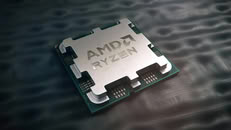 Additional software improvements include bandwidth controls. For example, with Zen 6, AMD has introduced PQOS Global Bandwidth Enforcers, which limit the memory bandwidth available to background tasks. This ensures that the majority of memory bandwidth is dedicated to main tasks, preventing background applications from affecting main application performance. When numerous background tasks are present, the CPU will limit their resource consumption. All of this combined will fix any game stuttering that may happen, as the 1% lows will be boosted by this dynamic workload optimization and prioritization of important tasks.
Source:
via VideoCardz
CPPC includes Performance Priority and HighestFreq settings, which manage task priority and allocate the highest performance, respectively. Additionally, when the CPU reaches its maximum temperature or power limit, the FloorPerf feature ensures that only the most critical tasks run at maximum frequency, while other cores are throttled to reduce power or temperature. This dynamic scheduling is expected to enhance various gaming aspects, particularly when addressing 1% lows in gaming tasks. Other features include per-core EPP boost, allowing specific CPU cores to boost to their maximum state without pushing the entire CPU to its limit. The CPU also offers improved frequency tuning with more dynamic scaling, focusing on maintaining stable clock speeds to deliver maximum performance when needed and ensuring a smooth gaming experience.

73 Comments on AMD "Zen 6" to Improve 1% Lows and In-Game Stuttering
Zen 3,4,5 X3D models all have 64mb of vcache
Zen 6 has 96mb of vcache
L2 cache is also going from 32mb to 48mb
48MB + 96MB will equal 144MB total.
And even better to get less devs defaulting to UE5.
The "you need a 5090 to run it maxed out" mentality was somewhat understandable when the card could actually be purchased at MSRP (which was true for FE from nVidia and less fancy models from Microcenter, sometime in 2025).
But now? Pffft.
Less taxing game engines and better content. Do it.50% more cache. And 50% more cores. I'm not surprised.
The tl;dr is there's actually a nugget of truth in disabling SMT on Zen 5 for better time-sensitive performance because of the penalty from switching between 1T to 2T for a core and why performance otherwise doesn't improve when disabling SMT if time-sensitivity isn't a concern. So if Zen 6 really is improving 1% lows, I imagine they're fixing this design issue.
This isn't a thing to test on Intel's CPUs, because clustered decoders are only on the E-cores, which aren't Hyperthreaded anyway.
boss "add some more random code in there, bit more background scripting, you not pushing the engine enough"
Bigger caches also help, but their size is still limited.