Monday, August 3rd 2026

CXMT Reportedly Plans Second Fab in Beijing to Boost DRAM Output
Chinese memory maker CXMT is planning a second DRAM fab in Beijing amid high demand for its memory products. According to Reuters, the Chinese memory giant is considering building this second fab and is already in talks to secure funding for the project. As CXMT aims to boost its manufacturing output, measured in DRAM wafers per month (WPM), the company needs to secure new funding and is reportedly backed by the local government to increase production. While the project details are currently unknown, building a modern DRAM fab can cost over $10 billion, meaning CXMT will likely require significant funds to get started.
Currently, CXMT operates two 12-inch fabs, one in Hefei and one in Beijing, with each fab having an output of about 100,000 WPM. This means the current output capacity is around 200,000 wafers per month, with plans to triple that number to an astonishing 600,000 WPM when the Shanghai and Hefei plants are completed and fully operational. We have already reported that CXMT will end the year 2026 with about 350,000 WPM of DRAM output, just behind Micron's 375,000 DRAM WPM output.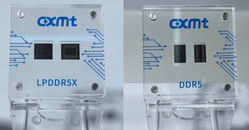 Although building a modern semiconductor plant takes years, CXMT is leading the industry in the speed of construction. Cleanrooms, where actual DRAM is manufactured away from any debris, are being built by CXMT in just 12 months, while the rest of the industry takes roughly two years. This is a significant speedup compared to the rest of the industry, as the entire supply chain is struggling to meet the massive demand driven by the AI data center buildout. CXMT's added capacity is likely to have a positive impact on the overall supply chain, but it will mostly be consumed by Chinese hyperscalers and AI labs for domestic demand.
Source:
Reuters
Currently, CXMT operates two 12-inch fabs, one in Hefei and one in Beijing, with each fab having an output of about 100,000 WPM. This means the current output capacity is around 200,000 wafers per month, with plans to triple that number to an astonishing 600,000 WPM when the Shanghai and Hefei plants are completed and fully operational. We have already reported that CXMT will end the year 2026 with about 350,000 WPM of DRAM output, just behind Micron's 375,000 DRAM WPM output.

18 Comments on CXMT Reportedly Plans Second Fab in Beijing to Boost DRAM Output
Either they capitalise on it now by profiteering - i.e Giving consumers ram that is 5-10% cheaper than what the cartel is offering. Or they roll the dice on the Ai bubble still being a thing when the second plant comes online and being another competitor on the market which is probably more than welcome at this point.
I dont think they will sell out to Ai. But whose to say that they wont alleviate SOME supply issues in the consumer market while also selling out to Ai at the same time? I mean if they have the capacity to do so then why not?
It is not about them "selling out to AI". If the Chinese government decide most of the DRAM CXMT produced should go towards AI, then CXMT's production will go towards AI. Very simple.CXMT is pretty much just one of the latest posterchild for China's state funding model whereby government-guided investment funds directly invest in tech startups in order to drive technological self-reliance.
About 37% of CXMT is owned by investors linked to the Hefei government, Hefei is the provincial capital of Anhui province, making them CXMT's largest shareholder group. China's national semiconductor fund is also an investor in CXMT. At least half of CMXT is owned by investors/investment funds that are somehow linked to either the central government or local government.
What do you think?
But yes. Im well aware of CXMT being largely state owned
And, frankly, because HBM has: much lower yields, and what's worse, risk of failure during stacking (complexity, substrate and other additional expenses), and also, margins are also lower (all DRAM makers report higher margins with consumer DRAM). Combine that with the recent switch of big DRAM makers to DDR6, and CXMT, simply is out of time, regardless of AI bubble burst, or not. The have to pedal to the metal ASAP, with all the tech they currently have.
The answer is always the same, it's too expensive to produce locally, so they outsource... just like most everyone else
then some wake up and smell the coffee, and change course, but it takes years, TONS of red tape, and tons of $ to make factories (Unless you are in a country that streamlines this stuff... like China)
EUV machines are only part of a node processing factory. A very important part, but just one part.It's not a zero sum game. CXMT can make both and expand production of both. They're making bucko bucks right now and the Chinese government would love to have supplies of both for their native applications.
The only significant impediment I've seen so far is growing NIMBY datacenter backlash, such as this (thanks to the Electoral College, rural voters have outsize political power in the US).Wishful thinking. They want to make money like everyone else, and China doesn't want to be left behind in AI.Strategically, China wants to be the new world leader in technology. They'll need exports to do that. Not every country has the same world outlook as America's Dear Leader does.High precision mechanical stuff like ICEs and weapons systems, for 2. The latter especially to countries who don't want to be trapped by US foreign policy. France and Germany have a greater share of the global arms exports market than China and Russia combined.
The EUV machine maker, since there's only one main manufacturer, should have enough valuation to start their own memory manufacturing.That doesn't come as a surprise with the router ban for example, ban it first then worry about how it affects everything else later, or just don't care about the consumer at all.
- overly ridiculous bureaucracy that requires tons of approvals and bugeteering.
- overly gross incompetence and knowledge of the local lawmakers, which are either blind or stupid, or both, to new new world trends and developments.
It seems like nowadays, only USA and China are the world visionaries and can anticipate de future needs, while others, like EU, Japan, etc, are still sleeping and ignoring the new world order.