Wednesday, August 12th 2026

Windows 11 Gets Dynamic File Sizes in File Explorer, Low Latency Profile for Apps, and More
Microsoft today released its August update, KB5121003, which finally brings more user-requested features as part of a simple Patch Tuesday security update. One of the most useful changes is the way File Explorer now displays file sizes. Instead of the old method of showing everything in kilobytes, Windows 11 has switched to a dynamic system that displays file sizes in KB, MB, or GB, depending on the size of the file. This makes it easier for users to view file sizes without having to manually convert them.
Additionally, the Low Latency Profile is expanding to more applications, potentially making software launch faster on weaker hardware. Previously introduced for Microsoft-branded "in-box" applications, this feature boosts the CPU to its maximum frequency for 1-3 seconds, resulting in noticeably smoother app launches during testing. When launching Microsoft applications like Edge and Outlook, the result is about a 40% faster application launch. Other applications, such as the Start Menu and context menus across the operating system, may be up to 70% faster. Now, other applications are getting this update, meaning the overall experience will be much smoother.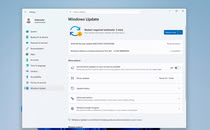 Windows Search is finally getting a long-overdue overhaul. It can now better understand typos, missing characters, and incomplete searches, giving users a better chance of finding the app or setting they actually wanted. Microsoft is improving how Windows Settings appear in search results, focusing on relevant results rather than irrelevant web links, making the experience more user-friendly. The search function now actively searches and indexes files across the operating system instead of defaulting to a web search. User settings are also respected in the Start Menu, where preferences are now enforced.
Source:
Microsoft
Additionally, the Low Latency Profile is expanding to more applications, potentially making software launch faster on weaker hardware. Previously introduced for Microsoft-branded "in-box" applications, this feature boosts the CPU to its maximum frequency for 1-3 seconds, resulting in noticeably smoother app launches during testing. When launching Microsoft applications like Edge and Outlook, the result is about a 40% faster application launch. Other applications, such as the Start Menu and context menus across the operating system, may be up to 70% faster. Now, other applications are getting this update, meaning the overall experience will be much smoother.

26 Comments on Windows 11 Gets Dynamic File Sizes in File Explorer, Low Latency Profile for Apps, and More
The specifics of who gets what are variable per feature. Could be geographical location, type of device, specific hardware features, whether the user has enhanced telemetry enabled or not, use of a Microsoft account, or whatever else Microsoft deems "relevant".
Feature rollouts may be variable because a feature makes more sense within certain circumstances, or could be because Microsoft just needs a control group that doesn't get the feature to compare telemetry against a group that did get the feature. That way, telemetry may reveal that users' behavior changes or that machines face increased rates of issues. Depending on what the telemetry says, Microsoft might remove the feature, change it or leave it as is.
As far as I know, Microsoft usually doesn't disclose what parameters they pick for configuring a feature rollout unless it's geographical location.
As for when this might be available to everyone... when 26H2 releases properly, most likely. So in September or October, I'd think.