Thursday, September 24th 2026

Apple and Qualcomm Renew Partnership for 5G Modem Supply

Qualcomm announced today that it is continuing its licensing agreement with Apple, as the previous agreement has ended. In a brief press statement, John Han, Executive Vice President and General Manager of Qualcomm Technology Licensing (QTL), stated that the company is "pleased to extend the Apple license agreement," which will take effect starting April 1, 2027. The end date of this new licensing agreement is still unknown, as the company did not disclose the exact terms, monetary value, or end date.

As readers may recall, in September 2023, Apple renewed its licensing deal with Qualcomm to obtain 5G modems for its products. This license was valid for three years and is now expiring, requiring a renewal. In its iPhones, Apple has started using a combination of in-house modems, known as C-series SoCs, along with Qualcomm-provided 5G modems. In 2019, Apple purchased Intel's modem business for $1 billion, acquiring the engineers and patents needed to jumpstart its own modem design and production. Early last year, with the launch of the iPhone 16e, Apple unveiled the C1 modem, its first-generation in-house 5G modem, which has since evolved into the upgraded C2 5G cellular modem design, now shipping with the iPhone 18 Pro lineup.
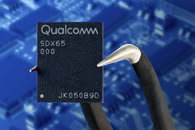
However, Apple cannot fully rely on its own modem production yet, as the new licensing renewal indicates. Qualcomm-made 5G cellular modems appear to be the backbone of modern smartphone connectivity, and Apple isn't completely confident in its C-Series modems to replace Qualcomm designs. With no details on the new agreement, it may be only a short-term plan until Apple finds a way to bring its in-house modem design team up to par with Qualcomm's.
Sources: Qualcomm, via ComputerBase
Add your own comment

5 Comments on Apple and Qualcomm Renew Partnership for 5G Modem Supply

#1
bonehead123
So whats really happening here is the old "if you can't beat them, join (or buy) them"

Seems like a good plan for now at least, because surely all those intel engineers that apple acquired, in combination with their own people, can come up with something to challenge Qually wally sooner than later....but it's been 6 years now and what have the got to show for it except some minor-league, low-end parts,,,
Posted on Reply
#2
cvaldes
bonehead123So whats really happening here is the old "if you can't beat them, join (or buy) them"

Seems like a good plan for now at least, because surely all those intel engineers that apple acquired, in combination with their own people, can come up with something to challenge Qually wally sooner than later....but it's been 6 years now and what have the got to show for it except some minor-league, low-end parts,,,
Nah, I don't think so.

Their current agreement expires on March 31, 2027 at which time Apple would have to stop making the US version of the iPhone 18 Pro Max (which has a Qualcomm modem). This extension likely carries Apple to fall 2027 when they will introduce the next generation iPhone Pro Max at which point the iPhone 18 Pro Max would be discontinued.

The theory that "Apple isn't completely confident in its C-Series modems to replace Qualcomm designs" makes zero sense. Apple is already using their in-house C2 cellular modem exclusively in the iPhone 18 Pro and iPhone Duo worldwide, and in the iPhone 18 Pro Max outside of the USA. Therefore the vast majority of their newly announced iPhones are using their in-house cellular modem. Apple has used their earlier generation C1 and C1X cellular modems in previous iPhone models, maybe iPads as well.

Industry pundits theorize that Apple is just including the Qualcomm chip in the US iP18 Pro Max to satisfy contractual obligations.
Posted on Reply
#3
sach
bonehead123So whats really happening here is the old "if you can't beat them, join (or buy) them"

Seems like a good plan for now at least, because surely all those intel engineers that apple acquired, in combination with their own people, can come up with something to challenge Qually wally sooner than later....but it's been 6 years now and what have the got to show for it except some minor-league, low-end parts,,,
A good, effective rule :D
Posted on Reply
#4
Mike2theL
I am guessing that apples cellular modems have Qualcomm IP in them for them to function properly. If that is true then apple doesn’t have a choice but to keep renewing the licensing deal with Qualcomm in perpetuity. Even if apple were to fully stop using Qualcomm in upcoming products with cellular connectivity they still need to sign a licensing agreement if apples modems use any Qualcomm IP in them. If apple were to stop renewing the license they would still get sued for patent infringement. This is why APPLE took Qualcomm to court a decade ago. Think about “double dipping”. It’s one thing to charge me for the physical purchase; it’s another to charge me a license just to buy and use them. Think about all the new sporting stadiums and arenas over the past two decades. Previously in the older stadiums people either paid for single game tickets or season ticket packages. Well all the new stadiums require a customer to purchase a PSL (personal seating LICENSE) before you can even buy season tickets. So again DOUBLE DIPPING. Remember Qualcomm plays a significant role in developing cellular infrastructure along with 3GPP (the worldwide organization that is ultimately responsible for cellular standards). So unless apple plays a significant role in developing 6G the one company holding them over a barrel well into the future will still be Qualcomm.
Posted on Reply
#5
jdrch
cvaldesNah, I don't think so.

Their current agreement expires on March 31, 2027 at which time Apple would have to stop making the US version of the iPhone 18 Pro Max (which has a Qualcomm modem). This extension likely carries Apple to fall 2027 when they will introduce the next generation iPhone Pro Max at which point the iPhone 18 Pro Max would be discontinued.

The theory that "Apple isn't completely confident in its C-Series modems to replace Qualcomm designs" makes zero sense. Apple is already using their in-house C2 cellular modem exclusively in the iPhone 18 Pro and iPhone Duo worldwide, and in the iPhone 18 Pro Max outside of the USA. Therefore the vast majority of their newly announced iPhones are using their in-house cellular modem. Apple has used their earlier generation C1 and C1X cellular modems in previous iPhone models, maybe iPads as well.

Industry pundits theorize that Apple is just including the Qualcomm chip in the US iP18 Pro Max to satisfy contractual obligations.
In-house modems yes, but likely use Qualcomm patents.
Mike2theLI am guessing that apples cellular modems have Qualcomm IP in them for them to function properly. If that is true then apple doesn’t have a choice but to keep renewing the licensing deal with Qualcomm in perpetuity. Even if apple were to fully stop using Qualcomm in upcoming products with cellular connectivity they still need to sign a licensing agreement if apples modems use any Qualcomm IP in them. If apple were to stop renewing the license they would still get sued for patent infringement. This is why APPLE took Qualcomm to court a decade ago. Think about “double dipping”. It’s one thing to charge me for the physical purchase; it’s another to charge me a license just to buy and use them. Think about all the new sporting stadiums and arenas over the past two decades. Previously in the older stadiums people either paid for single game tickets or season ticket packages. Well all the new stadiums require a customer to purchase a PSL (personal seating LICENSE) before you can even buy season tickets. So again DOUBLE DIPPING. Remember Qualcomm plays a significant role in developing cellular infrastructure along with 3GPP (the worldwide organization that is ultimately responsible for cellular standards). So unless apple plays a significant role in developing 6G the one company holding them over a barrel well into the future will still be Qualcomm.
Yep. Gotta say Intel absolutely finessed tf out of Apple with that $1B sale. Apple have likely paid Qualcomm much more than that in licensing fees since.
Posted on Reply
Nov 24th, 2026 04:54 CST change timezone

New Forum Posts

Popular Reviews

TPU on YouTube

Controversial News Posts