Monday, October 12th 2026

NexPhone, a Pocket PC-Smartphone Running Windows 11 Linux and Android, Launching in 2027

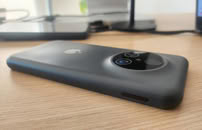
Nex Computer is the company behind the NexPhone, an upcoming smartphone that doubles as a pocketable computer running Android, Linux, and Windows 11. While the project was first announced a whole 14 years ago, Nex Computer recently published a development blog update revealing a Q1 2027 launch, indicating that the NexPhone will launch around March 2027.
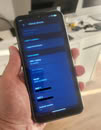
Our estimated shipping window is now the end of Q1 2027 (March 2027). New preorders are priced at $599, and the device price remains protected for customers who reserved at either $549 or $599. NexPhone is now running Android 17 on development devices, with continued Linux and Windows development.
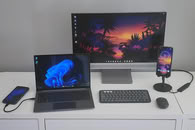
In the post, Nex Computer also clarifies that the NexPhone will run Android 17 when it launches, and it will be able to switch to a Debian Linux installation without rebooting the device, with a Windows 11 dual-boot option available as well. The idea behind the NexPhone is to pack a fully desktop-class device, with cross-platform access to files and information, into a smartphone form factor. In addition to the Windows and Linux installations, NexPhone will feature a customized Android desktop mode with a custom tabbed file manager and support for files and folders on the desktop.
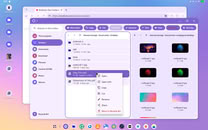
Judging from the wording in the dev log, it seems as though the Windows 11 and Linux installations may not be full-featured at launch, since the developer notes that driver and platform support for Windows 11 on the Qualcomm SoC is still in-development. However, Linux support appears to be included, even if Nex Computer also notes that development is ongoing for that as well.
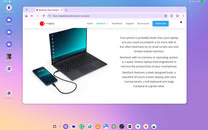
The NexPhone preorders start at $599, but the MSRP will be higher when it fully launches, although no indication has been provided for that MSRP.
Source: Nex Computer
Add your own comment

11 Comments on NexPhone, a Pocket PC-Smartphone Running Windows 11 Linux and Android, Launching in 2027

#1
_JP_
I'd much rather have old and still very capable smartphones being able to boot Windows and Linux for ARM, but sure new and shiny drives people's interest as opposed to a bit of effort and lower cost, I guess.
Posted on Reply
#2
Nelson Smith
They have a new type of micro sd card that is supposed to be releasing sooner, rather than later. The format is called SDUC, and initial micro sduc cards will have a storage capacity of 4tb, with the potential to go up to 128tb, at some point in the future. It would be great if these devices had expansion slots with support for sduc cards, right at launch, or soon after.
Posted on Reply
#3
claylomax
It's an interesting idea but I don't think it's going to work (be succesful).
Posted on Reply
#4
LabRat 891
Thunderbolt / USB4? MicroSDexpress? User-Replaceable Battery?
I see no mention of some pretty darned important hardware features for a Laptop/Desktop Replacement Device
Posted on Reply
#5
TheinsanegamerN
_JP_I'd much rather have old and still very capable smartphones being able to boot Windows and Linux for ARM, but sure new and shiny drives people's interest as opposed to a bit of effort and lower cost, I guess.
If it’s just a bit of effort, why don’t you do the work and port it so we can enjoy it?
Posted on Reply
#6
ZoneDymo
I am no fan of windows but if this were to function like those old windows phones and you could take it with you, plug the usb C into a dock and have monitors and a keyboard and mouse available to use it with, basically turning your phone into a pc, that would be cool as heck
Posted on Reply
#7
_JP_
TheinsanegamerNIf it’s just a bit of effort, why don’t you do the work and port it so we can enjoy it?
I don't have the skills, but I put my money where my mouth is at and try to be an active tester with as much feedback possible. Then possibly more people get to use it, the effort being that the devices I mention require hacking to dislodge Android. My opinion is on what project format I'd support with more interest.
Posted on Reply
#8
EnviousFrog
Running Windows 11 on 12 GB of RAM with 500 MB as VRAM? Good luck!
Posted on Reply
#9
Dr. Dro
EnviousFrogRunning Windows 11 on 12 GB of RAM with 500 MB as VRAM? Good luck!
Well pretty much every single computer with an AMD or Intel iGPU is doing this right now, it'll be fine. 512 MB is actually larger a graphics aperture than it needs be, although it's the least many PCs allow today. Just let WDDM manage it.
Posted on Reply
#10
TheinsanegamerN
LabRat 891Thunderbolt / USB4?
Literally no phones have this. Power and size constraints make this an instant no go.
LabRat 891MicroSDexpress?
The only device that uses it is the Switch 2. It'd be a cool feature but again both power hungry and space intensive due to NVMe use.
LabRat 891User-Replaceable Battery?
Would be a nice to have but comes with its own negatives, such as lower capacity in the given space.
LabRat 891I see no mention of some pretty darned important hardware features for a Laptop/Desktop Replacement Device
For most people, the hardware in their phones can already function as a laptop/desktop replacement device. If we insist that no tech can be deployed unless it needs the needs of the 1%, we would never get anything.

Samsung DEX has existed for years. Current devices are more then powerful enough. If this were to catch on, I'm sure more enthusiast oriented options would appear. But obviously, there are going to be compromises due to the form factor.
_JP_I don't have the skills, but I put my money where my mouth is at and try to be an active tester with as much feedback possible. Then possibly more people get to use it, the effort being that the devices I mention require hacking to dislodge Android. My opinion is on what project format I'd support with more interest.
If the project is first starting, then the largest and easiest base of devices to target is going to be currently sold and supported devices, not the smorgasbord of older devices. Especially given this will be targeted at flagships.
Posted on Reply
#11
_JP_
TheinsanegamerNSamsung DEX has existed for years.
Not only. IIRC, most Android phones since version 14 had desktop mode when connected to a USB-c dock (self-powered and compatible, not hub). Also, all of the supported Pixel phones allow for desktop mode with the right dock.
TheinsanegamerNIf the project is first starting, then the largest and easiest base of devices to target is going to be currently sold and supported devices, not the smorgasbord of older devices. Especially given this will be targeted at flagships.
Right, and I get it purely from a release channel for hardware support, but backporting means that one would reach the devices already present on the street.
Posted on Reply
Add your own comment
Nov 22nd, 2026 13:26 CST change timezone

New Forum Posts

Popular Reviews

TPU on YouTube

Controversial News Posts