Friday, November 13th 2026

AMD Loses Desktop CPU Share for the First Time in Months, Intel Regains Ground
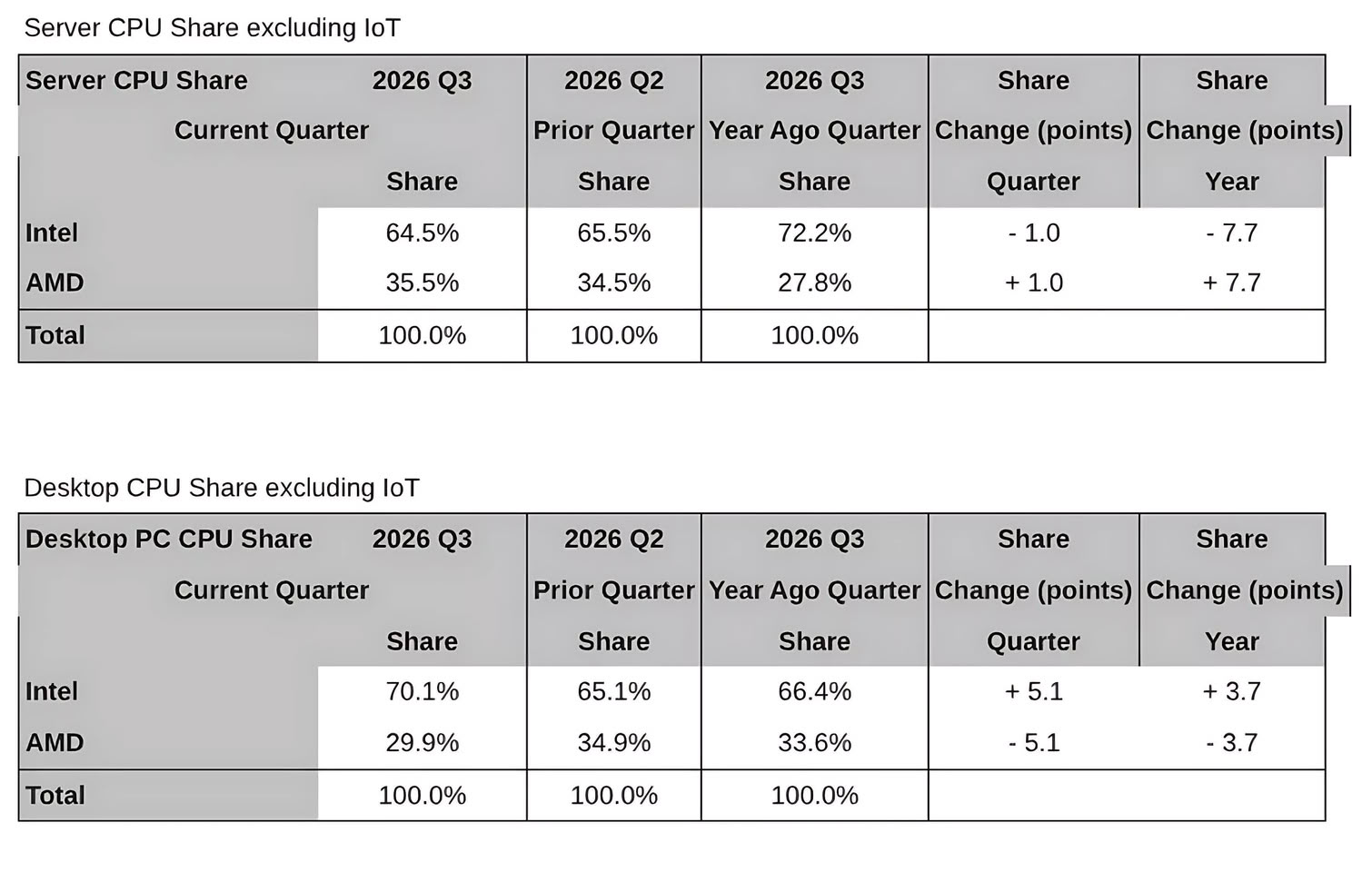
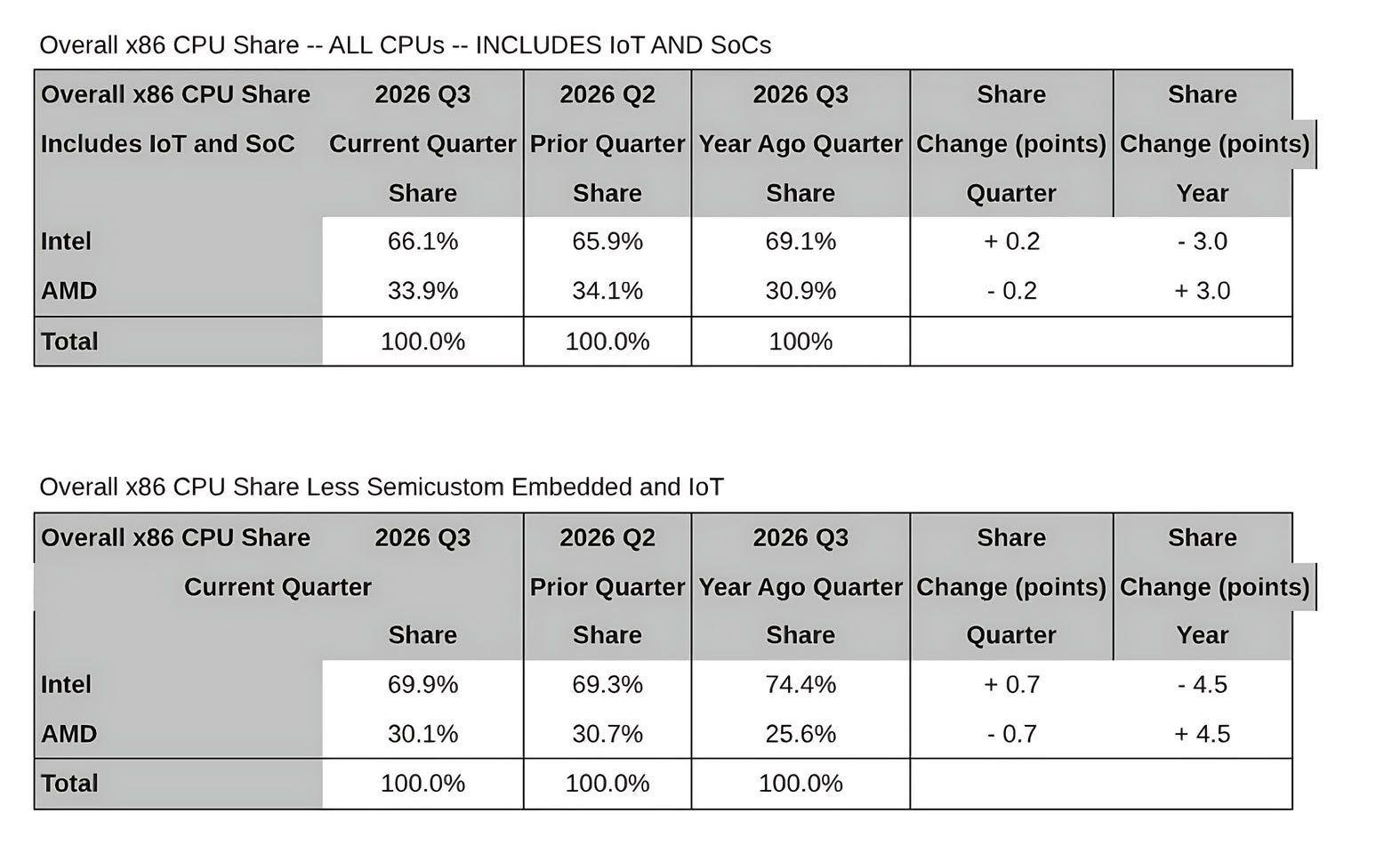
AMD's share of desktop CPU shipments fell to 29.9% in the third quarter of 2026, according to new Mercury Research data, shared by PC Gamer. That's a five-point drop from the 34.9% AMD held in Q2, with Intel climbing back to 70.1%. It's also AMD's lowest desktop figure since early 2025, when it sat at around 28%. A year ago, AMD held 33.6% of the desktop market.
Mercury itself admits it isn't sure what caused the swing. Its best guess is that weaker laptop demand let Intel shift more chips to desktops, which usually see a seasonal bump in the third quarter, after Intel had been under-supplying that market earlier in the year. AMD, on the other hand, didn't seem to get that seasonal increase. Mercury also points to AMD's heavier reliance on PC gaming, a market it says has been hurt by supply constraints on gaming GPUs. On top of that, AMD has openly admitted that demand is running ahead of what it can ship, and Lisa Su recently called AMD a "data center first" company.
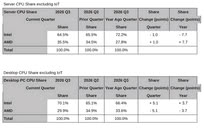
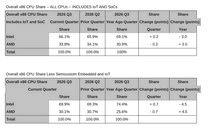 Intel's gain probably says more about supply than about its desktop chips suddenly winning over gamers. Mercury notes that desktop volumes took a large hit in Q2, and both companies saw mobile CPU shipments drop by more than 10% in Q3. In servers, the trend went the other way, with AMD rising to 35.5% from 34.5% the quarter before.
Sources:
Mercury Research, via PC Gamer
Mercury itself admits it isn't sure what caused the swing. Its best guess is that weaker laptop demand let Intel shift more chips to desktops, which usually see a seasonal bump in the third quarter, after Intel had been under-supplying that market earlier in the year. AMD, on the other hand, didn't seem to get that seasonal increase. Mercury also points to AMD's heavier reliance on PC gaming, a market it says has been hurt by supply constraints on gaming GPUs. On top of that, AMD has openly admitted that demand is running ahead of what it can ship, and Lisa Su recently called AMD a "data center first" company.
55 Comments on AMD Loses Desktop CPU Share for the First Time in Months, Intel Regains Ground
This is nothing new. Their quarterly revenues were already proportionally higher in data centre several quarters ago.
Nvidia on the other hand could completely drop the gaming GPU line, they're part of the way there by ending the 5090,5080, and purposely diverting chips away from the gaming side to sell more pro cards, causing prices to increase by 2-3X. Also possibly causing a false scarcity of silicon by overselling GPU's to AI companies.
Nvidia would barely notice the gaming market gone on their bottom line which was thrown in with edge computing, and the rest of the market would fill in the gap, or someone new could step in.
So your argument that Intel won the market because it was better is disproved by the same article you quoted but didn't link. I'm going to assume you simply forgot for now and that you didn't intentionally leave that out.
This article was from 2 years ago, AMD's case was less that they didn't care and more that they have to prioritize (more explained below) due to limited resources.
I do agree that Intel has put a lot of effort into laptops but that's part of the problem as well. CPU manufacturers being increasingly integrated into the laptop design process also makes it harder for competitors to get into the market. If the market shifts to increasing codesigns by OEM and chip manufacturer (and it has), that puts competitors and new entrants at a severe disadvantage. Not only does it take time to build these products and relationships, it takes a lot of money to provide engineering resources. It creates a moat. Heck even back when laptops weren't codesigned, the partner ship and resource advantage Intel used to hold was huge.Intel has merely caught up. You are skipping over the fast that they were lagging behind for several years.You are comparing an older architecture vs Intel's brand new one. You didn't compare against AMD's recent refresh, let alone the new architecture in early 2027.
This is the third time you've left out context in one comment that would have disproved the points you are making. It's becoming increasingly likely that you are doing this intentionally.False: www.noobfeed.com/hardware/panther-lake-amd-gorgon-point-laptop-efficiency
"New information from OEM and store sources backs up the fact that Panther Lake is pricey, sometimes very pricey. Panther Lake laptops with the more powerful 12XE Core iGPU are priced behind the scenes at around $1400 to $2400, with at least one store saying the usual price is around $2100."
Other reports backup this claim.
I can't help but notice you also jumped from using cougar cove performance numbers and panther lake pricing.
You have absolutely proven my point that Intel is more expensive on average for the same spec.