Wednesday, November 25th 2026

AMD Wants to Ray Trace Large, Dynamic Worlds with Reusable Parts
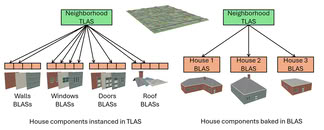
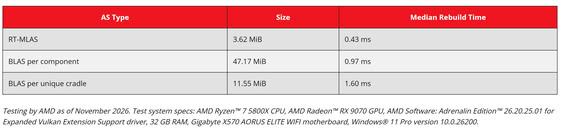
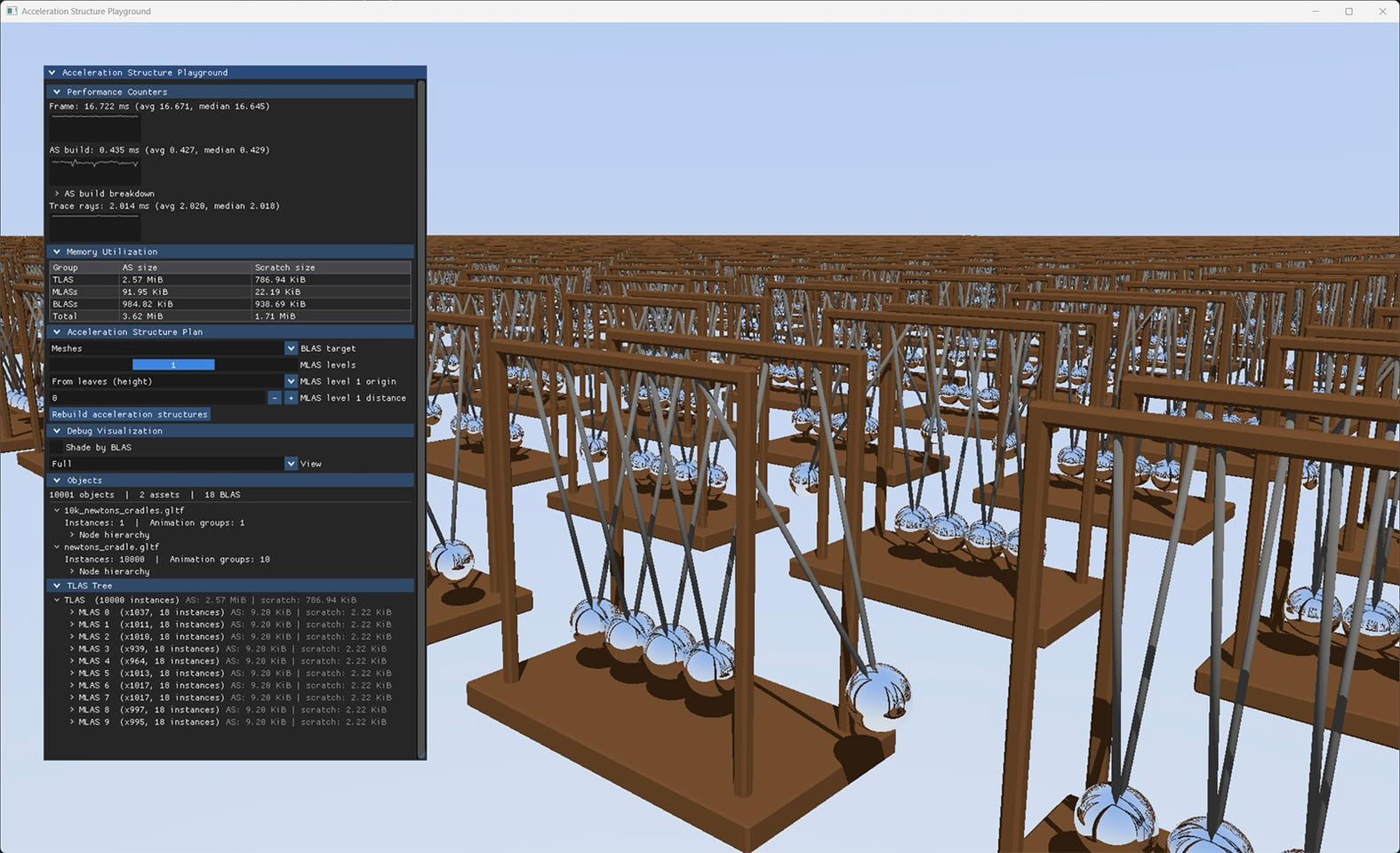
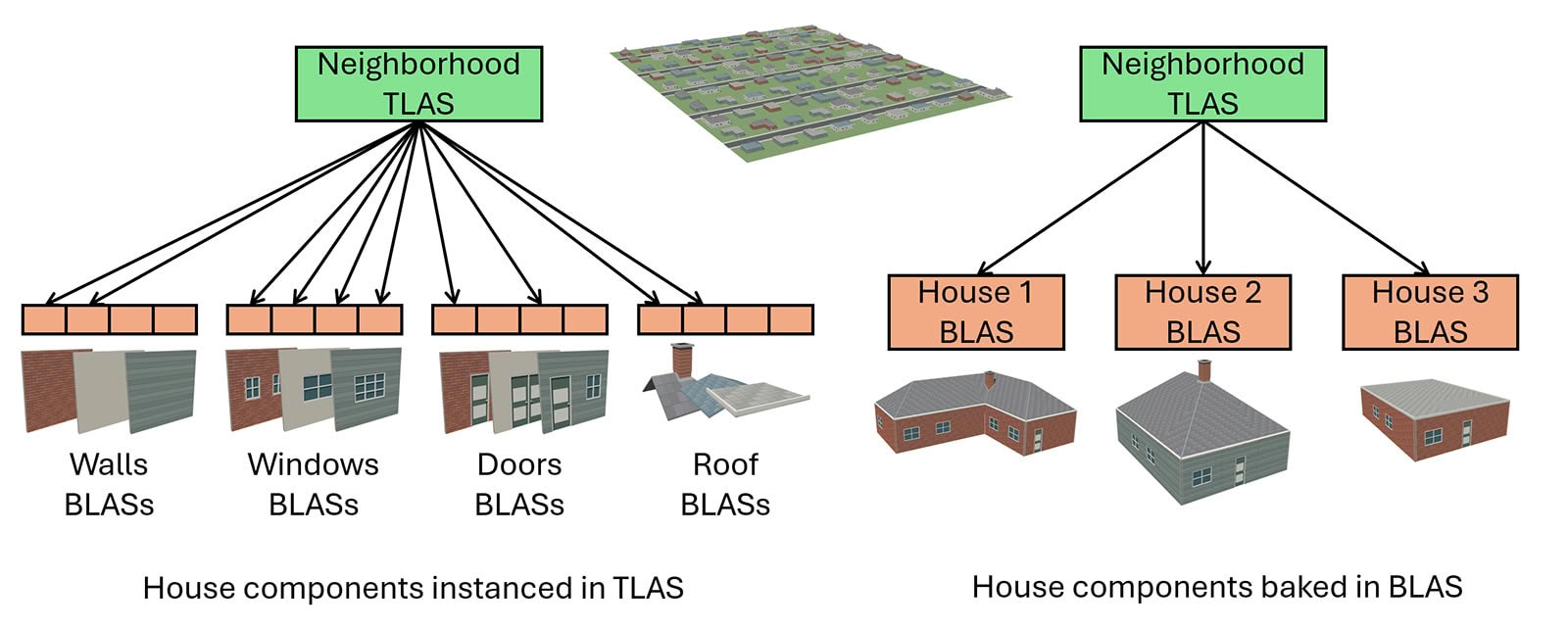
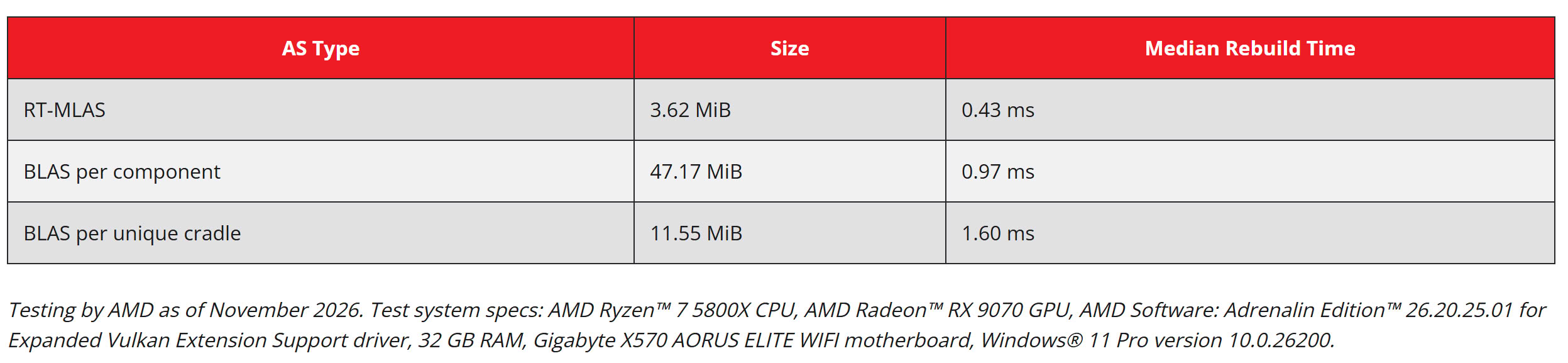
To scale large, open, dynamic worlds with ray tracing, AMD is developing a new approach to simplify the process. By extending traditional techniques, AMD introduces Ray Tracing Multi-Level Acceleration Structures (RT-MLAS). This technology adds additional levels of reusable acceleration structures within ray-traced objects, reducing both memory consumption and the time required to build and update them. Traditional ray tracing pipelines rely on two levels of acceleration structures: Bottom-Level Acceleration Structures (BLAS), which contain geometry, and a Top-Level Acceleration Structure (TLAS), which organizes instances of that geometry. However, large open worlds can have an enormous number of objects, making the TLAS increasingly expensive to rebuild as objects move or change their level of detail (LOD).
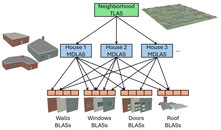
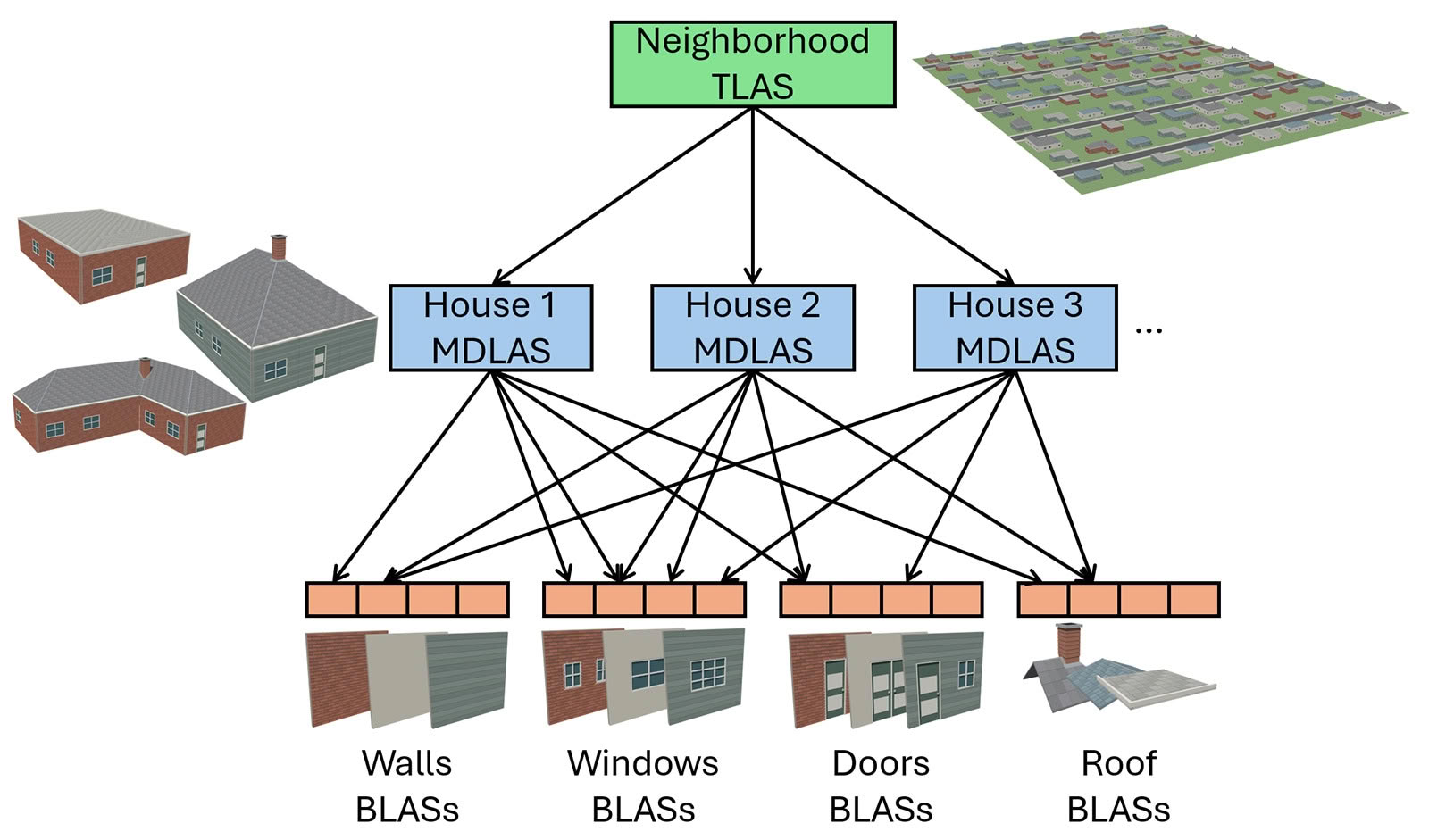
RT-MLAS addresses this challenge by introducing Mid-Level Acceleration Structures (MDLAS), allowing developers to organize objects into additional reusable hierarchies. AMD's implementation supports up to two additional levels, enabling repeated scene components to share acceleration structures rather than being individually duplicated or registered in an increasingly large TLAS. For example, an entire building can be represented by an MDLAS containing reusable walls, windows, doors, and roof components. This approach is particularly useful for open-world environments, where developers can organize different areas into independently manageable structures and rebuild only the sections that need updating. AMD's research also shows how the technology can benefit heavily animated environments, such as forests with tens of thousands of independently animated plants.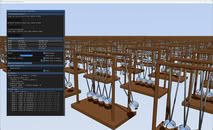
 In its Graphics Programming Conference 2026 presentation, AMD showcased more than 40,000 independently animated plants with ray-traced primary and shadow rays running at over 60 FPS at 1080p on a Radeon RX 9070 XT. By combining tetrahedral-cage animation with MLAS, the demonstration reduced the overhead of managing acceleration structures, allowing it to become traversal-limited instead of build-limited. This advancement could help developers implement real-time ray tracing in expansive environments containing thousands of independently moving objects. Finally, AMD notes that the technology is available on RDNA 4 GPUs through the Vulkan API, and developers can use Radeon RX 9000 series or Radeon AI PRO R9000 series.
Source:
GPUOpen
RT-MLAS addresses this challenge by introducing Mid-Level Acceleration Structures (MDLAS), allowing developers to organize objects into additional reusable hierarchies. AMD's implementation supports up to two additional levels, enabling repeated scene components to share acceleration structures rather than being individually duplicated or registered in an increasingly large TLAS. For example, an entire building can be represented by an MDLAS containing reusable walls, windows, doors, and roof components. This approach is particularly useful for open-world environments, where developers can organize different areas into independently manageable structures and rebuild only the sections that need updating. AMD's research also shows how the technology can benefit heavily animated environments, such as forests with tens of thousands of independently animated plants.
3 Comments on AMD Wants to Ray Trace Large, Dynamic Worlds with Reusable Parts
edit:
docs.vulkan.org/features/latest/features/proposals/VK_AMDX_multi_level_acceleration_structure.html