

CES 2026 News Coverage

Jan 6 - 9

CES is North America's largest and most important technology trade show, held every year in Las Vegas, Nevada. It brings together the tech world to debut new hardware, consumer electronics, AI breakthroughs, and next-generation technologies.

Just like every year, we're covering CES live from Las Vegas with our on-site team, backed by editors at home, to deliver the quickest and most comprehensive updates from the show floor.

On this page you can find all of our news coverage for the event.

ASUS ZenBook A16 Launches at CES As Ultra-Portable Snapdragon X2 Elite Extreme Laptop with 21-Hour Battery

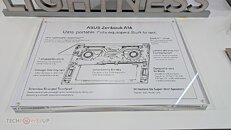
ASUS has had a strong presence at CES 2026, presenting updated gaming and creator laptops, including an AMD Ryzen AI Max+ 395-powered convertible laptop and a new ZenBook Duo with dual 14-inch OLED displays. As it happens, that Intel Panther Lake ZenBook has a Snapdragon-powered sibling as well. The new ASUS ZenBook A16 is a 16-inch Windows-on-Arm PC intended to be used as an everyday general productivity and media consumption laptop. ASUS's goal with the A16 was to design the "best commuter laptop," and balance portability, versatility, and efficiency. The end result is a 1.2 kg laptop that measures just 16.5 mm thick but still boasts 21 hours of battery life from a 70 Wh battery.

The ZenBook A16 will be available with both the Qualcomm Snapdragon X2 Elite Extreme X2E-92-100 and the X2 Elite Extreme X2E-94-100, both versions with 48 GB of LPDDR5x memory and up to 2 TB of PCIe 4x4 storage. The CPU in the ZenBook A16 aside, there are also a number of interesting features that make the new Arm-powered laptop stand out. For starters, the 3K (2880 x 1800) OLED touch display—there is also an otherwise identical non-touch version—reaches 1100 nits peak brightness and features a 120 Hz refresh rate. The ZenBook A16 is light on ports, though, likely owing to its thin Ceraluminum chassis—which ASUS says is 30% lighter and 3x more durable than regular aluminium. The ZenBook A16 has dual USB4 ports, a single USB 3.2 Gen 2 Type-A port, an HDMI 2.1 port, and a 3.5 mm combo audio jack. The A16's included chiclet keyboard has 1.3 mm of total travel, and the included trackpad has been stretched to the vertical limit, which has become a trend in modern laptops.

ASUS ROG Wi-Fi 8 Demo Unit: 8 Antennas + 3 LAN Ports, Also New ProArt Networking Devices

ASUS has used CES as a launch platform for many of its new Wi-Fi router products over the years, although this year it brought what it calls a demo system, rather than something that is ready for launch later this year. The ROG NeoCore Wi-Fi 8 router looks like something out of a Sci-Fi movie, and it really stands out compared to every other router we've ever seen. Due to the fact that Wi-Fi 8 isn't expected to be ratified until 2028, we might have to wait a while before we know if the NeoCore will become a retail product or not. The ROG NeoCore router is based on the shape of an icosahedron, which people that play role playing games might recognise as a 20-sided dice. As it is still early days, ASUS didn't share any specs, but three network ports are visible and based on the Wi-Fi 8 demo ASUS was running, we might be able to expect it to feature eight antennas split between the three Wi-Fi bands.

ASUS was also showing a pair of new ProArt branded networking products, the PRT-BE5000 router and the PQG-U1080 Ethernet switch. The PRT-BE5000 is as the name suggests a BE5000 Wi-Fi 7 router, which means a 3x3 antenna configuration for the 5 GHz which delivers a throughput of up to 4320 Mbps and a 2x2 setup for the 2.4 GHz band which delivers up to 688 Mbps. Other features include a pair of 2.5 Gbps Ethernet ports for WAN/LAN, three Gigabit ports, but oddly enough no USB ports. The PQG-U1080 is an unmanaged switch with eight 2.5 Gbps ports and two 10 Gbps SFP+ ports. Pricing of either device is currently unknown.

ASUS Displays its ROG Kithara Planar Magnetic Gaming Headset at CES

ASUS has decided to enter the deep end of audiophile gear by creating the ROG Kithara, a gaming headset with planar magnetic drivers from HIFIMAN. TPU has tested over 30 products by HIFIMAN and many of them have walked away with awards, so it will be interesting to see what they can do in collaboration with ASUS. The ROG Kithara comes with two sets of cables, one that has a built in MEMS based boom microphone and one that is a balanced cable that can be used with a 4.4 mm balanced connector, or regular 3.5 or 6.3 mm jack plugs. The Kithara also comes with a USB Type-C adapter, but it's not clear if this has a built-in DAC or not.

There are no gimmicks to be found here, no RGB lighting, no wireless connectivity. The ROG Kithara has an open-back design and ASUS claims that the 100 mm planar magnetic drivers deliver an 8 Hz to 55 kHz frequency response range. So far, ASUS hasn't provided any more detailed specs, beyond the 16 ohm impedance, but based on the information available, it seems like the Kithara is based on one of HIFIMAN's simpler planar magnetic drivers. The MEMS microphone is said to have a 20 Hz to 20 kHz frequency response with a 74dB SNR and a total harmonic distortion of less than 0.1 percent. ASUS supplies two pairs of ear cushions in a choice of either velour or leatherette with mesh fabric on the sides. As for pricing, the ROG Kithara is said to have an MSRP of US$359.

ASUS Reveals ZenBook Duo Refresh with Ceraluminum Chassis and Flagship Panther Lake CPU at CES 2026

ASUS has revealed new ZenBook laptops at CES 2026, but the headline device is its new dual-screen ZenBook Duo, which has received a physical redesign and a spec bump. The new ZenBook Duo, carries the same dual-screen productivity goals as previous generations but features a few refinements to the displays and hinges, a dual battery setup, and a lighter, stronger frame. The new ZenBook Duo UX8407 uses dual 14-inch 3K OLED displays with 144 Hz refresh rates and 1,000 nits claimed peak brightness. The displays are both touch-enabled and support the ASUS Pen 3.0—and consequently other Microsoft Pen Protocol 2.6 styluses—and ASUS claims that together they provide nearly 20 inches of screen real estate. The new chassis is constructed from Ceraluminum, which ASUS claims makes the ZenBook Duo three times more durable and 30% lighter, with the whole package coming in at 1.65 kg. Likewise, the new hinge design is both more compact and tougher, and effectively butts the two displays up against another, reducing the gap between the displays by 70% and eliminating the step so that the displays feel more like a single unit. The ZenBook Duo also includes a detachable trackpad, but the bottom display can also be used as a full-screen virtual keyboard and trackpad.

The new dual-screen laptop splits the 99 Wh battery between the top and bottom cases, and ASUS's battery life testing suggests an 18-hour battery life during video playback on both screens. This stretches to 32 hours of local video playback on a single screen. This battery life is partially thanks to the new Intel Core Ultra Series 3 CPUs that power the ZenBook Duo, which tops out with Intel's flagship mobile Panther Lake CPU, the Core Ultra X9 388H. The new CPU has 16 cores and features the new Intel Arc B390 iGPU, which is supposed to deliver RTX 4050-level performance at much lower power draw. That said, the ZenBook Duo will supposedly run the new Intel CPU at a 45 W TDP, which is only 20.8 W short of the 65.8 W claimed peak Turbo Power for 16-core CPU. The new ZenBook Duo will also offer up to 32 GB LPDDR5X RAM, with a 16 GB option also available. The ZenBook Duo is light on ports, as you might expect from a laptop with such a thin chassis. It features just one USB 3.2 Gen 2 Type-A port, two Thunderbolt 4 ports, and a single HDMI 2.1 port. Although ASUS doesn't mention it on the spec sheet, the ZenBook Duo does also include a 3.5 mm audio jack. ASUS says the 99 Wh batteries, which charge via one of the USB-C ports, charge to 60% in just 49 minutes.

ASUS Shows ROG GR70, ExpertCenter PN55 Mini PCs and Ascent GX10 Ultra-Small AI Supercomputer

ASUS brought several compact systems to CES 2026, covering gaming, productivity, and local AI workloads, besides the newly released NUC 16 Pro with Intel "Panther Lake". ROG GR70 is the company's first ROG-branded gaming mini PC powered by the AMD Ryzen 9 9955HX3D processor and can be configured with NVIDIA GeForce RTX 5070 or RTX 5060 Laptop GPUs. The system uses a triple-fan cooling solution and includes Wi-Fi 7 and Bluetooth 5.4. It includes 1 TB PCIe 4.0 NVMe SSD, with support for PCIe 4.0 and PCIe 5.0 M.2 drives.

ExpertCenter PN55 is an ultra-compact Copilot+ mini PC aimed at business and everyday productivity. It runs on AMD Ryzen AI 400 Series processors with Radeon 800M graphics and an NPU rated at up to 55 TOPS. Features include a dedicated Copilot key, fingerprint reader, built-in mic and speaker, dual 2.5 GbE LAN, six USB ports, Wi-Fi 7, and Bluetooth 5.4. ASUS says the PN55 meets military-grade durability standards.

ASUS Announces Chromebook CM32 Detachable

ASUS today announced the all-new ASUS Chromebook CM32 Detachable—the perfect portable companion for study, work and play, with a versatile 2-in-1 design that allows it to transform seamlessly between laptop and tablet. It features a bright and vibrant 12-inch 2.5K 120 Hz touchscreen, Arm -based processor, magnetic stylus with wireless charging, front and world-facing cameras, up to 13-hour battery life, fast Wi-Fi 7 connectivity, and outstanding military-strength durability.

Versatile mobility
ASUS Chromebook CM32 Detachable offers superb versatility for abundant possibilities, with a range of practical accessories. The detachable keyboard—available in White or Dark Grey—allows seamless transition between tablet and laptop modes, making it ideal for learning or productivity. An optional magnetic stand covered with a strong, stain-resistant leatherette material can be set at almost any angle, providing freedom, flexibility and comfort for modern on-the-go lifestyles. There's also an optional magnetic USI 2.0 stylus that charges wirelessly. This enables quick, precise movements for unleashing creativity and productivity, empowering users to take notes, transcribe orders, sketch ideas or capture moments of inspiration quickly, simply and intuitively. In addition, an optional Impact Shield—a ruggedized case that adds an extra layer of durability—is available to provide on-the-go protection from everyday bumps and scrapes.

ASUS ROG Refreshes Zephyrus G14 and G16 Gaming Laptops at CES

ASUS Republic of Gamers (ROG) today announced the arrival of a new generation of Zephyrus G14 and G16 gaming laptops, powered by cutting edge next-gen chips. Both the Zephyrus G14 and Zephyrus G16 feature models with Intel, AMD, and NVIDIA silicon, perfect for creatives and professionals on the go who need extra power. Both laptops also now feature models with a new ROG Nebula HDR OLED display capable of 1100 nits peak brightness, and all models feature a timeless CNC-milled aluminium chassis to ensure a precise, premium experience from end to end.

Next-gen power
Both the Zephyrus G14 and G16 are available with the latest Intel Core Ultra Series 3 processors. This family employs a modular, tile-based architecture to enable broad flexibility, from low power operations to peak performance that users would expect from an ROG Zephyrus gaming laptop. With up to 50 TOPS of NPU performance available, local execution of AI tasks and potential for in-game AI workflows make the Core Ultra Series 3 family a perfect choice for modern computing. The Zephyrus G14 GU405 features up to an NVIDIA GeForce RTX 5080 Laptop GPU, while the Zephyrus G16 GU606 features up to an NVIDIA GeForce RTX 5090 Laptop GPU. Featuring the latest NVIDIA Blackwell architecture and killer software features like DLSS 4 and Frame Generation, these laptops are built for next-gen gaming.

ASUS TUF Gaming TM500 Gaming Desktop With AMD Hawk Point CPU Spotted at CES

During CES 2026, ASUS announced the TUF Gaming TM500 Gaming PC, which in and of itself isn't a big deal and in fact, the TPU team on site grabbed a couple of quick snaps of it, without realising what sets it apart from your typical gaming PC. The TUF Gaming TM500 appears to be using leftover bits at ASUS, since it will be powered by either an AMD Ryzen 5 220 or a Ryzen 7 260, both of which are mobile CPUs based on AMD's Zen 4 processor architecture. These are obviously budget notebook chips with either six or eight cores, a Radeon 760M or 780M GPU and a total of 20 usable PCIe 4.0 lanes. ASUS decided that as this is a mobile CPU, the TM500 should use SO-DIMM memory. We're looking at a pair of DDR5 slots that support up to 64 GB of 5600 MT/s memory.

The motherboard itself appears to be microATX, but it has a custom layout and ASUS has even implemented a special heatpipe cooler that attaches to the rear of the chassis where the fan is located. As the TM500 is being sold as a gaming PC, it also comes with a choice of an AMD Radeon RX 9060 XT or an NVIDIA GeForce RTX 5060 graphics card. The motherboard also has room for a pair of SATA ports and a pair of PCIe 4.0 M.2 NVMe SSDs in the standard 2280 form factor. Connectivity wise, ASUS didn't seem to even have bothered, as the board only has a HDMI 2.1 port, one DP 1.4, one USB 3.2 Gen 1 (5 Gbps) Type-A port, two USB 2.0 ports, a Gigabit Ethernet port and three audio jacks around the back. The front of the chassis is home to a further two USB 3.2 Gen 1 (5 Gbps) Type-A ports and one Type-C port and a 3.5 mm combo headset jack. Considering the CPUs used have native USB4 support, as well as support for USB 3.2 Gen 2 (10 Gbps), this just feels cheap from ASUS. A Wi-Fi 6 module with Bluetooth 5.4 support and a 330 W PSU rounds off the package. There was no word on pricing, but it seems like there are competing mobile on desktop type systems out there that offer more features than the TUF Gaming TM500.

ASUS Announces New ProArt PX13 Laptop With AMD Ryzen AI Max+ 395 Processor

ASUS today announced the 2026 version of ProArt PX13, a versatile 13.3-inch AI-powered convertible laptop for creators. ProArt PX13 combines cutting-edge AI power with refined design to elevate modern creation. Powered by the AMD Ryzen AI Max+ 395 processor with a 50 TOPS NPU and up to 128 GB of unified memory, it delivers unmatched performance for AI-assisted workflows. This processor is capable of running optimized 120B-parameter large language models (LLMs) locally, enabling new frontiers in on-device AI creation. Enhanced by advanced AMD video-generation models, it supports the exclusive ASUS MuseTree app for text-to-video generation and intelligent storyboard simulation.

The sleek, 1.39 kg convertible flips seamlessly between laptop, tent, stand, or tablet modes, with full stylus support for intuitive input. Its 3K ASUS Lumina OLED touchscreen ensures precise color accuracy for flawless proofing. The ASUS DialPad provides tactile control for precise adjustments, while versatile I/O ports allow seamless connections to peripherals. Together with the ProArt Creator Hub, the AI-powered StoryCube media hub, a dedicated Copilot key, military-grade toughness, and a long-lasting battery, ProArt PX13 transforms any setting - indoors or outdoors - into a fully-fledged creative studio, ensuring the creative process is limited only by imagination, not hardware.

ASUS Debuts the Most Powerful NUC 16 Pro Powered by Intel "Panther Lake"

ASUS has introduced its most powerful NUC device yet. Named the NUC 16 Pro, the device is powered by Intel's latest "Panther Lake" processor, featuring the high-end Core Ultra X9 Series 3 processor paired with the Intel Arc B390 GPU. The system delivers 180 TOPS of INT8 AI performance, and ASUS targets developers and gamers with the powerful NPU and iGPU. The company has upgraded the memory and storage, moving to LPDDR5x for increased speed and significantly reduced power consumption. Since the top-end Core Ultra X9 388H SKU supports high-speed LPDDR5X-9600 memory, we assume ASUS has equipped this slim chassis with the highest-rated modules.

The device provides space for two NVMe drives and video outputs that can support four 4K panels simultaneously. All of this is housed in a 144x117x42 mm chassis that includes a dual-fan cooling solution to maintain performance under load. On the connectivity and service front, the NUC 16 Pro is designed with professionals in mind. It features two Ethernet ports, along with Wi-Fi 7 and Bluetooth 6.0. ASUS emphasizes practical design with a Toolless 2.0 chassis for easy upgrades and maintenance, and MIL-STD 810H testing indicates the system is built to endure tougher conditions than a typical mini PC. The software includes ASUS's own AI suite, although the company has not yet detailed which specific workflows or optimizations will be available.

We updated the article with additional photos. More images follow after the break.

ASUS Unveils V Series Home Desktop PCs

ASUS today announced the ASUS V series (VM701MG, V701ML, VM501MH, V501MV, V501SV)—an all-new lineup of home-focused desktop PCs that redefines how performance computers should look, sound, and feel in modern living spaces.

Powered by up to an AMD Ryzen AI 7 processor with a built-in NPU delivering over 50 TOPS for Copilot+ AI features, and up to dual NVIDIA GeForce RTX 5060 graphics, V series delivers smooth, responsive performance for work, creativity, and entertainment alike. Combined with an advanced ASUS cooling system that keeps temperatures low and noise levels down, it's designed for quiet performance that blends harmoniously into modern homes.

ASUS Showcases ExpertCenter Pro ET900N G3 at CES 2026

ASUS today announced the showcase of ExpertCenter Pro ET900N G3 at CES 2026, underscoring its commitment to delivering enterprise-grade AI infrastructure in accessible, deskside form factors. The all-new ET900N G3—accelerated by the NVIDIA GB300 Grace Blackwell Ultra Desktop Platform—sets a new standard for deskside AI supercomputers, combining extreme performance, unified memory architecture, and data-center-class connectivity.

Solving the last-mile challenge of modern AI development
AI development has reached extraordinary heights through massive cloud and data-center infrastructure, yet many researchers, developers, and data scientists still face a 'last-mile' challenge. While cloud services offer immense scale, countless workflows require local, private, and immediate compute power—especially for training, fine-tuning, or running large AI models that exceed the limits of traditional workstations. What these professionals need is a system that delivers data-center-class performance in a familiar, easily deployable deskside form factor.

ASUS ROG and KOJIMA PRODUCTIONS Launch New Line of Gaming Gear

ASUS Republic of Gamers (ROG) is proud to announce a collaboration with world-renowned game studio KOJIMA PRODUCTIONS, as well as the launch of the ROG Flow Z13-KJP along with a new lineup of KJP peripherals. ROG and KOJIMA PRODUCTIONS are driven to create products and experiences tailored for gamers.

Cutting-edge gaming hardware meets visionary storytelling
At the heart of this collaboration is 'Ludens'—the belief that humans are not only thinkers, but also players and creators. The collaboration combines the spirit of the ROG motto For Those Who Dare with KOJIMA PRODUCTIONS' vision From Sapiens to Ludens. Ludens are the ones who experiment, mod, create, and challenge what games—and gaming hardware—can be. By uniting cutting-edge ROG hardware with KOJIMA PRODUCTIONS' visionary storytelling, this partnership is a tribute to that spirit: everything we build, every detail we design, is for gamers everywhere—For Ludens Who Dare.

ASUS ROG XREAL R1 AR Gaming Glasses Give You A 171 Inch 240 Hz Gaming Experience

ASUS Republic of Gamers today announced the ROG XREAL R1, the world's first 240 Hz micro-OLED FHD (1920 x 1080) gaming glasses, featuring the ROG Control Dock for extensive connectivity and compatibility with PCs and consoles. ROG constantly pushes the boundaries of gaming display technology—from 15-inch portable screens to 65-inch monitors—creating a comprehensive lineup that meets every gamer's needs, from desktop setups to on-the-go play with the ROG Ally handheld. The ROG XREAL R1 AR creates seamless and immersive ROG Ally-optimized gaming experiences by offering a 57° expanded view, 3 Degrees of Freedom, electrochromic tinting technology, and Sound by Bose technology for an immersive audio experience. This next evolution of spatial gaming displays has been created in partnership with XREAL, an award-winning global leader in consumer AR glasses. These gaming glasses redefine what large-format gaming can be, transforming signature ROG performance and visual excellence into a spatial display that can be worn and experienced on the go.

Seamless compatibility with PCs, consoles, and ROG Ally
The ROG XREAL R1 integrates seamlessly within the ROG ecosystem to offer desktop-level versatility in a lightweight, wearable form. Powered by the ROG Control Dock, the R1 provides extensive connectivity through DisplayPort 1.4 and two HDMI 2.0 ports to allow gamers to effortlessly switch between their PC or console with a single click. The R1 can also connect directly to the ROG Ally handheld console via USB-C to give the wearer an up to 171-inch virtual battlefield for incredible immersion. This connection is fully optimized for plug-and-play with the Ally, so there's zero setup required. Users can still access full touchscreen controls on the Ally for effortless and intuitive control. The wearer can make the virtual screen larger or smaller, and farther or closer, with a press of button, thanks to the built-in spatial co-processing X1 chip. The ROG XREAL R1 weighs just 91 grams and is designed to deliver large-screen viewing experiences anywhere, even when on the move.

ASUS ROG Announces Next-Gen RGB OLED Technology at CES 2026

ASUS Republic of Gamers (ROG) today at CES 2026 announced a stunning array of gaming displays that are set to redefine visual immersion. ASUS and ROG continue to lead globally, holding the No.1 positions in OLED monitors and remaining the top choice for gamers. At CES, ROG unveiled its next-generation QD-OLED and Tandem OLED gaming monitors featuring revolutionary RGB Stripe Pixel OLED technology that reduces color fringing to ensure crystal-clear text and visuals. The new QD-OLED gaming displays also include new ROG BlackShield film that increases perceived black levels and upgrades the panel for improved toughness and scratch resistance.

ROG RGB Stripe Pixel OLED solutions
The latest ROG QD-OLED and Tandem OLED monitors feature revolutionary RGB Stripe Pixel technology that ensures ultrasharp imagery and crisp text for exceptional viewing experiences. The next-generation ROG monitors to feature this technology include the ROG Swift OLED PG34WCDN and Strix OLED XG34WCDMS (RGB QD-OLED panels), along with the ROG Swift OLED PG27UCWM (Tandem RGB OLED panel) monitor.

ASUS Showcases its First White ROG Crosshair Motherboard

ASUS at the 2026 CES will showcase its first ROG Crosshair series flagship AMD platform motherboard to feature a white PCB and color scheme, called the ROG Crosshair X870E Extreme Glacial. Functionally identical to the ROG Crosshair X870E Extreme that the company launched in 2025, this new board features a white PCB, a silvery-white shroud, and matte-white anodized aluminium heatsinks, along with some chrome accents and glossy textures along the combi heatsink spanning the chipset and M.2 slots.

We are as puzzled as you are with the lack of a visible PCI-Express 5.0 x16 slot in this render, but this may not be a mistake, the slot could be concealed and located at a 90-degree angle pointing downward, so you can use it with a Gen 5-capable riser. The board may even include it. This board apparently won a CES innovation award, so the innovative feature likely is this angled slot. Then again, there's that add-on card ejection mechanism. We can't wait to go hands-on with this board in Vegas to solve this mystery.

ASUS Intros Pro WS B850M-ACE SE Motherboard with IPMI for Home and SMB Servers

ASUS introduced the Pro WS B850M-ACE SE, an AMD Socket AM5 motherboard in the microATX form-factor that's laid out like a server motherboard, but targets a range of consumers spanning from home and small-business servers, to workstations with storage-heavy loadouts. The board draws power from a combination of 24-pin ATX, and 8+4 pin EPS. It supports the entire range of consumer Ryzen and commercial Ryzen PRO desktop processors from the Ryzen 7000 and Ryzen 9000 series. It also supports EPYC 4005 series server processors in the AM5 package. The board also supports ECC DDR5 unbuffered memory, with support for up to 256 GB of dual-channel (4 sub-channel) DDR5-5600 memory.

Among its use case-specific features are IPMI, U.2, and PCIe Gen 4 MCIO NVMe interfaces. The IPMI is driven by an ASPEED AST2600 chip that includes ASUS Control Center Express IT management software. Storage options include two M.2-2280 slots each with PCI-Express 5.0 x4 wiring, a PCIe Gen 4 MCIO, a U.2 Gen 3, and four SATA 6 Gbps ports. There's also an internal microSD slot for software key storage. There are three wired LAN interfaces—a 10 GbE driven by a Realtek RTL8127 PHY, a 2.5 GbE driven by Intel i225 series controller, and a third 1 GbE interface for the IPMI controller. USB interfaces include two 10 Gbps USB-C ports on the rear panel, a 20 Gbps USB-C header, three 10 Gbps USB type-A, an internal type-A, and additional 5 Gbps ports via headers. Display outputs include HDMI and DisplayPort from the iGPU, and a D-Sub from the IPMI chip. The board is expected to be priced around the $400 mark.

ASUS Previews Next-Gen Zenbook DUO, First-Ever ProArt GoPro Laptop, and New AI PC Lineup Ahead of CES 2026

ASUS announced the upcoming Always Incredible virtual launch event at CES 2026, where the company will unveil the latest portfolio of AI PCs. Streaming globally on January 6, 2026, at 09:00 PST (17:00 GMT) via the ASUS event site, the showcase will demonstrate how ASUS's vision of Ubiquitous AI. Incredible Possibilities is shaping the future of intelligent computing and redefining user experiences across work, creativity, and daily life.

AI Designed for Real-World Impact
ASUS is committed to enhancing everyday life through AI. The company will unveil a comprehensive AI ecosystem designed to deliver intelligent assistance across its portfolio of Copilot+ PCs, lightweight laptops, and creator solutions. This is brought to life through two key initiatives: Everyday AI, which enhances daily convenience and connectivity, and Creator AI, which provides advanced tools to accelerate creative workflows.
Nov 14th, 2026 16:26 CST change timezone

New Forum Posts

Popular Reviews

TPU on YouTube

Controversial News Posts