News Posts matching #Intel

Return to Keyword Browsing

TerraMaster F4-425 Plus and F2-425 Plus Debut: Intel N150 Hybrid NAS with Dual 5GbE

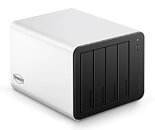
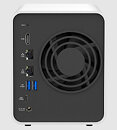
TerraMaster proudly launches the F4-425 Plus and F2-425 Plus series, two hybrid Network Attached Storage (NAS) devices designed for tech enthusiasts, small businesses, and home users. The F4-425 Plus features a pioneering 3+4 bay design, while the F2-425 Plus offers a 3+2 bay configuration for entry-level expansion. Both are equipped with dual 5GbE high-speed networking, three M.2 SSD slots, AI-driven privacy protection, and hybrid storage capacities of up to 144 TB/84 TB. These two products set a new benchmark in the NAS market with outstanding performance, top-tier security, and versatile applications. Combined with TerraMaster OS 6 (TOS 6) software and the Business Backup Suite (BBS), they provide seamless management and comprehensive data protection.

Powerful Performance and Scalability
The F4-425 Plus and F2-425 Plus are powered by Intel N150 quad-core processor (up to 3.6 GHz), 16 GB/8 GB DDR5 memory, and dual 5GbE network interfaces, achieving transfer speeds of up to 1010 MB/s to handle high-demand data processing with ease.

Intel Core Ultra X7 358H "Panther Lake" 12-Core Xe3 iGPU Tested

Intel's latest Core Ultra X7 358H CPU has appeared in recent Geekbench tests, marking the debut of the "Panther Lake" series with 12 Xe3 cores in online benchmark databases. Notably, this is the first instance of the Xe3 GPU in its complete integrated form. This lineup features the fastest memory subsystem among all Panther Lake models, with a speed of 9,600 MT/s, and a CPU architecture that includes four P-cores, eight E-cores, and four LPE-cores, totaling 16 CPU cores running at a max frequency of 4,776 MHz. While this SKU is most likely an engineering sample, it should be close to the final clocks Intel plans to ship. In OpenCL testing, the Panther Lake iGPU scored 52,014 points, which is not particularly high. This score places it in the range of NVIDIA's GeForce RTX 3050 discrete desktop GPU.

Historically, Intel's integrated GPUs tend to score lower in OpenCL benchmarks within Geekbench's GPU testing suites, where AMD and NVIDIA usually perform better. Therefore, this result should be interpreted with caution. When comparing Intel's iGPU performance across generations in this benchmark, from the "Arrow Lake-H" Arc 140T iGPU to the 12-core Xe3 GPU, there is roughly a 25% improvement favoring the newer architecture. Interestingly, the PTL iGPU performs closely to the Arc A550M discrete GPU, which features 16 cores on the first-generation Xe "Alchemist" microarchitecture, with a 60-80 W TDP and 8 GB of GDDR6. This may suggest that the OpenCL testing in Geekbench may not be fully optimized with drivers and performance enhancements. Before the official release, Intel is expected to update the drivers to ensure the GPU can deliver maximum performance.

Zotac Boards Powerful Mini PC Hype Train With NVIDIA RTX 5060 Ti-Powered ZBOX MAGNUS

In light of the recent flood of AI-ready mini PCs coming from the likes of Framework and GMKtec, Zotac has announced its own competitor, this time opting for a slightly different approach than the hyped AMD Ryzen AI Max+ 395 APU. Instead, the component company known for its mini PCs and discrete NVIDIA GPUs has equipped the Zbox Magnus (stylized as ZBOX MAGNUS) with an NVIDIA GeForce RTX 5070 Ti and up to a 20-core (8 performance, 12 efficiency cores) Intel Core Ultra 7 255HX CPU paired with dual memory slots for up to 96 GB of DDR5-6400 CSODIMM or DDR5-5600 SODIMM RAM—all in a mere 2.65-liter chassis. By default, however, the Magnus doesn't ship with RAM or storage, with a barebones variant currently listed on the company's Chinese site at a converted price of around $1,966 (13,9999 Yuan).

The product page lists the cooling solution as a heatsink and fan, but it's unclear whether there are separate heatsinks and fans for the CPU and GPU, raising questions about potential thermal throttling, given the tiny chassis. Zotac says that the Zbox Magnus is the first mini PC of its size to offer a desktop-class GeForce RTX 5060 Ti 16 GB GPU in a chassis that small, with the chassis measuring in at just 210 × 203 × 62.2 mm. That small chassis comes with the caveats that the Zbox Magnus needs a 330 W external AC-DC adapter, and that it features a soldered laptop-class CPU. Despite the small chassis, the Zbox Magnus has a decent selection of ports, with five USB Type-A ports, dual front USB Type-C ports, and dual Ethernet ports. It also comes with wall mount hardware and Wi-Fi antennae in the box.

Axiomtek Intros IMB701 ATX Server Motherboard Powered by Intel Xeon CPUs

Axiomtek, a world-renowned leader relentlessly devoted to the research, development, and manufacture of innovative, highly efficient, and reliable industrial computer products, proudly announces the launch of its IMB701, a high-performance server-grade ATX motherboard designed to meet the demands of AI, high-performance computing, and advanced image analysis. Powered by the latest 5th/4th Gen Intel Xeon Scalable Processors (up to 350 W TDP), the IMB701 delivers unparalleled computing performance with enterprise-level reliability.

High-Performance Architecture
The IMB701 supports the Intel Xeon Scalable platform with an LGA4677 socket, handling processors with up to 350 W TDP. It offers eight DDR5-5200 R-DIMM ECC slots, enabling up to 512 GB of high-density memory for demanding workloads. Its advanced architecture includes five PCIe x16 Gen 5 slots, enabling the integration of multiple GPUs and acceleration cards, making it highly scalable for AI workloads and video analytics, AOI, and LLM applications.

Intel Foundry Reportedly Secures 18A Order from Microsoft for Maia 3 Accelerator

Intel has secured a significant order from Microsoft, putting trust from external customers into Intel Foundry. According to Charlie Demerjian from SemiAccurate—and shared by X user @Jukanlosreve—Microsoft will manufacture its Maia 3 chip codenamed "Griffin" at Intel Foundry using the 18A or 18A-P process. This 18A-P node improves upon Intel's 18A by incorporating the RibbonFET and PowerVia technologies, offering enhanced performance and energy efficiency. Compare to the regular 18A node, improvements include newly designed low-threshold voltage components, optimized elements to reduce leakage, and refined ribbon width specifications, all aimed at boosting performance-per-watt metrics. This is particularly important for AI accelerators used in data centers, which require high efficiency due to the large number of units involved.

Microsoft could relocate the production of future Maia accelerators, following Maia 3, to Intel Foundry. If the Maia 3 project is successful, they plan to continue with Intel's more advanced nodes. As a reminder, Microsoft's first-generation Maia 100 chips were produced using TSMC's N5 process with CoWoS-S interposer technology. These chips feature an 820 mm² die size and operate at a 500 W TDP, with a maximum design power of 700 W. They include 64 GB of HBM2E memory providing 1.8 TB/s bandwidth and 500 MB of L1/L2 cache. The chips achieve peak tensor performance of 3 PetaOPS at 6-bit precision, 1.5 PetaOPS at 9-bit, and 0.8 PetaFLOPS for BF16. Connectivity options include 600 GB/s backend network bandwidth via twelve 400GbE ports and 32 GB/s host bandwidth through PCIe Gen 5 x8.

Update October 18, 17:30 UTC: Charlie Demerjian confirmed that the name of the chip is actually a third generation Maia 3 accelerator codenamed "Griffin."

TSMC to Bring More Advanced Manufacturing to Arizona Plant Ahead of Schedule

TSMC's strategy to keep advanced manufacturing primarily in Taiwan might be shifting, as indicated by recent comments from CEO C.C. Wei. During the Q3 earnings call, Wei stated, "We are preparing to upgrade our technologies faster... to more advanced process technologies in Arizona, given the strong AI-related demand from our customers." Previously, TSMC has emphasized that its latest nodes would be developed in Taiwan first, with Arizona following. Currently, TSMC produces N4 4 nm technology at its Arizona facilities and had planned to introduce the N3 node in 2028. However, this plan might change in favor of developing more advanced N2 or even A16 nodes in the coming years, as Taiwanese facilities advance to the A16 and A14 nodes first. The U.S. fabs will remain one node generation behind the Taiwanese fabs, rather than several generations as initially planned.

The push to accelerate advanced node deployment is largely driven by demand from U.S. customers. TSMC recently confirmed that its most advanced N2 node will begin volume production by the end of the year, with a rapid increase planned through 2026 in Taiwan. This marks the second 2 nm-class node to reach high-volume manufacturing, following Intel's 18A node. The competition from Intel's 18A and the upcoming 14A ramp may have led TSMC to reconsider its strategy for bringing advanced manufacturing to its U.S. facilities. While TSMC plans to add five more facilities at its Fab 21 site, it is yet to be confirmed which nodes will be developed there. With an accelerated timeline, it seems only a matter of time before we see the first Angstrom-era nodes produced on American soil.

Intel Quietly Raises Older Core i3/i5/i7/i9 Processor Prices Up to 15% Overseas

Intel has been quietly increasing prices on its older desktop CPUs over the past few weeks, particularly affecting budget and mid-range chips that are popular among consumers. According to South Korean pricing tracker Danawa, the Core i3-14100F has risen by 15%, from 121,000 won to 140,000 won between late September and mid-October. Similarly, the Core i5-14600KF has climbed 13% to 298,000 won. In Japan, the Core i5-14400 has seen a significant 20% increase in some stores. Meanwhile, the more expensive Core i7 and i9 chips have experienced only modest price adjustments of around 5%. This indicates that Intel is not raising prices uniformly but is instead targeting the high-volume sellers that constitute the majority of their desktop sales.

The timing of these price hikes coincides with the release of Intel's current desktop "Arrow Lake" processors. The Core Ultra 200S chips were intended to showcase Intel's latest advancements, but mixed performance reviews and aggressive pricing have led many builders to continue purchasing older generations. Despite the introduction of new models, DIY builders are still opting for older generation chips, enabling Intel to achieve better margins on products manufactured using its mature Intel 7 and Intel 10 process nodes. Unlike Arrow Lake, which relies on TSMC's external foundries and limits Intel's flexibility, these older chips are entirely under Intel's control regarding production costs and pricing decisions.

TSMC to Begin N2 Volume Production Before Year-End

TSMC announced today that its next-generation N2 node will enter series production before year's end, with a rapid ramp planned through 2026. This is the second 2 nm-class node to achieve high-volume manufacturing, with Intel's 18A node being the first. Last week, Intel confirmed that its Fab 52 is already pushing out 18A wafers in high-volume manufacturing capacity. The TSMC N2 milestone arrives as the manufacturer posted exceptionally strong Q3 financial results, showing that demand for the most advanced chips is moving faster than the industry can add new capacity. Revenue for Q3 was $33.10 billion, reflecting a 40.8% year-on-year gain and a 10.1% quarter-on-quarter increase.

In the third quarter, TSMC processed an astonishing 4.085 million 300 mm wafers, a rise of approximately 22.4% compared to the same period a year earlier, and reported year-over-year revenue growth of nearly 41%, producing roughly $33.1 billion in sales and more than $15 billion in profit for the quarter. Revenue from advanced process families, including all variants of N3, N5, and N7, now accounts for approximately 74% of total sales. By each node, N3 process shipments accounted for 23% of wafer revenue, N5 for 37% and N7 for 14%. The N5 family showed the largest sales increase, reflecting intense demand for AI accelerators and other high-end devices. It is also worth noting that each node carries a different pricing strategy, with newer nodes being significantly more expensive due to the more advanced and involved manufacturing techniques going into them.

Intel Unveils Crescent Island Data Center GPU with Xe3P Architecture and 160 GB of Memory

Today, Intel introduced its upcoming Crescent Island data center GPU designed specifically for AI inference workloads and built on the company's next-generation Xe3P "Celestial" architecture. The new GPU will focus on performance-per-watt efficiency, cost optimization and air-cooled operation, making it Intel's latest push into the growing AI accelerator market. Intel didn't release many technical details, so far announcing that Crescent Island will feature 160 GB of onboard LPDDR5X memory, an unusually large configuration for a GPU; however, this will help in handling large language models (LLMs) and other memory-intensive AI workloads. The use of LPDDR5X suggests a wide memory interface potentially up to 640 bits depending on whether Intel opts for a single high-end GPU die or a dual-GPU configuration. This setup provides high bandwidth and energy efficiency, although LPDDR5X's dual 16-bit channel design rules out butterfly connection modes common to GDDR6/7 memory.

Intel says customer sampling for Crescent Island will begin in the second half of 2026, with broader availability expected in 2027. The company is currently refining its open-source software stack using existing Arc Pro B-Series GPUs to ensure smooth scaling to Xe3P hardware. While detailed specifications remain under wraps, Crescent Island will compete with next-generation AI accelerators such as AMD's Instinct MI450 series and NVIDIA's Vera Rubin.

HP Expands Its Riot Games Lineup With New OMEN 16 League of Legends and OMEN 25 Gaming Monitor

Today at the 2025 League of Legends World Championship, HP Inc. introduced two new products developed with Riot Games: the OMEN 16 League of Legends Limited Edition Laptop and the OMEN 25 Gaming Monitor. These devices bring fan-favorite design elements and tournament-grade performance to players around the world, on stage and off. This new lineup marks the latest milestone in HP's global collaboration with Riot Games, first announced in 2024. Building on last month's debut of the OMEN 35L VALORANT Limited Edition gaming desktop, these additions further expand OMEN's portfolio of exclusive collaborations with Riot Games' titles.

"From all-out competition to all-in fandom, players want gear that reflects how they play," said Josephine Tan, Senior Vice President and Division President of Personal Systems Gaming Solutions, HP Inc. "This launch and continued collaboration with Riot Games celebrates both, with performance and design that resonates with the gaming community."

Intel "Panther Lake" Naming Scheme Confirmed with Core Ultra X9/X7/X5 SKUs

Last week, Intel finally revealed details about the much-anticipated "Panther Lake" processors. Our in-depth analysis covers all the specifics. However, one missing piece was the official naming scheme that Intel plans to use. Previous rumors suggested that the new naming scheme would include the X moniker to denote the top SKUs. Today, this has been confirmed by the developers of HWMonitor, a tool used for monitoring key system health sensors such as voltages, temperatures, power, currents, fan speeds, utilization, and clock speeds. They verified that the Panther Lake Core Ultra family will feature X9, X7, and X5 SKUs. These processors will include a larger Xe GPU tile with up to 12 Xe3 cores, the fastest memory subsystem, and a CPU structure consisting of four P-cores, eight E-cores, and four LPE-cores.
Below, you can check out the Core Ultra X9/X7/X5 SKUs, now confirmed by the HWMonitor update:

Intel and AMD Detail New x86 Improvements to Keep the Instruction Set Relevant

Late last year, Intel and AMD founded x86 ecosystem advisory group (EAG) to keep the x86 ISA growing and thriving in the era where Arm and RISC-V are expanding their presence. A year later, the hard work of Intel and AMD engineers is coming to a fruition. According to new blog posts by both x86 ecosystem advisory group founders, new instructions are being added as of now to harder the security layer and increase the vector and matrix performance. First in line is the new FRED (Flexible Return and Event Delivery) instruction, designed as a new modernized and standardized interrupt model to reduce latency in software and improve reliability in software. In addition to FRED, instructions such as AVX10 and ACE (Advanced Matrix Extensions for Matrix Multiplication) are now standardized and implemented across the stack, meaning that we now have a standardized way to accelerate matrix multiplication, as well as 512-bit vector extensions.

Perhaps the most interesting and the most important part of this update is the ChkTag for x86 memory safety. ChkTag is a new x86 memory-tagging instruction set that helps catch common memory-safety bugs such as buffer overflows and use-after-free by attaching small tags to memory and checking them in hardware. It gives developers and compilers fine-grained control over which accesses are checked, so tools can enable protections where they matter most without the heavy overhead of software-only approaches. That makes it practical for hardening applications, kernels, hypervisors and even firmware, while ChkTag-enabled binaries can still run on older processors that lack the hardware features, which eases deployment. The designers intend ChkTag to complement existing defenses like shadow stacks and confidential computing, and the full specification is expected later this year.

Intel 18A Gets Head Start on TSMC N2 with Fab 52 Ramp

Intel announced this week that its Panther Lake processors have entered volume production at Fab 52 using the company's 18A node, which is touted as the first 2 nm-class process to achieve high-volume manufacturing. This milestone gives Intel a slight timing advantage over rival foundries like TSMC, with its N2 node, and Samsung with its SF2 node. However, being first does not guarantee a lasting lead. Customers, partners, and investors will focus on Intel's ability to maintain parametric yields, control manufacturing costs per unit, and expand 18A beyond limited compute tiles. While Intel has shared improvements in defect density and early functional test results, comprehensive parametric yield metrics that demonstrate consistent achievement of power, performance, and frequency targets remain undisclosed. Initial shipments and early ramp figures will determine whether this production start is symbolic or substantive for Intel's manufacturing revival.

At the transistor level, 18A node introduces two major innovations: RibbonFET gate-all-around transistors and PowerVia backside power delivery. RibbonFET replaces vertical FinFET fins with thin horizontal silicon ribbons wrapped by gate material, enhancing electrostatic control, reducing leakage, and allowing shorter gate lengths. Intel reports approximately 5-10% shorter gate lengths when transitioning from FinFET to RibbonFET on 18A and claims over 20% reduction in per-transistor power. PowerVia relocates the power network to the wafer's backside, freeing up front-side metal for signal routing, shortening power paths, and reducing voltage drop at high switching rates. Together, these changes lower switching energy and provide designers with more flexibility to increase frequencies or reduce power consumption in notebooks and other mobile designs.

Intel Phases Out "Ponte Vecchio" and "Arctic Sound" Data Center GPUs

Intel has apparently started a slow deprecation phase of its "Ponte Vecchio" Data Center GPU Max and "Arctic Sound" Data Center GPU Flex series. According to the changelog in the Intel XPU Manager—a free and open-source tool for monitoring and managing Intel data center GPUs—version 1.3.3 deprecates Data Center GPU Flex Series and Data Center GPU Max Series. Owners of these GPUs are now advised to stick with the older version 1.2.42 for maximum feature support, and not update to the latest release. There are several reasons why this is happening, and a part of the suspicion is that Intel is preparing for "Jaguar Shores" AI accelerator transition, even as its has been only two years since its Data Center GPU Flex/Max series have launched.

Built on the Xe-HPC microarchitecture using Intel's 10 process, Ponte Vecchio is a massive chip, measuring about 1,280 mm² and containing roughly 100 billion transistors. It features 16,384 shading units, 1,024 tensor cores, and has a peak TDP of up to 600 W per card. The Max 1100, 1350, and 1550 SKUs, which offer 48 to 128 GB of memory, once made the design appealing for specialized HPC and AI applications. However, its large scale results in high costs, significant power consumption, and integration challenges. Intel's "Arctic Sound," also based on the Generation 12.5 GPU microarchitecture and manufactured on the Intel 10 node, is a much smaller chip, measuring around 190 mm² with about 8 billion transistors, 8,192 shading units, and 128 ROPs, and has a TDP close to 500 W. The Arctic Sound 1T, 2T, and M SKUs are compact 16 GB designs aimed at midrange data center tasks, with the GPU first appearing in 2021.

Intel XeSS 3 Expands Multi-Frame Generation Support to All XeSS 2 Titles

Intel made a surprisingly neat move as it will support XeSS 3 in all existing XeSS 2 games, Intel fellow Tom Petersen confirmed. The new update for Intel's super resolution technology will include multi-frame generation, arriving before AMD's FSR equivalent. At the Intel Tech Tour, the company confirmed that current XeSS 2 games will stay fully compatible. There are already 50 titles using XeSS 2 and more than 250 using XeSS 1 or 1.3. XeSS 3 will act as a drop-in replacement using the same API, needing no changes from developers. It is expected that the XeSS 3 Multi-Frame Generation feature will appear as a choice in the Intel Graphics Software app. You'll get to choose between 2×, 3×, and 4× frame generation modes based on what you like. However, Intel hasn't given us the full picture on how the 2× to 4× settings compare yet. They did show off two game demos though and screenshots posted by @hm1193 on X suggest ~250 FPS in Painkiller (Epic, 1080p) and ~130 FPS in Dying Light: The Beast (Max, 1080p) with XeSS 3 MFG 4x (Ultra Quality Upscaling) running on a 45 W PTL 12Xe.

What we know so far is that XeSS 3 will run on all Core Ultra CPUs and Alchemist or newer graphics. Whether you'll see a real difference might depend on the base framerate as frame generation doesn't work as well below 40-60 FPS. Intel's method looks a lot like what NVIDIA does with DLSS splitting upscaling from frame synthesis. Up until recently, Intel didn't have its own frame generation feature, a thing that changed with a blink of an eye now that they've taken a direct path into the multi-frame approach. This big step could give Intel an advantage over AMD, which still uses single-frame interpolation and is behind NVIDIA in this area. Intel has yet to share full details on XeSS 3, such as its launch date or expanded capabilities. The feature is widely expected to arrive with Panther Lake, Intel's next-generation CPU lineup featuring Xe3-based integrated graphics.

Intel Unveils Panther Lake Architecture: First AI PC Platform Built on 18A

Today Intel revealed the architectural details for the company's next generation client processor Intel Core Ultra series 3 (code-named Panther Lake) which is expected to begin shipping later this year. Panther Lake is the company's first product built on Intel 18A, the most advanced semiconductor process ever developed and manufactured in the United States.

Intel also previewed Xeon 6+ (code-named Clearwater Forest), its first Intel 18A-based server processor, which is expected to launch in the first half of 2026. Both Panther Lake and Clearwater Forest, as well as multiple generations of products built on Intel 18A, are being manufactured at Fab 52, Intel's new, state-of-the-art factory in Chandler, Arizona - a key milestone as Intel invests in strengthening American technology and manufacturing leadership and building a resilient semiconductor supply chain.

[Editor's note: Our in-depth tech preview article of Panther Lake is now live]

Intel Releases Arc GPU Graphics Drivers 101.8136 Beta

Intel has released the newest 101.8135 Beta version of its Arc GPU Graphics Drivers, adding Game On support for 2XKO, Battlefield 6, and Little Nightmares III games. Since it is a beta update, it does not come as a surprise that there no new fixed issued, but if you are looking to play these three new games, this beta drivers update is the way to go. As far as we are aware, known issues haven't changed since the previous drivers release. Both Battlefield 6 and Little Nightmares III launch on October 10th.

DOWNLOAD: Intel Arc GPU Graphics Drivers 101.8136 Beta

Thermaltake Launches AW360/420 AIO Liquid Cooler and WAir CPU Cooler for Workstations

Thermaltake, a leading PC DIY brand for premium hardware solutions, proudly announces the availability of the AW360/420 AIO Liquid Coolers and the WAir CPU Cooler, two high-performance cooling solutions designed specifically for modern workstations. Built for professionals tackling demanding workloads such as 3D rendering, AI computing, CAD design, and big data analytics, these coolers are engineered to deliver exceptional thermal performance, stability, and low noise under continuous high-load conditions.

Both coolers support Intel LGA4677 and AMD sTR5/SP6 sockets, ensuring broad compatibility with the latest high-core-count workstation processors. Combined with industry-leading TDP ratings, up to 625 W for the AW420 and 500 W for the Wair, both product lines provide reliable cooling for extended professional workloads.

Intel's "Panther Lake" Microarchitecture Deep Dive Set for October, Full Launch in 2026

The story of Intel's first 18A product, "Panther Lake," remains shrouded in mystery, at least for a few more days. According to earlier reports, Intel was expected to start shipping the first PTL-U and PTL-H SKUs by the end of 2025, with additional SKUs to follow in 2026. However, that situation could be subject to change, according to Golden Pig Upgrade. The rumored October 9 launch date is reserved only for the microarchitecture deep dive, and the launch and final specifications of specific models will occur at CES 2026. Being Intel's first big bet with the 18A node, Panther Lake is a product of years of Intel's manufacturing innovation, which needs to demonstrate that the investment in advanced manufacturing was worthwhile. Reportedly, Intel started limited shipments of its 18A nodes to U.S. customers in Q3, with these wafers already in production and initial output of its own CPUs expected in Q4.

Given that Panther Lake is the first 18A node product, we could expect that to be a large part of those shipped wafers, most likely going to OEMs for testing before integration. As a reminder, the low-power PTL-U models are designed for a 15 W TDP and are expected to come in 6-core and 8-core versions. Some SKUs will feature four high-performance P-cores paired with four LPE-cores, while others will have only two LPE-cores complementing four P-cores. Both families will utilize Xe3-based integrated graphics, with entry models featuring four GPU cores. The more powerful PTL-H line will scale up to around 16 CPU cores, comprising four P-Cores, eight E-cores, and four LPE-cores. Some H-series parts might include up to 12 GPU Xe3 cores for integrated graphics, but the final configurations will be revealed when Intel officially launches the Panther Lake product family.

Intel Updates NPU Driver to Support Android for PC Project

Intel has today pushed an update to its NPU driver for Linux, impacting Core Ultra "Meteor Lake", "Arrow Lake," and "Lunar Lake" processors. However, among the list of changes spotted by X user @SquashBionic is an interesting support for the Android platform, likely hinting at the Android for PC project. At Qualcomm's 10th annual Snapdragon Summit, Google teased its Android for PC project, and Qualcomm's CEO described it as very impressive. Google plans to merge its ChromeOS and Android for PC projects into a single branch, which will be Android for PC. That will include all of Google's best AI technologies from Gemini, now running on a more powerful mobile design. Some of these designs could be very well powered by Intel.

While preliminary details about Android for PC are unknown, the project will be aiming to compete with Windows in everyday tasks. Google could end up sourcing SoCs from Snapdragon for Arm-based designs, and Intel/AMD for x86-based laptops. With now added support for Intel NPU support for Linux driver—Android, a Linux-based OS—could become an optimization target for various non-mobile SoCs from Intel and AMD. Google plans to re-enter the PC ecosystem with the plan to converge mobile and desktop experiences, and Android for PC could allow designs that feature good battery life, portability, and satisfactory performance targets.

AMD Gains CPU Share as Intel Hits Record Low on Steam September Hardware Survey

A new month has started, meaning that the Steam Hardware and Software Survey has just finished collecting data for September 2025. And there was a subtle, yet clear message about the CPU market: Intel has slipped to its lowest share on record among Steam users, while AMD continues to close the gap. Valve's monthly snapshot shows Intel at about 58.61% and AMD around 41.31%. That shift is the main story this month and suggests a significant change in gamer preferences that warrants a closer examination. The recent movements are not massive, but they are consistent from one month to the next. AMD added roughly 2% points since June, continuing a pattern that started last year, while Intel has been losing ground month after month. A significant part of AMD's momentum stems from its gaming-focused X3D chips and the strong reception they have received in benchmark and real-world tests.

Pricing and aggressive promotions for AMD-based systems have also helped. Intel's share is falling even though it remains the largest single vendor, and recent CPU launches have failed to halt the downward trend among Steam users. If both companies continue at their current rates, AMD could become the more common choice among Steam players within a year, marking the first time this has happened in the survey's history. What this means in practice is important for gamers, builders, and the wider PC supply chain. Hardware makers and retailers may shift their inventory and marketing strategies to meet the rising demand for AMD. Game developers are also taking notice. For Intel, the path back will require more compelling launches, clearer messaging, and competitive pricing. The company recently advertised gaming parity with top AMD SKUs and offered better content creation results. For AMD, the challenge will be to turn momentum into sustained leadership without sacrificing margins or running into supply constraints. Either way, the CPU rivalry is no longer a background story. It is directly "streamed" on Steam.

Intel Details Core Options for "Nova Lake" Desktop and "Diamond Rapids" Xeon 7 Processors

Intel confirmed today which core microarchitectures will power its next-generation client and server processors, doubling down on previous rumors that "Coyote Cove" P-cores will power the "Nova Lake" family and "Panther Cove" P-cores will power the "Diamond Rapids" line. The details are outlined in Intel's latest ISA reference update and provide the clearest public signal yet about the company's roadmap through 2026. Nova Lake and Diamond Rapids are both slated for release next year, and the confirmation removes much of the guesswork about which P-core and E-core designs each family will use. On the client side, Nova Lake will pair Coyote Cove P-cores with "Arctic Wolf" E-cores and introduce an updated integrated graphics tile based on the Xe3 lineage.

Desktop Nova Lake-S parts are expected to scale to very high core counts, up to 52 cores, while HX mobile variants will focus on iGPU in power-optimized packages. Intel is also planning a platform update with an LGA 1954 socket, and the company suggests that it will deliver meaningful improvements in IPC and performance per watt compared to the previous Cougar Cove and Darkmont designs. For servers, Diamond Rapids will use Panther Cove P-cores, push core density aggressively, and is expected to arrive in the second half of 2026. These initial Panther Cove server chips will not include simultaneous multithreading, a decision Intel appears set to correct with the follow-up "Coral Rapids" family, which will reintroduce Hyper-Threading for datacenter workloads. There is also discussion of a Panther Cove-X variant designed for workstation users and a Wildcat Lake entry tier that will replace Twin Lake, utilizing Cougar Cove P-cores and Darkmont E-cores.

Intel Releases Arc GPU Graphics Drivers 101.8135 Beta

Intel has released the latest 101.8135 Beta version of its Arc GPU Graphics Drivers, adding Game On support for Call of Duty: Black Ops 7 Beta. This s a minor update so it only fixes intermittent visual corruption in the export window issue in Topaz Video when running on Intel Core Ultra Series 2 CPU with built-in Intel Arc GPUs. There are also several new known issues added since the previous 101.8132 WHQL drivers release, including issues with corruption on certain light sources in Call of Duty: Black Ops 7 Beta.

DOWNLOAD: Intel Arc GPU Graphics Drivers 101.8135 Beta

Intel Allegedly in Talks with AMD for Potential Foundry Manufacturing Deal

Latest rumors spin around Intel more than ever. According to Semafor, the company is in early talks with AMD—once its biggest rival in the PC and server chip wars—about making chips on Intel's production lines. As a CNBC report cited by TrendForce points out, if AMD were to use Intel for chip production, it would be a big win for Intel's foundry push. The report suggests such a deal would carry symbolic weight: AMD, a fierce competitor in x86 chips for PCs and servers, trusting manufacturing to its biggest rival. Right now, AMD relies heavily on TSMC for most of its chip production. The report didn't say how much manufacturing AMD would do with Intel, but Reuters noted in March that NVIDIA and Broadcom were testing Intel's most advanced node, 18A, while AMD was weighing whether the tech fits its needs.

AMD isn't the only company Intel is eyeing. We reported in late September that Intel reached out to Apple to explore potential investments and ways to work together more closely. The talks are described as early-stage and may not lead to a deal. Meanwhile, the Wall Street Journal reported that Intel also contacted TSMC—both a foundry rival and manufacturing partner—about potential investments or production partnerships. However, Focus Taiwan says TSMC clarified that no discussions about investments or partnerships have happened, despite rumors floating around that the struggling chipmaker is seeking TSMC's help.

HP Unveils Wealth of New Productivity Tools for Work

HP Inc. today announced new products and services designed to help people work without limits with greater ease and purpose. Transforming and simplifying the work experience, HP is boosting productivity, sparking creativity, and driving fulfillment.

As the modern workforce operates across office, remote, and mobile environments, employees need technology that enables seamless productivity, collaboration, and creativity. However, findings from HP's 2025 Working Relationship Index reveal that only 20% of knowledge workers feel they have access to the technology needed to truly support this hybrid way of working. HP is continuously advancing its portfolio of products and services to drive employee fulfillment—not just through enhanced productivity, but to create integrated platforms that foster deeper engagement and connection.
Return to Keyword Browsing
Nov 17th, 2026 13:16 CST change timezone

New Forum Posts

Popular Reviews

TPU on YouTube

Controversial News Posts