News Posts matching #Qualcomm

Return to Keyword Browsing

Google Tensor G5 Benchmark Leaks With Impressive Performance Gains — Still Trails Flagship Snapdragon SoCs

The Google Pixel 10 has been officially announced, with the Google Tensor G5 SoC and 16 GB of RAM running the show, however independent performance benchmarks have yet to prove the capabilities of said Tensor G5. A recently leaked Geekbench 6 CPU comparison, however, puts forward some impressive numbers from the new SoC. According to the leaked benchmark results, posted to r/pixel_phones on Reddit, the Google Tensor G5 in the Google Pixel 10 XL scored 2,296 in single-core tests, with the multicore score coming in at 6,203 points.

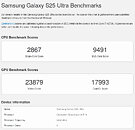
By comparison, the Geekbench 6 charts list the chart-topping Samsung Galaxy S25 Ultra and its Qualcomm Snapdragon 8 Elite as having a single-core score of 2,867 points and a multicore score of 9,491 points. Meanwhile, the Google Pixel 9 Pro scored just 1,876 points in single-core benchmarks and 4,337 points in multicore. This puts the Tensor G5 a solid 22% ahead of its predecessor, but still 20% behind the Samsung flagship in single-core performance. The gap grows in multicore benchmarks, however, where the Tensor G5 is still around 35% slower than the Snapdragon 8 Elite but a decent 43% faster than the G4 that preceded it. Google Tensor SoCs have never been known for their raw performance, but it's clear that Google has put some effort into making its Tensor SoCs more powerful. We will likely see more testing reveal the real-world performance improvements of the Tensor G5 when full reviews are released later this month around the phone's actual retail availability date.
Qualcomm Announces Third Quarter Fiscal 2025 Results

Qualcomm Incorporated (NASDAQ: QCOM) today announced results for its fiscal third quarter ended June 29, 2025.

"Another quarter of strong growth in QCT Automotive and IoT revenues further validates our diversification strategy and confidence in achieving our long-term revenue targets," said Cristiano Amon, President and CEO of Qualcomm Incorporated. "Our leadership in AI processing, high-performance and low-power computing and advanced connectivity positions us to become the industry platform of choice as AI gains scale at the edge."

EnGenius Announces Affordable ECW520 Wi-Fi 7 Access Point

EnGenius Technologies Inc., a global leader in advanced connectivity and cloud-managed networking solutions, is pleased to announce the release of the ECW520, the latest addition to its Wi-Fi 7 portfolio. Engineered to provide enterprise-grade wireless performance at a highly cost-effective price point, the ECW520 is designed to empower small and medium-sized businesses (SMBs) with next-generation connectivity—without the traditional enterprise cost.

EnGenius ECW520: High-Performance Wi-Fi 7, Optimized for SMBs
Powered by the Qualcomm Networking Pro 1220 Wi-Fi 7 platform, the ECW520 delivers robust tri-band 2x2x2 performance with combined throughput capabilities of up to 10.8 Gbps. At an MSRP of $189, the ECW520 redefines value in the wireless networking space, offering a professional-grade solution for IT professionals, managed service providers (MSPs), and integrators seeking high-capacity, reliable connectivity for SMB deployments.

Samsung Exynos 2500 Benchmarks Put New SoC Close to Qualcomm Competition but Still Slower

Samsung's Exynos 2500 SoC has appeared on Geekbench, this time giving us a clearer indication of what to expect from the upcoming SoC that will power the next generation of Samsung flagship smartphones. There are three total runs that have appeared on Geekbench, putting forward anywhere between 2303 and 2356 points in the single-core Geekbench 6 benchmark and 8062 and 8076 points in the multicore benchmark. Meanwhile, the Qualcomm Snapdragon 8 Elite in the current-generation Samsung Galaxy S25 Ultra manages a single-core score of 2883 and a multicore score or 9518 on the same Geekbench 6 benchmark. Samsung recently made the Exynos 2500 public, with the spec sheet revealing a Samsung Xclipse 950 GPU paired with 10 Arm Cortex CPUs (1× Cortex-X5, 2× Cortex-A725 at 2.74 GHz, 5× Cortex-A725 at 2.36 GHz, and 2× Cortex A520 at 1.8 GHz).

The new SoC is reportedly the first chip to use Samsung's 3 nm GAA process, and leaks suggest that Samsung may be using the new SoC across its entire next-gen global smartphone line-up, starting with the launch of the Galaxy Z Flip 7. This would be a stark departure from previous releases, where the US versions of the Galaxy S line-up featured Qualcomm Snapdragon processors, with the international Galaxy S smartphones packing the in-house Exynos designs. In recent years, however, Samsung has pivoted to using Snapdragon SoCs across all regions.

nubia Unveils Pad Pro, Designed for Work, Study and Entertainment

nubia has launched its first-ever tablet - the nubia Pad Pro. Designed to meet the growing demands of users across work, study, and entertainment, the nubia Pad Pro delivers a high-performance experience powered by the Qualcomm Snapdragon 8 Gen 3 processor, featuring a Prime Cortex-4 clock speed at up to 3.3 GHz.

It's equipped with LPDDR5X high-speed memory and UFS 4.0 flash storage, ensuring smooth multitasking capabilities and fast load times across applications. The nubia Pad Pro features a 10.9-inch 2.8K ultra-clear true-color screen with a resolution of 2880×1800, offering vivid visuals and accurate color reproduction. For audio, it supports DTS X Ultra spatial 3D sound, creating an immersive stereo experience ideal for entertainment and content consumption.

Robust AI Demand Drives 6% QoQ Growth in Revenue for Top 10 Global IC Design Companies in 1Q25

TrendForce's latest investigations reveal that 1Q25 revenue for the global IC design industry reached US$77.4 billion, marking a 6% QoQ increase and setting a new record high. This growth was fueled by early stocking ahead of new U.S. tariffs on electronics and the ongoing construction of AI data centers around the world, which sustained strong chip demand despite the traditional off-season.

NVIDIA remained the top-ranking IC design company, with Q1 revenue surging to $42.3 billion—up 12% QoQ and 72% YoY—thanks to increasing shipments of its new Blackwell platform. Although its H20 chip is constrained by updated U.S. export controls and is expected to incur losses in Q2, the higher-margin Blackwell is poised to replace the Hopper platform gradually, cushioning the financial impact.

Qualcomm to Acquire Alphawave Semi

Qualcomm Incorporated today announced that it has reached an agreement with Alphawave IP Group plc regarding the terms and conditions of a recommended acquisition by Aqua Acquisition Sub LLC, an indirect wholly-owned subsidiary of Qualcomm Incorporated, for the entire issued and to be issued ordinary share capital of Alphawave Semi at an implied enterprise value of approximately US$2.4 billion.

The acquisition of Alphawave Semi aims to further accelerate, and provide key assets for, Qualcomm's expansion into data centers. Qualcomm Oryon CPU and Hexagon NPU processors are well positioned to meet the growing demand for high-performance, low-power computing, which is being driven by a rapid increase in AI inferencing and the transition to custom CPUs in data centers.

Rumor of 18-core Qualcomm Snapdragon X2 Elite Flagship Emerges; on Claimed 64 GB RAM Test Platform

During a recent Computex keynote presentation, Qualcomm announced the next edition of its Snapdragon Summit. This year's event will take place in Hawaii, starting on September 23 and concluding on the 25th. The company's 2024 new product showcase took place last October, so an earlier than expected scheduled follow-up has caused industry observers to raise a collective eyebrow. Insiders foresee an unveiling of Qualcomm's next-gen flagship notebook/slimline laptop processor; mid-April leaks produced a smattering of elevated (generational) performance numbers. Late last week, Roland Quandt weighed in with fresh pre-release theories: "SC8480XP aka SD X2 Elite in testing with 64 GB RAM... looking like (an) 18-core thing, more and more."

Not long ago, the tenured semiconductor industry watcher linked the alleged Snapdragon X2 Elite flagship chip to a SK Hynix 48 GB RAM and 1 TB SSD-equipped SiP (System-in-Package) test platform. Mid-March "import-export database records" pointed to early evaluations of 18-core processor designs. The very best current-gen Snapdragon X Elite SoC leverages a 12-core "Oryon" design. Additional murmurs have driven speculation about diversified Snapdragon X2 Elite chips; allegedly powering desktop applications. Q1'25 rumors suggested the existence of setups configured with 120 mm AIO cooling solutions.

Xiaomi Envisions Proprietary Chipset Designs Being Deployed in non-Flagship Mobile Devices

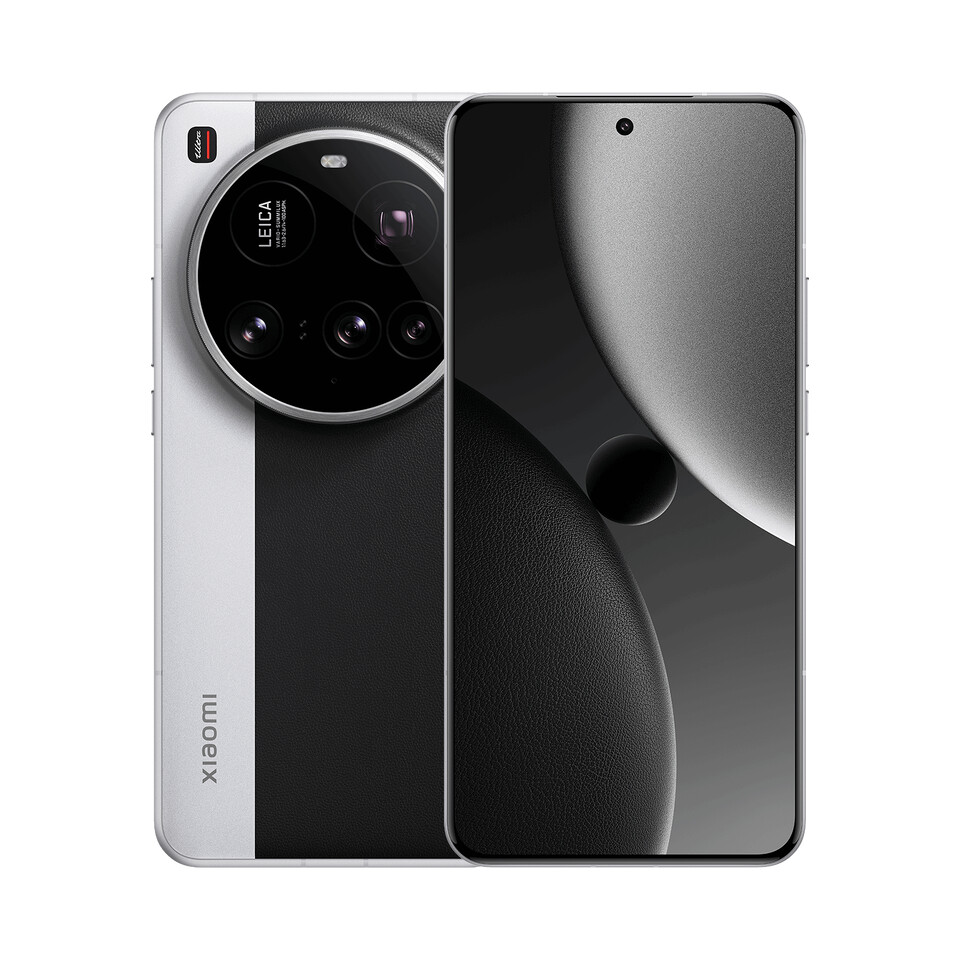
Last Thursday, Xiaomi revealed its proprietary XRING O1 3 nm mobile chipset. After months of rumors, the Chinese firm's highly anticipated first-party chip design was introduced during their special "A New Beginning" event—held in Beijing. During this multipronged product launch celebration, company leadership disclosed the underpinnings of their first-ever flagship processor. According to official descriptions, Xiaomi's pivotal XRING O1 SoC is built on: "a cutting-edge second-gen 3 nm process with 19 billion transistors, features a 10-core CPU and 16-core Immortalis-G925 GPU, delivering flagship performance with industry-leading power efficiency. It also integrates Xiaomi's fourth-gen ISP and a 6-core NPU offering 44 TOPS for advanced AI processing." Days prior to important ceremonies in China, a joint statement—issued by Qualcomm—detailed an extended Snapdragon chipset supply agreement. The XRING O1 processor line will drive forthcoming Xiaomi 15S Pro smartphones and Pad 7 Ultra tablets; reserved for initial "domestic market" launches. Qualcomm's current flagship offerings are technically superior to Xiaomi's fresh effort, but an ever-shifting political landscape could affect future shipments.

Lu Weibing—a company president and partner—has outlined a vision for XRING's eventual expansion beyond a flagship/high-end product tier. Last week's intro firmly positioned the 3 nm part as premium option that will power suitably expensive Android-based mobile devices. Weibing acknowledged that his team has jumped into the deep end: "(for) this platform capability, it is most difficult to work on smartphone flagship SoC, it has high power consumption demand and its technology is extremely complicated. If you can, then you should have the ability to work on flagship smartphone SoC. (Once you) move to work on other chips, it won't be that difficult." Industry moles posit that Xiaomi's XRING division is already a formidable force, in terms of staff headcounts and experience. The department could be absorbing some inspiration from Apple; namely their custom C1 modem chip. The firm's president painted a picture of things to come: "so we want to focus on the flagship SoC, and then we want to make a capable modem for the future. We have to work on 4G and 5G parts—together with 3G—leading to a complete matrix. So that is what we need to do at this stage." Early leaks have indicated the existence of a binned version of the XRING O1 SoC; present within early Xiaomi Pad 7 Ultra tablet samples. In theory, these compromised chips could be deployed in unannounced cheaper products.

Qualcomm & Xiaomi Extend Collaboration with Multi-Year Agreement

Qualcomm Technologies, Inc. and Xiaomi Corporation are celebrating 15 years of collaboration and have executed a multi-year agreement. The relationship between Qualcomm Technologies and Xiaomi has been pivotal in driving innovation across the technology industry and the companies are committed to delivering industry-leading products and solutions across various device categories globally.

"Qualcomm Technologies has always been one of Xiaomi's most trusted and vital partners, supporting our journey from a startup to a global technology leader. We look forward to continuing the next 15 years of our collaboration and leveraging Qualcomm's cutting-edge Snapdragon platforms and technologies to deliver even more innovative and high-quality products to our customers worldwide," said Lei Jun, CEO of Xiaomi.

Qualcomm Job Advert Alludes to Snapdragon-powered "Xbox Adjacent" Products

Late last week, tech news headlines were generated by a curious Qualcomm/NUVIA job advertisement. The presence of Xbox-related activities—at the US firm's Redmond, Washington office—has set off watchdog alarm bells. Microsoft's HQ is also located in this Seattle Metropolitan Area business hub. The job description outlined a sales director position—including interesting tidbits: "support sell-in activities for the next generation of Surface and Xbox products built on Snapdragon solutions" and "help define the next generation Surface and Xbox portfolios." Older leaks have suggested Microsoft's weighing up of ARM64 processor architecture, with next-gen Xbox designs in mind. Since the publication of widespread reportage, Qualcomm has edited out any mention of Xbox from the offending job ad. Given the latest evidence, fresh speculation has emerged from online media outlets. In theory, the company's hardware engineers could be formulating a next-gen Arm-based handheld—not directly related to "Project Kennan."

Jez Corden, executive editor of Windows Central, has dismissed many next-gen "handheld" or "home console" projections. Insiders believe that in-progress first-party development centers around AMD (x86) solutions. Similarly, Sony is reportedly collaborating with Team Red. The speculated PlayStation 6 (and a handheld offshoot) has been linked to Zen 6 and UDNA/RDNA 5 IPs. In response to initial claims, Corden reached out to shadowy industry figures. As disclosed in his opinion piece: "sources confirmed to me this morning that the next Xbox systems are not based on Qualcomm chips. There might be some third-party "Designed for Xbox" Arm-based offerings, like the Logitech G Cloud. But, the main plan from Microsoft, at least for now, is for the next-gen Xbox systems to have as much compatibility with your current library as possible. The overheads required to emulate games built for Microsoft's AMD-based systems are beyond what the Snapdragon line up is currently capable of." Today, Digital Foundry pointed out that Microsoft's "Xbox Play Anywhere" marketing campaign has created a looser categorization of related hardware. Thus providing extra scope for adjacent and supplemental devices (in the near future).

Acer Expands Aspire AI Series with Six New Copilot+ PCs Powered by Next-Gen Processors

Acer today announced the expansion of its Aspire AI series laptops with six new Copilot+ PCs, showcasing intuitive AI capabilities and versatile features. Available in sleek 14- and 16-inch models, these laptops offer varied configuration options, combining powerful computing with modern designs at pocket-friendly prices. The new Aspire AI laptops cater to a diverse range of users, including students, professionals and families seeking reliable performance and multi-day battery life for their daily computing needs. As Copilot+ PCs, these laptops serve to streamline workflow with exclusive AI experiences, including Recall (preview), Click to Do (preview), and Improved Windows Search, making it easier to resume tasks and quickly find what users need. Acer's proprietary AI applications - AcerSense, Acer LiveArt 2.0, Acer PurifiedView 2.0 and Acer PurifiedVoice 2.0 - make it easy to manage settings, sift through files, produce stunning content instantly, and improve videoconferencing quality.

Featuring a durable, thin-and-light aluminium chassis, the Aspire 16 AI and Aspire 14 AI are perfect for travel, going to school and mobile work. Their versatile 180° hinge designs allow them to lay flat or be positioned in various ways, adjusting viewing angles based on the task at hand. With plenty of battery life, these devices can power through more than an entire day without needing to plug in. The Aspire range comes with 14- or 16-inch up to 120 Hz displays featuring slim bezels, and 16:10 aspect ratios for expansive viewing. Touchscreen models are available for more interactive use cases. Each device is equipped with up to 32 GB LPDDR5X memory, 1 TB PCIe Gen 4 storage, and offers ultra-fast, stable connectivity with up to Wi-Fi 7 and Bluetooth 5.4. Plus, they are equipped with a generous number of I/O ports, including a pair of USB Type-C and USB Type-A ports, HDMI 2.1, and MicroSD card slots. Each model is also EPEAT Gold registered and is encased in 100% recyclable packaging.

Qualcomm Unveils the Snapdragon 7 Gen 4 Mobile Platform

Qualcomm Technologies, Inc. today unveiled the latest addition to its 7-series lineup - the Snapdragon 7 Gen 4 Mobile Platform. This brand-new platform is designed to enhance users' favorite multimedia experiences and deliver robust performance across the board. Whether capturing priceless moments with advanced image processing or enjoying action-packed gaming with select Snapdragon Elite Gaming features, Snapdragon 7 Gen 4 captivates users, allowing them to fully immerse themselves in their passions. The Snapdragon 7 Gen 4 also delivers innovative AI capabilities, including support for Gen AI assistants and popular large language models (LLMs) running directly on the device, with new-in-series stable diffusion image generation.

"With the Snapdragon 7 Gen 4 Mobile Platform, we are delivering new levels of possibilities in the 7-series with AI-driven experiences built directly into the hardware, making it easier than ever for users to capture, create, and share," said Chris Patrick, senior vice president and general manager of mobile handsets at Qualcomm Technologies, Inc. "Backed by Snapdragon Sound technology and packed with premium audio technologies, including the first-ever support for Qualcomm Expanded Personal Area Network (XPAN) technology outside the 8-series, this platform brings cutting-edge multimedia experiences to a broader audience."

Qualcomm & HUMAIN to Develop State-of-the-Art AI Data Centers

Qualcomm Technologies, Inc., a technology leader enabling connected intelligent computing, and HUMAIN, a national artificial intelligence (AI) champion advancing Saudi Arabia's goals for AI, today signed a Memorandum of Understanding (MOU) with the intent to enter a strategic collaboration for the development of next-generation AI data centers, infrastructure and cloud-to-edge services to meet the rapidly growing demand for AI across the globe, including the Kingdom of Saudi Arabia. The MOU was signed during the Saudi-US Investment Forum in Riyadh, which was held during the official visit of President of the United States Donald Trump to the Kingdom of Saudi Arabia.

The data centers and supporting ecosystem are intended to provide both government and enterprise organizations with access to high-performance and power efficient CPU and AI cloud infrastructure and cloud-to-edge services. These offerings will enable the deployment of AI solutions that can make real-time predictions and decisions, in addition to significantly increasing the availability and value of advanced AI-enabled applications.

Insider Suggests "Snapdragon 8 Elite Gen 2" SoC NPU Computing Power Bumped Up to 100 TOPS

Digital Chat Station (DCS)—a dedicated watcher of futuristic smartphone chip developments—has returned to a favorite topic: Qualcomm's rumored "Snapdragon 8 Elite Gen 2" mobile chipset. The tenured technological soothsayer disclosed compelling "SM8850" details over a month ago; mostly focusing on key next-gen upgrades. His latest bulletin reiterates many past claims, but a new proposition points to a significant bump in onboard AI-crunching capabilities. DCS's latest dose of inside track knowledge points to the Gen 2 chip's NPU computing power being bumped up "to 100 TOPS."

At the tail end of their bulletin, DCS mentioned an interesting new feature: "(the SM8850) chip natively supports hardware-level sunlight screen; display brightness of new devices will be greatly improved, and the native-level super frame will be further improved." In a separate post, DCS hinted about a forthcoming "Snapdragon 8 flagship chip-powered" smartphone that will make use of a "new silicon" 7800 mAh capacity battery. Commenters have linked OnePlus to this development—Chinese electronics firms seem to be ahead of mainstream South Korean rivals, with their formulations of silicon-carbon battery technology. DCS's freshest theory did not place the cutting-edge "Snapdragon 8 Elite Gen 2" chip alongside a super high-capacity power cell, but examples of this potent combination could arrive later this year.

Microsoft Intros New Surface 13-inch Laptop and Surface Pro 12-inch Tablet

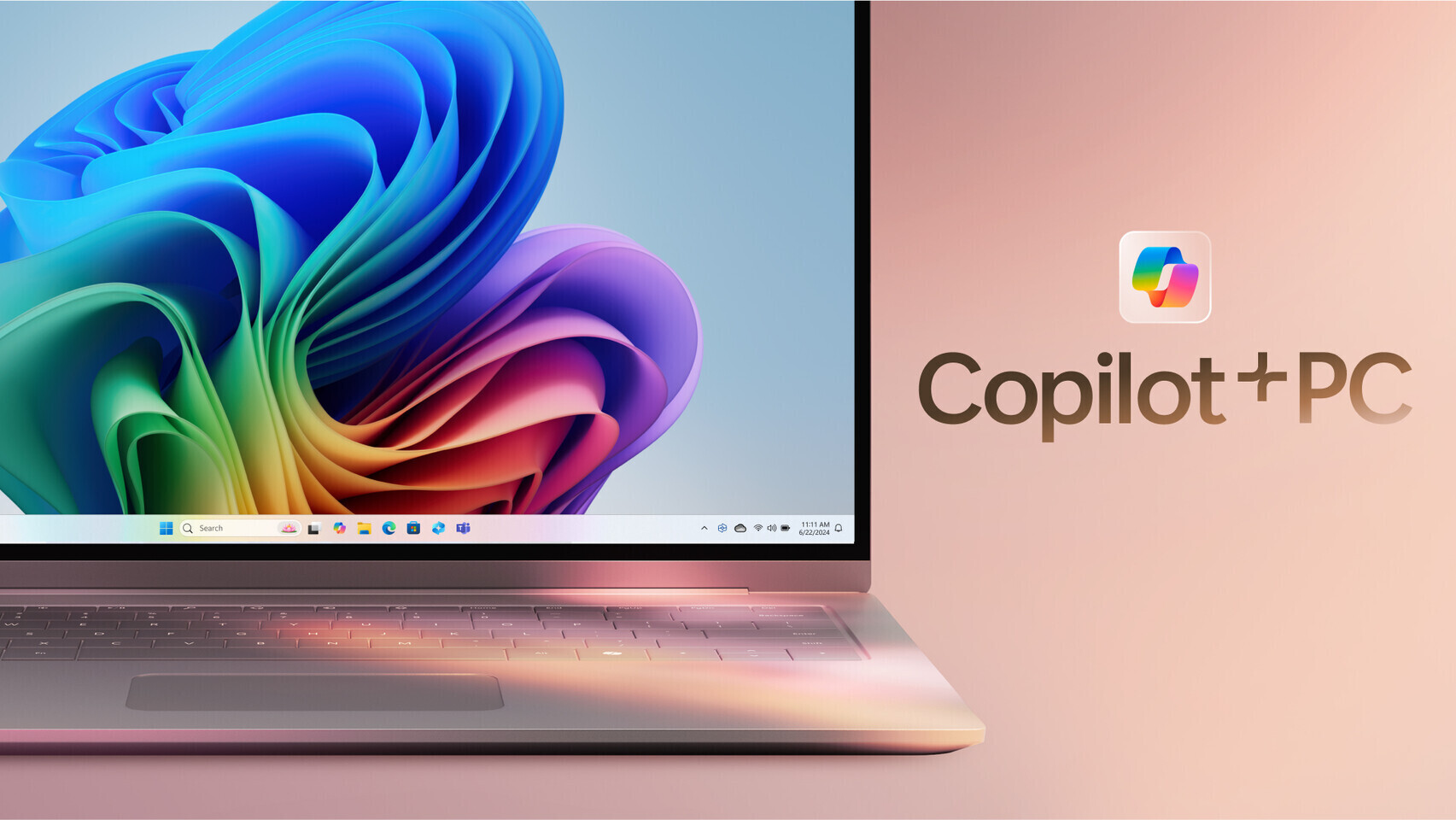
Copilot+ PCs continue to define the next wave of personal computing—fast, long lasting, secure PCs that are purpose-built to unlock AI experiences that empower us to get more done. Today, Microsoft and Surface expand the Copilot+ PC family with the new Surface Laptop, 13-inch and Surface Pro, 12-inch, designed with performance and portability in mind. These new PCs reflect the next chapter of Surface innovation bringing ultra-thin, lightweight and powerful Copilot+ PCs to more people at even lower price points.

Last May, we introduced a new category of devices—Copilot+ PCs, the fastest, most intelligent Windows PCs ever, with our flagship Surface Laptop and Surface Pro representing the ultimate Copilot+ PCs from Microsoft. Copilot+ PCs are lightning fast, responsive devices with long battery life, built to be secure by design and by default, and unlock exclusive AI experiences, running locally thanks to the Neural Processing Unit in their advanced processors. Windows continues to invest in Copilot+ PCs, with a new agent in settings and new Copilot+ PC experiences announced today—rolling out first to Windows Insiders. Today, we are proud to introduce two new Surface Copilot+ PCs, powered by Snapdragon X Plus processors, that deliver great experiences for great value. You now have more options to choose the right Surface Copilot+ PC to fit your needs.

1000+ Xiaomi Employees Reportedly Working on Proprietary "Xring" Chipset Designs

Mid-way through April, a few Asian media outlets proposed a fairly recent formation of Xiaomi's "chip platform department"—most likely operating as part of the Chinese corporation's mobile phone development operation. Industry insiders claimed that this special branch was tasked with the designing of "Xuanjie" chipsets, with added expertise provided by an ex-Qualcomm marketing director. Weeks later, Jukanlosreve has weighed in with alleged new details. The keen tracker—of unannounced flagship smartphone chips and semiconductor business revelations—believes that previous leaks were of merit, but made some corrections.

Given reported greater than expected "new division" headcounts, Xiaomi probably established its "Xring SoC" team a while ago—on this topic, Jukanlosreve divulged: "it operates as a new company; independent of the original parent firm. It's not a small team either—it has over 1000 people. To be honest, I see it as a positive development if a domestically produced chip gets used in a domestically made smartphone and sold globally. I genuinely hope it becomes reality. If Xring succeeds, it might encourage more companies to get involved, and even engineers currently working at major firms could see better pay opportunities."

Qualcomm Announces Second Quarter Fiscal 2025 Results

Qualcomm Incorporated (NASDAQ: QCOM) today announced results for its fiscal second quarter ended March 30, 2025.

"We are pleased to report another quarter of strong results," said Cristiano Amon, President and CEO of Qualcomm Incorporated. "As we navigate the current macroeconomic and trade environment, we remain focused on the critical factors we can control - our leading technology roadmap, best-in-class product portfolio, strong customer relationships and operational efficiencies. Our top priorities remain executing our diversification strategy and continuing to invest in areas that drive long-term value."

Nokia Demonstrates the Power of Its Flagship Wi-Fi 7 Solution at Apex Legends Global Series Esports Gaming Event

Nokia today announced it will showcase its Beacon 24 device at the ALGS esports gaming event, allowing fans and gamers to see firsthand the power of its Wi-Fi 7 solution for eGaming applications. Located in the heart of the convention center's challenging Wi-Fi environment, Nokia's demonstration, in partnership with Qualcomm, SONY, Corsair and EA, offers visitors an exclusive chance to battle a mystery pro head-to-head in the Apex Legends game, powered solely by Nokia's Wi-Fi device. Visitors will also be able to take on some of their favorite gaming content creators as part of a "take-over" event taking place at the Nokia booth.

The Nokia WiFi Beacon 24 embeds unique latency and queuing technology to give service providers a powerful Wi-Fi gateway solution that can rival any commercial and retail device on the market. Equipped with an advanced gaming optimization application available on Nokia's Corteca platform, the Wi-Fi 7 device delivers the ultimate end-user experience, delivering gaming-level latency that optimizes performance.

Snapdragon 8 Elite Gen 2 "for Galaxy" SoC Variant Linked to Samsung 2 nm GAA Node Process

Industry watchdogs have held the belief that Samsung's foundry business has lost several key clients due to alleged yield problems—the South Korean megacorp appears to be diligently working on major improvements with currently "in-progress" manufacturing processes; namely 2 nm GAA (aka SF2). Semiconductor industry insiders believe that TSMC is still leading the way with a recently completed trial run of their own 2 nm design, but rumors of elevated prices have reportedly upset certain important customers. According to a fresh Sedaily news article, Qualcomm has conducted negotiations with Samsung Foundry top brass—semiconductor industry moles claim that a "Snapdragon 8 Elite 2nd generation product" was the main topic of discussion. This next-gen flagship mobile chipset was previously linked to a 3 nm TSMC node, but newer rumors point to a possible spin-off that will utilize a "more advanced 2 nm process"—courtesy of Samsung Electronic's prime "Hwaseong S3" facility.

Sedaily and Jukanlosreve reckon that mass production will kick off at this cutting-edge early next year. Earlier today, Jukanlosreve added extra conjecture/context via a long social media bulletin: "the completed chips are expected to be integrated into Samsung Galaxy smartphones slated for launch in H2 2026. Design work is to finish in Q2 2025, after which mass-production preparations will begin and wafer runs will start in Q1 2026. Output is estimated at roughly 1,000 twelve-inch wafers per month. Given that Samsung's current 2 nm capacity is about 7,000 wafers/month, this project would utilize only around 15 % of its available capacity—suggesting this is a modest order rather than a large-scale win." These predictions have surprised many industry observers; Samsung leadership has seemingly tried to prioritize the in-house Exynos mobile processor designs within futuristic flagship Galaxy smartphone devices. Jukanlosreve reckons that the Samsung Foundry is keen to embrace any new "golden opportunities," given the operation's weakened track record across the past half decade. One unnamed insider posited: "this Qualcomm partnership could pave the way for orders from other big tech players." Sedaily sent a query to Samsung HQ, regarding the latest inside talk—a company spokesperson replied with: "we cannot confirm anything related to customer orders."

Xiaomi Reportedly Forms New In-house Chip Department; Headed by Former Qualcomm Marketing Director

Last year, leakers posited that Xiaomi engineers were working on proprietary new-generation mobile chipset. The giant Chinese technology company has produced proprietary SoC designs in the past—most notably 2017's Pengpai/Surge S1 (blink, and you missed it)—but has largely relied on a wide swatch of Qualcomm solutions for deployment in smartphones. According to a fairly fresh ITHome news report (via a source at Sina Technology), Xiaomi has established a "chip platform department" under the umbrella of its mobile phone product development division. The exact nature of this newly-formed team remains semi-mysterious, and how it intermeshes with current (rumored) proprietary chip design efforts. The megacorporation's speculated "dedicated chip platform department" is said to be working on a "Xuanjie" SoC series.

Qin Muyun—a former senior director of product marketing at Qualcomm—is purported to be the new department's leader. Insiders believe that Muyun will answer directly to Xiaomi's CEO: Lei Jun. Over the past half decade, company engineers have accumulated chip designing experience in multiple lesser technology fields—ITHome lists: "imaging, fast charging, power management, communication, and display" aspects. Xiaomi leadership could be "shaking up" its first-party SoC development projects. Two weeks ago, rumors turned up online regarding a node process downgrade—from 3 nm to 4 nm. Smartphone industry watchdogs reckon that Xiaomi's forthcoming flagship chipset design will perform on the level of Qualcomm's first generation Snapdragon 8 mobile processor (from 2021).

Qualcomm's Upcoming Snapdragon X2 Elite PC to Get a 22% Performance Boost

Qualcomm aims to boost the performance of its Windows-on-Arm PC chips by about 18-22% percent with the next-generation Snapdragon X2 processors. That estimate comes from Focused Digital, a well-known Chinese blogger often leaks supply-chain details. He says these new Snapdragon X2 chips will hit boost clocks of around 4.40 GHz, which is up from the 4.0 to 4.30 GHz range we see on today's Snapdragon X Elite models. Currently, those Elite chips use Oryon cores built on the TSMC 4 nm-class N4P process. They run between 3.0 and 3.80 GHz at base and can turbo up to 4.30 GHz. So, simply cranking the top speed up another 100 MHz could explain a chunk of that performance jump. Beyond clocks, Qualcomm is probably squeezing more efficiency out of its Oryon V3 microarchitecture too, though we don't have details yet.

We also don't know exactly which process node Qualcomm will pick. They could stick with a refined 4 nm variant or switch to 3 nm later on. Either way, a roughly 20 percent improvement aligns with what you'd expect from a new generation of chips due in 2025. Another rumor floating around is that the X2 Elite series will jump from 12 to 18 cores, giving the processors more parallel horsepower. Internal test rigs reportedly pair these chips with up to 48 GB of LPDDR5X RAM and 1 TB of NVMe storage. Qualcomm rolled out its first Snapdragon X Elite processors in mid-2024 and began testing the SC8480XP prototype in September 2024. If these performance figures hold up, the new Snapdragon X2 lineup could close the gap on x86 competitors and set Qualcomm up nicely for competing in stronger with a push in the PC segment by 2026.

Xiaomi's Proprietary Flagship Mobile SoC Reportedly Downgraded to TSMC "N4P"

According to reports from last year, Xiaomi was expected to unveil an oft-rumored proprietary mobile chipset design at some point in 2025. By October 2024, the Chinese technology giant allegedly reached the tape-out phase of its first 3 nm SoC—at the time, insiders posited that Xiaomi was seeking a manufacturing partner. Months earlier, a prototype design was linked to TSMC's 4 nm "N4P" node process—this rumor raised many smartphone watchdog eyebrows. Unlike many other Chinese firms, Xiaomi was reportedly allowed to select a fairly advanced manufacturing process at Taiwan's premier foundry service. In a past weekend news article, Wccftech outlined interesting circumstances: "(US) export controls have yet to affect Xiaomi, which is supposedly on track to launch its first in-house chipset later this year. However, while we reported last year that the company was scheduled to unveil its custom 3 nm SoC in 2025, we were disappointed to learn just the specifications of this version that will utilize TSMC's 'N4P' process. According to more details, this silicon will not sport any homegrown cores like Qualcomm has adopted for the Snapdragon 8 Elite."

Late last week, Jukanlosreve highlighted another leaker's prediction—regarding the technological foundations of Xiaomi's mystery flagship mobile processor. Fixed Focus Digital's Weibo post mentioned the "N4P" node, as well the utilization of current generation Arm Cortex-X925, Cortex-A725 and Cortex-A520 units. A speculated Imagination Technologies "IMG DXT 72-2304" integrated graphics solution is touted to outperform Qualcomm's Adreno 740 iGPU; as featured in their Snapdragon 8 Gen 2 (2022) SoC. As highlighted by Wccftech's report, one of the publication's associates has deemed Fixed Focus Digital to be an unreliable source of inside track info. In response to Jukanlosreve's tweeted question, Mochamad Farido Fanani opined: "that's right, how does Xiaomi use N4P in its new chipset? But this guy always guesses blindly." Older leaks—based on "N4P" rumors—projected performance levels roughly on par with Qualcomm's first generation Snapdragon 8 chip. This model was introduced at the tail end of 2021.

"Snapdragon 8 Elite Gen 2" SoC Tipped to Support LPDDR5X/LPDDR6 Memory

Late last month, speculative Snapdragon 8 Elite Gen 2 (aka SM8850) technical details emerged online. Up until then, Digital Chat Station's Weibo channel has delivered all sorts of pre-release information—mostly concentrating on Qualcomm's alleged redeployment of a familiar "2 + 6" core configuration, and selection of TSMC's 3 nm "N3P" node process. Earlier today, the veteran leaker predicted a couple of new-gen improvements—first concentrating on the alleged mobile chipset's "Adreno 840" integrated graphics solution. Digital Chat Station (DCS) believes that the company's engineering team has increased their iGPU design's independent cache size "from 12 MB to 16 MB," leading to: "early setting performance increased by 30%±." It is not clear whether this rumored upgrade has affected the SoC's L2 or L3 cache provisions, but the current-gen Snapdragon 8 Elite mobile processor makes do with 12 MB of L2 cache per cluster. Additionally, DCS reckons that an enlargement of caches has resulted in performance of Qualcomm's "second-generation self-developed CPU architecture" increasing "by 25%±."

As interpreted by Wccftech: "the upcoming SoC will now feature 32 MB of L2 cache, with the L3 count currently unknown at this time. The initial test results revealed that the 'Snapdragon 8 Elite Gen 2' delivered a 30 percent performance increase, but it is unconfirmed if this delta exists between the Snapdragon 8 Elite or some other silicon." DCS has heard whispers about the upcoming chip supporting "new generations of high-speed LPDDR5X/LPDDR6" memory. The mentioning of LPDDR5X is not surprising; given that the current Snapdragon 8 Elite model is already up to snuff with this spec. Just over a year ago, JEDEC was reportedly working on the finalization of LPDDR6 standards for mobile platforms. Shortly thereafter, smartphone industry watchdogs started to theorize about the arrival of a so-called "Snapdragon 8 Gen 4" chip with LPDDR6 RAM in 2025. Fast-forward to the present day; fresh reports suggest that manufacturers will have the option to outfit next-gen flagship devices with "bog-standard" LPDDR5X or faster/more efficient LPDDR6 memory.

Microsoft Copilot+ Becomes More Useful on AMD and Intel PCs

When Microsoft first introduced the Copilot+ program alongside its renewed push for Windows-on-Arm laptops, the AI-powered assistant features were mostly limited to Snapdragon X-powered devices. In addition to the inclusion of these features on Intel and AMD systems, Microsoft is also announcing Voice Access, a new accessibility feature that will first launch on Qualcomm Snapdragon systems and make their way to Intel- and AMD-powered systems. These new updates come by way of the March 27 Preview update titled KB505365. However, there is still no mention of an AMD and Intel launch for the much maligned Recall feature that Microsoft was testing late last year and recalled due to privacy concerns.

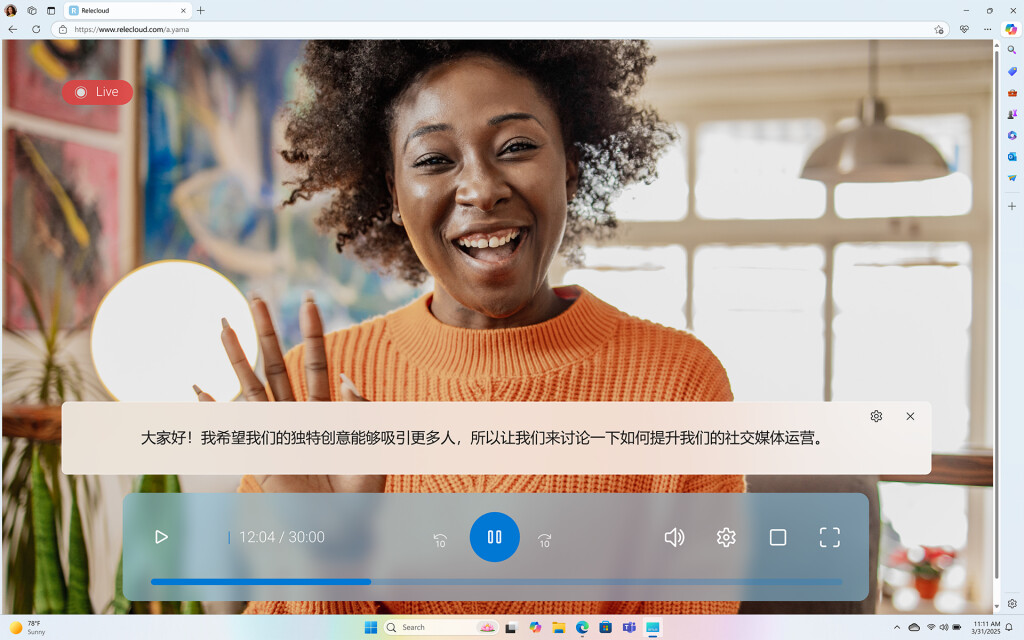
According to the latest Windows Experience Blog post, users of AMD- and Intel-powered PCs will now be able to access features, like Live Captions, Cocreator, Restyle Image, and Image Creator more broadly across the line-up of Copilot+ PCs with Intel Core Ultra 200V and AMD Ryzen AI 300 CPUs. Live Captions is officially pitched as an accessibility feature, meanwhile Restyle Image and Image Creator are AI-powered image editing and generation features, and Cocreator lies somewhere in between as a text-to-image tool that is meant to augment drawing in Paint. Cocreator will be rolling out as of the announcement, and Restyle Image and Image Creator will be available in the Photos app on Intel and AMD systems. As for Voice Access, Microsoft claims that it will allow users to be more flexible with their language when using speech to navigate their PCs, as opposed to "learning complex steps, commands and syntax that voice access previously required" for voice navigation on PC. Voice Access will initially be limited to Snapdragon X PCs, but it will roll out to AMD and Intel Copilot+ PCs later this year.
Return to Keyword Browsing
Nov 11th, 2026 04:07 CST change timezone

New Forum Posts

Popular Reviews

TPU on YouTube

Controversial News Posts