News Posts matching #Ryzen

Return to Keyword Browsing

HYTE's Honkai Star Rail Firefly Collection Now Available for Purchase

HYTE, a leading manufacturer of cutting-edge PC components, is happy to reveal that its Firefly-themed product lineup inspired by the iconic Stellaron Hunter from HoYoverse's Honkai: Star Rail is now available for purchase at HYTE.com.

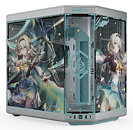
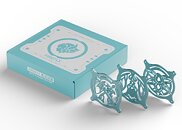
At the heart of the product lineup is the Official HYTE Y70 Firefly Case, which features a titanium silver colorway, 360-degree character artwork, and thematic elements and iconography inspired by Firefly and her S.A.M. armor throughout the chassis. In addition to the standard case, there are still limited-edition JP versions of the case that feature Kanji / Katakana branding for the Honkai: Star Rail logo. There is also an exclusive keychain based off Firefly's in-game phone case that can only be obtained by ordering either the US or JP PC case.

AMD Zen 6 "Medusa Point" CPU Spotted on Geekbench with 10 Cores, 32 MB L3 Cache

A fresh leak from Geekbench has surfaced listing an unannounced AMD processor with the OPN (Ordering Part Number) code 100-000001713-31. As for the platform, that is listed as Plum-MDS1, a somewhat direct hint to Medusa Point, AMD's next-gen mobile APU family based on Zen 6. The chip is a 10-core, 20-thread with a 2.4 GHz base clock, though actual test results show it running closer to 1.3-2 GHz, unsurprising for an engineering sample this early in development. Each core gets 1 MB of L2 cache, and the L3 comes in at 32 MB, up from 24 MB on Strix Point and 16 MB on Hawk Point. This is 50% more cache than the current 10-core parts like the Ryzen AI 9 365. The test system had 32 GB of memory installed, type unspecified. Benchmark numbers aren't worth reading into at this stage, as the chip spent most of the test hovering around 1.39 GHz and barely peeked above 2 GHz, well below what a final retail part on a 3 nm process would run at. Too early to draw any conclusions from the scores.

Shipping manifests from Planet3DNow linked to the "Medusa" codename suggest a 4C+4D layout, standard and density-optimized cores, though that doesn't exactly explain the 10-core count seen in Geekbench. One theory is that two additional low-power cores sit in the IO die, bringing the total to ten. The part is expected to be a 28 W TDP mobile chip for the FP10 socket. Medusa Point is shaping up to combine Zen 6 CPU cores with a mix of RDNA 5 and RDNA 3.5 graphics, plus an updated NPU. A launch around CES 2027 fits the AMD usual cadence, meaning there is likely a long wait ahead; however, this Geekbench entry confirms that testing is already happening, whether at AMD itself or at one of its early hardware partners.

Linux 7.1 Kernel Will Enhance Support for AMD Ryzen AI NPUs

AMD's hardware has generally enjoyed better support on Linux than its Intel and NVIDIA competition, although adoption and feature-parity to Windows can sometimes be a little slow. This has been the case with the AMD's APUs, which only just received power and usage monitoring via a pull request for Linux 7.1. The new AMDXDNA driver will expose power monitoring metrics for AMD Ryzen AI NPUs via DRM_IOCTL_AMDXDNA_GET_INFO, alongside new metrics to expose real-time NPU busy metrics to applications.

Both of these new metrics will presumably be used by those running and developing local LLMs and can be used to gauge hardware utilization and improve scheduling for AI tasks. These changes are expected to land in Linux 7.1, slated to release after 7.0, which is currently in development and is expected to launch sometime between April and May. Linux 7.0 itself is expected to introduce some significant performance improvements when it comes to cache and memory handling.

AMD Sees Agent Computers as the Next Step in AI PCs

AMD has published a guide for running OpenClaw locally on Windows through two distinct hardware paths it calls "RyzenClaw" and "RadeonClaw," both built around its own silicon and designed to keep AI agent workloads off the cloud entirely. The push is part of AMD's broader "Agent Computer" narrative, where it argues that not every AI workload belongs in a data center, people and businesses want control over their data, affordable always-on AI without usage limits, and the confidence that their models are running locally rather than on someone else's infrastructure. The setup runs through WSL2 with LM Studio handling local LLM inference via llama.cpp, and supports Memory.md through local embeddings, no cloud dependency required. AMD says the environment can be configured in under an hour, targeting early adopters and developers experimenting with personal AI agents.

The RyzenClaw path is built around a Ryzen AI Max+ system with 128 GB of unified memory, AMD specifically recommends reserving 96 GB as variable graphics memory for this use case. Running the Qwen 3.5 35B A3B model, that configuration delivers around 45 tokens per second, processes 10,000 input tokens in roughly 19.5 seconds, supports a 260K token context window, and can run up to six agents concurrently. AMD is positioning this as capable of "agent swarm" experimentation on consumer hardware. RadeonClaw takes a different approach, pairing OpenClaw with the Radeon AI PRO R9700, a workstation-class card with 32 GB of VRAM. That setup is considerably faster, around 120 tokens per second with the same model, and 10,000 input tokens processed in about 4.4 seconds. The tradeoff is a smaller 190K token context window and support for only two concurrent agents, compared to six on the Ryzen AI Max+ path.

Chinese Laptop Maker Chuwi Advertised AMD Ryzen 5 7430U SoC, but Shipped the Older Ryzen 5 5500U

Imagine buying a laptop, thinking you're getting a model with your desired CPU specifications, only to find a completely different model inside, cleverly concealed so you wouldn't notice without further investigation. According to an investigation by Notebookcheck, the Chinese electronics maker Chuwi is engaging in specification fraud. Users have discovered a different CPU SKU compared to what was advertised. In a review of the Chuwi CoreBook X and CoreBook Plus, Notebookcheck found that Chuwi had listed these laptops with an AMD Ryzen 5 7430U processor, but they actually come with an AMD Ryzen 5 5500U. This means that Chuwi is actively advertising these models on their website, on the laptop box, with laptop stickers, and even with BIOS modifications to make it seem as if they feature the newer Ryzen 5 7430U SoC with "Zen 3" CPU microarchitecture and Radeon "Vega 6" SoC. In reality, the company is shipping a processor that is a few generations old, with "Zen 2" CPU cores and Radeon Graphics 448SP.

Notebookcheck discovered this during a review of the Chuwi CoreBook X. The unit's performance was rather lackluster, prompting further investigation. Initially, they thought single-channel RAM was causing the subpar performance. To determine the true cause, they opened the unit and found the older Ryzen 5 5500U SoC with its corresponding part number 100-000000375. Additionally, other differences were noted in the SoC specifications, such as the L3 cache. Chuwi even went a step further by using a modified BIOS version to show that the unit features the AMD Ryzen 5 7430U. This led software diagnostic tools to display the advertised specification, while the lower-tier SoC was actually inside. This issue didn't occur just once with the Chuwi CoreBook X but also with a separate CoreBook Plus, which Notebookcheck also confirmed to feature the older SoC. Instead of the newer AMD Ryzen 5 7430U processor, both of these laptop models actually come with the AMD Ryzen 5 5500U, as verified through performance testing, and the OPN number that corresponds to a specific AMD chip.

SolidRun Unveils Next-Gen COM Express Type 6 Modules with LPCAMM2 Support

SolidRun, a leading developer and manufacturer of high-performance system-on-module (SOM) solutions, single-board computers (SBC) and network edge solutions, announced its new P100 COM Express Type 6 module family, powered by AMD Ryzen AI Embedded P100 processors. Designed for real-world edge deployments where systems don't sit still, the P100 COMx6 series targets mobile platforms as well as harsh, mission-critical environments across industrial automation, transportation, medical systems, and robotics.

"Edge AI is moving out of controlled environments and into the real world, like mobile platforms, harsh industrial sites, and mission-critical deployments where serviceability, and longevity matter as much as raw compute," said Dr. Atai Ziv, CEO of SolidRun. "Our new P100 COM Express Type 6 modules are built to deliver powerful AI performance at the edge while improving the mechanical durability and serviceability product developers need to deploy confidently in demanding environments."

Minisforum's N5 MAX Marks a Breakthrough in NAS Industry With Built-In OpenClaw in Local Computing

Minisforum's to-be-launched AI NAS N5 MAX, has been confirmed to successfully run the built-in OpenClaw in local AI LLMs. Equipped with AMD Ryzen AI Max+ 395, the self-developed MinisCloud OS unleashes full power of integrated AI NAS, fulfilling diverse user needs running data locally.

With more safety handling personal data on private platform, N5 MAX is the first AI NAS in the world to integrate OpenClaw with local computing, marking a revolution in the industry.

Crimson Desert Gets Surprisingly Low-End Minimum Hardware Requirements for PC and Console

Crimson Desert, the upcoming open-world action-adventure game from indie studio, Pearl Abyss, is finally closing in on its March 19 launch date, and as part of the lead-up to the launch, Pearl Abyss has officially published the minimum hardware requirements for both PC and console, including a proper dedicated handheld spec sheet that should give owners of the ASUS ROG Ally and Xbox Ally handheld gaming PCs an idea of what to expect. On the Xbox Series X and the Sony PlayStation 5, players can choose between Performance, Balanced, and Quality graphics settings, all of which with their own framerate targets and render quality settings. Performance targets 1080p resolution with 60 FPS, VRR or VSync enabled and ray tracing set to low.

Balanced bumps up the resolution to 4K upscaled from 1280p with FSR 3 and targets 40 FPS with Vsync, while Quality scales 1440p to 4K with FSR 3 and targets 30 FPS with Vsync enabled. The PS5 Pro steps up all quality settings to 4K, with Performance and Balanced using Upgraded PSSR upscaling to upscale 1080p and 1440p with 60 FPS and 48+ FPS with VRR, respectively. Quality mode on the PS5 Pro goes straight for 4K native at 30 FPS with Vsync and ray tracing on ultra. For the Xbox Series S, there are only two quality settings: Performance, at 720p, 40 FPS with Vsync and RT off, or Quality, at 1080p, 30 FPS with RT off. The Xbox Series X, on the other hand, offers Performance, with 1080p at 60 FPS with VRR or Vsync and RT set to low; Balanced, with 4K upscaled from 1280p with FSR 3, at 40 FPS with RT on low; and Quality, which is 4K upscaled from 1440p with FSR 3, at 30 FPS with RT set to high.

Dynabook Expands AMD-Powered Offerings with New Portégé X45W 14-inch 2-in-1 Convertible Laptop

Dynabook Americas, Inc., the gold standard for long-lasting, professional-grade laptops, today announced the new Portégé X45W, a premium 14-inch 2-in-1 convertible laptop designed to deliver productivity and flexibility across modern work environments. The Portégé X45W expands Dynabook's AMD-powered portfolio of mobile computing products, giving customers more choice with AMD Ryzen processing and integrated AMD Radeon graphics.

"Portégé X45W reflects Dynabook's commitment to delivering professional-grade devices that people can count on, while continuing to expand AMD processor options across our portfolio," said James Robbins, General Manager, Dynabook Americas, Inc. "With a versatile 2-in-1 design, strong everyday performance, and a security-forward foundation, Portégé X45W is built to help organizations standardize on a flexible device that supports productivity and collaboration across business, education, healthcare and public sector environments."

ASUS Announces ExpertCenter P700 Mini Tower

ASUS today announced ExpertCenter P700 Mini Tower (PM700MG) with AMD Ryzen AI 400-series processors, a refreshed 15-liter business desktop designed to deliver exceptional performance, scalability, and reliability for professional creators, engineers, and small businesses. With cutting-edge hardware, business-grade security, and comprehensive manageability, ExpertCenter P700 Mini Tower is engineered to be the trusted backbone of business-critical workloads.

Blending next-generation AI performance with whisper-quiet thermal design, P700 Mini Tower is built to tackle modern professional tasks with ease—from generative AI and content creation to advanced data analysis. As Copilot+ PCs, these new desktops bring intelligence and creativity to the forefront of everyday business, while the exclusive ASUS MyExpert all-in-one AI platform boosts productivity in multiple innovative and flexible ways. They also benefit from ASUS ExpertGuardian, providing all-around protection for sensitive data, plus military-grade durability to ensure long-term reliability.

ASRock X870E Taichi OCF Breaks PCMark 10 Express World Record 1st Place with AMD Ryzen 9 9950X3D

ASRock, the global leading manufacturer of motherboards, graphics cards, mini PCs, gaming monitors, power supply units and AIOs, proudly announces a new overclocking World Record achieved with its flagship X870E Taichi OCF motherboard.

Professional overclocker Alex2305 successfully pushed system performance to a new level using the ASRock X870E Taichi OCF paired with the powerful AMD Ryzen 9 9950X3D processor, achieving an incredible PCMark 10 Express score of 14290 marks, securing the World Record 1st Place on HWBOT.org.

AMD Releases Ryzen Chipset Driver 8.02.18.557

AMD has released Ryzen Chipset Driver version 8.02.18.557, a maintenance update focused on bug fixes and restoring a couple of components that went missing in a previous package. Specifically, support for the AMS Mailbox driver and the S0i3 filter driver are back, both needed for power management and system communication on supported Ryzen platforms. A few known issues are still present. Users on chipset installer version 7 can't directly roll back to version 6 or older. If you need to do that, you'll have to uninstall the newer installer first, delete the Qt_Dependencies folder, and then install the older package.

Other minor fixes include driver names showing up in English on non-English operating systems, occasional failures when installing or upgrading the Ryzen PPKG component, and some compatibility issues with the AMS and S0i3 filter drivers on non-English OS environments.

DOWNLOAD: AMD Chipset Software 8.02.18.557

ASRock Industrial Launches New Motherboards for AMD EPYC 4005 and Ryzen 9000 Series

ASRock Industrial announces new industrial motherboards supporting AMD EPYC 4005/4004, Ryzen 9000/8000/7000, and Ryzen Embedded 9000/7000 Series processors, expanding its platform portfolio across IMB-A1700, IMB-A1302, IMB-A1003, and IMB-A1002. Powered by AMD EPYC 4005 Series processors with up to 16 cores and 32 threads, delivering high-performance and energy efficiency for edge servers and enterprise workloads, alongside Zen 5-based Ryzen 9000 Series for exceptional computing power and Ryzen Embedded 9000 Series for long-term availability in reliable edge computing. Supporting ATX, microATX, and Mini-ITX form factors, these platforms feature DDR5 memory, PCIe Gen 5 expansion, multi-display capability, and rich industrial I/O to enable flexible system designs for computer vision, video analytics, AI-enhanced workloads, software development, gaming platforms, and professional-grade productivity systems.

IMB-A1700 Series: ATX Motherboard for high-performance
The IMB-A1700 ATX motherboard supports AMD EPYC 4005/4004, Ryzen 9000/8000/7000, and Ryzen Embedded 9000/7000 Series processors, delivering robust computing performance for demanding workloads. The board features four DDR5 5600 MHz ECC/non-ECC U-DIMM slots supporting up to 256 GB of memory, providing a stable foundation for high-throughput and multitasking environments. Expansion capability includes two PCIe x16 (Gen 5) slots, configurable as either one PCIe x16 (Gen 5) or two PCIe x8 (Gen 5), one PCIe x4 (Gen 4), and four PCIe x1 (Gen 4) slots, enabling flexible integration of GPUs, AI accelerators, and add-on cards. Storage support includes one M.2 key M for NVMe SSD and four SATA3 ports with RAID 0/1/10 support, enabling high-speed storage deployment. I/O connectivity is comprehensive, featuring seven USB 3.2 Gen 2 ports, eight USB 2.0 ports, and six COM ports, complemented by three 2.5G LAN and one 1G LAN. Supporting quad-display output via HDMI 2.0b and DisplayPort 1.2++ and built in an ATX form factor (12 x 9.6 inches), the IMB-A1700 is well-suited for AI-driven video analytics platforms, computer vision servers, high-end development systems, and performance-focused computing deployments.

GEEKOM A5 Pro 2026 Edition Sets New Benchmark as the Best $600 Mini PC

The GEEKOM A5 Pro 2026 Edition arrives as one of the most compelling compact desktops to date, earning its position as the best $600 mini PC in 2026 thanks to a rare blend of high performance that breezes through all daily tasks, solid build quality that withstand at least 5 years of intensive use, and a 3-year warranty for long-term peace of mind. Its launch further strengthens GEEKOM's reputation the global leader in small-form-factor computing.

At the heart of the A5 Pro 2026 Edition is AMD's Ryzen R5 7530U, a 6-core, 12-thread processor capable of boosting up to 4.5 GHz. Paired with Radeon graphics, dual-channel memory, and fast SSD storage, the system delivers smooth performance across daily office tasks, home entertainment, creative workloads, and even light gaming.

Morefine N1 NAS Launches With Ryzen 7 Pro 8845HS and dGPU Expansion Support

Morefine has announced the N1 NAS, a tower-style NAS solution that packs the AMD Ryzen 7 Pro 8845HS, up to 96 GB of DDR5-5600 ECC memory, dual 10 GbE ports, and built-in PCIe expansion. Pricing starts at $759 for a barebones version, but 32 GB of memory bumps that up to $1,209, while the 64 GB and 96 GB versions come in at $1,569 and $1,929. The Morefine N1 has three M.2 slots for up to 12 TB of SSD storage alongside four hot-swap 3.5-inch HDD bays accessible via the top of the case for an additional 120 TB. The aluminium case itself measured 218 × 193 × 372 mm, making it considerably smaller than many ITX systems but not quite as svelte as a traditional mini PC, like the recently announced Minisforum MS-A2.

The N1 also comes with a built-in 800 W PSU with 400 W dedicated to the GPU power budget, making it adequate for something like an NVIDIA GeForce RTX 5070 Ti, although the included PSU power connectors are not specified. Internal space for the dGPU is limited to 330 mm × 66 mm, too, so SFF GPUs will be the way to go. The port selection is also fairly decent for an SFF PC, packing dual USB 2.0, 1× USB4 port, 1× USB 3.2 Gen 2, 1× USB 3.2 Gen 1, a full size SD card reader, 1× HDMI 2.0, and dual 10 GbE RJ 45 ports. It also has a small 3-inch full color touch screen on the front of the case for displaying things like system information.

AMD CEO Lisa Su Says Server CPU Demand "Far Exceeded" Expectations, Supply Now Tightening

AMD is seeing server CPU demand it didn't fully anticipate, with CEO Lisa Su describing it as having "far exceeded" her expectations. Speaking at the Morgan Stanley Technology, Media & Telecom Conference earlier today, Su outlined how the landscape has shifted as agentic AI applications have taken off, pushing CPUs back into the spotlight alongside accelerators. The CPU-to-GPU ratio in AI compute workloads has evolved dramatically over the past few months, and top customers reportedly told Su that CPU demand sitting alongside AI was "under-forecasted." Supply is tightening as a result. The sudden spike in customer commitments left little time for the supply chain to adjust, though AMD says it's working closely with partners to ease existing bottlenecks and expects capacity to expand over the coming year. Su expressed confidence that AMD's product lineup is well positioned to address training, inference, and agentic workloads going forward. We've also seen this play out at the customer level, with hyperscalers like Meta signing CPU agreements with AMD and NVIDIA, a sign that compute is diversifying away from a pure GPU focus.

Back in late January, Intel disclosed it had to reallocate wafer capacity from its PC division to Xeon production after hyperscalers started ordering larger quantities than anticipated, triggering a temporary shortage. Then, in early February, both Intel and AMD warned customers in China about tightening supplies, with Intel Xeon delivery times stretching to as long as six months and prices up more than 10%. AMD's situation is somewhat less difficult, but lead times have still pushed out to eight to ten weeks for some orders. On the consumer side, AMD's next-gen Ryzen 'Olympic Ridge' desktop processors based on Zen 6 are rumored to have slipped to 2027, possibly another sign that AMD is prioritizing Zen 6 chiplets for EPYC server processors.

Lenovo Unveils New Business Notebooks and More at MWC 2026

At MWC 2026, Lenovo builds on the momentum from CES and Tech World to highlight its latest portfolio of AI-powered business devices, intelligent form factors, and enterprise-ready platforms, designed to help organizations scale AI with confidence. From modular AI PC concepts and rugged frontline tablets to the trusted ThinkPad portfolio and human-centric AI companions, Lenovo's MWC showcase highlights how innovation, reliability, and repairability come together to support modern work.

The new announcements reflect a continued focus on delivering democratized AI that is productive, adaptable, and protected, addressing the real-world needs of professionals, IT leaders, and enterprises operating across increasingly distributed environments. By combining AI-ready devices with strong repairability, platform choice across leading silicon partners, and enterprise-grade security and services, Lenovo is enabling businesses to adopt AI-powered computing without added complexity.

AMD Launches Ryzen AI 400 Series Processors for Mobile and Desktop

At Mobile World Congress 2026, AMD announced an expanded Ryzen AI portfolio with the launch of the AMD Ryzen AI 400 Series and Ryzen AI PRO 400 Series desktop processors. The new processors deliver powerful on-device AI acceleration and next-generation performance, enabling users to run AI applications and LLMs locally and tackle compute-intensive applications, including those for design and engineering, with ease. Additionally, AMD is expanding the Ryzen AI 400 Series mobile portfolio to include workstations.

With these additions, Ryzen AI 400 Series processors enable original equipment manufacturers (OEMs) to offer next-gen AI PCs across high-performance desktops, laptops and mobile workstations optimized for modern workloads.

AMD Ryzen 5 5500X3D Launches in China, Keeping AM4 Socket and "Zen 3" Generation Alive

AMD has expanded the availability of its Ryzen 5 5500X3D to the Chinese market, giving new life to a processor that first appeared in Latin America last year. There was no formal launch event or major announcement. Instead, the chip appeared through retail channels quietly, with a listing price of 1,199 RMB (roughly $175). At its core, the Ryzen 5 5500X3D is a six-core, 12-thread "Zen 3" processor designed for the AM4 platform. It runs at a 3.0 GHz base frequency and can boost up to 4.0 GHz. What sets it apart from standard Ryzen 5 models of the same generation is its expanded cache configuration. With a combined 99 MB of L2 and L3 cache, it targets gaming workloads that benefit from reduced memory latency and improved data access patterns, as seen with the other X3D SKUs.

AMD lists the processor at a 105 W TDP, and buyers should note that it does not include a bundled cooler and lacks integrated graphics. At $175, this pricing positions the 5500X3D as one of the more accessible X3D options available. AMD revived its AM4 socket with an additional "Zen 3" chip, but this time in an X3D variant to keep up with modern designs in performance. With support for DDR4 memory, PCIe 4.0, and a wide range of AM4 motherboards, including X570 and B550, the 5500X3D offers existing users a relatively inexpensive drop-in upgrade. For those running Ryzen 3 or Ryzen 5 from the 5000 series, this chip could be a very good upgrade without having to switch to a completely new platform and the more expensive DDR5 memory.

Minisforum Launches MS-A2 Mini Desktop Server with AMD Ryzen 9 9955HX

Minisforum is known for making powerful mini PCs, like the Core Ultra 9 285H-powered M1 Pro we recently reviewed, and the latest entry into the company's line-up is the MS-A2, an upgrade to 2024's MS-A1. The new mini workstation is marketed as a small form factor desktop server for programming, business, and home lab use cases, and it seems to have the specs to back that up. The whole package measures just 196×189×48 mm, or 1.78 L, making it seriously compact. Official US pricing for the MS-A2 with the Ryzen 9 9955HX starts at $799 with no RAM or storage or $1,199 with 32 GB RAM and a 1 TB SSD. The mini PC with 96 GB of RAM and 2 a 2 TB SSD costs $1,919 on the Minisforum store.

The MS-A2 uses AMD's Ryzen 9 9955HX mobile CPU—with a claimed 100 W turbo TDP—paired with up to 96 GB of DDR5-5600 memory and up to three PCIe 4.0 M.2 slots, for up to 12 TB total capacity, as well as support for U.2 NVMe 22110 drives, bringing total storage capacity up to 23 TB. Networking is also impressive, thanks to dual 10 Gb SFP+ ports and dual 2.5 Gb Ethernet ports. The MS-A2 also sports Wi-Fi 6E and Bluetooth 5.2 wireless connectivity, and it has more than enough ports for proper workstation use. The front of the mini PC has dual USB 3.2 Gen 1 Type-A ports, a USB 2.0 port, and a 3.5 mm audio combo jack, while the back has 2× USB Type-C 3.2 Gen 2 ports with DisplayPort 2.0 Alt mode support, 1× HDMI 2.1, 2× 2.5 Gb RJ45 ports, 2× 10 Gb SFP+ ports, 1× USB 3.1 Gen 2, and 1× USB 3.1 Gen 1 port. The Ryzen 9 9955HX has a pretty weak Radeon 610M iGPU, which will get the job done for most productivity tasks, but the MS-A2 also has a built-in full-length PCIe 4.0 ×8 slot for GPU or IO upgrades, and that slot supports can be split into two PCIe ×4 connections.

Orange Pi Neo Delayed Due to RAM Crisis: "We Are Now Waiting For a Good Time To Launch"

The Orange Pi Neo is a Linux-powered gaming handheld that was announced way back in 2024 with the goal of launching sometime in 2026. It was to be powered by the AMD Ryzen 7 7840U with 16 GB of RAM or 8840U with 32 GB of RAM, and it would run Manjaro Linux natively. Now, the developer behind the project has posted on the development log hosted on the Manjaro forum that the Orange Pi Neo-01 will be delayed due to high memory and storage prices. Originally, the handheld was meant to be priced at $450-550, depending on the CPU and memory, which is very competitive, given the 1080p, 120 Hz display, dual trackpads, and dual USB4 ports. The skyrocketing prices of DDR5 memory and storage would likely result in massive price increases or vanishingly thin margins for the Orange Pi Neo-01, so it makes sense to delay the project until things calm down. The developer does mention that FCC and CE compliances were complete and that a number of improvements had been made to Manjaro Gaming Edition in the meantime—although this means it will be challenging to update the internals if the launch is pushed back too far. Currently, it's unclear when the Orange Pi Neo-01 will launch, but it seems unlikely that the RAM crisis will end soon.
Due to high prices of DDR5 RAM and SSDs the project is currently on ice. Certifications for CE and FCC are now complete. Also a lot of improvements around the Manjaro Gaming Edition had happened. We are now waiting for a good time to launch the product.

Overclockers UK Announces the Brand New TechForge REVAlution Gaming PC

She travelled across space and time to fulfil the prophecy bestowed upon her. Now Reva takes her place amongst the legendary OcUK TechForge Gaming PC range with the brand new REVAlution Gaming PC. Built to travel the universe and facilitate high-performance gaming, the OcUK TechForge REVAlution harnesses the latest gaming hardware to delivered 4K AAA gaming with ease.

Hardware built to defy destiny
Reva's Shatterclaws aren't the only tech designed with performance and strength in mind, as under the hood the OcUK TechForge REVAlution houses the very best hardware. Powering the system is AMD's brand new Ryzen 7 9850X3D, the fastest gaming CPU on the market. With 32 GB of Patriot Viper RGB XTREME 5 DDR5 RAM and Kioxia's EXCERIA 2 TB SSD NVMe M.2, the OcUK TechForge REVAlution spared no expense on its journey across space and time.

AMD "Gorgon Point" Desktop APUs Tipped for Early 2026 Launch

AMD announced its Ryzen AI 400 series "Gorgon Point" mobile APUs based on Zen 5 and Zen 5c cores at CES 2026 earlier this year, simultaneously showing off the AM5-based Ryzen AI 400-branded desktop APUs at the same show. Now, according to a new leak by Moore's Law is Dead on X, AMD will allegedly launch the new Ryzen AI 400-series desktop processors for AM5 in the first half of 2026. MLID adds that the launch may even happen as early as Q1. He also released what he claims to be a short promotional video of an AMD Ryzen AI 400 Pro processor in an AM5 socket to lend credence to his leak.

Exact specifications for the AM5 APUs are unconfirmed, but if they're anything like the laptop counterparts, it is expected that the new APUs will launch with the same silicon as Strix Point but with adjusted power management and increased clock speeds. This means we can expect to see the Ryzen AI 400 desktop processors top out with a 12-core (4× Zen 5; 8 × Zen 5c) CPU cluster tied to a 16 CU RDNA 3.5 iGPU, and a 60 TOPS NPU.

AMD Ryzen Z1 Extreme SoC Update Arrives for ASUS ROG Ally After Six Months

A few days ago, we reported that AMD is seemingly ending driver support for its Ryzen Z1 Extreme SoC, just two and a half years after its launch. Since Lenovo issued product guidance that the company will no longer provide updates, and ASUS's own ROG Ally handheld console had not received an update in over six months, the situation was dire. However, ASUS today released a new driver update for its ROG Ally handheld console, which had been stuck with six-month-old SoC drivers from August 2025. This changes the situation from the platform being completely abandoned for half a year to a periodic update window that will likely continue unless gamers encounter a surprise change.

Initially, we couldn't determine the "blame" for this irregular driver update cycle, as it could have been either AMD or OEMs being slow with the driver updates. As AMD offers configurable TDP (cTDP) for the Z1 Extreme with values ranging from 9 to 30 W, this means that OEMs can get SoCs in various configurations, each needing to be tested and verified before distributing an official driver. To add more to the mess, Lenovo Korea has confirmed that their own driver update plan for the product has stopped, leaving users to switch to other platforms or use Linux-based operating systems that carry their own drivers for these platforms to extract maximum longevity. Hence, the entire situation is now more complicated.

Sapphire PURE X870A WIFI 7 Motherboard Available Now

The all-white SAPPHIRE PURE X870A WIFI 7 returns with Wi-Fi 7, PCIe 5.0, SAPPHIRE CORE BIOS, and TriXX-M software, delivering high performance and striking design for gamers and PC builders.

Next-Gen Performance Meets Sleek Design
SAPPHIRE Technology today launches the SAPPHIRE PURE X870A WIFI 7, a fully white AM5 motherboard designed for gamers, system builders, and modders who want exceptional performance and standout aesthetics. Powered by the AMD X870 chipset and supporting Ryzen 7000, 8000, and 9000 Series processors, the SAPPHIRE PURE X870A WIFI 7 delivers speed, stability, and reliable gaming performance in a crisp, unified white design. SAPPHIRE PURE has always embodied a coordinated, minimalist aesthetic, and the X870A continues this legacy. Every detail, from heatsinks to layout, has been designed to create a bright, cohesive look that complements modern white-themed builds, appealing to users who value both style and substance.
Return to Keyword Browsing
Nov 11th, 2026 04:13 CST change timezone

New Forum Posts

Popular Reviews

TPU on YouTube

Controversial News Posts