News Posts matching #light

Return to Keyword Browsing

Dead Pixels Creep In Along the Edges of Older WOLED TVs, RTINGS Finds

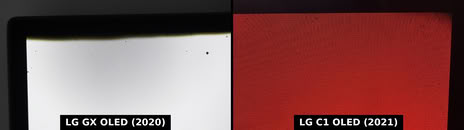
Fourteen of the 16 WOLED TVs in RTINGS' 18,000-hour accelerated longevity test developed what the outlet calls "edge rot," meaning dead pixels and other damage creeping in along the panel edges. All of these sets use LG Display panels and were released between 2020 and 2023, and the test works out to roughly ten years of typical U.S. viewing. Older WBC panels fared worst, with nine of ten affected and five rated severe, while five of six newer WBE panels also showed it. Only the LG A2 and LG G3 came out clean. Meanwhile, the three QD-OLED TVs in the test, Samsung's S95B and S95C and Sony's A95K, didn't have a single dead pixel. However, RTINGS says three units are too few to call QD-OLED immune.

Unlike burn-in, edge rot doesn't depend on what you watch, so the usual advice of mixing up content won't help. RTINGS suspects contamination during manufacturing or flaws in the encapsulation layer that keeps moisture out, though confirming that would need proper failure analysis. Two staffers also found it on their own LG GX and C1 at home. In a statement to RTINGS, LG said the issue may appear in a very small number of products under prolonged heat, humidity or other harsh conditions, and isn't expected in normal use, which is interesting given that LG Display once argued QD-OLED was more prone to burn-in. RTINGS now rates WOLEDs slightly lower for expected reliability, including newer models as a precaution, though it still considers OLEDs more durable than LCDs. Its next planned test includes 2025 and 2026 models, some with LG's RGB Tandem panels, which should show if it's been fixed.

Discord Is Rebuilding Its App in Rust, Early Build Uses Just 290 MB of RAM

Discord is rewriting its desktop app in Rust and dropping Electron, and the early numbers look very promising. Discord CTO and co-founder Stanislav Vishnevskiy posted a Task Manager screenshot on X showing the new client, listed as "Discord Phoenix," using just 290.2 MB of RAM. In the same screenshot, Steam's WebHelper sits at 856 MB and Battle.net at 344 MB. That's a big drop, as Discord said late last year that its current Windows client normally stays under 1 GB, and it even tested auto-restarting the app once it crossed 4 GB. Vishnevskiy also shared a side-by-side clip on two laptops showing the new client booting much faster, adding that clicking around "feels instant."

Mobile is getting the same treatment. According to Vishnevskiy, Discord is dropping React Native as well, so the mobile apps will keep their native interface while sharing app code with the desktop client through Rust. The new client is built on GPUI, the Rust UI framework from the team behind the Zed code editor, rather than Tauri as many had guessed. There's no release date yet, and Discord only says it hopes to get it into testing with users soon.
Hitscan Hyperlight X Launches: 35-37 g Wireless Gaming Mouse with SPDT Switches and Updated Internals

Hitscan has announced an update to its Hyperlight wireless gaming mouse from 2024, both reducing the weight of the symmetrical mouse and updating its internals in the name of faster clicks and lower response times. The Hitscan Hyperlight X will use the same shape as the original Hyperlight, but the Hyperlight X will allegedly weigh in at 35-37 g, depending on whether you're using full-size or dot skates. While Hitscan itself hasn't shared all that much about the new mouse, aside from its October 28 launch date, @jakeufps on X shared some information about the new hardware.

[Editor's note: Our in-depth review of the original Hitscan Hyperlight is live]

While the Hyperlight X will allegedly have the same shape, it will feature new SPDT switches—nominally closed mechanical switches that send a click when the circuit is opened, effectively reducing the actuation distance and click latency substantially. The Hyperlight X will also launch with the PixArt PAW 3950 sensor, an update from the prior 3395, and a Nordic nRF54L15 MCU. It will also ship with an 8K receiver, enabling 8 kHz polling from the factory instead of requiring an additional accessory purchase.
Update Oct 29th: Hitscan has updated the product page of the Hitscan X with official $109.99 pricing and a proper spec sheet.

Surface Laptop Ultra Gets Its First Firmware Fix for Flickering and Slow Reboots

Microsoft has rolled out the first firmware update for its RTX Spark-powered Surface Laptop Ultra, less than a week after the laptop started shipping on October 16. Listed in Windows Update as "System Hardware Update 200.0.7.0," the October 22 release fixes three problems spelled out in Microsoft's update history: extended reboot times, screen flickering, and unexpected restarts. It also bundles unspecified bug fixes and general performance improvements. The update is arriving in stages, so not every owner will see it right away, and like other Surface firmware, it can't be rolled back once installed.
These issues had already surfaced in early reviews and owner reports. Windows Central noted reboots long enough to roughly double the time it took to install updates, while some owners saw the Mini-LED panel flicker, in a few cases only when the display sat idle. However, the update doesn't address everything reviewers flagged. Notebookcheck measured a sluggish 57 ms black-to-white response time with visible ghosting, no local dimming, and a grayish 0.61-nit black level, and it seems unlikely that firmware can do much about those. Some owners have also reported the laptop running hot under light workloads, which Microsoft hasn't mentioned.
NVIDIA RTXPT 1.9 Path Tracer Gets Around 20% Faster, Adds Windows on Arm Support

NVIDIA has released version 1.9.0 of RTX Path Tracing (RTXPT), its open-source reference path tracer on GitHub, claiming roughly 20% better performance than the previous 1.8.1 release, with comparable or better image quality. RTXPT is a code sample for developers, meant as a starting point for building a path tracer or as a reference for NVIDIA's other ray tracing SDKs. Several changes add up to that uplift. The path tracer can now optionally trace only three quarters, half, or a quarter of the pixels each frame, and the built-in performance presets use this by default, along with lower bounce limits in the faster modes.

On DirectX 12, async compute lets the previous frame's DLSS Ray Reconstruction and post-processing overlap with the next frame's path tracing, and TLAS instance generation has moved to the GPU. Lighting got some attention too. NEE-AT light sampling now handles up to 2 million lights, up from 512K, and the SHaRC radiance cache is on by default in real-time mode, apparently feeding more indirect lighting into DLSS Ray Reconstruction at about the same cost. Version 1.9 also adds Windows on ARM64 support. The release notes don't say why, though it's probably no coincidence, given NVIDIA's own Arm-based RTX Spark chip for Windows PCs.

Intel Patent Describes Micro LEDs Built Into Glass Substrate CPU Packages

Intel has been granted a US patent for a chip package with tiny LEDs built into it, according to a TrendForce report. Titled "IC Package with Micro LEDs" (patent 12,733,303), it describes a semiconductor die with a micro LED attached, embedded at least partially into a glass substrate. Through-glass vias (TGVs) supply power to the LED and connect to the package substrate. The LEDs can apparently use nanowire structures to emit red, green, and blue light. The patent lists a few uses, including illuminated lettering on the CPU surface, personalization for DIY electronics (think RGB lighting), and indicators for electrical testing inside the package. The patent was filed in 2022 but has now been disclosed by Intel.

Of course, most CPUs sit under a heatsink, so it's hard to think of a scenario where glowing letters on a CPU package would make sense. The optical angle is more interesting. It looks like the patent doesn't describe a working optical link, but AU Optronics is developing a Micro LED co-packaged optics module for links of up to 10 meters in AI data centers, and there are rumors of Intel and AUO collaborating. We don't know if anything has been agreed yet. Intel reportedly stepped back from in-house glass substrate R&D last year, then moved to license the tech to others, and in January it showed a glass core substrate with EMIB at NEPCON Japan. Companies file patents all the time, and most never become products, so I wouldn't expect RGB CPUs anytime soon.

Modder Brings Path Tracing And Frame Generation to Grand Theft Auto 2 via RTX Remix

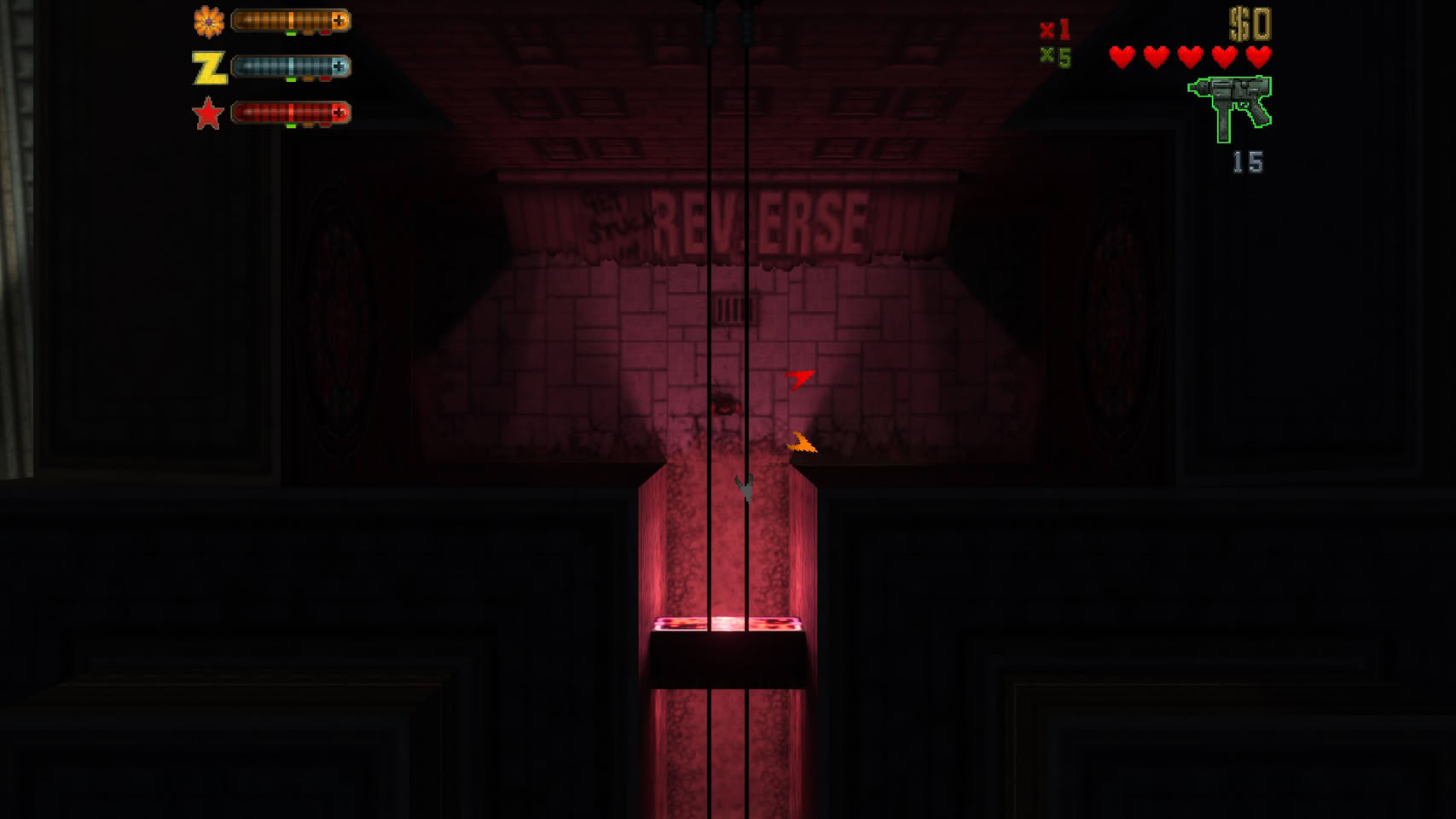
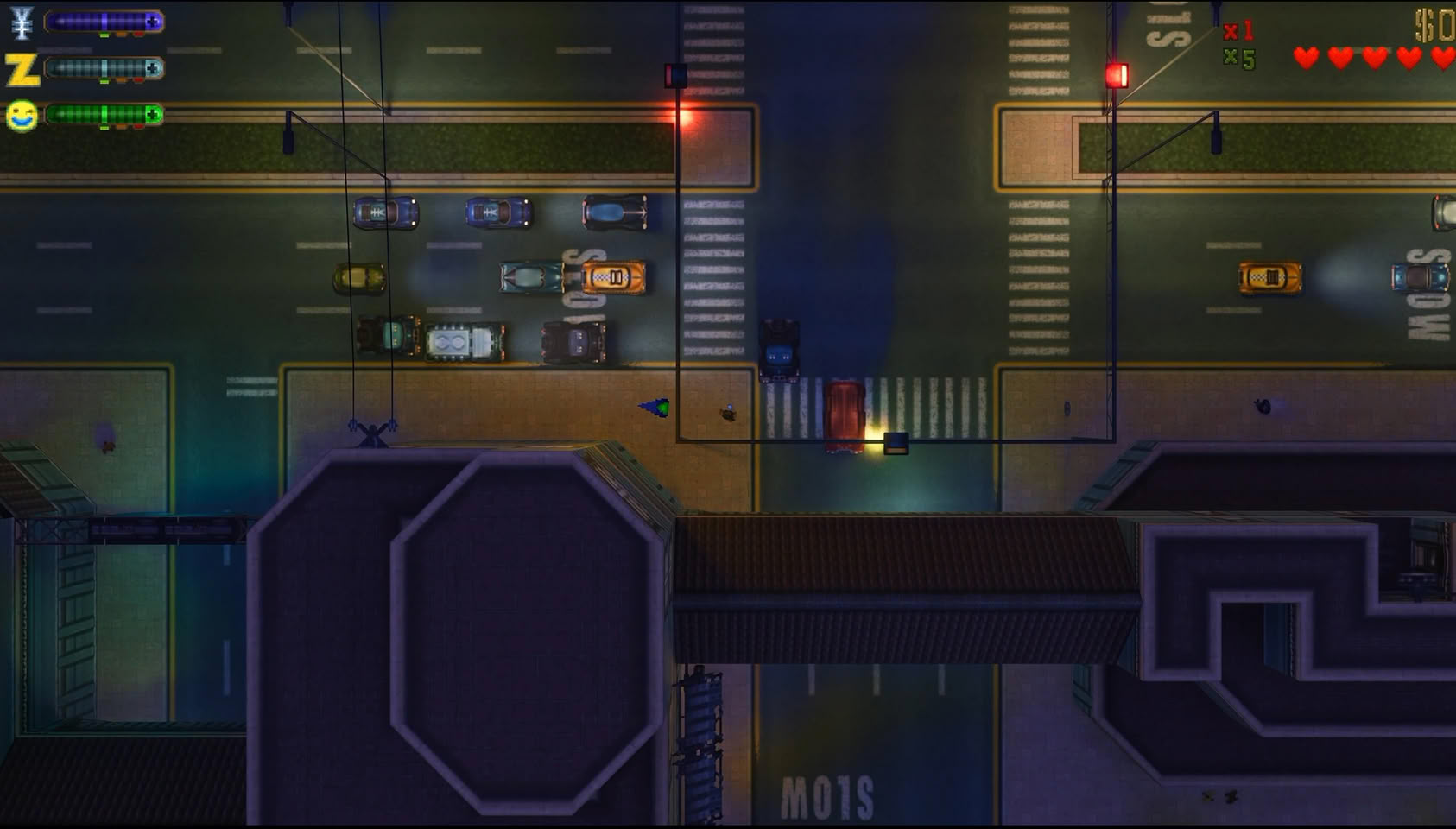
Modder gebdag has released GTA2 RTX Remix, a mod that brings full path tracing and dynamic time-of-day lighting to Grand Theft Auto 2, the 1999 top-down classic. NVIDIA's Jacob Freeman shared a clip of the mod on X, showing a day-night cycle that looks quite well-done. Apparently, the biggest hurdle in the process was technical, as GTA 2 ran on DirectDraw and an early version of Direct3D, neither of which RTX Remix supports natively. To get around this, the modder built a custom Direct3D 9 wrapper using two DLLs that translate the game's legacy rendering calls into something RTX Remix can actually read. The result reportedly adds real-time path-traced lighting, so explosions, car fires, and neon signs now cast their own glow, and the day-night cycle shifts lighting as it passes.

The mod also unlocks widescreen 16:9 support (the original was locked to 4:3) and adds frame generation for up to 60 FPS, well above what the original release could hit. GTA2 RTX Remix is open source on GitHub and was reportedly tested on version 9.6 of the game, the free release Rockstar distributed in 2004. It needs 64-bit Windows 10 or 11 alongside the RTX Remix runtime. It's certainly a niche release given how old the base game is, but it's another one in the chain of RTX Remix mods breathing new life into titles most people wrote off years ago. Similar projects already exist for Max Payne, Morrowind, and Need for Speed Carbon, and modders keep finding new ways to push the tool's limits.

Modder Builds Split Keyboard With Integrated Joysticks and One-Handed Gaming Functionality

The Tiwaz is an open-source split keyboard product that started as a DIY project and morphed into something a little more concrete and comprehensive. Unlike traditional split ergonomic keyboards, like the MoErgo Go60 and ZSA Voyager, which generally eschew any thoughts of gaming prowess in favor of ergonomics, the Tiwaz was designed with gaming in mind. Specifically, its designer, Timo Strube, explains in the project's GitHub that "each half works standalone as a one-handed controller or macro pad," allowing it to be used by left-and right-handed users. The keyboard uses hot-swap sockets compatible with standard MX-style mechanical switches, giving it a wider degree of customization.

The Tiwaz uses a split ortholinear layout, meaning the keys are arranged in straight rows and columns, instead of the offsets present in both columnar stagger and row stagger layouts. Another interesting feature in the Tiwaz is that it features two thumb joysticks—one on the inner side of the keyboard itself. These can be configured to output cardinal directions, analog directions like a gamepad, or even mouse movements. The actual layout of the keyboard is also rather unorthodox, even for a split keyboard, with a total of 76 keys (38 per side), which is already a lot for a split keyboard, which usually hover around 50-60 keys at most. It also has a gasket-mounted case design, which also runs counter to many split ergonomic keyboards that forego features like gasket mounts in search of thinner cases for ergonomics purposes.

Mchose Launches Ace75 Hall Effect Gaming Keyboard on Kickstarter

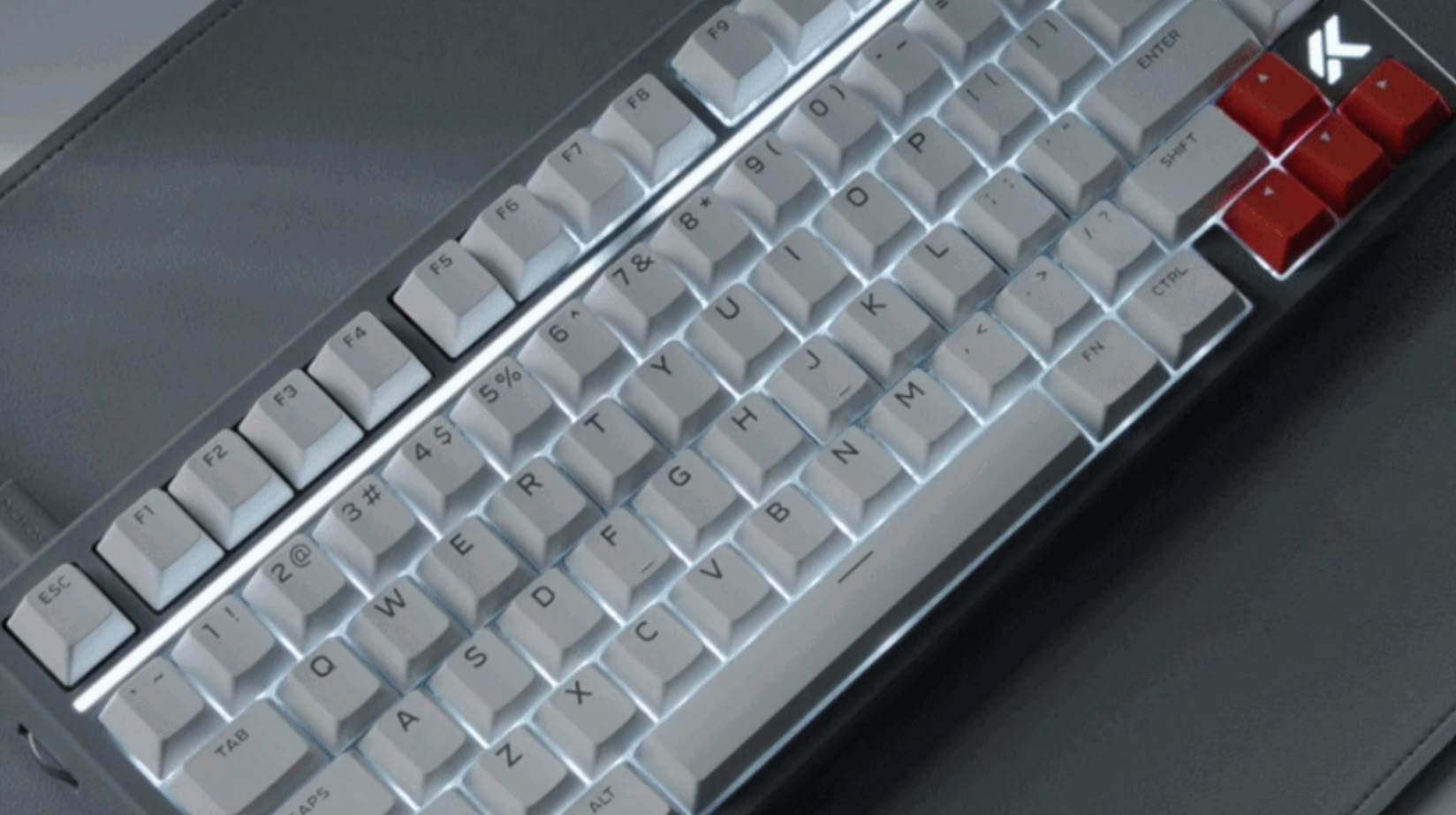
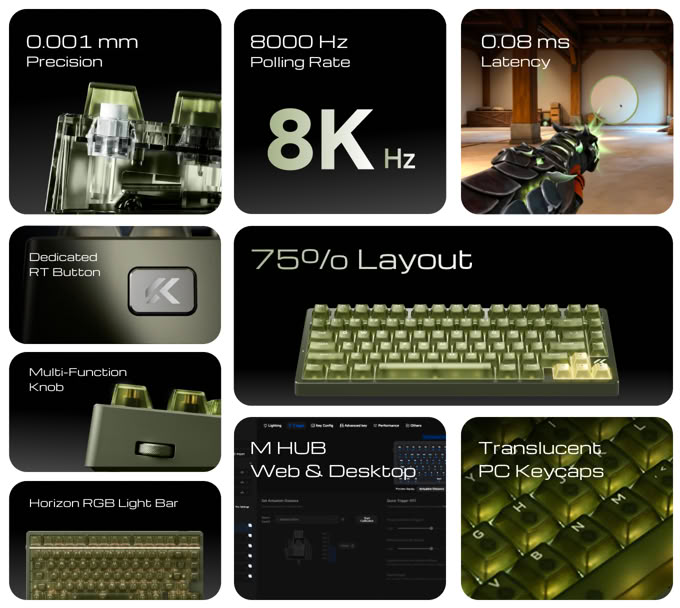
Mchose, a brand known for making affordable high-performance gaming peripherals, has officially launched the Ace75, a new Hall effect gaming keyboard with a 75% layout and a focus on both aesthetics and gaming performance. Mchose hasn't specified what the keyboard is made from, but the images on the Kickstarter page suggest an aluminium case that's been anodized to color-match the keycaps for various colorways. On Kickstarter, the Mchose Ace75 starts at $109, but the MSRP will be $149 when it eventually launches out of the Kickstarter.

The Ace75 offers the choice of two switches, depending on what keyboard color you choose: the Moon Rock Grey keyboard will come with Berserker Magnetic Switches, while the more exciting Mecha Green, Navy Blue, and Midnight Purple versions will come with TTC Royal Steed switches. The Moon Rock Grey colorway will also be the only one of the lot to ship with opaque PBT keycaps, while the other three colorways come with translucent polycarbonate, instead. Aside from the fairly minimalist case design, the Ace75 comes with a few tricks up its sleeve that may make it particularly useful as a keyboard that's both a daily driver and a gaming accessory.

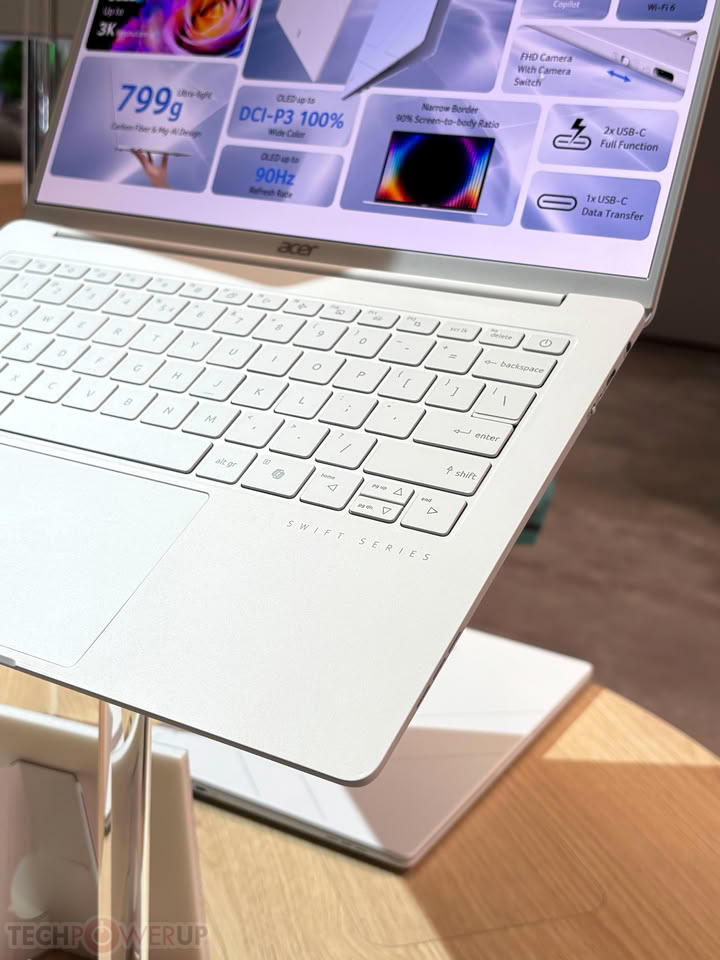
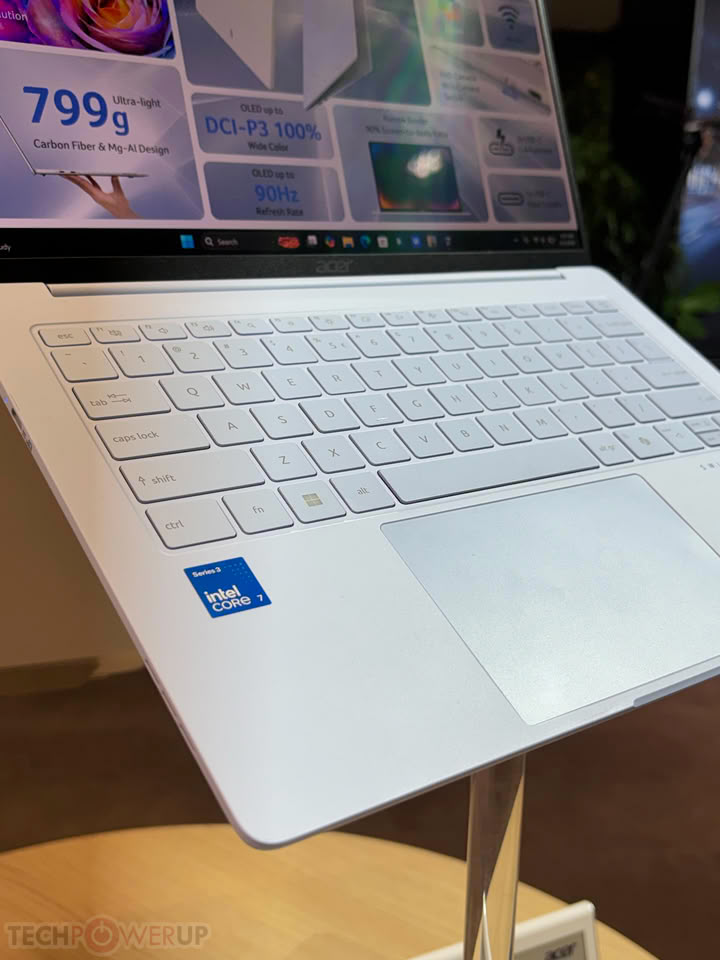
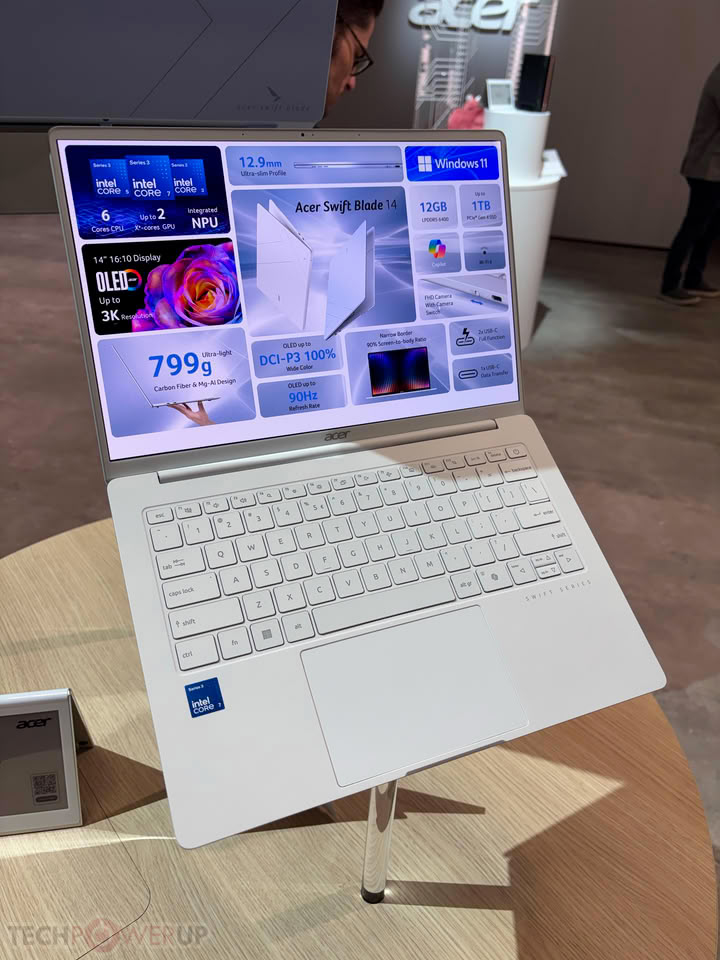
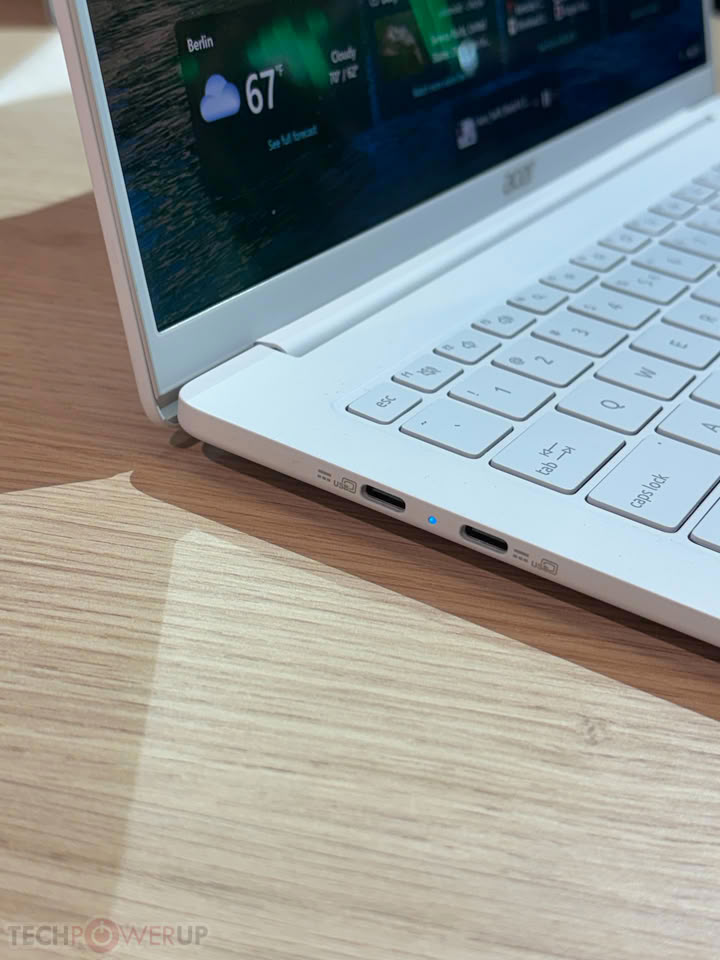
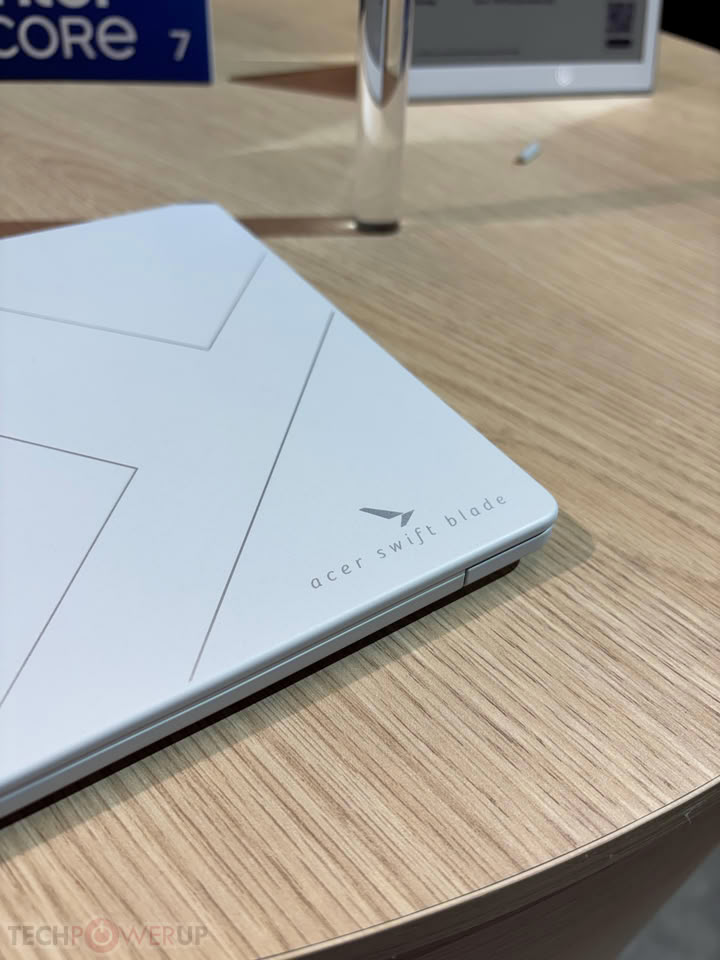
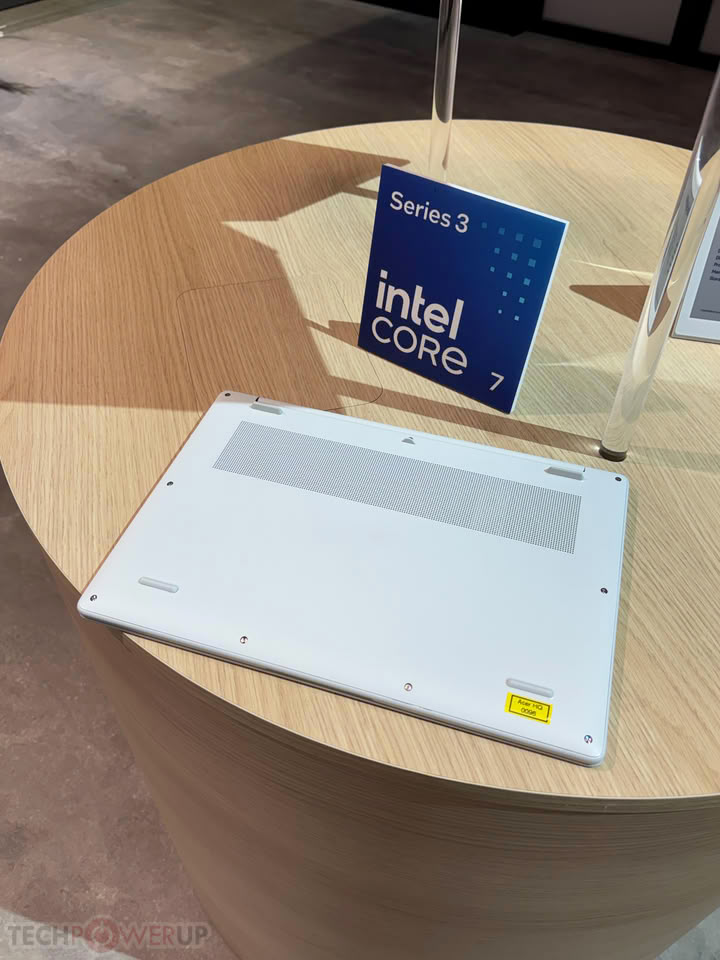
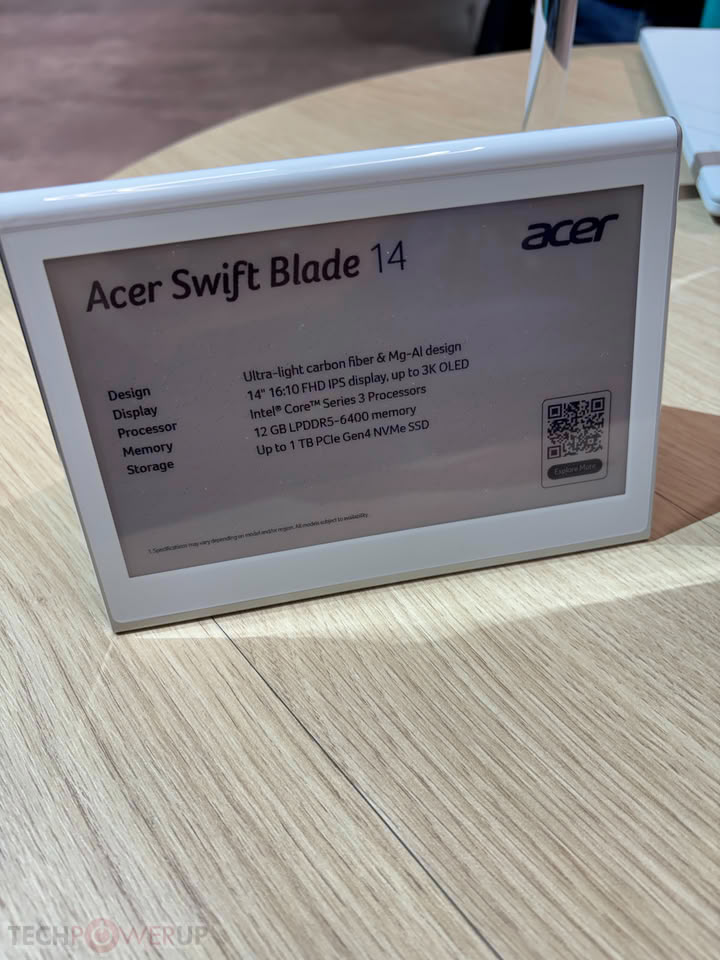
Acer Shows Off the 799g Swift Blade 14 at IFA

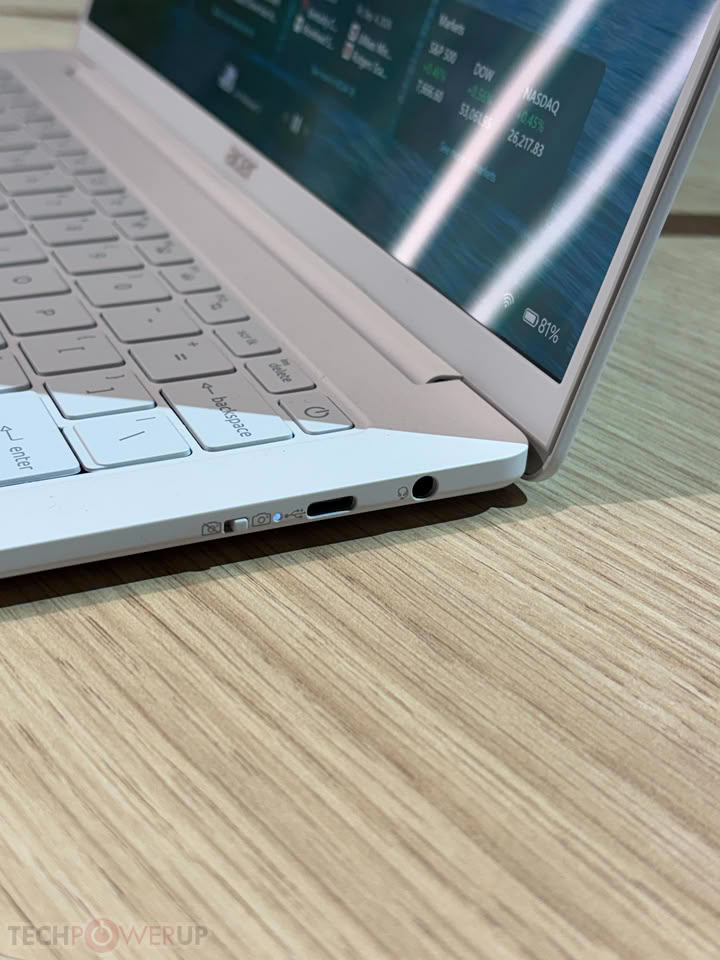
We're on the ground at IFA in Berlin this week, and one of the more interesting machines we walked past on the show floor was the Acer Swift Blade 14. It's a new sub-brand under Acer's Swift lineup, and the first thing you notice picking it up is just how little of it there is to hold. Acer built the Swift Blade 14 to weigh just 799 grams (1.76 pounds), making it one of the lightest 14-inch Windows laptops we've come across. The chassis pairs carbon fiber on the top and bottom covers with a magnesium-aluminum alloy keyboard deck, keeping the weight down without the machine feeling flimsy in hand. It measures 12.9mm thin on the base configuration and 13.5mm on OLED models. That's not quite as thin as a 13-inch MacBook Air, but it is significantly lighter.

Inside, the laptop runs on Intel's Wildcat Lake platform, scaling up to a Core 7 350 CPU alongside 12GB of onboard LPDDR5-6400 memory and up to 1TB of PCIe Gen 4 NVMe storage. The display comes in three tiers, topping out at a 3K OLED WQXGA+ panel running at 90Hz with 400 nits and full DCI-P3 coverage, packed into a 90% screen-to-body ratio with 4.3mm bezels. A 50Wh battery, three USB Type-C ports, Wi-Fi 6, and Bluetooth 5.3 round out the spec sheet. Of course, thermal performance will be a concern in a chassis this thin, so we'll have to wait for independent testing to comment on that. Acer confirmed the Swift Blade 14 launches across EMEA in December, though pricing hasn't been announced yet.
Return to Keyword Browsing
Nov 11th, 2026 06:14 CST change timezone

New Forum Posts

Popular Reviews

TPU on YouTube

Controversial News Posts