News Posts matching #ssd

Return to Keyword Browsing

AI Server Demand Sustains Memory Contract Price Increases in 4Q26, While Consumer-Side Pressure Persists

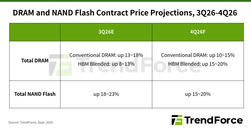
TrendForce's latest memory industry research reveals that DRAM suppliers continue to prioritize advanced-process capacity for high-performance server products in 4Q26, keeping the overall market undersupplied. However, the pace of contract price increases is expected to moderate, with conventional DRAM prices projected to rise 10-15% QoQ.

Meanwhile, the NAND Flash market is seeing a divergence between accelerating AI demand and weak consumer demand, although prices are still rising across segments. Overall NAND Flash contract prices are projected to increase 15-20% QoQ.

AMD Ryzen AI Max+ Pro 495 Framework Desktop Batch 1 Sells Out Despite Sky-High Prices

Framework officially launched pre-orders for its AMD Ryzen AI Max+ Pro 495-powered Desktop mini PCs on September 30, as previously announced. Launch pricing started at $6,799 for the DIY Edition with 192 GB of unified memory and no pre-installed storage. A pre-built version with a 2 TB NVMe 4.0 SSD and Fedora Linux pre-installed comes with a $7,449 price tag.

It was revealed hours before launch that the OEM would only be offering one batch of the new Desktop SKU due to limited RAM quantities. Despite the eye-watering price, the first batch of Ryzen AI Max+ Pro 495 mini PCs sold out within hours of the start of pre-orders. However, in a post on X, Framework confirmed that it had managed to secure another batch of RAM for the Gorgon Halo systems, and it subsequently opened a second limited batch of pre-orders, which remain available at the time of writing and are slated to start shipping in November. Framework added in a separate post on X that prices for the Framework Desktop PC will only increase in the coming months.

CD Projekt Red Unveils Detailed PC Requirements for The Witcher 3: Wild Hunt Remastered

CD Projekt RED has published the full and updated PC requirements for The Witcher 3: Wild Hunt Remastered, which launches tomorrow, September 29, as a free upgrade for existing owners. Only the minimum and recommended specs were public until now, but the new detailed requirements are broken down by categories and even include separate Ray Tracing and Path Tracing requirements. The updated table covers six tiers: Minimum, Recommended, Ultra, RT Minimum, RT Recommended, and Path Tracing.

The Minimum tier targets 1080p at 30 FPS with the Low preset, and requires a Core i5-8400 or Ryzen 5 2600 CPU, 12 GB of RAM, and a GTX 1660, RX 5500 XT, or Arc A580 graphics card. CDPR says the GTX 1660 can reach 60 FPS or higher there. Recommended (1080p, 60 FPS, High) asks for a Core i7-8700K or Ryzen 5 3600X CPU, 16 GB of RAM, and an RTX 2060 Super, RX 6600 XT, or Arc B580 GPU. If you want to play at Ultra (1440p, 60 FPS), it calls for a Core i7-13700K or Ryzen 7 7700X CPU, 24 GB of RAM, and an RTX 3070 Ti, RX 6800 XT, or Arc B580 graphics card with XeSS.

QNAP Launches Compact TS-432XeU Short-Depth 10 GbE/2.5 GbE Quad-Core ARM NAS

QNAP Systems, Inc., a leading computing, networking and storage solution innovator, today launched the new short-depth rackmount NAS TS-432XeU. Featuring high-speed 10GbE/2.5GbE connectivity, a quad-core ARM processor, flexible expansion and backup options, and support for Docker container applications, the TS-432XeU enables small and medium-sized businesses to quickly build a reliable, high-performance, and easy-to-manage storage and collaboration environment—while minimizing deployment costs.
Sean Teng, Product Manager at QNAP"Designed with both performance and space efficiency in mind, the TS-432XeU combines 10GbE/2.5GbE networking and four USB 3.2 Gen 1 ports to support external backup, fast data ingestion, and flexible capacity expansion. Whether handling daily backups or supporting multi-user collaboration, the TS-432XeU delivers efficient performance while giving SMBs greater operational flexibility and lower long-term storage costs."

Stronger North American Demand to Keep Enterprise SSD Prices on an Upward Trend in 4Q26

U.S. CSPs have recently upgraded their enterprise SSD demand forecasts over the past two weeks, according to TrendForce's research. This shift is mainly driven by major CSPs speeding up deployments and expanding enterprise SSD use across more applications. Notably, this demand increase isn't confined to high-performance TLC products; QLC products, known for their superior cost efficiency and capacity, have become a significant growth catalyst.

Recent procurement momentum suggests that total enterprise SSD orders in the fourth quarter could surpass the already elevated levels seen in 3Q26, maintaining a strong upward trajectory. This has given NAND Flash suppliers greater control over capacity allocation and pricing in the enterprise segment, while further supporting continued increases in enterprise SSD prices.

Acer Expects PC Prices to Rise by Up to 20% in Q4, Peak Around Mid-2027

Acer Chairman and CEO Jason Chen says PC prices could rise by another 5% to 20% in the fourth quarter of 2026, according to Taiwan's Economic Daily News. Chen reportedly said that DDR4 and DDR5 memory are no longer in short supply and that CPU supply is mostly fine, with only some low-end and mid-range chips still tight. Prices haven't followed this change, though. Memory and SSD costs are still high, so systems with more RAM or storage will probably see bigger increases. Chen expects the average selling price of PCs to peak around mid-2027, with a possible drop in the second half of that year.

Even if component costs fall earlier, it takes several months for cheaper parts to reach finished PCs. Chen also reportedly said suppliers keep pushing through price increases, some of which he considers hard to justify. He also pointed to expanding Chinese memory production, and by the sound of it, he doesn't think the shortage can run until 2030, as many in the industry have claimed. That capacity is still ramping up, though. Chinese giant CXMT is reportedly preparing to enter the NAND flash market with an R&D line, and YMTC is expanding with new fabs.

Solidigm Reportedly Plans Its First NAND Fab in the United States

SK hynix subsidiary Solidigm is reportedly planning to open its first NAND Flash manufacturing facility in the United States. To address global supply chain challenges, SK hynix is exploring ways to expand its production capabilities worldwide and create a more resilient operation against geopolitical events. Currently, Solidigm operates in the United States with its headquarters and R&D center, while all its manufacturing is based outside the country. When SK hynix acquired Intel's NAND Flash manufacturing business in 2021 and established the Solidigm brand, the company continued manufacturing in China without expanding overseas.

At present, Solidigm operates Fab 1 in Dalian, China, and has accelerated the construction of Fab 2 nearby. This expansion aims to increase production by 50% by 2027 to meet the rising demand for NAND Flash. Solidigm owns and operates this facility, marking a resumption of expansion in mainland China after a four-year project freeze.

Akasa Launches Newton N16, Compact Fanless Case for ASUS NUC 16 Pro

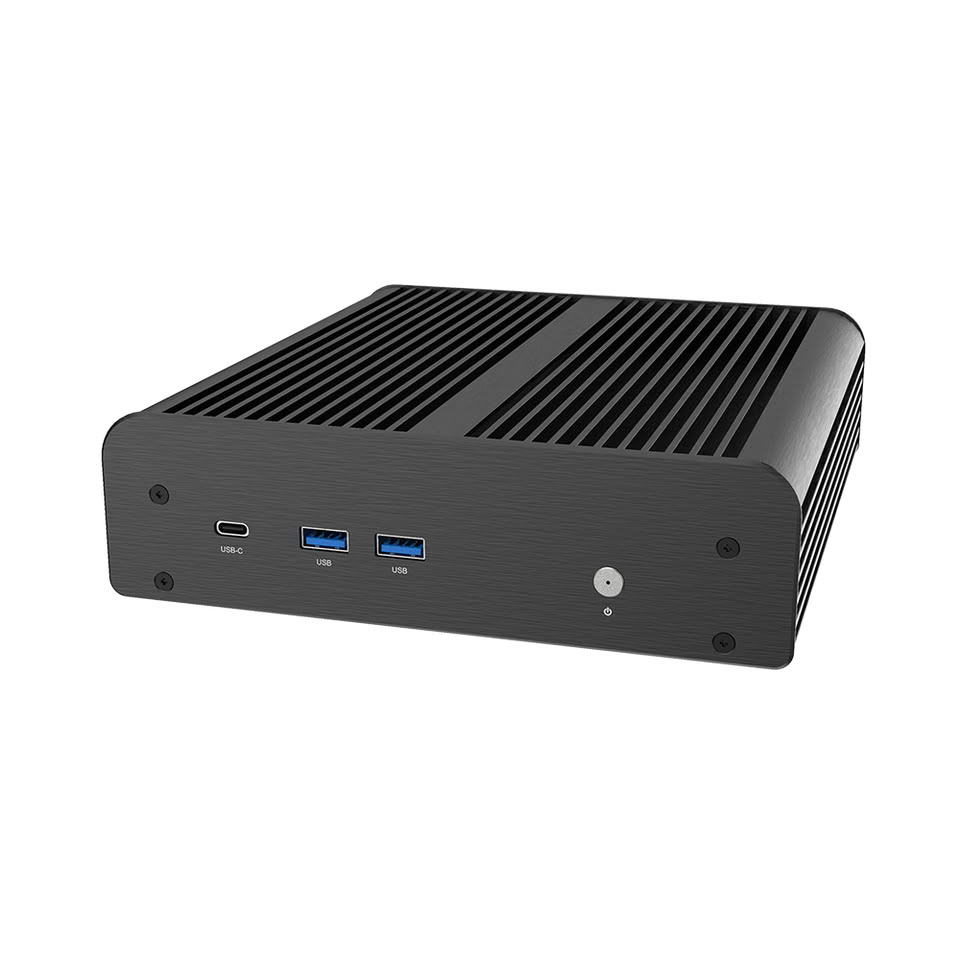
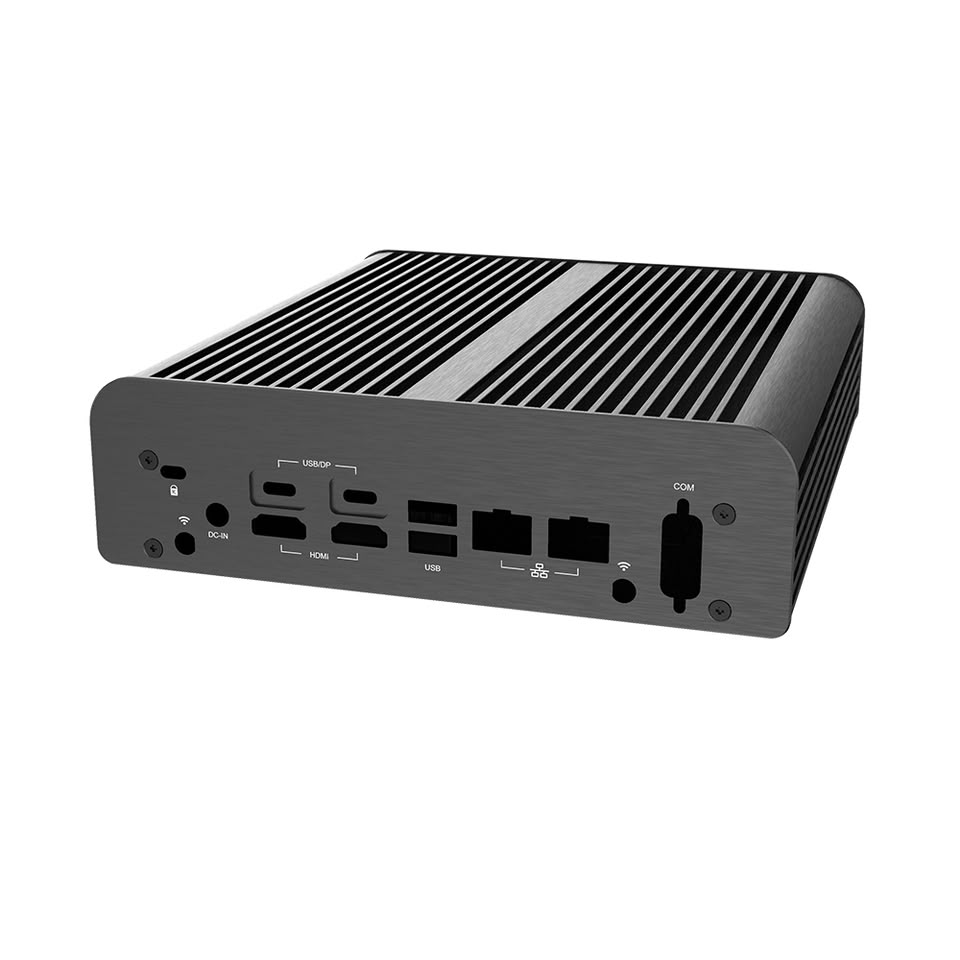
Akasa, a leading provider of thermal solutions, introduces the Newton N16, a compact aluminium fanless case designed for the ASUS NUC 16 Pro. Available in dual HDMI (A-NUC109-M1B) and dual DisplayPort (A-NUC109-M2B) versions, the Newton N16 includes dedicated passive cooling for the CPU and dual M.2 SSDs. Measuring just 188.6 x 204 x 53.6 mm (W x D x H) with a volume of 2.1 L, it provides a compact fanless platform for digital signage, industrial automation, POS, surveillance, AI and embedded computing applications.

Designed for ASUS NUC 16 Pro
Built specifically for the new ASUS NUC 16 Pro AI Mini PC, the Newton N16 keeps access to the board's native interfaces within an aluminium chassis designed for silent, passive cooling. Supporting Intel Core Ultra Series 3 processors up to 28 W TDP, the NUC 16 Pro platform combines integrated Intel Arc graphics with a dedicated NPU for business, industrial and local AI applications.

ADATA TRUSTA Showcases AI Scaler Extended Memory, TD7P51 ECO Gen 5 SSD and R-DIMM at AI Infra Summit 2026

TRUSTA, the enterprise storage and memory brand of memory leader ADATA, is showcasing its latest AI Scaler Extended Memory solution at AI Infra Summit 2026, one of North America's leading AI infrastructure events, bringing together approximately 8,000 professionals and 250 industry partners across the AI infrastructure ecosystem.

As increasingly complex AI models place greater demands on GPU memory and drive up infrastructure costs, TRUSTA is highlighting its award-winning AI Scaler Extended Memory Solution under the theme "Scale AI Beyond GPU Limits." The integrated hardware-software architecture enables enterprises to deploy on-premises AI with greater scalability and cost efficiency. TRUSTA is also presenting its TD7P51 ECO PCIe Gen 5 enterprise SSD and DDR5 R-DIMM, demonstrating a comprehensive portfolio built for next-generation AI infrastructure.

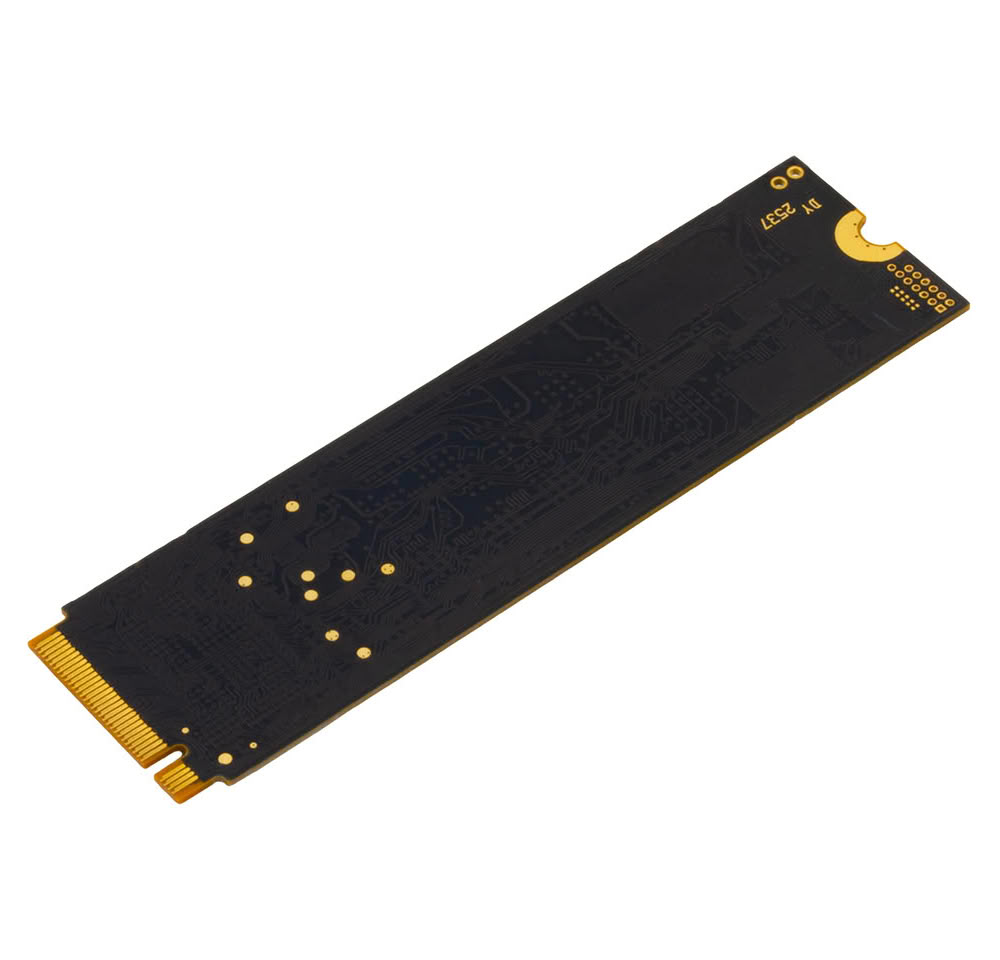
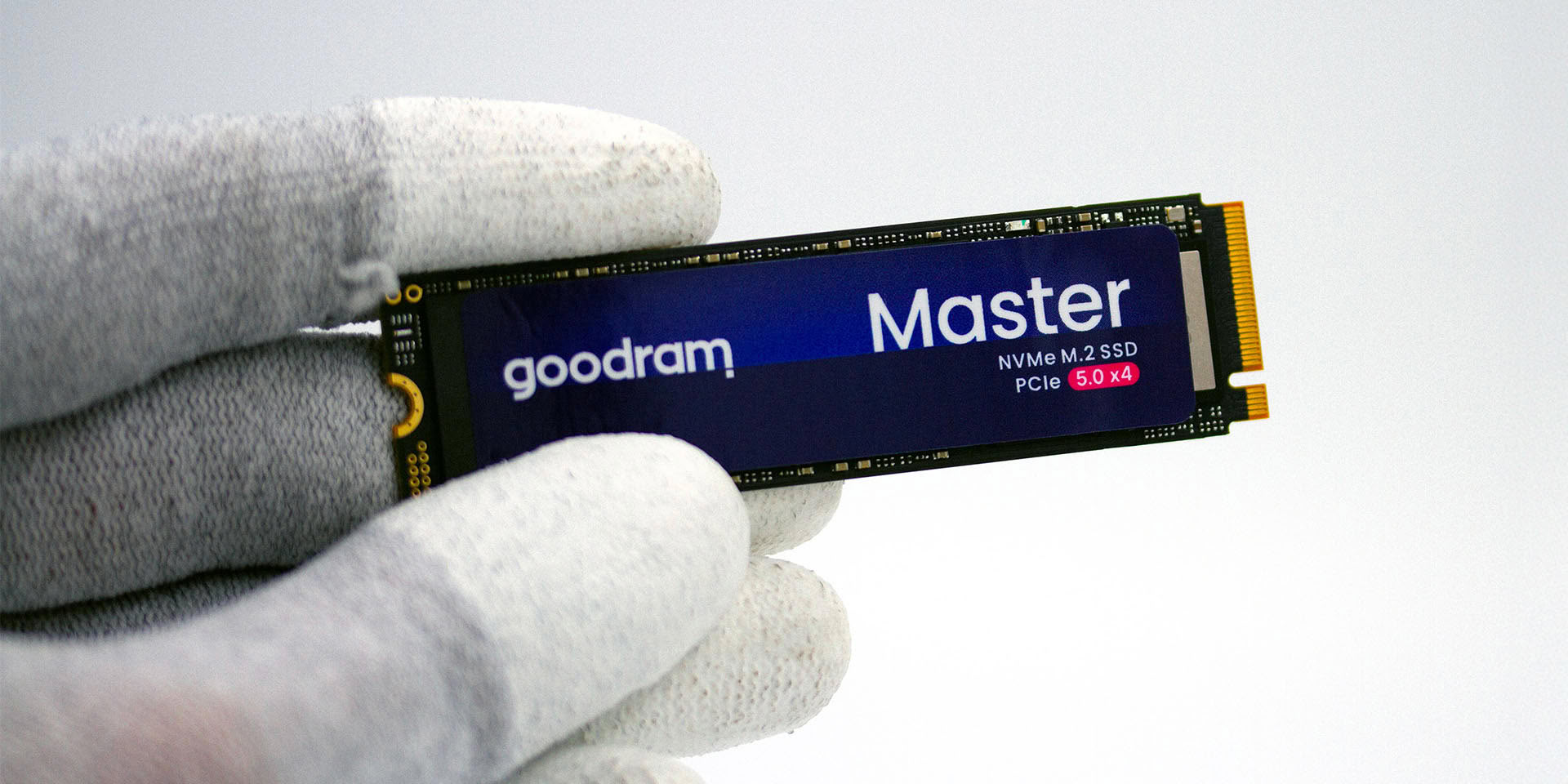
Goodram Introduces Master PCIe 5.0 SSD Series With Speeds Up to 14,000 MB/s

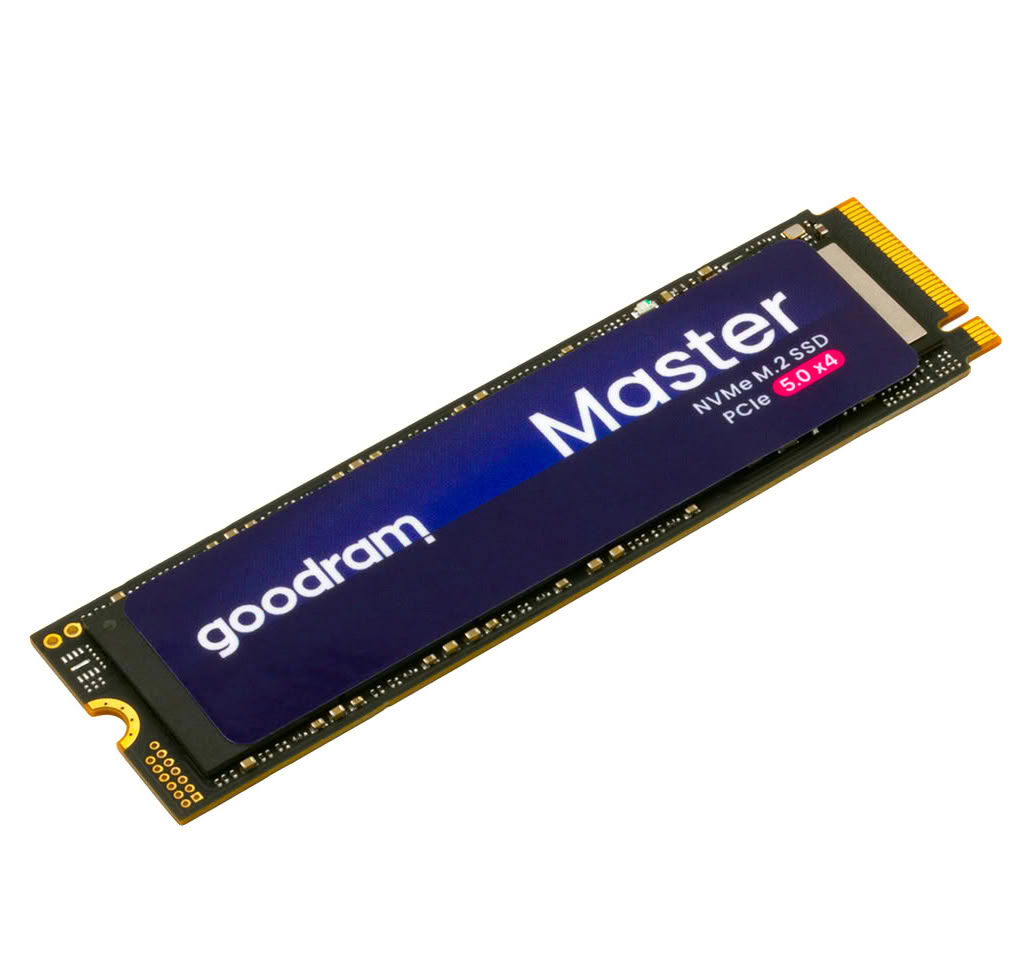
Goodram is introducing Master, a consumer NVMe PCIe 5.0 SSD designed for next-generation platforms. The new model is aimed at gamers, content creators, professionals and PC enthusiasts who demand top performance when working with large files, the latest games and AI-powered applications.

Thanks to the PCIe 5.0 x4 interface, Goodram Master delivers sequential read speeds of up to 14,000 MB/s, write speeds of up to 13,000 MB/s and performance of up to 2,000,000 IOPS. These specifications translate into shorter application and game loading times, faster transfers of large files and high system responsiveness even during intensive multitasking.

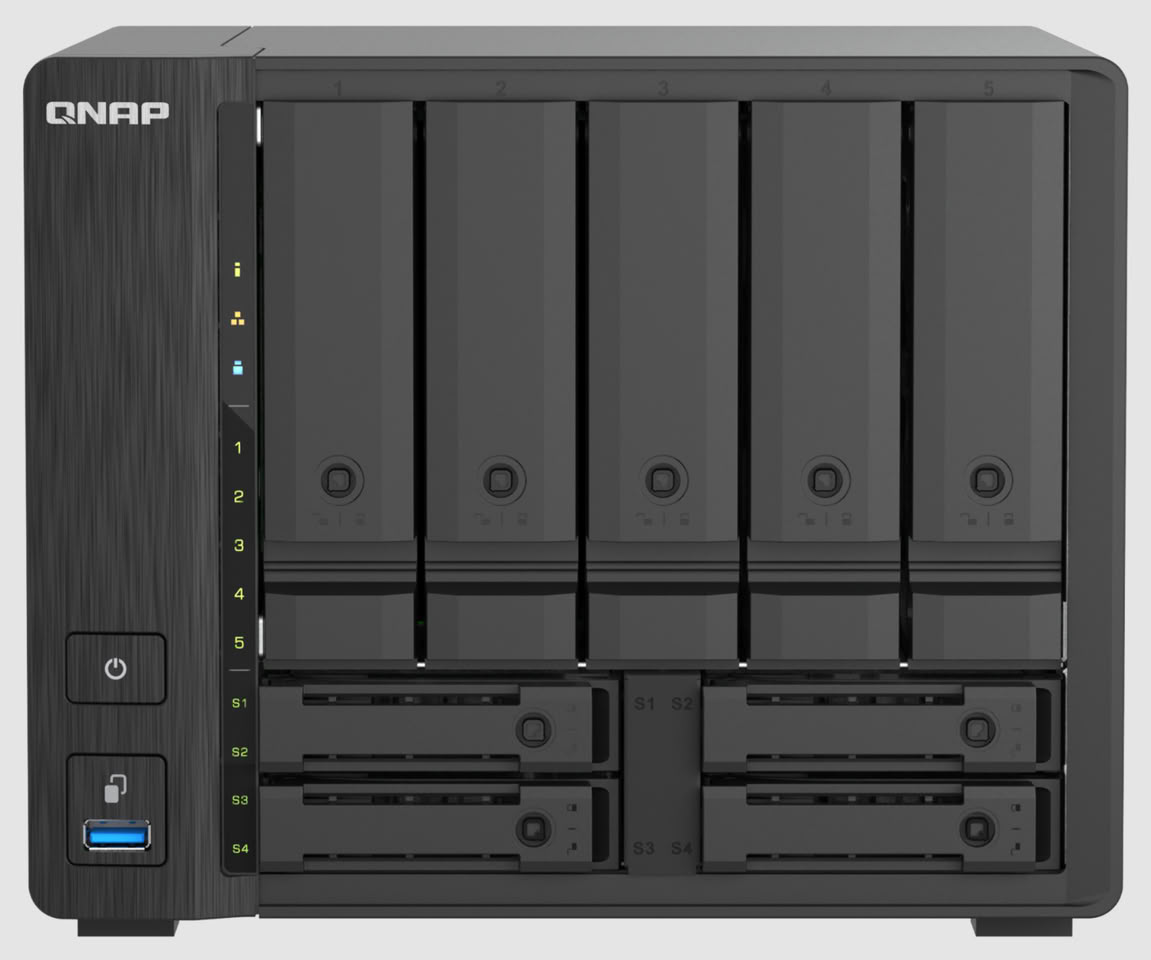
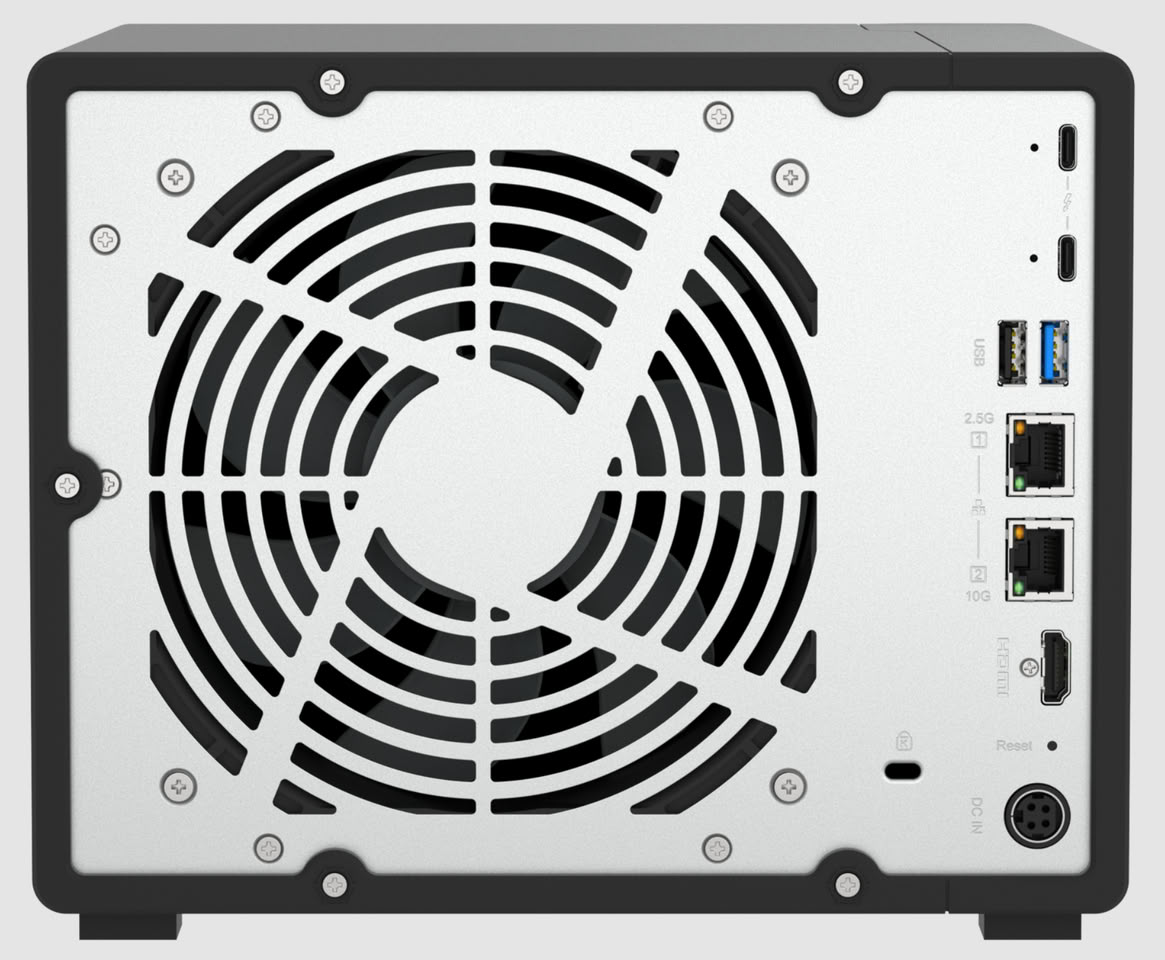
QNAP Releases the TS-h966TX Thunderbolt 4 & 10GbE NAS

QNAP Systems, Inc., a leading innovator in storage, networking, and computing solutions, today announced the TS-h966TX, a compact and reliable 9-bay hybrid Thunderbolt 4 10GbE NAS designed to accelerate modern content creation workflows. Featuring a unique 5+4 hybrid drive design, the 9-bay TS-h966TX combines large-capacity SATA HDD storage with high-performance U.2 NVMe SSD acceleration—helping creators and small studios achieve both cost efficiency and fast project turnaround.

Compared to QNAP's previous HDD-based 6-bay Thunderbolt 4 NAS models, the TS-h966TX is physically 36% smaller, enabling more efficient workspace deployment without compromising performance. With four dedicated U.2 NVMe SSD bays (which support installing M.2 NVMe SSDs via the QDA-UMP4A adapter), users can build ultra-fast storage pools or enable SSD cache to boost IOPS for demanding editing, VFX, and multi-user production environments.

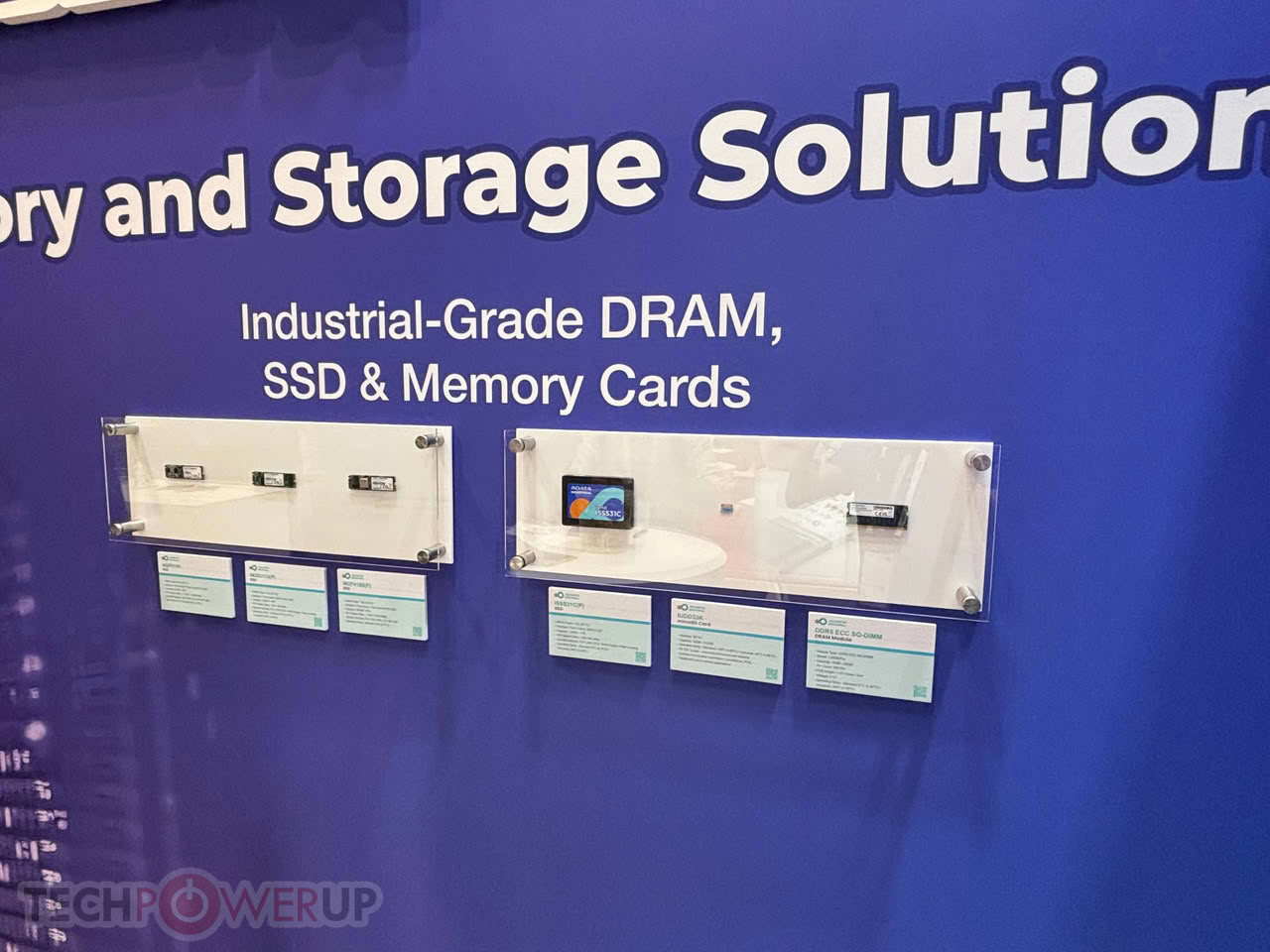
ADATA Expands Enterprise "TRUSTA" Brand and Shows Industrial Products at IFA 2026

At IFA 2026 in Berlin, we visited the ADATA booth to see what the company has in store. To many, the surprising factor is the introduction of the relatively new "TRUSTA" brand by ADATA, which focuses on enterprise and industrial product offerings, a departure from what traditional PC enthusiasts know about ADATA. First, we explored the TRUSTA brand to see what the company offers. This includes the T7P5 SSDs, which boast read speeds of 13.5 GB/s and write speeds of 10.3 GB/s, and come in capacities ranging from 1.6 TB to 7.68 TB. All of this is powered by 3D NAND Flash using eTLC architecture, with the SSD form factors including U.2, E1.S, and E3.S versions, all carrying the same PCIe Gen 5 x4 interface, just with different twists depending on server or workstation needs.

Lexar Shows Off Muse Portable SSD, Claims World's Thinnest at IFA 2026

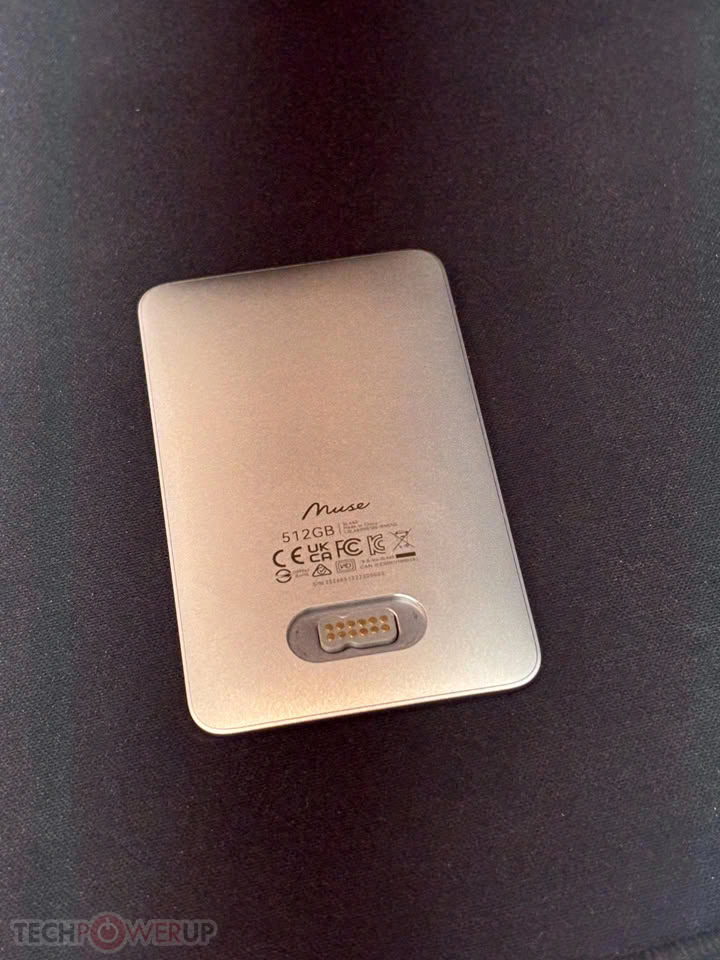
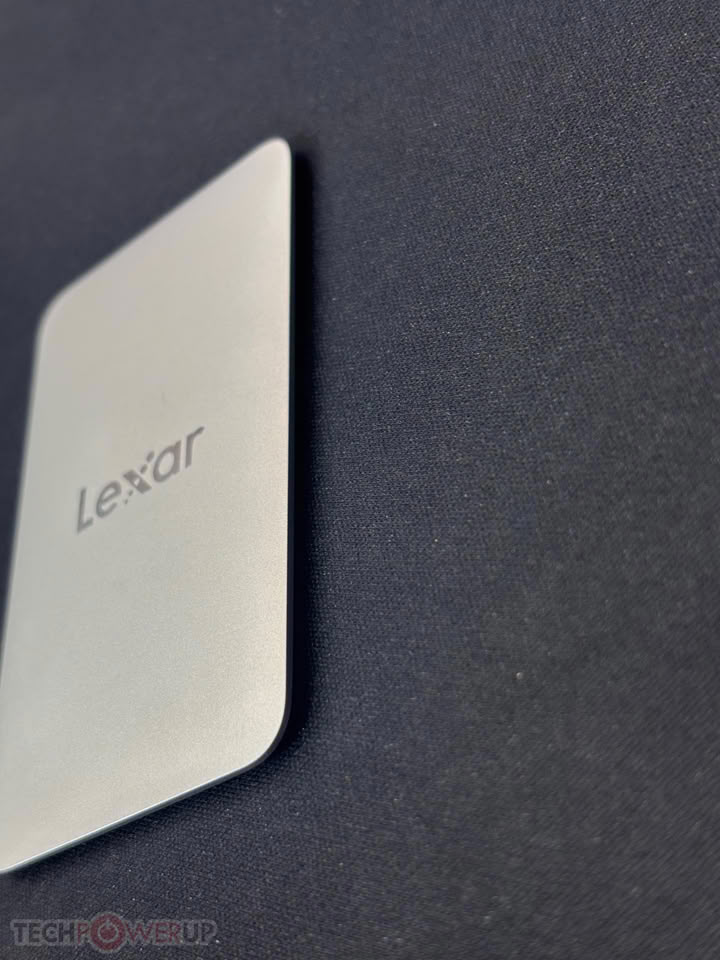
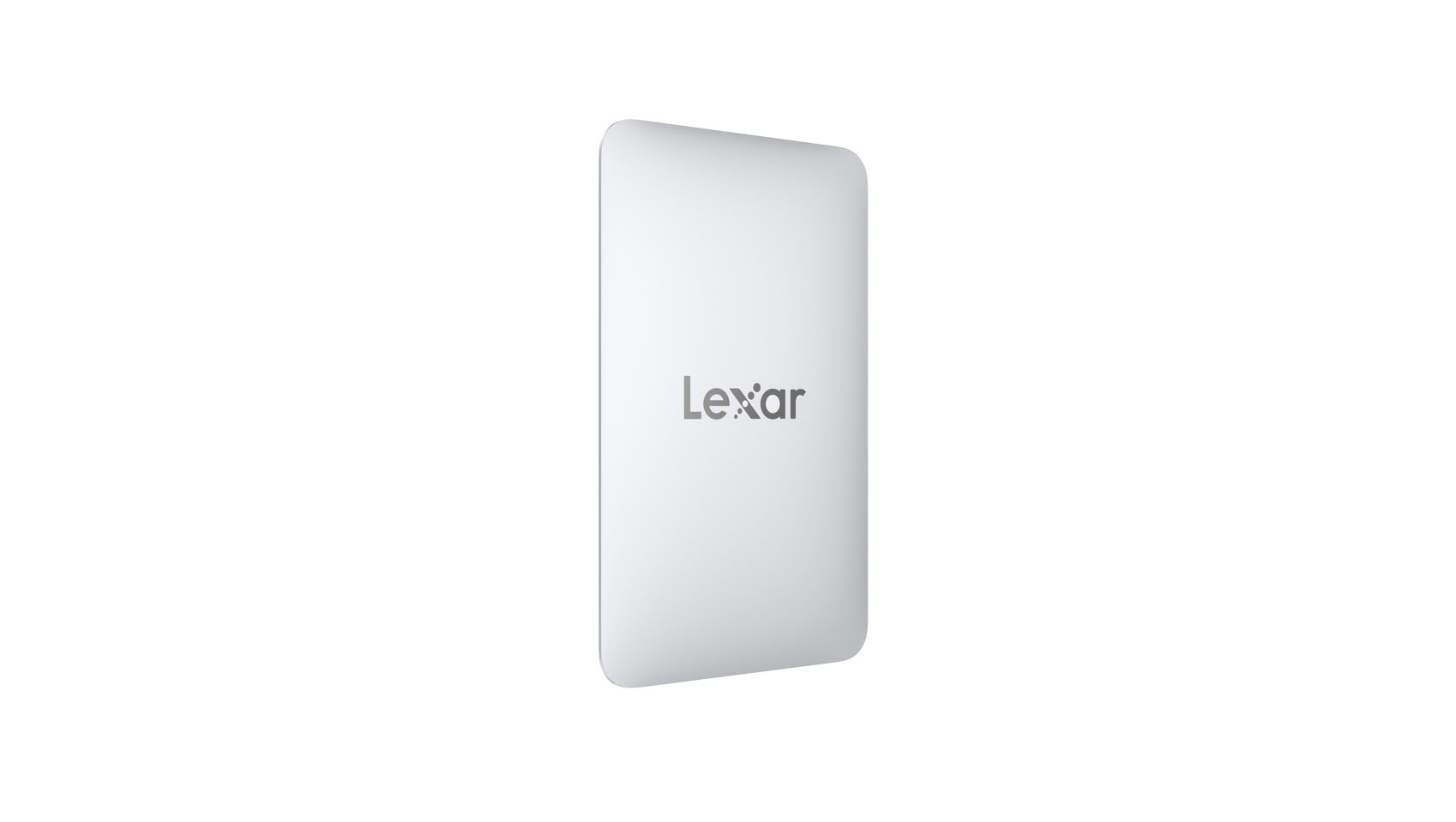
We are on the ground at IFA 2026 in Berlin, and Lexar used the floor to show off the Muse, a portable SSD the company is calling the world's thinnest. It measures just 3.8mm at its thickest point, tapering to about 1mm at the edges. That's closer to a credit card than the SSD bricks most people are used to carrying. However, getting there meant losing the USB-C port entirely. The Muse instead uses SnapLink, a proprietary pogo-pin connector held in place by N52-grade neodymium magnets, paired with a separate magnetic cable that terminates in USB-C. That also means that if you lose the SnapLink cable, the Muse is pretty much dead weight, since there's no standard port to fall back on.

The speeds are unremarkable for this class of drive, with up to 1,050 MB/s reads and 1,000 MB/s writes, and support for 4K ProRes recording at up to 120 FPS on compatible iPhones. Lexar also throws in a magnetic sleeve so the drive can sit on the back of a MagSafe-compatible iPhone. It launches in 512GB and 1TB capacities in Q4 2026, but there's no word on pricing yet. Lexar also hasn't shared sustained write or thermal numbers, so it's not clear yet how that thin aluminium shell handles heat during a long video dump. Lexar showed the Muse alongside its AI Storage Core lineup at the show, marking the company's 30th year in the memory business.

Improved CPU Supply Narrows 2026 Global Notebook Shipment Decline to 9.4%, but Brands Still Face Heavy Cost Pressure

TrendForce's recent research into the notebook industry shows that CPU supply has markedly improved since 2Q26, enabling brands to gradually normalize their procurement and manufacturing processes. Meanwhile, persistent increases in DRAM and SSD costs have led brands to accelerate their procurement strategies to secure components earlier, resulting in shipment volumes exceeding expectations in the first half of the year. Nonetheless, the ongoing rise in memory prices, along with increased CPU costs, has further amplified cost pressures on notebook brands.

TrendForce notes that as CPU shortages ease in 2H26, continued advance procurement by brands, earlier replacement purchases by consumers, and stable commercial demand are expected to support an upward revision to shipment forecasts. As a result, the decline in global notebook shipments for full-year 2026 is expected to narrow to 9.4% YoY.

Lexar Shows New AI Storage Core Technologies and Storage for Specialized Application Environments at IFA 2026

Beyond portable storage, Lexar is also showcasing the continued evolution of its AI Storage Core at IFA 2026. Combining advanced packaging, chip hardware, Lexar Luma Bridge technologies, and system-level optimization, the showcase includes next-generation AI-grade Gen 5 SSD and AI-grade Gen 5 Storage Stick. With bandwidth of up to 11 GB/s, these concepts support compact AI devices requiring larger local model storage, faster model switching, lower-latency data access, and sustained performance within constrained power and thermal environments.

Underpinning these concepts is an integrated hardware-software architecture built around Longsys' self-developed Gen 5 controller SPU, or Storage Processing Unit, and Lexar Luma Bridge technologies. Manufactured on an advanced 5 nm process with a DRAM-less architecture, the SPU is engineered to improve supply stability while maintaining high-performance AI storage capabilities. Lexar Luma Bridge uses intelligent workload scheduling, predictive prefetch, and optimized cache management to address large Mixture-of-Experts models, expanding KV Cache, and I/O latency—improving local AI performance while reducing DRAM capacity requirements by approximately 40%.

Lexar Claims the World's Thinnest Portable SSD with the Muse at IFA 2026

Lexar, a global leader in memory and storage solutions, today unveiled its latest storage innovations at IFA 2026, led by the new Lexar Muse the world's thinnest portable SSD. which brings high-speed external storage into a card-like form with premium minimalist aesthetics and intuitive magnetic connectivity to empower creators across mobile capture and on-the-go workflows. As Lexar mark s its 30th anniversary in 2026, the company is building on three decades of trusted memory expertise to enter its next chapter. Lexar's IFA showcase reflects this continued evolution—from the Muse Ultra-Slim Portable SSD created for mobile workflows to AI storage technologies and emerging B2B applications.

Lexar Redefines Portable Storage with the Muse, the World's Thinnest Portable SSD
Smartphones have become central to both professional and everyday content creation, yet conventional portable SSDs can add bulk and cable clutter to mobile setups. The new Lexar Muse Ultra-Slim Portable SSD takes a more considered approach, combining an ultra-slim, card-like body, a magnetic carry sleeve, and Lexar's proprietary PogoPin magnetic data connection. Paired with the supplied SnapLink Magnetic Cable, these elements create a cleaner, more intuitive storage experience. Named Muse to reflect its role in inspiring creativity, the drive provides a compact, streamlined storage setup for handheld filming, travel, on-the-go editing, and backup.

Samsung Leads NAND Market as Prices Climb 55% in a Single Quarter

The latest NAND market share data from Counterpoint Research shows just how far prices have risen in 2026. The global NAND market grew 70% quarter-over-quarter in Q2, following 90% growth in Q1. This is driven almost entirely by rising prices rather than higher shipments. NAND contract prices climbed 55% QoQ in Q2 alone, which lines up with earlier TrendForce estimates pointing to a 70-75% jump over the same stretch. Samsung held onto the top spot with 28% revenue share, down slightly from 29% in Q1 and 32% a year earlier, while SK hynix sits second at 19% and Micron rounds out the top three at 15%, helped along by high selling prices.

The surge traces back to AI infrastructure eating up NAND supply that would otherwise go toward consumer SSDs. Enterprise and hyperscale buyers are stockpiling high-capacity flash for AI servers, and manufacturers have leaned into that shift since it carries far better margins than retail drives. That's left less capacity for client SSDs, and it's part of why consumer drive prices keep climbing even as shipment volumes stay flat. China's YMTC is one of the more interesting movers here, growing from a 9% share a year ago to 14% in Q2, likely picking up volume as the bigger three chase their most profitable enterprise orders instead. Most forecasts still put meaningful price stabilization sometime in 2027, since new NAND capacity takes years to bring online and AI demand shows no sign of slowing.

Higher Prices and Shipments Drive Top Five Enterprise SSD Vendors' Revenue to Nearly US$37.59 Billion in 2Q26

NAND Flash suppliers are broadening their enterprise SSD product lines to boost profits and refine their offerings, according to TrendForce's recent memory industry report. Increased shipment volumes and higher contract prices are expected to propel the combined revenue of the top five enterprise SSD brands to double quarter-over-quarter, reaching $37.59 billion in 2Q26—a staggering 103.6% increase.

TrendForce expects enterprise SSD demand to remain elevated in 3Q26 thanks to the growing adoption of generative AI agent services, steady data center infrastructure deployments by CSPs, and large-scale shipments of NVIDIA GB-series AI server racks. These factors are expected to drive industry revenue even higher. However, rising output from Chinese suppliers and the emergence of China's domestic cloud market could reshape the competitive landscape going forward.

Sandisk Shows Pokémon-Themed USB-C Flash Drive and Portable SSD

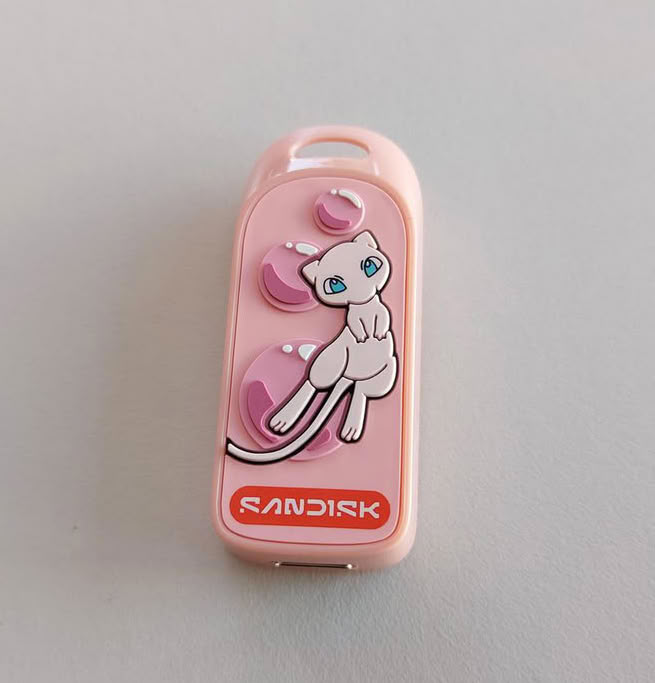
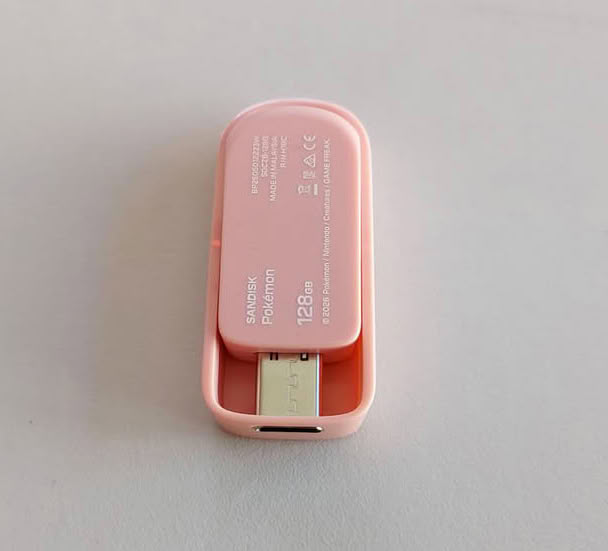
At Gamescom 2026 in Cologne, Germany, Sandisk showcased its lineup of officially licensed Pokémon storage products with two new drives celebrating the franchise's 30th anniversary. This includes the Sandisk Pokémon USB-C Flash Drive Mew Edition and the Sandisk Pokémon Portable SSD Mewtwo Edition. Designed around two of the most recognizable Pokémon characters, these new storage devices combine tactile 2D representations of their respective Pokémon, turning what would otherwise be ordinary storage hardware into collectibles that still serve a useful purpose. The Mew Edition offers up to 128 GB of storage through a USB-C interface. It is designed for supported smartphones, tablets, and computers, making it suitable for transferring photos, videos, game captures, and other everyday files without requiring a bulky external drive.

For users dealing with larger files, the Mewtwo Edition offers more. The Sandisk Pokémon Portable SSD is rated for read speeds of up to 1,000 MB/s, making it up to five times faster than traditional portable hard drives. It provides a more suitable solution for large photo libraries, video footage, and creative projects. Sandisk also equips the drive with protection against drops of up to two meters, adding some welcome durability to its portable design. The Mewtwo Edition will be offered in 500 GB and 1 TB capacities, while the Mew USB-C Flash Drive tops out at 128 GB. Both products are available starting today, giving Pokémon fans another way to combine their interest in the franchise with storage solutions they will actually use.

The Witcher 3: Wild Hunt Remastered Bumps PC Minimum Hardware Requirements

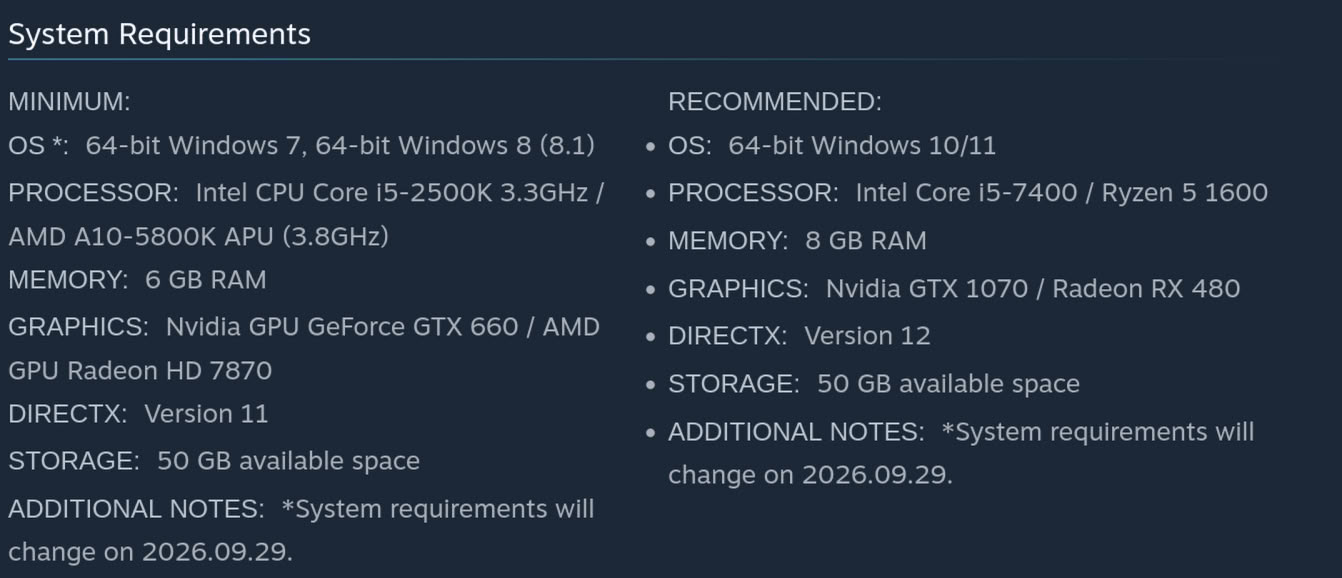
CD Projekt Red announced The Witcher 3: Wild Hunt Remastered at Gamescom 2026, revealing a visual, performance, and gameplay upgrades coming as a free update to The Witcher 3 for existing owners. Owners of The Witcher 3: Wild Hunt Complete Edition will see their game update to the Remaster on September 29, but that upgrade will come with significantly higher demands of their gaming rigs, with the minimum PC system requirements now exceeding the recommended PC system requirements in the CPU department and more or less matching them on the GPU side of things.

According to the Remaster's Battle.Net store page, where the updated minimum specs were revealed first, The Witcher 3: Wild Hunt Remastered will call for an Intel Core i5-8400 or an AMD Ryzen 5 2600, paired with 12 GB of RAM and 70 GB of SSD storage. Previously, The Witcher 3: Wild Hunt only called for an Intel Core i5-2500K or an AMD A10-5800K.

Samsung Showcases P9 and P7 SSDs Featuring USB4 at Gamescom 2026

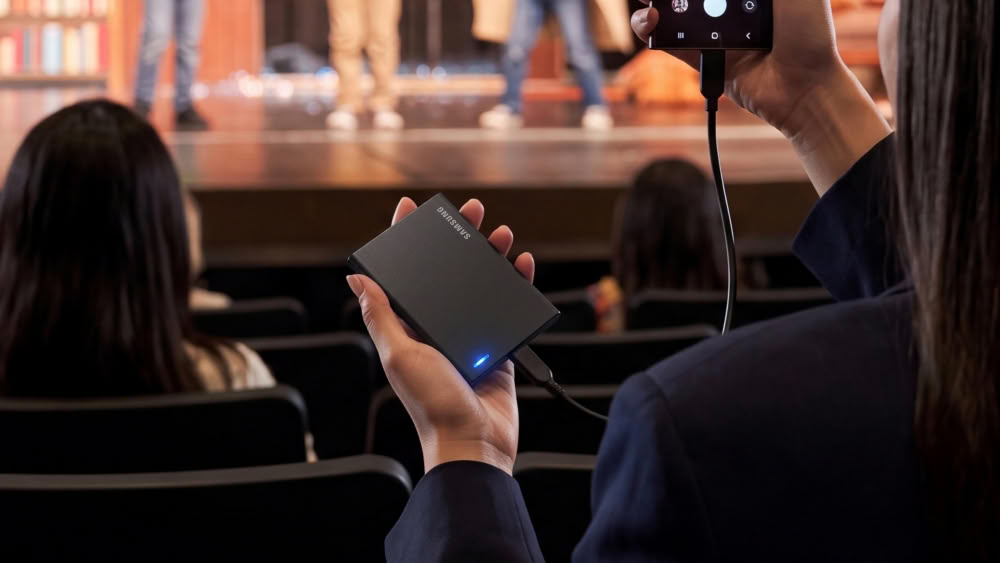
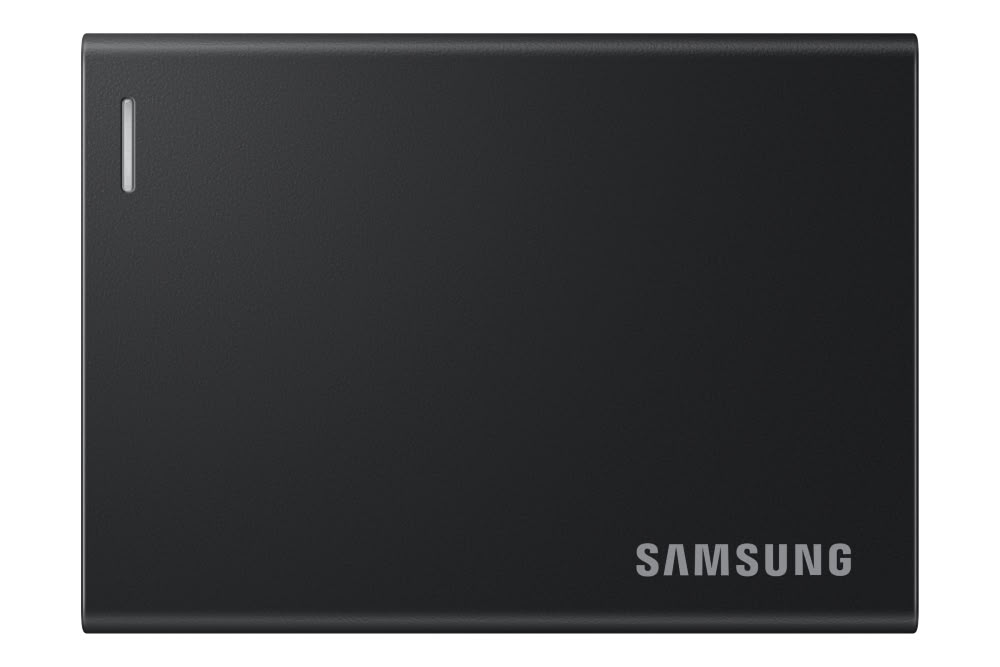
Samsung Electronics a global leader in advanced memory technology, today unveiled the P9 and P7, its next-generation portable solid-state drives (SSDs) featuring USB4 connectivity. The company introduced the new P Series at Gamescom 2026, the world's largest gaming event, held in Cologne, Germany from Aug. 26-30.

Designed to meet rapidly growing storage demands driven by ultra-high-resolution video, AI content, and large-scale games, the P Series includes the flagship P9, which delivers high-end performance for professional users, and the P7, designed for fast and convenient storage across everyday use cases.

Memory Prices Soar; DRAM and NAND Flash to Account for 68% of Major CSP CapEx in 2027

According to TrendForce's latest memory industry research, major global cloud service providers (CSPs) are accelerating AI infrastructure investment, with total CapEx projected to surge 98% YoY in 2026 and rise another 50% in 2027. The rapid increase will be driven in part by soaring memory contract prices and robust procurement demand. TrendForce estimates that DRAM and NAND Flash combined will account for 47% of CSPs' total CapEx in 2026, with their share rising further to 68% in 2027.

TrendForce observes that the sharp rise in memory contract prices since the second half of 2025 has significantly increased memory's share of CSP spending. Server DRAM—a key procurement category for CSPs—saw contract prices rise by a cumulative 64% in 2H25, with a further jump of approximately 270% expected in 2026. Meanwhile, a similar trend is unfolding in NAND Flash, with enterprise SSD prices rising by around 35% in 2H25 and projected to surge by a cumulative 235% in 2026.

CPUID Unveils CPU-Z 3.01 With a New Validator

CPUID has released an update to one of the most popular utilities in the world of PC hardware with the official launch of CPU-Z version 3.01, the first stable release in the CPU-Z 3.0 family. Much has changed within the CPU-Z software itself, as it now provides more detailed validation results for regular users and clearer validation for extreme overclocking scenarios. The familiar CPU-Z skin still runs on top of the desktop application, but the validation process has become more interesting. CPUID claims that in less than 10 seconds, users will see a new CPU-Z Validation V3 displayed, offering a much deeper system analysis. The tool now covers over 100 detection points, including outdated drivers, overheating SSDs or CPUs, hardware issues, and even bloatware.

The tool has improved XOC validation for extreme overclockers aiming to break world records. Under CPU-Z Validator V2, Standard Mode required a five-second load, with all frequency data sources needing to stay within 1% of each other, or the validation would be rejected. V2's XOC Mode removed the load and most internal checks, resulting in an "unsure" status. With V3 XOC Mode, CPU-Z continues to disable the load while calculating both effective and input frequencies. If the effective frequency is lower than the input frequency, the submission can still be validated, with the effective frequency used as the final validated result. This should make XOC validation more accommodating and could lead to new overclocking records beyond today's validated results. Below is an example result of CPU-Z running on an AMD Ryzen 7 7840U SoC, showcasing the new validator page look.

DOWNLOAD: CPU-Z v3.01.

Combined Revenue of Top Five NAND Flash Brands Rises 77% QoQ in 2Q26; Micron Moves Up to Third Place

TrendForce's latest NAND Flash industry research reveals that AI server demand remained steady in the second quarter of 2026—particularly for enterprise SSDs—resulting in a supply shortage across the NAND Flash market. This allowed suppliers to raise ASPs significantly through contract negotiations. As a result, the combined revenue of the top five publicly listed NAND Flash brands rose 77% QoQ to US$68.87 billion.

Looking ahead to the third quarter, demand from smartphones and PCs is expected to remain weak as higher BOM costs push up device prices. However, demand from AI servers for enterprise SSDs remains strong. Meanwhile, suppliers are generally prioritizing capital expenditure on DRAM and HBM, limiting new NAND Flash capacity. ASPs are therefore expected to continue supporting overall industry revenue growth in the third quarter.

YMTC Surpasses Micron, Kioxia, and Sandisk in Global Storage Market Share

Chinese YMTC has been on a significant upswing, as confirmed by the global NAND Flash shipment market share tracker for the second quarter of this year. According to Counterpoint Research data, YMTC became the third-largest player in Q2, surpassing some of the biggest names in the industry. Leading the global NAND Flash shipment market share is Samsung, holding 25% of the market. In second place is SK hynix, along with its subsidiary Solidigm, commanding 22% of the market share. However, YMTC has claimed the third spot, with its bit shipments growing 22% year-over-year and 5% quarter-over-quarter, edging ahead of Micron, Kioxia, and Sandisk.

YMTC's rise to the third-largest player in the NAND Flash industry in Q2 is attributed to the substantial volume of shipments both domestically and internationally. YMTC's Xtacking 4.0 storage architecture is now in mass production with 267-layer 3D NAND, and the path to 300+ layer technology is anticipated for next year. This, combined with a high production volume, has allowed YMTC to surpass established names with ease. However, market share does not equate to revenue share. Despite ranking third in market share, YMTC only ranked fifth in revenue share among vendors. This is because YMTC is currently focusing on consumer electronics, while Micron, Kioxia, and other vendors concentrate on the more profitable enterprise server and AI sectors.
Return to Keyword Browsing
Nov 18th, 2026 23:20 PST change timezone

New Forum Posts

Popular Reviews

TPU on YouTube

Controversial News Posts