News Posts matching #ssd

Return to Keyword Browsing

OWC Announces ThunderBlade X12 Expansion Delivering up to 192TB of Thunderbolt 5 RAID Storage

Other World Computing (OWC), a trusted leader in high-performance storage, memory, connectivity, software, and accessories that empower creative and business professionals to maximize performance, enhance reliability, and streamline workflows, today announced a major capacity expansion for its OWC ThunderBlade X12 production shuttle RAID SSD - doubling max capacity to 192TBs. This makes the OWC ThunderBlade X12 the first and only Thunderbolt 5 RAID shuttle drive to deliver this level of capacity and performance in a compact form factor.

With up to 6600 MB/s peak and 5990 MB/s sustained write speeds thanks to its Thunderbolt 5 technology, OWC ThunderBlade X12 has once again doubled the performance of its highly acclaimed predecessor. Up to 192 TB of storage is under your control with SoftRAID Premium, the fastest, most powerful, and flexible RAID tool on the planet. It's the perfect portable solution with the highest performance, efficiency, and dependability for film and streaming service content production as well as cutting-edge multi-cam 4K, 6K, or 8K RAW sequences, 12K RAW video, and beyond, or even stereoscopic 360 VR editing.
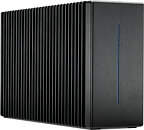
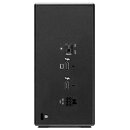
Other World Computing Introduces 8TB Envoy Ultra Thunderbolt 5 SSD

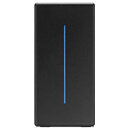
Other World Computing (OWC), a trusted leader in high-performance storage, memory, connectivity, software, and accessories that empower creative and business professionals to maximize performance, enhance reliability, and streamline workflows, today announced an 8 TB version of its OWC Envoy Ultra Thunderbolt 5 SSD, making it the first and only Thunderbolt 5 drive of this it's kind and capacity, in the world.

"Envoy Ultra is built for people who do not baby their gear. It is rugged, reliable, and fast in ways you actually feel in real-world work, not just on a spec sheet. Throw it in a bag… plug it in anywhere… and you'll get over 6000 MB per second without external power, adapters, or noise," said Larry O'Connor, Founder and CEO, Other World Computing (OWC). "With this - the first and only 8 TB Thunderbolt 5 SSD - professionals no longer have to choose between speed, capacity, or portability. That combination of durability, simplicity, and performance is what professionals expect from OWC. And it is why Envoy Ultra delivers the best of Thunderbolt 5 in the palm of your hand."

Conner Returns to the 2026 CES with Portable Digital Storage Solutions

Conner Peripherals, once a pioneering force in the evolution of personal computing, was known throughout the 1980s and 1990s as the industry leader and dominant standard in digital storage, particularly for 3.5-inch hard drives. By 1990, Conner Peripherals was the fastest-growing start-up company in the history of US commerce. Conner helped shape the foundation of modern digital storage and set benchmarks for performance, reliability, and compact engineering.

The Conner brand proudly announces its return to the marketplace with a bold new vision, integrated artificial intelligence (AI), and a revitalized product lineup. The rebirth of Conner is blending its legacy of innovation with cutting-edge design to meet the demands of an increasingly mobile, data-driven world. As consumers generate more content and rely on multiple devices, Conner is stepping forward with modern solutions that redefine what portable storage can be, which will be on display at the 2026 CES in Central Hall, Booth #20217.

Memory Makers Prioritize Server Applications, Driving Across-the-Board Price Increases in 1Q26

TrendForce's latest investigations indicate that DRAM suppliers in 1Q26 will continue to reallocate advanced process nodes and new capacity toward server and HBM products to support rising AI server demand. This shift has significantly limited supply in other markets, causing conventional DRAM contract prices to increase by about 55-60% QoQ. Meanwhile, disciplined capacity management by NAND Flash suppliers, along with robust server demand that is displacing other applications, is likely to increase contract prices across all NAND Flash product categories by 33-38%.

Despite weaker notebook shipments and slower growth in memory demand due to potential specification downgrades, PC DRAM prices are still set to rise sharply in the first quarter. DRAM suppliers have simultaneously tightened supply to PC OEMs and module makers, forcing some OEMs to procure memory at higher prices through modules makers. This is expected to raise DRAM suppliers' module pricing and significantly drive up PC DRAM prices.

ADATA Pioneers New Era of AI Innovation at CES 2026

Global leader in memory modules and flash storage, ADATA Technology Co., Ltd. will present its latest breakthroughs at CES 2026, under the theme "Advancing Innovation." Marking its upcoming 25th anniversary, ADATA will showcase its latest innovations alongside its enterprise storage brand TRUSTA, industrial solutions leader ADATA Industrial, and gaming brand XPG.

The exhibition centers on three key zones: AI Innovation, Smart Living, and Gaming Lifestyle. The AI Innovation Zone showcases innovative hybrid storage and memory solutions, intelligent management software for edge computing, and Gen 5 SSDs for AI PCs, demonstrating significant achievements in AI integration. The Everyday Innovation Zone features the industry's first 4-RANK DDR5 CUDIMM memory, sustainable DDR5 memory, external SSDs equipped with USB4 and NFC technology, and embedded storage solutions. In the Gaming Lifestyle Zone, XPG will spotlight its innovative thermal solutions, establishing a high-performance gaming ecosystem with a comprehensive new product lineup. Simultaneously, an online exhibition will launch on January 6, inviting global audiences to witness groundbreaking AI innovations and smart application capabilities.

GEEKOM Returns to CES 2026 with Premium Laptops and Next-Generation Mini PCs

GEEKOM will make its fourth consecutive appearance at CES 2026, taking place from January 6 to 9 at Booth 35025 in LVCC South Hall 2. As a leader in the Mini PC industry, GEEKOM is presenting its most focused product launch to date, marking a major expansion into premium laptops while continuing to advance its compact computing lineup.

The centerpiece of GEEKOM's CES 2026 showcase is the GeekBook X14 Pro, a laptop that sets a new benchmark for lightweight design. Weighing just 2.2 pounds and measuring only 0.23 inches at its thinnest point, the GeekBook X14 Pro is positioned as the world's lightest all-metal laptop. It features a 2.8K OLED display with a 120 Hz refresh rate, delivering sharp visuals, vivid colors, and smooth performance.

Beelink Reveals Specs and Pricing for the ME Pro 2-Bay NAS

Last week, Beelink revealed a teaser for its ME Pro NAS devices and now the company has unveiled the pricing for its first two 2-bay models, which come in a total of five different SKUs. All five SKUs are based on Intel Twin Lake SoCs, with the three base SKUs being built around the Intel Processor N95 and the two remaining SKUs sporting the Intel Processor N150. The base model pairs the N95 with 12 GB of 4800 MT/s LPDDR5 and a 128 GB SSD for US$369, whereas an upgraded SKUl with a 512 GB SSD comes in at US$449 and finally the top tier SKU comes with a 1 TB SSD for US$479. The N150 SKUs include 16 GB of LPDDR5 and start at US$529 with a 512 GB SSD and tops out at US$559 with a 1 TB SSD.

The ME Pro with the Twin Lake SoCs offers three M.2 NVMe slots, one with a PCIe 3.0 x2 interface and two with a PCIe 3.0 x1 interface. There's space for a pair of 2.5- or 3.5-inch hard drives and up to 30 TB drives are supported. Around the back you'll find a 19 V DC input, a 2.5 Gbps (Intel i226-V) and a 5 Gbps (Realtek RTL8126) Ethernet jack, an HDMI 2.1 port capable of 4K60p output, two USB 2.0 ports, one USB 3.2 Gen 2 (10 Gbps) Type-C port and a 3.5 mm audio jack. Around the front is a further USB 3.2 Gen 2 (10 Gbps) Type-A port, the power switch and a reset and clear CMOS pin-hole. A neat addition is a small tool that is attached to the base of the housing. Beelink has also included Wi-Fi 6 and Bluetooth 5.4 and it seems like the ME Pro ships with Windows 11 Home. Pre-orders are up now, with shipping said to start at some point in January.

Windows 11 25H2 Includes a Faster NVMe Driver Needing Manual Installation

Although Windows has had awareness of the NVMe storage media protocol since Windows 8.1, it turns out that the stock Microsoft driver for NVMe devices, disk.sys, offers suboptimal performance. This driver dates back to 2006, and is part of Microsoft's oldest internal basic drivers. Disk.sys appears to treat NVMe devices like SCSI drives. Microsoft released a new native driver with a greater degree of awareness of NVMe with Windows 11 25H2 (client) and Windows 2025 (server) operating systems, called nvmedisk.sys. The easiest way to check if your drive is using the older driver would be to bring up Device Manager, collapse "Disk Drives," open the Properties of your drive, go to the Driver tab, and click on the "driver details" button.

Notebookcheck made a fascinating discovery that has the potential to unlock greater performance with your NVMe drives, if they are compatible. Apparently, nvmedisk.sys significantly improves performance, both in sequential and random workloads. Using this driver, however, is fraught with risks. Not all NVMe SSDs support it, and if incompatible, it could break Windows 11 boot. The publication put out a guide on how to get Windows 11 to use nvmedisk.sys. This involves changing three Windows Registry values. It would be a good idea to image or backup your data before you tinker with this, so you can perform a full image restore if it breaks Windows booting. The guide can be found in the source links below, use it at your own risk.

KIOXIA SSDs Achieve Compatibility with Microchip's Adaptec SmartRAID 4300 Series RAID Storage Accelerator

Kioxia Corporation, today announced that its 2.5-inch KIOXIA CM7 Series Enterprise PCIe 5.0 NVMe 2.0, KIOXIA CD8P Series Data Center PCIe 5.0 NVMe 2.0 and KIOXIA CD8 Series Data Center PCIe 4.0 NVMe 1.4 SSDs have been successfully tested for compatibility and interoperability with the Adaptec SmartRAID 4300 Series RAID storage accelerator card from Microchip Technology Inc.

The Adaptec SmartRAID 4300 accelerator supports up to 32 NVMe SSDs, with each drive directly connected to the CPU through its own dedicated channel. This design eliminates the PCIe bottleneck typically associated with a traditional single x16 host interface, enabling each SSD to operate at peak performance. This innovative architecture delivers exceptional throughput and IOPS, making it an ideal solution for data-intensive enterprise applications. The success of next-generation data center infrastructures relies on ecosystem collaboration and interoperability to ensure seamless integration of current and future technologies.

Kingston Warns SSD Shortage Will Get Worse in the Next 30 Days

The modern-day SSD business is divided into two main perspectives: some predict that NAND flash shortages will ease, while others speculate that the situation will worsen. Kingston belongs to the latter group, with the company's datacenter SSD business manager, Cameron Crandall, discussing this on The Full Nerd Network podcast. According to him, the NAND flash shortage is expected to significantly worsen in the next 30 days, leading to an increase in SSD prices from current levels. In 2025 alone, Kingston reports that NAND flash prices have surged by 246% from the first quarter until now, with 70% of that increase occurring in just the last 60 days. This indicates that many price hikes have already been integrated into the supply chain.

Edward Crisler, the PR manager for Sapphire, advised PC gamers and potential buyers not to rush into panic buying. He stated, "The good news is, I don't think the real pain we're experiencing now and for the next six months or so will last much longer than that." However, he also highlighted that the main challenge is the uncertainty of the situation. This uncertainty is causing OEMs to increase NAND flash contracts, where no one besides NAND flash manufacturers can predict what is exactly going on in the supply chain, and just how long the massive demand will outpace supply.
DRAM Price Hikes Have Minimal Impact on PC OEMs, Notes Report

The global DRAM shortage has driven up the prices of individual RAM kits, but PC OEMs have largely remained unaffected. Acer and ASUS indicated this week that rising memory costs are starting to influence notebook pricing, though retail price changes are still limited for now. Some brands, such as Dell, may begin raising prices on select high-end and business models, but neither Acer nor ASUS has officially changed their MSRPs in any way. Company executives warned that as new orders enter the market in the coming quarters, memory inflation will increasingly be reflected in end-product pricing. However, pricing remains stable for the time being, and there are no price changes.

Much of the near-term price stability comes from long-term supply agreements that protect OEMs and ODMs from paying spot market rates. Acer's CEO noted that memory historically accounted for about 8% to 10% of a PC's bill of materials, and that a 30% to 50% rise in memory costs so far has resulted in only an approximate 2% to 3% impact on the total BOM cost. Since many manufacturers secure memory through contracts that renew on quarterly or multi-year cycles, wider price fluctuations effects are likely to appear gradually, with more noticeable changes expected from the second quarter and into the third quarter of 2026 as contracts reset.

GIGABYTE Announces Availability of AORUS Prime 5 Gaming Desktop

GIGABYTE, the world's leading computer brand, announces that the AORUS PRIME 5 is now officially available. This high-performance desktop system is built on a new architecture with flagship-grade hardware, paired with GIGABYTE's signature cooling innovations and advanced fan technology. Designed to deliver exceptional speed and long-term reliability for gaming and multitasking, the AORUS PRIME 5 combines power, precision, and design with true plug-and-play simplicity.

The AORUS PRIME 5 not only features up to an AMD Ryzen 7 9800X3D processor and NVIDIA GeForce RTX 5080 graphics cards for multicore and next-generation AI performance, but is also built entirely with GIGABYTE products, including a 2 TB SSD and 32 GB of high-speed RGB memory for lightning-fast responsiveness and seamless multitasking. This configuration embodies GIGABYTE's DNA of proven stability, even extending that excellence into a fully integrated cooling solution.

Samsung Denies NAND Flash Exit as Sapphire PR Manager Calls for Calm

The gaming hardware industry has been in a bit of a state of late as a result of increased demand for DRAM causing a supply shortage and massive price hikes. As a result of the aforementioned issues, Samsung has been rumored to be converting some of its HBM3E and NAND production capacity to DRAM in order to meet demand. The ensuing rumors claimed that Samsung was planning an exit from the NAND, and thus SATA SSD market, as a result of the shift in focus. Micron's recent exit from the consumer space, and the closure of its Crucial memory and SSD brand, lent credence to these rumors, however, these rumors have recently been addressed by a Samsung spokesperson directly in a response to Wccftech. The spokesperson simply said "The rumor regarding the phasing out of Samsung SATA or other SSDs is false," apparently declining to expand any further. However, this is just one indication that the DRAM crisis may not be as long-lived as some have claimed.

Around the same time, in an interview with Hardware Unboxed, Edward Crisler, the PR manager for Sapphire, cautioned PC gamers and potential buyers against panic buying, saying that, "the good news is, I don't think the real pain, that we're suffering now and for the next six months or so, is going to last much longer than that," although he goes on to say that the actual issue at hand is uncertainty of the situation. The implication is that the market will eventually begin to stabilize within the next six to eight months. The implication isn't necessarily that DRAM prices will return to normal, but rather that DRAM supply will eventually catch up to supply. It could also be the case that the massive AI and datacenter boom currently causing the shortages will slow in the coming months, which would also help to stabilize things somewhat. Crisler is careful to note that DRAM prices may still remain somewhat elevated after the market stabilizes, but he seems to be convinced that the sky-high prices we're seeing for consumer memory will fall to some degree and that the gaming industry will adapt to whatever the end result is of the market shake-up.

KIOXIA Prepares Affordable G3 M.2 SSDs with QLC NAND and PCIe 5.0 Connection

KIOXIA is introducing a new storage solution with its Exceria G3 SSD series, an M.2 PCIe NVMe SSD lineup that combines PCIe 5.0 speeds with QLC NAND memory to offer more affordable options for fast PCIe 5.0 storage. Scheduled for release in the fourth quarter of 2025, these M.2 2280 drives will be available in 1 TB and 2 TB capacities. They promise sequential read speeds of up to 10,000 MB/s and write speeds reaching 9,600 MB/s for the larger model. By integrating the latest interface standard with its eighth-generation BiCS FLASH QLC memory, KIOXIA aims to attract users looking to upgrade from older SATA and PCIe 3.0 drives, without pushing them into the higher-priced tier dominated by TLC NAND.

While QLC memory has historically lagged behind TLC in endurance and performance, the 2 TB G3 surpasses KIOXIA's Exceria Plus G4 in sequential writes and random IOPS, achieving 1.6 million read operations and 1.45 million write operations per second. This improvement is due to the BiCS8 architectural enhancements, which enable KIOXIA to rate the drives at 600 TBW for the 1 TB model and 1,200 TBW for the 2 TB version. These durability figures are comparable to most modern TLC offerings. The 1 TB variant is also impressive, with 10,000 MB/s read speeds, 8,900 MB/s write speeds, and 1.3 million IOPS for random reads. Naturally, performance decreases with smaller capacities. Pricing is still unknown, but the point here is affordability, so that might be something to look forward to.

HDD Prices Soar, Sparking Fears of Incoming Shortage

The good-old "spinning rust"—commonly referred to as Hard Disk Drives (HDDs)—may be another leg in the depleted computing infrastructure caused by the AI boom. According to DigiTimes, contract negotiations for the fourth quarter of 2025 concluded with traditional HDD prices settling about 4% higher quarter-over-quarter, marking the largest rise in the past eight quarters. That is over the largest increase in recent years, indicating that the demand is again outpacing supply even in the slower storage segments like HDD. The massive demand reportedly comes from particularly strong uptake for desktop 3.5-inch drives in China and continued heavy procurement of high-capacity units by major U.S. cloud service providers and hyperscalers.

In China, there is a preference for domestically produced CPUs and operating systems, combined with an increase in local PC assembly, which has brought HDDs back into first-class role in certain PC configurations after years of being replaced by SSDs. Additionally, concerns about SSD data retention have led some customers and policymakers to favor HDDs for specific workloads. Large cloud operators are also expanding their exabyte-class storage for AI, analytics, and archival needs. Manufacturers report that utilization rates are at or near full capacity as demand extends beyond traditional surveillance and backup applications. Especially with AI infrastructure, storing massive data for model training has prompted AI labs to use some HDD-based storage infrastructure where speed isn't needed.

Samsung Could Stop SATA SSD Production Amid NAND Flash Shortage

Samsung is reportedly considering halting its consumer SATA III SSD production lines due to a growing shortage of NAND flash in the supply chain. According to Moore's Law is Dead, industry insiders have been discussing Samsung's potential stop of regular SATA III SSD production. Most NAND flash is being allocated to datacenter customers, such as AI labs and hyperscalers, leaving limited supply for the lower-margin consumer market, including PC gamers and tech enthusiasts. However, this likely only impacts regular SATA III SSDs and not Samsung's popular M.2 PCIe NVMe drives, which have been a consumer favorite for years. Additionally, there are reports that Samsung is converting its NAND flash production lines in Pyeongtaek and Hwaseong to focus on DRAM production. The upcoming Pyeongtaek Fab 4 (P4) is also expected to operate as a DRAM-only facility using Samsung's latest 1c process.

Earlier industry sources suggest that Samsung is becoming cautious about the NAND market, while demand for standard DRAM has surged. This shift makes NAND flash a less attractive segment, causing the entire supply chain to slow down as inventories are depleted. The demand for AI infrastructure has rapidly depleted inventory across the supply chain, and NAND flash is no exception. The rapid expansion of AI infrastructure has led to NAND flash shortages, which could persist for years. It was noted that the price of a 1 Terabit TLC NAND increased from $4.80 in July 2025 to $10.70 in November 2025, marking an increase of over 100% in less than six months. Other types of NAND flash, such as MLC and QLC, have also seen their spot prices more than double.

Club3D Releases New Thunderbolt 5 Docking Station and CSV-2512 KVM Switch

Club 3D officially released its 2 newest products: The CSV-2562 13-1 Thunderbolt 5 Docking Station and the CSV-2512 KVM Switch. These new products are a strong way to end the year for Club 3D since the docking station is Club 3D's most powerful docking station yet.

CSV-2562 13-1 Thunderbolt 5 Docking Station M.2 SSD 2x HDMI 8K60Hz Thunderbolt Share Certified 180 W
The Club 3D CSV-2562 is a certified Thunderbolt 5 docking station that consolidates all essential ports into one device, including an SSD slot for easily expanding your computer's storage with the same speeds as your internal drive.
  • Club 3D's highest model Thunderbolt 5 device, fully certified for guaranteed compatibility and peak performance.
  • Add more space with an easy-to-use SSD slot, giving your computer the same lightning-fast speed as its built-in storage.
  • Connect up to 3 screens at 5K60Hz, ideal for multitasking at a high level.
  • Delivers a 140 W power delivery to your laptop and 30 W to your phone or tablet, to charge your devices without the need for extra chargers.
  • Comes with a Thunderbolt Share license to connect two computers directly for seamless file transfer and display control.
  • Upgrade your setup with the CSV-2562 and experience peak Thunderbolt 5 performance from one compact and reliable docking station.

KIOXIA Unveils New Exceria PRO G2 SSD Series

KIOXIA Europe GmbH today announced the EXCERIA PRO G2 SSD, the new performance flagship in its EXCERIA Personal SSD portfolio. Engineered for enthusiasts who demand the very best, the EXCERIA PRO G2 delivers blistering PCIe 5.0 speeds backed by high-performance BiCS FLASH TLC 3D flash memory. Pushing the boundaries of what's possible in consumer storage, the EXCERIA PRO G2 achieves impressive sequential read speeds of up to 14,900 MB/s and write speeds of up to 13,700 MB/s. This immense bandwidth, combined with exceptional random read/write performance, enhances data efficiency, enabling instantaneous game loading, seamless 8K video editing, and vastly accelerated workflow for the most demanding applications.

Available in capacities up to 4 TB and built in the M.2 2280 form factor, the EXCERIA PRO G2 is built for those who refuse to compromise. It leverages KIOXIA's advanced BiCS FLASH TLC 3D flash memory and a high-performance engine to provide sustained speeds and robust reliability under heavy, continuous workloads, making it the ideal drive for high-end PCs, next-gen gaming consoles, and professional content creation systems.

Biwin CL100 Mini SSD Reaches Retail in China, Top 2 TB SKU Costs ~$311

Biwin has just released its intriguing Mini SSD design as a standalone product for consumers, at least in China. A brief introduction—carrying a largely red theme—occurred roughly four months ago. At the time, the Chinese storage media specialist did not give its proprietary design a proper model designation. Fast-forward to early December, fresh JD.com and official website listings have signalled the CL100's arrival at retail. A wider release seems inevitable, but prospective global customers will need to grab a matching "plug and play" Mini SSD Reader (RD510) in order to access the tiny product's contained pool of storage. The CL100 Mini SSD is described as: "a high-performance, ultra-mini storage solution. Measuring just 15.0 mm × 17.0 mm × 1.4 mm, it offers SSD performance in the size of a small coin or just about the size of a microSD card."

GPD and OneXPlayer have referred to the emerging format's slot standard as "1517," since their Win 5 and Super X (respectively) handheld gaming devices are already supporters of Biwin's sleek design. Naturally, the CL100's compact setup is marketed as an ideal removable storage solution for compatible ultra-thin notebooks/laptops, mini PCs, and portable gaming PCs. One key innovation is highlighted on the company's dedicated product page: "CL100 uses advanced LGA packaging technology, integrating the controller and flash memory modules into an ultra-compact form." Official marketing material outlines "impressive read speeds up to 3700 MB/s, and write speeds up to 3400 MB/s." The JD.com SKU selection system lists three prices: 599 Yuan (~$85 USD) for the 512 GB model, 1099 Yuan (~$156 USD) for Biwin's 1 TB option, and 2199 Yuan (~$311 USD) for the 2 TB range topper.

SK Hynix Slows Down HBM4 Ramp, Prepares 300+ Layer NAND Flash

Interesting developments are unfolding in the world of DRAM and NAND flash, as one of the largest players, SK Hynix, has announced product updates for 2026. The company appears to be following its competitor Samsung by slowing the ramp-up of its next-generation HBM4. Initially, SK Hynix planned to increase its HBM4 capacity in the second quarter of 2026. However, this has been postponed to the third quarter of 2026, as the company plans to expand its HBM4 manufacturing capacity. The delay is due to the high demand for its current HBM3E capacity, necessitating the continued operation of HBM3E manufacturing sites longer than expected. SK Hynix's largest customer for HBM chips, NVIDIA, is reportedly facing challenges with the volume production of "Rubin," delaying the need for HBM4, while the HBM3E-equipped "Blackwell" remains in strong demand.

DapuStor Intros Second-Gen QLC R6060 SSD Series with Capacities up to 245 TB

As AI technology evolves at breakneck speed, the industry is witnessing an unprecedented explosion of data. The bottleneck in AI infrastructure is shifting—no longer solely about compute power, but about how data is stored, accessed, and scaled. The critical challenge now lies in managing ever-growing volumes of warm and hot data with higher density, lower power consumption, and optimized total cost of ownership (TCO). Traditional expansion strategies are hitting limits in space, power consumption, and cost efficiency, prompting a new wave of infrastructure transformation—ushering in the era of enterprise-grade QLC SSDs.

As one of the Global Tier-1 Leaders in ultra-capacity enterprise QLC SSDs, DapuStor has launched its second-generation QLC solution this year: the PCIe Gen 5 R6060 SSD. With a maximum capacity of up to 245 TB and 122 TB models already deployed by end customers, the drive is purpose-built and ideally suited for AI-Grade Data Lakes, vector databases, and large-scale storage scenarios. Entering this new phase, DapuStor brings to market a more mature QLC technology that delivers a compelling balance of performance, energy efficiency, and cost-effectiveness for the AI era.

Team Group Launches New PD40 Mini External SSD

Team Group announced the launch of the Team Group PD40 Mini External SSD. Featuring the latest USB4 Type-C interface, it boasts read speeds of up to 4,000 MB/s. The PD40 combines exceptional performance with an ultra-compact design, elevating the portable storage experience to a new level. Users can transfer high-resolution videos, photos, and large files in just seconds, meeting the demands of business professionals and everyday users who seek speed, stability, and portability in a single device.

The Team Group PD40 Mini External SSD features a stylish and sophisticated matte black and deep red finish. Its rubberized, grooved texture provides a firm grip and anti-slip protection. The integrated lanyard hole combines fashion and function, making it easy to attach to a backpack and carry on the go for effortless data access anytime, anywhere. The PD40 weighs just 22 grams and is available in 1 TB, 2 TB, and 4 TB capacities. It utilizes the USB4 Type-C interface, ensuring broad compatibility with USB 3.2 and USB 2.0 devices. The PD40 offers true plug-and-play convenience across multiple systems and devices, empowering users to securely store and access their important data and memories.

AI Infrastructure Continues to Strengthen NAND Flash Demand; Kioxia Posts Highest QoQ Growth of 33.1% in 3Q25

TrendForce's recent research indicates that the ongoing expansion of AI infrastructure by CSPs fueled strong demand for enterprise SSDs in 3Q25. As a result, the combined revenue of the top five NAND Flash vendors grew by 16.5% QoQ, approaching US$17.1 billion. The production cuts enacted earlier in the year are now impacting the market, helping to balance supply and demand in the latter half. Additionally, the rising proportion of enterprise SSD shipments contributed to increased ASPs among suppliers.

A forecast for 4Q25 indicates that demand driven by AI for high-performance TLC and QLC enterprise SSDs will keep growing. However, as suppliers' inventories normalize and node migrations cause typical yield-related losses, the growth in shipments will be more restrained. Ongoing shortages in HDD supply will continue to push NAND Flash prices upward. TrendForce predicts total NAND Flash prices will rise by 20-25%, further boosting quarterly revenue.

Apacer Introduces ECO Series and AS714 Portable SSD

In response to global sustainability trends, Apacer Technology Inc. has unveiled its new ECO Series portable storage products made from fully recycled plastic materials, alongside the AS714 Portable SSD, which combines which delivers mobile-ready convenience with IP65-rated protection. These launches reinforce Apacer's long-term commitment to integrating sustainable design and innovative technology across its product lines.

Apacer CEO CK Chang emphasized that the company has been actively advancing green product design in recent years. "Beyond implementing sustainable actions into our product design, we aim to inspire more consumers to embrace environmental awareness through tangible, eco-conscious products," he said.

KIOXIA AiSAQ and Memory-Centric AI Innovations Enable AI-Based Automatic Image Recognition for Logistics Processes

Kioxia America, Inc. today announced a collaboration between Kioxia Corporation, Tsubakimoto Chain Co. (Tsubakimoto Chain) and EAGLYS Inc. (EAGLYS) to develop AI-driven image recognition technology that automatically identifies products moving through logistics workflows. This system supports advanced automation and efficiency in logistics, enabling organizations to respond quickly to changing market needs while managing costs and maintaining service quality. KIOXIA AiSAQ 1 and Memory-Centric AI2 technologies are central to this effort, addressing the need for scalable AI adoption as product types continue to expand and diversify. The jointly developed technology will be demonstrated during the 2025 International Robot Exhibition.

With the continued rise of e-commerce transactions, logistics networks are seeing greater volumes and a wider range of products moving through them. At the same time, ongoing labor shortages are driving the need for greater operational efficiency through AI. Traditional image recognition AI systems rely on deep learning models that require parameter tuning and retraining whenever new or seasonal products are introduced. This process is time-consuming and increases both power usage and operational costs, especially when dealing with large product catalogs.
Return to Keyword Browsing
Nov 18th, 2026 23:20 PST change timezone

New Forum Posts

Popular Reviews

TPU on YouTube

Controversial News Posts