Friday, September 4th 2015
AMD Radeon R9 Nano Review by TPU...Not
There won't be a Radeon R9 Nano review on TechPowerUp. AMD says that it has too few review samples for the press. When AMD first held up the Radeon R9 Nano at its "Fiji" GPU unveil, to us it came across as the most promising product based on the chip, even more than the R9 Fury series, its dual-GPU variant, and the food-processor-shaped SFF gaming desktop thing. The prospect of "faster than R9 290X at 175W" is what excited us the most, as that would disrupt NVIDIA's GM204 based products. Unfortunately, the most exciting product by AMD also has the least amount of excitement by AMD itself.
The first signs of that are, AMD making it prohibitively expensive at $650, and not putting it in the hands of the press, for a launch-day review. We're not getting one, and nor do some of our friends on either sides of the Atlantic. AMD is making some of its tallest claims with this product, and it's important (for AMD) that some of those claims are put to the test. A validated product could maybe even convince some to reach for their wallets, to pull out $650.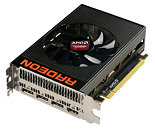 Are we sourgraping? You tell us. We're one of the few sites that give you noise testing by some really expensive and broad-ranged noise-testing equipment, and more importantly, card-only power-draw. Our reviews also grill graphics cards through 22 real-world tests across four resolutions, each, and offer price-performance graphs. When NVIDIA didn't send us a GeForce GTX TITAN-Z sample, we didn't care. We didn't make an announcement like this. At $2,999, it was just a terrible product and we never wished it was part of our graphs. Its competing R9 295X2 could be had under $700, and so it continues to top our performance charts.
The R9 Nano, on the other hand, has the potential for greatness. Never mind the compact board design and its SFF credentials. Pull out this ASIC, put it on a normal 20-25 cm PCB, price it around $350, and dual-slot cooling that can turn its fans off in idle, and AMD could have had a GM204-killing product. Sadly, there's no way for us to test that, either. We can't emulate an R9 Nano on an R9 Fury X. The Nano appears to have a unique power/temperature based throttling algorithm that we can't copy.
"Fiji" is a good piece of technology, but apparently, very little effort is being made to put it into the hands of as many people as possible (and by that we mean consumers). This is an incoherence between what AMD CEO stated at the "Fiji" unveil, and what her company is doing. It's also great disservice to the people who probably stayed up many nights to get the interposer design right, or sailing through uncharted territory with HBM. Oh well.
The first signs of that are, AMD making it prohibitively expensive at $650, and not putting it in the hands of the press, for a launch-day review. We're not getting one, and nor do some of our friends on either sides of the Atlantic. AMD is making some of its tallest claims with this product, and it's important (for AMD) that some of those claims are put to the test. A validated product could maybe even convince some to reach for their wallets, to pull out $650.
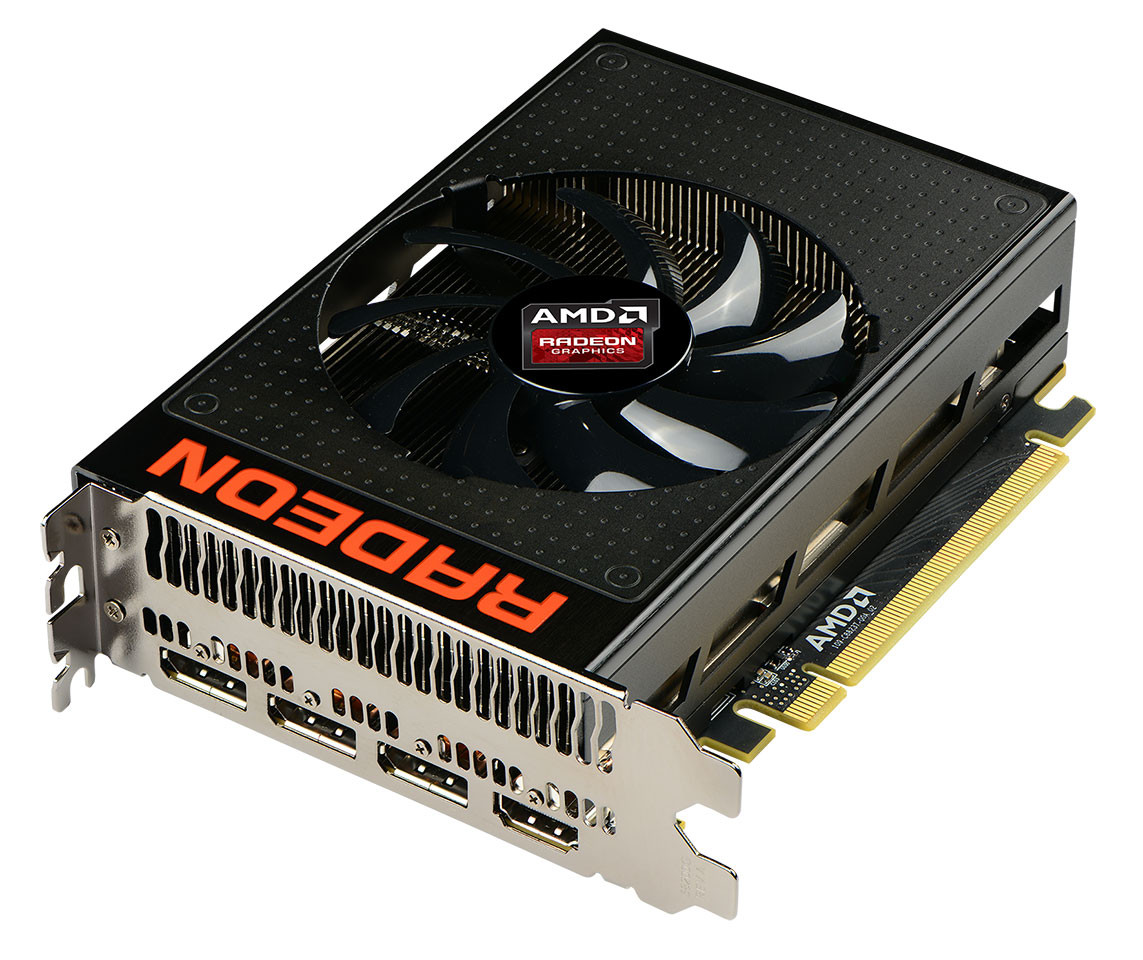
The R9 Nano, on the other hand, has the potential for greatness. Never mind the compact board design and its SFF credentials. Pull out this ASIC, put it on a normal 20-25 cm PCB, price it around $350, and dual-slot cooling that can turn its fans off in idle, and AMD could have had a GM204-killing product. Sadly, there's no way for us to test that, either. We can't emulate an R9 Nano on an R9 Fury X. The Nano appears to have a unique power/temperature based throttling algorithm that we can't copy.
"Fiji" is a good piece of technology, but apparently, very little effort is being made to put it into the hands of as many people as possible (and by that we mean consumers). This is an incoherence between what AMD CEO stated at the "Fiji" unveil, and what her company is doing. It's also great disservice to the people who probably stayed up many nights to get the interposer design right, or sailing through uncharted territory with HBM. Oh well.
759 Comments on AMD Radeon R9 Nano Review by TPU...Not
what happens if they go chapter 11 between sending the card for review and the review being done ( or bankrupt )
you never answered my question fan boy did you get a card to fan-review
They are right that GPU is a re-brand of a re-brand and the potential to make a wisecrack of it is there, with a different kind of thought process about how that would look to someone watching: it comes across as a bit derogatory toward the cards vendor (AMD) already the viewer gets the impression AMD are the but of jokes. that can be devastating for AMD.
The information is valid and should be included, but its no joke and perhaps a coment on whether or not the product is actually any good despite it being a re-brand, does the fact that it is a re-brand really matter? this is information that is important to the viewer.
Notice power from these two cards. GTX 970 ITX pictured below is overclocked too :roll:
Unfortunately for AMD the truth will come out with or without TPU review anyway. Worst case is that TPU borrow the card from someone within the industry. Everyone knows TPU is well known and respected among everyone.
He might have cooked up a special rig for the Nano to showcase it. If he haven`t, he is still very good at explaining how it all fits together
Size is mostly the only selling point AMD have of this card, so they try to market it like that.
Too bad GTX 970 ITX is there to ruin the show :p
Please start making graphics card again. Something like a 576 EU Gen 9 graphics might be pretty interesting.
Or perhaps something else. Maybe PowerVR?
And that is why I think TPU's GPU review are the best! :toast:
... Whatever that means.
I have been a long stalker of TPU, but if you are going to use your media power for some weird agenda i highly doubt it will help you in the long run. For example rebranding comes with its own losses that would show up in results graphs no matter what your funny comments are. I dont want to listen a review editor bashing in a way for something that has no addition for a review. They could rebrand ATI 9500 PRO for 2016 lineup. Bash it for low performance, bash it for high P. consumption. Until then it seems to me like "OMG REBRAND LOL". R9 390 is an appealing product for me aswell as GTX970. (I will do my best to not to buy nvidia products just because they should not be confident about fecking customers over and get away with it.)
For rebranding I would rather like to hear possible downsides. Like;
-Still old Tech and not a new silicon which would hurt the user in the long run and might have shortcomings sooner than users could guess.
-They may be rebrands but prices have gone up more than 4GB memory addition so it has lower bang for buck ratio than original brand.