Friday, September 4th 2015
AMD Radeon R9 Nano Review by TPU...Not
There won't be a Radeon R9 Nano review on TechPowerUp. AMD says that it has too few review samples for the press. When AMD first held up the Radeon R9 Nano at its "Fiji" GPU unveil, to us it came across as the most promising product based on the chip, even more than the R9 Fury series, its dual-GPU variant, and the food-processor-shaped SFF gaming desktop thing. The prospect of "faster than R9 290X at 175W" is what excited us the most, as that would disrupt NVIDIA's GM204 based products. Unfortunately, the most exciting product by AMD also has the least amount of excitement by AMD itself.
The first signs of that are, AMD making it prohibitively expensive at $650, and not putting it in the hands of the press, for a launch-day review. We're not getting one, and nor do some of our friends on either sides of the Atlantic. AMD is making some of its tallest claims with this product, and it's important (for AMD) that some of those claims are put to the test. A validated product could maybe even convince some to reach for their wallets, to pull out $650. Are we sourgraping? You tell us. We're one of the few sites that give you noise testing by some really expensive and broad-ranged noise-testing equipment, and more importantly, card-only power-draw. Our reviews also grill graphics cards through 22 real-world tests across four resolutions, each, and offer price-performance graphs. When NVIDIA didn't send us a GeForce GTX TITAN-Z sample, we didn't care. We didn't make an announcement like this. At $2,999, it was just a terrible product and we never wished it was part of our graphs. Its competing R9 295X2 could be had under $700, and so it continues to top our performance charts.
The R9 Nano, on the other hand, has the potential for greatness. Never mind the compact board design and its SFF credentials. Pull out this ASIC, put it on a normal 20-25 cm PCB, price it around $350, and dual-slot cooling that can turn its fans off in idle, and AMD could have had a GM204-killing product. Sadly, there's no way for us to test that, either. We can't emulate an R9 Nano on an R9 Fury X. The Nano appears to have a unique power/temperature based throttling algorithm that we can't copy.
"Fiji" is a good piece of technology, but apparently, very little effort is being made to put it into the hands of as many people as possible (and by that we mean consumers). This is an incoherence between what AMD CEO stated at the "Fiji" unveil, and what her company is doing. It's also great disservice to the people who probably stayed up many nights to get the interposer design right, or sailing through uncharted territory with HBM. Oh well.
The first signs of that are, AMD making it prohibitively expensive at $650, and not putting it in the hands of the press, for a launch-day review. We're not getting one, and nor do some of our friends on either sides of the Atlantic. AMD is making some of its tallest claims with this product, and it's important (for AMD) that some of those claims are put to the test. A validated product could maybe even convince some to reach for their wallets, to pull out $650.
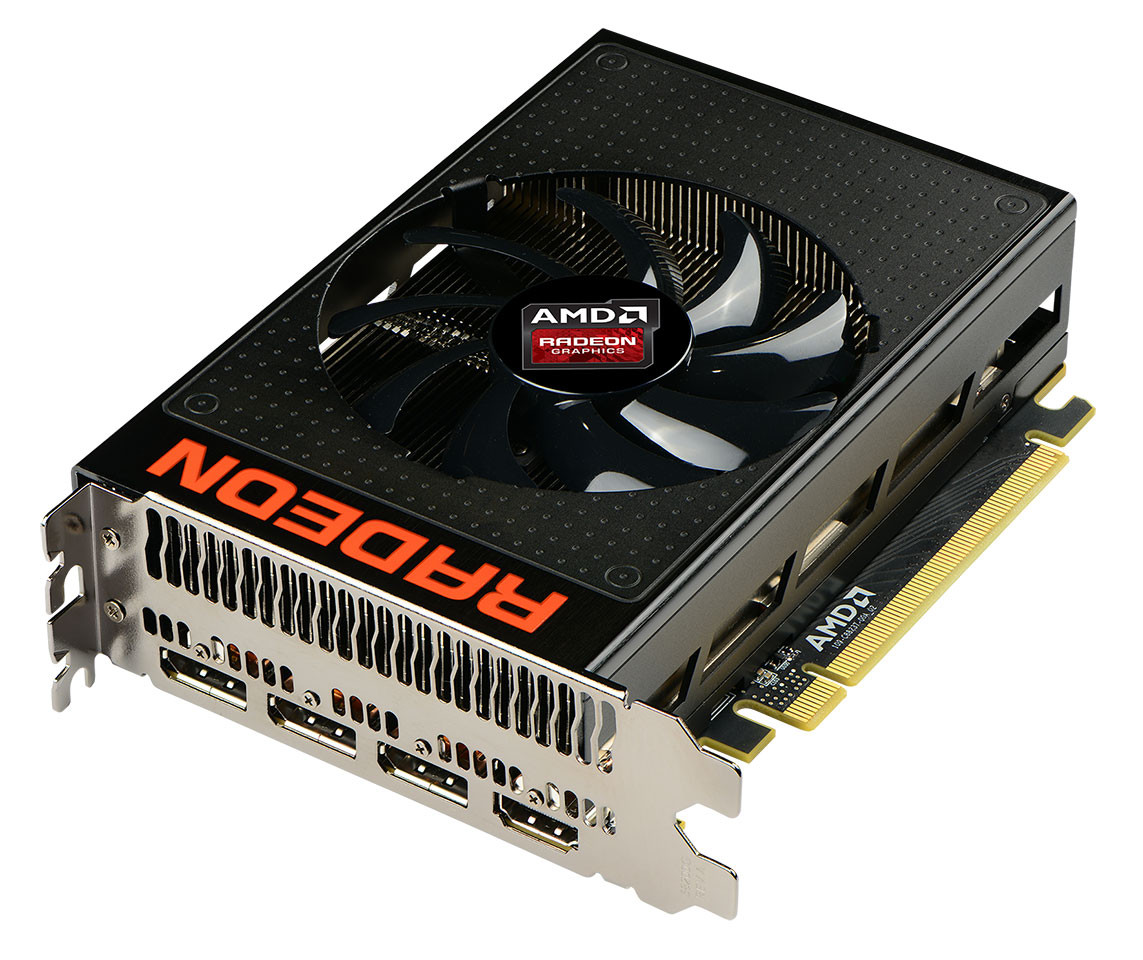
The R9 Nano, on the other hand, has the potential for greatness. Never mind the compact board design and its SFF credentials. Pull out this ASIC, put it on a normal 20-25 cm PCB, price it around $350, and dual-slot cooling that can turn its fans off in idle, and AMD could have had a GM204-killing product. Sadly, there's no way for us to test that, either. We can't emulate an R9 Nano on an R9 Fury X. The Nano appears to have a unique power/temperature based throttling algorithm that we can't copy.
"Fiji" is a good piece of technology, but apparently, very little effort is being made to put it into the hands of as many people as possible (and by that we mean consumers). This is an incoherence between what AMD CEO stated at the "Fiji" unveil, and what her company is doing. It's also great disservice to the people who probably stayed up many nights to get the interposer design right, or sailing through uncharted territory with HBM. Oh well.
759 Comments on AMD Radeon R9 Nano Review by TPU...Not
Some replies in this thread were hilarious and over the top. Like I said before this this thread, so much rage over a card. lol
I assume that those fist-pumping at Roy's brilliant PR will now be spinning the departure of the saviour as a positive move
I would be more concerned with follow on projects and the custom ARM K12 which would now seem to be in a state of limbo. I can understand that Keller would leave after completing what he signed on to do - which turned out to a much smaller job than it originally entailed thanks to the shelving of SkyBridge and K12's lack of priority, but for Keller to leave without AMD naming his successor poses a question of maintaining chip design momentum. All Zen does is get AMD back into the race, but they still need competitive successor designs laid down almost immediately to avoid falling (again) into the trap of platform stagnation.
KitGuru apology regarding AMD DDR4 memory news story | KitGuru
KitGuru was at "war" with AMD this summer for not getting a Fury X card. They posted an article attacking AMD directly, but they where totally blasted by readers in the comments section. They ended up banning posters and they also created a couple of accounts at Disqus to help defend the site's opinion, or at least that's what looked like, with accounts only having a few posts in certain articles about their differencies with AMD, accounts that stopped posting afterwards.
Months passed, and probably they found common ground with AMD. They even took a Nano to review, something that I wasn't expecting.
Yesterday they posted an article with some negative comments about Radeon memory and today they are at full damage control apologizing for those comments in every way known to mankind as you can see in the above article.
JMO