Friday, September 4th 2015

AMD Radeon R9 Nano Review by TPU...Not
There won't be a Radeon R9 Nano review on TechPowerUp. AMD says that it has too few review samples for the press. When AMD first held up the Radeon R9 Nano at its "Fiji" GPU unveil, to us it came across as the most promising product based on the chip, even more than the R9 Fury series, its dual-GPU variant, and the food-processor-shaped SFF gaming desktop thing. The prospect of "faster than R9 290X at 175W" is what excited us the most, as that would disrupt NVIDIA's GM204 based products. Unfortunately, the most exciting product by AMD also has the least amount of excitement by AMD itself.
The first signs of that are, AMD making it prohibitively expensive at $650, and not putting it in the hands of the press, for a launch-day review. We're not getting one, and nor do some of our friends on either sides of the Atlantic. AMD is making some of its tallest claims with this product, and it's important (for AMD) that some of those claims are put to the test. A validated product could maybe even convince some to reach for their wallets, to pull out $650. Are we sourgraping? You tell us. We're one of the few sites that give you noise testing by some really expensive and broad-ranged noise-testing equipment, and more importantly, card-only power-draw. Our reviews also grill graphics cards through 22 real-world tests across four resolutions, each, and offer price-performance graphs. When NVIDIA didn't send us a GeForce GTX TITAN-Z sample, we didn't care. We didn't make an announcement like this. At $2,999, it was just a terrible product and we never wished it was part of our graphs. Its competing R9 295X2 could be had under $700, and so it continues to top our performance charts.
The R9 Nano, on the other hand, has the potential for greatness. Never mind the compact board design and its SFF credentials. Pull out this ASIC, put it on a normal 20-25 cm PCB, price it around $350, and dual-slot cooling that can turn its fans off in idle, and AMD could have had a GM204-killing product. Sadly, there's no way for us to test that, either. We can't emulate an R9 Nano on an R9 Fury X. The Nano appears to have a unique power/temperature based throttling algorithm that we can't copy.
"Fiji" is a good piece of technology, but apparently, very little effort is being made to put it into the hands of as many people as possible (and by that we mean consumers). This is an incoherence between what AMD CEO stated at the "Fiji" unveil, and what her company is doing. It's also great disservice to the people who probably stayed up many nights to get the interposer design right, or sailing through uncharted territory with HBM. Oh well.
The first signs of that are, AMD making it prohibitively expensive at $650, and not putting it in the hands of the press, for a launch-day review. We're not getting one, and nor do some of our friends on either sides of the Atlantic. AMD is making some of its tallest claims with this product, and it's important (for AMD) that some of those claims are put to the test. A validated product could maybe even convince some to reach for their wallets, to pull out $650.
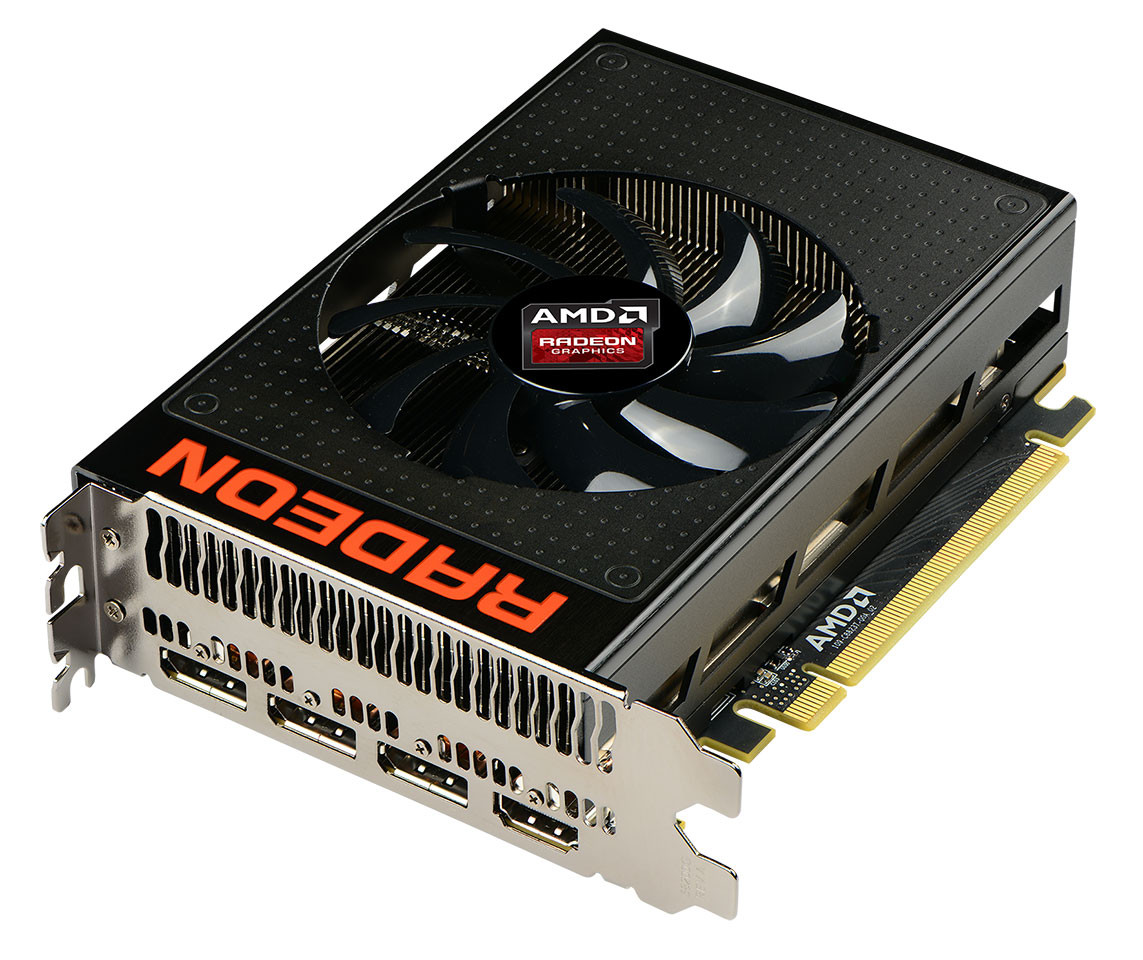
The R9 Nano, on the other hand, has the potential for greatness. Never mind the compact board design and its SFF credentials. Pull out this ASIC, put it on a normal 20-25 cm PCB, price it around $350, and dual-slot cooling that can turn its fans off in idle, and AMD could have had a GM204-killing product. Sadly, there's no way for us to test that, either. We can't emulate an R9 Nano on an R9 Fury X. The Nano appears to have a unique power/temperature based throttling algorithm that we can't copy.
"Fiji" is a good piece of technology, but apparently, very little effort is being made to put it into the hands of as many people as possible (and by that we mean consumers). This is an incoherence between what AMD CEO stated at the "Fiji" unveil, and what her company is doing. It's also great disservice to the people who probably stayed up many nights to get the interposer design right, or sailing through uncharted territory with HBM. Oh well.
759 Comments on AMD Radeon R9 Nano Review by TPU...Not
Instead of producing a 970/980 killer, we get rebranded overclocked 290(X)s with additional 4GB that nobody outside of CF needs for fantasy prices.I stopped even visiting PCGH years ago. Not because they produce wonky benchmarks (numbers), but because they were much to tame in their conclusions - they didn't call out companies on their BS. What they produced was more like company PR + benchmark numbers.
If you want journalism in german language you have to read Igor Wallossek @tomshardware.de -- he isn't the loudest but sure knows what he 's doing and writing.
PCGH is more for the 14 year olds.
companies like them and amd have no place anymore.
Nvidia Iray. It obviously doesn't work on AMD GPU.
www.nvidia.com/object/nvidia-iray.html
Nobody said anything about Social Media Reviews". What WAS said is AMD are taking Social Marketing to a whole new level.
"Community Rep" is a euphemism for Internet/Online Marketer. "AMD reps" are paid to promote the products, help with SEO, attract interest, attempt damage control etc.
en.wikipedia.org/wiki/Online_advertising
www.google.co.nz/search?q=Online+Marketer&ie=utf-8&oe=utf-8&gws_rd=cr&ei=kD3sVYXqKoTcmAX314qABQ
blog.hubspot.com/blog/tabid/6307/bid/6734/Sell-Online-Marketing-to-Your-Boss-7-Euphemisms-Everyone-Needs.aspx
This is how advertising is done these days,.... but the degree of BS can vary wildly depending on the company. AMD often misrepresent the truth.
Prime example is Matt stating on Guru that VSR would be supported on the 280x but not 79x0 because of "incompatibility". Which ofc was a flat out lie since they are identical.
Fwiw, I posted exactly that reply to Matt and was promptly banned by someone (admin) @Guru. I never found out who.
Hilbert reinstated my account the next day but by then thread had been picked up by reddit and Asder was busy modding drivers to make VSR work with the 7900.
A few days later after total silence, Matt posted again saying "sorry for the confusion, we want to make your experience better so our devs our working to get 7900 support for VSR" or something to that affect.
That summed up his (therefore AMD's) response, after not replying to a single comment or query posted to him by 7900 owners wanting an explanation..
More like AMD were in damage control mode after being caught red handed trying to obsolete a rebranded card to increase sales.
That's one example, but prob the most blatant.....
So now hopefully some people may understand why I get annoyed....;) :)
And I like Igor for his approach to GPU reviews - shortly after the initial release you usually get a deep dive into certain aspects of the cards that no one else covers be it problems (e.g. noise + heat + throttle) and how to reduce it (290 + Accelero Xtreme) or finding the efficiency sweetpot of a product (really great article for the 970 iTX).
On topic: has AMD contacted TPU about this yet? You'd think the article would have turned some heads at AMD to try to expedite getting a card to TPU.
Don't get me wrong the 950 release recently was utterly 'meh'.
The only part about the 390 that isn't a rebrand is the VRAM. It's faster and higher capacity. After some testing I've concluded that (at least in Valley benchmark,) that GPU performance scales linearly to memory frequency, even from as low as 1000Mhz up to 1600Mhz. Not to say gains a huge but, they're consistently linear. I would expect an overclocked 390 to outperform an overclocked 290 just because of the faster VRAM alone, even if the cores are the same.
Either way, what does it matter? The 290 is one of the best bang for your buck GPUs you can get with the 390 a little over it. The question is, do you think the extra and faster VRAM along with a tweaked BIOS is worth the extra price? I thought it was and I can't say I've been disappointed but I don't have a 290 to compare it to.
Yup, this is AMD trying to BS the community by delaying the truth to be revealed. Shame on you AMD
and wow I barely do anything with twitter and I have more followers than her
I mean, an unknown blogger, instead of respectable reviewer sites that reach tens of thousands viewers? The signs are clearly there. Do AMD really think we are that stupid?
Must be very infuriating for TPU to see that the blogger above get one but they dont.
Secondly, torn_tv is a member of the AMDRTP and is unknown in the reviewer industry compared to TPU.
Third, its called "Fanboy" and is a personal attack if you were referring to me.
I don`t need to say anything more
I think I can already sum up his review: "it is AWESOME! #MakeItNano" :shadedshu: