Friday, June 7th 2019

MSI CEO: AMD Plans to Stop Being the Value Alternative, X570 Motherboards to be Expensive
MSI's CEO Charles Chiang, quoted by Tom's Hardware at COMPUTEX 2019, laid out what we were already seeing with motherboard designs from all vendors of AMD's X570-based motherboards: pricing is likely increasing across the board, and AMD's market positioning won't be of the alternative, lower-value brand.
As quoted, Chiang said that ""Lots of people ask me, what do you think about today's AMD? I say today's AMD is completely different company compared to two, three, five years ago. They have nice technology and they are there to put the higher spec with the reasonable pricing. But right now they say, "Hey Charles, let's push to marketing to the higher [end]. So let's sell higher-pricing motherboards, higher-spec motherboards, and let's see what will happen in the market. So I don't think that AMD is the company that wants to sell low cost here, low cost there." Which does make sense: AMD isn't in the position of the underdog anymore -at least technology and product-portfolio wise when it comes to consumer CPUs. With better products, comes a desire for higher margins, and a change in direction for a company that was basically forced to almost cut itself out of the market in terms of profits with its previous, non-competitive CPU designs.
 Efforts to survive on AMD's part have been immense, with the company severely tightening its belt in all fields, including R&D, in the times leading to the launch of their previous-gen architecture, Bulldozer. And with the way that one architecture panned out in the market, AMD didn't really find a way to dig itself out of the trenches. No like it has with Zen: a lithe, small, highly efficient design that allowed the company to not only make up lost ground on technology and CPU performance but also on profits. That the company wants to price its products in higher segments, alongside their performance improvements and competitiveness against Intel's slow-moving lineup, makes all sorts of sense from a business perspective.


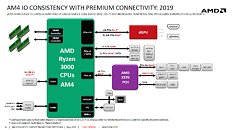
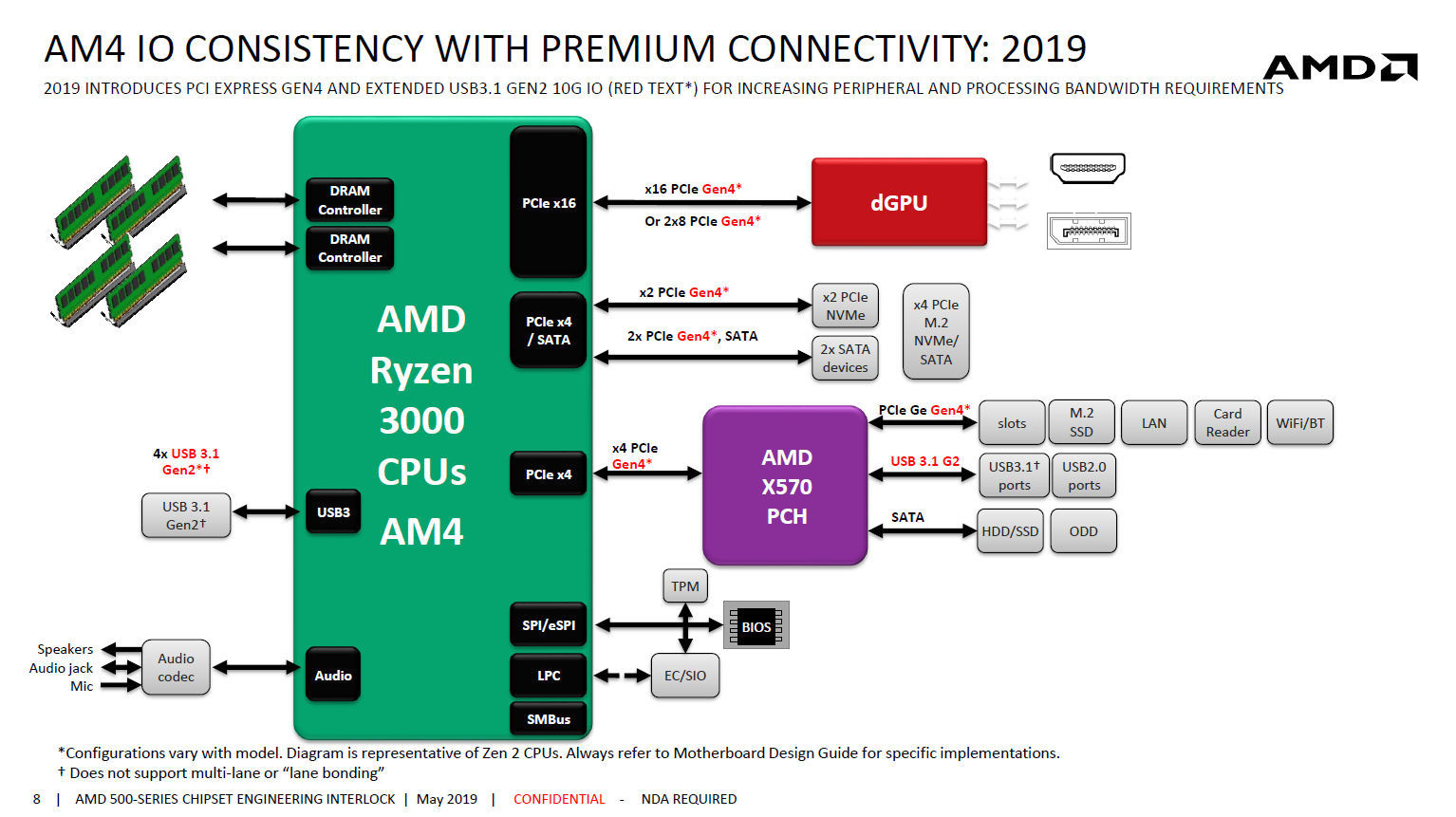
 Charles Chiang said that there a multitude of factors contributing to the higher pricing of X570 motherboards: that AMD is planning to charge more for each chipset (compared to the ASMedia-designed X470), but also because of the integration of PCIe 4.0. PCIe 4.0 support has meant a higher-TDp chipset (which has required a throwback to the days of old with active cooling over AMD's chipset, which has increased its TDp up to 10 W compared to the previous gen's X470's 3 W); and because PCIe switches are another best entirely in terms of complexity and power delivery capabilities. All of these add cost, and this cost will end up being passed on to end users (at least partially): as it always is.
Source:
Tom's Hardware
As quoted, Chiang said that ""Lots of people ask me, what do you think about today's AMD? I say today's AMD is completely different company compared to two, three, five years ago. They have nice technology and they are there to put the higher spec with the reasonable pricing. But right now they say, "Hey Charles, let's push to marketing to the higher [end]. So let's sell higher-pricing motherboards, higher-spec motherboards, and let's see what will happen in the market. So I don't think that AMD is the company that wants to sell low cost here, low cost there." Which does make sense: AMD isn't in the position of the underdog anymore -at least technology and product-portfolio wise when it comes to consumer CPUs. With better products, comes a desire for higher margins, and a change in direction for a company that was basically forced to almost cut itself out of the market in terms of profits with its previous, non-competitive CPU designs.



151 Comments on MSI CEO: AMD Plans to Stop Being the Value Alternative, X570 Motherboards to be Expensive
Hahaha I am of course not holding my breath :rolleyes:
To be honest, I'm not surprised that prices are going up. However, the rate at which some prices (*cough* Nvidia *cough*) have increased is a bit surprising.
It's clear some companies are taking advantage of being the industry leader, by quite a large margin compared to the cost of the actual hardware.
I think the industry as a whole has lost touch with their customers and we've ended up in a strange place where people seemingly strive to buy $1,000+ pieces of hardware, which I agree is strange, but it's not strange that we see more expensive hardware, as it's also a lot more capable and a lot more complex.
Everything up until now points to X570 being an unnecessary addition for the most part. Intel for example understands very well the fact that high end boards are redundant so they've done the only thing left to ensure that their newest chipsets remain relevant no matter what : locking important features such as over clocking and restricting new CPUs being used on other chipsets.
Source: videocardz.com/newz/amd-ryzen-9-3950x-to-become-worlds-first-16-core-gaming-cpu
My buying range stays around the $250 mark though.
But you are right that many people pay more money than they should, for features that they probably don't need right now, or would probably never use. With X570 there are two things that could send people buy those motherboards. They are made with Ryzen 3000 in mind, but we will have to wait and see if there is any real advantage there, and the support for PCIe 4.0, that probably will be useless for like 99% of consumers, at least in the first year. Overcockers of course will find that 50MHz higher overclock at 0.01V lower voltage for the CPU and 10MHz higher overclock for the RAM, is justifying $100 or more.I wouldn't use the word fear for a price tag of $700 for a beast that has 16 cores. This is last year's ThreadRipper at a lower price than the starting price for the 16 core ThreadRipper. Thinking of that, we might get surprised with a lower or even a higher price. Anything is possible, depending on how AMD will market it. Destroy Intel's high end line? Max $700. Try to convince the world + dog that it is the premium brand? $999.
X570 also gives you more peripheral connectivity and a faster chipset/CPU interface.